Key Insights
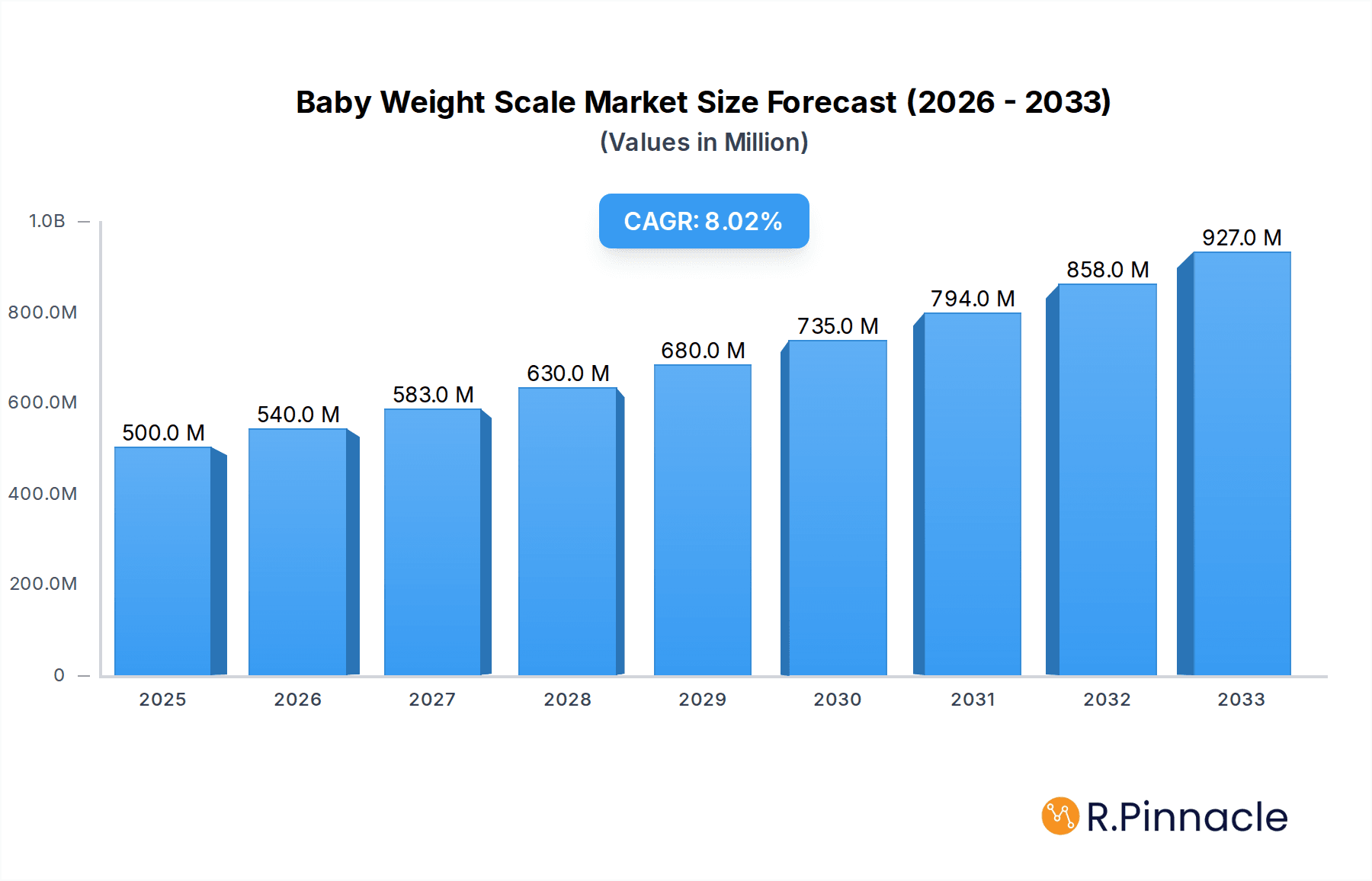
The global Baby Weight Scale market is poised for robust expansion, with an estimated market size of USD 500 million in 2025. This growth is underpinned by a projected Compound Annual Growth Rate (CAGR) of 8% over the forecast period of 2025-2033, indicating a dynamic and expanding industry. The increasing emphasis on infant health and accurate weight monitoring, particularly in the early stages of development, is a primary driver. Parents are becoming more health-conscious, seeking reliable tools to track their baby's growth milestones. This trend is further amplified by the rising global birth rates and a growing awareness of the importance of early detection of growth-related issues. Furthermore, advancements in technology are leading to the development of more sophisticated and user-friendly baby weight scales, incorporating features like memory functions, tare options, and even connectivity for data tracking, which are appealing to modern parents.
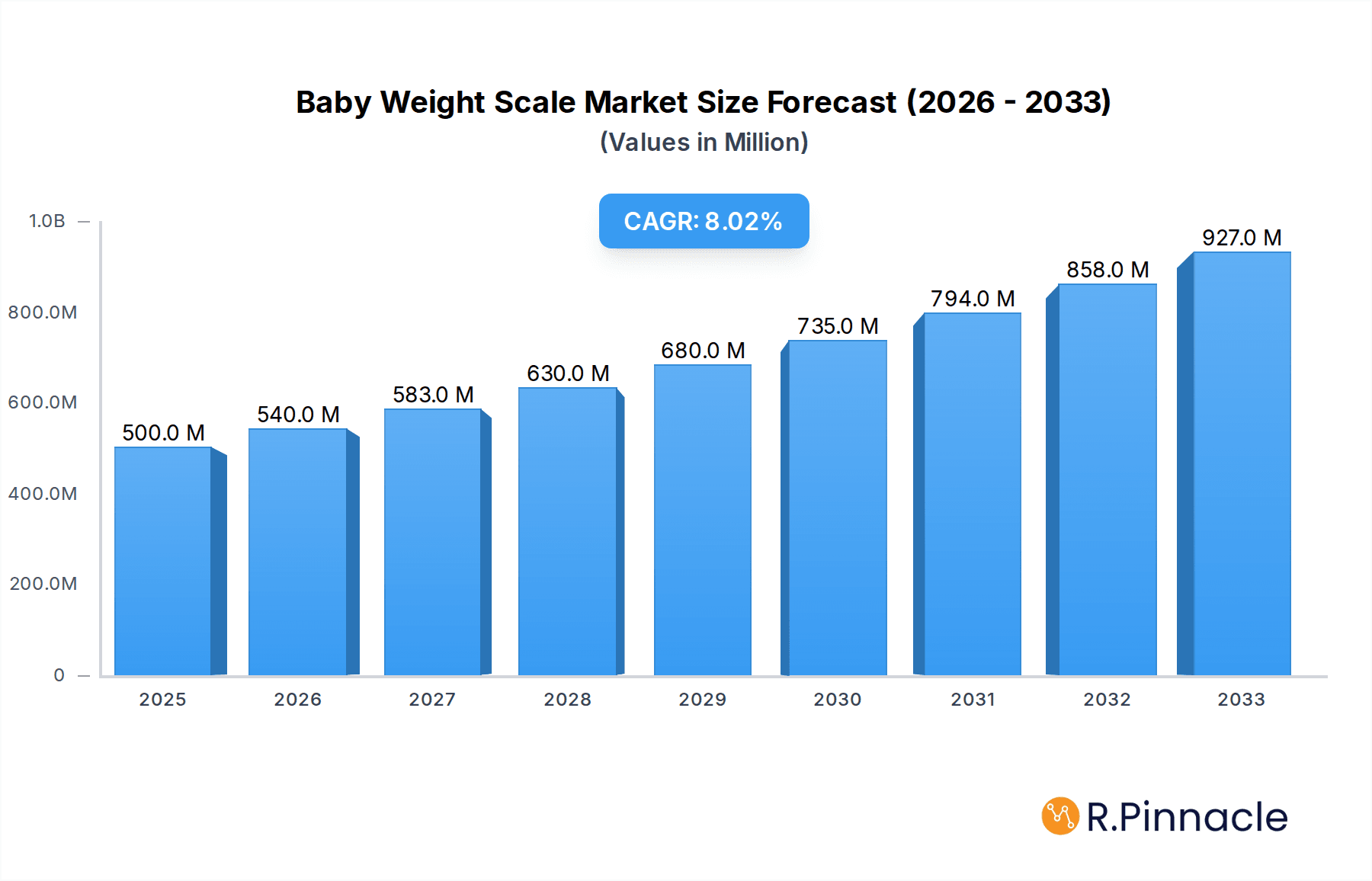
Baby Weight Scale Market Size (In Million)

The market's trajectory is also influenced by the expanding healthcare infrastructure, especially in emerging economies, leading to increased accessibility of essential baby care products. Hospitals and baby care centers are significant consumers, investing in accurate weighing instruments for routine check-ups and specialized care. While the market enjoys strong growth drivers, certain factors could influence its pace. The cost of advanced digital scales might present a restraint for some segments of the population, particularly in price-sensitive markets. However, the increasing availability of a range of products, from basic analog scales to feature-rich digital models, helps to mitigate this. The market is segmented by application into Home, Hospital, Baby Care Center, and Other, and by type into One Piece Type and Split Type. Key players like Newline, Charder, Hopkins, Tanita, Detecto, DigiWeigh, and Seca are actively innovating and competing, contributing to market dynamism and offering diverse choices to consumers across various regions.
Baby Weight Scale Company Market Share
Comprehensive Baby Weight Scale Market Analysis Report (2019-2033)
This in-depth report provides a comprehensive analysis of the global Baby Weight Scale market, meticulously examining market structure, dynamics, regional landscapes, product innovations, and future growth trajectories. Leveraging a detailed study period from 2019 to 2033, with a base year of 2025, this report offers invaluable insights for industry professionals, manufacturers, investors, and healthcare providers. We explore key segments, identify dominant players, and forecast market trends with actionable data and strategic recommendations.
Baby Weight Scale Market Structure & Innovation Trends
The Baby Weight Scale market exhibits a moderately concentrated structure, with key players like Newline, Charder, Hopkins, Tanita, Detecto, DigiWeigh, and Seca holding significant market shares. Innovation is a crucial driver, fueled by the demand for enhanced accuracy, portability, and integrated digital features. Regulatory frameworks, particularly concerning medical device safety and accuracy standards, play a pivotal role in shaping product development and market entry. Product substitutes, such as general-purpose weighing scales, are less prevalent due to the specialized nature of infant weighing requirements. End-user demographics are primarily driven by the birth rate, parental awareness of infant health, and the increasing adoption of smart home and health monitoring devices. Mergers and acquisitions (M&A) activities, with estimated deal values reaching millions, are strategic moves by larger entities to consolidate market position and acquire innovative technologies. Historical M&A trends suggest a continued interest in acquiring companies with strong R&D capabilities and established distribution networks. The market capitalization of key players collectively stands in the millions.
Baby Weight Scale Market Dynamics & Trends
The Baby Weight Scale market is poised for robust growth, driven by a confluence of factors that underscore its increasing importance in infant healthcare and parental well-being. The global CAGR is projected to be around xx%, reflecting sustained expansion throughout the forecast period. A primary growth driver is the escalating global birth rate, which directly translates into a larger addressable market for baby weight scales. Coupled with this is a heightened parental awareness of infant health and development, leading to greater emphasis on regular and accurate monitoring of a baby's weight, a critical indicator of growth and well-being. Technological advancements are significantly disrupting the market, with the integration of smart features such as Bluetooth connectivity, mobile app synchronization, and cloud-based data storage. These innovations offer parents real-time tracking, historical data analysis, and even personalized feeding recommendations, enhancing the user experience and providing actionable health insights. The shift towards home-based healthcare and the increasing adoption of connected devices in households further propel the demand for smart and user-friendly baby scales. Consumer preferences are increasingly leaning towards scales that offer not only precision but also ease of use, durability, and aesthetically pleasing designs that fit into modern nursery environments. Competitive dynamics are intensifying, with established players investing heavily in R&D to differentiate their offerings and new entrants seeking to capitalize on niche market demands. The market penetration of digital and smart baby weight scales is steadily increasing, as consumers become more familiar with and receptive to technology-driven health solutions. This trend is further amplified by the growing influence of e-commerce platforms, which provide wider accessibility and comparative purchasing options for consumers.
Dominant Regions & Segments in Baby Weight Scale
The North America region currently dominates the Baby Weight Scale market, driven by a strong healthcare infrastructure, high disposable incomes, and a technologically savvy consumer base. Within North America, the United States stands out as a leading country due to its advanced healthcare system, high birth rates in certain demographics, and significant adoption of advanced baby care products.
Key Drivers of Dominance in North America:
- Advanced Healthcare Infrastructure: A well-established network of hospitals, pediatric clinics, and home healthcare services creates a consistent demand for accurate and reliable baby weight scales.
- High Disposable Income: Consumers in North America possess the financial capacity to invest in premium baby care products, including sophisticated digital and smart baby scales.
- Technological Adoption: The region exhibits a high propensity to adopt new technologies, making smart baby scales with app integration and data tracking particularly popular.
- Parental Awareness and Focus on Infant Health: Strong societal emphasis on child development and health monitoring encourages proactive weight tracking.
- Supportive Regulatory Environment: While stringent, the regulatory environment in North America also fosters innovation and quality assurance, building consumer trust.
In terms of Application, Home use represents the largest segment, reflecting the increasing trend of parents opting for at-home monitoring of their infants' health. This is followed by Hospital use, where accuracy and regulatory compliance are paramount for clinical settings. The Baby Care Center segment also contributes significantly, serving professional childcare facilities.
In terms of Types, the One Piece Type scale is the more prevalent segment. This design offers a unified platform, making it straightforward to place an infant and obtain a reading. Its simplicity and portability contribute to its widespread adoption in home environments. While the Split Type (often featuring separate platforms and displays) offers potential ergonomic advantages in clinical settings, the ease of use and cost-effectiveness of the one-piece design make it the dominant choice for general consumer use.
Baby Weight Scale Product Innovations
Product innovation in the Baby Weight Scale market is focused on enhancing user experience and providing greater health insights. Advancements include ultra-precise digital sensors for accurate readings, tare functions to account for blankets, and hold functions to stabilize readings of active infants. A significant trend is the integration of smart technology, enabling seamless connectivity with smartphones and tablets via Bluetooth. This allows for the tracking of weight gain over time, data logging, and sharing with healthcare providers. Many new products also offer features like built-in measuring tapes, integrated feeding logs, and personalized growth charts, providing a more holistic approach to infant care and appealing to health-conscious parents. These innovations translate into competitive advantages by addressing specific parental needs for convenience, data-driven insights, and peace of mind regarding their baby's development.
Report Scope & Segmentation Analysis
This report provides a granular segmentation of the Baby Weight Scale market.
Application Segments:
- Home: This segment encompasses scales used by parents and caregivers in domestic settings. Projections indicate strong growth due to increasing demand for at-home health monitoring. Market size is estimated to be in the millions, with competitive dynamics driven by features and pricing.
- Hospital: Scales for clinical use in hospitals, requiring high precision and durability. This segment is expected to maintain steady growth, driven by healthcare facility upgrades and consistent demand. Market size is in the millions, with competition focused on accuracy certifications and reliability.
- Baby Care Center: Scales used in professional childcare settings, including daycares and birthing centers. This segment is projected for moderate growth, influenced by the expansion of childcare facilities. Market size is in the millions.
- Other: This category includes scales for research, specialized medical applications, and niche markets. Its growth trajectory is dependent on specific industry needs.
Types Segments:
- One Piece Type: The dominant segment, characterized by a single platform for weighing. This segment is expected to continue its market leadership due to its simplicity and affordability. Market size is in the millions.
- Split Type: Scales with separate weighing platforms and displays. This segment is projected for steady growth, particularly in professional healthcare settings where ergonomic benefits are valued. Market size is in the millions.
Key Drivers of Baby Weight Scale Growth
The Baby Weight Scale market is propelled by several key drivers. Technological advancements in sensor accuracy and smart connectivity are paramount, offering enhanced data tracking and user convenience. The increasing global birth rate directly expands the potential consumer base. A growing parental awareness of infant health and development leads to a greater demand for accurate monitoring tools. Furthermore, the rise of home healthcare trends and the adoption of digital health solutions encourage the use of smart and portable weighing devices. Supportive government initiatives and healthcare policies that promote early childhood development and monitoring also contribute to market expansion. The increasing availability and affordability of these devices through e-commerce channels further fuels market penetration.
Challenges in the Baby Weight Scale Sector
Despite positive growth prospects, the Baby Weight Scale sector faces several challenges. Stringent regulatory compliance for medical devices, particularly regarding accuracy and safety standards, can increase development costs and time-to-market. Supply chain disruptions and the reliance on global manufacturing can lead to price volatility and availability issues, impacting production volumes and delivery timelines. Intense price competition from both established brands and emerging players can squeeze profit margins, especially for basic models. Moreover, consumer education is crucial to highlight the benefits of specialized baby scales over general-purpose alternatives. The perceived high cost of advanced smart scales can also be a barrier for some consumer segments, limiting market penetration. Ensuring consistent data security and privacy for connected devices is another growing concern that manufacturers must address.
Emerging Opportunities in Baby Weight Scale
The Baby Weight Scale market is ripe with emerging opportunities. The growing demand for personalized infant care solutions presents a significant avenue, with scales offering integrated growth tracking and health insights. The expansion of telehealth and remote patient monitoring creates a need for accurate, connected baby scales that can transmit data to healthcare providers. The increasing adoption of wearable technology and smart nursery devices offers opportunities for seamless integration of baby weight data into a broader ecosystem of infant care. Furthermore, exploring emerging markets in developing economies with improving healthcare infrastructure and rising disposable incomes offers substantial growth potential. The development of eco-friendly and sustainable baby scale options could also appeal to a growing segment of environmentally conscious consumers. Finally, partnerships with pediatricians and healthcare organizations can enhance product credibility and drive adoption.
Leading Players in the Baby Weight Scale Market
- Newline
- Charder
- Hopkins
- Tanita
- Detecto
- DigiWeigh
- Seca
Key Developments in Baby Weight Scale Industry
- 2024: Launch of advanced smart baby scales with enhanced AI-driven growth analytics by leading manufacturers.
- 2023: Increased focus on ergonomic designs and user-friendly interfaces for pediatricians and parents.
- 2022: Significant investment in R&D for Bluetooth connectivity and cloud-based data management for baby weight scales.
- 2021: Emergence of eco-friendly and sustainable baby scale models in response to consumer demand.
- 2020: Introduction of integrated measuring tape features on a wider range of baby weight scales.
- 2019: Growing adoption of tare functions and hold features to improve accuracy with active infants.
Future Outlook for Baby Weight Scale Market
The future outlook for the Baby Weight Scale market is exceptionally positive, characterized by sustained innovation and expanding market reach. Growth accelerators will be primarily driven by the increasing integration of sophisticated digital technologies, including AI and IoT, for comprehensive infant health monitoring and predictive analytics. The continued rise in global birth rates, coupled with a pervasive parental focus on infant well-being, will ensure a consistent demand for accurate weighing solutions. Strategic opportunities lie in further penetrating emerging markets, developing specialized scales for premature infants, and fostering stronger collaborations within the healthcare ecosystem to promote early intervention and personalized care. The market is expected to witness a gradual shift towards connected health solutions, making smart baby scales an indispensable part of modern infant care.
Baby Weight Scale Segmentation
-
1. Application
- 1.1. Home
- 1.2. Hospital
- 1.3. Baby Care Center
- 1.4. Other
-
2. Types
- 2.1. One Piece Type
- 2.2. Split Type
Baby Weight Scale Segmentation By Geography
-
1. North America
- 1.1. United States
- 1.2. Canada
- 1.3. Mexico
-
2. South America
- 2.1. Brazil
- 2.2. Argentina
- 2.3. Rest of South America
-
3. Europe
- 3.1. United Kingdom
- 3.2. Germany
- 3.3. France
- 3.4. Italy
- 3.5. Spain
- 3.6. Russia
- 3.7. Benelux
- 3.8. Nordics
- 3.9. Rest of Europe
-
4. Middle East & Africa
- 4.1. Turkey
- 4.2. Israel
- 4.3. GCC
- 4.4. North Africa
- 4.5. South Africa
- 4.6. Rest of Middle East & Africa
-
5. Asia Pacific
- 5.1. China
- 5.2. India
- 5.3. Japan
- 5.4. South Korea
- 5.5. ASEAN
- 5.6. Oceania
- 5.7. Rest of Asia Pacific
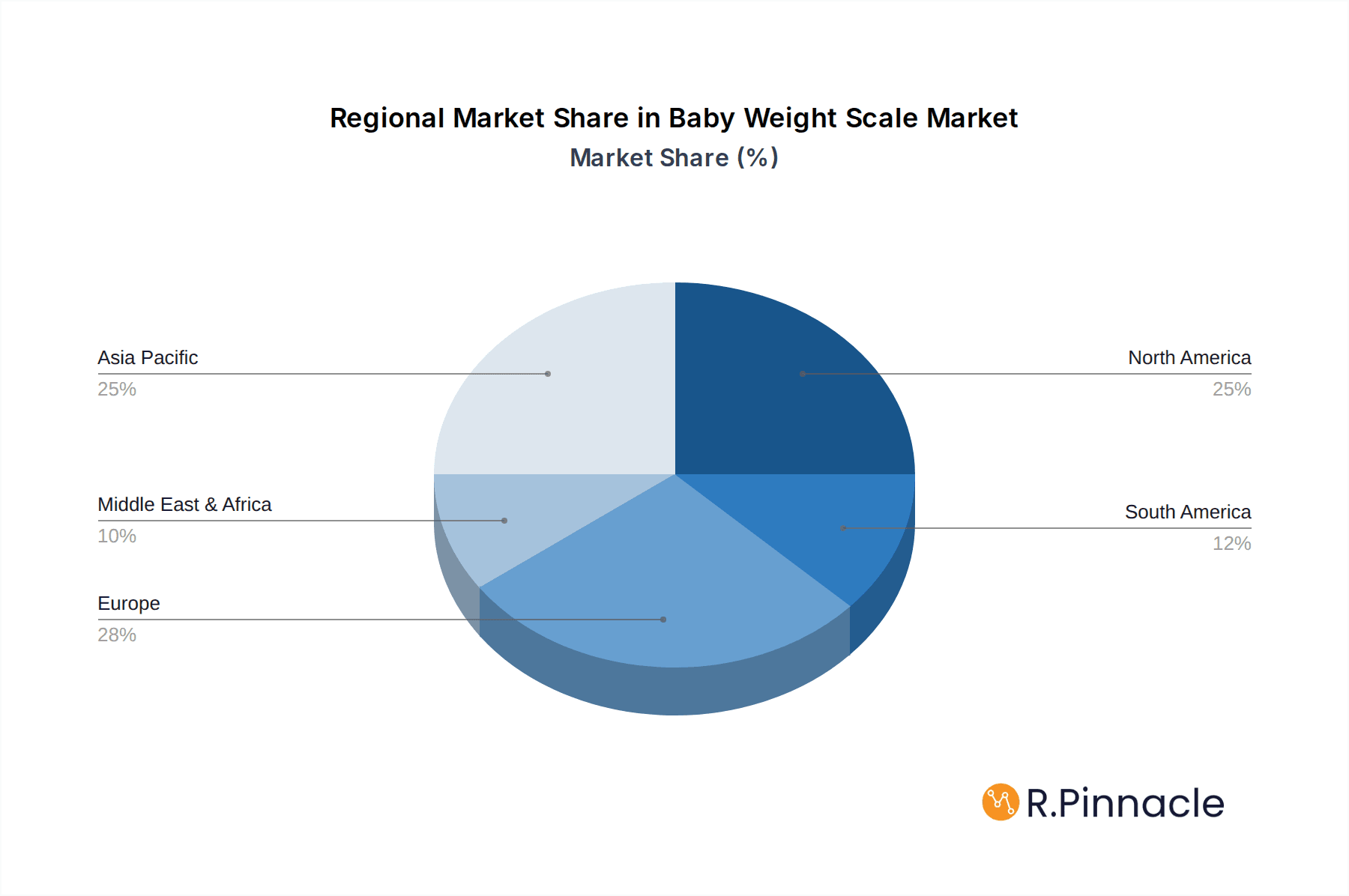
Baby Weight Scale Regional Market Share
Geographic Coverage of Baby Weight Scale
Baby Weight Scale REPORT HIGHLIGHTS
| Aspects | Details |
|---|---|
| Study Period | 2020-2034 |
| Base Year | 2025 |
| Estimated Year | 2026 |
| Forecast Period | 2026-2034 |
| Historical Period | 2020-2025 |
| Growth Rate | CAGR of 8% from 2020-2034 |
| Segmentation |
|
Table of Contents
- 1. Introduction
- 1.1. Research Scope
- 1.2. Market Segmentation
- 1.3. Research Methodology
- 1.4. Definitions and Assumptions
- 2. Executive Summary
- 2.1. Introduction
- 3. Market Dynamics
- 3.1. Introduction
- 3.2. Market Drivers
- 3.3. Market Restrains
- 3.4. Market Trends
- 4. Market Factor Analysis
- 4.1. Porters Five Forces
- 4.2. Supply/Value Chain
- 4.3. PESTEL analysis
- 4.4. Market Entropy
- 4.5. Patent/Trademark Analysis
- 5. Global Baby Weight Scale Analysis, Insights and Forecast, 2020-2032
- 5.1. Market Analysis, Insights and Forecast - by Application
- 5.1.1. Home
- 5.1.2. Hospital
- 5.1.3. Baby Care Center
- 5.1.4. Other
- 5.2. Market Analysis, Insights and Forecast - by Types
- 5.2.1. One Piece Type
- 5.2.2. Split Type
- 5.3. Market Analysis, Insights and Forecast - by Region
- 5.3.1. North America
- 5.3.2. South America
- 5.3.3. Europe
- 5.3.4. Middle East & Africa
- 5.3.5. Asia Pacific
- 5.1. Market Analysis, Insights and Forecast - by Application
- 6. North America Baby Weight Scale Analysis, Insights and Forecast, 2020-2032
- 6.1. Market Analysis, Insights and Forecast - by Application
- 6.1.1. Home
- 6.1.2. Hospital
- 6.1.3. Baby Care Center
- 6.1.4. Other
- 6.2. Market Analysis, Insights and Forecast - by Types
- 6.2.1. One Piece Type
- 6.2.2. Split Type
- 6.1. Market Analysis, Insights and Forecast - by Application
- 7. South America Baby Weight Scale Analysis, Insights and Forecast, 2020-2032
- 7.1. Market Analysis, Insights and Forecast - by Application
- 7.1.1. Home
- 7.1.2. Hospital
- 7.1.3. Baby Care Center
- 7.1.4. Other
- 7.2. Market Analysis, Insights and Forecast - by Types
- 7.2.1. One Piece Type
- 7.2.2. Split Type
- 7.1. Market Analysis, Insights and Forecast - by Application
- 8. Europe Baby Weight Scale Analysis, Insights and Forecast, 2020-2032
- 8.1. Market Analysis, Insights and Forecast - by Application
- 8.1.1. Home
- 8.1.2. Hospital
- 8.1.3. Baby Care Center
- 8.1.4. Other
- 8.2. Market Analysis, Insights and Forecast - by Types
- 8.2.1. One Piece Type
- 8.2.2. Split Type
- 8.1. Market Analysis, Insights and Forecast - by Application
- 9. Middle East & Africa Baby Weight Scale Analysis, Insights and Forecast, 2020-2032
- 9.1. Market Analysis, Insights and Forecast - by Application
- 9.1.1. Home
- 9.1.2. Hospital
- 9.1.3. Baby Care Center
- 9.1.4. Other
- 9.2. Market Analysis, Insights and Forecast - by Types
- 9.2.1. One Piece Type
- 9.2.2. Split Type
- 9.1. Market Analysis, Insights and Forecast - by Application
- 10. Asia Pacific Baby Weight Scale Analysis, Insights and Forecast, 2020-2032
- 10.1. Market Analysis, Insights and Forecast - by Application
- 10.1.1. Home
- 10.1.2. Hospital
- 10.1.3. Baby Care Center
- 10.1.4. Other
- 10.2. Market Analysis, Insights and Forecast - by Types
- 10.2.1. One Piece Type
- 10.2.2. Split Type
- 10.1. Market Analysis, Insights and Forecast - by Application
- 11. Competitive Analysis
- 11.1. Global Market Share Analysis 2025
- 11.2. Company Profiles
- 11.2.1 Newline
- 11.2.1.1. Overview
- 11.2.1.2. Products
- 11.2.1.3. SWOT Analysis
- 11.2.1.4. Recent Developments
- 11.2.1.5. Financials (Based on Availability)
- 11.2.2 Charder
- 11.2.2.1. Overview
- 11.2.2.2. Products
- 11.2.2.3. SWOT Analysis
- 11.2.2.4. Recent Developments
- 11.2.2.5. Financials (Based on Availability)
- 11.2.3 Hopkins
- 11.2.3.1. Overview
- 11.2.3.2. Products
- 11.2.3.3. SWOT Analysis
- 11.2.3.4. Recent Developments
- 11.2.3.5. Financials (Based on Availability)
- 11.2.4 Tanita
- 11.2.4.1. Overview
- 11.2.4.2. Products
- 11.2.4.3. SWOT Analysis
- 11.2.4.4. Recent Developments
- 11.2.4.5. Financials (Based on Availability)
- 11.2.5 Detecto
- 11.2.5.1. Overview
- 11.2.5.2. Products
- 11.2.5.3. SWOT Analysis
- 11.2.5.4. Recent Developments
- 11.2.5.5. Financials (Based on Availability)
- 11.2.6 DigiWeigh
- 11.2.6.1. Overview
- 11.2.6.2. Products
- 11.2.6.3. SWOT Analysis
- 11.2.6.4. Recent Developments
- 11.2.6.5. Financials (Based on Availability)
- 11.2.7 Seca
- 11.2.7.1. Overview
- 11.2.7.2. Products
- 11.2.7.3. SWOT Analysis
- 11.2.7.4. Recent Developments
- 11.2.7.5. Financials (Based on Availability)
- 11.2.1 Newline
List of Figures
- Figure 1: Global Baby Weight Scale Revenue Breakdown (undefined, %) by Region 2025 & 2033
- Figure 2: North America Baby Weight Scale Revenue (undefined), by Application 2025 & 2033
- Figure 3: North America Baby Weight Scale Revenue Share (%), by Application 2025 & 2033
- Figure 4: North America Baby Weight Scale Revenue (undefined), by Types 2025 & 2033
- Figure 5: North America Baby Weight Scale Revenue Share (%), by Types 2025 & 2033
- Figure 6: North America Baby Weight Scale Revenue (undefined), by Country 2025 & 2033
- Figure 7: North America Baby Weight Scale Revenue Share (%), by Country 2025 & 2033
- Figure 8: South America Baby Weight Scale Revenue (undefined), by Application 2025 & 2033
- Figure 9: South America Baby Weight Scale Revenue Share (%), by Application 2025 & 2033
- Figure 10: South America Baby Weight Scale Revenue (undefined), by Types 2025 & 2033
- Figure 11: South America Baby Weight Scale Revenue Share (%), by Types 2025 & 2033
- Figure 12: South America Baby Weight Scale Revenue (undefined), by Country 2025 & 2033
- Figure 13: South America Baby Weight Scale Revenue Share (%), by Country 2025 & 2033
- Figure 14: Europe Baby Weight Scale Revenue (undefined), by Application 2025 & 2033
- Figure 15: Europe Baby Weight Scale Revenue Share (%), by Application 2025 & 2033
- Figure 16: Europe Baby Weight Scale Revenue (undefined), by Types 2025 & 2033
- Figure 17: Europe Baby Weight Scale Revenue Share (%), by Types 2025 & 2033
- Figure 18: Europe Baby Weight Scale Revenue (undefined), by Country 2025 & 2033
- Figure 19: Europe Baby Weight Scale Revenue Share (%), by Country 2025 & 2033
- Figure 20: Middle East & Africa Baby Weight Scale Revenue (undefined), by Application 2025 & 2033
- Figure 21: Middle East & Africa Baby Weight Scale Revenue Share (%), by Application 2025 & 2033
- Figure 22: Middle East & Africa Baby Weight Scale Revenue (undefined), by Types 2025 & 2033
- Figure 23: Middle East & Africa Baby Weight Scale Revenue Share (%), by Types 2025 & 2033
- Figure 24: Middle East & Africa Baby Weight Scale Revenue (undefined), by Country 2025 & 2033
- Figure 25: Middle East & Africa Baby Weight Scale Revenue Share (%), by Country 2025 & 2033
- Figure 26: Asia Pacific Baby Weight Scale Revenue (undefined), by Application 2025 & 2033
- Figure 27: Asia Pacific Baby Weight Scale Revenue Share (%), by Application 2025 & 2033
- Figure 28: Asia Pacific Baby Weight Scale Revenue (undefined), by Types 2025 & 2033
- Figure 29: Asia Pacific Baby Weight Scale Revenue Share (%), by Types 2025 & 2033
- Figure 30: Asia Pacific Baby Weight Scale Revenue (undefined), by Country 2025 & 2033
- Figure 31: Asia Pacific Baby Weight Scale Revenue Share (%), by Country 2025 & 2033
List of Tables
- Table 1: Global Baby Weight Scale Revenue undefined Forecast, by Application 2020 & 2033
- Table 2: Global Baby Weight Scale Revenue undefined Forecast, by Types 2020 & 2033
- Table 3: Global Baby Weight Scale Revenue undefined Forecast, by Region 2020 & 2033
- Table 4: Global Baby Weight Scale Revenue undefined Forecast, by Application 2020 & 2033
- Table 5: Global Baby Weight Scale Revenue undefined Forecast, by Types 2020 & 2033
- Table 6: Global Baby Weight Scale Revenue undefined Forecast, by Country 2020 & 2033
- Table 7: United States Baby Weight Scale Revenue (undefined) Forecast, by Application 2020 & 2033
- Table 8: Canada Baby Weight Scale Revenue (undefined) Forecast, by Application 2020 & 2033
- Table 9: Mexico Baby Weight Scale Revenue (undefined) Forecast, by Application 2020 & 2033
- Table 10: Global Baby Weight Scale Revenue undefined Forecast, by Application 2020 & 2033
- Table 11: Global Baby Weight Scale Revenue undefined Forecast, by Types 2020 & 2033
- Table 12: Global Baby Weight Scale Revenue undefined Forecast, by Country 2020 & 2033
- Table 13: Brazil Baby Weight Scale Revenue (undefined) Forecast, by Application 2020 & 2033
- Table 14: Argentina Baby Weight Scale Revenue (undefined) Forecast, by Application 2020 & 2033
- Table 15: Rest of South America Baby Weight Scale Revenue (undefined) Forecast, by Application 2020 & 2033
- Table 16: Global Baby Weight Scale Revenue undefined Forecast, by Application 2020 & 2033
- Table 17: Global Baby Weight Scale Revenue undefined Forecast, by Types 2020 & 2033
- Table 18: Global Baby Weight Scale Revenue undefined Forecast, by Country 2020 & 2033
- Table 19: United Kingdom Baby Weight Scale Revenue (undefined) Forecast, by Application 2020 & 2033
- Table 20: Germany Baby Weight Scale Revenue (undefined) Forecast, by Application 2020 & 2033
- Table 21: France Baby Weight Scale Revenue (undefined) Forecast, by Application 2020 & 2033
- Table 22: Italy Baby Weight Scale Revenue (undefined) Forecast, by Application 2020 & 2033
- Table 23: Spain Baby Weight Scale Revenue (undefined) Forecast, by Application 2020 & 2033
- Table 24: Russia Baby Weight Scale Revenue (undefined) Forecast, by Application 2020 & 2033
- Table 25: Benelux Baby Weight Scale Revenue (undefined) Forecast, by Application 2020 & 2033
- Table 26: Nordics Baby Weight Scale Revenue (undefined) Forecast, by Application 2020 & 2033
- Table 27: Rest of Europe Baby Weight Scale Revenue (undefined) Forecast, by Application 2020 & 2033
- Table 28: Global Baby Weight Scale Revenue undefined Forecast, by Application 2020 & 2033
- Table 29: Global Baby Weight Scale Revenue undefined Forecast, by Types 2020 & 2033
- Table 30: Global Baby Weight Scale Revenue undefined Forecast, by Country 2020 & 2033
- Table 31: Turkey Baby Weight Scale Revenue (undefined) Forecast, by Application 2020 & 2033
- Table 32: Israel Baby Weight Scale Revenue (undefined) Forecast, by Application 2020 & 2033
- Table 33: GCC Baby Weight Scale Revenue (undefined) Forecast, by Application 2020 & 2033
- Table 34: North Africa Baby Weight Scale Revenue (undefined) Forecast, by Application 2020 & 2033
- Table 35: South Africa Baby Weight Scale Revenue (undefined) Forecast, by Application 2020 & 2033
- Table 36: Rest of Middle East & Africa Baby Weight Scale Revenue (undefined) Forecast, by Application 2020 & 2033
- Table 37: Global Baby Weight Scale Revenue undefined Forecast, by Application 2020 & 2033
- Table 38: Global Baby Weight Scale Revenue undefined Forecast, by Types 2020 & 2033
- Table 39: Global Baby Weight Scale Revenue undefined Forecast, by Country 2020 & 2033
- Table 40: China Baby Weight Scale Revenue (undefined) Forecast, by Application 2020 & 2033
- Table 41: India Baby Weight Scale Revenue (undefined) Forecast, by Application 2020 & 2033
- Table 42: Japan Baby Weight Scale Revenue (undefined) Forecast, by Application 2020 & 2033
- Table 43: South Korea Baby Weight Scale Revenue (undefined) Forecast, by Application 2020 & 2033
- Table 44: ASEAN Baby Weight Scale Revenue (undefined) Forecast, by Application 2020 & 2033
- Table 45: Oceania Baby Weight Scale Revenue (undefined) Forecast, by Application 2020 & 2033
- Table 46: Rest of Asia Pacific Baby Weight Scale Revenue (undefined) Forecast, by Application 2020 & 2033
Frequently Asked Questions
1. What is the projected Compound Annual Growth Rate (CAGR) of the Baby Weight Scale?
The projected CAGR is approximately 8%.
2. Which companies are prominent players in the Baby Weight Scale?
Key companies in the market include Newline, Charder, Hopkins, Tanita, Detecto, DigiWeigh, Seca.
3. What are the main segments of the Baby Weight Scale?
The market segments include Application, Types.
4. Can you provide details about the market size?
The market size is estimated to be USD XXX N/A as of 2022.
5. What are some drivers contributing to market growth?
N/A
6. What are the notable trends driving market growth?
N/A
7. Are there any restraints impacting market growth?
N/A
8. Can you provide examples of recent developments in the market?
N/A
9. What pricing options are available for accessing the report?
Pricing options include single-user, multi-user, and enterprise licenses priced at USD 2900.00, USD 4350.00, and USD 5800.00 respectively.
10. Is the market size provided in terms of value or volume?
The market size is provided in terms of value, measured in N/A.
11. Are there any specific market keywords associated with the report?
Yes, the market keyword associated with the report is "Baby Weight Scale," which aids in identifying and referencing the specific market segment covered.
12. How do I determine which pricing option suits my needs best?
The pricing options vary based on user requirements and access needs. Individual users may opt for single-user licenses, while businesses requiring broader access may choose multi-user or enterprise licenses for cost-effective access to the report.
13. Are there any additional resources or data provided in the Baby Weight Scale report?
While the report offers comprehensive insights, it's advisable to review the specific contents or supplementary materials provided to ascertain if additional resources or data are available.
14. How can I stay updated on further developments or reports in the Baby Weight Scale?
To stay informed about further developments, trends, and reports in the Baby Weight Scale, consider subscribing to industry newsletters, following relevant companies and organizations, or regularly checking reputable industry news sources and publications.
Methodology
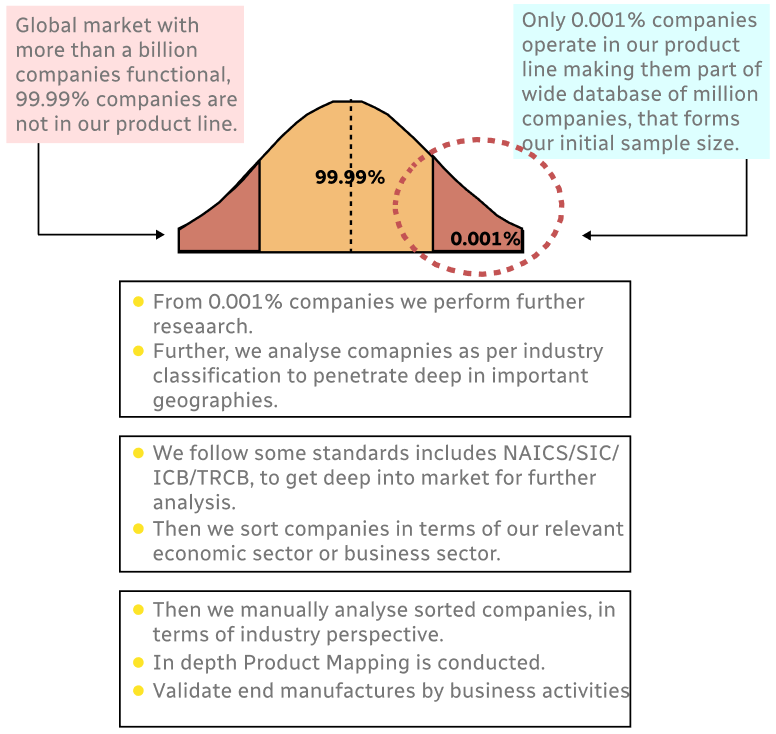
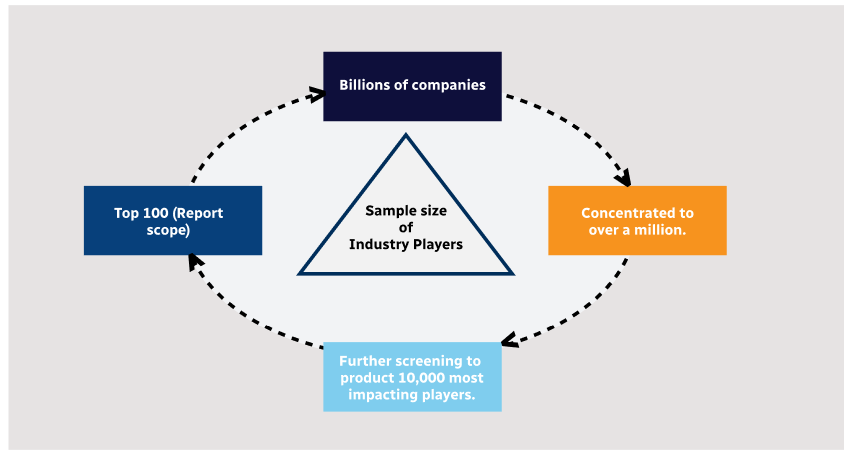
Step 1 - Identification of Relevant Samples Size from Population Database
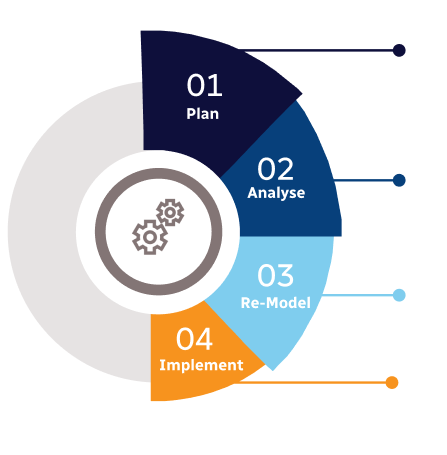
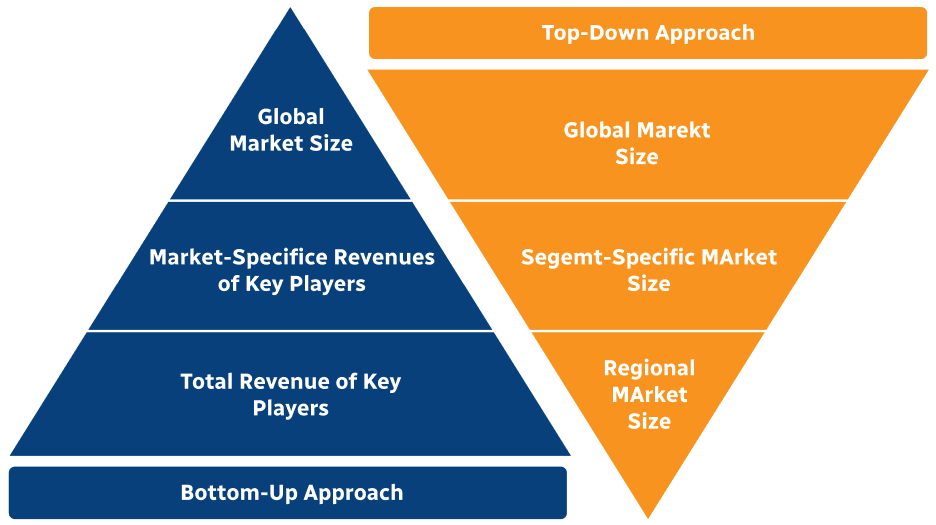
Step 2 - Approaches for Defining Global Market Size (Value, Volume* & Price*)
Note*: In applicable scenarios
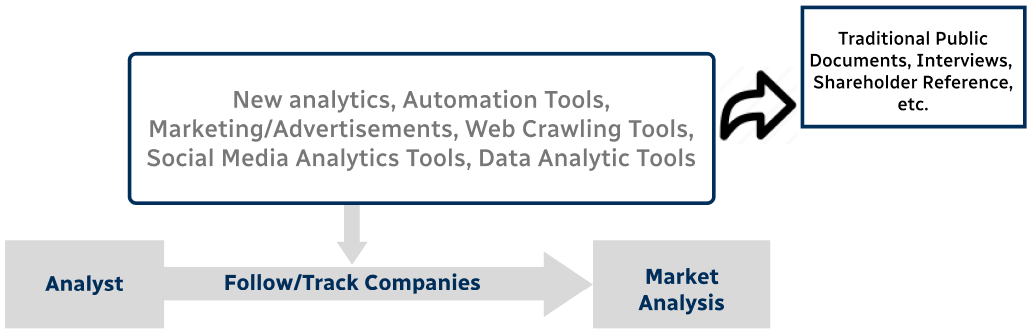
Step 3 - Data Sources
Primary Research
- Web Analytics
- Survey Reports
- Research Institute
- Latest Research Reports
- Opinion Leaders
Secondary Research
- Annual Reports
- White Paper
- Latest Press Release
- Industry Association
- Paid Database
- Investor Presentations
Step 4 - Data Triangulation
Involves using different sources of information in order to increase the validity of a study
These sources are likely to be stakeholders in a program - participants, other researchers, program staff, other community members, and so on.
Then we put all data in single framework & apply various statistical tools to find out the dynamic on the market.
During the analysis stage, feedback from the stakeholder groups would be compared to determine areas of agreement as well as areas of divergence