


Key Insights
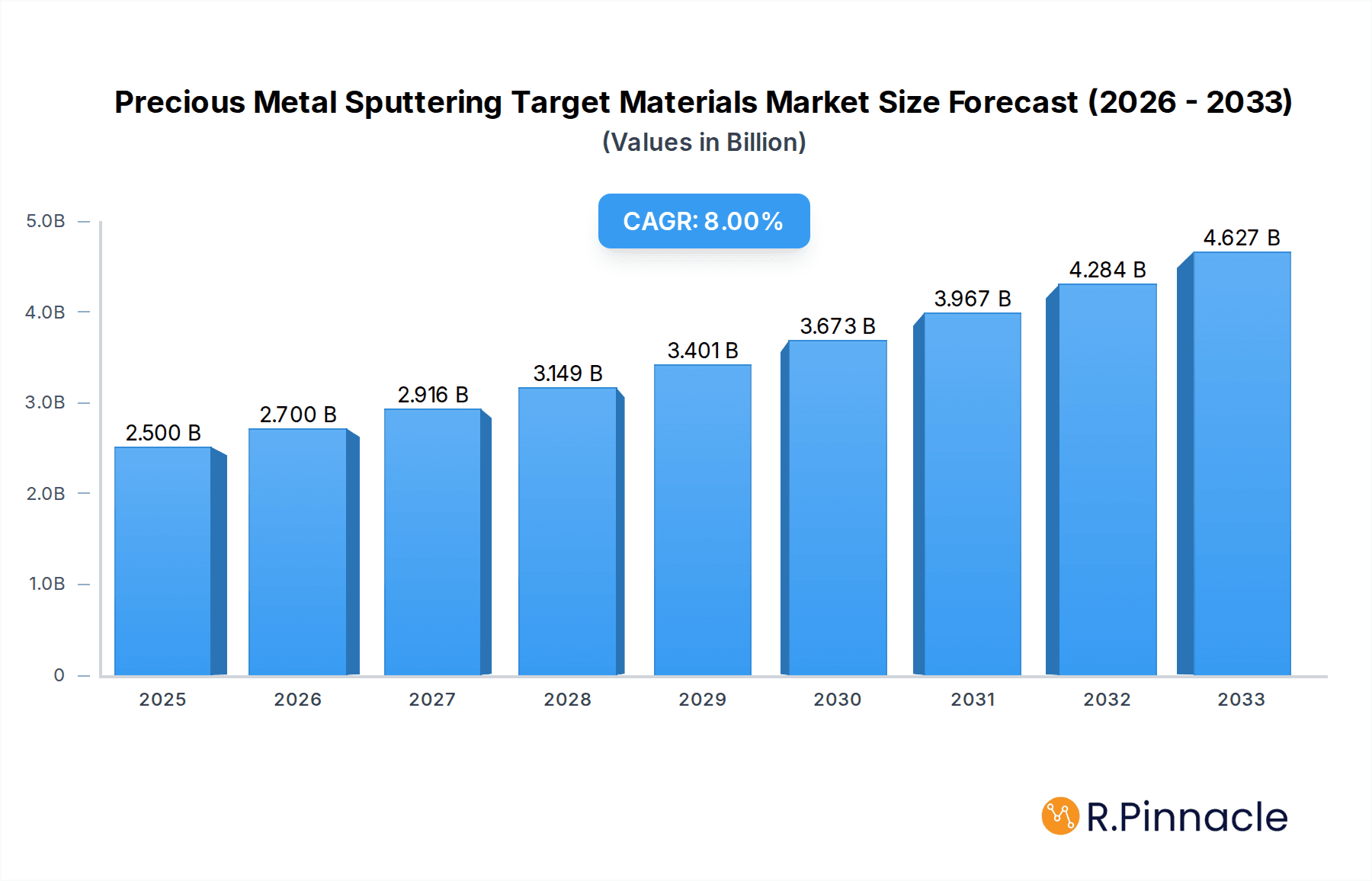
The Precious Metal Sputtering Target Materials market is poised for significant expansion, projected to reach USD 2.5 billion in 2025. This robust growth is fueled by an anticipated CAGR of 8% over the forecast period from 2025 to 2033. Key applications driving this demand include the semiconductor industry, which relies heavily on these materials for advanced microchip fabrication, and the burgeoning solar energy sector, where sputtering targets are crucial for efficient photovoltaic cell production. The display industry, encompassing both LCD and other flat-panel technologies, also represents a substantial market segment, demanding high-purity precious metals for advanced screen manufacturing. This consistent demand across multiple high-growth sectors underscores the strategic importance of precious metal sputtering targets in enabling next-generation electronic and energy technologies.
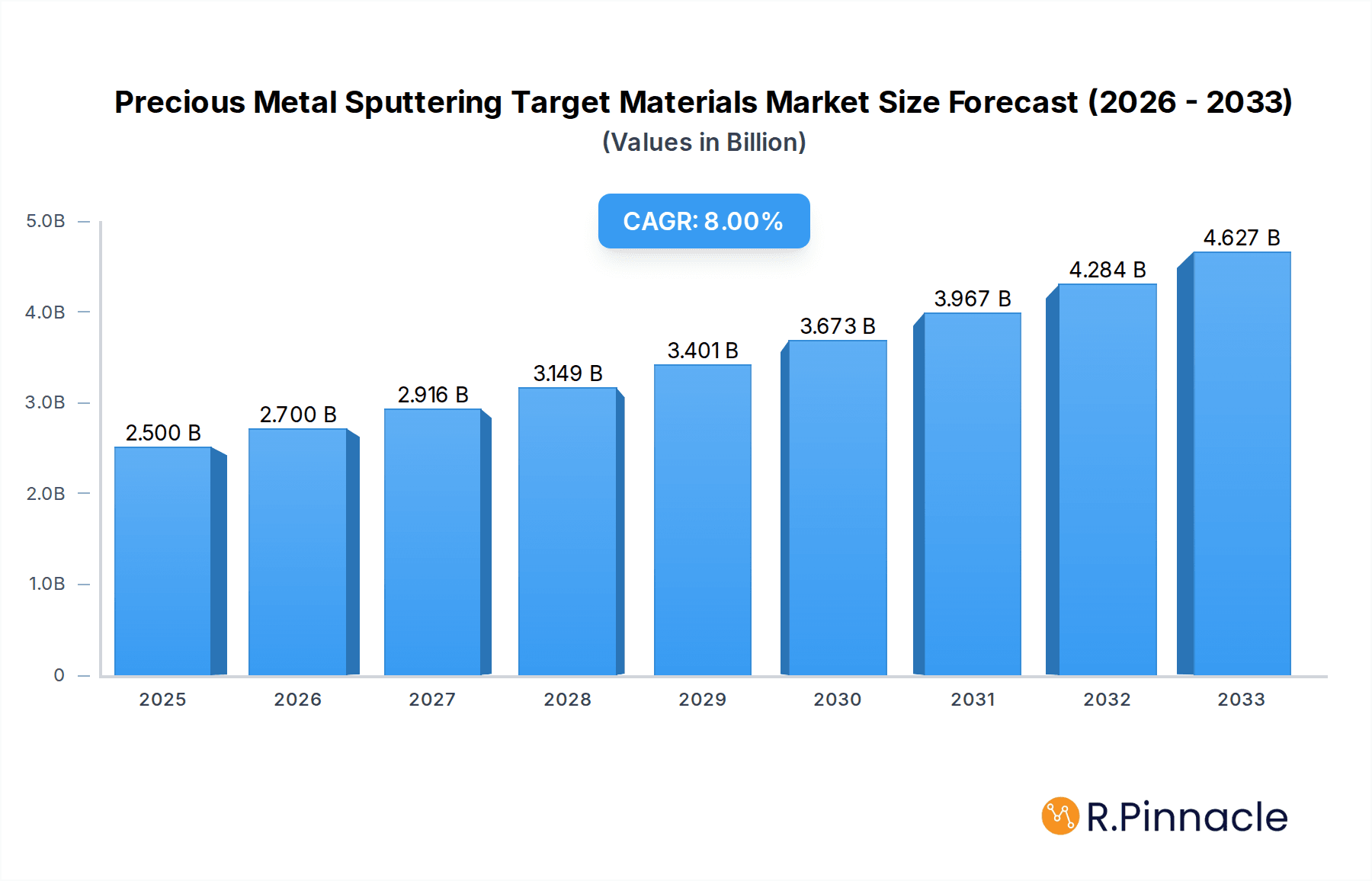
Precious Metal Sputtering Target Materials Market Size (In Billion)

The market's trajectory is shaped by several dynamic drivers. Advancements in semiconductor technology, necessitating smaller, more powerful, and efficient chips, directly translate to increased demand for high-performance sputtering targets. Similarly, the global push for renewable energy sources is a major impetus, as sputtering targets play a vital role in enhancing the efficiency and durability of solar cells. Emerging trends include the development of novel alloy compositions and higher purity materials to meet the increasingly stringent requirements of advanced applications. While the market presents substantial opportunities, certain restraints, such as the inherent volatility in precious metal prices and the high cost of raw materials, could pose challenges. However, the continuous innovation in sputtering techniques and the growing adoption of these materials in new frontiers are expected to largely mitigate these concerns, paving the way for sustained market growth.
Precious Metal Sputtering Target Materials Company Market Share
Precious Metal Sputtering Target Materials Market Report: 2019-2033 Analysis
This comprehensive report provides an in-depth analysis of the global precious metal sputtering target materials market, offering critical insights for stakeholders across the semiconductor, solar energy, and flat panel display industries. Leveraging advanced analytics and extensive market intelligence, this study delves into market dynamics, growth drivers, technological innovations, and competitive landscapes from 2019 through 2033, with a base year of 2025. Explore the burgeoning demand for high-purity precious metal targets essential for advanced manufacturing processes.
Precious Metal Sputtering Target Materials Market Structure & Innovation Trends
The precious metal sputtering target materials market exhibits a moderately concentrated structure, with a few key players holding significant market share, estimated to be in the billions. Innovation remains a primary driver, propelled by the relentless demand for enhanced performance in semiconductor fabrication, particularly for advanced nodes and novel device architectures. Regulatory frameworks, largely focused on material purity standards and environmental compliance for precious metal sourcing and processing, play a crucial role in market entry and operational strategies. While direct product substitutes are limited due to the unique properties of precious metals like gold, silver, and platinum, advancements in alternative deposition techniques and materials with comparable performance characteristics for specific applications pose a nascent threat. End-user demographics are predominantly comprised of large-scale manufacturers in the electronics, solar, and display sectors, characterized by stringent quality control and long-term supply agreements. Mergers and acquisitions (M&A) activities are observed periodically, driven by the pursuit of technological synergy, expanded production capacity, and fortified market presence, with deal values often reaching hundreds of millions.
Precious Metal Sputtering Target Materials Market Dynamics & Trends
The precious metal sputtering target materials market is poised for robust growth, projected to witness a Compound Annual Growth Rate (CAGR) of approximately 7.5% during the forecast period of 2025–2033. This expansion is underpinned by several powerful market growth drivers. The relentless advancement in the semiconductor industry serves as a primary catalyst, with increasing demand for sophisticated integrated circuits (ICs) requiring high-purity precious metal films for interconnects, barrier layers, and advanced packaging. The proliferation of 5G technology, artificial intelligence (AI), and the Internet of Things (IoT) devices necessitates more complex and high-performance semiconductors, directly translating to a higher consumption of precious metal sputtering targets.
Furthermore, the solar energy sector is experiencing a significant upswing, driven by global initiatives to promote renewable energy and reduce carbon emissions. High-efficiency photovoltaic cells, particularly thin-film solar technologies, increasingly rely on sputtering deposition of precious metals like silver for conductive electrodes, contributing significantly to their energy conversion efficiency. Market penetration in this segment is expected to accelerate as solar energy costs continue to decline and governments offer supportive policies.
The flat panel display (FPD) market, encompassing both LCD and emerging OLED technologies, also represents a substantial growth avenue. Precious metal targets are employed in the fabrication of transparent conductive films and electrodes, essential for the functionality and performance of high-resolution displays in smartphones, tablets, televisions, and other electronic gadgets. As display technologies evolve towards larger sizes, higher refresh rates, and improved energy efficiency, the demand for these critical materials will continue to rise.
Technological disruptions are also shaping the market. Innovations in sputtering deposition techniques, such as high-throughput sputtering and advanced target bonding technologies, are enhancing material utilization efficiency and reducing manufacturing costs, making precious metal targets more accessible for a wider range of applications. Advances in material science are leading to the development of even higher purity targets and novel alloy compositions tailored for specific performance requirements.
Consumer preferences are indirectly influencing the market through the demand for advanced electronic devices and sustainable energy solutions. The push for smaller, faster, and more energy-efficient electronics, coupled with the global transition towards cleaner energy sources, directly fuels the need for the sophisticated materials provided by the precious metal sputtering target industry.
The competitive landscape is characterized by a mix of established global players and emerging regional manufacturers. Intense competition revolves around product quality, purity, consistency, and the ability to provide customized solutions. Strategic partnerships, technological collaborations, and significant investments in research and development are key strategies employed by leading companies to maintain their competitive edge. The market penetration of precious metal sputtering targets remains high within their specialized applications due to the irreplaceable nature of their properties in many high-performance scenarios.
Dominant Regions & Segments in Precious Metal Sputtering Target Materials
The Asia-Pacific region stands as the dominant force in the precious metal sputtering target materials market, driven by its unparalleled concentration of semiconductor fabrication facilities, leading display manufacturers, and a burgeoning solar energy sector. Countries like China, South Korea, Taiwan, and Japan are at the forefront of this dominance, fueled by robust government support, significant R&D investments, and the presence of major end-user industries. Economic policies actively promoting high-tech manufacturing and substantial infrastructure development in these nations create a fertile ground for the growth of precious metal sputtering target consumption.
Within applications, the Semiconductor segment commands the largest market share, estimated to exceed fifty billion dollars in 2025. The insatiable global demand for advanced microchips for computing, telecommunications, automotive electronics, and consumer devices directly translates into an immense need for high-purity gold, platinum, and other precious metal targets used in critical deposition processes. Innovations in semiconductor technology, such as advanced lithography, 3D NAND flash memory, and next-generation processors, continually push the boundaries for material requirements, ensuring sustained growth for this segment.
Among the types of precious metal sputtering targets, Gold Target Materials often lead in terms of market value and application breadth. Gold's exceptional conductivity, corrosion resistance, and biocompatibility make it indispensable in a wide array of semiconductor interconnects, contact layers, and specialized medical devices. The consistent demand from the high-end electronics sector ensures its continued leadership. However, Silver Target Materials are experiencing rapid growth, particularly driven by their critical role in the solar energy sector as highly efficient and cost-effective conductive electrodes. The increasing global push for renewable energy and the efficiency gains offered by silver in photovoltaic cells are propelling its market penetration. Platinum Target Materials, while generally commanding higher prices and used in more specialized applications, are crucial for catalysts, high-performance sensors, and certain advanced semiconductor processes requiring extreme temperature and chemical resistance.
The LCD Flat Panel Display segment, although mature in some aspects, continues to represent a significant market due to the widespread adoption of LCD technology across various devices. Precious metals are vital for the transparent conductive layers that enable pixel control. While the growth rate may be moderate compared to semiconductors, the sheer volume of production ensures its substantial contribution. The Others Flat Panel Display segment, encompassing emerging technologies like OLED and MicroLED, presents a promising growth frontier. As these display technologies mature and gain wider market acceptance, the demand for specialized precious metal sputtering targets will escalate, offering significant future potential.
Precious Metal Sputtering Target Materials Product Innovations
Product innovations in precious metal sputtering target materials are primarily focused on achieving ultra-high purity levels, reducing grain size for enhanced uniformity, and developing specialized alloy compositions. Companies are investing in advanced refining techniques and sophisticated quality control measures to meet the stringent demands of leading-edge semiconductor fabrication. For instance, the development of sub-parts-per-billion (ppb) purity gold targets is crucial for next-generation microelectronic devices where even trace impurities can degrade performance. Furthermore, advancements in target manufacturing, such as optimized hot pressing and HIP (Hot Isostatic Pressing) processes, allow for denser, more homogeneous targets with improved sputtering yields and longer service life. These innovations offer competitive advantages by enabling customers to achieve higher device yields, improved performance, and reduced manufacturing costs.
Report Scope & Segmentation Analysis
This report encompasses a detailed segmentation of the precious metal sputtering target materials market across key applications and material types.
The Application segments include:
- Semiconductor: This segment is projected to exhibit strong growth, driven by the continuous demand for advanced microchips in various electronic devices. Market size is expected to reach tens of billions by 2025, with a projected CAGR of over 8%.
- Solar Energy: Witnessing substantial expansion due to the global shift towards renewable energy, this segment offers significant growth opportunities. Market size is expected to be in the billions, with a high CAGR driven by efficiency demands.
- LCD Flat Panel Display: A mature yet significant segment, characterized by stable demand from the massive production of LCD screens. Market size is in the billions, with a moderate growth rate.
- Others Flat Panel Display: This segment, encompassing technologies like OLED and MicroLED, presents a high-growth potential area with increasing market penetration and demand for specialized materials.
The Type segments include:
- Gold Target Materials: Historically a dominant segment, this continues to be driven by widespread use in semiconductors and electronics. Expected market size in the billions.
- Silver Target Materials: Experiencing rapid growth, primarily fueled by the solar energy sector's demand for efficient conductive layers. Market size is projected to reach billions.
- Platinum Target Materials: Utilized in niche, high-performance applications, this segment commands higher prices and is critical for specialized industries. Market size is in the hundreds of millions, with steady growth.
- Others: This category includes other precious metals like Palladium and Rhodium, used in specialized applications, contributing hundreds of millions to the market.
Key Drivers of Precious Metal Sputtering Target Materials Growth
The growth of the precious metal sputtering target materials market is primarily propelled by the unstoppable technological advancements in the semiconductor industry. The continuous miniaturization of transistors, the development of complex 3D architectures, and the increasing demand for high-speed data processing in applications like AI and 5G are driving the need for ultra-high purity precious metals in advanced interconnects and contact layers. Secondly, the global imperative for renewable energy adoption is a significant growth accelerator, particularly for silver targets used in high-efficiency solar cells. Government incentives and decreasing solar panel costs are fueling widespread deployment, thereby increasing demand. Lastly, the evolving landscape of display technologies, with the rise of OLED and MicroLED, is creating new avenues for precious metal applications in advanced conductive films, promising substantial future growth.
Challenges in the Precious Metal Sputtering Target Materials Sector
Despite the promising outlook, the precious metal sputtering target materials sector faces several challenges. Volatility in precious metal prices due to geopolitical factors and market speculation can significantly impact manufacturing costs and profitability. Stringent regulatory frameworks surrounding the sourcing and ethical handling of precious metals can add complexity and compliance burdens for manufacturers. Furthermore, the high cost of raw materials can lead to price sensitivity among end-users, prompting research into alternative, lower-cost materials where feasible. Finally, the highly specialized nature of applications necessitates significant investment in R&D and advanced manufacturing capabilities, creating barriers to entry for new players and posing a competitive pressure for existing ones to continually innovate.
Emerging Opportunities in Precious Metal Sputtering Target Materials
Emerging opportunities in the precious metal sputtering target materials market are abundant, driven by innovation and expanding application frontiers. The growing demand for advanced packaging solutions in semiconductors, such as wafer-level packaging and heterogeneous integration, presents a significant opportunity for specialized precious metal targets. The continued expansion of the Internet of Medical Things (IoMT) and advancements in implantable electronic devices are creating new demand for biocompatible precious metal coatings. Furthermore, the increasing focus on sustainable manufacturing practices is driving research into more efficient sputtering processes and the development of target recycling programs, offering opportunities for companies that can provide eco-friendly solutions. Finally, the exploration of new applications in areas like quantum computing and advanced sensors could unlock entirely new markets for high-performance precious metal sputtering targets.
Leading Players in the Precious Metal Sputtering Target Materials Market
- JX Nippon Mining & Metals Corporation
- Praxair
- Plansee SE
- Mitsui Mining & Smelting
- Hitachi Metals
- Honeywell
- Sumitomo Chemical
- ULVAC
- Materion (Heraeus)
- GRIKIN Advanced Material Co.,Ltd.
- TOSOH
- Ningbo Jiangfeng
- Heesung
- Luvata
- Fujian Acetron New Materials Co.,Ltd
- Changzhou Sujing Electronic Material
- Luoyang Sifon Electronic Materials
- FURAYA Metals Co.,Ltd
- Advantec
- Angstrom Sciences
- Umicore Thin Film Products
Key Developments in Precious Metal Sputtering Target Materials Industry
- 2023/05: Major semiconductor equipment manufacturers announce advancements in high-throughput sputtering systems, increasing demand for optimized precious metal targets.
- 2022/11: Several leading solar energy companies report significant improvements in photovoltaic cell efficiency using advanced silver sputtering techniques.
- 2022/07: A prominent material supplier introduces ultra-high purity gold sputtering targets with sub-ppb impurity levels for next-generation semiconductor nodes.
- 2021/12: Reports indicate increased M&A activity in the precious metal target sector, driven by consolidation and pursuit of technological synergies.
- 2021/08: Emerging display technology companies showcase prototypes utilizing novel precious metal thin films for enhanced color gamut and brightness.
Future Outlook for Precious Metal Sputtering Target Materials Market
The future outlook for the precious metal sputtering target materials market is exceptionally bright, projected to be a multi-billion dollar industry by 2033. Growth accelerators include the continuous miniaturization and performance enhancement of semiconductors, driven by AI, 5G, and IoT. The accelerating global transition to renewable energy will further fuel demand for high-efficiency solar cells utilizing silver targets. Emerging applications in advanced display technologies, medical devices, and potentially quantum computing represent significant untapped potential. Strategic opportunities lie in developing higher purity materials, customized alloy compositions, and sustainable sourcing and recycling solutions to cater to the evolving needs of a technologically advanced and environmentally conscious global market.
Precious Metal Sputtering Target Materials Segmentation
-
1. Application
- 1.1. Semiconductor
- 1.2. Solar Energy
- 1.3. LCD Flat Panel Display
- 1.4. Others Flat Panel Display
-
2. Types
- 2.1. Gold Target Materials
- 2.2. Sliver Target Materials
- 2.3. Platinum Target Materials
- 2.4. Others
Precious Metal Sputtering Target Materials Segmentation By Geography
-
1. North America
- 1.1. United States
- 1.2. Canada
- 1.3. Mexico
-
2. South America
- 2.1. Brazil
- 2.2. Argentina
- 2.3. Rest of South America
-
3. Europe
- 3.1. United Kingdom
- 3.2. Germany
- 3.3. France
- 3.4. Italy
- 3.5. Spain
- 3.6. Russia
- 3.7. Benelux
- 3.8. Nordics
- 3.9. Rest of Europe
-
4. Middle East & Africa
- 4.1. Turkey
- 4.2. Israel
- 4.3. GCC
- 4.4. North Africa
- 4.5. South Africa
- 4.6. Rest of Middle East & Africa
-
5. Asia Pacific
- 5.1. China
- 5.2. India
- 5.3. Japan
- 5.4. South Korea
- 5.5. ASEAN
- 5.6. Oceania
- 5.7. Rest of Asia Pacific
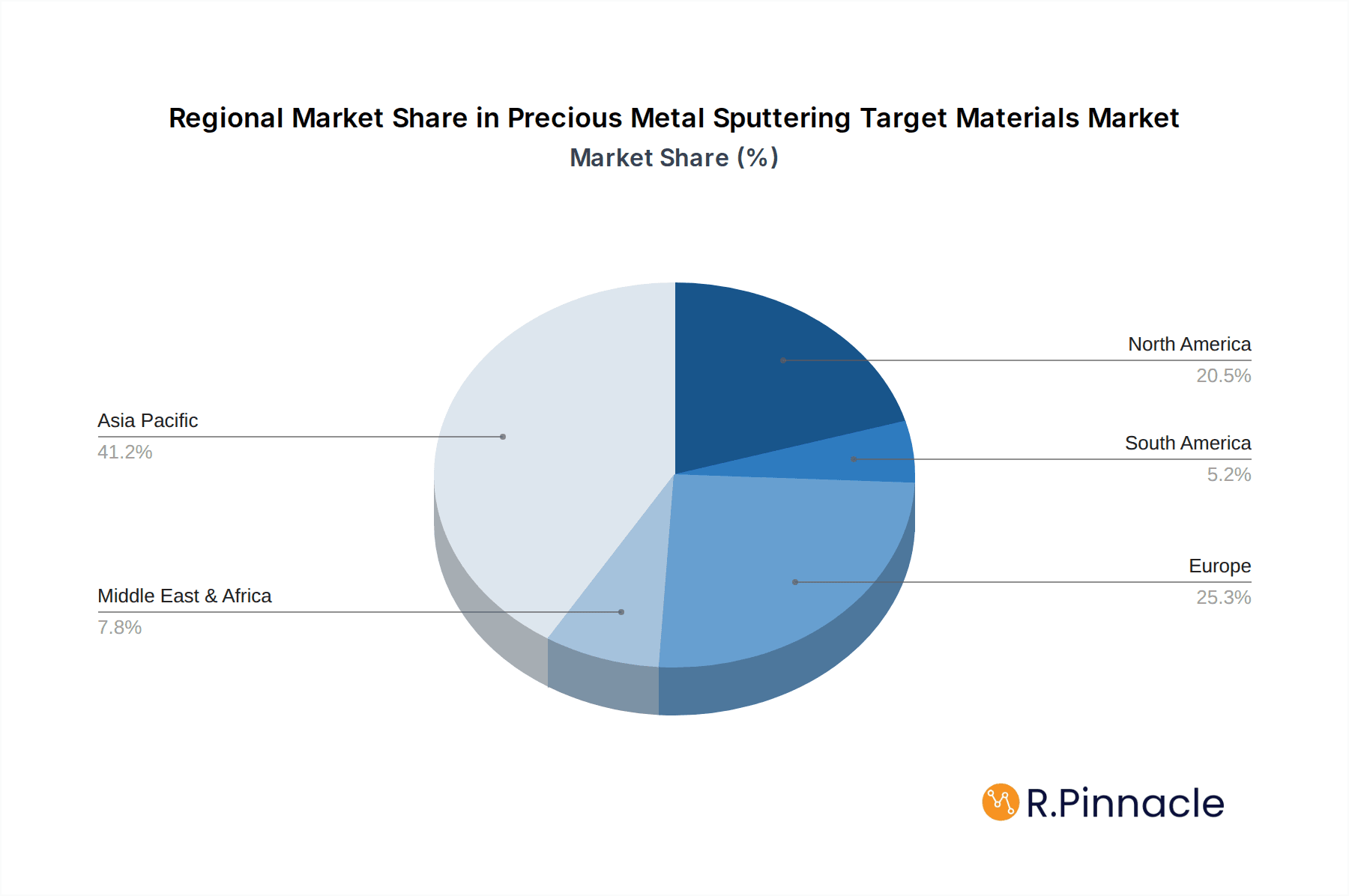
Precious Metal Sputtering Target Materials Regional Market Share
Geographic Coverage of Precious Metal Sputtering Target Materials
Precious Metal Sputtering Target Materials REPORT HIGHLIGHTS
| Aspects | Details |
|---|---|
| Study Period | 2020-2034 |
| Base Year | 2025 |
| Estimated Year | 2026 |
| Forecast Period | 2026-2034 |
| Historical Period | 2020-2025 |
| Growth Rate | CAGR of 8% from 2020-2034 |
| Segmentation |
|
Table of Contents
- 1. Introduction
- 1.1. Research Scope
- 1.2. Market Segmentation
- 1.3. Research Methodology
- 1.4. Definitions and Assumptions
- 2. Executive Summary
- 2.1. Introduction
- 3. Market Dynamics
- 3.1. Introduction
- 3.2. Market Drivers
- 3.3. Market Restrains
- 3.4. Market Trends
- 4. Market Factor Analysis
- 4.1. Porters Five Forces
- 4.2. Supply/Value Chain
- 4.3. PESTEL analysis
- 4.4. Market Entropy
- 4.5. Patent/Trademark Analysis
- 5. Global Precious Metal Sputtering Target Materials Analysis, Insights and Forecast, 2020-2032
- 5.1. Market Analysis, Insights and Forecast - by Application
- 5.1.1. Semiconductor
- 5.1.2. Solar Energy
- 5.1.3. LCD Flat Panel Display
- 5.1.4. Others Flat Panel Display
- 5.2. Market Analysis, Insights and Forecast - by Types
- 5.2.1. Gold Target Materials
- 5.2.2. Sliver Target Materials
- 5.2.3. Platinum Target Materials
- 5.2.4. Others
- 5.3. Market Analysis, Insights and Forecast - by Region
- 5.3.1. North America
- 5.3.2. South America
- 5.3.3. Europe
- 5.3.4. Middle East & Africa
- 5.3.5. Asia Pacific
- 5.1. Market Analysis, Insights and Forecast - by Application
- 6. North America Precious Metal Sputtering Target Materials Analysis, Insights and Forecast, 2020-2032
- 6.1. Market Analysis, Insights and Forecast - by Application
- 6.1.1. Semiconductor
- 6.1.2. Solar Energy
- 6.1.3. LCD Flat Panel Display
- 6.1.4. Others Flat Panel Display
- 6.2. Market Analysis, Insights and Forecast - by Types
- 6.2.1. Gold Target Materials
- 6.2.2. Sliver Target Materials
- 6.2.3. Platinum Target Materials
- 6.2.4. Others
- 6.1. Market Analysis, Insights and Forecast - by Application
- 7. South America Precious Metal Sputtering Target Materials Analysis, Insights and Forecast, 2020-2032
- 7.1. Market Analysis, Insights and Forecast - by Application
- 7.1.1. Semiconductor
- 7.1.2. Solar Energy
- 7.1.3. LCD Flat Panel Display
- 7.1.4. Others Flat Panel Display
- 7.2. Market Analysis, Insights and Forecast - by Types
- 7.2.1. Gold Target Materials
- 7.2.2. Sliver Target Materials
- 7.2.3. Platinum Target Materials
- 7.2.4. Others
- 7.1. Market Analysis, Insights and Forecast - by Application
- 8. Europe Precious Metal Sputtering Target Materials Analysis, Insights and Forecast, 2020-2032
- 8.1. Market Analysis, Insights and Forecast - by Application
- 8.1.1. Semiconductor
- 8.1.2. Solar Energy
- 8.1.3. LCD Flat Panel Display
- 8.1.4. Others Flat Panel Display
- 8.2. Market Analysis, Insights and Forecast - by Types
- 8.2.1. Gold Target Materials
- 8.2.2. Sliver Target Materials
- 8.2.3. Platinum Target Materials
- 8.2.4. Others
- 8.1. Market Analysis, Insights and Forecast - by Application
- 9. Middle East & Africa Precious Metal Sputtering Target Materials Analysis, Insights and Forecast, 2020-2032
- 9.1. Market Analysis, Insights and Forecast - by Application
- 9.1.1. Semiconductor
- 9.1.2. Solar Energy
- 9.1.3. LCD Flat Panel Display
- 9.1.4. Others Flat Panel Display
- 9.2. Market Analysis, Insights and Forecast - by Types
- 9.2.1. Gold Target Materials
- 9.2.2. Sliver Target Materials
- 9.2.3. Platinum Target Materials
- 9.2.4. Others
- 9.1. Market Analysis, Insights and Forecast - by Application
- 10. Asia Pacific Precious Metal Sputtering Target Materials Analysis, Insights and Forecast, 2020-2032
- 10.1. Market Analysis, Insights and Forecast - by Application
- 10.1.1. Semiconductor
- 10.1.2. Solar Energy
- 10.1.3. LCD Flat Panel Display
- 10.1.4. Others Flat Panel Display
- 10.2. Market Analysis, Insights and Forecast - by Types
- 10.2.1. Gold Target Materials
- 10.2.2. Sliver Target Materials
- 10.2.3. Platinum Target Materials
- 10.2.4. Others
- 10.1. Market Analysis, Insights and Forecast - by Application
- 11. Competitive Analysis
- 11.1. Global Market Share Analysis 2025
- 11.2. Company Profiles
- 11.2.1 JX Nippon Mining & Metals Corporation
- 11.2.1.1. Overview
- 11.2.1.2. Products
- 11.2.1.3. SWOT Analysis
- 11.2.1.4. Recent Developments
- 11.2.1.5. Financials (Based on Availability)
- 11.2.2 Praxair
- 11.2.2.1. Overview
- 11.2.2.2. Products
- 11.2.2.3. SWOT Analysis
- 11.2.2.4. Recent Developments
- 11.2.2.5. Financials (Based on Availability)
- 11.2.3 Plansee SE
- 11.2.3.1. Overview
- 11.2.3.2. Products
- 11.2.3.3. SWOT Analysis
- 11.2.3.4. Recent Developments
- 11.2.3.5. Financials (Based on Availability)
- 11.2.4 Mitsui Mining & Smelting
- 11.2.4.1. Overview
- 11.2.4.2. Products
- 11.2.4.3. SWOT Analysis
- 11.2.4.4. Recent Developments
- 11.2.4.5. Financials (Based on Availability)
- 11.2.5 Hitachi Metals
- 11.2.5.1. Overview
- 11.2.5.2. Products
- 11.2.5.3. SWOT Analysis
- 11.2.5.4. Recent Developments
- 11.2.5.5. Financials (Based on Availability)
- 11.2.6 Honeywell
- 11.2.6.1. Overview
- 11.2.6.2. Products
- 11.2.6.3. SWOT Analysis
- 11.2.6.4. Recent Developments
- 11.2.6.5. Financials (Based on Availability)
- 11.2.7 Sumitomo Chemical
- 11.2.7.1. Overview
- 11.2.7.2. Products
- 11.2.7.3. SWOT Analysis
- 11.2.7.4. Recent Developments
- 11.2.7.5. Financials (Based on Availability)
- 11.2.8 ULVAC
- 11.2.8.1. Overview
- 11.2.8.2. Products
- 11.2.8.3. SWOT Analysis
- 11.2.8.4. Recent Developments
- 11.2.8.5. Financials (Based on Availability)
- 11.2.9 Materion (Heraeus)
- 11.2.9.1. Overview
- 11.2.9.2. Products
- 11.2.9.3. SWOT Analysis
- 11.2.9.4. Recent Developments
- 11.2.9.5. Financials (Based on Availability)
- 11.2.10 GRIKIN Advanced Material Co.
- 11.2.10.1. Overview
- 11.2.10.2. Products
- 11.2.10.3. SWOT Analysis
- 11.2.10.4. Recent Developments
- 11.2.10.5. Financials (Based on Availability)
- 11.2.11 Ltd.
- 11.2.11.1. Overview
- 11.2.11.2. Products
- 11.2.11.3. SWOT Analysis
- 11.2.11.4. Recent Developments
- 11.2.11.5. Financials (Based on Availability)
- 11.2.12 TOSOH
- 11.2.12.1. Overview
- 11.2.12.2. Products
- 11.2.12.3. SWOT Analysis
- 11.2.12.4. Recent Developments
- 11.2.12.5. Financials (Based on Availability)
- 11.2.13 Ningbo Jiangfeng
- 11.2.13.1. Overview
- 11.2.13.2. Products
- 11.2.13.3. SWOT Analysis
- 11.2.13.4. Recent Developments
- 11.2.13.5. Financials (Based on Availability)
- 11.2.14 Heesung
- 11.2.14.1. Overview
- 11.2.14.2. Products
- 11.2.14.3. SWOT Analysis
- 11.2.14.4. Recent Developments
- 11.2.14.5. Financials (Based on Availability)
- 11.2.15 Luvata
- 11.2.15.1. Overview
- 11.2.15.2. Products
- 11.2.15.3. SWOT Analysis
- 11.2.15.4. Recent Developments
- 11.2.15.5. Financials (Based on Availability)
- 11.2.16 Fujian Acetron New Materials Co.
- 11.2.16.1. Overview
- 11.2.16.2. Products
- 11.2.16.3. SWOT Analysis
- 11.2.16.4. Recent Developments
- 11.2.16.5. Financials (Based on Availability)
- 11.2.17 Ltd
- 11.2.17.1. Overview
- 11.2.17.2. Products
- 11.2.17.3. SWOT Analysis
- 11.2.17.4. Recent Developments
- 11.2.17.5. Financials (Based on Availability)
- 11.2.18 Changzhou Sujing Electronic Material
- 11.2.18.1. Overview
- 11.2.18.2. Products
- 11.2.18.3. SWOT Analysis
- 11.2.18.4. Recent Developments
- 11.2.18.5. Financials (Based on Availability)
- 11.2.19 Luoyang Sifon Electronic Materials
- 11.2.19.1. Overview
- 11.2.19.2. Products
- 11.2.19.3. SWOT Analysis
- 11.2.19.4. Recent Developments
- 11.2.19.5. Financials (Based on Availability)
- 11.2.20 FURAYA Metals Co.
- 11.2.20.1. Overview
- 11.2.20.2. Products
- 11.2.20.3. SWOT Analysis
- 11.2.20.4. Recent Developments
- 11.2.20.5. Financials (Based on Availability)
- 11.2.21 Ltd
- 11.2.21.1. Overview
- 11.2.21.2. Products
- 11.2.21.3. SWOT Analysis
- 11.2.21.4. Recent Developments
- 11.2.21.5. Financials (Based on Availability)
- 11.2.22 Advantec
- 11.2.22.1. Overview
- 11.2.22.2. Products
- 11.2.22.3. SWOT Analysis
- 11.2.22.4. Recent Developments
- 11.2.22.5. Financials (Based on Availability)
- 11.2.23 Angstrom Sciences
- 11.2.23.1. Overview
- 11.2.23.2. Products
- 11.2.23.3. SWOT Analysis
- 11.2.23.4. Recent Developments
- 11.2.23.5. Financials (Based on Availability)
- 11.2.24 Umicore Thin Film Products
- 11.2.24.1. Overview
- 11.2.24.2. Products
- 11.2.24.3. SWOT Analysis
- 11.2.24.4. Recent Developments
- 11.2.24.5. Financials (Based on Availability)
- 11.2.1 JX Nippon Mining & Metals Corporation
List of Figures
- Figure 1: Global Precious Metal Sputtering Target Materials Revenue Breakdown (undefined, %) by Region 2025 & 2033
- Figure 2: North America Precious Metal Sputtering Target Materials Revenue (undefined), by Application 2025 & 2033
- Figure 3: North America Precious Metal Sputtering Target Materials Revenue Share (%), by Application 2025 & 2033
- Figure 4: North America Precious Metal Sputtering Target Materials Revenue (undefined), by Types 2025 & 2033
- Figure 5: North America Precious Metal Sputtering Target Materials Revenue Share (%), by Types 2025 & 2033
- Figure 6: North America Precious Metal Sputtering Target Materials Revenue (undefined), by Country 2025 & 2033
- Figure 7: North America Precious Metal Sputtering Target Materials Revenue Share (%), by Country 2025 & 2033
- Figure 8: South America Precious Metal Sputtering Target Materials Revenue (undefined), by Application 2025 & 2033
- Figure 9: South America Precious Metal Sputtering Target Materials Revenue Share (%), by Application 2025 & 2033
- Figure 10: South America Precious Metal Sputtering Target Materials Revenue (undefined), by Types 2025 & 2033
- Figure 11: South America Precious Metal Sputtering Target Materials Revenue Share (%), by Types 2025 & 2033
- Figure 12: South America Precious Metal Sputtering Target Materials Revenue (undefined), by Country 2025 & 2033
- Figure 13: South America Precious Metal Sputtering Target Materials Revenue Share (%), by Country 2025 & 2033
- Figure 14: Europe Precious Metal Sputtering Target Materials Revenue (undefined), by Application 2025 & 2033
- Figure 15: Europe Precious Metal Sputtering Target Materials Revenue Share (%), by Application 2025 & 2033
- Figure 16: Europe Precious Metal Sputtering Target Materials Revenue (undefined), by Types 2025 & 2033
- Figure 17: Europe Precious Metal Sputtering Target Materials Revenue Share (%), by Types 2025 & 2033
- Figure 18: Europe Precious Metal Sputtering Target Materials Revenue (undefined), by Country 2025 & 2033
- Figure 19: Europe Precious Metal Sputtering Target Materials Revenue Share (%), by Country 2025 & 2033
- Figure 20: Middle East & Africa Precious Metal Sputtering Target Materials Revenue (undefined), by Application 2025 & 2033
- Figure 21: Middle East & Africa Precious Metal Sputtering Target Materials Revenue Share (%), by Application 2025 & 2033
- Figure 22: Middle East & Africa Precious Metal Sputtering Target Materials Revenue (undefined), by Types 2025 & 2033
- Figure 23: Middle East & Africa Precious Metal Sputtering Target Materials Revenue Share (%), by Types 2025 & 2033
- Figure 24: Middle East & Africa Precious Metal Sputtering Target Materials Revenue (undefined), by Country 2025 & 2033
- Figure 25: Middle East & Africa Precious Metal Sputtering Target Materials Revenue Share (%), by Country 2025 & 2033
- Figure 26: Asia Pacific Precious Metal Sputtering Target Materials Revenue (undefined), by Application 2025 & 2033
- Figure 27: Asia Pacific Precious Metal Sputtering Target Materials Revenue Share (%), by Application 2025 & 2033
- Figure 28: Asia Pacific Precious Metal Sputtering Target Materials Revenue (undefined), by Types 2025 & 2033
- Figure 29: Asia Pacific Precious Metal Sputtering Target Materials Revenue Share (%), by Types 2025 & 2033
- Figure 30: Asia Pacific Precious Metal Sputtering Target Materials Revenue (undefined), by Country 2025 & 2033
- Figure 31: Asia Pacific Precious Metal Sputtering Target Materials Revenue Share (%), by Country 2025 & 2033
List of Tables
- Table 1: Global Precious Metal Sputtering Target Materials Revenue undefined Forecast, by Application 2020 & 2033
- Table 2: Global Precious Metal Sputtering Target Materials Revenue undefined Forecast, by Types 2020 & 2033
- Table 3: Global Precious Metal Sputtering Target Materials Revenue undefined Forecast, by Region 2020 & 2033
- Table 4: Global Precious Metal Sputtering Target Materials Revenue undefined Forecast, by Application 2020 & 2033
- Table 5: Global Precious Metal Sputtering Target Materials Revenue undefined Forecast, by Types 2020 & 2033
- Table 6: Global Precious Metal Sputtering Target Materials Revenue undefined Forecast, by Country 2020 & 2033
- Table 7: United States Precious Metal Sputtering Target Materials Revenue (undefined) Forecast, by Application 2020 & 2033
- Table 8: Canada Precious Metal Sputtering Target Materials Revenue (undefined) Forecast, by Application 2020 & 2033
- Table 9: Mexico Precious Metal Sputtering Target Materials Revenue (undefined) Forecast, by Application 2020 & 2033
- Table 10: Global Precious Metal Sputtering Target Materials Revenue undefined Forecast, by Application 2020 & 2033
- Table 11: Global Precious Metal Sputtering Target Materials Revenue undefined Forecast, by Types 2020 & 2033
- Table 12: Global Precious Metal Sputtering Target Materials Revenue undefined Forecast, by Country 2020 & 2033
- Table 13: Brazil Precious Metal Sputtering Target Materials Revenue (undefined) Forecast, by Application 2020 & 2033
- Table 14: Argentina Precious Metal Sputtering Target Materials Revenue (undefined) Forecast, by Application 2020 & 2033
- Table 15: Rest of South America Precious Metal Sputtering Target Materials Revenue (undefined) Forecast, by Application 2020 & 2033
- Table 16: Global Precious Metal Sputtering Target Materials Revenue undefined Forecast, by Application 2020 & 2033
- Table 17: Global Precious Metal Sputtering Target Materials Revenue undefined Forecast, by Types 2020 & 2033
- Table 18: Global Precious Metal Sputtering Target Materials Revenue undefined Forecast, by Country 2020 & 2033
- Table 19: United Kingdom Precious Metal Sputtering Target Materials Revenue (undefined) Forecast, by Application 2020 & 2033
- Table 20: Germany Precious Metal Sputtering Target Materials Revenue (undefined) Forecast, by Application 2020 & 2033
- Table 21: France Precious Metal Sputtering Target Materials Revenue (undefined) Forecast, by Application 2020 & 2033
- Table 22: Italy Precious Metal Sputtering Target Materials Revenue (undefined) Forecast, by Application 2020 & 2033
- Table 23: Spain Precious Metal Sputtering Target Materials Revenue (undefined) Forecast, by Application 2020 & 2033
- Table 24: Russia Precious Metal Sputtering Target Materials Revenue (undefined) Forecast, by Application 2020 & 2033
- Table 25: Benelux Precious Metal Sputtering Target Materials Revenue (undefined) Forecast, by Application 2020 & 2033
- Table 26: Nordics Precious Metal Sputtering Target Materials Revenue (undefined) Forecast, by Application 2020 & 2033
- Table 27: Rest of Europe Precious Metal Sputtering Target Materials Revenue (undefined) Forecast, by Application 2020 & 2033
- Table 28: Global Precious Metal Sputtering Target Materials Revenue undefined Forecast, by Application 2020 & 2033
- Table 29: Global Precious Metal Sputtering Target Materials Revenue undefined Forecast, by Types 2020 & 2033
- Table 30: Global Precious Metal Sputtering Target Materials Revenue undefined Forecast, by Country 2020 & 2033
- Table 31: Turkey Precious Metal Sputtering Target Materials Revenue (undefined) Forecast, by Application 2020 & 2033
- Table 32: Israel Precious Metal Sputtering Target Materials Revenue (undefined) Forecast, by Application 2020 & 2033
- Table 33: GCC Precious Metal Sputtering Target Materials Revenue (undefined) Forecast, by Application 2020 & 2033
- Table 34: North Africa Precious Metal Sputtering Target Materials Revenue (undefined) Forecast, by Application 2020 & 2033
- Table 35: South Africa Precious Metal Sputtering Target Materials Revenue (undefined) Forecast, by Application 2020 & 2033
- Table 36: Rest of Middle East & Africa Precious Metal Sputtering Target Materials Revenue (undefined) Forecast, by Application 2020 & 2033
- Table 37: Global Precious Metal Sputtering Target Materials Revenue undefined Forecast, by Application 2020 & 2033
- Table 38: Global Precious Metal Sputtering Target Materials Revenue undefined Forecast, by Types 2020 & 2033
- Table 39: Global Precious Metal Sputtering Target Materials Revenue undefined Forecast, by Country 2020 & 2033
- Table 40: China Precious Metal Sputtering Target Materials Revenue (undefined) Forecast, by Application 2020 & 2033
- Table 41: India Precious Metal Sputtering Target Materials Revenue (undefined) Forecast, by Application 2020 & 2033
- Table 42: Japan Precious Metal Sputtering Target Materials Revenue (undefined) Forecast, by Application 2020 & 2033
- Table 43: South Korea Precious Metal Sputtering Target Materials Revenue (undefined) Forecast, by Application 2020 & 2033
- Table 44: ASEAN Precious Metal Sputtering Target Materials Revenue (undefined) Forecast, by Application 2020 & 2033
- Table 45: Oceania Precious Metal Sputtering Target Materials Revenue (undefined) Forecast, by Application 2020 & 2033
- Table 46: Rest of Asia Pacific Precious Metal Sputtering Target Materials Revenue (undefined) Forecast, by Application 2020 & 2033
Frequently Asked Questions
1. What is the projected Compound Annual Growth Rate (CAGR) of the Precious Metal Sputtering Target Materials?
The projected CAGR is approximately 8%.
2. Which companies are prominent players in the Precious Metal Sputtering Target Materials?
Key companies in the market include JX Nippon Mining & Metals Corporation, Praxair, Plansee SE, Mitsui Mining & Smelting, Hitachi Metals, Honeywell, Sumitomo Chemical, ULVAC, Materion (Heraeus), GRIKIN Advanced Material Co., Ltd., TOSOH, Ningbo Jiangfeng, Heesung, Luvata, Fujian Acetron New Materials Co., Ltd, Changzhou Sujing Electronic Material, Luoyang Sifon Electronic Materials, FURAYA Metals Co., Ltd, Advantec, Angstrom Sciences, Umicore Thin Film Products.
3. What are the main segments of the Precious Metal Sputtering Target Materials?
The market segments include Application, Types.
4. Can you provide details about the market size?
The market size is estimated to be USD XXX N/A as of 2022.
5. What are some drivers contributing to market growth?
N/A
6. What are the notable trends driving market growth?
N/A
7. Are there any restraints impacting market growth?
N/A
8. Can you provide examples of recent developments in the market?
N/A
9. What pricing options are available for accessing the report?
Pricing options include single-user, multi-user, and enterprise licenses priced at USD 4900.00, USD 7350.00, and USD 9800.00 respectively.
10. Is the market size provided in terms of value or volume?
The market size is provided in terms of value, measured in N/A.
11. Are there any specific market keywords associated with the report?
Yes, the market keyword associated with the report is "Precious Metal Sputtering Target Materials," which aids in identifying and referencing the specific market segment covered.
12. How do I determine which pricing option suits my needs best?
The pricing options vary based on user requirements and access needs. Individual users may opt for single-user licenses, while businesses requiring broader access may choose multi-user or enterprise licenses for cost-effective access to the report.
13. Are there any additional resources or data provided in the Precious Metal Sputtering Target Materials report?
While the report offers comprehensive insights, it's advisable to review the specific contents or supplementary materials provided to ascertain if additional resources or data are available.
14. How can I stay updated on further developments or reports in the Precious Metal Sputtering Target Materials?
To stay informed about further developments, trends, and reports in the Precious Metal Sputtering Target Materials, consider subscribing to industry newsletters, following relevant companies and organizations, or regularly checking reputable industry news sources and publications.
Methodology
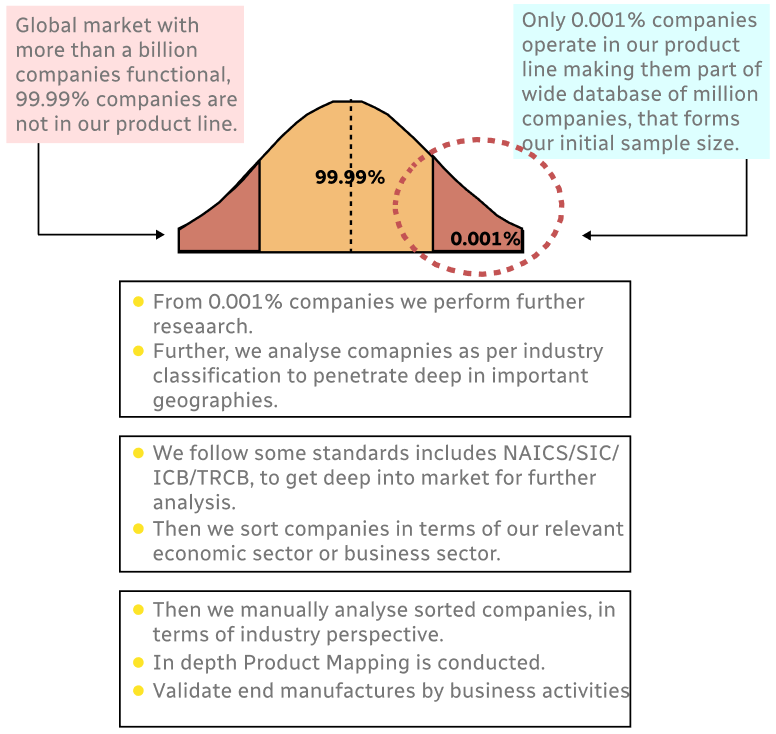
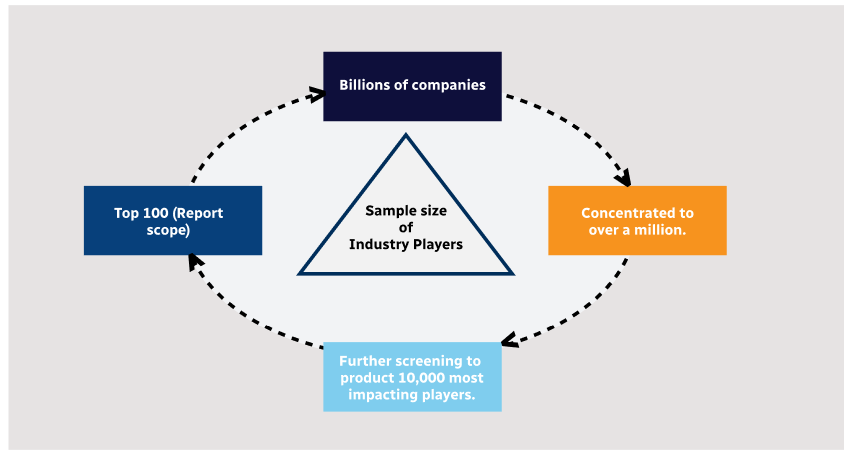
Step 1 - Identification of Relevant Samples Size from Population Database
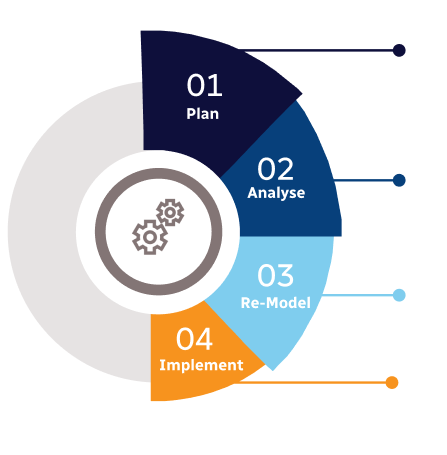
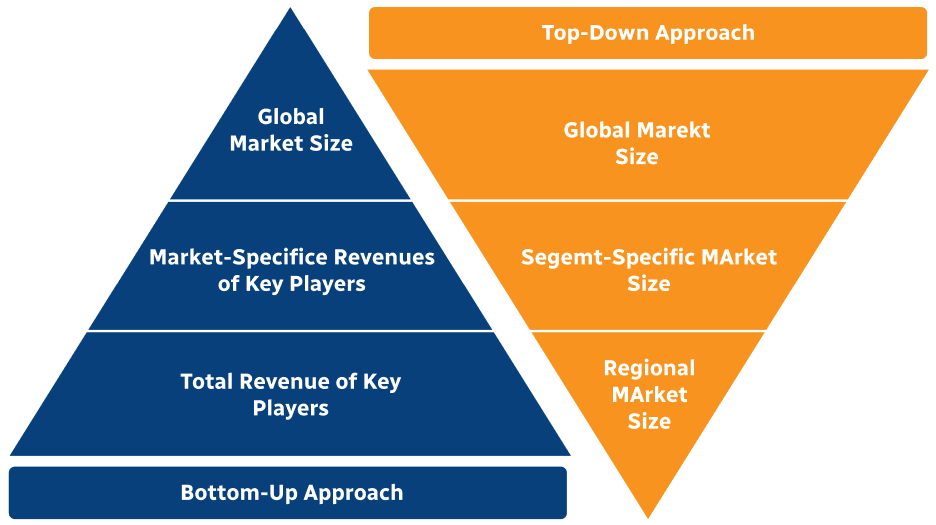
Step 2 - Approaches for Defining Global Market Size (Value, Volume* & Price*)
Note*: In applicable scenarios
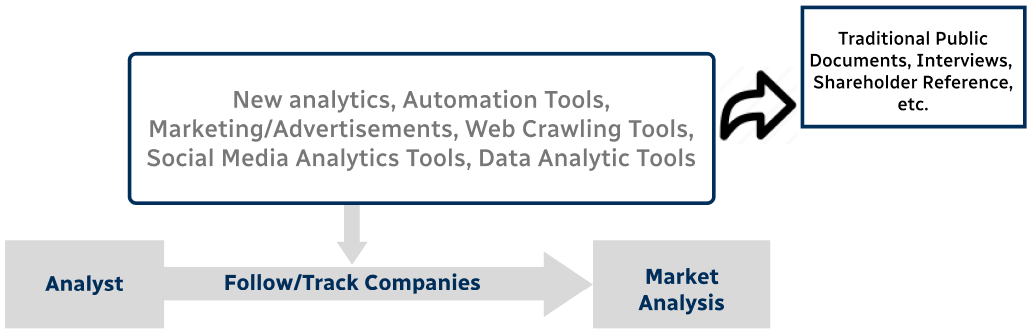
Step 3 - Data Sources
Primary Research
- Web Analytics
- Survey Reports
- Research Institute
- Latest Research Reports
- Opinion Leaders
Secondary Research
- Annual Reports
- White Paper
- Latest Press Release
- Industry Association
- Paid Database
- Investor Presentations
Step 4 - Data Triangulation
Involves using different sources of information in order to increase the validity of a study
These sources are likely to be stakeholders in a program - participants, other researchers, program staff, other community members, and so on.
Then we put all data in single framework & apply various statistical tools to find out the dynamic on the market.
During the analysis stage, feedback from the stakeholder groups would be compared to determine areas of agreement as well as areas of divergence