


Key Insights
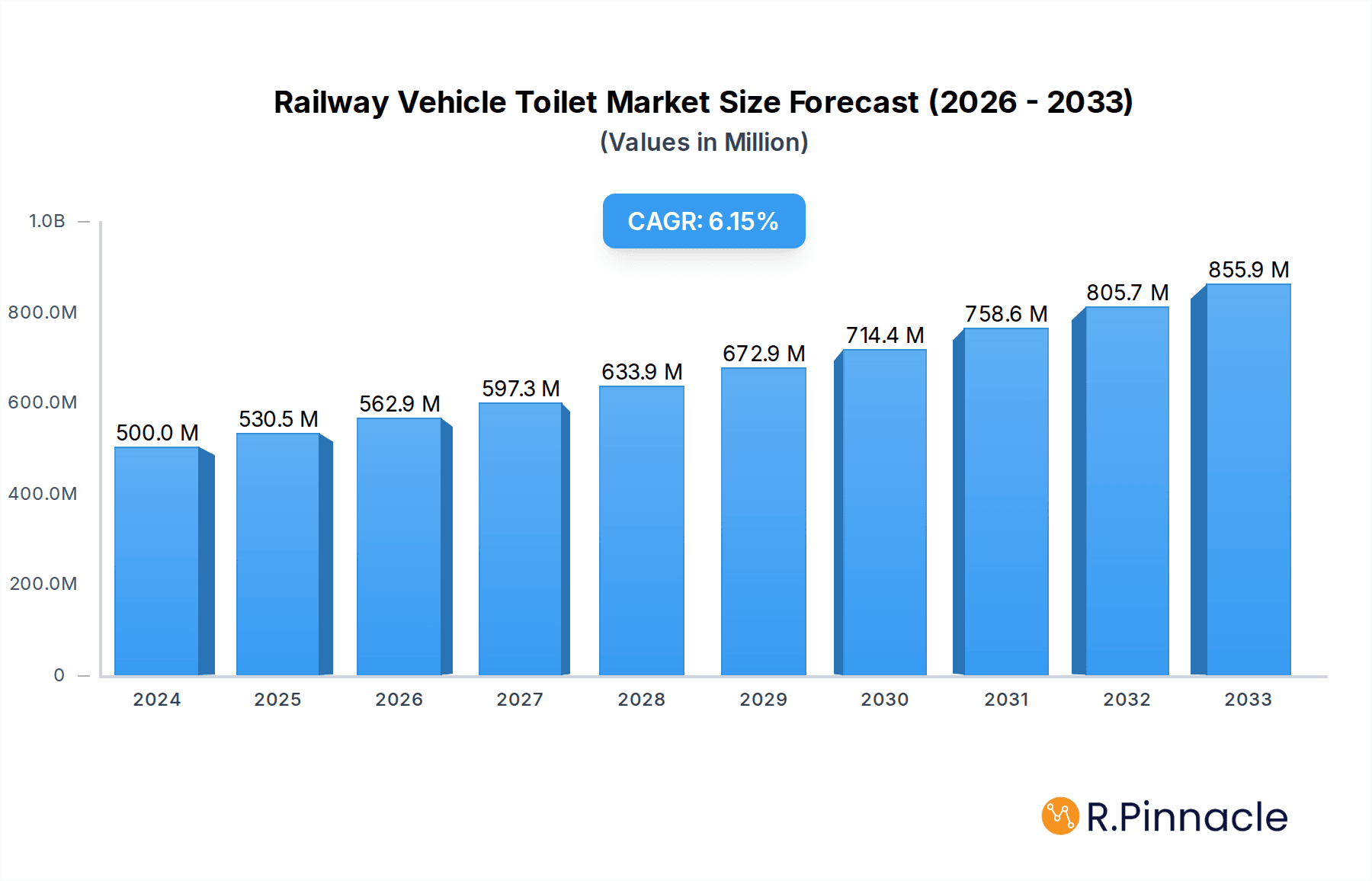
The global Railway Vehicle Toilet market is poised for robust growth, driven by increasing investments in railway infrastructure modernization and the burgeoning demand for passenger comfort and hygiene. With an estimated market size of USD 500 million in 2024, the sector is projected to expand at a Compound Annual Growth Rate (CAGR) of 6.1% through 2033. This expansion is fueled by the necessity of upgrading existing rolling stock to meet contemporary standards and the construction of new, high-speed rail networks worldwide. Key market drivers include stricter environmental regulations demanding water-efficient and advanced waste management systems, alongside the growing emphasis on passenger experience, especially in long-distance and intercity travel. The rise of specialized applications, such as vacuum toilet systems for enhanced efficiency and pressurized water flushing systems for improved sanitation, further propels market dynamism. Prominent players like WABTEC, Huatie Tongda, and EVAC are at the forefront, innovating and expanding their product portfolios to cater to evolving industry needs.
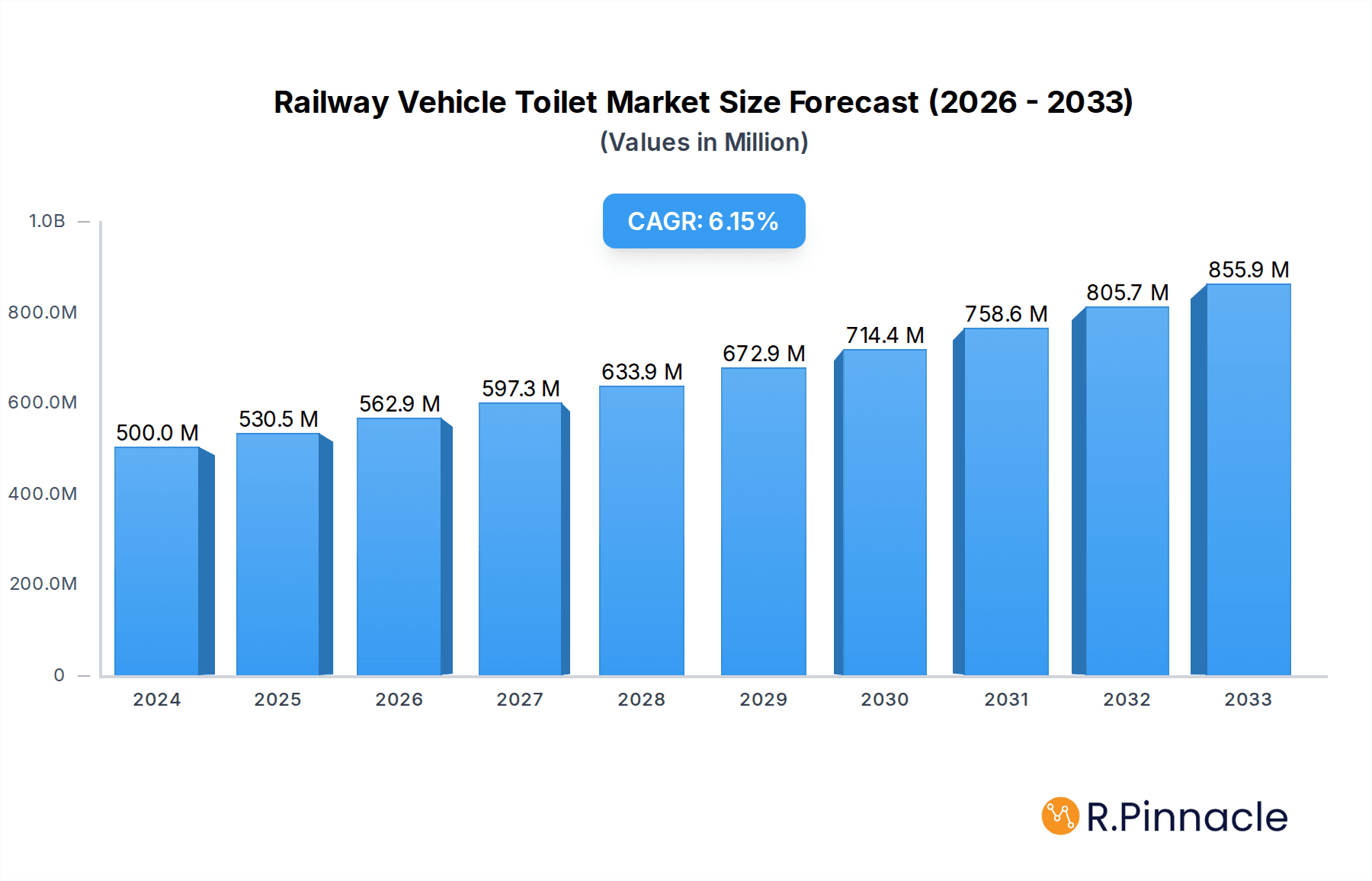
Railway Vehicle Toilet Market Size (In Million)

The market segmentation reveals a strong presence in both passenger and freight car applications, with a particular focus on developing sophisticated toilet systems. The Asia Pacific region, led by China and India, is expected to be a significant growth engine due to rapid railway network expansion and increasing disposable incomes, driving demand for better passenger amenities. Conversely, mature markets in North America and Europe are characterized by retrofitting and replacement cycles, emphasizing technological advancements and sustainable solutions. Restraints such as the high initial cost of advanced systems and the maintenance complexity can pose challenges, but ongoing technological innovation and the long-term benefits of efficiency and passenger satisfaction are expected to outweigh these concerns. The market's trajectory indicates a future where comfortable and hygienic rail travel becomes a standard, directly influencing the design and functionality of onboard toilet systems across the globe.
Railway Vehicle Toilet Company Market Share
Railway Vehicle Toilet Market Analysis: Global Forecast & Industry Insights (2019–2033)
Gain unparalleled insights into the global Railway Vehicle Toilet market with this comprehensive report. Spanning from 2019 to 2033, this in-depth analysis provides historical context, current market snapshots, and precise future projections. Explore intricate market structures, groundbreaking innovation trends, and critical market dynamics shaping the future of railway sanitation. This report is an essential resource for manufacturers, suppliers, investors, and industry stakeholders seeking to navigate the evolving landscape of railway vehicle toilet solutions, from passenger comfort to freight efficiency.
Railway Vehicle Toilet Market Structure & Innovation Trends
The global railway vehicle toilet market, valued at over $2,000 million in 2025, exhibits a moderate to high concentration, driven by a handful of leading global manufacturers. Innovation is a key differentiator, with companies investing significantly in the development of advanced, eco-friendly, and low-maintenance toilet systems. Regulatory frameworks, particularly concerning environmental impact and passenger safety standards, are increasingly influencing product development and adoption. For instance, stringent wastewater discharge regulations in major economies are pushing for more efficient and contained solutions. Product substitutes, such as on-board chemical toilets or specialized waste management systems for specific train types, represent a minor threat but are generally less efficient and less integrated. End-user demographics are diverse, ranging from long-distance passenger services demanding premium amenities to commuter trains prioritizing reliability and cost-effectiveness. Mergers and acquisitions (M&A) activity, while not consistently high, plays a role in market consolidation and technology acquisition, with deal values ranging from $50 million to $200 million, strategically aimed at enhancing market share and expanding product portfolios. Key players like WABTEC and EVAC are actively involved in R&D to meet evolving industry demands.
- Market Concentration: Moderate to High, with key players holding significant market shares.
- Innovation Drivers: Environmental regulations, passenger comfort, operational efficiency, and technological advancements.
- Regulatory Frameworks: Growing emphasis on sustainability, hygiene, and safety standards.
- Product Substitutes: Limited but present, particularly in specialized freight applications.
- End-User Demographics: Diverse, from luxury passenger services to utilitarian freight transport.
- M&A Activities: Strategic acquisitions aimed at technology integration and market expansion.
Railway Vehicle Toilet Market Dynamics & Trends
The global railway vehicle toilet market is poised for substantial growth, driven by a confluence of factors aimed at enhancing passenger experience and operational sustainability. The projected Compound Annual Growth Rate (CAGR) of approximately 5.5% between 2025 and 2033 underscores this optimistic outlook. A primary growth driver is the increasing global investment in railway infrastructure and the expansion of high-speed rail networks, particularly in emerging economies. This expansion directly translates into a higher demand for modern and efficient toilet systems across a vast fleet of passenger cars. Technological disruptions are playing a pivotal role, with advancements in vacuum toilet systems and pressurized water flushing systems offering superior water efficiency, reduced waste volume, and enhanced hygiene compared to traditional flushing mechanisms. The adoption of smart technologies, such as sensor-based monitoring for maintenance and automatic flushing, is also gaining traction, leading to improved operational efficiency and reduced downtime for railway operators.
Consumer preferences are shifting towards greater comfort and hygiene on long journeys, pushing operators to upgrade their onboard facilities. This includes a demand for quieter, more odor-free, and aesthetically pleasing toilet compartments. Furthermore, the growing global focus on environmental sustainability is a significant trend. Manufacturers are responding by developing toilets that minimize water consumption and optimize waste management, aligning with broader environmental goals and corporate social responsibility initiatives. The competitive dynamics within the market are characterized by a blend of established global players and emerging regional manufacturers. Companies are differentiating themselves through product innovation, cost-competitiveness, and the ability to cater to diverse regional regulations and operational requirements. Market penetration is expected to deepen significantly, especially in developing regions where railway travel is a primary mode of transportation and is undergoing modernization.
The market penetration of advanced vacuum toilet systems is forecast to exceed 70% in new passenger car installations by 2033, driven by their water-saving capabilities and superior waste management. Furthermore, the demand for compact and lightweight designs is escalating, particularly for urban and metro rail applications where space is at a premium. The integration of antimicrobial surfaces and advanced odor control technologies is becoming a standard expectation in premium passenger segments. The continuous evolution of regulatory standards, pushing for zero-emission or low-emission operations, also indirectly influences the design and materials used in railway toilets, favoring durable and eco-friendly components. The overall market is moving towards a more integrated and intelligent approach to onboard sanitation, where performance, passenger satisfaction, and environmental responsibility are paramount.
Dominant Regions & Segments in Railway Vehicle Toilet
The global railway vehicle toilet market is demonstrably dominated by the Asia-Pacific region, driven by substantial investments in railway modernization and expansion across countries like China and India. This region's dominance is underpinned by robust economic policies supporting infrastructure development and a rapidly growing population that relies heavily on rail transport for both passenger and freight movement. The sheer volume of new rolling stock being manufactured and deployed in Asia-Pacific significantly boosts the demand for railway vehicle toilets. The market size in this region is estimated to exceed $1,500 million by 2025.
Within the Asia-Pacific, China stands out as a leading country due to its extensive high-speed rail network and ongoing development of intercity and freight lines. Government initiatives promoting sustainable transportation and passenger comfort further amplify the demand for advanced toilet systems. The region’s dominance is further propelled by the presence of major manufacturers like Huatie Tongda and Qingdao Victall Railway, contributing to both domestic supply and export capabilities.
In terms of application segments, Passenger Cars represent the largest and most dynamic segment, accounting for over 75% of the market value in 2025. The increasing emphasis on passenger experience, particularly for long-distance and high-speed rail, necessitates the installation of advanced, comfortable, and hygienic toilet facilities. The growth in this segment is directly correlated with the expansion of passenger rail services globally.
The Vacuum Toilet System segment is experiencing the most rapid growth and is projected to dominate the market by 2033, driven by its superior water efficiency, reduced waste volume, and enhanced sanitation capabilities. This technology aligns perfectly with growing environmental concerns and operational cost-saving objectives of railway operators. The market for vacuum toilet systems is expected to reach over $1,800 million by 2025.
- Leading Region: Asia-Pacific
- Key Drivers in Asia-Pacific: Massive railway infrastructure development, government support for public transportation, increasing passenger demand, and a strong manufacturing base.
- Dominant Country: China, with extensive high-speed rail and a large manufacturing sector.
- Dominant Application Segment: Passenger Cars
- Key Drivers in Passenger Cars: Enhanced passenger comfort and experience, long-distance travel demands, and the growth of high-speed rail networks.
- Dominant Type Segment: Vacuum Toilet System
- Key Drivers for Vacuum Toilet Systems: Superior water and energy efficiency, reduced waste disposal challenges, improved hygiene standards, and alignment with environmental regulations.
- Secondary Segments: Freight Cars, Pressured Water Flushing Toilet System
- Freight Cars: Growing demand for basic sanitation solutions in crew compartments of long-haul freight trains.
- Pressured Water Flushing Toilet System: Continues to hold a significant share in existing fleets and certain regional markets due to cost-effectiveness and established infrastructure.
The Pressured Water Flushing Toilet System remains a substantial segment, particularly in regions with established infrastructure and a focus on cost-effectiveness. However, its market share is gradually being eroded by the growing adoption of vacuum systems due to their long-term operational and environmental benefits. The market for this system is estimated at $500 million in 2025.
Railway Vehicle Toilet Product Innovations
Product innovation in the railway vehicle toilet sector is primarily focused on enhancing water and energy efficiency, improving hygiene, and reducing maintenance requirements. Advanced vacuum toilet systems are at the forefront, utilizing sophisticated vacuum generation and flushing mechanisms to minimize water usage per flush, often to less than 1 liter. Antimicrobial coatings on surfaces, self-cleaning functionalities, and advanced odor control systems are becoming standard features in premium offerings. These innovations not only enhance passenger comfort and experience but also contribute to the overall sustainability goals of railway operators. Competitive advantages are being built on the reliability, durability, and smart integration capabilities of these systems, allowing for remote monitoring and predictive maintenance.
Report Scope & Segmentation Analysis
This report meticulously analyzes the global railway vehicle toilet market across various segments. The Application segmentation includes Passenger Cars, which represents the largest and fastest-growing segment due to increasing passenger travel and demand for comfort, and Freight Cars, catering to crew facilities in long-haul operations. The Types segmentation focuses on Vacuum Toilet System, characterized by its water efficiency and advanced technology, and Pressured Water Flushing Toilet System, a more traditional and cost-effective solution. Growth projections for Passenger Cars are estimated at a CAGR of 6% from 2025-2033, with a market size of over $1,500 million in 2025. The Vacuum Toilet System segment is projected to grow at a CAGR of 7% during the same period, reaching over $1,800 million in 2025. The Freight Car segment is expected to witness a CAGR of 3%, while the Pressured Water Flushing Toilet System segment is projected to grow at 2%.
Key Drivers of Railway Vehicle Toilet Growth
The growth of the railway vehicle toilet market is propelled by several interconnected factors. Firstly, the burgeoning global investment in railway infrastructure, including high-speed rail and commuter networks, directly fuels the demand for new rolling stock equipped with modern sanitation facilities. Secondly, increasingly stringent environmental regulations worldwide are pushing manufacturers to develop and adopt water-efficient and sustainable toilet systems, favoring vacuum technologies. Thirdly, evolving passenger expectations for comfort and hygiene during travel are compelling railway operators to upgrade their onboard amenities, driving the adoption of advanced toilet solutions. Finally, technological advancements, such as improved vacuum pumps, sensor technology for water management, and the integration of antimicrobial materials, are enhancing the performance and attractiveness of these systems.
Challenges in the Railway Vehicle Toilet Sector
Despite the positive growth trajectory, the railway vehicle toilet sector faces several challenges. High initial capital costs associated with advanced vacuum toilet systems can be a barrier for some operators, especially in cost-sensitive markets or for older rolling stock requiring extensive retrofitting. Furthermore, the complexity of installation and maintenance for some high-tech systems can require specialized training for railway maintenance personnel. Supply chain disruptions for critical components, exacerbated by geopolitical factors or global events, can impact production timelines and costs. Finally, the presence of established, lower-cost conventional systems in some markets creates competitive pressure, requiring continuous innovation and demonstration of long-term value by advanced system providers.
Emerging Opportunities in Railway Vehicle Toilet
Significant emerging opportunities lie in the growing demand for smart and connected toilet systems that can provide real-time diagnostics and predictive maintenance alerts, reducing downtime and operational costs for railway operators. The increasing focus on sustainability also presents opportunities for companies offering waterless or ultra-low water consumption solutions. Furthermore, the expansion of railway networks in emerging economies, particularly in Africa and Southeast Asia, opens up new, untapped markets for both basic and advanced toilet systems. The development of compact and modular toilet designs tailored for specific applications, such as urban metro systems or specialized freight trains, also represents a promising avenue for growth.
Leading Players in the Railway Vehicle Toilet Market
- WABTEC
- Huatie Tongda
- EVAC
- Rolen Technologies & Products
- Qingdao Victall Railway
- Goko Seisakusho
- Dowaldwerke
- Zhuzhou CRRC Times Electric
- Glova Rails
- VKV Praha
Key Developments in Railway Vehicle Toilet Industry
- 2023/Q4: WABTEC launches a new generation of highly water-efficient vacuum toilet systems for long-distance passenger trains.
- 2023/Q3: EVAC announces a strategic partnership with a major European railway manufacturer to integrate its advanced sanitation solutions into new high-speed train orders.
- 2023/Q2: Huatie Tongda expands its production capacity to meet the surging demand from China's rapidly growing high-speed rail network.
- 2022/Q4: Rolen Technologies & Products introduces innovative antimicrobial coatings for toilet surfaces, enhancing passenger hygiene.
- 2022/Q3: Qingdao Victall Railway secures a significant contract for supplying toilet systems to a major Asian railway operator.
- 2022/Q1: Goko Seisakusho focuses on developing lighter-weight toilet modules to reduce overall rolling stock weight.
- 2021/Q4: Dowaldwerke invests in R&D for improved odor filtration systems in railway toilets.
Future Outlook for Railway Vehicle Toilet Market
The future outlook for the railway vehicle toilet market is exceptionally strong, driven by sustained global investment in rail transportation and an unwavering commitment to passenger comfort and environmental sustainability. The ongoing expansion of high-speed rail networks and the increasing adoption of eco-friendly technologies will continue to be primary growth accelerators. Innovations in smart technologies, such as IoT integration for system monitoring and maintenance, are expected to become industry standards, enhancing operational efficiency for railway operators. The market is also poised for significant growth in emerging economies as they modernize their rail infrastructure. Strategic partnerships and continued R&D efforts by leading players will be crucial in capitalizing on these opportunities, ensuring a future where railway travel is not only efficient and sustainable but also exceptionally comfortable and hygienic.
Railway Vehicle Toilet Segmentation
-
1. Application
- 1.1. Passenger Cars
- 1.2. Freight Cars
-
2. Types
- 2.1. Vacuum Toilet System
- 2.2. Pressured Water Flushing Toilet System
Railway Vehicle Toilet Segmentation By Geography
-
1. North America
- 1.1. United States
- 1.2. Canada
- 1.3. Mexico
-
2. South America
- 2.1. Brazil
- 2.2. Argentina
- 2.3. Rest of South America
-
3. Europe
- 3.1. United Kingdom
- 3.2. Germany
- 3.3. France
- 3.4. Italy
- 3.5. Spain
- 3.6. Russia
- 3.7. Benelux
- 3.8. Nordics
- 3.9. Rest of Europe
-
4. Middle East & Africa
- 4.1. Turkey
- 4.2. Israel
- 4.3. GCC
- 4.4. North Africa
- 4.5. South Africa
- 4.6. Rest of Middle East & Africa
-
5. Asia Pacific
- 5.1. China
- 5.2. India
- 5.3. Japan
- 5.4. South Korea
- 5.5. ASEAN
- 5.6. Oceania
- 5.7. Rest of Asia Pacific
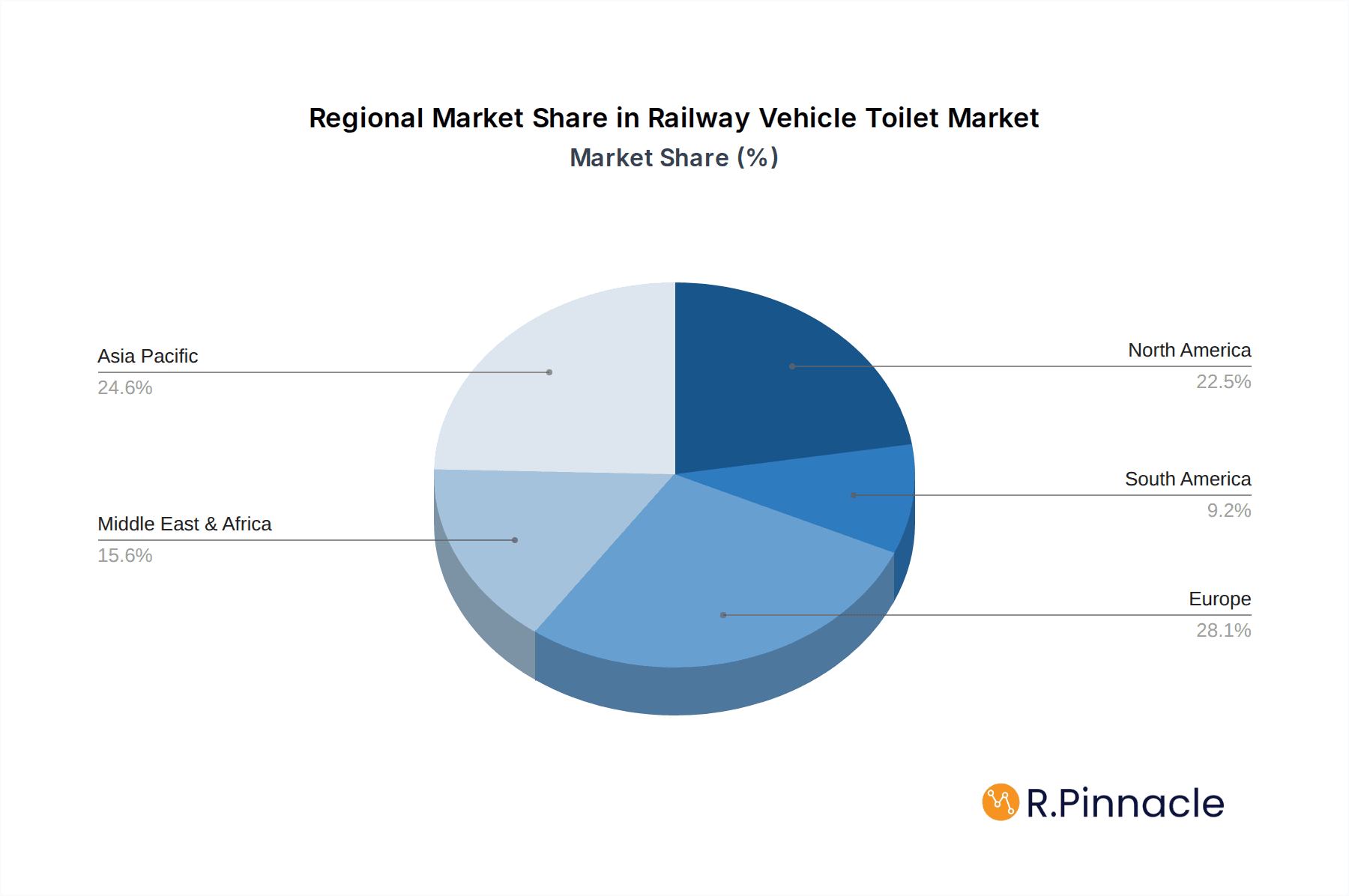
Railway Vehicle Toilet Regional Market Share
Geographic Coverage of Railway Vehicle Toilet
Railway Vehicle Toilet REPORT HIGHLIGHTS
| Aspects | Details |
|---|---|
| Study Period | 2020-2034 |
| Base Year | 2025 |
| Estimated Year | 2026 |
| Forecast Period | 2026-2034 |
| Historical Period | 2020-2025 |
| Growth Rate | CAGR of 6.1% from 2020-2034 |
| Segmentation |
|
Table of Contents
- 1. Introduction
- 1.1. Research Scope
- 1.2. Market Segmentation
- 1.3. Research Methodology
- 1.4. Definitions and Assumptions
- 2. Executive Summary
- 2.1. Introduction
- 3. Market Dynamics
- 3.1. Introduction
- 3.2. Market Drivers
- 3.3. Market Restrains
- 3.4. Market Trends
- 4. Market Factor Analysis
- 4.1. Porters Five Forces
- 4.2. Supply/Value Chain
- 4.3. PESTEL analysis
- 4.4. Market Entropy
- 4.5. Patent/Trademark Analysis
- 5. Global Railway Vehicle Toilet Analysis, Insights and Forecast, 2020-2032
- 5.1. Market Analysis, Insights and Forecast - by Application
- 5.1.1. Passenger Cars
- 5.1.2. Freight Cars
- 5.2. Market Analysis, Insights and Forecast - by Types
- 5.2.1. Vacuum Toilet System
- 5.2.2. Pressured Water Flushing Toilet System
- 5.3. Market Analysis, Insights and Forecast - by Region
- 5.3.1. North America
- 5.3.2. South America
- 5.3.3. Europe
- 5.3.4. Middle East & Africa
- 5.3.5. Asia Pacific
- 5.1. Market Analysis, Insights and Forecast - by Application
- 6. North America Railway Vehicle Toilet Analysis, Insights and Forecast, 2020-2032
- 6.1. Market Analysis, Insights and Forecast - by Application
- 6.1.1. Passenger Cars
- 6.1.2. Freight Cars
- 6.2. Market Analysis, Insights and Forecast - by Types
- 6.2.1. Vacuum Toilet System
- 6.2.2. Pressured Water Flushing Toilet System
- 6.1. Market Analysis, Insights and Forecast - by Application
- 7. South America Railway Vehicle Toilet Analysis, Insights and Forecast, 2020-2032
- 7.1. Market Analysis, Insights and Forecast - by Application
- 7.1.1. Passenger Cars
- 7.1.2. Freight Cars
- 7.2. Market Analysis, Insights and Forecast - by Types
- 7.2.1. Vacuum Toilet System
- 7.2.2. Pressured Water Flushing Toilet System
- 7.1. Market Analysis, Insights and Forecast - by Application
- 8. Europe Railway Vehicle Toilet Analysis, Insights and Forecast, 2020-2032
- 8.1. Market Analysis, Insights and Forecast - by Application
- 8.1.1. Passenger Cars
- 8.1.2. Freight Cars
- 8.2. Market Analysis, Insights and Forecast - by Types
- 8.2.1. Vacuum Toilet System
- 8.2.2. Pressured Water Flushing Toilet System
- 8.1. Market Analysis, Insights and Forecast - by Application
- 9. Middle East & Africa Railway Vehicle Toilet Analysis, Insights and Forecast, 2020-2032
- 9.1. Market Analysis, Insights and Forecast - by Application
- 9.1.1. Passenger Cars
- 9.1.2. Freight Cars
- 9.2. Market Analysis, Insights and Forecast - by Types
- 9.2.1. Vacuum Toilet System
- 9.2.2. Pressured Water Flushing Toilet System
- 9.1. Market Analysis, Insights and Forecast - by Application
- 10. Asia Pacific Railway Vehicle Toilet Analysis, Insights and Forecast, 2020-2032
- 10.1. Market Analysis, Insights and Forecast - by Application
- 10.1.1. Passenger Cars
- 10.1.2. Freight Cars
- 10.2. Market Analysis, Insights and Forecast - by Types
- 10.2.1. Vacuum Toilet System
- 10.2.2. Pressured Water Flushing Toilet System
- 10.1. Market Analysis, Insights and Forecast - by Application
- 11. Competitive Analysis
- 11.1. Global Market Share Analysis 2025
- 11.2. Company Profiles
- 11.2.1 WABTEC
- 11.2.1.1. Overview
- 11.2.1.2. Products
- 11.2.1.3. SWOT Analysis
- 11.2.1.4. Recent Developments
- 11.2.1.5. Financials (Based on Availability)
- 11.2.2 Huatie Tongda
- 11.2.2.1. Overview
- 11.2.2.2. Products
- 11.2.2.3. SWOT Analysis
- 11.2.2.4. Recent Developments
- 11.2.2.5. Financials (Based on Availability)
- 11.2.3 EVAC
- 11.2.3.1. Overview
- 11.2.3.2. Products
- 11.2.3.3. SWOT Analysis
- 11.2.3.4. Recent Developments
- 11.2.3.5. Financials (Based on Availability)
- 11.2.4 Rolen Technologies & Products
- 11.2.4.1. Overview
- 11.2.4.2. Products
- 11.2.4.3. SWOT Analysis
- 11.2.4.4. Recent Developments
- 11.2.4.5. Financials (Based on Availability)
- 11.2.5 Qingdao Victall Railway
- 11.2.5.1. Overview
- 11.2.5.2. Products
- 11.2.5.3. SWOT Analysis
- 11.2.5.4. Recent Developments
- 11.2.5.5. Financials (Based on Availability)
- 11.2.6 Goko Seisakusho
- 11.2.6.1. Overview
- 11.2.6.2. Products
- 11.2.6.3. SWOT Analysis
- 11.2.6.4. Recent Developments
- 11.2.6.5. Financials (Based on Availability)
- 11.2.7 Dowaldwerke
- 11.2.7.1. Overview
- 11.2.7.2. Products
- 11.2.7.3. SWOT Analysis
- 11.2.7.4. Recent Developments
- 11.2.7.5. Financials (Based on Availability)
- 11.2.8 Zhuzhou CRRC Times Electric
- 11.2.8.1. Overview
- 11.2.8.2. Products
- 11.2.8.3. SWOT Analysis
- 11.2.8.4. Recent Developments
- 11.2.8.5. Financials (Based on Availability)
- 11.2.9 Glova Rails
- 11.2.9.1. Overview
- 11.2.9.2. Products
- 11.2.9.3. SWOT Analysis
- 11.2.9.4. Recent Developments
- 11.2.9.5. Financials (Based on Availability)
- 11.2.10 VKV Praha
- 11.2.10.1. Overview
- 11.2.10.2. Products
- 11.2.10.3. SWOT Analysis
- 11.2.10.4. Recent Developments
- 11.2.10.5. Financials (Based on Availability)
- 11.2.1 WABTEC
List of Figures
- Figure 1: Global Railway Vehicle Toilet Revenue Breakdown (undefined, %) by Region 2025 & 2033
- Figure 2: Global Railway Vehicle Toilet Volume Breakdown (K, %) by Region 2025 & 2033
- Figure 3: North America Railway Vehicle Toilet Revenue (undefined), by Application 2025 & 2033
- Figure 4: North America Railway Vehicle Toilet Volume (K), by Application 2025 & 2033
- Figure 5: North America Railway Vehicle Toilet Revenue Share (%), by Application 2025 & 2033
- Figure 6: North America Railway Vehicle Toilet Volume Share (%), by Application 2025 & 2033
- Figure 7: North America Railway Vehicle Toilet Revenue (undefined), by Types 2025 & 2033
- Figure 8: North America Railway Vehicle Toilet Volume (K), by Types 2025 & 2033
- Figure 9: North America Railway Vehicle Toilet Revenue Share (%), by Types 2025 & 2033
- Figure 10: North America Railway Vehicle Toilet Volume Share (%), by Types 2025 & 2033
- Figure 11: North America Railway Vehicle Toilet Revenue (undefined), by Country 2025 & 2033
- Figure 12: North America Railway Vehicle Toilet Volume (K), by Country 2025 & 2033
- Figure 13: North America Railway Vehicle Toilet Revenue Share (%), by Country 2025 & 2033
- Figure 14: North America Railway Vehicle Toilet Volume Share (%), by Country 2025 & 2033
- Figure 15: South America Railway Vehicle Toilet Revenue (undefined), by Application 2025 & 2033
- Figure 16: South America Railway Vehicle Toilet Volume (K), by Application 2025 & 2033
- Figure 17: South America Railway Vehicle Toilet Revenue Share (%), by Application 2025 & 2033
- Figure 18: South America Railway Vehicle Toilet Volume Share (%), by Application 2025 & 2033
- Figure 19: South America Railway Vehicle Toilet Revenue (undefined), by Types 2025 & 2033
- Figure 20: South America Railway Vehicle Toilet Volume (K), by Types 2025 & 2033
- Figure 21: South America Railway Vehicle Toilet Revenue Share (%), by Types 2025 & 2033
- Figure 22: South America Railway Vehicle Toilet Volume Share (%), by Types 2025 & 2033
- Figure 23: South America Railway Vehicle Toilet Revenue (undefined), by Country 2025 & 2033
- Figure 24: South America Railway Vehicle Toilet Volume (K), by Country 2025 & 2033
- Figure 25: South America Railway Vehicle Toilet Revenue Share (%), by Country 2025 & 2033
- Figure 26: South America Railway Vehicle Toilet Volume Share (%), by Country 2025 & 2033
- Figure 27: Europe Railway Vehicle Toilet Revenue (undefined), by Application 2025 & 2033
- Figure 28: Europe Railway Vehicle Toilet Volume (K), by Application 2025 & 2033
- Figure 29: Europe Railway Vehicle Toilet Revenue Share (%), by Application 2025 & 2033
- Figure 30: Europe Railway Vehicle Toilet Volume Share (%), by Application 2025 & 2033
- Figure 31: Europe Railway Vehicle Toilet Revenue (undefined), by Types 2025 & 2033
- Figure 32: Europe Railway Vehicle Toilet Volume (K), by Types 2025 & 2033
- Figure 33: Europe Railway Vehicle Toilet Revenue Share (%), by Types 2025 & 2033
- Figure 34: Europe Railway Vehicle Toilet Volume Share (%), by Types 2025 & 2033
- Figure 35: Europe Railway Vehicle Toilet Revenue (undefined), by Country 2025 & 2033
- Figure 36: Europe Railway Vehicle Toilet Volume (K), by Country 2025 & 2033
- Figure 37: Europe Railway Vehicle Toilet Revenue Share (%), by Country 2025 & 2033
- Figure 38: Europe Railway Vehicle Toilet Volume Share (%), by Country 2025 & 2033
- Figure 39: Middle East & Africa Railway Vehicle Toilet Revenue (undefined), by Application 2025 & 2033
- Figure 40: Middle East & Africa Railway Vehicle Toilet Volume (K), by Application 2025 & 2033
- Figure 41: Middle East & Africa Railway Vehicle Toilet Revenue Share (%), by Application 2025 & 2033
- Figure 42: Middle East & Africa Railway Vehicle Toilet Volume Share (%), by Application 2025 & 2033
- Figure 43: Middle East & Africa Railway Vehicle Toilet Revenue (undefined), by Types 2025 & 2033
- Figure 44: Middle East & Africa Railway Vehicle Toilet Volume (K), by Types 2025 & 2033
- Figure 45: Middle East & Africa Railway Vehicle Toilet Revenue Share (%), by Types 2025 & 2033
- Figure 46: Middle East & Africa Railway Vehicle Toilet Volume Share (%), by Types 2025 & 2033
- Figure 47: Middle East & Africa Railway Vehicle Toilet Revenue (undefined), by Country 2025 & 2033
- Figure 48: Middle East & Africa Railway Vehicle Toilet Volume (K), by Country 2025 & 2033
- Figure 49: Middle East & Africa Railway Vehicle Toilet Revenue Share (%), by Country 2025 & 2033
- Figure 50: Middle East & Africa Railway Vehicle Toilet Volume Share (%), by Country 2025 & 2033
- Figure 51: Asia Pacific Railway Vehicle Toilet Revenue (undefined), by Application 2025 & 2033
- Figure 52: Asia Pacific Railway Vehicle Toilet Volume (K), by Application 2025 & 2033
- Figure 53: Asia Pacific Railway Vehicle Toilet Revenue Share (%), by Application 2025 & 2033
- Figure 54: Asia Pacific Railway Vehicle Toilet Volume Share (%), by Application 2025 & 2033
- Figure 55: Asia Pacific Railway Vehicle Toilet Revenue (undefined), by Types 2025 & 2033
- Figure 56: Asia Pacific Railway Vehicle Toilet Volume (K), by Types 2025 & 2033
- Figure 57: Asia Pacific Railway Vehicle Toilet Revenue Share (%), by Types 2025 & 2033
- Figure 58: Asia Pacific Railway Vehicle Toilet Volume Share (%), by Types 2025 & 2033
- Figure 59: Asia Pacific Railway Vehicle Toilet Revenue (undefined), by Country 2025 & 2033
- Figure 60: Asia Pacific Railway Vehicle Toilet Volume (K), by Country 2025 & 2033
- Figure 61: Asia Pacific Railway Vehicle Toilet Revenue Share (%), by Country 2025 & 2033
- Figure 62: Asia Pacific Railway Vehicle Toilet Volume Share (%), by Country 2025 & 2033
List of Tables
- Table 1: Global Railway Vehicle Toilet Revenue undefined Forecast, by Application 2020 & 2033
- Table 2: Global Railway Vehicle Toilet Volume K Forecast, by Application 2020 & 2033
- Table 3: Global Railway Vehicle Toilet Revenue undefined Forecast, by Types 2020 & 2033
- Table 4: Global Railway Vehicle Toilet Volume K Forecast, by Types 2020 & 2033
- Table 5: Global Railway Vehicle Toilet Revenue undefined Forecast, by Region 2020 & 2033
- Table 6: Global Railway Vehicle Toilet Volume K Forecast, by Region 2020 & 2033
- Table 7: Global Railway Vehicle Toilet Revenue undefined Forecast, by Application 2020 & 2033
- Table 8: Global Railway Vehicle Toilet Volume K Forecast, by Application 2020 & 2033
- Table 9: Global Railway Vehicle Toilet Revenue undefined Forecast, by Types 2020 & 2033
- Table 10: Global Railway Vehicle Toilet Volume K Forecast, by Types 2020 & 2033
- Table 11: Global Railway Vehicle Toilet Revenue undefined Forecast, by Country 2020 & 2033
- Table 12: Global Railway Vehicle Toilet Volume K Forecast, by Country 2020 & 2033
- Table 13: United States Railway Vehicle Toilet Revenue (undefined) Forecast, by Application 2020 & 2033
- Table 14: United States Railway Vehicle Toilet Volume (K) Forecast, by Application 2020 & 2033
- Table 15: Canada Railway Vehicle Toilet Revenue (undefined) Forecast, by Application 2020 & 2033
- Table 16: Canada Railway Vehicle Toilet Volume (K) Forecast, by Application 2020 & 2033
- Table 17: Mexico Railway Vehicle Toilet Revenue (undefined) Forecast, by Application 2020 & 2033
- Table 18: Mexico Railway Vehicle Toilet Volume (K) Forecast, by Application 2020 & 2033
- Table 19: Global Railway Vehicle Toilet Revenue undefined Forecast, by Application 2020 & 2033
- Table 20: Global Railway Vehicle Toilet Volume K Forecast, by Application 2020 & 2033
- Table 21: Global Railway Vehicle Toilet Revenue undefined Forecast, by Types 2020 & 2033
- Table 22: Global Railway Vehicle Toilet Volume K Forecast, by Types 2020 & 2033
- Table 23: Global Railway Vehicle Toilet Revenue undefined Forecast, by Country 2020 & 2033
- Table 24: Global Railway Vehicle Toilet Volume K Forecast, by Country 2020 & 2033
- Table 25: Brazil Railway Vehicle Toilet Revenue (undefined) Forecast, by Application 2020 & 2033
- Table 26: Brazil Railway Vehicle Toilet Volume (K) Forecast, by Application 2020 & 2033
- Table 27: Argentina Railway Vehicle Toilet Revenue (undefined) Forecast, by Application 2020 & 2033
- Table 28: Argentina Railway Vehicle Toilet Volume (K) Forecast, by Application 2020 & 2033
- Table 29: Rest of South America Railway Vehicle Toilet Revenue (undefined) Forecast, by Application 2020 & 2033
- Table 30: Rest of South America Railway Vehicle Toilet Volume (K) Forecast, by Application 2020 & 2033
- Table 31: Global Railway Vehicle Toilet Revenue undefined Forecast, by Application 2020 & 2033
- Table 32: Global Railway Vehicle Toilet Volume K Forecast, by Application 2020 & 2033
- Table 33: Global Railway Vehicle Toilet Revenue undefined Forecast, by Types 2020 & 2033
- Table 34: Global Railway Vehicle Toilet Volume K Forecast, by Types 2020 & 2033
- Table 35: Global Railway Vehicle Toilet Revenue undefined Forecast, by Country 2020 & 2033
- Table 36: Global Railway Vehicle Toilet Volume K Forecast, by Country 2020 & 2033
- Table 37: United Kingdom Railway Vehicle Toilet Revenue (undefined) Forecast, by Application 2020 & 2033
- Table 38: United Kingdom Railway Vehicle Toilet Volume (K) Forecast, by Application 2020 & 2033
- Table 39: Germany Railway Vehicle Toilet Revenue (undefined) Forecast, by Application 2020 & 2033
- Table 40: Germany Railway Vehicle Toilet Volume (K) Forecast, by Application 2020 & 2033
- Table 41: France Railway Vehicle Toilet Revenue (undefined) Forecast, by Application 2020 & 2033
- Table 42: France Railway Vehicle Toilet Volume (K) Forecast, by Application 2020 & 2033
- Table 43: Italy Railway Vehicle Toilet Revenue (undefined) Forecast, by Application 2020 & 2033
- Table 44: Italy Railway Vehicle Toilet Volume (K) Forecast, by Application 2020 & 2033
- Table 45: Spain Railway Vehicle Toilet Revenue (undefined) Forecast, by Application 2020 & 2033
- Table 46: Spain Railway Vehicle Toilet Volume (K) Forecast, by Application 2020 & 2033
- Table 47: Russia Railway Vehicle Toilet Revenue (undefined) Forecast, by Application 2020 & 2033
- Table 48: Russia Railway Vehicle Toilet Volume (K) Forecast, by Application 2020 & 2033
- Table 49: Benelux Railway Vehicle Toilet Revenue (undefined) Forecast, by Application 2020 & 2033
- Table 50: Benelux Railway Vehicle Toilet Volume (K) Forecast, by Application 2020 & 2033
- Table 51: Nordics Railway Vehicle Toilet Revenue (undefined) Forecast, by Application 2020 & 2033
- Table 52: Nordics Railway Vehicle Toilet Volume (K) Forecast, by Application 2020 & 2033
- Table 53: Rest of Europe Railway Vehicle Toilet Revenue (undefined) Forecast, by Application 2020 & 2033
- Table 54: Rest of Europe Railway Vehicle Toilet Volume (K) Forecast, by Application 2020 & 2033
- Table 55: Global Railway Vehicle Toilet Revenue undefined Forecast, by Application 2020 & 2033
- Table 56: Global Railway Vehicle Toilet Volume K Forecast, by Application 2020 & 2033
- Table 57: Global Railway Vehicle Toilet Revenue undefined Forecast, by Types 2020 & 2033
- Table 58: Global Railway Vehicle Toilet Volume K Forecast, by Types 2020 & 2033
- Table 59: Global Railway Vehicle Toilet Revenue undefined Forecast, by Country 2020 & 2033
- Table 60: Global Railway Vehicle Toilet Volume K Forecast, by Country 2020 & 2033
- Table 61: Turkey Railway Vehicle Toilet Revenue (undefined) Forecast, by Application 2020 & 2033
- Table 62: Turkey Railway Vehicle Toilet Volume (K) Forecast, by Application 2020 & 2033
- Table 63: Israel Railway Vehicle Toilet Revenue (undefined) Forecast, by Application 2020 & 2033
- Table 64: Israel Railway Vehicle Toilet Volume (K) Forecast, by Application 2020 & 2033
- Table 65: GCC Railway Vehicle Toilet Revenue (undefined) Forecast, by Application 2020 & 2033
- Table 66: GCC Railway Vehicle Toilet Volume (K) Forecast, by Application 2020 & 2033
- Table 67: North Africa Railway Vehicle Toilet Revenue (undefined) Forecast, by Application 2020 & 2033
- Table 68: North Africa Railway Vehicle Toilet Volume (K) Forecast, by Application 2020 & 2033
- Table 69: South Africa Railway Vehicle Toilet Revenue (undefined) Forecast, by Application 2020 & 2033
- Table 70: South Africa Railway Vehicle Toilet Volume (K) Forecast, by Application 2020 & 2033
- Table 71: Rest of Middle East & Africa Railway Vehicle Toilet Revenue (undefined) Forecast, by Application 2020 & 2033
- Table 72: Rest of Middle East & Africa Railway Vehicle Toilet Volume (K) Forecast, by Application 2020 & 2033
- Table 73: Global Railway Vehicle Toilet Revenue undefined Forecast, by Application 2020 & 2033
- Table 74: Global Railway Vehicle Toilet Volume K Forecast, by Application 2020 & 2033
- Table 75: Global Railway Vehicle Toilet Revenue undefined Forecast, by Types 2020 & 2033
- Table 76: Global Railway Vehicle Toilet Volume K Forecast, by Types 2020 & 2033
- Table 77: Global Railway Vehicle Toilet Revenue undefined Forecast, by Country 2020 & 2033
- Table 78: Global Railway Vehicle Toilet Volume K Forecast, by Country 2020 & 2033
- Table 79: China Railway Vehicle Toilet Revenue (undefined) Forecast, by Application 2020 & 2033
- Table 80: China Railway Vehicle Toilet Volume (K) Forecast, by Application 2020 & 2033
- Table 81: India Railway Vehicle Toilet Revenue (undefined) Forecast, by Application 2020 & 2033
- Table 82: India Railway Vehicle Toilet Volume (K) Forecast, by Application 2020 & 2033
- Table 83: Japan Railway Vehicle Toilet Revenue (undefined) Forecast, by Application 2020 & 2033
- Table 84: Japan Railway Vehicle Toilet Volume (K) Forecast, by Application 2020 & 2033
- Table 85: South Korea Railway Vehicle Toilet Revenue (undefined) Forecast, by Application 2020 & 2033
- Table 86: South Korea Railway Vehicle Toilet Volume (K) Forecast, by Application 2020 & 2033
- Table 87: ASEAN Railway Vehicle Toilet Revenue (undefined) Forecast, by Application 2020 & 2033
- Table 88: ASEAN Railway Vehicle Toilet Volume (K) Forecast, by Application 2020 & 2033
- Table 89: Oceania Railway Vehicle Toilet Revenue (undefined) Forecast, by Application 2020 & 2033
- Table 90: Oceania Railway Vehicle Toilet Volume (K) Forecast, by Application 2020 & 2033
- Table 91: Rest of Asia Pacific Railway Vehicle Toilet Revenue (undefined) Forecast, by Application 2020 & 2033
- Table 92: Rest of Asia Pacific Railway Vehicle Toilet Volume (K) Forecast, by Application 2020 & 2033
Frequently Asked Questions
1. What is the projected Compound Annual Growth Rate (CAGR) of the Railway Vehicle Toilet?
The projected CAGR is approximately 6.1%.
2. Which companies are prominent players in the Railway Vehicle Toilet?
Key companies in the market include WABTEC, Huatie Tongda, EVAC, Rolen Technologies & Products, Qingdao Victall Railway, Goko Seisakusho, Dowaldwerke, Zhuzhou CRRC Times Electric, Glova Rails, VKV Praha.
3. What are the main segments of the Railway Vehicle Toilet?
The market segments include Application, Types.
4. Can you provide details about the market size?
The market size is estimated to be USD XXX N/A as of 2022.
5. What are some drivers contributing to market growth?
N/A
6. What are the notable trends driving market growth?
N/A
7. Are there any restraints impacting market growth?
N/A
8. Can you provide examples of recent developments in the market?
N/A
9. What pricing options are available for accessing the report?
Pricing options include single-user, multi-user, and enterprise licenses priced at USD 3350.00, USD 5025.00, and USD 6700.00 respectively.
10. Is the market size provided in terms of value or volume?
The market size is provided in terms of value, measured in N/A and volume, measured in K.
11. Are there any specific market keywords associated with the report?
Yes, the market keyword associated with the report is "Railway Vehicle Toilet," which aids in identifying and referencing the specific market segment covered.
12. How do I determine which pricing option suits my needs best?
The pricing options vary based on user requirements and access needs. Individual users may opt for single-user licenses, while businesses requiring broader access may choose multi-user or enterprise licenses for cost-effective access to the report.
13. Are there any additional resources or data provided in the Railway Vehicle Toilet report?
While the report offers comprehensive insights, it's advisable to review the specific contents or supplementary materials provided to ascertain if additional resources or data are available.
14. How can I stay updated on further developments or reports in the Railway Vehicle Toilet?
To stay informed about further developments, trends, and reports in the Railway Vehicle Toilet, consider subscribing to industry newsletters, following relevant companies and organizations, or regularly checking reputable industry news sources and publications.
Methodology
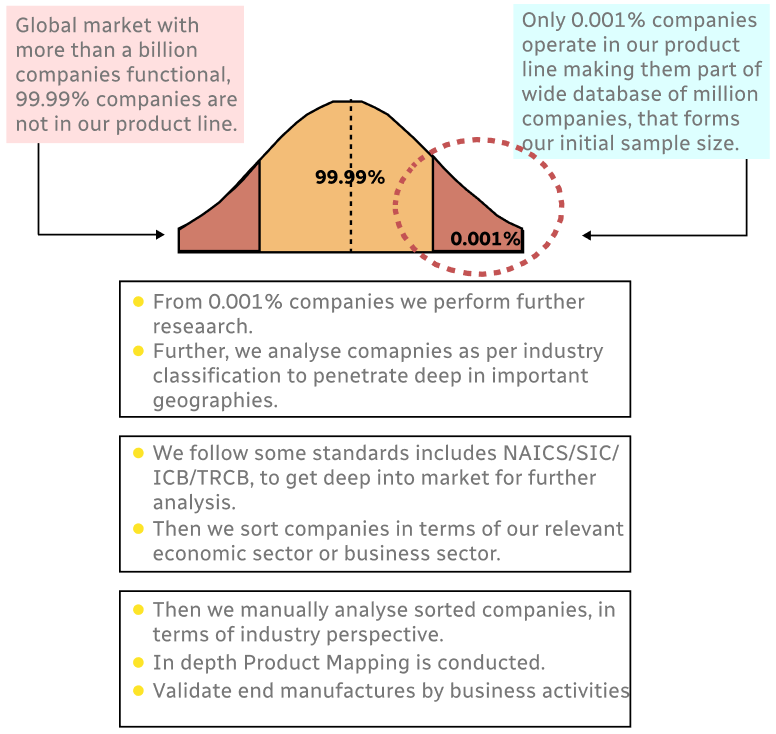
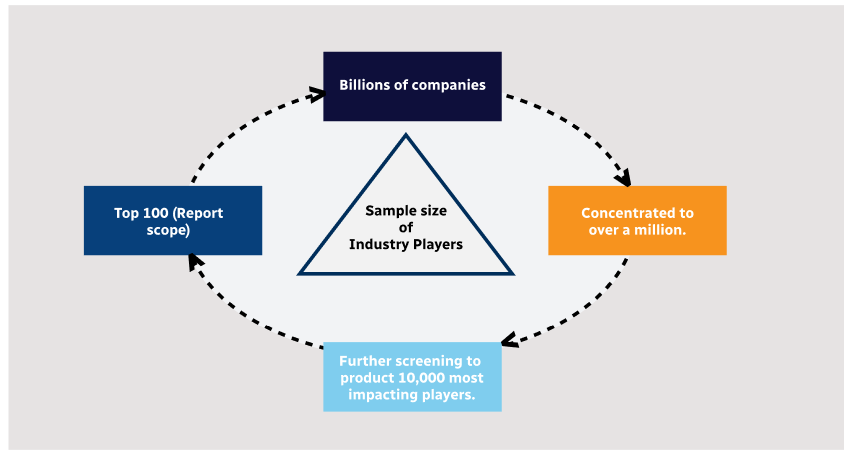
Step 1 - Identification of Relevant Samples Size from Population Database
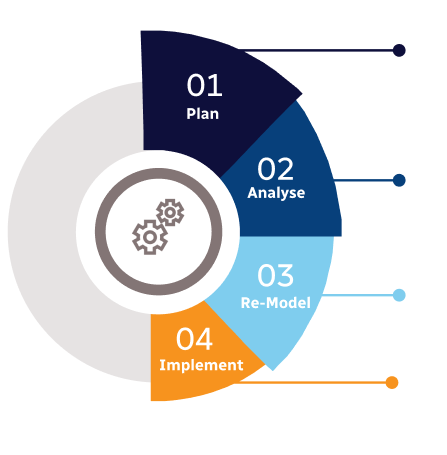
Step 2 - Approaches for Defining Global Market Size (Value, Volume* & Price*)
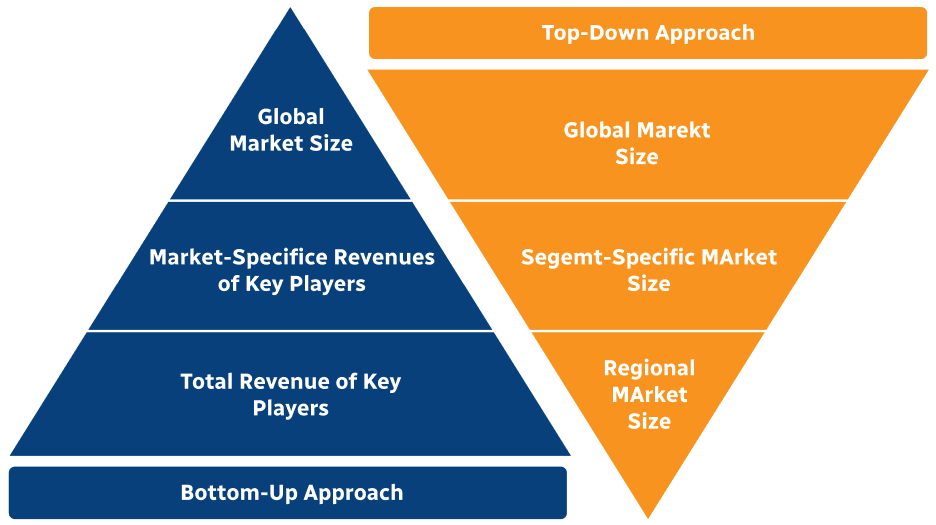
Note*: In applicable scenarios
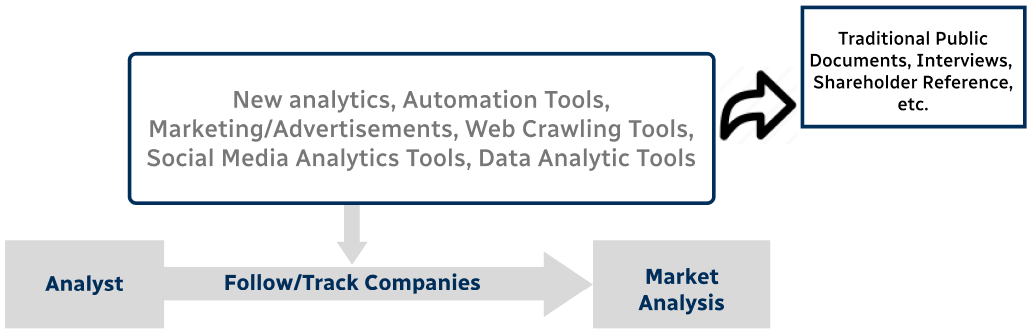
Step 3 - Data Sources
Primary Research
- Web Analytics
- Survey Reports
- Research Institute
- Latest Research Reports
- Opinion Leaders
Secondary Research
- Annual Reports
- White Paper
- Latest Press Release
- Industry Association
- Paid Database
- Investor Presentations
Step 4 - Data Triangulation
Involves using different sources of information in order to increase the validity of a study
These sources are likely to be stakeholders in a program - participants, other researchers, program staff, other community members, and so on.
Then we put all data in single framework & apply various statistical tools to find out the dynamic on the market.
During the analysis stage, feedback from the stakeholder groups would be compared to determine areas of agreement as well as areas of divergence