


Key Insights
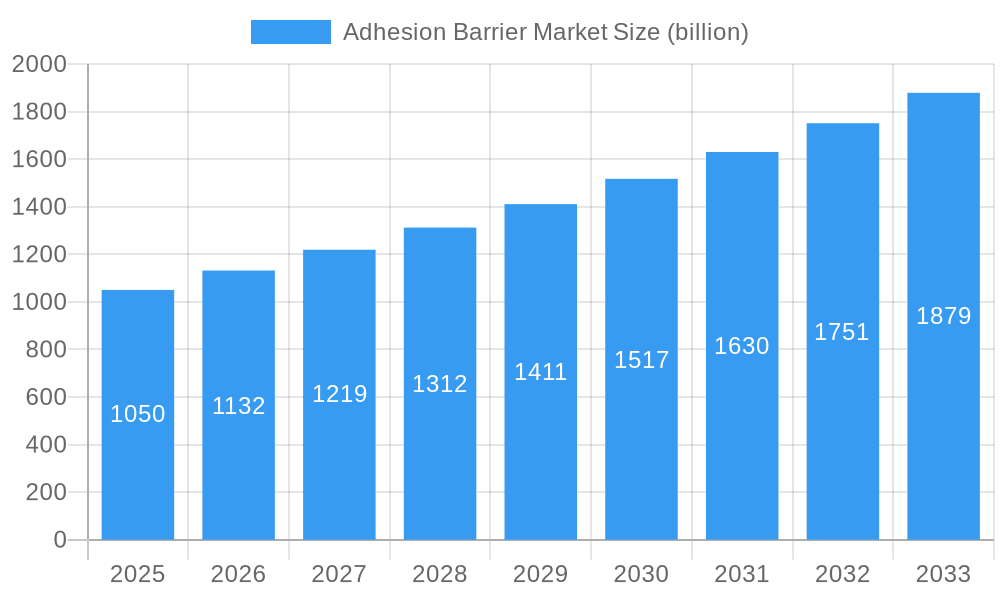
The global Adhesion Barrier Market is poised for significant expansion, projected to reach an estimated USD 1.05 billion in 2025. This robust growth is underpinned by a compelling Compound Annual Growth Rate (CAGR) of 7.8%, indicating a dynamic and upward trajectory for the market throughout the forecast period of 2025-2033. The primary drivers fueling this expansion are the increasing prevalence of surgical procedures across various specialties, a growing awareness among healthcare professionals and patients regarding the detrimental effects of post-surgical adhesions, and continuous advancements in the development of innovative adhesion barrier products. These barriers play a critical role in preventing the formation of unwanted scar tissue that can lead to pain, organ dysfunction, and further medical complications, thus highlighting their essential function in improving patient outcomes and reducing long-term healthcare costs.
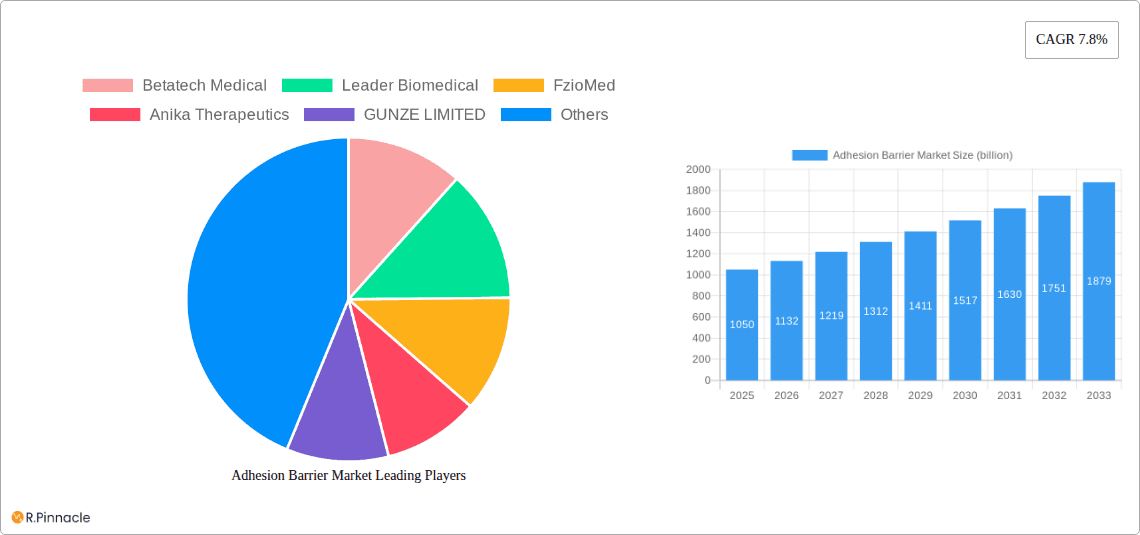
Adhesion Barrier Market Market Size (In Billion)

The market segmentation reveals a diverse landscape, with Synthetic Adhesion Barriers, particularly those based on Hyaluronic Acid and Polyethylene Glycol, expected to capture a substantial market share due to their enhanced efficacy and biocompatibility. Film and liquid formulations are anticipated to dominate, offering ease of application and broad utility. General/Abdominal Surgeries, Gynecological Surgeries, and Cardiovascular Surgeries are identified as key application areas driving demand, reflecting the high volume of these procedures. Geographically, North America and Europe are expected to lead the market, driven by sophisticated healthcare infrastructure, high adoption rates of advanced medical technologies, and a substantial patient pool. However, the Asia Pacific region is projected to exhibit the fastest growth, fueled by rapid economic development, increasing healthcare expenditure, and a rising number of medical tourism destinations. Key players like Integra LifeSciences Holdings Corporation, Johnson & Johnson, and Baxter International are actively investing in research and development, strategic partnerships, and product launches to capitalize on these growth opportunities and maintain a competitive edge in this evolving market.
Adhesion Barrier Market Company Market Share
Adhesion Barrier Market: Comprehensive Market Analysis & Growth Forecast (2019-2033)
This in-depth Adhesion Barrier Market report provides a strategic overview of the global market, offering actionable insights for industry stakeholders. Covering a study period from 2019 to 2033, with a base year of 2025 and a forecast period of 2025–2033, this report delves into market dynamics, key players, product innovations, and future outlook. Leverage our expert analysis to understand market trends, capitalize on emerging opportunities, and navigate challenges in this vital healthcare sector. The global Adhesion Barrier Market is projected to reach an estimated $XX billion by 2033, exhibiting a Compound Annual Growth Rate (CAGR) of XX% from the base year 2025.
Adhesion Barrier Market Market Structure & Innovation Trends
The Adhesion Barrier Market exhibits a moderately concentrated structure, with a few key players dominating market share. Innovation drivers are primarily focused on developing biocompatible, absorbable, and highly effective adhesion barriers with improved ease of application and reduced post-operative complications. Regulatory frameworks, overseen by bodies like the FDA and EMA, play a crucial role in approving new products and ensuring patient safety. The market sees continuous innovation in synthetic and natural barrier formulations, driven by advancements in biomaterials science. Product substitutes, while present in the form of conventional surgical techniques, are increasingly being challenged by the superior efficacy of modern adhesion barriers. End-user demographics are expanding beyond general surgery to encompass specialized fields like gynecology, cardiology, orthopedics, and neurology, reflecting the growing adoption of these barriers across diverse surgical applications. Mergers and acquisitions (M&A) activities, with estimated deal values in the hundreds of millions of dollars, are a notable trend, as larger companies seek to expand their product portfolios and market reach. For instance, Integra LifeSciences Holdings Corporation has strategically acquired companies to bolster its presence in this segment. Key market players like Johnson & Johnson, Baxter International, and Anika Therapeutics hold significant market share, with their continuous investment in research and development fueling market expansion.
Adhesion Barrier Market Market Dynamics & Trends
The Adhesion Barrier Market is experiencing robust growth, propelled by a confluence of escalating healthcare expenditures, an increasing volume of surgical procedures globally, and a growing awareness among both healthcare professionals and patients regarding the detrimental effects of post-operative adhesions. Technological advancements in biomaterials and drug delivery systems are continuously refining the efficacy and safety profiles of adhesion barriers, leading to the development of more sophisticated formulations such as advanced films and gels. Consumer preferences are shifting towards minimally invasive surgical techniques, where adhesion barriers play a pivotal role in mitigating complications and improving patient recovery times. The competitive landscape is characterized by intense innovation and strategic collaborations, with companies vying for market dominance through product differentiation and superior clinical outcomes. The market penetration of adhesion barriers is steadily increasing across various surgical specialties, indicating a broader acceptance and integration into standard surgical protocols. Market growth drivers include the rising incidence of chronic diseases necessitating surgical interventions and the aging global population, which is more susceptible to surgical complications. Furthermore, advancements in nanotechnology and regenerative medicine are paving the way for next-generation adhesion barriers with enhanced tissue regeneration and anti-inflammatory properties. The market is also influenced by evolving reimbursement policies and the drive for cost-effective healthcare solutions, encouraging the adoption of products that reduce hospital stays and re-admission rates. The CAGR for the Adhesion Barrier Market is estimated to be XX% during the forecast period.
Dominant Regions & Segments in Adhesion Barrier Market
North America currently leads the Adhesion Barrier Market, driven by its advanced healthcare infrastructure, high adoption rate of innovative medical technologies, and a substantial volume of complex surgical procedures. The United States, in particular, holds a dominant position due to significant investments in research and development, favorable regulatory policies that encourage medical device innovation, and a strong presence of leading pharmaceutical and medical device manufacturers. The region's dominance is further bolstered by a robust reimbursement framework that supports the use of advanced surgical adjuncts like adhesion barriers.
Product Segment Dominance: Within the Synthetic Adhesion Barriers segment, Hyaluronic Acid-based barriers are witnessing considerable traction due to their excellent biocompatibility and biodegradability. Regenerated Cellulose and Polyethylene Glycol formulations also represent significant market shares. The continuous innovation in synthetic materials aims to achieve superior barrier properties and predictable absorption rates, catering to diverse surgical needs. The market size for synthetic adhesion barriers is estimated to be $XX billion in 2025.
Formulation Dominance: The Gel formulation segment is a key growth driver, offering ease of application and excellent conformity to irregular tissue surfaces. Liquid formulations also hold a considerable share, facilitating widespread coverage. Film-based barriers are gaining popularity for specific applications requiring precise placement and a consistent barrier layer. The market penetration of gel formulations is expected to reach XX% by 2033.
Application Dominance: General/Abdominal Surgeries represent the largest application segment, owing to the high prevalence of adhesion formation in this area following procedures like hysterectomies and bowel resections. Gynecological Surgeries also contribute significantly to market demand due to the sensitive nature of tissues and the high risk of adhesion-related complications. Cardiovascular Surgeries, Orthopedic Surgeries, and Neurological Surgeries are emerging application areas with increasing adoption as surgeons recognize the benefits of adhesion prevention in these complex procedures. The market size for general/abdominal surgeries is projected to reach $XX billion in 2025.
Economic Policies and Infrastructure: Favorable economic policies that incentivize medical device innovation and a well-developed healthcare infrastructure with advanced surgical facilities in North America are critical factors underpinning regional dominance.
Adhesion Barrier Market Product Innovations
Product innovations in the Adhesion Barrier Market are centered on developing materials that offer superior biocompatibility, controlled absorption rates, and enhanced efficacy in preventing post-operative adhesions. Key developments include the creation of bioresorbable films and gels that conform seamlessly to tissue surfaces, minimizing dead space and reducing the inflammatory response. Companies are focusing on formulations that exhibit both physical barrier properties and therapeutic benefits, such as anti-inflammatory or pro-healing capabilities. Competitive advantages are being gained through improved ease of use for surgeons, faster integration into surgical workflows, and a demonstrable reduction in adhesion-related morbidity and hospital readmissions. The ongoing pursuit of novel biomaterials and advanced manufacturing techniques is shaping the future of adhesion barrier products, ensuring their continued relevance and expanded application across a wider range of surgical disciplines.
Report Scope & Segmentation Analysis
This report meticulously analyzes the Adhesion Barrier Market across its key segments, providing detailed market sizes, growth projections, and competitive dynamics.
Product Segmentation: The market is segmented into Synthetic Adhesion Barriers (including Hyaluronic Acid, Regenerated Cellulose, Polyethylene Glycol, and Other Synthetic Adhesion Barriers) and Natural Adhesion Barriers (including Collagen and Fibrin). Synthetic barriers, particularly those based on hyaluronic acid and polyethylene glycol, are expected to witness significant growth due to their well-established safety profiles and tunable properties. Natural barriers, while offering inherent biocompatibility, face challenges in terms of scalability and cost. The synthetic segment is projected to account for XX% of the market by 2033.
Formulation Segmentation: The Film, Liquid, and Gel formulations are analyzed. Gel formulations are anticipated to dominate due to their ease of application and ability to conform to complex anatomical structures, thereby offering superior adhesion prevention. The liquid segment is also robust, while film formulations are gaining traction for their precise application capabilities. The gel formulation segment is expected to grow at a CAGR of XX%.
Application Segmentation: Key applications include General/Abdominal Surgeries, Gynecological Surgeries, Cardiovascular Surgeries, Orthopedic Surgeries, Neurological Surgeries, and Other Applications. General and abdominal surgeries currently represent the largest share, driven by the high incidence of adhesions in these procedures. However, significant growth is projected in cardiovascular, orthopedic, and neurological surgeries as awareness and adoption of adhesion barriers increase in these complex fields. The orthopedic surgery segment is expected to witness a CAGR of XX%.
Key Drivers of Adhesion Barrier Market Growth
The Adhesion Barrier Market growth is propelled by several critical factors. Firstly, the increasing global prevalence of surgical procedures, both elective and emergency, directly translates to a higher demand for adhesion prevention strategies. Secondly, advancements in biomaterial science are enabling the development of more effective, biocompatible, and absorbable adhesion barriers with improved clinical outcomes. Thirdly, a growing awareness among healthcare professionals and patients about the debilitating effects of post-operative adhesions, such as chronic pain, infertility, and bowel obstruction, is driving the adoption of these barriers. Furthermore, the rising incidence of chronic diseases requiring surgical interventions and the aging global population contribute significantly to market expansion. Regulatory support for innovative medical devices also plays a crucial role in facilitating market growth.
Challenges in the Adhesion Barrier Market Sector
Despite the promising growth trajectory, the Adhesion Barrier Market faces several challenges. Regulatory hurdles and the stringent approval processes for new medical devices can lead to extended development timelines and significant costs for manufacturers. The cost-effectiveness of some advanced adhesion barrier products can be a barrier to widespread adoption, particularly in healthcare systems with budget constraints. Supply chain disruptions and the complexity of sourcing high-quality raw materials can also impact production and availability. Moreover, the presence of competitive products and the need for continuous innovation to stay ahead of evolving surgical techniques and patient needs present ongoing challenges. Educating surgeons and healthcare providers about the benefits and optimal use of different adhesion barrier types remains crucial for market penetration.
Emerging Opportunities in Adhesion Barrier Market
Emerging opportunities in the Adhesion Barrier Market lie in the development of novel bio-inspired and nano-engineered materials that offer enhanced efficacy and targeted delivery. The expansion of adhesion barrier applications into less explored surgical areas, such as reconstructive surgery and organ transplantation, presents significant growth potential. The increasing demand for minimally invasive surgical techniques further fuels the need for advanced adhesion barriers that facilitate smoother recovery and reduced complication rates. Geographically, the growing healthcare expenditure and improving surgical infrastructure in emerging economies in Asia-Pacific and Latin America offer substantial untapped market potential. Partnerships and collaborations between research institutions and industry players are crucial for accelerating innovation and bringing next-generation adhesion barrier solutions to market.
Leading Players in the Adhesion Barrier Market Market
- Betatech Medical
- Leader Biomedical
- FzioMed
- Anika Therapeutics
- GUNZE LIMITED
- TAICEND TECHNOLOGY CO LTD
- MAST Biosurgery
- Integra LifeSciences Holdings Corporation
- Johnson & Johnson
- Wuhan Sitaili Medical Apparatus Development Co
- Baxter International
- BIOSCOMPASS INC
Key Developments in Adhesion Barrier Market Industry
- June 2022: CGBIO launched MEDICLORE, an anti-adhesion agent in Indonesia. MEDICLORE inhibits adhesion by changing from sol to gel form by body temperature when applied to the body.
- February 2022: Gunze Limited obtained medical device approval to manufacture and sell TENALEAF, the first sheet-type absorbable adhesion barrier made in Japan.
Future Outlook for Adhesion Barrier Market Market
The future outlook for the Adhesion Barrier Market is exceptionally bright, driven by an ongoing surge in surgical interventions and continuous advancements in medical technology. Growth accelerators include the development of personalized adhesion barriers tailored to specific patient needs and surgical procedures, as well as the integration of smart materials that offer real-time monitoring of the surgical site. Strategic opportunities lie in expanding market reach into developing economies where the unmet need for effective adhesion prevention is high. Furthermore, increased investment in research and development focused on combination therapies, where adhesion barriers are used in conjunction with other post-operative treatments, is expected to unlock new therapeutic avenues. The market is poised for sustained growth as healthcare providers increasingly prioritize patient outcomes and the reduction of healthcare-associated complications. The projected market size by 2033 is estimated to be $XX billion.
Adhesion Barrier Market Segmentation
-
1. Product
-
1.1. Synthetic Adhesion Barriers
- 1.1.1. Hyaluronic Acid
- 1.1.2. Regenerated Cellulose
- 1.1.3. Polyethylene Glycol
- 1.1.4. Other Synthetic Adhesion Barriers
-
1.2. Natural Adhesion Barriers
- 1.2.1. Collagen
- 1.2.2. Fibrin
-
1.1. Synthetic Adhesion Barriers
-
2. Formulation
- 2.1. Film
- 2.2. Liquid
- 2.3. Gel
-
3. Application
- 3.1. General/Abdominal Surgeries
- 3.2. Gynecological Surgeries
- 3.3. Cardiovascular Surgeries
- 3.4. Orthopedic Surgeries
- 3.5. Neurological Surgeries
- 3.6. Other Applications
Adhesion Barrier Market Segmentation By Geography
-
1. North America
- 1.1. United States
- 1.2. Canada
- 1.3. Mexico
-
2. Europe
- 2.1. Germany
- 2.2. United Kingdom
- 2.3. France
- 2.4. Italy
- 2.5. Spain
- 2.6. Rest of Europe
-
3. Asia Pacific
- 3.1. China
- 3.2. Japan
- 3.3. India
- 3.4. Australia
- 3.5. South korea
- 3.6. Rest of Asia Pacific
-
4. Middle East and Africa
- 4.1. GCC
- 4.2. South Africa
- 4.3. Rest of Middle East and Africa
-
5. South America
- 5.1. Brazil
- 5.2. Argentina
- 5.3. Rest of South America
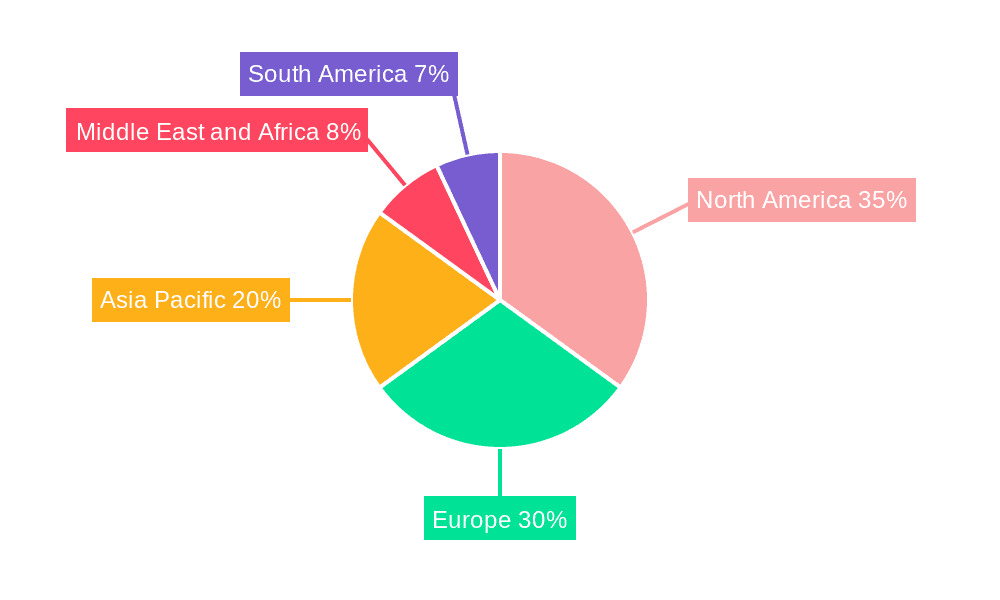
Adhesion Barrier Market Regional Market Share
Geographic Coverage of Adhesion Barrier Market
Adhesion Barrier Market REPORT HIGHLIGHTS
| Aspects | Details |
|---|---|
| Study Period | 2020-2034 |
| Base Year | 2025 |
| Estimated Year | 2026 |
| Forecast Period | 2026-2034 |
| Historical Period | 2020-2025 |
| Growth Rate | CAGR of 7.8% from 2020-2034 |
| Segmentation |
|
Table of Contents
- 1. Introduction
- 1.1. Research Scope
- 1.2. Market Segmentation
- 1.3. Research Methodology
- 1.4. Definitions and Assumptions
- 2. Executive Summary
- 2.1. Introduction
- 3. Market Dynamics
- 3.1. Introduction
- 3.2. Market Drivers
- 3.2.1. Increase in the Volume of Surgeries and Sports-related Injuries; Rising Awareness about the Medical Implications of Adhesions
- 3.3. Market Restrains
- 3.3.1. High Cost of Surgical Procedures Coupled with Side Effects Associated with Adhesion Barriers; Stringent Regulations Resulting in Limited Technological Innovations
- 3.4. Market Trends
- 3.4.1. Gynecological Surgeries Segment Expected to Witness Growth
- 4. Market Factor Analysis
- 4.1. Porters Five Forces
- 4.2. Supply/Value Chain
- 4.3. PESTEL analysis
- 4.4. Market Entropy
- 4.5. Patent/Trademark Analysis
- 5. Global Adhesion Barrier Market Analysis, Insights and Forecast, 2020-2032
- 5.1. Market Analysis, Insights and Forecast - by Product
- 5.1.1. Synthetic Adhesion Barriers
- 5.1.1.1. Hyaluronic Acid
- 5.1.1.2. Regenerated Cellulose
- 5.1.1.3. Polyethylene Glycol
- 5.1.1.4. Other Synthetic Adhesion Barriers
- 5.1.2. Natural Adhesion Barriers
- 5.1.2.1. Collagen
- 5.1.2.2. Fibrin
- 5.1.1. Synthetic Adhesion Barriers
- 5.2. Market Analysis, Insights and Forecast - by Formulation
- 5.2.1. Film
- 5.2.2. Liquid
- 5.2.3. Gel
- 5.3. Market Analysis, Insights and Forecast - by Application
- 5.3.1. General/Abdominal Surgeries
- 5.3.2. Gynecological Surgeries
- 5.3.3. Cardiovascular Surgeries
- 5.3.4. Orthopedic Surgeries
- 5.3.5. Neurological Surgeries
- 5.3.6. Other Applications
- 5.4. Market Analysis, Insights and Forecast - by Region
- 5.4.1. North America
- 5.4.2. Europe
- 5.4.3. Asia Pacific
- 5.4.4. Middle East and Africa
- 5.4.5. South America
- 5.1. Market Analysis, Insights and Forecast - by Product
- 6. North America Adhesion Barrier Market Analysis, Insights and Forecast, 2020-2032
- 6.1. Market Analysis, Insights and Forecast - by Product
- 6.1.1. Synthetic Adhesion Barriers
- 6.1.1.1. Hyaluronic Acid
- 6.1.1.2. Regenerated Cellulose
- 6.1.1.3. Polyethylene Glycol
- 6.1.1.4. Other Synthetic Adhesion Barriers
- 6.1.2. Natural Adhesion Barriers
- 6.1.2.1. Collagen
- 6.1.2.2. Fibrin
- 6.1.1. Synthetic Adhesion Barriers
- 6.2. Market Analysis, Insights and Forecast - by Formulation
- 6.2.1. Film
- 6.2.2. Liquid
- 6.2.3. Gel
- 6.3. Market Analysis, Insights and Forecast - by Application
- 6.3.1. General/Abdominal Surgeries
- 6.3.2. Gynecological Surgeries
- 6.3.3. Cardiovascular Surgeries
- 6.3.4. Orthopedic Surgeries
- 6.3.5. Neurological Surgeries
- 6.3.6. Other Applications
- 6.1. Market Analysis, Insights and Forecast - by Product
- 7. Europe Adhesion Barrier Market Analysis, Insights and Forecast, 2020-2032
- 7.1. Market Analysis, Insights and Forecast - by Product
- 7.1.1. Synthetic Adhesion Barriers
- 7.1.1.1. Hyaluronic Acid
- 7.1.1.2. Regenerated Cellulose
- 7.1.1.3. Polyethylene Glycol
- 7.1.1.4. Other Synthetic Adhesion Barriers
- 7.1.2. Natural Adhesion Barriers
- 7.1.2.1. Collagen
- 7.1.2.2. Fibrin
- 7.1.1. Synthetic Adhesion Barriers
- 7.2. Market Analysis, Insights and Forecast - by Formulation
- 7.2.1. Film
- 7.2.2. Liquid
- 7.2.3. Gel
- 7.3. Market Analysis, Insights and Forecast - by Application
- 7.3.1. General/Abdominal Surgeries
- 7.3.2. Gynecological Surgeries
- 7.3.3. Cardiovascular Surgeries
- 7.3.4. Orthopedic Surgeries
- 7.3.5. Neurological Surgeries
- 7.3.6. Other Applications
- 7.1. Market Analysis, Insights and Forecast - by Product
- 8. Asia Pacific Adhesion Barrier Market Analysis, Insights and Forecast, 2020-2032
- 8.1. Market Analysis, Insights and Forecast - by Product
- 8.1.1. Synthetic Adhesion Barriers
- 8.1.1.1. Hyaluronic Acid
- 8.1.1.2. Regenerated Cellulose
- 8.1.1.3. Polyethylene Glycol
- 8.1.1.4. Other Synthetic Adhesion Barriers
- 8.1.2. Natural Adhesion Barriers
- 8.1.2.1. Collagen
- 8.1.2.2. Fibrin
- 8.1.1. Synthetic Adhesion Barriers
- 8.2. Market Analysis, Insights and Forecast - by Formulation
- 8.2.1. Film
- 8.2.2. Liquid
- 8.2.3. Gel
- 8.3. Market Analysis, Insights and Forecast - by Application
- 8.3.1. General/Abdominal Surgeries
- 8.3.2. Gynecological Surgeries
- 8.3.3. Cardiovascular Surgeries
- 8.3.4. Orthopedic Surgeries
- 8.3.5. Neurological Surgeries
- 8.3.6. Other Applications
- 8.1. Market Analysis, Insights and Forecast - by Product
- 9. Middle East and Africa Adhesion Barrier Market Analysis, Insights and Forecast, 2020-2032
- 9.1. Market Analysis, Insights and Forecast - by Product
- 9.1.1. Synthetic Adhesion Barriers
- 9.1.1.1. Hyaluronic Acid
- 9.1.1.2. Regenerated Cellulose
- 9.1.1.3. Polyethylene Glycol
- 9.1.1.4. Other Synthetic Adhesion Barriers
- 9.1.2. Natural Adhesion Barriers
- 9.1.2.1. Collagen
- 9.1.2.2. Fibrin
- 9.1.1. Synthetic Adhesion Barriers
- 9.2. Market Analysis, Insights and Forecast - by Formulation
- 9.2.1. Film
- 9.2.2. Liquid
- 9.2.3. Gel
- 9.3. Market Analysis, Insights and Forecast - by Application
- 9.3.1. General/Abdominal Surgeries
- 9.3.2. Gynecological Surgeries
- 9.3.3. Cardiovascular Surgeries
- 9.3.4. Orthopedic Surgeries
- 9.3.5. Neurological Surgeries
- 9.3.6. Other Applications
- 9.1. Market Analysis, Insights and Forecast - by Product
- 10. South America Adhesion Barrier Market Analysis, Insights and Forecast, 2020-2032
- 10.1. Market Analysis, Insights and Forecast - by Product
- 10.1.1. Synthetic Adhesion Barriers
- 10.1.1.1. Hyaluronic Acid
- 10.1.1.2. Regenerated Cellulose
- 10.1.1.3. Polyethylene Glycol
- 10.1.1.4. Other Synthetic Adhesion Barriers
- 10.1.2. Natural Adhesion Barriers
- 10.1.2.1. Collagen
- 10.1.2.2. Fibrin
- 10.1.1. Synthetic Adhesion Barriers
- 10.2. Market Analysis, Insights and Forecast - by Formulation
- 10.2.1. Film
- 10.2.2. Liquid
- 10.2.3. Gel
- 10.3. Market Analysis, Insights and Forecast - by Application
- 10.3.1. General/Abdominal Surgeries
- 10.3.2. Gynecological Surgeries
- 10.3.3. Cardiovascular Surgeries
- 10.3.4. Orthopedic Surgeries
- 10.3.5. Neurological Surgeries
- 10.3.6. Other Applications
- 10.1. Market Analysis, Insights and Forecast - by Product
- 11. Competitive Analysis
- 11.1. Global Market Share Analysis 2025
- 11.2. Company Profiles
- 11.2.1 Betatech Medical
- 11.2.1.1. Overview
- 11.2.1.2. Products
- 11.2.1.3. SWOT Analysis
- 11.2.1.4. Recent Developments
- 11.2.1.5. Financials (Based on Availability)
- 11.2.2 Leader Biomedical
- 11.2.2.1. Overview
- 11.2.2.2. Products
- 11.2.2.3. SWOT Analysis
- 11.2.2.4. Recent Developments
- 11.2.2.5. Financials (Based on Availability)
- 11.2.3 FzioMed
- 11.2.3.1. Overview
- 11.2.3.2. Products
- 11.2.3.3. SWOT Analysis
- 11.2.3.4. Recent Developments
- 11.2.3.5. Financials (Based on Availability)
- 11.2.4 Anika Therapeutics
- 11.2.4.1. Overview
- 11.2.4.2. Products
- 11.2.4.3. SWOT Analysis
- 11.2.4.4. Recent Developments
- 11.2.4.5. Financials (Based on Availability)
- 11.2.5 GUNZE LIMITED
- 11.2.5.1. Overview
- 11.2.5.2. Products
- 11.2.5.3. SWOT Analysis
- 11.2.5.4. Recent Developments
- 11.2.5.5. Financials (Based on Availability)
- 11.2.6 TAICEND TECHNOLOGY CO LTD
- 11.2.6.1. Overview
- 11.2.6.2. Products
- 11.2.6.3. SWOT Analysis
- 11.2.6.4. Recent Developments
- 11.2.6.5. Financials (Based on Availability)
- 11.2.7 MAST Biosurgery
- 11.2.7.1. Overview
- 11.2.7.2. Products
- 11.2.7.3. SWOT Analysis
- 11.2.7.4. Recent Developments
- 11.2.7.5. Financials (Based on Availability)
- 11.2.8 Integra LifeSciences Holdings Corporation
- 11.2.8.1. Overview
- 11.2.8.2. Products
- 11.2.8.3. SWOT Analysis
- 11.2.8.4. Recent Developments
- 11.2.8.5. Financials (Based on Availability)
- 11.2.9 Johnson & Johnson
- 11.2.9.1. Overview
- 11.2.9.2. Products
- 11.2.9.3. SWOT Analysis
- 11.2.9.4. Recent Developments
- 11.2.9.5. Financials (Based on Availability)
- 11.2.10 Wuhan Sitaili Medical Apparatus Development Co
- 11.2.10.1. Overview
- 11.2.10.2. Products
- 11.2.10.3. SWOT Analysis
- 11.2.10.4. Recent Developments
- 11.2.10.5. Financials (Based on Availability)
- 11.2.11 Baxter International
- 11.2.11.1. Overview
- 11.2.11.2. Products
- 11.2.11.3. SWOT Analysis
- 11.2.11.4. Recent Developments
- 11.2.11.5. Financials (Based on Availability)
- 11.2.12 BIOSCOMPASS INC
- 11.2.12.1. Overview
- 11.2.12.2. Products
- 11.2.12.3. SWOT Analysis
- 11.2.12.4. Recent Developments
- 11.2.12.5. Financials (Based on Availability)
- 11.2.1 Betatech Medical
List of Figures
- Figure 1: Global Adhesion Barrier Market Revenue Breakdown (billion, %) by Region 2025 & 2033
- Figure 2: Global Adhesion Barrier Market Volume Breakdown (K Unit, %) by Region 2025 & 2033
- Figure 3: North America Adhesion Barrier Market Revenue (billion), by Product 2025 & 2033
- Figure 4: North America Adhesion Barrier Market Volume (K Unit), by Product 2025 & 2033
- Figure 5: North America Adhesion Barrier Market Revenue Share (%), by Product 2025 & 2033
- Figure 6: North America Adhesion Barrier Market Volume Share (%), by Product 2025 & 2033
- Figure 7: North America Adhesion Barrier Market Revenue (billion), by Formulation 2025 & 2033
- Figure 8: North America Adhesion Barrier Market Volume (K Unit), by Formulation 2025 & 2033
- Figure 9: North America Adhesion Barrier Market Revenue Share (%), by Formulation 2025 & 2033
- Figure 10: North America Adhesion Barrier Market Volume Share (%), by Formulation 2025 & 2033
- Figure 11: North America Adhesion Barrier Market Revenue (billion), by Application 2025 & 2033
- Figure 12: North America Adhesion Barrier Market Volume (K Unit), by Application 2025 & 2033
- Figure 13: North America Adhesion Barrier Market Revenue Share (%), by Application 2025 & 2033
- Figure 14: North America Adhesion Barrier Market Volume Share (%), by Application 2025 & 2033
- Figure 15: North America Adhesion Barrier Market Revenue (billion), by Country 2025 & 2033
- Figure 16: North America Adhesion Barrier Market Volume (K Unit), by Country 2025 & 2033
- Figure 17: North America Adhesion Barrier Market Revenue Share (%), by Country 2025 & 2033
- Figure 18: North America Adhesion Barrier Market Volume Share (%), by Country 2025 & 2033
- Figure 19: Europe Adhesion Barrier Market Revenue (billion), by Product 2025 & 2033
- Figure 20: Europe Adhesion Barrier Market Volume (K Unit), by Product 2025 & 2033
- Figure 21: Europe Adhesion Barrier Market Revenue Share (%), by Product 2025 & 2033
- Figure 22: Europe Adhesion Barrier Market Volume Share (%), by Product 2025 & 2033
- Figure 23: Europe Adhesion Barrier Market Revenue (billion), by Formulation 2025 & 2033
- Figure 24: Europe Adhesion Barrier Market Volume (K Unit), by Formulation 2025 & 2033
- Figure 25: Europe Adhesion Barrier Market Revenue Share (%), by Formulation 2025 & 2033
- Figure 26: Europe Adhesion Barrier Market Volume Share (%), by Formulation 2025 & 2033
- Figure 27: Europe Adhesion Barrier Market Revenue (billion), by Application 2025 & 2033
- Figure 28: Europe Adhesion Barrier Market Volume (K Unit), by Application 2025 & 2033
- Figure 29: Europe Adhesion Barrier Market Revenue Share (%), by Application 2025 & 2033
- Figure 30: Europe Adhesion Barrier Market Volume Share (%), by Application 2025 & 2033
- Figure 31: Europe Adhesion Barrier Market Revenue (billion), by Country 2025 & 2033
- Figure 32: Europe Adhesion Barrier Market Volume (K Unit), by Country 2025 & 2033
- Figure 33: Europe Adhesion Barrier Market Revenue Share (%), by Country 2025 & 2033
- Figure 34: Europe Adhesion Barrier Market Volume Share (%), by Country 2025 & 2033
- Figure 35: Asia Pacific Adhesion Barrier Market Revenue (billion), by Product 2025 & 2033
- Figure 36: Asia Pacific Adhesion Barrier Market Volume (K Unit), by Product 2025 & 2033
- Figure 37: Asia Pacific Adhesion Barrier Market Revenue Share (%), by Product 2025 & 2033
- Figure 38: Asia Pacific Adhesion Barrier Market Volume Share (%), by Product 2025 & 2033
- Figure 39: Asia Pacific Adhesion Barrier Market Revenue (billion), by Formulation 2025 & 2033
- Figure 40: Asia Pacific Adhesion Barrier Market Volume (K Unit), by Formulation 2025 & 2033
- Figure 41: Asia Pacific Adhesion Barrier Market Revenue Share (%), by Formulation 2025 & 2033
- Figure 42: Asia Pacific Adhesion Barrier Market Volume Share (%), by Formulation 2025 & 2033
- Figure 43: Asia Pacific Adhesion Barrier Market Revenue (billion), by Application 2025 & 2033
- Figure 44: Asia Pacific Adhesion Barrier Market Volume (K Unit), by Application 2025 & 2033
- Figure 45: Asia Pacific Adhesion Barrier Market Revenue Share (%), by Application 2025 & 2033
- Figure 46: Asia Pacific Adhesion Barrier Market Volume Share (%), by Application 2025 & 2033
- Figure 47: Asia Pacific Adhesion Barrier Market Revenue (billion), by Country 2025 & 2033
- Figure 48: Asia Pacific Adhesion Barrier Market Volume (K Unit), by Country 2025 & 2033
- Figure 49: Asia Pacific Adhesion Barrier Market Revenue Share (%), by Country 2025 & 2033
- Figure 50: Asia Pacific Adhesion Barrier Market Volume Share (%), by Country 2025 & 2033
- Figure 51: Middle East and Africa Adhesion Barrier Market Revenue (billion), by Product 2025 & 2033
- Figure 52: Middle East and Africa Adhesion Barrier Market Volume (K Unit), by Product 2025 & 2033
- Figure 53: Middle East and Africa Adhesion Barrier Market Revenue Share (%), by Product 2025 & 2033
- Figure 54: Middle East and Africa Adhesion Barrier Market Volume Share (%), by Product 2025 & 2033
- Figure 55: Middle East and Africa Adhesion Barrier Market Revenue (billion), by Formulation 2025 & 2033
- Figure 56: Middle East and Africa Adhesion Barrier Market Volume (K Unit), by Formulation 2025 & 2033
- Figure 57: Middle East and Africa Adhesion Barrier Market Revenue Share (%), by Formulation 2025 & 2033
- Figure 58: Middle East and Africa Adhesion Barrier Market Volume Share (%), by Formulation 2025 & 2033
- Figure 59: Middle East and Africa Adhesion Barrier Market Revenue (billion), by Application 2025 & 2033
- Figure 60: Middle East and Africa Adhesion Barrier Market Volume (K Unit), by Application 2025 & 2033
- Figure 61: Middle East and Africa Adhesion Barrier Market Revenue Share (%), by Application 2025 & 2033
- Figure 62: Middle East and Africa Adhesion Barrier Market Volume Share (%), by Application 2025 & 2033
- Figure 63: Middle East and Africa Adhesion Barrier Market Revenue (billion), by Country 2025 & 2033
- Figure 64: Middle East and Africa Adhesion Barrier Market Volume (K Unit), by Country 2025 & 2033
- Figure 65: Middle East and Africa Adhesion Barrier Market Revenue Share (%), by Country 2025 & 2033
- Figure 66: Middle East and Africa Adhesion Barrier Market Volume Share (%), by Country 2025 & 2033
- Figure 67: South America Adhesion Barrier Market Revenue (billion), by Product 2025 & 2033
- Figure 68: South America Adhesion Barrier Market Volume (K Unit), by Product 2025 & 2033
- Figure 69: South America Adhesion Barrier Market Revenue Share (%), by Product 2025 & 2033
- Figure 70: South America Adhesion Barrier Market Volume Share (%), by Product 2025 & 2033
- Figure 71: South America Adhesion Barrier Market Revenue (billion), by Formulation 2025 & 2033
- Figure 72: South America Adhesion Barrier Market Volume (K Unit), by Formulation 2025 & 2033
- Figure 73: South America Adhesion Barrier Market Revenue Share (%), by Formulation 2025 & 2033
- Figure 74: South America Adhesion Barrier Market Volume Share (%), by Formulation 2025 & 2033
- Figure 75: South America Adhesion Barrier Market Revenue (billion), by Application 2025 & 2033
- Figure 76: South America Adhesion Barrier Market Volume (K Unit), by Application 2025 & 2033
- Figure 77: South America Adhesion Barrier Market Revenue Share (%), by Application 2025 & 2033
- Figure 78: South America Adhesion Barrier Market Volume Share (%), by Application 2025 & 2033
- Figure 79: South America Adhesion Barrier Market Revenue (billion), by Country 2025 & 2033
- Figure 80: South America Adhesion Barrier Market Volume (K Unit), by Country 2025 & 2033
- Figure 81: South America Adhesion Barrier Market Revenue Share (%), by Country 2025 & 2033
- Figure 82: South America Adhesion Barrier Market Volume Share (%), by Country 2025 & 2033
List of Tables
- Table 1: Global Adhesion Barrier Market Revenue billion Forecast, by Product 2020 & 2033
- Table 2: Global Adhesion Barrier Market Volume K Unit Forecast, by Product 2020 & 2033
- Table 3: Global Adhesion Barrier Market Revenue billion Forecast, by Formulation 2020 & 2033
- Table 4: Global Adhesion Barrier Market Volume K Unit Forecast, by Formulation 2020 & 2033
- Table 5: Global Adhesion Barrier Market Revenue billion Forecast, by Application 2020 & 2033
- Table 6: Global Adhesion Barrier Market Volume K Unit Forecast, by Application 2020 & 2033
- Table 7: Global Adhesion Barrier Market Revenue billion Forecast, by Region 2020 & 2033
- Table 8: Global Adhesion Barrier Market Volume K Unit Forecast, by Region 2020 & 2033
- Table 9: Global Adhesion Barrier Market Revenue billion Forecast, by Product 2020 & 2033
- Table 10: Global Adhesion Barrier Market Volume K Unit Forecast, by Product 2020 & 2033
- Table 11: Global Adhesion Barrier Market Revenue billion Forecast, by Formulation 2020 & 2033
- Table 12: Global Adhesion Barrier Market Volume K Unit Forecast, by Formulation 2020 & 2033
- Table 13: Global Adhesion Barrier Market Revenue billion Forecast, by Application 2020 & 2033
- Table 14: Global Adhesion Barrier Market Volume K Unit Forecast, by Application 2020 & 2033
- Table 15: Global Adhesion Barrier Market Revenue billion Forecast, by Country 2020 & 2033
- Table 16: Global Adhesion Barrier Market Volume K Unit Forecast, by Country 2020 & 2033
- Table 17: United States Adhesion Barrier Market Revenue (billion) Forecast, by Application 2020 & 2033
- Table 18: United States Adhesion Barrier Market Volume (K Unit) Forecast, by Application 2020 & 2033
- Table 19: Canada Adhesion Barrier Market Revenue (billion) Forecast, by Application 2020 & 2033
- Table 20: Canada Adhesion Barrier Market Volume (K Unit) Forecast, by Application 2020 & 2033
- Table 21: Mexico Adhesion Barrier Market Revenue (billion) Forecast, by Application 2020 & 2033
- Table 22: Mexico Adhesion Barrier Market Volume (K Unit) Forecast, by Application 2020 & 2033
- Table 23: Global Adhesion Barrier Market Revenue billion Forecast, by Product 2020 & 2033
- Table 24: Global Adhesion Barrier Market Volume K Unit Forecast, by Product 2020 & 2033
- Table 25: Global Adhesion Barrier Market Revenue billion Forecast, by Formulation 2020 & 2033
- Table 26: Global Adhesion Barrier Market Volume K Unit Forecast, by Formulation 2020 & 2033
- Table 27: Global Adhesion Barrier Market Revenue billion Forecast, by Application 2020 & 2033
- Table 28: Global Adhesion Barrier Market Volume K Unit Forecast, by Application 2020 & 2033
- Table 29: Global Adhesion Barrier Market Revenue billion Forecast, by Country 2020 & 2033
- Table 30: Global Adhesion Barrier Market Volume K Unit Forecast, by Country 2020 & 2033
- Table 31: Germany Adhesion Barrier Market Revenue (billion) Forecast, by Application 2020 & 2033
- Table 32: Germany Adhesion Barrier Market Volume (K Unit) Forecast, by Application 2020 & 2033
- Table 33: United Kingdom Adhesion Barrier Market Revenue (billion) Forecast, by Application 2020 & 2033
- Table 34: United Kingdom Adhesion Barrier Market Volume (K Unit) Forecast, by Application 2020 & 2033
- Table 35: France Adhesion Barrier Market Revenue (billion) Forecast, by Application 2020 & 2033
- Table 36: France Adhesion Barrier Market Volume (K Unit) Forecast, by Application 2020 & 2033
- Table 37: Italy Adhesion Barrier Market Revenue (billion) Forecast, by Application 2020 & 2033
- Table 38: Italy Adhesion Barrier Market Volume (K Unit) Forecast, by Application 2020 & 2033
- Table 39: Spain Adhesion Barrier Market Revenue (billion) Forecast, by Application 2020 & 2033
- Table 40: Spain Adhesion Barrier Market Volume (K Unit) Forecast, by Application 2020 & 2033
- Table 41: Rest of Europe Adhesion Barrier Market Revenue (billion) Forecast, by Application 2020 & 2033
- Table 42: Rest of Europe Adhesion Barrier Market Volume (K Unit) Forecast, by Application 2020 & 2033
- Table 43: Global Adhesion Barrier Market Revenue billion Forecast, by Product 2020 & 2033
- Table 44: Global Adhesion Barrier Market Volume K Unit Forecast, by Product 2020 & 2033
- Table 45: Global Adhesion Barrier Market Revenue billion Forecast, by Formulation 2020 & 2033
- Table 46: Global Adhesion Barrier Market Volume K Unit Forecast, by Formulation 2020 & 2033
- Table 47: Global Adhesion Barrier Market Revenue billion Forecast, by Application 2020 & 2033
- Table 48: Global Adhesion Barrier Market Volume K Unit Forecast, by Application 2020 & 2033
- Table 49: Global Adhesion Barrier Market Revenue billion Forecast, by Country 2020 & 2033
- Table 50: Global Adhesion Barrier Market Volume K Unit Forecast, by Country 2020 & 2033
- Table 51: China Adhesion Barrier Market Revenue (billion) Forecast, by Application 2020 & 2033
- Table 52: China Adhesion Barrier Market Volume (K Unit) Forecast, by Application 2020 & 2033
- Table 53: Japan Adhesion Barrier Market Revenue (billion) Forecast, by Application 2020 & 2033
- Table 54: Japan Adhesion Barrier Market Volume (K Unit) Forecast, by Application 2020 & 2033
- Table 55: India Adhesion Barrier Market Revenue (billion) Forecast, by Application 2020 & 2033
- Table 56: India Adhesion Barrier Market Volume (K Unit) Forecast, by Application 2020 & 2033
- Table 57: Australia Adhesion Barrier Market Revenue (billion) Forecast, by Application 2020 & 2033
- Table 58: Australia Adhesion Barrier Market Volume (K Unit) Forecast, by Application 2020 & 2033
- Table 59: South korea Adhesion Barrier Market Revenue (billion) Forecast, by Application 2020 & 2033
- Table 60: South korea Adhesion Barrier Market Volume (K Unit) Forecast, by Application 2020 & 2033
- Table 61: Rest of Asia Pacific Adhesion Barrier Market Revenue (billion) Forecast, by Application 2020 & 2033
- Table 62: Rest of Asia Pacific Adhesion Barrier Market Volume (K Unit) Forecast, by Application 2020 & 2033
- Table 63: Global Adhesion Barrier Market Revenue billion Forecast, by Product 2020 & 2033
- Table 64: Global Adhesion Barrier Market Volume K Unit Forecast, by Product 2020 & 2033
- Table 65: Global Adhesion Barrier Market Revenue billion Forecast, by Formulation 2020 & 2033
- Table 66: Global Adhesion Barrier Market Volume K Unit Forecast, by Formulation 2020 & 2033
- Table 67: Global Adhesion Barrier Market Revenue billion Forecast, by Application 2020 & 2033
- Table 68: Global Adhesion Barrier Market Volume K Unit Forecast, by Application 2020 & 2033
- Table 69: Global Adhesion Barrier Market Revenue billion Forecast, by Country 2020 & 2033
- Table 70: Global Adhesion Barrier Market Volume K Unit Forecast, by Country 2020 & 2033
- Table 71: GCC Adhesion Barrier Market Revenue (billion) Forecast, by Application 2020 & 2033
- Table 72: GCC Adhesion Barrier Market Volume (K Unit) Forecast, by Application 2020 & 2033
- Table 73: South Africa Adhesion Barrier Market Revenue (billion) Forecast, by Application 2020 & 2033
- Table 74: South Africa Adhesion Barrier Market Volume (K Unit) Forecast, by Application 2020 & 2033
- Table 75: Rest of Middle East and Africa Adhesion Barrier Market Revenue (billion) Forecast, by Application 2020 & 2033
- Table 76: Rest of Middle East and Africa Adhesion Barrier Market Volume (K Unit) Forecast, by Application 2020 & 2033
- Table 77: Global Adhesion Barrier Market Revenue billion Forecast, by Product 2020 & 2033
- Table 78: Global Adhesion Barrier Market Volume K Unit Forecast, by Product 2020 & 2033
- Table 79: Global Adhesion Barrier Market Revenue billion Forecast, by Formulation 2020 & 2033
- Table 80: Global Adhesion Barrier Market Volume K Unit Forecast, by Formulation 2020 & 2033
- Table 81: Global Adhesion Barrier Market Revenue billion Forecast, by Application 2020 & 2033
- Table 82: Global Adhesion Barrier Market Volume K Unit Forecast, by Application 2020 & 2033
- Table 83: Global Adhesion Barrier Market Revenue billion Forecast, by Country 2020 & 2033
- Table 84: Global Adhesion Barrier Market Volume K Unit Forecast, by Country 2020 & 2033
- Table 85: Brazil Adhesion Barrier Market Revenue (billion) Forecast, by Application 2020 & 2033
- Table 86: Brazil Adhesion Barrier Market Volume (K Unit) Forecast, by Application 2020 & 2033
- Table 87: Argentina Adhesion Barrier Market Revenue (billion) Forecast, by Application 2020 & 2033
- Table 88: Argentina Adhesion Barrier Market Volume (K Unit) Forecast, by Application 2020 & 2033
- Table 89: Rest of South America Adhesion Barrier Market Revenue (billion) Forecast, by Application 2020 & 2033
- Table 90: Rest of South America Adhesion Barrier Market Volume (K Unit) Forecast, by Application 2020 & 2033
Frequently Asked Questions
1. What is the projected Compound Annual Growth Rate (CAGR) of the Adhesion Barrier Market?
The projected CAGR is approximately 7.8%.
2. Which companies are prominent players in the Adhesion Barrier Market?
Key companies in the market include Betatech Medical, Leader Biomedical, FzioMed, Anika Therapeutics, GUNZE LIMITED, TAICEND TECHNOLOGY CO LTD, MAST Biosurgery, Integra LifeSciences Holdings Corporation, Johnson & Johnson, Wuhan Sitaili Medical Apparatus Development Co, Baxter International, BIOSCOMPASS INC.
3. What are the main segments of the Adhesion Barrier Market?
The market segments include Product, Formulation, Application.
4. Can you provide details about the market size?
The market size is estimated to be USD 1.05 billion as of 2022.
5. What are some drivers contributing to market growth?
Increase in the Volume of Surgeries and Sports-related Injuries; Rising Awareness about the Medical Implications of Adhesions.
6. What are the notable trends driving market growth?
Gynecological Surgeries Segment Expected to Witness Growth.
7. Are there any restraints impacting market growth?
High Cost of Surgical Procedures Coupled with Side Effects Associated with Adhesion Barriers; Stringent Regulations Resulting in Limited Technological Innovations.
8. Can you provide examples of recent developments in the market?
June 2022: CGBIO launched MEDICLORE, an anti-adhesion agent in Indonesia. MEDICLORE inhibits adhesion by changing from sol to gel form by body temperature when applied to the body.
9. What pricing options are available for accessing the report?
Pricing options include single-user, multi-user, and enterprise licenses priced at USD 4750, USD 5250, and USD 8750 respectively.
10. Is the market size provided in terms of value or volume?
The market size is provided in terms of value, measured in billion and volume, measured in K Unit.
11. Are there any specific market keywords associated with the report?
Yes, the market keyword associated with the report is "Adhesion Barrier Market," which aids in identifying and referencing the specific market segment covered.
12. How do I determine which pricing option suits my needs best?
The pricing options vary based on user requirements and access needs. Individual users may opt for single-user licenses, while businesses requiring broader access may choose multi-user or enterprise licenses for cost-effective access to the report.
13. Are there any additional resources or data provided in the Adhesion Barrier Market report?
While the report offers comprehensive insights, it's advisable to review the specific contents or supplementary materials provided to ascertain if additional resources or data are available.
14. How can I stay updated on further developments or reports in the Adhesion Barrier Market?
To stay informed about further developments, trends, and reports in the Adhesion Barrier Market, consider subscribing to industry newsletters, following relevant companies and organizations, or regularly checking reputable industry news sources and publications.
Methodology
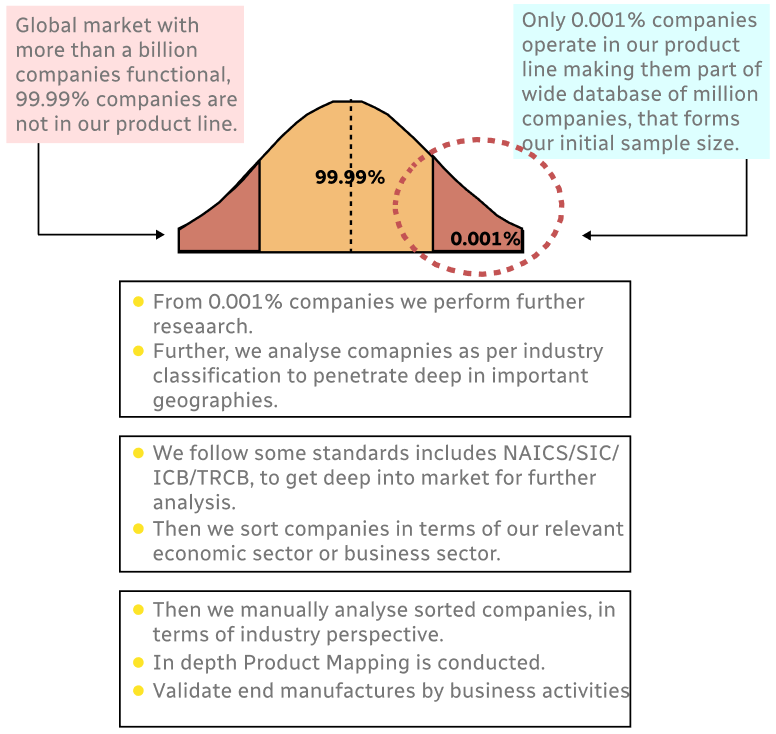
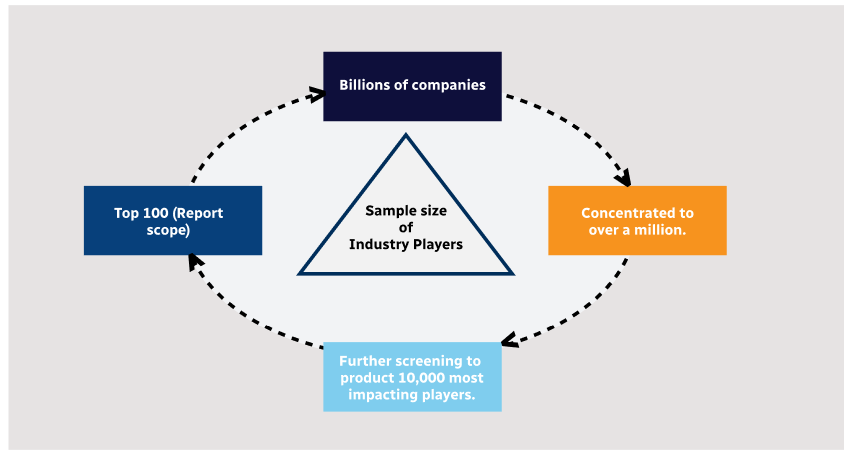
Step 1 - Identification of Relevant Samples Size from Population Database
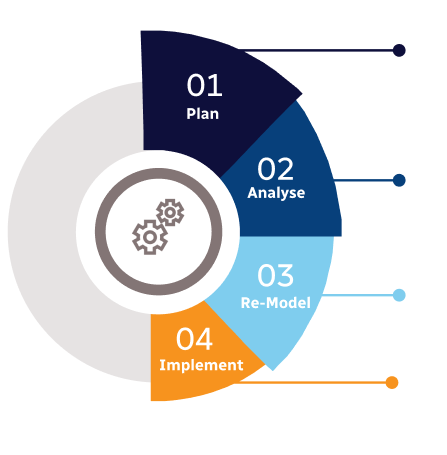
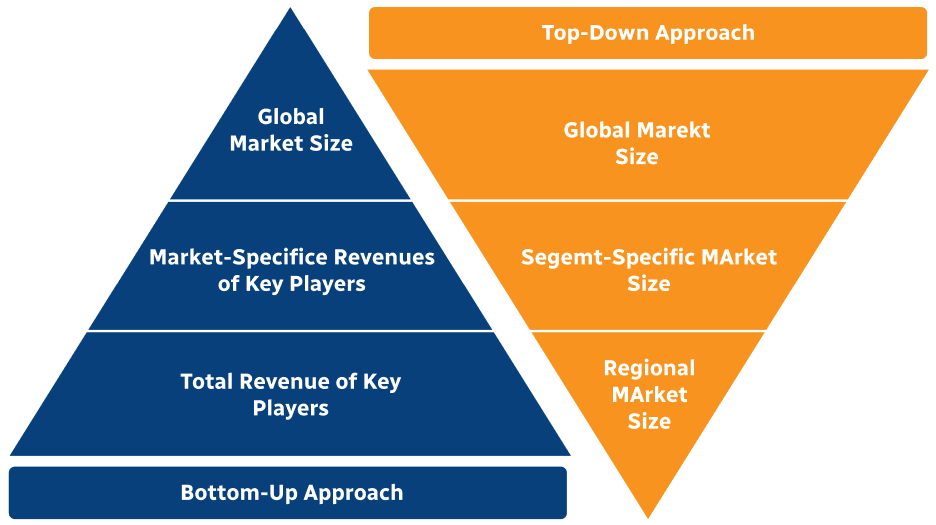
Step 2 - Approaches for Defining Global Market Size (Value, Volume* & Price*)
Note*: In applicable scenarios
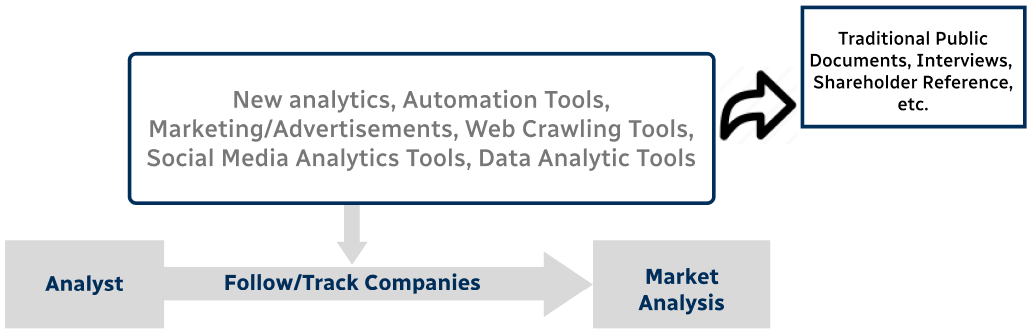
Step 3 - Data Sources
Primary Research
- Web Analytics
- Survey Reports
- Research Institute
- Latest Research Reports
- Opinion Leaders
Secondary Research
- Annual Reports
- White Paper
- Latest Press Release
- Industry Association
- Paid Database
- Investor Presentations
Step 4 - Data Triangulation
Involves using different sources of information in order to increase the validity of a study
These sources are likely to be stakeholders in a program - participants, other researchers, program staff, other community members, and so on.
Then we put all data in single framework & apply various statistical tools to find out the dynamic on the market.
During the analysis stage, feedback from the stakeholder groups would be compared to determine areas of agreement as well as areas of divergence