


Key Insights
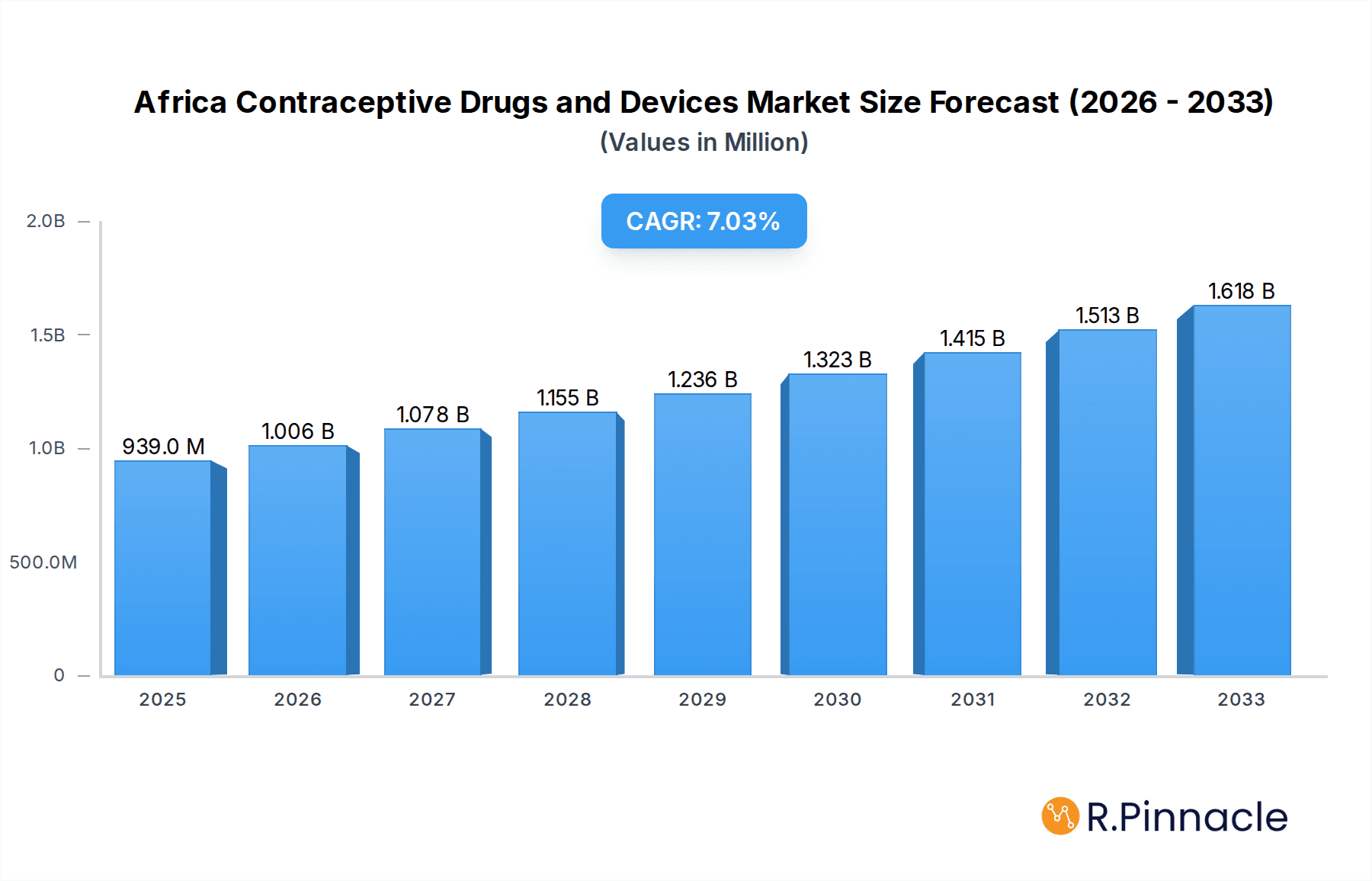
The African Contraceptive Drugs and Devices Market is poised for significant expansion, projected to reach USD 938.98 million by 2025, demonstrating a robust CAGR of 7.2% throughout the forecast period of 2025-2033. This growth is propelled by a confluence of factors, including increasing awareness surrounding family planning and sexual health across the continent, a growing young population with a high demand for contraceptive solutions, and expanding government initiatives and non-governmental organization (NGO) support aimed at improving reproductive health outcomes. The rising adoption of both pharmaceutical and device-based contraceptives, driven by varying preferences and accessibility, will further fuel market momentum. Notably, the demand for oral contraceptives and condoms remains strong, while the market is also witnessing an upward trend in the adoption of long-acting reversible contraceptives (LARCs) such as IUDs and vaginal rings, reflecting a growing preference for convenient and effective methods.
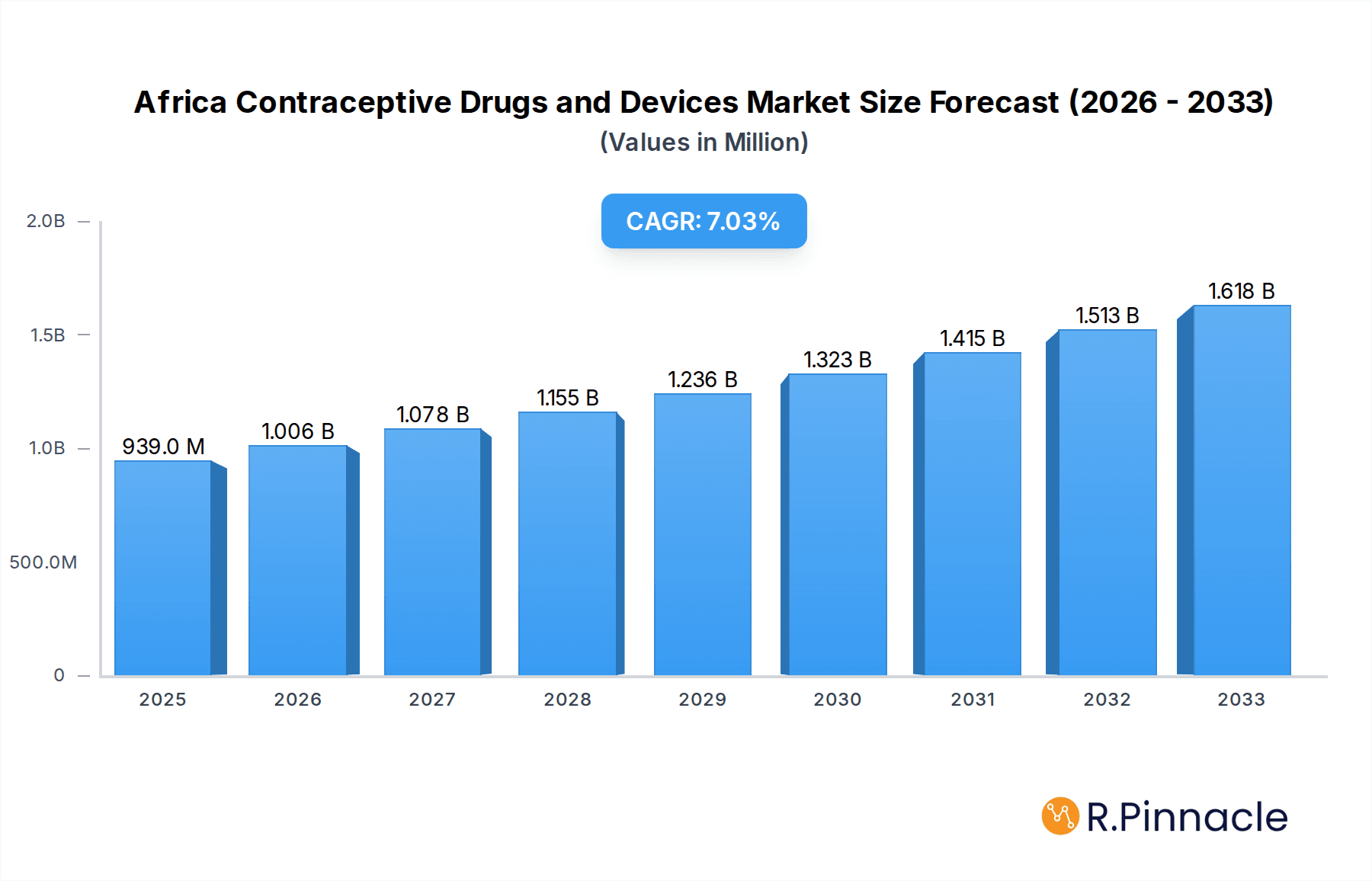
Africa Contraceptive Drugs and Devices Market Market Size (In Million)

Key market drivers include the escalating prevalence of unintended pregnancies and the subsequent need for reliable family planning methods. Furthermore, improvements in healthcare infrastructure and distribution networks across major African economies like South Africa and Nigeria are enhancing product accessibility. However, challenges such as varying regulatory landscapes, affordability concerns for certain advanced contraceptive technologies in low-income regions, and persistent cultural taboos in some communities may present moderate restraints. Despite these hurdles, the market's trajectory indicates substantial opportunities for growth, with significant potential for innovation in product development and strategic partnerships to address the diverse needs of the African population. The market is segmented by product type (drugs and devices), gender (male and female), and geography, with South Africa and Nigeria anticipated to remain dominant regional players.
Africa Contraceptive Drugs and Devices Market Company Market Share
Here's an SEO-optimized, reader-centric report description for the Africa Contraceptive Drugs and Devices Market, designed for high search visibility and engagement with industry professionals.
Africa Contraceptive Drugs and Devices Market: Growth, Trends, and Forecast to 2033
This comprehensive report delivers in-depth analysis of the Africa contraceptive drugs and devices market, offering critical insights into market structure, dynamics, and future trajectory from 2019 to 2033. With a base year of 2025 and a forecast period extending to 2033, this study provides actionable intelligence for stakeholders navigating this vital sector. The report meticulously segments the market by products (drugs and devices), gender (male and female), and geography, covering key nations like South Africa, Nigeria, Morocco, Uganda, and the Democratic Republic of the Congo. Examine market size, growth drivers, challenges, and competitive landscapes, enriched with expert analysis of industry developments.
Africa Contraceptive Drugs and Devices Market Market Structure & Innovation Trends
The Africa contraceptive drugs and devices market exhibits a moderately concentrated structure, with key players like Bayer AG, Merck & Co Inc, Teva Pharmaceutical Industries Ltd, and Medicines360 spearheading innovation. Regulatory frameworks, while evolving, present both opportunities and challenges for market entry and product approval. The influx of generic contraceptives and the increasing availability of affordable oral contraceptives and condoms are significant competitive forces. End-user demographics are shifting, with a growing younger population and increased awareness of family planning driving demand. Mergers and acquisitions (M&A) activities, though not extensively documented in terms of specific deal values for this region, are anticipated to shape market consolidation. The market share distribution is influenced by regional access, healthcare infrastructure, and government initiatives promoting reproductive health.
Africa Contraceptive Drugs and Devices Market Market Dynamics & Trends
The Africa contraceptive drugs and devices market is poised for robust growth, driven by a confluence of factors that underscore the increasing demand for reproductive health solutions across the continent. The estimated CAGR for the forecast period of 2025–2033 is expected to be substantial, fueled by a rising population, growing awareness of family planning benefits, and a tangible shift in consumer preferences towards safer and more effective contraceptive methods. Technological disruptions, such as the development of longer-acting reversible contraceptives (LARCs) like IUDs and vaginal rings, are gaining traction, offering improved adherence and convenience for users. Governments and non-governmental organizations (NGOs) are increasingly investing in public health initiatives and awareness campaigns, which are significantly boosting market penetration for both contraceptive drugs and devices. Economic development in various African nations is also contributing to increased disposable incomes, enabling a larger segment of the population to access a wider range of contraceptive products. The competitive dynamics are characterized by a blend of global pharmaceutical giants and emerging local manufacturers, all vying to capture market share by offering a diverse product portfolio that caters to varied needs and affordability levels. The demand for female contraceptives, particularly oral contraceptives and injectables, remains dominant, but there's a nascent but growing interest in male contraceptive devices and methods, indicating a potential future market segment. The accessibility and affordability of condoms continue to make them a cornerstone of the market, especially in regions with lower healthcare budgets. The continuous innovation in product formulations and delivery systems, coupled with strategic partnerships and distribution networks, are key trends shaping the market's expansive trajectory.
Dominant Regions & Segments in Africa Contraceptive Drugs and Devices Market
The Africa contraceptive drugs and devices market showcases distinct regional dominance and segment preferences, driven by a complex interplay of economic policies, healthcare infrastructure, and socio-cultural factors. South Africa consistently emerges as a dominant region, owing to its relatively advanced healthcare system, higher disposable incomes, and robust awareness campaigns surrounding reproductive health. This leadership is further bolstered by a well-established distribution network for contraceptive drugs and devices. In terms of product segments, oral contraceptives and condoms command the largest market share due to their widespread availability, affordability, and established consumer familiarity.
Geographic Dominance:
- South Africa: Leads due to strong healthcare infrastructure, high awareness levels, and government support for family planning programs. The presence of major pharmaceutical distributors ensures broad product accessibility.
- Nigeria: Shows significant growth potential, driven by its large population and increasing demand for family planning services. Government initiatives and the expanding private healthcare sector are key drivers.
- Rest of South Africa: This aggregated segment, encompassing nations like Kenya and Tanzania, is experiencing accelerated growth owing to expanding economies and targeted public health interventions.
Product Segment Dominance:
- Drugs: Oral Contraceptives are the most prevalent, favored for their ease of use and accessibility. Contraceptive Injectables are also gaining traction due to their long-acting nature and effectiveness, particularly in public health programs.
- Devices: Condoms remain a cornerstone, benefiting from their dual protection against STIs and unintended pregnancies, coupled with affordability. IUDs are increasingly recognized for their long-term efficacy and are seeing rising adoption.
Gender Segment Dominance:
- Female Contraceptives dominate the market, reflecting historical and societal focus on female responsibility in family planning. However, there is a growing, albeit nascent, interest in male contraceptives, indicating future market expansion opportunities.
The dominance of these segments is underpinned by factors such as government procurement policies, private sector investment in R&D and manufacturing, and the ongoing efforts by healthcare providers and NGOs to educate the public about various contraceptive options. The affordability and accessibility of oral contraceptives and condoms make them the leading choices across most demographics in the region.
Africa Contraceptive Drugs and Devices Market Product Innovations
Product innovations in the Africa contraceptive drugs and devices market are increasingly focused on enhancing efficacy, improving user convenience, and ensuring affordability. The development of new formulations for oral contraceptives with fewer side effects and improved compliance, alongside advancements in injectable contraceptives offering longer protection periods, are key trends. In the devices segment, innovations are centered on user-friendly designs for vaginal rings and IUDs, as well as exploring novel materials for condoms that offer improved sensation and durability. These innovations aim to address unmet needs, boost market adoption, and provide greater choice for consumers across diverse socioeconomic backgrounds.
Report Scope & Segmentation Analysis
This report meticulously analyzes the Africa Contraceptive Drugs and Devices Market, segmenting it to provide granular insights. The Products segment is divided into Drugs, encompassing Oral Contraceptives, Topical Contraceptives, and Contraceptive Injectable, and Devices, including Condoms, Diaphragms, Cervical Caps, Sponges, Vaginal Rings, IUDs, and Other Devices. The Gender segmentation covers Male and Female users. Geographically, the market is dissected into South Africa, Nigeria, Morocco, Uganda, Democratic Republic of the Congo, and the Rest of South Africa. Each segment's market size, projected growth rates, and competitive dynamics are thoroughly examined, offering a comprehensive view of market potential and strategic opportunities.
Key Drivers of Africa Contraceptive Drugs and Devices Market Growth
Key drivers propelling the Africa Contraceptive Drugs and Devices Market include a burgeoning young population demanding family planning solutions, increasing government and NGO initiatives promoting reproductive health and awareness, and rising disposable incomes in various African nations that enhance affordability. Furthermore, advancements in medical technology leading to more effective and convenient contraceptive options, such as long-acting reversible contraceptives (LARCs), are significantly boosting market demand.
Challenges in the Africa Contraceptive Drugs and Devices Market Sector
Significant challenges in the Africa Contraceptive Drugs and Devices Market include fragmented healthcare infrastructure, leading to uneven access to products and services across vast regions. Supply chain disruptions, particularly in remote areas, and high import duties on certain medical devices can further impede market penetration. Socio-cultural barriers and lack of comprehensive sex education in some communities also contribute to lower adoption rates, while the high cost of certain advanced contraceptive technologies poses an affordability challenge for a large segment of the population.
Emerging Opportunities in Africa Contraceptive Drugs and Devices Market
Emerging opportunities within the Africa Contraceptive Drugs and Devices Market lie in the growing demand for LARCs, such as IUDs and vaginal rings, due to their long-term efficacy and convenience. The increasing focus on male contraceptive research and development presents a future growth avenue. Furthermore, the expansion of digital health platforms and mobile-based health services offers innovative channels for product distribution and user education, particularly in underserved urban and rural areas.
Leading Players in the Africa Contraceptive Drugs and Devices Market Market
- Bayer AG
- Merck & Co Inc
- Teva Pharmaceutical Industries Ltd
- Medicines360
- AbbVie
- Johnson & Johnson
- Lupin Limited
- Mylan N V
- Pfizer Inc
Key Developments in Africa Contraceptive Drugs and Devices Market Industry
- 2023: Launch of a new low-dose oral contraceptive formulation in South Africa, targeting improved patient compliance and reduced side effects.
- 2023: Expansion of a public health initiative in Nigeria focused on increasing access to free IUD insertions in rural communities.
- 2022: Introduction of an innovative male condom design by a regional manufacturer in Kenya, emphasizing enhanced user experience and durability.
- 2022: Partnerships between global pharmaceutical companies and local distributors to enhance the supply chain for contraceptive injectables across multiple East African countries.
- 2021: Regulatory approval granted for a new vaginal ring contraceptive in Morocco, offering a discreet and long-acting family planning option.
Future Outlook for Africa Contraceptive Drugs and Devices Market Market
The future outlook for the Africa Contraceptive Drugs and Devices Market is exceptionally promising, driven by increasing demographic pressures and a growing recognition of the importance of reproductive health. The continuous innovation in drug formulations and device technology, coupled with strategic investments in manufacturing and distribution networks, will further fuel market expansion. Government commitments to improving healthcare access and family planning services, alongside rising consumer awareness, are set to accelerate the adoption of a wider array of contraceptive solutions, solidifying the market's trajectory towards significant growth and impact.
Africa Contraceptive Drugs and Devices Market Segmentation
-
1. Products
-
1.1. By Drugs
- 1.1.1. Oral Contraceptives
- 1.1.2. Topical Contraceptives
- 1.1.3. Contraceptive Injectable
-
1.2. By Device
- 1.2.1. Condoms
- 1.2.2. Diaphragms
- 1.2.3. Cervical Caps
- 1.2.4. Sponges
- 1.2.5. Vaginal Rings
- 1.2.6. IUD
- 1.2.7. Other Devices
-
1.1. By Drugs
-
2. Gender
- 2.1. Male
- 2.2. Female
-
3. Geography
- 3.1. South Africa
- 3.2. Nigeria
- 3.3. Morocco
- 3.4. Uganda
- 3.5. Democratic Republic of the Congo
- 3.6. Rest of South Africa
Africa Contraceptive Drugs and Devices Market Segmentation By Geography
- 1. South Africa
- 2. Nigeria
- 3. Morocco
- 4. Uganda
- 5. Democratic Republic of the Congo
- 6. Rest of South Africa
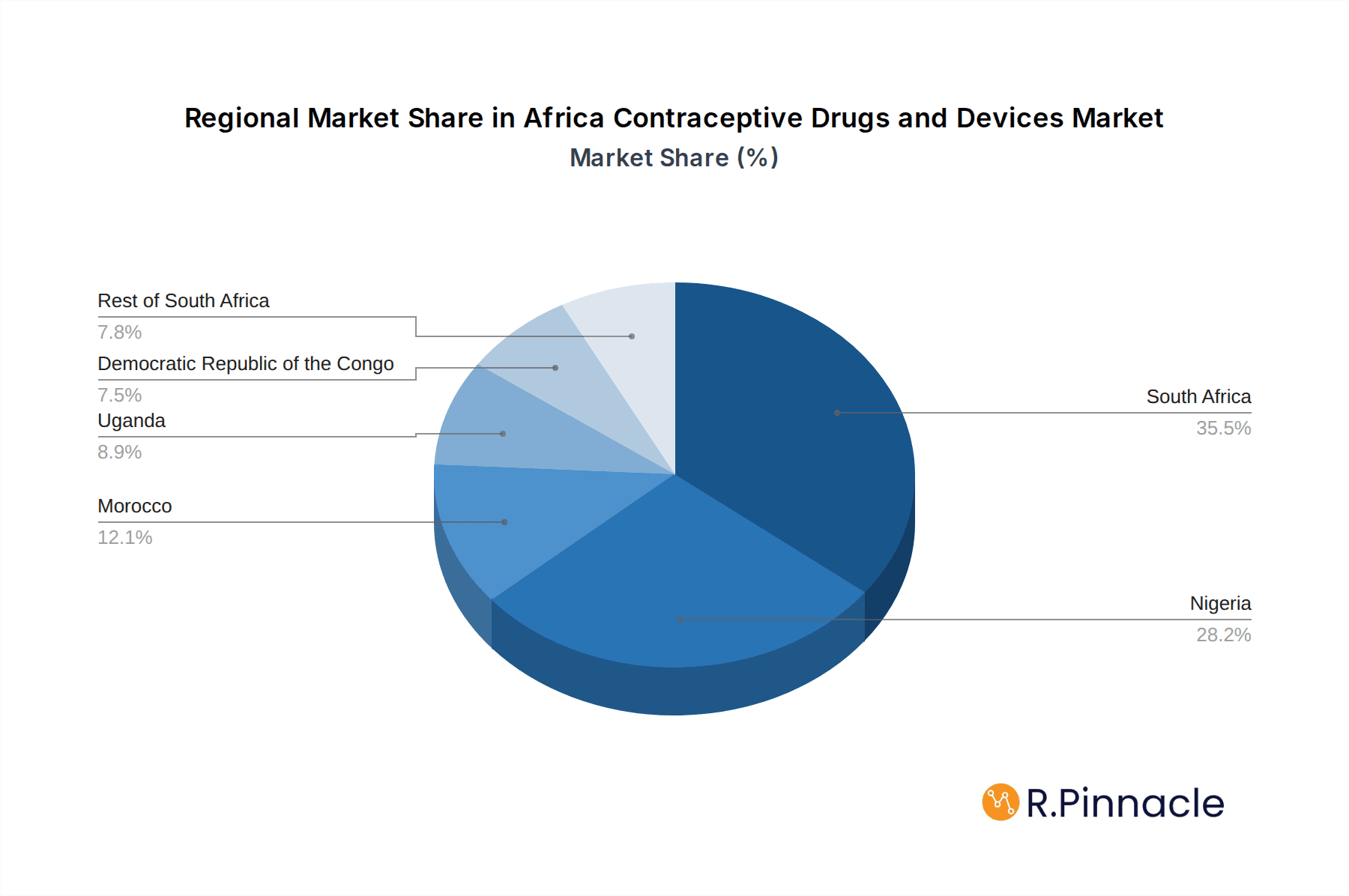
Africa Contraceptive Drugs and Devices Market Regional Market Share
Geographic Coverage of Africa Contraceptive Drugs and Devices Market
Africa Contraceptive Drugs and Devices Market REPORT HIGHLIGHTS
| Aspects | Details |
|---|---|
| Study Period | 2020-2034 |
| Base Year | 2025 |
| Estimated Year | 2026 |
| Forecast Period | 2026-2034 |
| Historical Period | 2020-2025 |
| Growth Rate | CAGR of 7.2% from 2020-2034 |
| Segmentation |
|
Table of Contents
- 1. Introduction
- 1.1. Research Scope
- 1.2. Market Segmentation
- 1.3. Research Methodology
- 1.4. Definitions and Assumptions
- 2. Executive Summary
- 2.1. Introduction
- 3. Market Dynamics
- 3.1. Introduction
- 3.2. Market Drivers
- 3.2.1. Increasing Incidence of the STDs and Unplanned Pregnancies; Rise in Government Initiatives
- 3.3. Market Restrains
- 3.3.1. Side Effects Associated with the Use of Contraceptive Drugs and Devices
- 3.4. Market Trends
- 3.4.1. The Oral Contraceptives Segment is Expected to Show Better Growth in the Forecast Years
- 4. Market Factor Analysis
- 4.1. Porters Five Forces
- 4.2. Supply/Value Chain
- 4.3. PESTEL analysis
- 4.4. Market Entropy
- 4.5. Patent/Trademark Analysis
- 5. Africa Contraceptive Drugs and Devices Market Analysis, Insights and Forecast, 2020-2032
- 5.1. Market Analysis, Insights and Forecast - by Products
- 5.1.1. By Drugs
- 5.1.1.1. Oral Contraceptives
- 5.1.1.2. Topical Contraceptives
- 5.1.1.3. Contraceptive Injectable
- 5.1.2. By Device
- 5.1.2.1. Condoms
- 5.1.2.2. Diaphragms
- 5.1.2.3. Cervical Caps
- 5.1.2.4. Sponges
- 5.1.2.5. Vaginal Rings
- 5.1.2.6. IUD
- 5.1.2.7. Other Devices
- 5.1.1. By Drugs
- 5.2. Market Analysis, Insights and Forecast - by Gender
- 5.2.1. Male
- 5.2.2. Female
- 5.3. Market Analysis, Insights and Forecast - by Geography
- 5.3.1. South Africa
- 5.3.2. Nigeria
- 5.3.3. Morocco
- 5.3.4. Uganda
- 5.3.5. Democratic Republic of the Congo
- 5.3.6. Rest of South Africa
- 5.4. Market Analysis, Insights and Forecast - by Region
- 5.4.1. South Africa
- 5.4.2. Nigeria
- 5.4.3. Morocco
- 5.4.4. Uganda
- 5.4.5. Democratic Republic of the Congo
- 5.4.6. Rest of South Africa
- 5.1. Market Analysis, Insights and Forecast - by Products
- 6. South Africa Africa Contraceptive Drugs and Devices Market Analysis, Insights and Forecast, 2020-2032
- 6.1. Market Analysis, Insights and Forecast - by Products
- 6.1.1. By Drugs
- 6.1.1.1. Oral Contraceptives
- 6.1.1.2. Topical Contraceptives
- 6.1.1.3. Contraceptive Injectable
- 6.1.2. By Device
- 6.1.2.1. Condoms
- 6.1.2.2. Diaphragms
- 6.1.2.3. Cervical Caps
- 6.1.2.4. Sponges
- 6.1.2.5. Vaginal Rings
- 6.1.2.6. IUD
- 6.1.2.7. Other Devices
- 6.1.1. By Drugs
- 6.2. Market Analysis, Insights and Forecast - by Gender
- 6.2.1. Male
- 6.2.2. Female
- 6.3. Market Analysis, Insights and Forecast - by Geography
- 6.3.1. South Africa
- 6.3.2. Nigeria
- 6.3.3. Morocco
- 6.3.4. Uganda
- 6.3.5. Democratic Republic of the Congo
- 6.3.6. Rest of South Africa
- 6.1. Market Analysis, Insights and Forecast - by Products
- 7. Nigeria Africa Contraceptive Drugs and Devices Market Analysis, Insights and Forecast, 2020-2032
- 7.1. Market Analysis, Insights and Forecast - by Products
- 7.1.1. By Drugs
- 7.1.1.1. Oral Contraceptives
- 7.1.1.2. Topical Contraceptives
- 7.1.1.3. Contraceptive Injectable
- 7.1.2. By Device
- 7.1.2.1. Condoms
- 7.1.2.2. Diaphragms
- 7.1.2.3. Cervical Caps
- 7.1.2.4. Sponges
- 7.1.2.5. Vaginal Rings
- 7.1.2.6. IUD
- 7.1.2.7. Other Devices
- 7.1.1. By Drugs
- 7.2. Market Analysis, Insights and Forecast - by Gender
- 7.2.1. Male
- 7.2.2. Female
- 7.3. Market Analysis, Insights and Forecast - by Geography
- 7.3.1. South Africa
- 7.3.2. Nigeria
- 7.3.3. Morocco
- 7.3.4. Uganda
- 7.3.5. Democratic Republic of the Congo
- 7.3.6. Rest of South Africa
- 7.1. Market Analysis, Insights and Forecast - by Products
- 8. Morocco Africa Contraceptive Drugs and Devices Market Analysis, Insights and Forecast, 2020-2032
- 8.1. Market Analysis, Insights and Forecast - by Products
- 8.1.1. By Drugs
- 8.1.1.1. Oral Contraceptives
- 8.1.1.2. Topical Contraceptives
- 8.1.1.3. Contraceptive Injectable
- 8.1.2. By Device
- 8.1.2.1. Condoms
- 8.1.2.2. Diaphragms
- 8.1.2.3. Cervical Caps
- 8.1.2.4. Sponges
- 8.1.2.5. Vaginal Rings
- 8.1.2.6. IUD
- 8.1.2.7. Other Devices
- 8.1.1. By Drugs
- 8.2. Market Analysis, Insights and Forecast - by Gender
- 8.2.1. Male
- 8.2.2. Female
- 8.3. Market Analysis, Insights and Forecast - by Geography
- 8.3.1. South Africa
- 8.3.2. Nigeria
- 8.3.3. Morocco
- 8.3.4. Uganda
- 8.3.5. Democratic Republic of the Congo
- 8.3.6. Rest of South Africa
- 8.1. Market Analysis, Insights and Forecast - by Products
- 9. Uganda Africa Contraceptive Drugs and Devices Market Analysis, Insights and Forecast, 2020-2032
- 9.1. Market Analysis, Insights and Forecast - by Products
- 9.1.1. By Drugs
- 9.1.1.1. Oral Contraceptives
- 9.1.1.2. Topical Contraceptives
- 9.1.1.3. Contraceptive Injectable
- 9.1.2. By Device
- 9.1.2.1. Condoms
- 9.1.2.2. Diaphragms
- 9.1.2.3. Cervical Caps
- 9.1.2.4. Sponges
- 9.1.2.5. Vaginal Rings
- 9.1.2.6. IUD
- 9.1.2.7. Other Devices
- 9.1.1. By Drugs
- 9.2. Market Analysis, Insights and Forecast - by Gender
- 9.2.1. Male
- 9.2.2. Female
- 9.3. Market Analysis, Insights and Forecast - by Geography
- 9.3.1. South Africa
- 9.3.2. Nigeria
- 9.3.3. Morocco
- 9.3.4. Uganda
- 9.3.5. Democratic Republic of the Congo
- 9.3.6. Rest of South Africa
- 9.1. Market Analysis, Insights and Forecast - by Products
- 10. Democratic Republic of the Congo Africa Contraceptive Drugs and Devices Market Analysis, Insights and Forecast, 2020-2032
- 10.1. Market Analysis, Insights and Forecast - by Products
- 10.1.1. By Drugs
- 10.1.1.1. Oral Contraceptives
- 10.1.1.2. Topical Contraceptives
- 10.1.1.3. Contraceptive Injectable
- 10.1.2. By Device
- 10.1.2.1. Condoms
- 10.1.2.2. Diaphragms
- 10.1.2.3. Cervical Caps
- 10.1.2.4. Sponges
- 10.1.2.5. Vaginal Rings
- 10.1.2.6. IUD
- 10.1.2.7. Other Devices
- 10.1.1. By Drugs
- 10.2. Market Analysis, Insights and Forecast - by Gender
- 10.2.1. Male
- 10.2.2. Female
- 10.3. Market Analysis, Insights and Forecast - by Geography
- 10.3.1. South Africa
- 10.3.2. Nigeria
- 10.3.3. Morocco
- 10.3.4. Uganda
- 10.3.5. Democratic Republic of the Congo
- 10.3.6. Rest of South Africa
- 10.1. Market Analysis, Insights and Forecast - by Products
- 11. Rest of South Africa Africa Contraceptive Drugs and Devices Market Analysis, Insights and Forecast, 2020-2032
- 11.1. Market Analysis, Insights and Forecast - by Products
- 11.1.1. By Drugs
- 11.1.1.1. Oral Contraceptives
- 11.1.1.2. Topical Contraceptives
- 11.1.1.3. Contraceptive Injectable
- 11.1.2. By Device
- 11.1.2.1. Condoms
- 11.1.2.2. Diaphragms
- 11.1.2.3. Cervical Caps
- 11.1.2.4. Sponges
- 11.1.2.5. Vaginal Rings
- 11.1.2.6. IUD
- 11.1.2.7. Other Devices
- 11.1.1. By Drugs
- 11.2. Market Analysis, Insights and Forecast - by Gender
- 11.2.1. Male
- 11.2.2. Female
- 11.3. Market Analysis, Insights and Forecast - by Geography
- 11.3.1. South Africa
- 11.3.2. Nigeria
- 11.3.3. Morocco
- 11.3.4. Uganda
- 11.3.5. Democratic Republic of the Congo
- 11.3.6. Rest of South Africa
- 11.1. Market Analysis, Insights and Forecast - by Products
- 12. Competitive Analysis
- 12.1. Market Share Analysis 2025
- 12.2. Company Profiles
- 12.2.1 Bayer AG
- 12.2.1.1. Overview
- 12.2.1.2. Products
- 12.2.1.3. SWOT Analysis
- 12.2.1.4. Recent Developments
- 12.2.1.5. Financials (Based on Availability)
- 12.2.2 Merck & Co Inc
- 12.2.2.1. Overview
- 12.2.2.2. Products
- 12.2.2.3. SWOT Analysis
- 12.2.2.4. Recent Developments
- 12.2.2.5. Financials (Based on Availability)
- 12.2.3 Teva Pharmaceutical Industries Ltd
- 12.2.3.1. Overview
- 12.2.3.2. Products
- 12.2.3.3. SWOT Analysis
- 12.2.3.4. Recent Developments
- 12.2.3.5. Financials (Based on Availability)
- 12.2.4 Medicines360*List Not Exhaustive
- 12.2.4.1. Overview
- 12.2.4.2. Products
- 12.2.4.3. SWOT Analysis
- 12.2.4.4. Recent Developments
- 12.2.4.5. Financials (Based on Availability)
- 12.2.5 AbbVie
- 12.2.5.1. Overview
- 12.2.5.2. Products
- 12.2.5.3. SWOT Analysis
- 12.2.5.4. Recent Developments
- 12.2.5.5. Financials (Based on Availability)
- 12.2.6 Johnson & Johnson
- 12.2.6.1. Overview
- 12.2.6.2. Products
- 12.2.6.3. SWOT Analysis
- 12.2.6.4. Recent Developments
- 12.2.6.5. Financials (Based on Availability)
- 12.2.7 Lupin Limited
- 12.2.7.1. Overview
- 12.2.7.2. Products
- 12.2.7.3. SWOT Analysis
- 12.2.7.4. Recent Developments
- 12.2.7.5. Financials (Based on Availability)
- 12.2.8 Mylan N V
- 12.2.8.1. Overview
- 12.2.8.2. Products
- 12.2.8.3. SWOT Analysis
- 12.2.8.4. Recent Developments
- 12.2.8.5. Financials (Based on Availability)
- 12.2.9 Pfizer Inc
- 12.2.9.1. Overview
- 12.2.9.2. Products
- 12.2.9.3. SWOT Analysis
- 12.2.9.4. Recent Developments
- 12.2.9.5. Financials (Based on Availability)
- 12.2.1 Bayer AG
List of Figures
- Figure 1: Africa Contraceptive Drugs and Devices Market Revenue Breakdown (million, %) by Product 2025 & 2033
- Figure 2: Africa Contraceptive Drugs and Devices Market Share (%) by Company 2025
List of Tables
- Table 1: Africa Contraceptive Drugs and Devices Market Revenue million Forecast, by Products 2020 & 2033
- Table 2: Africa Contraceptive Drugs and Devices Market Revenue million Forecast, by Gender 2020 & 2033
- Table 3: Africa Contraceptive Drugs and Devices Market Revenue million Forecast, by Geography 2020 & 2033
- Table 4: Africa Contraceptive Drugs and Devices Market Revenue million Forecast, by Region 2020 & 2033
- Table 5: Africa Contraceptive Drugs and Devices Market Revenue million Forecast, by Products 2020 & 2033
- Table 6: Africa Contraceptive Drugs and Devices Market Revenue million Forecast, by Gender 2020 & 2033
- Table 7: Africa Contraceptive Drugs and Devices Market Revenue million Forecast, by Geography 2020 & 2033
- Table 8: Africa Contraceptive Drugs and Devices Market Revenue million Forecast, by Country 2020 & 2033
- Table 9: Africa Contraceptive Drugs and Devices Market Revenue million Forecast, by Products 2020 & 2033
- Table 10: Africa Contraceptive Drugs and Devices Market Revenue million Forecast, by Gender 2020 & 2033
- Table 11: Africa Contraceptive Drugs and Devices Market Revenue million Forecast, by Geography 2020 & 2033
- Table 12: Africa Contraceptive Drugs and Devices Market Revenue million Forecast, by Country 2020 & 2033
- Table 13: Africa Contraceptive Drugs and Devices Market Revenue million Forecast, by Products 2020 & 2033
- Table 14: Africa Contraceptive Drugs and Devices Market Revenue million Forecast, by Gender 2020 & 2033
- Table 15: Africa Contraceptive Drugs and Devices Market Revenue million Forecast, by Geography 2020 & 2033
- Table 16: Africa Contraceptive Drugs and Devices Market Revenue million Forecast, by Country 2020 & 2033
- Table 17: Africa Contraceptive Drugs and Devices Market Revenue million Forecast, by Products 2020 & 2033
- Table 18: Africa Contraceptive Drugs and Devices Market Revenue million Forecast, by Gender 2020 & 2033
- Table 19: Africa Contraceptive Drugs and Devices Market Revenue million Forecast, by Geography 2020 & 2033
- Table 20: Africa Contraceptive Drugs and Devices Market Revenue million Forecast, by Country 2020 & 2033
- Table 21: Africa Contraceptive Drugs and Devices Market Revenue million Forecast, by Products 2020 & 2033
- Table 22: Africa Contraceptive Drugs and Devices Market Revenue million Forecast, by Gender 2020 & 2033
- Table 23: Africa Contraceptive Drugs and Devices Market Revenue million Forecast, by Geography 2020 & 2033
- Table 24: Africa Contraceptive Drugs and Devices Market Revenue million Forecast, by Country 2020 & 2033
- Table 25: Africa Contraceptive Drugs and Devices Market Revenue million Forecast, by Products 2020 & 2033
- Table 26: Africa Contraceptive Drugs and Devices Market Revenue million Forecast, by Gender 2020 & 2033
- Table 27: Africa Contraceptive Drugs and Devices Market Revenue million Forecast, by Geography 2020 & 2033
- Table 28: Africa Contraceptive Drugs and Devices Market Revenue million Forecast, by Country 2020 & 2033
Frequently Asked Questions
1. What is the projected Compound Annual Growth Rate (CAGR) of the Africa Contraceptive Drugs and Devices Market?
The projected CAGR is approximately 7.2%.
2. Which companies are prominent players in the Africa Contraceptive Drugs and Devices Market?
Key companies in the market include Bayer AG, Merck & Co Inc, Teva Pharmaceutical Industries Ltd, Medicines360*List Not Exhaustive, AbbVie, Johnson & Johnson, Lupin Limited, Mylan N V, Pfizer Inc.
3. What are the main segments of the Africa Contraceptive Drugs and Devices Market?
The market segments include Products, Gender, Geography.
4. Can you provide details about the market size?
The market size is estimated to be USD 938.98 million as of 2022.
5. What are some drivers contributing to market growth?
Increasing Incidence of the STDs and Unplanned Pregnancies; Rise in Government Initiatives.
6. What are the notable trends driving market growth?
The Oral Contraceptives Segment is Expected to Show Better Growth in the Forecast Years.
7. Are there any restraints impacting market growth?
Side Effects Associated with the Use of Contraceptive Drugs and Devices.
8. Can you provide examples of recent developments in the market?
N/A
9. What pricing options are available for accessing the report?
Pricing options include single-user, multi-user, and enterprise licenses priced at USD 4750, USD 5250, and USD 8750 respectively.
10. Is the market size provided in terms of value or volume?
The market size is provided in terms of value, measured in million.
11. Are there any specific market keywords associated with the report?
Yes, the market keyword associated with the report is "Africa Contraceptive Drugs and Devices Market," which aids in identifying and referencing the specific market segment covered.
12. How do I determine which pricing option suits my needs best?
The pricing options vary based on user requirements and access needs. Individual users may opt for single-user licenses, while businesses requiring broader access may choose multi-user or enterprise licenses for cost-effective access to the report.
13. Are there any additional resources or data provided in the Africa Contraceptive Drugs and Devices Market report?
While the report offers comprehensive insights, it's advisable to review the specific contents or supplementary materials provided to ascertain if additional resources or data are available.
14. How can I stay updated on further developments or reports in the Africa Contraceptive Drugs and Devices Market?
To stay informed about further developments, trends, and reports in the Africa Contraceptive Drugs and Devices Market, consider subscribing to industry newsletters, following relevant companies and organizations, or regularly checking reputable industry news sources and publications.
Methodology
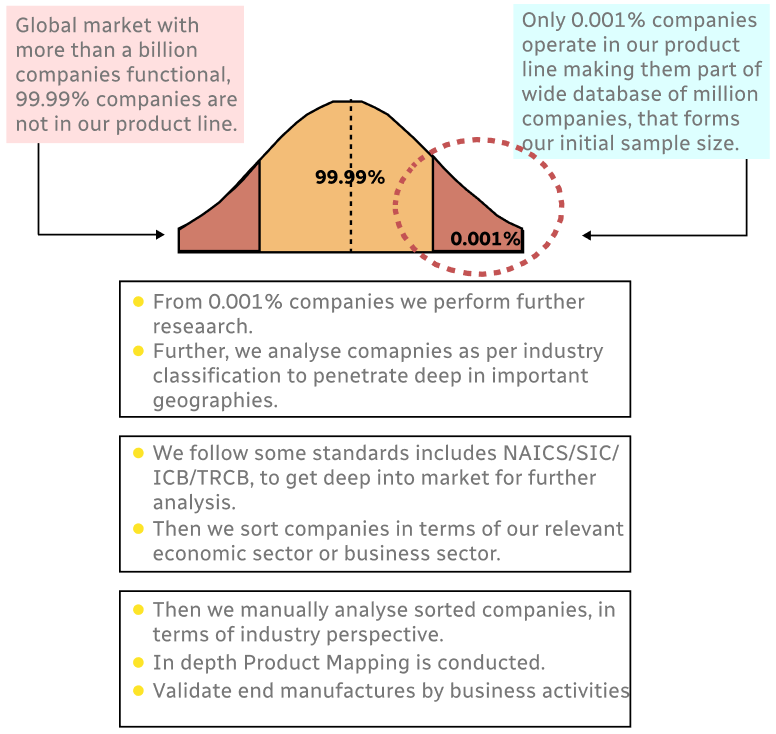
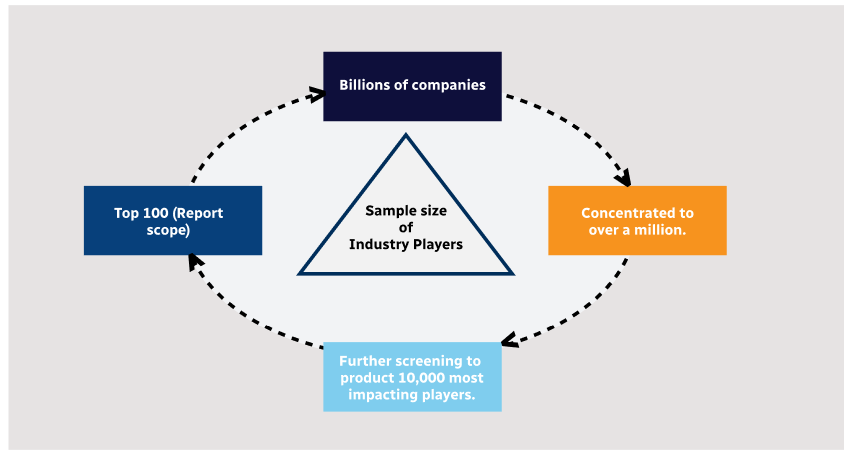
Step 1 - Identification of Relevant Samples Size from Population Database
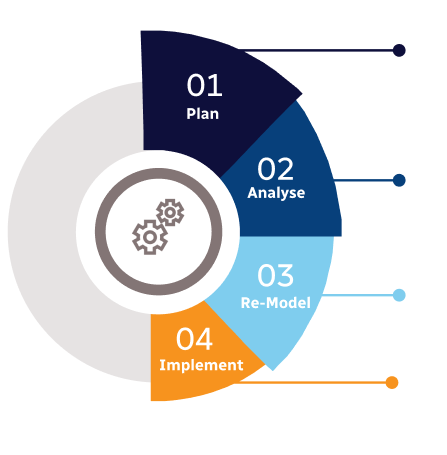
Step 2 - Approaches for Defining Global Market Size (Value, Volume* & Price*)
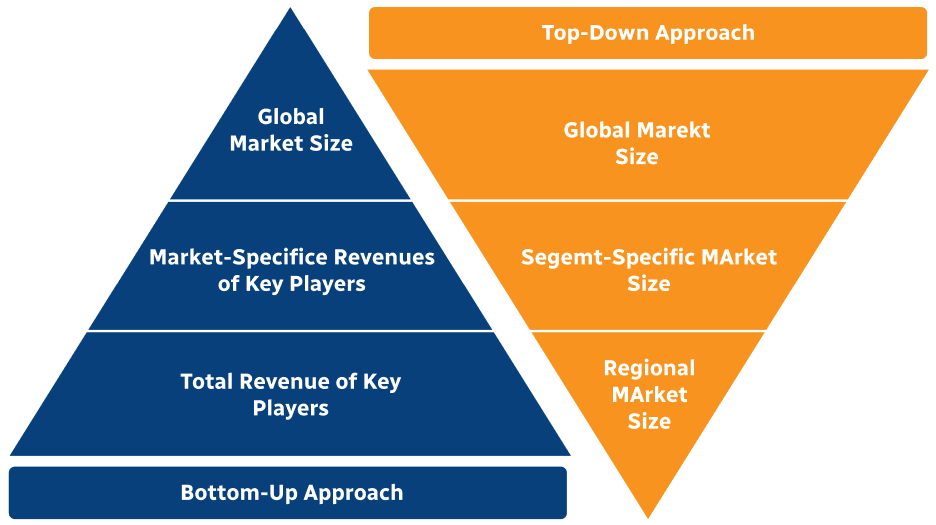
Note*: In applicable scenarios
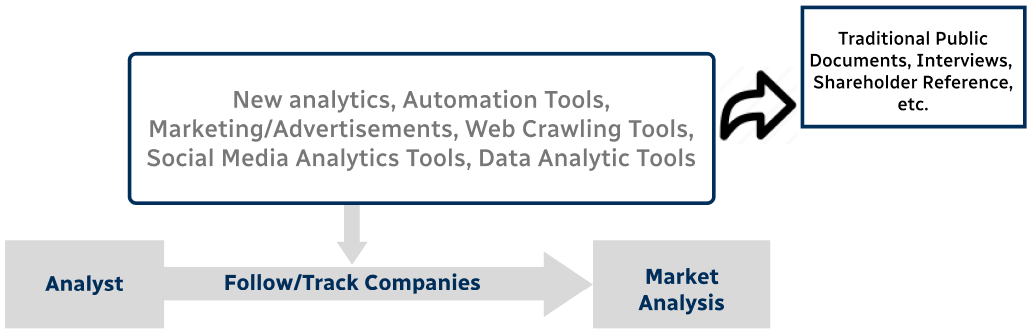
Step 3 - Data Sources
Primary Research
- Web Analytics
- Survey Reports
- Research Institute
- Latest Research Reports
- Opinion Leaders
Secondary Research
- Annual Reports
- White Paper
- Latest Press Release
- Industry Association
- Paid Database
- Investor Presentations
Step 4 - Data Triangulation
Involves using different sources of information in order to increase the validity of a study
These sources are likely to be stakeholders in a program - participants, other researchers, program staff, other community members, and so on.
Then we put all data in single framework & apply various statistical tools to find out the dynamic on the market.
During the analysis stage, feedback from the stakeholder groups would be compared to determine areas of agreement as well as areas of divergence