


Key Insights
The global Artificial Kidney market is poised for significant expansion, projected to reach USD 1.16 Million by 2025 and grow at a robust Compound Annual Growth Rate (CAGR) of 7.20%. This upward trajectory is fueled by a confluence of escalating chronic kidney disease (CKD) prevalence, an aging global population, and continuous advancements in medical technology. The growing demand for improved dialysis technologies and the increasing focus on organ transplantation, despite its inherent limitations, are further bolstering market growth. Furthermore, the rising healthcare expenditure across developing economies is creating a more accessible market for artificial kidney solutions. Innovative research and development in areas such as wearable artificial kidneys and bio-artificial kidneys are also contributing to the optimism surrounding the market's future, promising more effective and less invasive treatment options for patients. The market encompasses a range of artificial organ types, including artificial hearts, lungs, and cochlear implants, alongside bionic solutions for vision, hearing, orthopedic, and cardiac applications, reflecting a broader trend towards integrated bio-electronic medical devices.
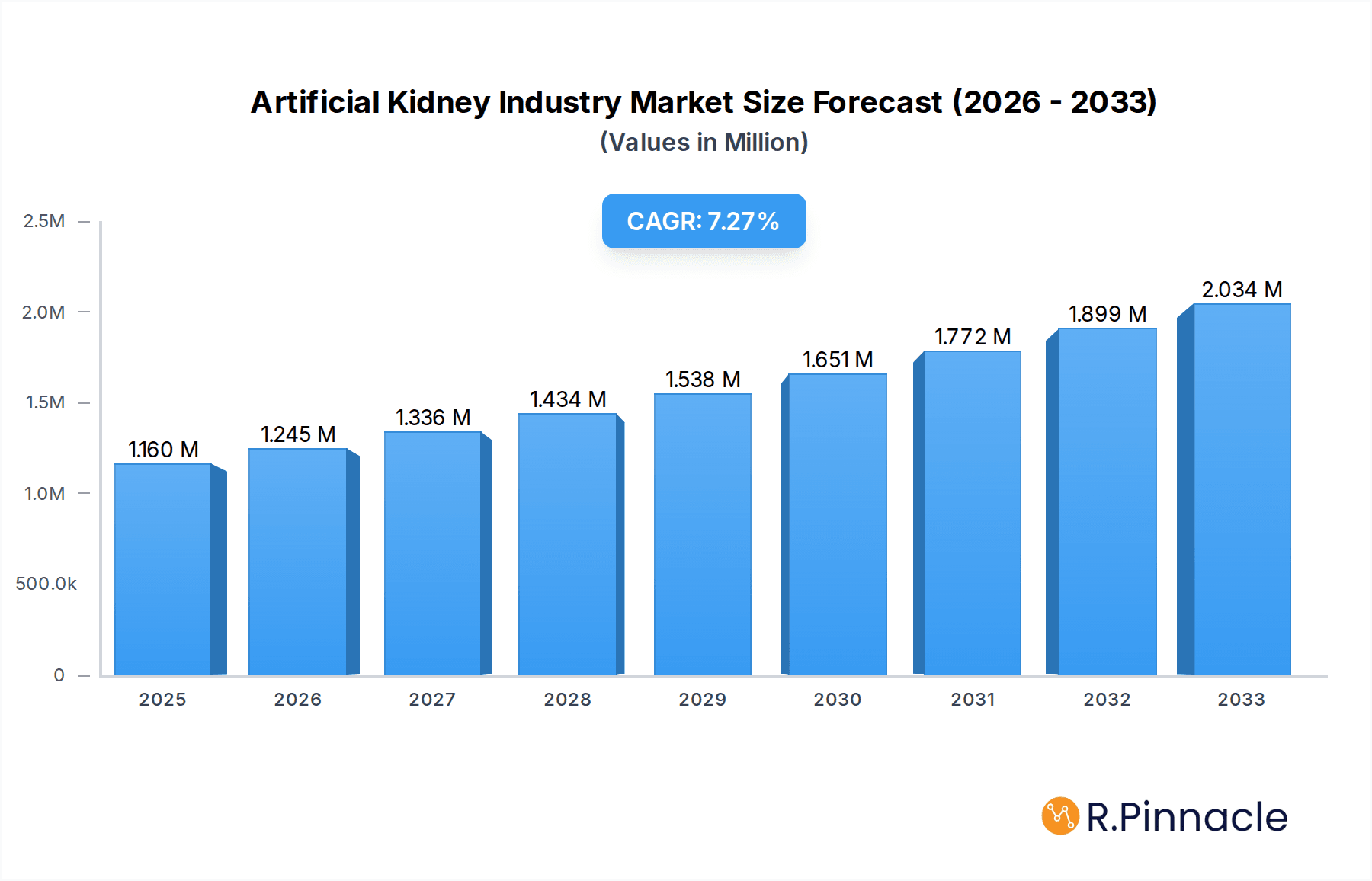
Artificial Kidney Industry Market Size (In Million)

The market's growth is primarily driven by the increasing incidence of kidney failure, a condition exacerbated by rising rates of diabetes and hypertension. These conditions often lead to severe kidney damage, necessitating renal replacement therapies. While traditional dialysis remains a cornerstone of treatment, the limitations associated with it, such as patient discomfort and lifestyle restrictions, are driving innovation towards more advanced artificial kidney solutions. The United States represents a significant market due to its high prevalence of kidney disease and substantial investment in healthcare research and development. Canada and Mexico are also contributing to market expansion, driven by increasing healthcare access and a growing awareness of advanced treatment options. Despite the promising growth, potential restraints include the high cost of development and implementation of these advanced technologies, stringent regulatory approval processes, and the need for extensive clinical trials. However, the long-term outlook remains exceptionally positive, with ongoing technological breakthroughs expected to overcome these challenges and democratize access to life-saving artificial kidney technologies.

Artificial Kidney Industry Company Market Share
This comprehensive report delivers in-depth analysis and actionable insights into the global artificial kidney market, a rapidly evolving sector within the broader artificial organ market and bionics industry. Leveraging high-ranking keywords such as bioartificial kidney, kidney innovation, artificial organ market size, and bionic devices, this report is meticulously crafted for industry professionals, researchers, and investors seeking to understand market dynamics, identify growth opportunities, and navigate the competitive landscape. The study encompasses a detailed market analysis from the historical period of 2019–2024, with a base year of 2025, and extends to a forecast period of 2025–2033, projecting a significant CAGR for the artificial kidney industry.
Artificial Kidney Industry Market Structure & Innovation Trends
The artificial kidney industry is characterized by a moderate to high level of market concentration, driven by significant R&D investments and the stringent regulatory pathways for medical devices. Key innovation drivers include the growing prevalence of Chronic Kidney Disease (CKD), advancements in biomaterials, microfluidics, and regenerative medicine, and government initiatives aimed at accelerating the development of novel kidney replacement therapies. The United States, in particular, is a hotbed for innovation, exemplified by the Kidney Innovation Accelerator (KidneyX) prize competition launched in August 2022 by the HHS and ASN, aiming to foster the development of a fully functional bioartificial kidney. While direct market share data for individual artificial kidney devices is proprietary, leading companies like Medtronic Inc, Baxter International Inc, and Asahi Kasei Medical Co Ltd are prominent players in the broader artificial organ market. Mergers and acquisitions (M&A) are likely to play a crucial role in consolidating market share and acquiring innovative technologies. For instance, the artificial organ market has seen M&A activities valued in the hundreds of Million in adjacent sectors, signaling potential for significant deals within the artificial kidney space as technologies mature. The landscape also involves continuous product development and strategic partnerships to address unmet clinical needs and improve patient outcomes, with artificial organ market growth being a primary focus.
Artificial Kidney Industry Market Dynamics & Trends
The artificial kidney market is poised for substantial growth, driven by a confluence of technological advancements, an aging global population, and the increasing incidence of kidney failure. The projected CAGR for the artificial kidney industry is expected to be robust, fueled by breakthroughs in implantable artificial kidneys and wearable dialysis devices. Market penetration of these advanced technologies is still in its nascent stages, offering significant upside potential. Factors such as rising healthcare expenditure globally, coupled with a growing awareness of kidney health and available treatment options, are key growth catalysts. Technological disruptions are at the forefront, with research focusing on creating more efficient, less invasive, and potentially reversible artificial kidney solutions. The development of bioartificial kidneys that incorporate living cells to mimic natural kidney function represents a paradigm shift, promising to reduce the reliance on dialysis and transplantation. Consumer preferences are increasingly shifting towards solutions that offer greater independence and improved quality of life, favoring miniaturized, wearable, or implantable devices over traditional hemodialysis. The competitive dynamics within the artificial kidney market are intensifying, with both established medical device manufacturers and agile biotech startups vying for market leadership. Strategic collaborations, clinical trial successes, and regulatory approvals will be critical determinants of success. The global market size for artificial organs is projected to reach billions of Million by 2033, with artificial kidneys playing a significant role. Furthermore, the growing demand for bionic devices across various medical applications underscores the broader trend towards advanced bio-integrated technologies.
Dominant Regions & Segments in Artificial Kidney Industry
The United States stands as the dominant region in the artificial kidney industry, driven by a robust healthcare infrastructure, substantial R&D investments, a high prevalence of kidney diseases, and favorable government initiatives. The country consistently leads in the adoption of advanced medical technologies, including artificial organs and bionic devices.
Key Drivers of Dominance in the United States:
- Economic Policies: Significant funding allocated to medical research and development through agencies like the National Institutes of Health (NIH) and private venture capital fosters innovation and commercialization.
- Infrastructure: A well-established network of research institutions, hospitals, and specialized clinics facilitates clinical trials and the widespread adoption of new technologies.
- Regulatory Framework: While stringent, the FDA's pathway for medical device approval, coupled with initiatives like KidneyX, encourages focused development of innovative kidney replacement therapies.
- Market Size & Demand: The high incidence of Chronic Kidney Disease (CKD) and end-stage renal disease (ESRD) in the US creates a substantial patient pool demanding advanced treatment solutions.
Segment Analysis:
- Type: Artificial Organ (Artificial Kidney): This segment is the primary focus and driver of growth within the artificial kidney industry. Innovations in both implantable artificial kidneys and advanced dialysis technologies are central to this segment's expansion. The artificial organ market as a whole is seeing considerable growth, with the artificial kidney sub-segment showing particular promise due to the immense unmet need.
- Type: Artificial Organ (Other Organ Types): While not directly artificial kidneys, advancements in other artificial organs, such as artificial hearts (exemplified by the successful implantation in a child in Canada in July 2022), showcase the broader technological progress in creating life-sustaining bio-integrated devices. This progress indirectly benefits the artificial kidney market by proving the viability of complex organ replacements.
- Bionics (Cardiac Bionics): The progress in cardiac bionics, like the total artificial heart mentioned, demonstrates the increasing capability in creating sophisticated implantable devices. This technological expertise and manufacturing prowess can often be leveraged for the development of artificial kidneys.
- Geography: United States: As highlighted, the US leads due to its strong ecosystem for innovation, funding, and market demand.
- Geography: Canada: Canada, though a smaller market than the US, is also a significant contributor, particularly in pioneering innovative applications, as seen with the pediatric total artificial heart implantation. Its healthcare system supports the adoption of advanced medical technologies.
- Geography: Mexico: While currently a developing market for advanced artificial kidney technologies compared to the US and Canada, Mexico presents a growing opportunity due to its increasing healthcare spending and a rising incidence of kidney-related ailments. The artificial organ market in Mexico is expected to expand as access to technology improves.
The interplay of these segments and geographies creates a dynamic landscape. The continued investment in R&D and the pursuit of advanced bionic devices and artificial organs are critical for sustained growth across all regions, with a particular emphasis on creating solutions that can bridge the gap between current treatments and a fully functional bioartificial kidney.
Artificial Kidney Industry Product Innovations
Product innovations in the artificial kidney industry are primarily focused on enhancing efficiency, reducing invasiveness, and improving patient quality of life. Key advancements include the development of implantable artificial kidneys that can mimic natural kidney filtration and detoxification processes, potentially eliminating the need for external dialysis. Wearable artificial kidney devices are also gaining traction, offering greater mobility and autonomy to patients. Furthermore, significant research is underway to develop bioartificial kidneys that incorporate living kidney cells, promising regenerative capabilities. These innovations aim to provide competitive advantages by addressing limitations of current therapies, such as the burden of frequent dialysis treatments and the scarcity of donor organs for transplantation, thereby driving artificial organ market growth.
Report Scope & Segmentation Analysis
This report meticulously segments the artificial kidney industry across several key dimensions to provide a comprehensive market view. The Type segmentation includes Artificial Organ (further broken down into Artificial Heart, Artificial Kidney, Artificial Lungs, Cochlear Implants, and Other Organ Types) and Bionics (including Vision Bionics, Ear Bionics, Orthopedic Bionic, and Cardiac Bionics). Geographically, the analysis covers the United States, Canada, and Mexico. Growth projections for each segment are detailed, with the Artificial Kidney segment within Artificial Organ expected to exhibit the highest growth rate due to unmet clinical needs and ongoing research into bioartificial kidneys. Market sizes are estimated for each segment, reflecting the varying levels of technological maturity and adoption rates. Competitive dynamics are analyzed, highlighting the players and strategies shaping each niche within the broader artificial organ market and bionic devices landscape.
Key Drivers of Artificial Kidney Industry Growth
The artificial kidney industry is propelled by several critical growth drivers. Technologically, advancements in miniaturization, biomaterials, and bio-integration are enabling the development of more sophisticated and effective artificial kidneys. The increasing prevalence of Chronic Kidney Disease (CKD) and end-stage renal disease (ESRD) globally, driven by factors like diabetes and hypertension, creates a substantial and growing patient pool requiring advanced kidney replacement therapies. Economic factors, including rising healthcare expenditure and government initiatives aimed at improving organ replacement technologies, such as the Kidney Innovation Accelerator (KidneyX) in the US, further stimulate market growth. Regulatory support for innovation, coupled with the persistent shortage of donor organs for transplantation, creates a strong demand for viable artificial kidney solutions, fostering artificial organ market growth.
Challenges in the Artificial Kidney Industry Sector
Despite promising advancements, the artificial kidney industry faces significant challenges. Stringent and lengthy regulatory approval processes for novel medical devices can impede the pace of market entry and commercialization. High development and manufacturing costs associated with complex bionic devices and artificial organs can lead to high product prices, potentially limiting accessibility for some patient populations. Issues related to product durability, long-term efficacy, and the risk of complications such as infection or clotting in implantable devices require continuous R&D and post-market surveillance. Furthermore, the competitive landscape, while driving innovation, also presents challenges in market penetration, especially against established dialysis treatments. The development of a fully functional bioartificial kidney still faces hurdles in achieving long-term cell viability and integration.
Emerging Opportunities in Artificial Kidney Industry
Emerging opportunities within the artificial kidney industry are vast and exciting. The development of implantable and wearable artificial kidneys promises to revolutionize patient care, offering enhanced independence and quality of life. The pursuit of a truly functional bioartificial kidney represents a significant long-term opportunity, potentially leading to a cure for kidney failure. Advancements in regenerative medicine and stem cell therapy are opening new avenues for creating more biologically integrated artificial organs. The expanding global population and the rising incidence of kidney disease in emerging economies present substantial untapped markets for artificial kidney solutions. Collaborations between academic institutions, biotech startups, and established medical device manufacturers are crucial for accelerating innovation and bridging the gap between research and patient access, driving artificial organ market growth.
Leading Players in the Artificial Kidney Industry Market
- Medtronic Inc
- Ossur
- Abiomed Inc
- Cyberonics Inc
- Esko Bionics
- Asahi Kasei Medical Co Ltd
- Cochlear Ltd
- Boston Scientific Corporation
- Baxter International Inc
- Berlin Heart GmbH
Key Developments in Artificial Kidney Industry Industry
- August 2022: The United States Department of Health and Human Services (HHS) and the American Society of Nephrology (ASN) unveiled a fresh prize competition through the Kidney Innovation Accelerator (KidneyX). This competition aims to advance the development of a fully functional bioartificial kidney.
- July 2022: In Canada, a group of doctors from SickKids made medical history by successfully implanting one of the first total artificial hearts in a child. They received training on this groundbreaking technology in the United States.
Future Outlook for Artificial Kidney Industry Market
The future outlook for the artificial kidney industry is exceptionally promising, driven by relentless technological innovation and an escalating global demand for effective kidney replacement therapies. The continuous evolution of artificial organs, particularly in miniaturization and bio-integration, points towards the widespread adoption of implantable and wearable devices that significantly enhance patient autonomy and quality of life. The ongoing quest for a fully functional bioartificial kidney, bolstered by advancements in regenerative medicine, holds the potential to fundamentally transform treatment paradigms. Strategic investments, collaborative research efforts, and supportive regulatory environments will be pivotal in realizing this potential, ensuring substantial artificial organ market growth and addressing the critical unmet needs of millions worldwide. The market is expected to witness significant expansion, offering strategic opportunities for stakeholders to lead in shaping the future of kidney care.
Artificial Kidney Industry Segmentation
-
1. Type
-
1.1. Artificial Organ
- 1.1.1. Artificial Heart
- 1.1.2. Artificial Kidney
- 1.1.3. Artificial Lungs
- 1.1.4. Cochlear Implants
- 1.1.5. Other Organ Types
-
1.2. Bionics
- 1.2.1. Vision Bionics
- 1.2.2. Ear Bionics
- 1.2.3. Orthopedic Bionic
- 1.2.4. Cardiac Bionics
-
1.1. Artificial Organ
-
2. Geography
- 2.1. United States
- 2.2. Canada
- 2.3. Mexico
Artificial Kidney Industry Segmentation By Geography
- 1. United States
- 2. Canada
- 3. Mexico
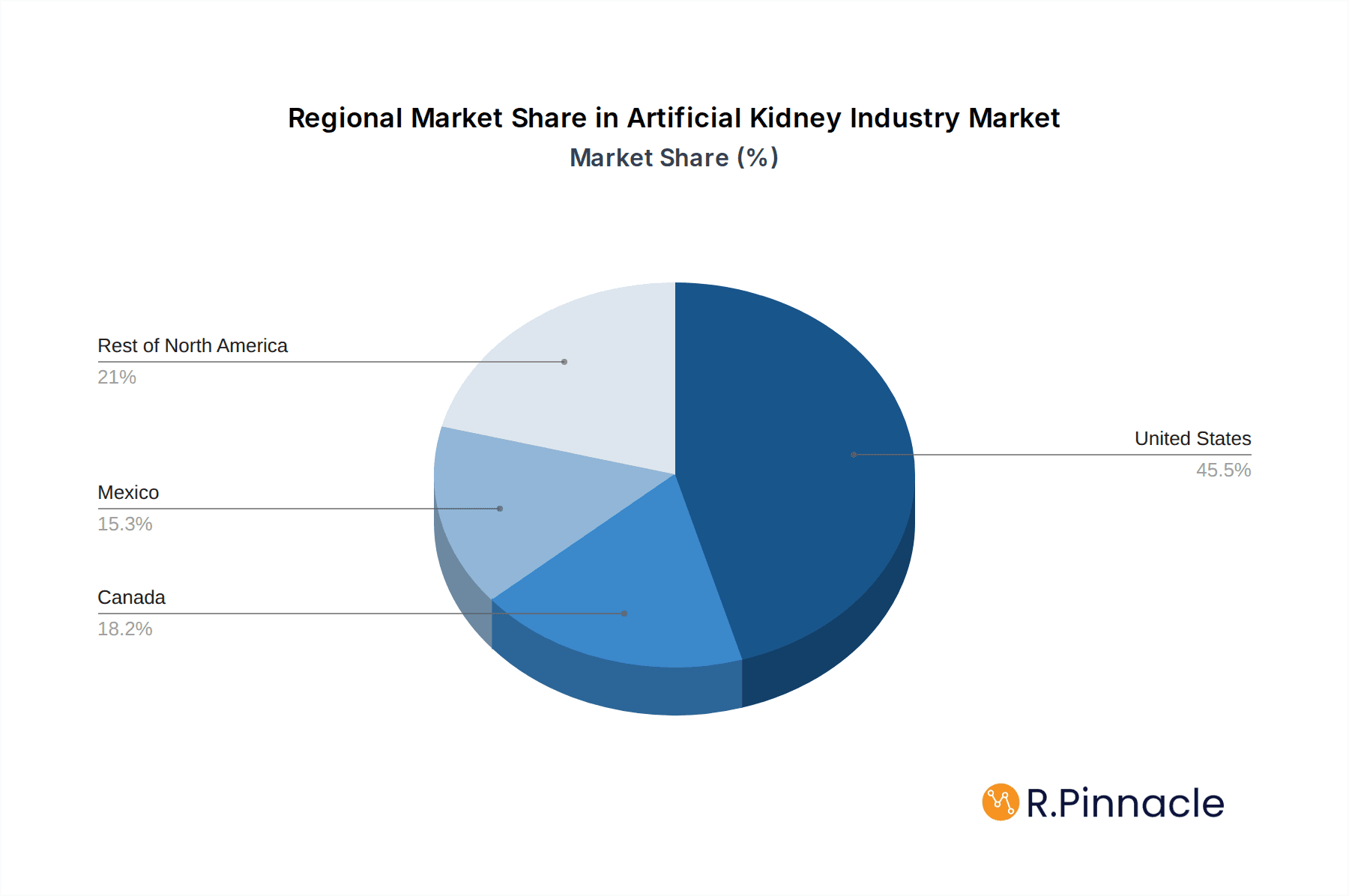
Artificial Kidney Industry Regional Market Share
Geographic Coverage of Artificial Kidney Industry
Artificial Kidney Industry REPORT HIGHLIGHTS
| Aspects | Details |
|---|---|
| Study Period | 2020-2034 |
| Base Year | 2025 |
| Estimated Year | 2026 |
| Forecast Period | 2026-2034 |
| Historical Period | 2020-2025 |
| Growth Rate | CAGR of 7.20% from 2020-2034 |
| Segmentation |
|
Table of Contents
- 1. Introduction
- 1.1. Research Scope
- 1.2. Market Segmentation
- 1.3. Research Methodology
- 1.4. Definitions and Assumptions
- 2. Executive Summary
- 2.1. Introduction
- 3. Market Dynamics
- 3.1. Introduction
- 3.2. Market Drivers
- 3.2.1. Increased Incidence of Disabilities and Organ Failures; High Incidence of Road Accidents Leading to Amputations; Technological Advancements in the Artificial Organ and Bionics
- 3.3. Market Restrains
- 3.3.1. Expensive Procedures; Risk of Compatibility Issues and Malfunctions
- 3.4. Market Trends
- 3.4.1. Artificial Kidney Segment is Estimated to Witness a Healthy Growth Over the Forecast Period
- 4. Market Factor Analysis
- 4.1. Porters Five Forces
- 4.2. Supply/Value Chain
- 4.3. PESTEL analysis
- 4.4. Market Entropy
- 4.5. Patent/Trademark Analysis
- 5. Global Artificial Kidney Industry Analysis, Insights and Forecast, 2020-2032
- 5.1. Market Analysis, Insights and Forecast - by Type
- 5.1.1. Artificial Organ
- 5.1.1.1. Artificial Heart
- 5.1.1.2. Artificial Kidney
- 5.1.1.3. Artificial Lungs
- 5.1.1.4. Cochlear Implants
- 5.1.1.5. Other Organ Types
- 5.1.2. Bionics
- 5.1.2.1. Vision Bionics
- 5.1.2.2. Ear Bionics
- 5.1.2.3. Orthopedic Bionic
- 5.1.2.4. Cardiac Bionics
- 5.1.1. Artificial Organ
- 5.2. Market Analysis, Insights and Forecast - by Geography
- 5.2.1. United States
- 5.2.2. Canada
- 5.2.3. Mexico
- 5.3. Market Analysis, Insights and Forecast - by Region
- 5.3.1. United States
- 5.3.2. Canada
- 5.3.3. Mexico
- 5.1. Market Analysis, Insights and Forecast - by Type
- 6. United States Artificial Kidney Industry Analysis, Insights and Forecast, 2020-2032
- 6.1. Market Analysis, Insights and Forecast - by Type
- 6.1.1. Artificial Organ
- 6.1.1.1. Artificial Heart
- 6.1.1.2. Artificial Kidney
- 6.1.1.3. Artificial Lungs
- 6.1.1.4. Cochlear Implants
- 6.1.1.5. Other Organ Types
- 6.1.2. Bionics
- 6.1.2.1. Vision Bionics
- 6.1.2.2. Ear Bionics
- 6.1.2.3. Orthopedic Bionic
- 6.1.2.4. Cardiac Bionics
- 6.1.1. Artificial Organ
- 6.2. Market Analysis, Insights and Forecast - by Geography
- 6.2.1. United States
- 6.2.2. Canada
- 6.2.3. Mexico
- 6.1. Market Analysis, Insights and Forecast - by Type
- 7. Canada Artificial Kidney Industry Analysis, Insights and Forecast, 2020-2032
- 7.1. Market Analysis, Insights and Forecast - by Type
- 7.1.1. Artificial Organ
- 7.1.1.1. Artificial Heart
- 7.1.1.2. Artificial Kidney
- 7.1.1.3. Artificial Lungs
- 7.1.1.4. Cochlear Implants
- 7.1.1.5. Other Organ Types
- 7.1.2. Bionics
- 7.1.2.1. Vision Bionics
- 7.1.2.2. Ear Bionics
- 7.1.2.3. Orthopedic Bionic
- 7.1.2.4. Cardiac Bionics
- 7.1.1. Artificial Organ
- 7.2. Market Analysis, Insights and Forecast - by Geography
- 7.2.1. United States
- 7.2.2. Canada
- 7.2.3. Mexico
- 7.1. Market Analysis, Insights and Forecast - by Type
- 8. Mexico Artificial Kidney Industry Analysis, Insights and Forecast, 2020-2032
- 8.1. Market Analysis, Insights and Forecast - by Type
- 8.1.1. Artificial Organ
- 8.1.1.1. Artificial Heart
- 8.1.1.2. Artificial Kidney
- 8.1.1.3. Artificial Lungs
- 8.1.1.4. Cochlear Implants
- 8.1.1.5. Other Organ Types
- 8.1.2. Bionics
- 8.1.2.1. Vision Bionics
- 8.1.2.2. Ear Bionics
- 8.1.2.3. Orthopedic Bionic
- 8.1.2.4. Cardiac Bionics
- 8.1.1. Artificial Organ
- 8.2. Market Analysis, Insights and Forecast - by Geography
- 8.2.1. United States
- 8.2.2. Canada
- 8.2.3. Mexico
- 8.1. Market Analysis, Insights and Forecast - by Type
- 9. Competitive Analysis
- 9.1. Global Market Share Analysis 2025
- 9.2. Company Profiles
- 9.2.1 Medtronic Inc
- 9.2.1.1. Overview
- 9.2.1.2. Products
- 9.2.1.3. SWOT Analysis
- 9.2.1.4. Recent Developments
- 9.2.1.5. Financials (Based on Availability)
- 9.2.2 Ossur
- 9.2.2.1. Overview
- 9.2.2.2. Products
- 9.2.2.3. SWOT Analysis
- 9.2.2.4. Recent Developments
- 9.2.2.5. Financials (Based on Availability)
- 9.2.3 Abiomed Inc
- 9.2.3.1. Overview
- 9.2.3.2. Products
- 9.2.3.3. SWOT Analysis
- 9.2.3.4. Recent Developments
- 9.2.3.5. Financials (Based on Availability)
- 9.2.4 Cyberonics Inc
- 9.2.4.1. Overview
- 9.2.4.2. Products
- 9.2.4.3. SWOT Analysis
- 9.2.4.4. Recent Developments
- 9.2.4.5. Financials (Based on Availability)
- 9.2.5 Esko Bionics
- 9.2.5.1. Overview
- 9.2.5.2. Products
- 9.2.5.3. SWOT Analysis
- 9.2.5.4. Recent Developments
- 9.2.5.5. Financials (Based on Availability)
- 9.2.6 Asahi Kasei Medical Co Ltd
- 9.2.6.1. Overview
- 9.2.6.2. Products
- 9.2.6.3. SWOT Analysis
- 9.2.6.4. Recent Developments
- 9.2.6.5. Financials (Based on Availability)
- 9.2.7 Cochlear Ltd
- 9.2.7.1. Overview
- 9.2.7.2. Products
- 9.2.7.3. SWOT Analysis
- 9.2.7.4. Recent Developments
- 9.2.7.5. Financials (Based on Availability)
- 9.2.8 Boston Scientific Corporation
- 9.2.8.1. Overview
- 9.2.8.2. Products
- 9.2.8.3. SWOT Analysis
- 9.2.8.4. Recent Developments
- 9.2.8.5. Financials (Based on Availability)
- 9.2.9 Baxter International Inc
- 9.2.9.1. Overview
- 9.2.9.2. Products
- 9.2.9.3. SWOT Analysis
- 9.2.9.4. Recent Developments
- 9.2.9.5. Financials (Based on Availability)
- 9.2.10 Berlin Heart GmbH
- 9.2.10.1. Overview
- 9.2.10.2. Products
- 9.2.10.3. SWOT Analysis
- 9.2.10.4. Recent Developments
- 9.2.10.5. Financials (Based on Availability)
- 9.2.1 Medtronic Inc
List of Figures
- Figure 1: Global Artificial Kidney Industry Revenue Breakdown (Million, %) by Region 2025 & 2033
- Figure 2: Global Artificial Kidney Industry Volume Breakdown (Piece, %) by Region 2025 & 2033
- Figure 3: United States Artificial Kidney Industry Revenue (Million), by Type 2025 & 2033
- Figure 4: United States Artificial Kidney Industry Volume (Piece), by Type 2025 & 2033
- Figure 5: United States Artificial Kidney Industry Revenue Share (%), by Type 2025 & 2033
- Figure 6: United States Artificial Kidney Industry Volume Share (%), by Type 2025 & 2033
- Figure 7: United States Artificial Kidney Industry Revenue (Million), by Geography 2025 & 2033
- Figure 8: United States Artificial Kidney Industry Volume (Piece), by Geography 2025 & 2033
- Figure 9: United States Artificial Kidney Industry Revenue Share (%), by Geography 2025 & 2033
- Figure 10: United States Artificial Kidney Industry Volume Share (%), by Geography 2025 & 2033
- Figure 11: United States Artificial Kidney Industry Revenue (Million), by Country 2025 & 2033
- Figure 12: United States Artificial Kidney Industry Volume (Piece), by Country 2025 & 2033
- Figure 13: United States Artificial Kidney Industry Revenue Share (%), by Country 2025 & 2033
- Figure 14: United States Artificial Kidney Industry Volume Share (%), by Country 2025 & 2033
- Figure 15: Canada Artificial Kidney Industry Revenue (Million), by Type 2025 & 2033
- Figure 16: Canada Artificial Kidney Industry Volume (Piece), by Type 2025 & 2033
- Figure 17: Canada Artificial Kidney Industry Revenue Share (%), by Type 2025 & 2033
- Figure 18: Canada Artificial Kidney Industry Volume Share (%), by Type 2025 & 2033
- Figure 19: Canada Artificial Kidney Industry Revenue (Million), by Geography 2025 & 2033
- Figure 20: Canada Artificial Kidney Industry Volume (Piece), by Geography 2025 & 2033
- Figure 21: Canada Artificial Kidney Industry Revenue Share (%), by Geography 2025 & 2033
- Figure 22: Canada Artificial Kidney Industry Volume Share (%), by Geography 2025 & 2033
- Figure 23: Canada Artificial Kidney Industry Revenue (Million), by Country 2025 & 2033
- Figure 24: Canada Artificial Kidney Industry Volume (Piece), by Country 2025 & 2033
- Figure 25: Canada Artificial Kidney Industry Revenue Share (%), by Country 2025 & 2033
- Figure 26: Canada Artificial Kidney Industry Volume Share (%), by Country 2025 & 2033
- Figure 27: Mexico Artificial Kidney Industry Revenue (Million), by Type 2025 & 2033
- Figure 28: Mexico Artificial Kidney Industry Volume (Piece), by Type 2025 & 2033
- Figure 29: Mexico Artificial Kidney Industry Revenue Share (%), by Type 2025 & 2033
- Figure 30: Mexico Artificial Kidney Industry Volume Share (%), by Type 2025 & 2033
- Figure 31: Mexico Artificial Kidney Industry Revenue (Million), by Geography 2025 & 2033
- Figure 32: Mexico Artificial Kidney Industry Volume (Piece), by Geography 2025 & 2033
- Figure 33: Mexico Artificial Kidney Industry Revenue Share (%), by Geography 2025 & 2033
- Figure 34: Mexico Artificial Kidney Industry Volume Share (%), by Geography 2025 & 2033
- Figure 35: Mexico Artificial Kidney Industry Revenue (Million), by Country 2025 & 2033
- Figure 36: Mexico Artificial Kidney Industry Volume (Piece), by Country 2025 & 2033
- Figure 37: Mexico Artificial Kidney Industry Revenue Share (%), by Country 2025 & 2033
- Figure 38: Mexico Artificial Kidney Industry Volume Share (%), by Country 2025 & 2033
List of Tables
- Table 1: Global Artificial Kidney Industry Revenue Million Forecast, by Type 2020 & 2033
- Table 2: Global Artificial Kidney Industry Volume Piece Forecast, by Type 2020 & 2033
- Table 3: Global Artificial Kidney Industry Revenue Million Forecast, by Geography 2020 & 2033
- Table 4: Global Artificial Kidney Industry Volume Piece Forecast, by Geography 2020 & 2033
- Table 5: Global Artificial Kidney Industry Revenue Million Forecast, by Region 2020 & 2033
- Table 6: Global Artificial Kidney Industry Volume Piece Forecast, by Region 2020 & 2033
- Table 7: Global Artificial Kidney Industry Revenue Million Forecast, by Type 2020 & 2033
- Table 8: Global Artificial Kidney Industry Volume Piece Forecast, by Type 2020 & 2033
- Table 9: Global Artificial Kidney Industry Revenue Million Forecast, by Geography 2020 & 2033
- Table 10: Global Artificial Kidney Industry Volume Piece Forecast, by Geography 2020 & 2033
- Table 11: Global Artificial Kidney Industry Revenue Million Forecast, by Country 2020 & 2033
- Table 12: Global Artificial Kidney Industry Volume Piece Forecast, by Country 2020 & 2033
- Table 13: Global Artificial Kidney Industry Revenue Million Forecast, by Type 2020 & 2033
- Table 14: Global Artificial Kidney Industry Volume Piece Forecast, by Type 2020 & 2033
- Table 15: Global Artificial Kidney Industry Revenue Million Forecast, by Geography 2020 & 2033
- Table 16: Global Artificial Kidney Industry Volume Piece Forecast, by Geography 2020 & 2033
- Table 17: Global Artificial Kidney Industry Revenue Million Forecast, by Country 2020 & 2033
- Table 18: Global Artificial Kidney Industry Volume Piece Forecast, by Country 2020 & 2033
- Table 19: Global Artificial Kidney Industry Revenue Million Forecast, by Type 2020 & 2033
- Table 20: Global Artificial Kidney Industry Volume Piece Forecast, by Type 2020 & 2033
- Table 21: Global Artificial Kidney Industry Revenue Million Forecast, by Geography 2020 & 2033
- Table 22: Global Artificial Kidney Industry Volume Piece Forecast, by Geography 2020 & 2033
- Table 23: Global Artificial Kidney Industry Revenue Million Forecast, by Country 2020 & 2033
- Table 24: Global Artificial Kidney Industry Volume Piece Forecast, by Country 2020 & 2033
Frequently Asked Questions
1. What is the projected Compound Annual Growth Rate (CAGR) of the Artificial Kidney Industry?
The projected CAGR is approximately 7.20%.
2. Which companies are prominent players in the Artificial Kidney Industry?
Key companies in the market include Medtronic Inc , Ossur, Abiomed Inc, Cyberonics Inc, Esko Bionics, Asahi Kasei Medical Co Ltd, Cochlear Ltd, Boston Scientific Corporation, Baxter International Inc, Berlin Heart GmbH.
3. What are the main segments of the Artificial Kidney Industry?
The market segments include Type, Geography.
4. Can you provide details about the market size?
The market size is estimated to be USD 1.16 Million as of 2022.
5. What are some drivers contributing to market growth?
Increased Incidence of Disabilities and Organ Failures; High Incidence of Road Accidents Leading to Amputations; Technological Advancements in the Artificial Organ and Bionics.
6. What are the notable trends driving market growth?
Artificial Kidney Segment is Estimated to Witness a Healthy Growth Over the Forecast Period.
7. Are there any restraints impacting market growth?
Expensive Procedures; Risk of Compatibility Issues and Malfunctions.
8. Can you provide examples of recent developments in the market?
August 2022: The United States Department of Health and Human Services (HHS) and the American Society of Nephrology (ASN) unveiled a fresh prize competition through the Kidney Innovation Accelerator (KidneyX). This competition aims to advance the development of a fully functional bioartificial kidney.
9. What pricing options are available for accessing the report?
Pricing options include single-user, multi-user, and enterprise licenses priced at USD 4750, USD 5250, and USD 8750 respectively.
10. Is the market size provided in terms of value or volume?
The market size is provided in terms of value, measured in Million and volume, measured in Piece.
11. Are there any specific market keywords associated with the report?
Yes, the market keyword associated with the report is "Artificial Kidney Industry," which aids in identifying and referencing the specific market segment covered.
12. How do I determine which pricing option suits my needs best?
The pricing options vary based on user requirements and access needs. Individual users may opt for single-user licenses, while businesses requiring broader access may choose multi-user or enterprise licenses for cost-effective access to the report.
13. Are there any additional resources or data provided in the Artificial Kidney Industry report?
While the report offers comprehensive insights, it's advisable to review the specific contents or supplementary materials provided to ascertain if additional resources or data are available.
14. How can I stay updated on further developments or reports in the Artificial Kidney Industry?
To stay informed about further developments, trends, and reports in the Artificial Kidney Industry, consider subscribing to industry newsletters, following relevant companies and organizations, or regularly checking reputable industry news sources and publications.
Methodology
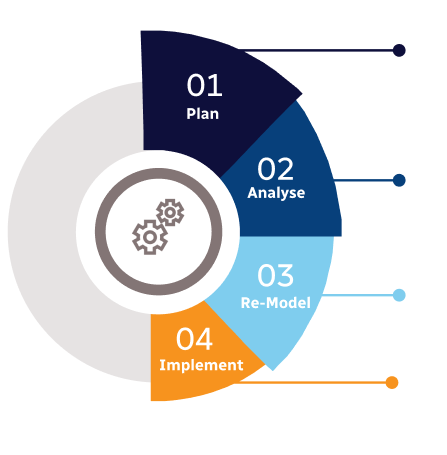
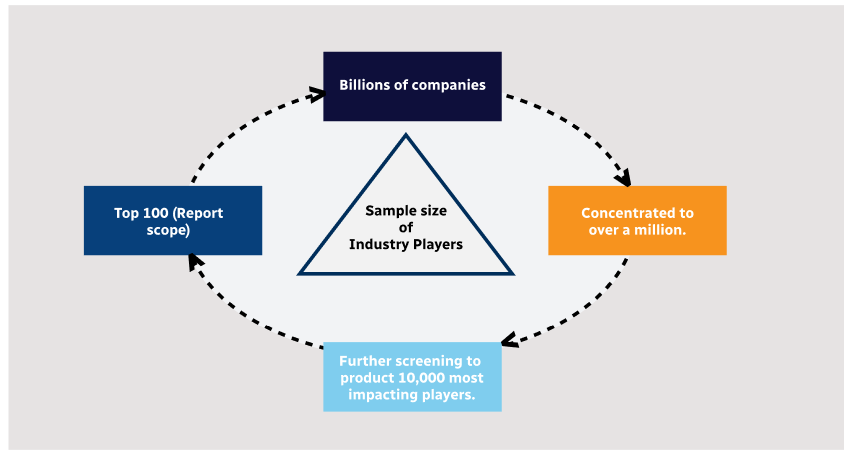
Step 1 - Identification of Relevant Samples Size from Population Database
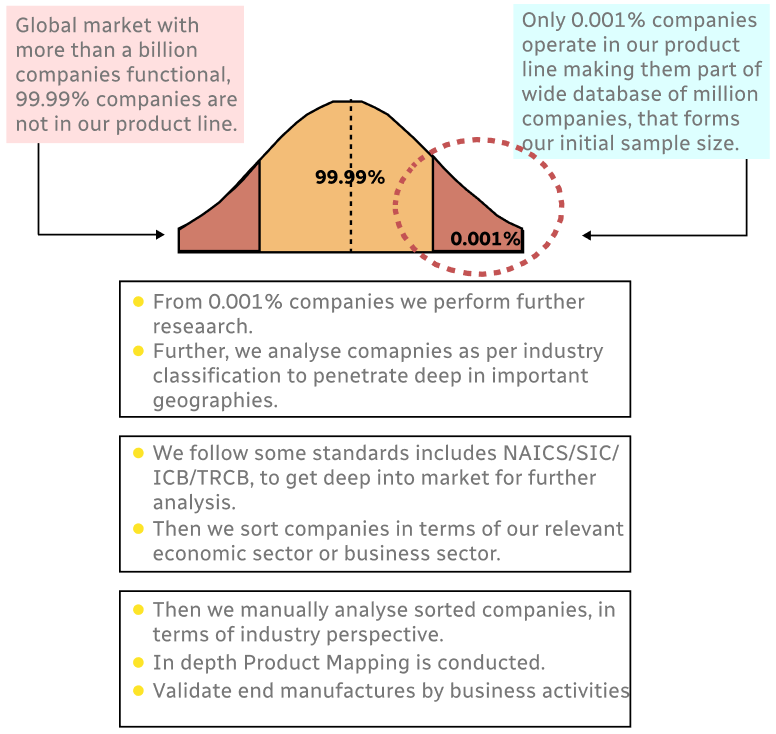
Step 2 - Approaches for Defining Global Market Size (Value, Volume* & Price*)
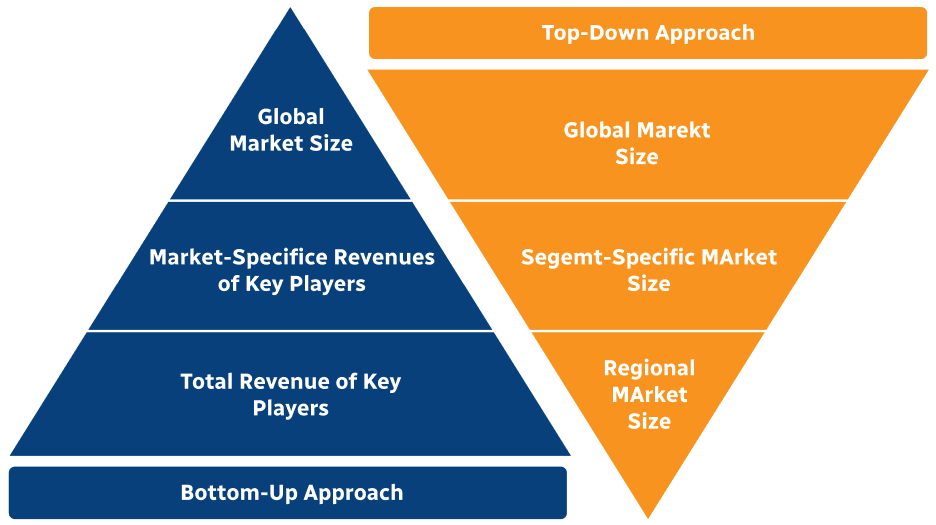
Note*: In applicable scenarios
Step 3 - Data Sources
Primary Research
- Web Analytics
- Survey Reports
- Research Institute
- Latest Research Reports
- Opinion Leaders
Secondary Research
- Annual Reports
- White Paper
- Latest Press Release
- Industry Association
- Paid Database
- Investor Presentations
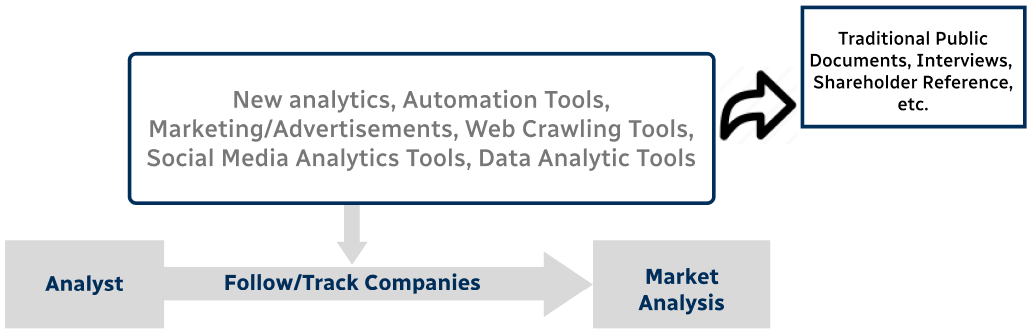
Step 4 - Data Triangulation
Involves using different sources of information in order to increase the validity of a study
These sources are likely to be stakeholders in a program - participants, other researchers, program staff, other community members, and so on.
Then we put all data in single framework & apply various statistical tools to find out the dynamic on the market.
During the analysis stage, feedback from the stakeholder groups would be compared to determine areas of agreement as well as areas of divergence