


Key Insights
The German commercial HVAC market is poised for robust growth, projected to reach a valuation of approximately €2.46 billion. This expansion is driven by a compelling Compound Annual Growth Rate (CAGR) of 5.89% from 2025 to 2033, indicating a dynamic and expanding sector. A significant driver for this growth is the increasing demand for energy-efficient and sustainable HVAC solutions, spurred by stringent environmental regulations and rising energy costs. The ongoing refurbishment of existing commercial buildings to meet modern energy performance standards, alongside the construction of new, energy-conscious commercial spaces, further fuels this trend. Furthermore, advancements in HVAC technology, including the integration of smart controls and IoT capabilities for optimized performance and remote management, are enhancing system efficiency and occupant comfort, thereby boosting market adoption. The hospitality sector, with its continuous need for comfort and operational efficiency, is a key contributor, as are the expanding requirements of commercial and public buildings seeking to reduce their carbon footprint and operational expenditures.
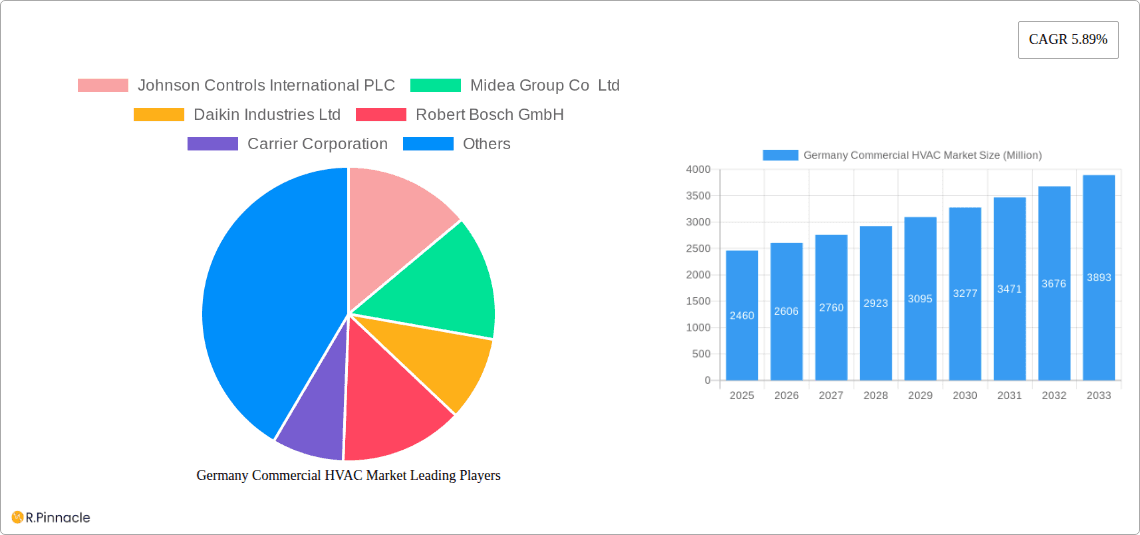
Germany Commercial HVAC Market Market Size (In Billion)

The market is segmented into HVAC Equipment, further categorized into Heating Equipment and Air Conditioning/Ventilation Equipment, and HVAC Services. The HVAC Equipment segment is expected to lead, driven by innovation in high-efficiency heating and cooling systems. HVAC Services, encompassing installation, maintenance, and repair, will also witness substantial growth as building owners prioritize the longevity and optimal performance of their HVAC investments. Key market players like Johnson Controls International PLC, Midea Group Co Ltd, Daikin Industries Ltd, and Robert Bosch GmbH are actively investing in research and development to introduce advanced, eco-friendly HVAC solutions. While the market demonstrates significant positive momentum, potential restraints could include the initial high capital investment for advanced HVAC systems and the availability of skilled labor for installation and maintenance of complex technologies. However, the long-term benefits in terms of energy savings and operational efficiency are increasingly outweighing these concerns for businesses across Germany.
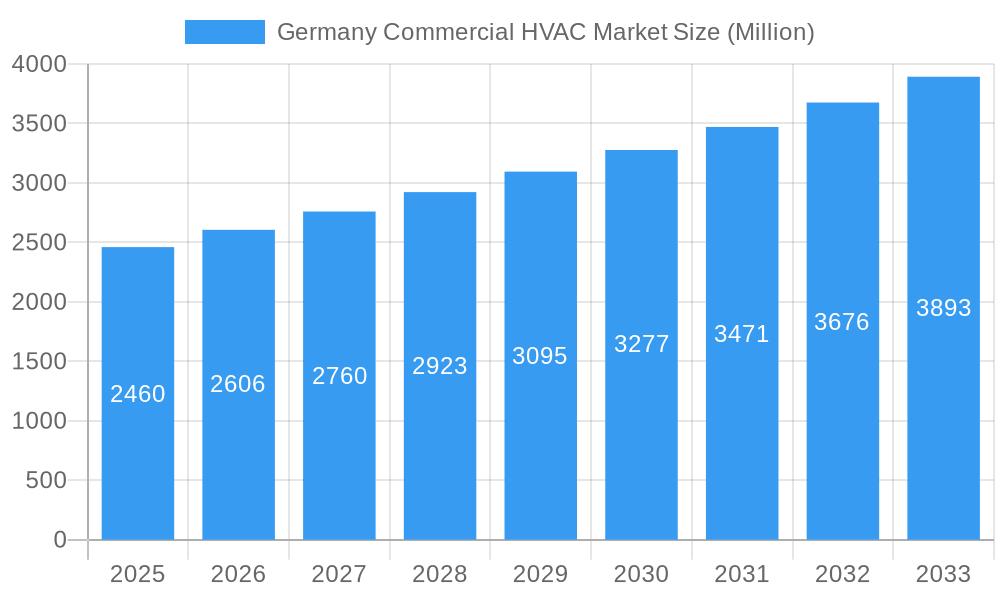
Germany Commercial HVAC Market Company Market Share
Gain a strategic advantage in the dynamic Germany Commercial HVAC Market with our in-depth report. This essential resource provides detailed analysis, actionable insights, and future projections for industry stakeholders, facility managers, HVAC contractors, and technology providers. Covering the period from 2019 to 2033, with a base and estimated year of 2025, this report delves into market structure, dynamics, regional dominance, product innovations, and key growth drivers. Equip yourself with the knowledge to navigate regulatory landscapes, capitalize on emerging trends, and optimize your business strategies in one of Europe's most significant markets.
Germany Commercial HVAC Market Market Structure & Innovation Trends
The Germany Commercial HVAC Market exhibits a moderately consolidated structure, with leading global players like Johnson Controls International PLC, Midea Group Co Ltd, and Daikin Industries Ltd holding substantial market shares. Innovation is a critical differentiator, driven by stringent energy efficiency regulations and a growing demand for sustainable solutions. Companies are heavily investing in R&D for HVAC Equipment, particularly energy-efficient Heating Equipment and advanced Air Conditioning /Ventilation Equipment. The integration of IoT and smart building technologies is a significant innovation trend, enabling remote monitoring, predictive maintenance, and optimized energy consumption. Regulatory frameworks, such as those promoting energy-efficient building standards and emissions reduction, are shaping product development and market entry strategies. Product substitutes, while present in the form of simpler heating or cooling solutions, are increasingly being outperformed by integrated HVAC systems that offer superior performance and cost-effectiveness over their lifecycle. End-user demographics are shifting towards building owners and facility managers prioritizing long-term operational savings and environmental responsibility. Mergers and acquisitions (M&A) activities, though not extensively detailed with specific values in this overview, are indicative of a market consolidating around key players and technological expertise, aiming to expand product portfolios and geographical reach.
Germany Commercial HVAC Market Market Dynamics & Trends
The Germany Commercial HVAC Market is experiencing robust growth, fueled by several interconnected dynamics and evolving trends. A primary growth driver is the increasing focus on energy efficiency and sustainability mandated by German and European Union regulations. This is leading to a significant demand for advanced HVAC Equipment, such as high-efficiency heat pumps, variable refrigerant flow (VRF) systems, and smart ventilation solutions. The Commercial Buildings sector, including offices, retail spaces, and industrial facilities, is undergoing extensive retrofitting and new construction projects that prioritize energy-efficient HVAC installations. This trend is further amplified by rising energy costs, incentivizing businesses to invest in solutions that reduce operational expenditures.
Technological disruptions are profoundly impacting the market. The integration of the Internet of Things (IoT) and Building Management Systems (BMS) is transforming HVAC operations, enabling remote diagnostics, predictive maintenance, and optimized performance through data analytics. LG Electronics Inc and Panasonic Corporation are at the forefront of developing smart HVAC solutions that offer enhanced user control and energy savings. Consumer preferences are increasingly leaning towards intelligent, connected, and environmentally friendly HVAC systems. Facility managers and building owners are actively seeking solutions that not only provide optimal comfort but also contribute to their corporate sustainability goals. This preference is driving the adoption of systems that utilize eco-friendly refrigerants and have a lower carbon footprint.
Competitive dynamics are intense, with established players like Johnson Controls International PLC, Midea Group Co Ltd, and Daikin Industries Ltd constantly innovating to maintain market leadership. Simultaneously, new entrants and niche players are emerging, focusing on specialized solutions and emerging technologies. The HVAC Services segment is also experiencing significant growth, driven by the increasing complexity of modern HVAC systems and the need for professional installation, maintenance, and repair services. The market penetration of advanced HVAC technologies is expected to rise as awareness of their long-term benefits grows and incentives for their adoption continue. The estimated market CAGR is projected to be robust, reflecting sustained investment in modernizing Germany's commercial building infrastructure.
Dominant Regions & Segments in Germany Commercial HVAC Market
The Germany Commercial HVAC Market is characterized by significant regional variations and segment-specific dynamics. Within Germany, the western regions, particularly North Rhine-Westphalia, Bavaria, and Baden-Württemberg, represent dominant geographical areas for HVAC installations and services. These regions boast a high concentration of Commercial Buildings, including large corporate offices, industrial complexes, and extensive hospitality infrastructure, driven by their strong economic bases and significant population densities. Economic policies in these states often promote energy-efficient building development and retrofitting initiatives, further bolstering HVAC market activity.
Type of Component:
- HVAC Equipment: This segment holds the largest market share, driven by new construction and the replacement of aging systems.
- Heating Equipment: Demand for efficient heating solutions, particularly heat pumps and advanced boilers, remains strong, influenced by Germany's cold winters and sustainability mandates.
- Air Conditioning /Ventilation Equipment: The growing need for climate control in offices, retail spaces, and public buildings, coupled with increasing awareness of indoor air quality, fuels this sub-segment's growth. Innovations in energy-efficient cooling and ventilation technologies are key drivers.
- HVAC Services: This segment is experiencing rapid expansion due to the increasing complexity of modern HVAC systems, the need for regular maintenance to ensure optimal performance and energy efficiency, and the growing demand for installation and repair services. The trend towards smart building integration necessitates specialized service expertise.
- HVAC Equipment: This segment holds the largest market share, driven by new construction and the replacement of aging systems.
End User Industry:
- Commercial Buildings: This is the leading end-user industry, encompassing office buildings, retail centers, and manufacturing facilities. Energy efficiency upgrades and the demand for comfortable working environments are primary growth drivers. Robert Bosch GmbH and Carrier Corporation are significant players in catering to this segment.
- Hospitality: Hotels, restaurants, and other hospitality establishments require reliable and energy-efficient HVAC systems to ensure guest comfort and operational efficiency. Their focus on energy savings and environmental certifications is a key influencer.
- Public Buildings: This includes schools, hospitals, and government facilities. While procurement cycles can be longer, the emphasis on long-term cost savings, sustainability, and occupant well-being makes this a crucial segment. The Valliant Group is a notable contributor to this sector.
- Others: This encompasses a broad range of applications, including data centers, laboratories, and specialized industrial facilities, each with unique HVAC requirements and growth trajectories.
Germany Commercial HVAC Market Product Innovations
Product innovations in the Germany Commercial HVAC Market are largely focused on enhancing energy efficiency, reducing environmental impact, and integrating smart technologies. Companies are developing advanced heat pumps that utilize eco-friendly refrigerants, such as the Panasonic Corporation's recent unveiling of new commercial air-to-water (A2W) heat pump models. These innovations aim to meet stringent regulatory requirements and growing demand for sustainable solutions. The integration of IoT capabilities, as seen in Voltas' new Scroll Inverter Chillers, is a significant trend, enabling BMS compatibility, remote monitoring, and mobile application control. These advancements offer competitive advantages through improved performance, lower operational costs, and enhanced user experience, aligning with market demands for intelligent and sustainable HVAC solutions.
Report Scope & Segmentation Analysis
This report provides a comprehensive analysis of the Germany Commercial HVAC Market, segmented across key areas to offer granular insights.
- Type of Component: The market is analyzed based on HVAC Equipment, further broken down into Heating Equipment and Air Conditioning /Ventilation Equipment, alongside HVAC Services. HVAC Equipment is expected to maintain its dominant share due to ongoing construction and replacement needs, with HVAC Services projected for substantial growth driven by system complexity and maintenance demands.
- End User Industry: We examine the market across Hospitality, Commercial Buildings, Public Buildings, and Others. Commercial Buildings are anticipated to lead in market size and growth, followed by the hospitality sector's consistent demand for comfort and efficiency. Public Buildings represent a stable, albeit sometimes slower-moving, segment with a focus on long-term value.
Key Drivers of Germany Commercial HVAC Market Growth
The Germany Commercial HVAC Market is propelled by a confluence of powerful drivers. Stringent energy efficiency regulations, such as those outlined by the German government and EU directives, are a primary catalyst, pushing for the adoption of advanced and sustainable HVAC technologies. The increasing cost of energy is compelling businesses to invest in energy-efficient HVAC systems to reduce operational expenses, making solutions from companies like Danfoss A/ attractive. Technological advancements, particularly in smart building integration, IoT connectivity, and the development of eco-friendly refrigerants, are creating new market opportunities. Furthermore, a growing awareness and commitment to corporate social responsibility and sustainability are influencing purchasing decisions towards environmentally conscious HVAC solutions.
Challenges in the Germany Commercial HVAC Market Sector
Despite robust growth, the Germany Commercial HVAC Market faces several challenges. The complexity of regulatory compliance and evolving energy standards can pose hurdles for manufacturers and installers, requiring continuous adaptation. Supply chain disruptions, as witnessed in recent years, can impact the availability of key components and lead to price volatility. The high initial investment cost associated with advanced, energy-efficient HVAC systems can be a deterrent for some smaller businesses, despite long-term operational savings. Additionally, a shortage of skilled labor for the installation and maintenance of sophisticated HVAC systems presents a significant challenge, potentially slowing down project execution and impacting service quality.
Emerging Opportunities in Germany Commercial HVAC Market
Emerging opportunities in the Germany Commercial HVAC Market are abundant, particularly in the realm of sustainable and smart solutions. The ongoing transition towards renewable energy sources creates significant demand for integrated HVAC systems that leverage these sources, such as advanced heat pumps. The increasing focus on indoor air quality (IAQ) in response to health concerns presents an opportunity for ventilation and air purification technologies. The retrofitting of existing commercial buildings to improve energy efficiency offers a vast market. Furthermore, the development and adoption of IoT-enabled HVAC systems that provide data-driven insights for predictive maintenance and optimized energy management are creating new service revenue streams and enhancing customer loyalty.
Leading Players in the Germany Commercial HVAC Market Market
- Johnson Controls International PLC
- Midea Group Co Ltd
- Daikin Industries Ltd
- Robert Bosch GmbH
- Carrier Corporation
- Valliant Group
- LG Electronics Inc
- Lennox International Inc
- BDR Thermea Group
- Panasonic Corporation
- Danfoss A/
Key Developments in Germany Commercial HVAC Market Industry
- March 2024: Panasonic Corporation unveiled three new commercial air-to-water (A2W) heat pump models utilizing eco-friendly natural refrigerants, designed for multi-dwelling units, stores, and offices.
- February 2024: Voltas unveiled a new range of commercial air conditioning units, including Scroll Inverter Chillers with cooling capacities from 12 to 72 TR, featuring eco-friendly refrigerants, IoT technology, BMS compatibility, silent operation, and mobile app control.
Future Outlook for Germany Commercial HVAC Market Market
The future outlook for the Germany Commercial HVAC Market is exceptionally positive, driven by a sustained commitment to energy efficiency and sustainability. The ongoing decarbonization efforts across industries will continue to fuel demand for advanced HVAC solutions, particularly electric-based systems like heat pumps. Increased investment in smart building technologies and IoT integration will transform how HVAC systems are managed, offering greater efficiency and predictive maintenance capabilities. Government incentives and stringent building codes will ensure that energy-efficient and environmentally friendly options remain at the forefront of market demand. The sector is poised for continuous innovation, with a focus on intelligent, connected, and low-carbon HVAC solutions that cater to the evolving needs of businesses and contribute to Germany's climate goals.
Germany Commercial HVAC Market Segmentation
-
1. Type of Component
-
1.1. HVAC Equipment
- 1.1.1. Heating Equipment
- 1.1.2. Air Conditioning /Ventillation Equipment
- 1.2. HVAC Services
-
1.1. HVAC Equipment
-
2. End User Industry
- 2.1. Hospitality
- 2.2. Commercial Buildings
- 2.3. Public Buildings
- 2.4. Others
Germany Commercial HVAC Market Segmentation By Geography
- 1. Germany
Germany Commercial HVAC Market Regional Market Share
Geographic Coverage of Germany Commercial HVAC Market
Germany Commercial HVAC Market REPORT HIGHLIGHTS
| Aspects | Details |
|---|---|
| Study Period | 2020-2034 |
| Base Year | 2025 |
| Estimated Year | 2026 |
| Forecast Period | 2026-2034 |
| Historical Period | 2020-2025 |
| Growth Rate | CAGR of 5.89% from 2020-2034 |
| Segmentation |
|
Table of Contents
- 1. Introduction
- 1.1. Research Scope
- 1.2. Market Segmentation
- 1.3. Research Methodology
- 1.4. Definitions and Assumptions
- 2. Executive Summary
- 2.1. Introduction
- 3. Market Dynamics
- 3.1. Introduction
- 3.2. Market Drivers
- 3.2.1. Growing Commercial Construction in the country; Increasing Demand For Energy Efficient Devices
- 3.3. Market Restrains
- 3.3.1. Growing Commercial Construction in the country; Increasing Demand For Energy Efficient Devices
- 3.4. Market Trends
- 3.4.1. HVAC Equipment Holds the Significant Market Share
- 4. Market Factor Analysis
- 4.1. Porters Five Forces
- 4.2. Supply/Value Chain
- 4.3. PESTEL analysis
- 4.4. Market Entropy
- 4.5. Patent/Trademark Analysis
- 5. Germany Commercial HVAC Market Analysis, Insights and Forecast, 2020-2032
- 5.1. Market Analysis, Insights and Forecast - by Type of Component
- 5.1.1. HVAC Equipment
- 5.1.1.1. Heating Equipment
- 5.1.1.2. Air Conditioning /Ventillation Equipment
- 5.1.2. HVAC Services
- 5.1.1. HVAC Equipment
- 5.2. Market Analysis, Insights and Forecast - by End User Industry
- 5.2.1. Hospitality
- 5.2.2. Commercial Buildings
- 5.2.3. Public Buildings
- 5.2.4. Others
- 5.3. Market Analysis, Insights and Forecast - by Region
- 5.3.1. Germany
- 5.1. Market Analysis, Insights and Forecast - by Type of Component
- 6. Competitive Analysis
- 6.1. Market Share Analysis 2025
- 6.2. Company Profiles
- 6.2.1 Johnson Controls International PLC
- 6.2.1.1. Overview
- 6.2.1.2. Products
- 6.2.1.3. SWOT Analysis
- 6.2.1.4. Recent Developments
- 6.2.1.5. Financials (Based on Availability)
- 6.2.2 Midea Group Co Ltd
- 6.2.2.1. Overview
- 6.2.2.2. Products
- 6.2.2.3. SWOT Analysis
- 6.2.2.4. Recent Developments
- 6.2.2.5. Financials (Based on Availability)
- 6.2.3 Daikin Industries Ltd
- 6.2.3.1. Overview
- 6.2.3.2. Products
- 6.2.3.3. SWOT Analysis
- 6.2.3.4. Recent Developments
- 6.2.3.5. Financials (Based on Availability)
- 6.2.4 Robert Bosch GmbH
- 6.2.4.1. Overview
- 6.2.4.2. Products
- 6.2.4.3. SWOT Analysis
- 6.2.4.4. Recent Developments
- 6.2.4.5. Financials (Based on Availability)
- 6.2.5 Carrier Corporation
- 6.2.5.1. Overview
- 6.2.5.2. Products
- 6.2.5.3. SWOT Analysis
- 6.2.5.4. Recent Developments
- 6.2.5.5. Financials (Based on Availability)
- 6.2.6 Carrier Corporation
- 6.2.6.1. Overview
- 6.2.6.2. Products
- 6.2.6.3. SWOT Analysis
- 6.2.6.4. Recent Developments
- 6.2.6.5. Financials (Based on Availability)
- 6.2.7 Valliant Group
- 6.2.7.1. Overview
- 6.2.7.2. Products
- 6.2.7.3. SWOT Analysis
- 6.2.7.4. Recent Developments
- 6.2.7.5. Financials (Based on Availability)
- 6.2.8 LG Electronics Inc
- 6.2.8.1. Overview
- 6.2.8.2. Products
- 6.2.8.3. SWOT Analysis
- 6.2.8.4. Recent Developments
- 6.2.8.5. Financials (Based on Availability)
- 6.2.9 Lennox International Inc
- 6.2.9.1. Overview
- 6.2.9.2. Products
- 6.2.9.3. SWOT Analysis
- 6.2.9.4. Recent Developments
- 6.2.9.5. Financials (Based on Availability)
- 6.2.10 BDR Thermea Group
- 6.2.10.1. Overview
- 6.2.10.2. Products
- 6.2.10.3. SWOT Analysis
- 6.2.10.4. Recent Developments
- 6.2.10.5. Financials (Based on Availability)
- 6.2.11 Panasonic Corporation
- 6.2.11.1. Overview
- 6.2.11.2. Products
- 6.2.11.3. SWOT Analysis
- 6.2.11.4. Recent Developments
- 6.2.11.5. Financials (Based on Availability)
- 6.2.12 Danfoss A/
- 6.2.12.1. Overview
- 6.2.12.2. Products
- 6.2.12.3. SWOT Analysis
- 6.2.12.4. Recent Developments
- 6.2.12.5. Financials (Based on Availability)
- 6.2.1 Johnson Controls International PLC
List of Figures
- Figure 1: Germany Commercial HVAC Market Revenue Breakdown (Million, %) by Product 2025 & 2033
- Figure 2: Germany Commercial HVAC Market Share (%) by Company 2025
List of Tables
- Table 1: Germany Commercial HVAC Market Revenue Million Forecast, by Type of Component 2020 & 2033
- Table 2: Germany Commercial HVAC Market Volume Billion Forecast, by Type of Component 2020 & 2033
- Table 3: Germany Commercial HVAC Market Revenue Million Forecast, by End User Industry 2020 & 2033
- Table 4: Germany Commercial HVAC Market Volume Billion Forecast, by End User Industry 2020 & 2033
- Table 5: Germany Commercial HVAC Market Revenue Million Forecast, by Region 2020 & 2033
- Table 6: Germany Commercial HVAC Market Volume Billion Forecast, by Region 2020 & 2033
- Table 7: Germany Commercial HVAC Market Revenue Million Forecast, by Type of Component 2020 & 2033
- Table 8: Germany Commercial HVAC Market Volume Billion Forecast, by Type of Component 2020 & 2033
- Table 9: Germany Commercial HVAC Market Revenue Million Forecast, by End User Industry 2020 & 2033
- Table 10: Germany Commercial HVAC Market Volume Billion Forecast, by End User Industry 2020 & 2033
- Table 11: Germany Commercial HVAC Market Revenue Million Forecast, by Country 2020 & 2033
- Table 12: Germany Commercial HVAC Market Volume Billion Forecast, by Country 2020 & 2033
Frequently Asked Questions
1. What is the projected Compound Annual Growth Rate (CAGR) of the Germany Commercial HVAC Market?
The projected CAGR is approximately 5.89%.
2. Which companies are prominent players in the Germany Commercial HVAC Market?
Key companies in the market include Johnson Controls International PLC, Midea Group Co Ltd, Daikin Industries Ltd, Robert Bosch GmbH, Carrier Corporation, Carrier Corporation, Valliant Group, LG Electronics Inc, Lennox International Inc, BDR Thermea Group, Panasonic Corporation, Danfoss A/.
3. What are the main segments of the Germany Commercial HVAC Market?
The market segments include Type of Component, End User Industry.
4. Can you provide details about the market size?
The market size is estimated to be USD 2.46 Million as of 2022.
5. What are some drivers contributing to market growth?
Growing Commercial Construction in the country; Increasing Demand For Energy Efficient Devices.
6. What are the notable trends driving market growth?
HVAC Equipment Holds the Significant Market Share.
7. Are there any restraints impacting market growth?
Growing Commercial Construction in the country; Increasing Demand For Energy Efficient Devices.
8. Can you provide examples of recent developments in the market?
In March 2024, Panasonic Corporation unveiled three new commercial air-to-water (A2W) heat pump models that utilize eco-friendly natural refrigerants. These models are designed for use in multi-dwelling units, stores, offices, and other light commercial properties.
9. What pricing options are available for accessing the report?
Pricing options include single-user, multi-user, and enterprise licenses priced at USD 3800, USD 4500, and USD 5800 respectively.
10. Is the market size provided in terms of value or volume?
The market size is provided in terms of value, measured in Million and volume, measured in Billion.
11. Are there any specific market keywords associated with the report?
Yes, the market keyword associated with the report is "Germany Commercial HVAC Market," which aids in identifying and referencing the specific market segment covered.
12. How do I determine which pricing option suits my needs best?
The pricing options vary based on user requirements and access needs. Individual users may opt for single-user licenses, while businesses requiring broader access may choose multi-user or enterprise licenses for cost-effective access to the report.
13. Are there any additional resources or data provided in the Germany Commercial HVAC Market report?
While the report offers comprehensive insights, it's advisable to review the specific contents or supplementary materials provided to ascertain if additional resources or data are available.
14. How can I stay updated on further developments or reports in the Germany Commercial HVAC Market?
To stay informed about further developments, trends, and reports in the Germany Commercial HVAC Market, consider subscribing to industry newsletters, following relevant companies and organizations, or regularly checking reputable industry news sources and publications.
Methodology
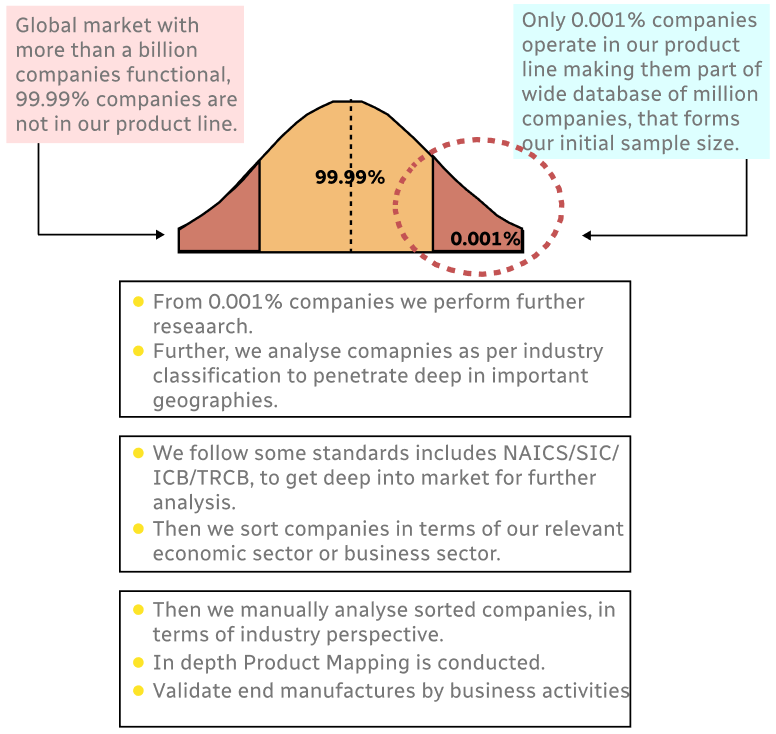
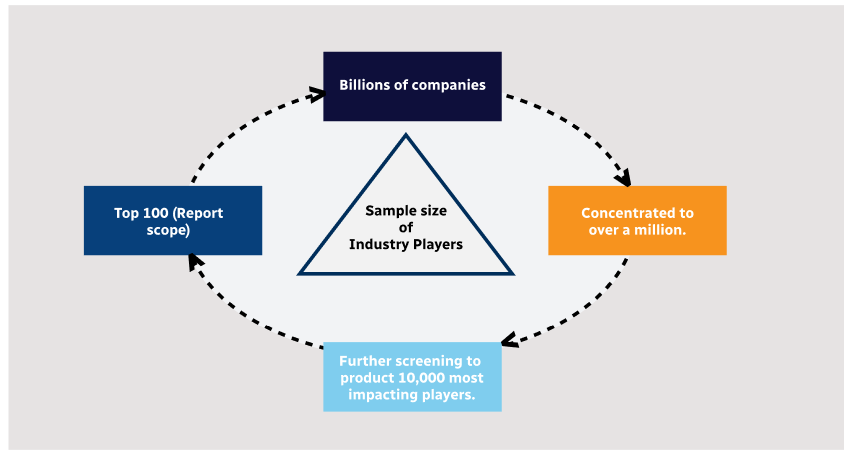
Step 1 - Identification of Relevant Samples Size from Population Database
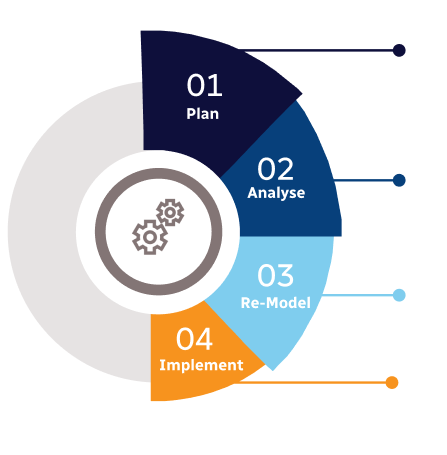
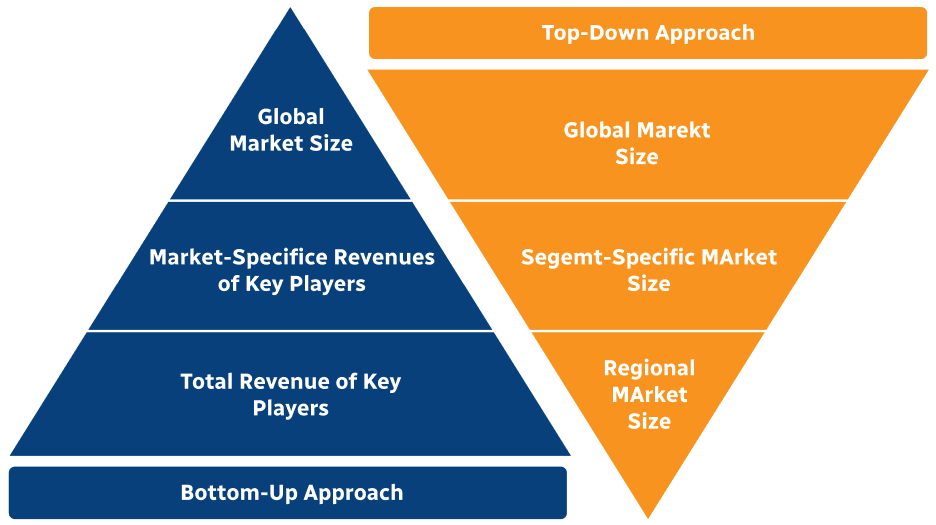
Step 2 - Approaches for Defining Global Market Size (Value, Volume* & Price*)
Note*: In applicable scenarios
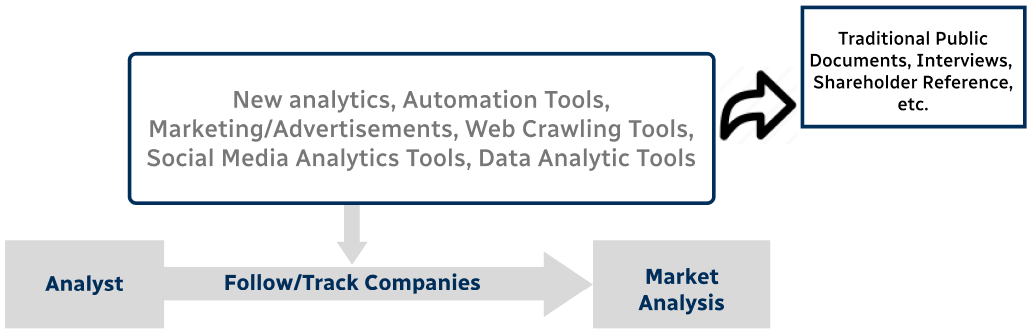
Step 3 - Data Sources
Primary Research
- Web Analytics
- Survey Reports
- Research Institute
- Latest Research Reports
- Opinion Leaders
Secondary Research
- Annual Reports
- White Paper
- Latest Press Release
- Industry Association
- Paid Database
- Investor Presentations
Step 4 - Data Triangulation
Involves using different sources of information in order to increase the validity of a study
These sources are likely to be stakeholders in a program - participants, other researchers, program staff, other community members, and so on.
Then we put all data in single framework & apply various statistical tools to find out the dynamic on the market.
During the analysis stage, feedback from the stakeholder groups would be compared to determine areas of agreement as well as areas of divergence