


Key Insights
Indonesia's data center construction market is poised for significant expansion, projected to reach USD 276.26 billion by 2025. The market is expected to witness a robust Compound Annual Growth Rate (CAGR) of 6.6% during the forecast period of 2025-2033. This growth is primarily propelled by the escalating demand for digital infrastructure driven by the burgeoning digital economy, increased cloud adoption, and the proliferation of internet-connected devices. Furthermore, government initiatives aimed at fostering digital transformation and attracting foreign investment are acting as substantial catalysts for market development. The continuous increase in data generation across various sectors, including finance, telecommunications, and e-commerce, necessitates the construction of new, advanced data center facilities to accommodate this ever-growing volume of information.

Indonesia Data Center Construction Market Market Size (In Billion)

The market's expansion is further bolstered by advancements in data center technology and the increasing adoption of advanced cooling systems, such as immersion cooling and direct-to-chip cooling solutions, to manage the thermal challenges of high-density computing. Investment in power distribution units, uninterruptible power supplies (UPS), and generators is also a critical driver, ensuring reliable and uninterrupted operations. While the market exhibits strong growth potential, certain restraints such as the high initial capital investment required for data center construction and the availability of skilled labor could pose challenges. However, the strategic importance of Indonesia as a key market in Southeast Asia, coupled with its growing digital landscape, positions it for sustained development in the data center construction sector.

Indonesia Data Center Construction Market Company Market Share
Indonesia Data Center Construction Market: Comprehensive Industry Report (2019-2033)
This in-depth report provides a granular analysis of the Indonesia Data Center Construction Market, offering critical insights for stakeholders navigating this rapidly expanding sector. Leveraging extensive historical data from 2019-2024 and projecting future growth through 2033, with a base and estimated year of 2025, this research dissects market dynamics, segmentation, key players, and emerging trends. With a projected market size of XXX billion by 2033, driven by a Compound Annual Growth Rate (CAGR) of XX.XX%, understand the opportunities and challenges in one of Southeast Asia's most dynamic digital economies.
Indonesia Data Center Construction Market Market Structure & Innovation Trends
The Indonesia Data Center Construction Market exhibits a moderately concentrated structure, with a mix of established global players and burgeoning local enterprises vying for market share. Innovation is primarily driven by the relentless demand for higher compute densities, increased power efficiency, and advanced cooling solutions to support the burgeoning digital transformation across various industries. Regulatory frameworks, while evolving, continue to shape construction standards and data sovereignty requirements, influencing site selection and operational compliance. The market faces limited direct product substitutes for the core infrastructure, but indirect alternatives like edge computing solutions are gaining traction. End-user demographics are increasingly diverse, with IT and Telecommunications, Banking, Financial Services, and Insurance (BFSI), and Government sectors leading the adoption of robust data center infrastructure. Mergers and Acquisitions (M&A) activity, evidenced by deals like PT Telkom Indonesia's restructuring of its data center business valued at IDR 2.01 trillion, are strategic moves to consolidate market presence and leverage economies of scale. The market share distribution reflects a competitive landscape where significant investments are being made to meet the escalating digital demands.
Indonesia Data Center Construction Market Market Dynamics & Trends
The Indonesia Data Center Construction Market is experiencing robust growth, propelled by a confluence of powerful market drivers and transformative technological disruptions. The exponential increase in data generation from cloud computing, big data analytics, and the Internet of Things (IoT) is fundamentally reshaping the demand for sophisticated and scalable data center facilities. Digital transformation initiatives across all sectors, accelerated by the recent global pandemic, have amplified the need for localized, high-performance data storage and processing capabilities. Consumer preferences are shifting towards low-latency services, necessitating the construction of more distributed and closer-to-user data centers. Competitive dynamics are characterized by intense innovation in cooling technologies, energy efficiency, and power management solutions, with companies like Schneider Electric SE and Legrand actively developing cutting-edge products. Furthermore, government initiatives aimed at fostering digital infrastructure and attracting foreign investment are playing a pivotal role in market expansion. The market penetration of advanced data center technologies is steadily increasing, indicating a growing maturity and sophistication of the Indonesian digital ecosystem.
Dominant Regions & Segments in Indonesia Data Center Construction Market
Jakarta stands out as the dominant region within the Indonesian data center construction market, fueled by its status as the nation's economic and technological hub, attracting significant investment and housing a dense concentration of end-users. The IT and Telecommunications segment is the leading end-user, driven by the rapid expansion of cloud services, mobile data usage, and digital infrastructure development.
- Electrical Infrastructure commands a substantial market share, with Power Distribution Solutions forming a critical component.
- Power Distribution Solution (PDUs - B): Essential for efficient power management within racks.
- Transfer Switches (Static, Automatic (ATS)): Crucial for maintaining uninterrupted power supply.
- Switchgear (Low-voltage, Medium-voltage): Vital for power control and protection.
- Power Panels and Components: Fundamental for building electrical systems.
- Power Backup Solutions, including UPS and Generators, are indispensable for ensuring business continuity and are seeing increased investment.
- Mechanical Infrastructure is also a key segment, with Cooling Systems playing a critical role in managing thermal loads.
- In-row and In-rack Cooling: Technologies increasingly favored for their efficiency in high-density environments.
- General Construction encompasses the foundational building activities, which are intrinsically linked to overall market growth.
- Tier-III data centers represent the most prevalent tier type, offering a balance of redundancy and availability for most business-critical applications.
- Banking, Financial Services, and Insurance (BFSI) and Government and Defense are significant end-users, requiring highly secure and reliable data center infrastructure.
Indonesia Data Center Construction Market Product Innovations
Product innovation in the Indonesia Data Center Construction Market is centered on enhancing efficiency, scalability, and sustainability. Key developments include advancements in Immersion Cooling and Direct-to-Chip Cooling technologies, addressing the thermal challenges of high-density computing and enabling greater power efficiency. The integration of AI-powered predictive maintenance in UPS and Generator systems is improving reliability and reducing downtime. Furthermore, the adoption of modular data center designs offers faster deployment times and greater flexibility. These innovations provide a competitive advantage by lowering operational costs, increasing capacity, and meeting the evolving demands of modern digital workloads.
Report Scope & Segmentation Analysis
This report provides a comprehensive analysis of the Indonesia Data Center Construction Market, segmented across key areas to offer detailed insights. The study covers Infrastructure, further divided into Electrical Infrastructure and Mechanical Infrastructure. Within Electrical Infrastructure, detailed segmentation includes Power Distribution Solution (PDUs - B, Transfer Switches (Static, Automatic (ATS)), Switchgear (Low-voltage, Medium-voltage), Power Panels and Components, Others), Power Backup Solutions (UPS, Generators), and Service. Mechanical Infrastructure encompasses Cooling Systems (Immersion Cooling, Direct-to-chip Cooling, Rear Door Heat Exchanger, In-row and In-rack Cooling), Racks, and Other Mechanical Infrastructures. General Construction forms another significant segment. The market is also analyzed by Tier Type, including Tier-I and-II, Tier-III, and Tier-IV. End User segmentation includes Banking, Financial Services, and Insurance, IT and Telecommunications, Government and Defense, Healthcare, and Other End Users. Each segment is analyzed for its market size, growth projections, and competitive dynamics within the forecast period of 2025–2033.
Key Drivers of Indonesia Data Center Construction Market Growth
The Indonesian data center construction market's expansion is propelled by several pivotal factors. The escalating adoption of cloud computing services, fueled by the digital transformation across industries, necessitates robust and scalable data center infrastructure. The burgeoning e-commerce sector and the increasing penetration of smartphones and internet connectivity contribute to exponential data growth. Furthermore, government initiatives aimed at fostering digital economy growth and attracting foreign investment, coupled with favorable policies for technology infrastructure development, are significant catalysts. The demand for data localization due to data privacy regulations also drives the construction of new, on-shore data centers.
Challenges in the Indonesia Data Center Construction Market Sector
Despite its robust growth, the Indonesia Data Center Construction Market faces several challenges. Regulatory hurdles, including complex permitting processes and evolving land-use policies, can lead to project delays and increased costs. Supply chain disruptions, exacerbated by global events, can impact the availability and pricing of critical construction materials and specialized equipment. Intense competition from both domestic and international players puts pressure on pricing and profit margins. Furthermore, the shortage of skilled labor for specialized construction and operational roles presents a constraint on rapid scaling. The high capital expenditure required for building state-of-the-art facilities can also be a barrier to entry for smaller players.
Emerging Opportunities in Indonesia Data Center Construction Market
The Indonesia Data Center Construction Market presents significant emerging opportunities. The rapid growth of hyperscale cloud providers expanding their presence in the region is a major driver. Increasing demand for colocation services from small and medium-sized enterprises (SMEs) and startups seeking cost-effective infrastructure solutions offers a substantial market. The rise of edge computing presents opportunities for smaller, distributed data center deployments closer to end-users, enabling lower latency applications. Furthermore, the growing adoption of sustainability initiatives, such as renewable energy integration and efficient cooling, opens avenues for green data center development. Investments in 5G network infrastructure will also drive demand for data center capacity to support its functionalities.
Leading Players in the Indonesia Data Center Construction Market Market
- SAS Institute Inc
- Laurson & Toubro
- Fortis Construction
- IBM Corporation
- Brookfield Infrastructur
- Schneider Electric SE
- Turner Construction Co
- Delta Power Solutions
- Legrand
- NTT Facillities
- AECOM
- Iris Global
Key Developments in Indonesia Data Center Construction Market Industry
- September 2022: A significant development saw the commencement of construction on a 23 MW data center in Jakarta, Indonesia. This facility, representing a company's third site in Southeast Asia, is a strategic move to capitalize on the region's rapid digital transformation. Designed for high-power density applications, it aims to serve hyperscale deployments, networks, and financial service providers, with an expected completion by Q4 2023.
- August 2022: PT Sigma Cipta Caraka (SCA), also known as Telkomsigma, underwent a major business restructuring where its data center business was transferred to PT Telkom Data Ekosistem (TDE). This significant transaction was valued at IDR 2.01 trillion and was part of PT Telkom Indonesia (Persero) Tbk's broader business restructuring program, signaling consolidation and strategic realignment within the Indonesian telecommunications and data center sector.
Future Outlook for Indonesia Data Center Construction Market Market
The future outlook for the Indonesia Data Center Construction Market is exceptionally promising, driven by sustained digital transformation and increasing data consumption. The continued expansion of cloud services, the proliferation of IoT devices, and the rollout of 5G technologies will significantly boost demand for advanced data center infrastructure. Strategic investments from both domestic and international players are expected to intensify, focusing on high-density computing capabilities and sustainable operations. The market is poised for continued growth as Indonesia solidifies its position as a key digital hub in Southeast Asia, creating a favorable environment for construction and innovation in the data center sector.
Indonesia Data Center Construction Market Segmentation
-
1. Infrastructure
-
1.1. Market Segmentation - By Electrical Infrastructure
-
1.1.1. Power Distribution Solution
- 1.1.1.1. PDUs - B
-
1.1.1.2. Transfer Switches
- 1.1.1.2.1. Static
- 1.1.1.2.2. Automatic (ATS)
-
1.1.1.3. Switchgear
- 1.1.1.3.1. Low-voltage
- 1.1.1.3.2. Medium-voltage
- 1.1.1.4. Power Panels and Components
- 1.1.1.5. Others
-
1.1.2. Power Backup Solutions
- 1.1.2.1. UPS
- 1.1.2.2. Generators
- 1.1.3. Service
-
1.1.1. Power Distribution Solution
-
1.2. Market Segmentation - By Mechanical Infrastructure
-
1.2.1. Cooling Systems
- 1.2.1.1. Immersion Cooling
- 1.2.1.2. Direct-to-chip Cooling
- 1.2.1.3. Rear Door Heat Exchanger
- 1.2.1.4. In-row and In-rack Cooling
- 1.2.2. Racks
- 1.2.3. Other Mechanical Infrastructures
-
1.2.1. Cooling Systems
- 1.3. General Construction
-
1.1. Market Segmentation - By Electrical Infrastructure
-
2. Electrical Infrastructure
-
2.1. Power Distribution Solution
- 2.1.1. PDUs - B
-
2.1.2. Transfer Switches
- 2.1.2.1. Static
- 2.1.2.2. Automatic (ATS)
-
2.1.3. Switchgear
- 2.1.3.1. Low-voltage
- 2.1.3.2. Medium-voltage
- 2.1.4. Power Panels and Components
- 2.1.5. Others
-
2.2. Power Backup Solutions
- 2.2.1. UPS
- 2.2.2. Generators
- 2.3. Service
-
2.1. Power Distribution Solution
-
3. Power Distribution Solution
- 3.1. PDUs - B
-
3.2. Transfer Switches
- 3.2.1. Static
- 3.2.2. Automatic (ATS)
-
3.3. Switchgear
- 3.3.1. Low-voltage
- 3.3.2. Medium-voltage
- 3.4. Power Panels and Components
- 3.5. Others
-
4. Power Backup Solutions
- 4.1. UPS
- 4.2. Generators
- 5. Service
-
6. Mechanical Infrastructure
-
6.1. Cooling Systems
- 6.1.1. Immersion Cooling
- 6.1.2. Direct-to-chip Cooling
- 6.1.3. Rear Door Heat Exchanger
- 6.1.4. In-row and In-rack Cooling
- 6.2. Racks
- 6.3. Other Mechanical Infrastructures
-
6.1. Cooling Systems
-
7. Cooling Systems
- 7.1. Immersion Cooling
- 7.2. Direct-to-chip Cooling
- 7.3. Rear Door Heat Exchanger
- 7.4. In-row and In-rack Cooling
- 8. Racks
- 9. Other Mechanical Infrastructures
- 10. General Construction
-
11. Tier Type
- 11.1. Tier-I and-II
- 11.2. Tier-III
- 11.3. Tier-IV
- 12. Tier-I and-II
- 13. Tier-III
- 14. Tier-IV
-
15. End User
- 15.1. Banking, Financial Services, and Insurance
- 15.2. IT and Telecommunications
- 15.3. Government and Defense
- 15.4. Healthcare
- 15.5. Other End Users
- 16. Banking, Financial Services, and Insurance
- 17. IT and Telecommunications
- 18. Government and Defense
- 19. Healthcare
- 20. Other End Users
Indonesia Data Center Construction Market Segmentation By Geography
- 1. Indonesia
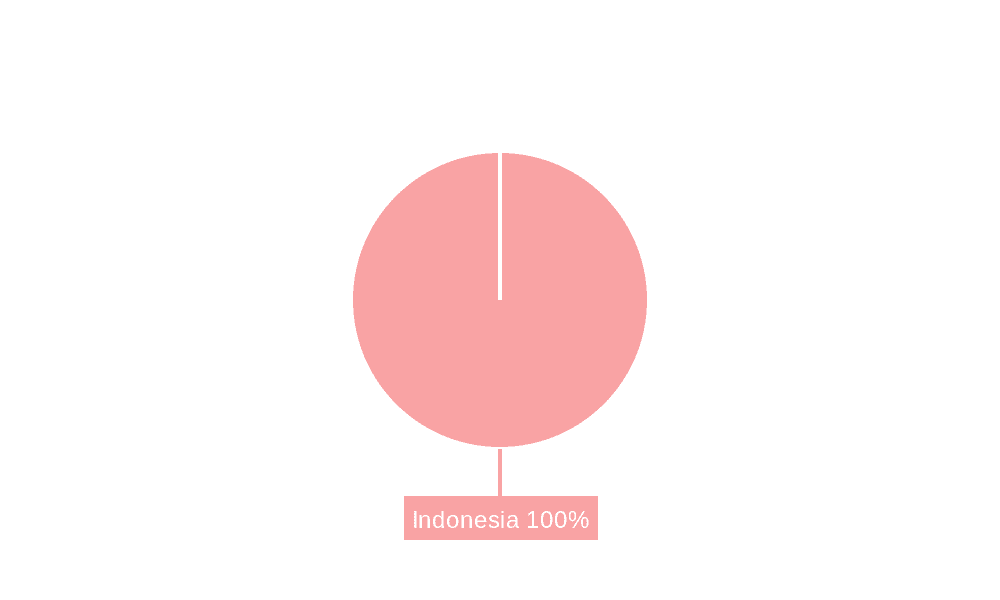
Indonesia Data Center Construction Market Regional Market Share
Geographic Coverage of Indonesia Data Center Construction Market
Indonesia Data Center Construction Market REPORT HIGHLIGHTS
| Aspects | Details |
|---|---|
| Study Period | 2020-2034 |
| Base Year | 2025 |
| Estimated Year | 2026 |
| Forecast Period | 2026-2034 |
| Historical Period | 2020-2025 |
| Growth Rate | CAGR of 6.6% from 2020-2034 |
| Segmentation |
|
Table of Contents
- 1. Introduction
- 1.1. Research Scope
- 1.2. Market Segmentation
- 1.3. Research Methodology
- 1.4. Definitions and Assumptions
- 2. Executive Summary
- 2.1. Introduction
- 3. Market Dynamics
- 3.1. Introduction
- 3.2. Market Drivers
- 3.2.1. Major ICT Indicators Contributing to the Growth of Data Centre in Indonesia; Rise of Green Data Centers; Government Support in the Form of Tax Incentives for Development of Data Centers
- 3.3. Market Restrains
- 3.3.1. Higher Initial Investments and Low Availability of Resources
- 3.4. Market Trends
- 3.4.1. Major ICT Indicators Contributing to the Growth of Data Centre in Indonesia
- 4. Market Factor Analysis
- 4.1. Porters Five Forces
- 4.2. Supply/Value Chain
- 4.3. PESTEL analysis
- 4.4. Market Entropy
- 4.5. Patent/Trademark Analysis
- 5. Indonesia Data Center Construction Market Analysis, Insights and Forecast, 2020-2032
- 5.1. Market Analysis, Insights and Forecast - by Infrastructure
- 5.1.1. Market Segmentation - By Electrical Infrastructure
- 5.1.1.1. Power Distribution Solution
- 5.1.1.1.1. PDUs - B
- 5.1.1.1.2. Transfer Switches
- 5.1.1.1.2.1. Static
- 5.1.1.1.2.2. Automatic (ATS)
- 5.1.1.1.3. Switchgear
- 5.1.1.1.3.1. Low-voltage
- 5.1.1.1.3.2. Medium-voltage
- 5.1.1.1.4. Power Panels and Components
- 5.1.1.1.5. Others
- 5.1.1.2. Power Backup Solutions
- 5.1.1.2.1. UPS
- 5.1.1.2.2. Generators
- 5.1.1.3. Service
- 5.1.1.1. Power Distribution Solution
- 5.1.2. Market Segmentation - By Mechanical Infrastructure
- 5.1.2.1. Cooling Systems
- 5.1.2.1.1. Immersion Cooling
- 5.1.2.1.2. Direct-to-chip Cooling
- 5.1.2.1.3. Rear Door Heat Exchanger
- 5.1.2.1.4. In-row and In-rack Cooling
- 5.1.2.2. Racks
- 5.1.2.3. Other Mechanical Infrastructures
- 5.1.2.1. Cooling Systems
- 5.1.3. General Construction
- 5.1.1. Market Segmentation - By Electrical Infrastructure
- 5.2. Market Analysis, Insights and Forecast - by Electrical Infrastructure
- 5.2.1. Power Distribution Solution
- 5.2.1.1. PDUs - B
- 5.2.1.2. Transfer Switches
- 5.2.1.2.1. Static
- 5.2.1.2.2. Automatic (ATS)
- 5.2.1.3. Switchgear
- 5.2.1.3.1. Low-voltage
- 5.2.1.3.2. Medium-voltage
- 5.2.1.4. Power Panels and Components
- 5.2.1.5. Others
- 5.2.2. Power Backup Solutions
- 5.2.2.1. UPS
- 5.2.2.2. Generators
- 5.2.3. Service
- 5.2.1. Power Distribution Solution
- 5.3. Market Analysis, Insights and Forecast - by Power Distribution Solution
- 5.3.1. PDUs - B
- 5.3.2. Transfer Switches
- 5.3.2.1. Static
- 5.3.2.2. Automatic (ATS)
- 5.3.3. Switchgear
- 5.3.3.1. Low-voltage
- 5.3.3.2. Medium-voltage
- 5.3.4. Power Panels and Components
- 5.3.5. Others
- 5.4. Market Analysis, Insights and Forecast - by Power Backup Solutions
- 5.4.1. UPS
- 5.4.2. Generators
- 5.5. Market Analysis, Insights and Forecast - by Service
- 5.6. Market Analysis, Insights and Forecast - by Mechanical Infrastructure
- 5.6.1. Cooling Systems
- 5.6.1.1. Immersion Cooling
- 5.6.1.2. Direct-to-chip Cooling
- 5.6.1.3. Rear Door Heat Exchanger
- 5.6.1.4. In-row and In-rack Cooling
- 5.6.2. Racks
- 5.6.3. Other Mechanical Infrastructures
- 5.6.1. Cooling Systems
- 5.7. Market Analysis, Insights and Forecast - by Cooling Systems
- 5.7.1. Immersion Cooling
- 5.7.2. Direct-to-chip Cooling
- 5.7.3. Rear Door Heat Exchanger
- 5.7.4. In-row and In-rack Cooling
- 5.8. Market Analysis, Insights and Forecast - by Racks
- 5.9. Market Analysis, Insights and Forecast - by Other Mechanical Infrastructures
- 5.10. Market Analysis, Insights and Forecast - by General Construction
- 5.11. Market Analysis, Insights and Forecast - by Tier Type
- 5.11.1. Tier-I and-II
- 5.11.2. Tier-III
- 5.11.3. Tier-IV
- 5.12. Market Analysis, Insights and Forecast - by Tier-I and-II
- 5.13. Market Analysis, Insights and Forecast - by Tier-III
- 5.14. Market Analysis, Insights and Forecast - by Tier-IV
- 5.15. Market Analysis, Insights and Forecast - by End User
- 5.15.1. Banking, Financial Services, and Insurance
- 5.15.2. IT and Telecommunications
- 5.15.3. Government and Defense
- 5.15.4. Healthcare
- 5.15.5. Other End Users
- 5.16. Market Analysis, Insights and Forecast - by Banking, Financial Services, and Insurance
- 5.17. Market Analysis, Insights and Forecast - by IT and Telecommunications
- 5.18. Market Analysis, Insights and Forecast - by Government and Defense
- 5.19. Market Analysis, Insights and Forecast - by Healthcare
- 5.20. Market Analysis, Insights and Forecast - by Other End Users
- 5.21. Market Analysis, Insights and Forecast - by Region
- 5.21.1. Indonesia
- 5.1. Market Analysis, Insights and Forecast - by Infrastructure
- 6. Competitive Analysis
- 6.1. Market Share Analysis 2025
- 6.2. Company Profiles
- 6.2.1 SAS Institute Inc
- 6.2.1.1. Overview
- 6.2.1.2. Products
- 6.2.1.3. SWOT Analysis
- 6.2.1.4. Recent Developments
- 6.2.1.5. Financials (Based on Availability)
- 6.2.2 Laurson & Toubro
- 6.2.2.1. Overview
- 6.2.2.2. Products
- 6.2.2.3. SWOT Analysis
- 6.2.2.4. Recent Developments
- 6.2.2.5. Financials (Based on Availability)
- 6.2.3 Fortis Construction
- 6.2.3.1. Overview
- 6.2.3.2. Products
- 6.2.3.3. SWOT Analysis
- 6.2.3.4. Recent Developments
- 6.2.3.5. Financials (Based on Availability)
- 6.2.4 IBM Corporation
- 6.2.4.1. Overview
- 6.2.4.2. Products
- 6.2.4.3. SWOT Analysis
- 6.2.4.4. Recent Developments
- 6.2.4.5. Financials (Based on Availability)
- 6.2.5 Brookfield Infrastructur
- 6.2.5.1. Overview
- 6.2.5.2. Products
- 6.2.5.3. SWOT Analysis
- 6.2.5.4. Recent Developments
- 6.2.5.5. Financials (Based on Availability)
- 6.2.6 Schneider Electric SE
- 6.2.6.1. Overview
- 6.2.6.2. Products
- 6.2.6.3. SWOT Analysis
- 6.2.6.4. Recent Developments
- 6.2.6.5. Financials (Based on Availability)
- 6.2.7 Turner Construction Co
- 6.2.7.1. Overview
- 6.2.7.2. Products
- 6.2.7.3. SWOT Analysis
- 6.2.7.4. Recent Developments
- 6.2.7.5. Financials (Based on Availability)
- 6.2.8 Delta Power Solutions
- 6.2.8.1. Overview
- 6.2.8.2. Products
- 6.2.8.3. SWOT Analysis
- 6.2.8.4. Recent Developments
- 6.2.8.5. Financials (Based on Availability)
- 6.2.9 Legrand
- 6.2.9.1. Overview
- 6.2.9.2. Products
- 6.2.9.3. SWOT Analysis
- 6.2.9.4. Recent Developments
- 6.2.9.5. Financials (Based on Availability)
- 6.2.10 NTT Facillities
- 6.2.10.1. Overview
- 6.2.10.2. Products
- 6.2.10.3. SWOT Analysis
- 6.2.10.4. Recent Developments
- 6.2.10.5. Financials (Based on Availability)
- 6.2.11 AECOM
- 6.2.11.1. Overview
- 6.2.11.2. Products
- 6.2.11.3. SWOT Analysis
- 6.2.11.4. Recent Developments
- 6.2.11.5. Financials (Based on Availability)
- 6.2.12 Iris Global
- 6.2.12.1. Overview
- 6.2.12.2. Products
- 6.2.12.3. SWOT Analysis
- 6.2.12.4. Recent Developments
- 6.2.12.5. Financials (Based on Availability)
- 6.2.1 SAS Institute Inc
List of Figures
- Figure 1: Indonesia Data Center Construction Market Revenue Breakdown (undefined, %) by Product 2025 & 2033
- Figure 2: Indonesia Data Center Construction Market Share (%) by Company 2025
List of Tables
- Table 1: Indonesia Data Center Construction Market Revenue undefined Forecast, by Infrastructure 2020 & 2033
- Table 2: Indonesia Data Center Construction Market Revenue undefined Forecast, by Electrical Infrastructure 2020 & 2033
- Table 3: Indonesia Data Center Construction Market Revenue undefined Forecast, by Power Distribution Solution 2020 & 2033
- Table 4: Indonesia Data Center Construction Market Revenue undefined Forecast, by Power Backup Solutions 2020 & 2033
- Table 5: Indonesia Data Center Construction Market Revenue undefined Forecast, by Service 2020 & 2033
- Table 6: Indonesia Data Center Construction Market Revenue undefined Forecast, by Mechanical Infrastructure 2020 & 2033
- Table 7: Indonesia Data Center Construction Market Revenue undefined Forecast, by Cooling Systems 2020 & 2033
- Table 8: Indonesia Data Center Construction Market Revenue undefined Forecast, by Racks 2020 & 2033
- Table 9: Indonesia Data Center Construction Market Revenue undefined Forecast, by Other Mechanical Infrastructures 2020 & 2033
- Table 10: Indonesia Data Center Construction Market Revenue undefined Forecast, by General Construction 2020 & 2033
- Table 11: Indonesia Data Center Construction Market Revenue undefined Forecast, by Tier Type 2020 & 2033
- Table 12: Indonesia Data Center Construction Market Revenue undefined Forecast, by Tier-I and-II 2020 & 2033
- Table 13: Indonesia Data Center Construction Market Revenue undefined Forecast, by Tier-III 2020 & 2033
- Table 14: Indonesia Data Center Construction Market Revenue undefined Forecast, by Tier-IV 2020 & 2033
- Table 15: Indonesia Data Center Construction Market Revenue undefined Forecast, by End User 2020 & 2033
- Table 16: Indonesia Data Center Construction Market Revenue undefined Forecast, by Banking, Financial Services, and Insurance 2020 & 2033
- Table 17: Indonesia Data Center Construction Market Revenue undefined Forecast, by IT and Telecommunications 2020 & 2033
- Table 18: Indonesia Data Center Construction Market Revenue undefined Forecast, by Government and Defense 2020 & 2033
- Table 19: Indonesia Data Center Construction Market Revenue undefined Forecast, by Healthcare 2020 & 2033
- Table 20: Indonesia Data Center Construction Market Revenue undefined Forecast, by Other End Users 2020 & 2033
- Table 21: Indonesia Data Center Construction Market Revenue undefined Forecast, by Region 2020 & 2033
- Table 22: Indonesia Data Center Construction Market Revenue undefined Forecast, by Infrastructure 2020 & 2033
- Table 23: Indonesia Data Center Construction Market Revenue undefined Forecast, by Electrical Infrastructure 2020 & 2033
- Table 24: Indonesia Data Center Construction Market Revenue undefined Forecast, by Power Distribution Solution 2020 & 2033
- Table 25: Indonesia Data Center Construction Market Revenue undefined Forecast, by Power Backup Solutions 2020 & 2033
- Table 26: Indonesia Data Center Construction Market Revenue undefined Forecast, by Service 2020 & 2033
- Table 27: Indonesia Data Center Construction Market Revenue undefined Forecast, by Mechanical Infrastructure 2020 & 2033
- Table 28: Indonesia Data Center Construction Market Revenue undefined Forecast, by Cooling Systems 2020 & 2033
- Table 29: Indonesia Data Center Construction Market Revenue undefined Forecast, by Racks 2020 & 2033
- Table 30: Indonesia Data Center Construction Market Revenue undefined Forecast, by Other Mechanical Infrastructures 2020 & 2033
- Table 31: Indonesia Data Center Construction Market Revenue undefined Forecast, by General Construction 2020 & 2033
- Table 32: Indonesia Data Center Construction Market Revenue undefined Forecast, by Tier Type 2020 & 2033
- Table 33: Indonesia Data Center Construction Market Revenue undefined Forecast, by Tier-I and-II 2020 & 2033
- Table 34: Indonesia Data Center Construction Market Revenue undefined Forecast, by Tier-III 2020 & 2033
- Table 35: Indonesia Data Center Construction Market Revenue undefined Forecast, by Tier-IV 2020 & 2033
- Table 36: Indonesia Data Center Construction Market Revenue undefined Forecast, by End User 2020 & 2033
- Table 37: Indonesia Data Center Construction Market Revenue undefined Forecast, by Banking, Financial Services, and Insurance 2020 & 2033
- Table 38: Indonesia Data Center Construction Market Revenue undefined Forecast, by IT and Telecommunications 2020 & 2033
- Table 39: Indonesia Data Center Construction Market Revenue undefined Forecast, by Government and Defense 2020 & 2033
- Table 40: Indonesia Data Center Construction Market Revenue undefined Forecast, by Healthcare 2020 & 2033
- Table 41: Indonesia Data Center Construction Market Revenue undefined Forecast, by Other End Users 2020 & 2033
- Table 42: Indonesia Data Center Construction Market Revenue undefined Forecast, by Country 2020 & 2033
Frequently Asked Questions
1. What is the projected Compound Annual Growth Rate (CAGR) of the Indonesia Data Center Construction Market?
The projected CAGR is approximately 6.6%.
2. Which companies are prominent players in the Indonesia Data Center Construction Market?
Key companies in the market include SAS Institute Inc, Laurson & Toubro, Fortis Construction, IBM Corporation, Brookfield Infrastructur, Schneider Electric SE, Turner Construction Co, Delta Power Solutions, Legrand, NTT Facillities, AECOM, Iris Global.
3. What are the main segments of the Indonesia Data Center Construction Market?
The market segments include Infrastructure, Electrical Infrastructure, Power Distribution Solution, Power Backup Solutions, Service , Mechanical Infrastructure, Cooling Systems, Racks, Other Mechanical Infrastructures, General Construction, Tier Type, Tier-I and-II, Tier-III, Tier-IV, End User, Banking, Financial Services, and Insurance, IT and Telecommunications, Government and Defense, Healthcare, Other End Users.
4. Can you provide details about the market size?
The market size is estimated to be USD XXX N/A as of 2022.
5. What are some drivers contributing to market growth?
Major ICT Indicators Contributing to the Growth of Data Centre in Indonesia; Rise of Green Data Centers; Government Support in the Form of Tax Incentives for Development of Data Centers.
6. What are the notable trends driving market growth?
Major ICT Indicators Contributing to the Growth of Data Centre in Indonesia.
7. Are there any restraints impacting market growth?
Higher Initial Investments and Low Availability of Resources.
8. Can you provide examples of recent developments in the market?
September 2022: The company commenced construction on a 23 MW data center in Jakarta, Indonesia, marking the company's third site in South East Asia as it capitalizes on the region's rapid digital transformation in the wake of the global pandemic. The new facility will offer 3,430 cabinets and an IT load of 23 MW and is designed to cater to the growing demand for high-power density applications from cloud-driven hyperscale deployments, local and international networks, and financial service providers. It is expected to complete by Q4 2023.
9. What pricing options are available for accessing the report?
Pricing options include single-user, multi-user, and enterprise licenses priced at USD 3800, USD 4500, and USD 5800 respectively.
10. Is the market size provided in terms of value or volume?
The market size is provided in terms of value, measured in N/A.
11. Are there any specific market keywords associated with the report?
Yes, the market keyword associated with the report is "Indonesia Data Center Construction Market," which aids in identifying and referencing the specific market segment covered.
12. How do I determine which pricing option suits my needs best?
The pricing options vary based on user requirements and access needs. Individual users may opt for single-user licenses, while businesses requiring broader access may choose multi-user or enterprise licenses for cost-effective access to the report.
13. Are there any additional resources or data provided in the Indonesia Data Center Construction Market report?
While the report offers comprehensive insights, it's advisable to review the specific contents or supplementary materials provided to ascertain if additional resources or data are available.
14. How can I stay updated on further developments or reports in the Indonesia Data Center Construction Market?
To stay informed about further developments, trends, and reports in the Indonesia Data Center Construction Market, consider subscribing to industry newsletters, following relevant companies and organizations, or regularly checking reputable industry news sources and publications.
Methodology
Step 1 - Identification of Relevant Samples Size from Population Database
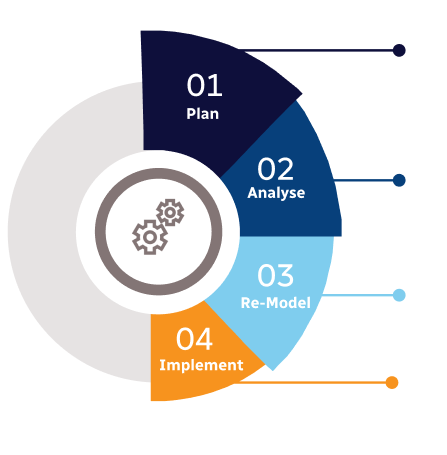
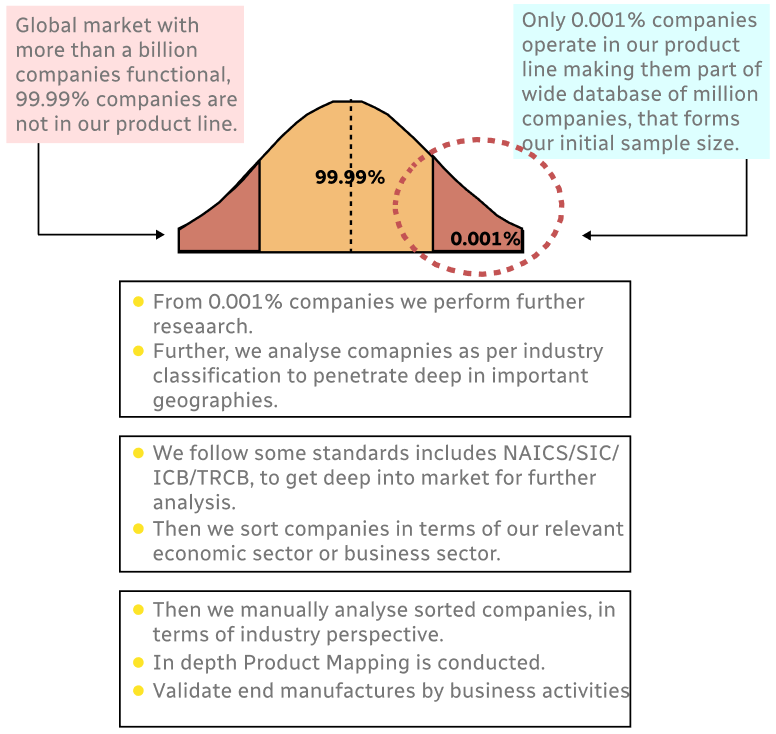
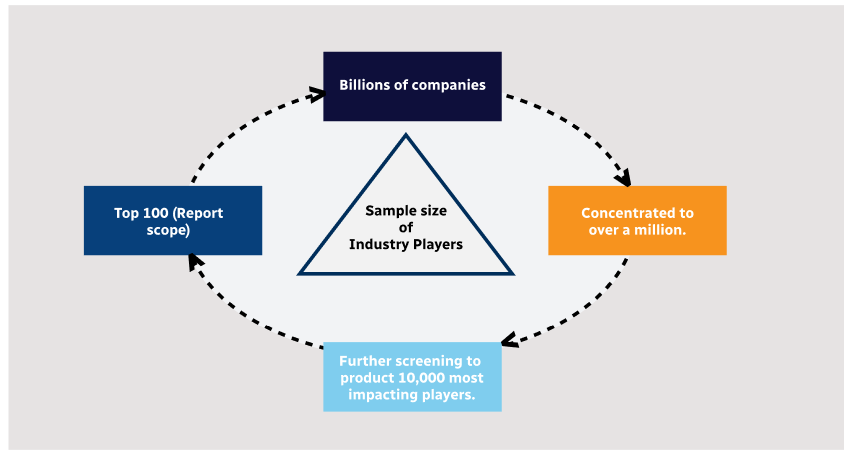
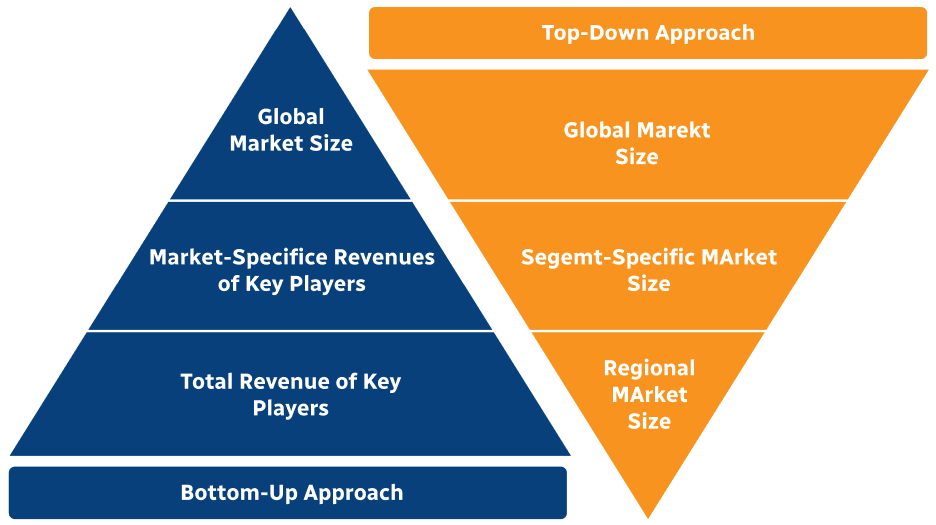
Step 2 - Approaches for Defining Global Market Size (Value, Volume* & Price*)
Note*: In applicable scenarios
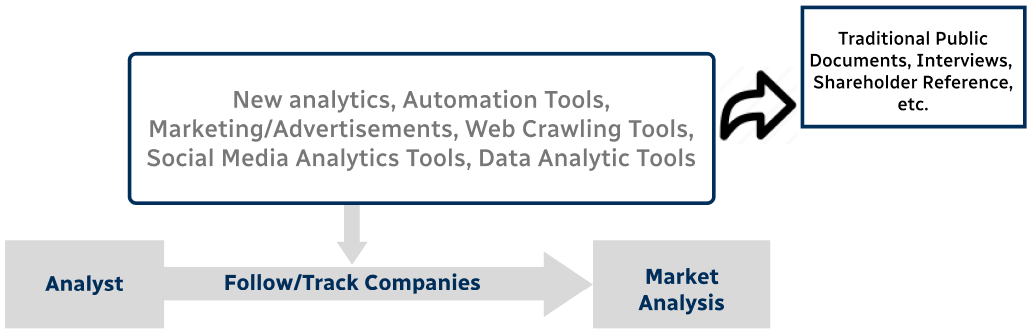
Step 3 - Data Sources
Primary Research
- Web Analytics
- Survey Reports
- Research Institute
- Latest Research Reports
- Opinion Leaders
Secondary Research
- Annual Reports
- White Paper
- Latest Press Release
- Industry Association
- Paid Database
- Investor Presentations
Step 4 - Data Triangulation
Involves using different sources of information in order to increase the validity of a study
These sources are likely to be stakeholders in a program - participants, other researchers, program staff, other community members, and so on.
Then we put all data in single framework & apply various statistical tools to find out the dynamic on the market.
During the analysis stage, feedback from the stakeholder groups would be compared to determine areas of agreement as well as areas of divergence