


Key Insights
The global Knee Orthoses market is poised for robust expansion, with an estimated market size of $3.93 billion in 2024. This growth is propelled by an anticipated Compound Annual Growth Rate (CAGR) of 5.04% from 2025 to 2033, indicating sustained demand for innovative solutions in joint support and rehabilitation. Key market drivers include the increasing prevalence of osteoarthritis and other degenerative joint diseases, a growing aging population susceptible to knee injuries, and a rising awareness of the benefits of orthotic interventions in pain management and mobility enhancement. Furthermore, advancements in material science and design are leading to more comfortable, effective, and personalized knee orthoses, further stimulating market penetration across various healthcare settings. The expanding adoption of homecare solutions also contributes significantly to this growth trajectory, allowing for convenient and continuous therapeutic support.
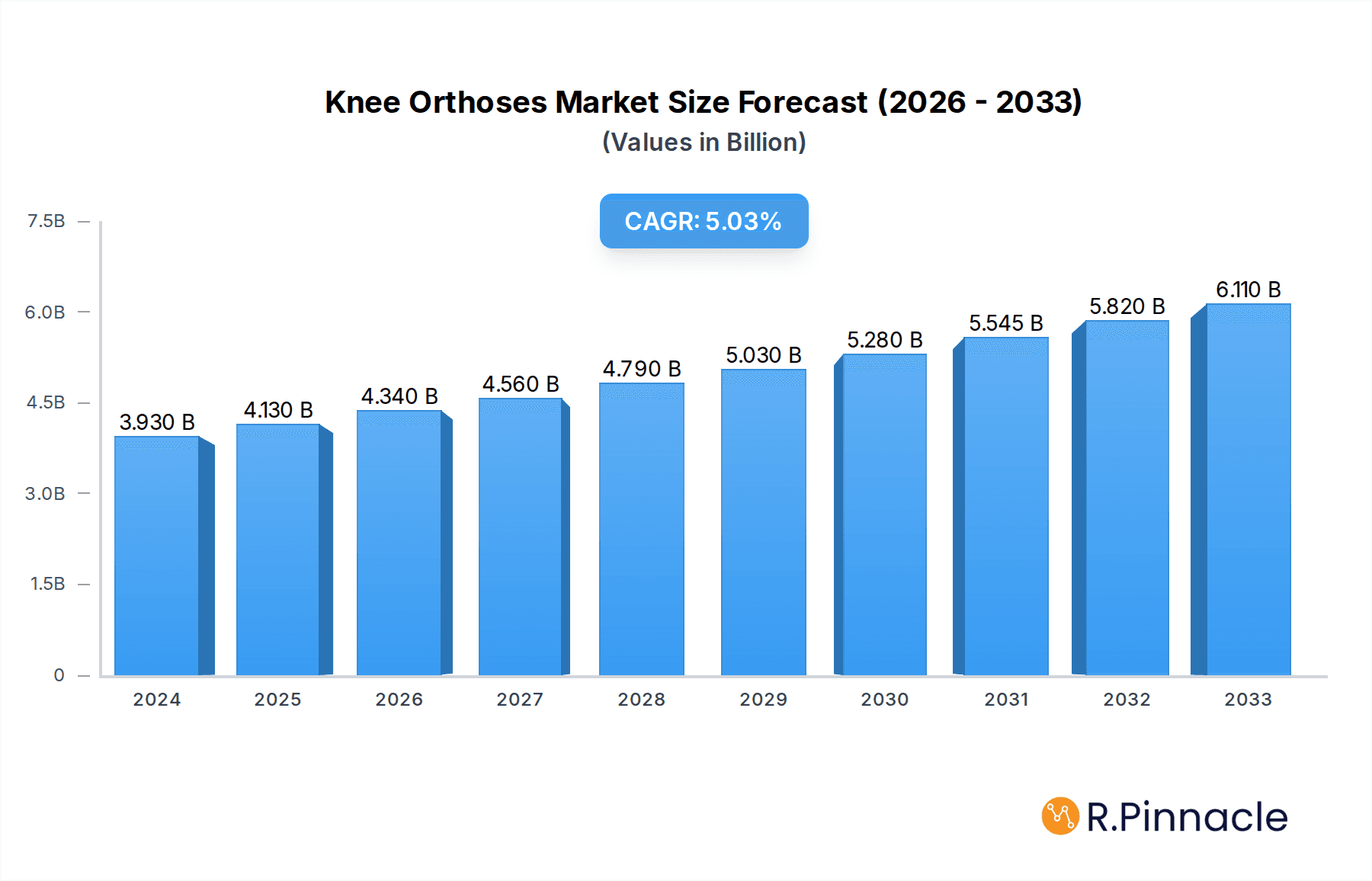
Knee Orthoses Market Size (In Billion)

The market for knee orthoses is segmented into distinct application areas and types, reflecting diverse patient needs and treatment protocols. Hospitals and clinics represent major end-use segments, leveraging these devices for post-operative care, injury rehabilitation, and chronic condition management. The growing demand for specialized orthopedic care in homecare settings also presents a significant opportunity, driven by patient preference for convenience and cost-effectiveness. Within product types, dynamic orthoses, which allow for controlled movement and support, are gaining traction due to their role in active rehabilitation. Static orthoses, providing rigid support and immobilization, remain crucial for severe injuries and post-surgical recovery. Leading companies such as Hanger Clinic, DJO Global, and Ottobock are at the forefront, investing in research and development to introduce advanced orthotic solutions and expand their global reach, catering to a diverse range of regional markets including North America, Europe, and the Asia Pacific.
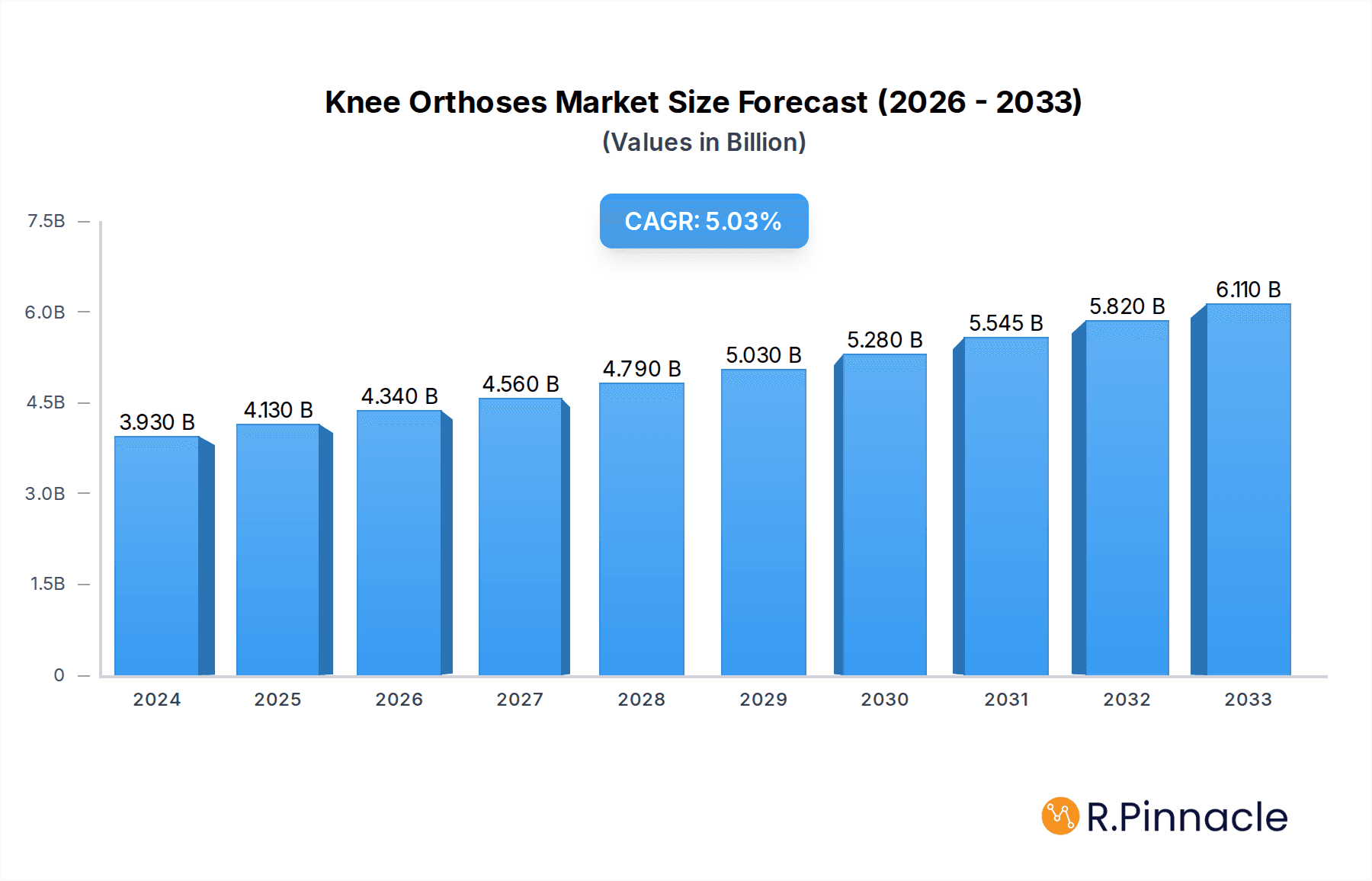
Knee Orthoses Company Market Share
This in-depth report offers a definitive analysis of the global Knee Orthoses market, providing critical insights for industry stakeholders. Leveraging extensive data from 2019 to 2033, with a base year of 2025, this report details market structure, dynamics, innovations, regional dominance, and future outlook. Discover actionable intelligence on market size, CAGR, CAGR projections, and competitive landscapes, crucial for strategic decision-making in the evolving orthotics sector.
Knee Orthoses Market Structure & Innovation Trends
The global Knee Orthoses market exhibits a moderately concentrated structure, with key players like Hanger Clinic, Comprehensive Prosthetics and Orthotics, DJO Global, Ottobock, and Medi holding significant market share. Innovation drivers are primarily fueled by advancements in material science, leading to lighter, more comfortable, and highly functional orthoses. Regulatory frameworks, particularly in North America and Europe, are well-established, focusing on product safety and efficacy, which influences product development cycles. Product substitutes, while present in the form of conservative treatments, are increasingly being complemented by advanced orthotic solutions that offer superior patient outcomes. End-user demographics are shifting, with a growing elderly population and an increasing prevalence of sports-related injuries driving demand. Mergers and Acquisitions (M&A) activities are projected to remain a key trend, with estimated M&A deal values reaching in the billions as companies seek to expand their product portfolios and geographical reach. For instance, a significant acquisition in the orthotics sector could boost the market share of the acquiring entity by an estimated 5-10%.
- Innovation Drivers: Advancements in material science (e.g., carbon fiber composites, advanced polymers), 3D printing technologies, and sensor integration for real-time monitoring.
- Regulatory Landscape: Stringent FDA approvals in the US, CE marking in Europe, and evolving standards for personalized orthotics.
- Product Substitutes: Physical therapy, pain management medications, and surgical interventions.
- End-User Demographics: Aging population, active lifestyle enthusiasts, individuals with osteoarthritis, post-operative patients.
- M&A Activity: Strategic acquisitions to gain market access, technological expertise, and product diversification.
Knee Orthoses Market Dynamics & Trends
The global Knee Orthoses market is experiencing robust growth, driven by an aging global population and a corresponding increase in age-related musculoskeletal disorders such as osteoarthritis and ligament injuries. The rising prevalence of sports-related injuries, particularly among athletes and active individuals, further fuels the demand for effective knee support solutions. Technological advancements are playing a pivotal role, with the integration of smart technologies, such as sensors that monitor patient compliance and biomechanical data, transforming traditional orthoses into sophisticated assistive devices. The development of custom-fit orthoses through 3D printing technology is revolutionizing patient care, offering unparalleled comfort and efficacy, leading to higher market penetration rates, estimated at XX% in developed regions. Consumer preferences are increasingly leaning towards lightweight, comfortable, and aesthetically appealing orthoses that integrate seamlessly into daily life. This shift is compelling manufacturers to invest in research and development for innovative designs and materials. The competitive landscape is characterized by intense rivalry among established players and emerging innovators, leading to continuous product differentiation and strategic partnerships. The market penetration for advanced dynamic orthotics is projected to increase significantly, contributing to an estimated Compound Annual Growth Rate (CAGR) of XX% over the forecast period. Furthermore, the growing awareness of the benefits of early intervention with orthoses to prevent disease progression and improve quality of life is a substantial growth accelerator. The expansion of healthcare infrastructure in emerging economies and increasing disposable incomes are also contributing factors to market expansion. The projected market size is expected to reach billions by the end of the forecast period.
Dominant Regions & Segments in Knee Orthoses
North America currently holds a dominant position in the global Knee Orthoses market, primarily driven by a high prevalence of osteoarthritis and knee injuries, robust healthcare expenditure, and advanced technological adoption. The United States, in particular, accounts for a significant share due to its well-established reimbursement policies and the presence of leading orthotic manufacturers and clinics. Favorable economic policies supporting the healthcare sector and a strong emphasis on rehabilitation and sports medicine further bolster its dominance.
- Leading Region: North America
- Key Country: United States
- Dominant Application Segment: Hospitals, followed closely by Clinics, are the primary settings for the prescription and fitting of knee orthoses. This is due to the clinical expertise available and the need for professional assessment. Homecare settings are witnessing rapid growth, fueled by an aging population and increased patient preference for remote care solutions.
- Hospitals: High patient volume, post-surgical rehabilitation, trauma care.
- Clinics: Specialized orthotic and prosthetic clinics, physiotherapy centers, sports medicine clinics.
- Homecare Settings: Growing adoption for chronic condition management and post-discharge support.
- Dominant Type Segment: Static Orthotics currently command a larger market share due to their widespread use in providing stability and support for various knee conditions. However, Dynamic Orthotics are experiencing a faster growth trajectory, driven by their ability to facilitate movement and actively correct deformities, appealing to athletes and individuals seeking functional recovery.
- Static Orthotics: Support, immobilization, pain relief for conditions like osteoarthritis.
- Dynamic Orthotics: Functional recovery, improved mobility, active correction for ligament injuries and post-operative rehabilitation.
Knee Orthoses Product Innovations
Product innovations in the Knee Orthoses market are revolutionizing patient care. Advancements in material science have led to the development of ultra-lightweight yet incredibly durable orthoses, such as those incorporating carbon fiber composites. The integration of smart sensors into orthotic devices is a significant trend, enabling real-time monitoring of patient movement, compliance, and therapeutic progress, offering invaluable data for clinicians. 3D printing technology is enabling the creation of highly customized orthoses, precisely molded to individual patient anatomy, enhancing comfort and efficacy. These innovations provide a competitive advantage by addressing unmet patient needs for greater mobility, pain reduction, and faster rehabilitation.
Report Scope & Segmentation Analysis
This report meticulously segments the Knee Orthoses market to provide granular insights. The Application segmentation includes Hospitals, Clinics, and Homecare Settings, each offering unique market dynamics and growth trajectories. Hospitals are characterized by high patient throughput and post-operative care demands. Clinics, encompassing specialized orthotic centers and rehabilitation facilities, focus on expert fitting and personalized solutions. Homecare Settings are emerging as a significant growth area, driven by the increasing demand for remote patient management and chronic condition support. The Types segmentation comprises Dynamic Orthotics and Static Orthotics. Dynamic Orthotics are designed to actively assist or correct movement, showing strong growth due to their application in sports rehabilitation and post-surgical recovery. Static Orthotics provide essential support and immobilization, maintaining a substantial market share due to their broad applicability in managing conditions like osteoarthritis.
- Application: Hospitals: Projected market size of $XX billion by 2033, with an estimated CAGR of XX%.
- Application: Clinics: Projected market size of $XX billion by 2033, with an estimated CAGR of XX%.
- Application: Homecare Settings: Projected market size of $XX billion by 2033, with an estimated CAGR of XX%.
- Type: Dynamic Orthotics: Projected market size of $XX billion by 2033, with an estimated CAGR of XX%.
- Type: Static Orthotics: Projected market size of $XX billion by 2033, with an estimated CAGR of XX%.
Key Drivers of Knee Orthoses Growth
The growth of the Knee Orthoses market is propelled by several key factors. The aging global population is a primary driver, as older individuals are more susceptible to knee-related ailments like osteoarthritis and degenerative joint diseases. The increasing incidence of sports-related injuries among both professional athletes and recreational participants further amplifies demand for effective knee support and rehabilitation solutions. Technological advancements, including the development of lighter materials, custom 3D printing, and integrated sensors for real-time monitoring, enhance product functionality and patient outcomes. Furthermore, growing awareness among patients and healthcare professionals regarding the benefits of early intervention and non-invasive treatments for knee conditions is fostering greater adoption of orthotic devices.
- Demographic Shifts: Rising elderly population and increased sports participation.
- Technological Innovations: Smart orthotics, 3D printing for customization, advanced materials.
- Increased Healthcare Awareness: Emphasis on rehabilitation, preventative care, and non-surgical interventions.
- Improved Reimbursement Policies: Favorable insurance coverage for orthotic devices in key markets.
Challenges in the Knee Orthoses Sector
Despite its growth potential, the Knee Orthoses sector faces several challenges. High cost of advanced orthotic devices can be a barrier to adoption, especially in developing economies or for individuals with limited insurance coverage. Stringent regulatory approvals in various regions can prolong the market entry timeline for new products and increase development costs. Lack of patient compliance with prescribed orthotic regimens due to discomfort, inconvenience, or insufficient education remains a persistent issue. Intense competition from both established players and emerging startups can lead to price pressures and necessitate continuous innovation. Supply chain disruptions, as witnessed in recent global events, can impact the availability of raw materials and finished products, affecting market stability.
- Cost of Devices: High price points for advanced and customized orthotics.
- Regulatory Hurdles: Lengthy approval processes and varying standards across different countries.
- Patient Compliance: Issues related to comfort, aesthetics, and understanding of treatment benefits.
- Competitive Pressures: Price wars and the need for constant product differentiation.
- Supply Chain Volatility: Potential for disruptions in raw material sourcing and manufacturing.
Emerging Opportunities in Knee Orthoses
The Knee Orthoses market presents several promising opportunities for growth and innovation. The expanding use of smart orthotics with integrated sensors offers significant potential for remote patient monitoring, data-driven rehabilitation, and personalized treatment plans. The advancement and wider adoption of 3D printing technology for personalized orthotic fabrication will continue to drive demand for custom-fit solutions, enhancing patient comfort and efficacy. The growing focus on sports medicine and preventative care opens new avenues for developing specialized orthoses for athletes and active individuals, aiming to enhance performance and reduce injury risk. Furthermore, penetration into emerging markets with increasing healthcare expenditure and a growing awareness of rehabilitative technologies represents a substantial untapped potential. Partnerships between orthotics manufacturers and healthcare providers can streamline patient access to advanced solutions and improve treatment outcomes.
- Personalized Orthotics: Increased demand for custom-fit devices via 3D printing.
- Smart Orthotics: Integration of sensors for remote monitoring and data analytics.
- Sports Medicine Focus: Development of specialized orthoses for performance enhancement and injury prevention.
- Emerging Market Expansion: Tapping into underserved regions with growing healthcare needs.
- Digital Health Integration: Leveraging telemedicine and digital platforms for patient support and follow-up.
Leading Players in the Knee Orthoses Market
- Hanger Clinic
- Comprehensive Prosthetics and Orthotics
- DJO Global
- Ottobock
- DeRoyal Industries
- Medi
- Thuasne
- Nakamura Brace
- Ambroise
- Juzo
- Xi'an Hai Hong Prosthetic and Orthosis
Key Developments in Knee Orthoses Industry
- 2024/01: DJO Global launched a new lightweight, high-performance knee brace designed for athletic rehabilitation, enhancing product portfolio with advanced features.
- 2023/11: Ottobock announced a strategic partnership with a leading prosthetics research institute to accelerate the development of next-generation intelligent orthotic solutions.
- 2023/07: Medi introduced a novel dynamic knee orthosis featuring advanced sensor technology for real-time gait analysis, improving patient recovery outcomes.
- 2023/04: Thuasne acquired a specialized orthotics company, expanding its presence in the custom-fit bracing segment and reinforcing its market position.
- 2022/10: Hanger Clinic invested significantly in its 3D printing capabilities, aiming to provide faster turnaround times for custom orthotic devices.
Future Outlook for Knee Orthoses Market
The future outlook for the Knee Orthoses market is exceptionally promising, driven by persistent demographic trends and continuous technological innovation. The increasing prevalence of age-related knee conditions and the growing emphasis on active lifestyles will sustain robust demand. The integration of smart technologies, artificial intelligence, and advanced materials will further transform knee orthoses into sophisticated, personalized assistive devices, leading to improved patient outcomes and a higher quality of life. The expansion of the market into emerging economies, coupled with favorable reimbursement policies and increasing healthcare expenditure, presents significant growth opportunities. Strategic collaborations and acquisitions are expected to shape the competitive landscape, fostering innovation and market consolidation. The market is poised for sustained growth, with an anticipated market size reaching tens of billions by the end of the forecast period.
Knee Orthoses Segmentation
-
1. Application
- 1.1. Hospitals
- 1.2. Clinics
- 1.3. Homecare Settings
-
2. Types
- 2.1. Dynamic Orthotics
- 2.2. Static Orthotics
Knee Orthoses Segmentation By Geography
-
1. North America
- 1.1. United States
- 1.2. Canada
- 1.3. Mexico
-
2. South America
- 2.1. Brazil
- 2.2. Argentina
- 2.3. Rest of South America
-
3. Europe
- 3.1. United Kingdom
- 3.2. Germany
- 3.3. France
- 3.4. Italy
- 3.5. Spain
- 3.6. Russia
- 3.7. Benelux
- 3.8. Nordics
- 3.9. Rest of Europe
-
4. Middle East & Africa
- 4.1. Turkey
- 4.2. Israel
- 4.3. GCC
- 4.4. North Africa
- 4.5. South Africa
- 4.6. Rest of Middle East & Africa
-
5. Asia Pacific
- 5.1. China
- 5.2. India
- 5.3. Japan
- 5.4. South Korea
- 5.5. ASEAN
- 5.6. Oceania
- 5.7. Rest of Asia Pacific
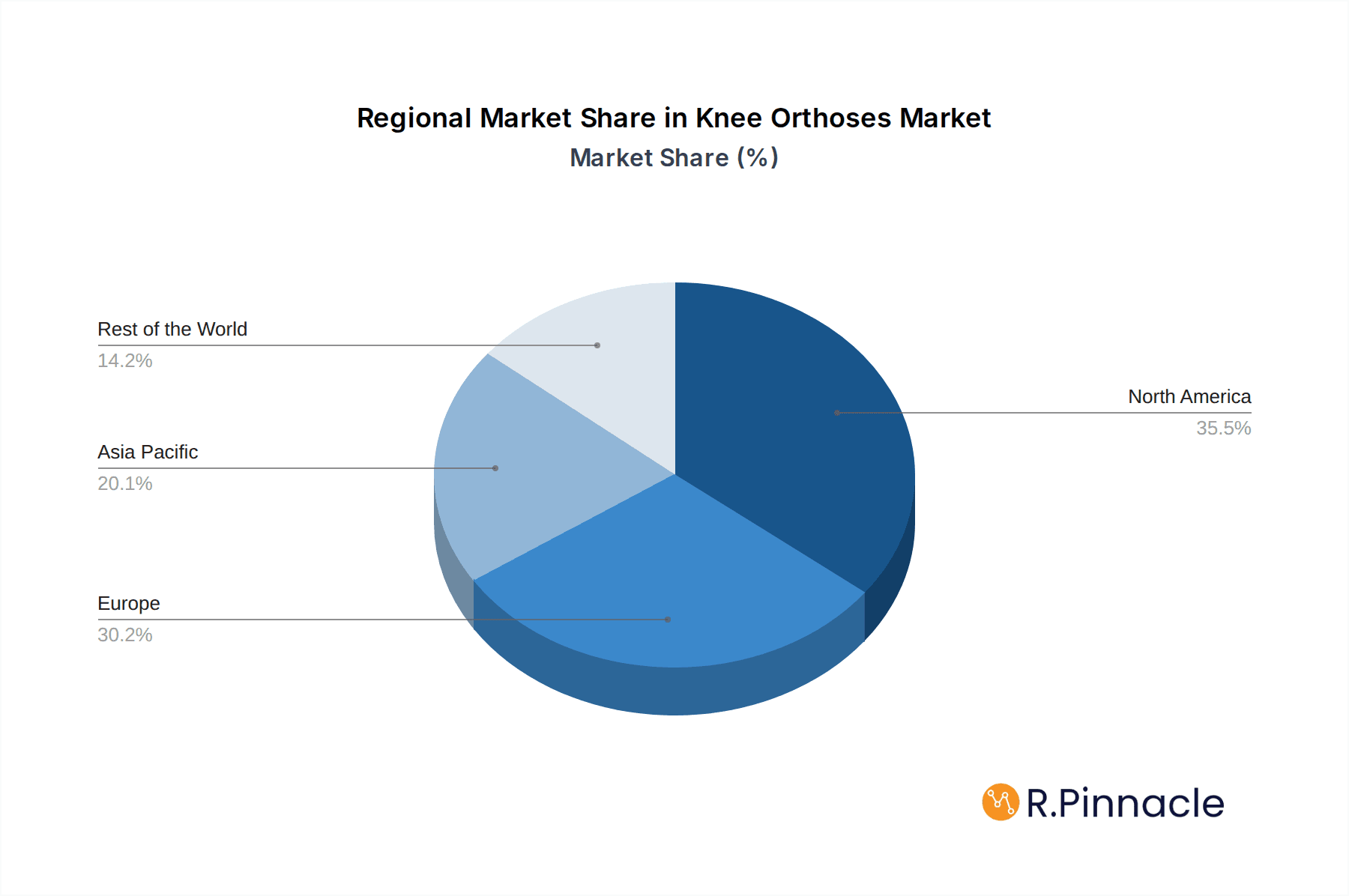
Knee Orthoses Regional Market Share
Geographic Coverage of Knee Orthoses
Knee Orthoses REPORT HIGHLIGHTS
| Aspects | Details |
|---|---|
| Study Period | 2020-2034 |
| Base Year | 2025 |
| Estimated Year | 2026 |
| Forecast Period | 2026-2034 |
| Historical Period | 2020-2025 |
| Growth Rate | CAGR of 5.04% from 2020-2034 |
| Segmentation |
|
Table of Contents
- 1. Introduction
- 1.1. Research Scope
- 1.2. Market Segmentation
- 1.3. Research Methodology
- 1.4. Definitions and Assumptions
- 2. Executive Summary
- 2.1. Introduction
- 3. Market Dynamics
- 3.1. Introduction
- 3.2. Market Drivers
- 3.3. Market Restrains
- 3.4. Market Trends
- 4. Market Factor Analysis
- 4.1. Porters Five Forces
- 4.2. Supply/Value Chain
- 4.3. PESTEL analysis
- 4.4. Market Entropy
- 4.5. Patent/Trademark Analysis
- 5. Global Knee Orthoses Analysis, Insights and Forecast, 2020-2032
- 5.1. Market Analysis, Insights and Forecast - by Application
- 5.1.1. Hospitals
- 5.1.2. Clinics
- 5.1.3. Homecare Settings
- 5.2. Market Analysis, Insights and Forecast - by Types
- 5.2.1. Dynamic Orthotics
- 5.2.2. Static Orthotics
- 5.3. Market Analysis, Insights and Forecast - by Region
- 5.3.1. North America
- 5.3.2. South America
- 5.3.3. Europe
- 5.3.4. Middle East & Africa
- 5.3.5. Asia Pacific
- 5.1. Market Analysis, Insights and Forecast - by Application
- 6. North America Knee Orthoses Analysis, Insights and Forecast, 2020-2032
- 6.1. Market Analysis, Insights and Forecast - by Application
- 6.1.1. Hospitals
- 6.1.2. Clinics
- 6.1.3. Homecare Settings
- 6.2. Market Analysis, Insights and Forecast - by Types
- 6.2.1. Dynamic Orthotics
- 6.2.2. Static Orthotics
- 6.1. Market Analysis, Insights and Forecast - by Application
- 7. South America Knee Orthoses Analysis, Insights and Forecast, 2020-2032
- 7.1. Market Analysis, Insights and Forecast - by Application
- 7.1.1. Hospitals
- 7.1.2. Clinics
- 7.1.3. Homecare Settings
- 7.2. Market Analysis, Insights and Forecast - by Types
- 7.2.1. Dynamic Orthotics
- 7.2.2. Static Orthotics
- 7.1. Market Analysis, Insights and Forecast - by Application
- 8. Europe Knee Orthoses Analysis, Insights and Forecast, 2020-2032
- 8.1. Market Analysis, Insights and Forecast - by Application
- 8.1.1. Hospitals
- 8.1.2. Clinics
- 8.1.3. Homecare Settings
- 8.2. Market Analysis, Insights and Forecast - by Types
- 8.2.1. Dynamic Orthotics
- 8.2.2. Static Orthotics
- 8.1. Market Analysis, Insights and Forecast - by Application
- 9. Middle East & Africa Knee Orthoses Analysis, Insights and Forecast, 2020-2032
- 9.1. Market Analysis, Insights and Forecast - by Application
- 9.1.1. Hospitals
- 9.1.2. Clinics
- 9.1.3. Homecare Settings
- 9.2. Market Analysis, Insights and Forecast - by Types
- 9.2.1. Dynamic Orthotics
- 9.2.2. Static Orthotics
- 9.1. Market Analysis, Insights and Forecast - by Application
- 10. Asia Pacific Knee Orthoses Analysis, Insights and Forecast, 2020-2032
- 10.1. Market Analysis, Insights and Forecast - by Application
- 10.1.1. Hospitals
- 10.1.2. Clinics
- 10.1.3. Homecare Settings
- 10.2. Market Analysis, Insights and Forecast - by Types
- 10.2.1. Dynamic Orthotics
- 10.2.2. Static Orthotics
- 10.1. Market Analysis, Insights and Forecast - by Application
- 11. Competitive Analysis
- 11.1. Global Market Share Analysis 2025
- 11.2. Company Profiles
- 11.2.1 Hanger Clinic
- 11.2.1.1. Overview
- 11.2.1.2. Products
- 11.2.1.3. SWOT Analysis
- 11.2.1.4. Recent Developments
- 11.2.1.5. Financials (Based on Availability)
- 11.2.2 Comprehensive Prosthetics and Orthotics
- 11.2.2.1. Overview
- 11.2.2.2. Products
- 11.2.2.3. SWOT Analysis
- 11.2.2.4. Recent Developments
- 11.2.2.5. Financials (Based on Availability)
- 11.2.3 DJO Global
- 11.2.3.1. Overview
- 11.2.3.2. Products
- 11.2.3.3. SWOT Analysis
- 11.2.3.4. Recent Developments
- 11.2.3.5. Financials (Based on Availability)
- 11.2.4 Ottobock
- 11.2.4.1. Overview
- 11.2.4.2. Products
- 11.2.4.3. SWOT Analysis
- 11.2.4.4. Recent Developments
- 11.2.4.5. Financials (Based on Availability)
- 11.2.5 DeRoyal Industries
- 11.2.5.1. Overview
- 11.2.5.2. Products
- 11.2.5.3. SWOT Analysis
- 11.2.5.4. Recent Developments
- 11.2.5.5. Financials (Based on Availability)
- 11.2.6 Medi
- 11.2.6.1. Overview
- 11.2.6.2. Products
- 11.2.6.3. SWOT Analysis
- 11.2.6.4. Recent Developments
- 11.2.6.5. Financials (Based on Availability)
- 11.2.7 Thuasne
- 11.2.7.1. Overview
- 11.2.7.2. Products
- 11.2.7.3. SWOT Analysis
- 11.2.7.4. Recent Developments
- 11.2.7.5. Financials (Based on Availability)
- 11.2.8 Nakamura Brace
- 11.2.8.1. Overview
- 11.2.8.2. Products
- 11.2.8.3. SWOT Analysis
- 11.2.8.4. Recent Developments
- 11.2.8.5. Financials (Based on Availability)
- 11.2.9 Ambroise
- 11.2.9.1. Overview
- 11.2.9.2. Products
- 11.2.9.3. SWOT Analysis
- 11.2.9.4. Recent Developments
- 11.2.9.5. Financials (Based on Availability)
- 11.2.10 Juzo
- 11.2.10.1. Overview
- 11.2.10.2. Products
- 11.2.10.3. SWOT Analysis
- 11.2.10.4. Recent Developments
- 11.2.10.5. Financials (Based on Availability)
- 11.2.11 Xi'an Hai Hong Prosthetic and Orthosis
- 11.2.11.1. Overview
- 11.2.11.2. Products
- 11.2.11.3. SWOT Analysis
- 11.2.11.4. Recent Developments
- 11.2.11.5. Financials (Based on Availability)
- 11.2.1 Hanger Clinic
List of Figures
- Figure 1: Global Knee Orthoses Revenue Breakdown (undefined, %) by Region 2025 & 2033
- Figure 2: North America Knee Orthoses Revenue (undefined), by Application 2025 & 2033
- Figure 3: North America Knee Orthoses Revenue Share (%), by Application 2025 & 2033
- Figure 4: North America Knee Orthoses Revenue (undefined), by Types 2025 & 2033
- Figure 5: North America Knee Orthoses Revenue Share (%), by Types 2025 & 2033
- Figure 6: North America Knee Orthoses Revenue (undefined), by Country 2025 & 2033
- Figure 7: North America Knee Orthoses Revenue Share (%), by Country 2025 & 2033
- Figure 8: South America Knee Orthoses Revenue (undefined), by Application 2025 & 2033
- Figure 9: South America Knee Orthoses Revenue Share (%), by Application 2025 & 2033
- Figure 10: South America Knee Orthoses Revenue (undefined), by Types 2025 & 2033
- Figure 11: South America Knee Orthoses Revenue Share (%), by Types 2025 & 2033
- Figure 12: South America Knee Orthoses Revenue (undefined), by Country 2025 & 2033
- Figure 13: South America Knee Orthoses Revenue Share (%), by Country 2025 & 2033
- Figure 14: Europe Knee Orthoses Revenue (undefined), by Application 2025 & 2033
- Figure 15: Europe Knee Orthoses Revenue Share (%), by Application 2025 & 2033
- Figure 16: Europe Knee Orthoses Revenue (undefined), by Types 2025 & 2033
- Figure 17: Europe Knee Orthoses Revenue Share (%), by Types 2025 & 2033
- Figure 18: Europe Knee Orthoses Revenue (undefined), by Country 2025 & 2033
- Figure 19: Europe Knee Orthoses Revenue Share (%), by Country 2025 & 2033
- Figure 20: Middle East & Africa Knee Orthoses Revenue (undefined), by Application 2025 & 2033
- Figure 21: Middle East & Africa Knee Orthoses Revenue Share (%), by Application 2025 & 2033
- Figure 22: Middle East & Africa Knee Orthoses Revenue (undefined), by Types 2025 & 2033
- Figure 23: Middle East & Africa Knee Orthoses Revenue Share (%), by Types 2025 & 2033
- Figure 24: Middle East & Africa Knee Orthoses Revenue (undefined), by Country 2025 & 2033
- Figure 25: Middle East & Africa Knee Orthoses Revenue Share (%), by Country 2025 & 2033
- Figure 26: Asia Pacific Knee Orthoses Revenue (undefined), by Application 2025 & 2033
- Figure 27: Asia Pacific Knee Orthoses Revenue Share (%), by Application 2025 & 2033
- Figure 28: Asia Pacific Knee Orthoses Revenue (undefined), by Types 2025 & 2033
- Figure 29: Asia Pacific Knee Orthoses Revenue Share (%), by Types 2025 & 2033
- Figure 30: Asia Pacific Knee Orthoses Revenue (undefined), by Country 2025 & 2033
- Figure 31: Asia Pacific Knee Orthoses Revenue Share (%), by Country 2025 & 2033
List of Tables
- Table 1: Global Knee Orthoses Revenue undefined Forecast, by Application 2020 & 2033
- Table 2: Global Knee Orthoses Revenue undefined Forecast, by Types 2020 & 2033
- Table 3: Global Knee Orthoses Revenue undefined Forecast, by Region 2020 & 2033
- Table 4: Global Knee Orthoses Revenue undefined Forecast, by Application 2020 & 2033
- Table 5: Global Knee Orthoses Revenue undefined Forecast, by Types 2020 & 2033
- Table 6: Global Knee Orthoses Revenue undefined Forecast, by Country 2020 & 2033
- Table 7: United States Knee Orthoses Revenue (undefined) Forecast, by Application 2020 & 2033
- Table 8: Canada Knee Orthoses Revenue (undefined) Forecast, by Application 2020 & 2033
- Table 9: Mexico Knee Orthoses Revenue (undefined) Forecast, by Application 2020 & 2033
- Table 10: Global Knee Orthoses Revenue undefined Forecast, by Application 2020 & 2033
- Table 11: Global Knee Orthoses Revenue undefined Forecast, by Types 2020 & 2033
- Table 12: Global Knee Orthoses Revenue undefined Forecast, by Country 2020 & 2033
- Table 13: Brazil Knee Orthoses Revenue (undefined) Forecast, by Application 2020 & 2033
- Table 14: Argentina Knee Orthoses Revenue (undefined) Forecast, by Application 2020 & 2033
- Table 15: Rest of South America Knee Orthoses Revenue (undefined) Forecast, by Application 2020 & 2033
- Table 16: Global Knee Orthoses Revenue undefined Forecast, by Application 2020 & 2033
- Table 17: Global Knee Orthoses Revenue undefined Forecast, by Types 2020 & 2033
- Table 18: Global Knee Orthoses Revenue undefined Forecast, by Country 2020 & 2033
- Table 19: United Kingdom Knee Orthoses Revenue (undefined) Forecast, by Application 2020 & 2033
- Table 20: Germany Knee Orthoses Revenue (undefined) Forecast, by Application 2020 & 2033
- Table 21: France Knee Orthoses Revenue (undefined) Forecast, by Application 2020 & 2033
- Table 22: Italy Knee Orthoses Revenue (undefined) Forecast, by Application 2020 & 2033
- Table 23: Spain Knee Orthoses Revenue (undefined) Forecast, by Application 2020 & 2033
- Table 24: Russia Knee Orthoses Revenue (undefined) Forecast, by Application 2020 & 2033
- Table 25: Benelux Knee Orthoses Revenue (undefined) Forecast, by Application 2020 & 2033
- Table 26: Nordics Knee Orthoses Revenue (undefined) Forecast, by Application 2020 & 2033
- Table 27: Rest of Europe Knee Orthoses Revenue (undefined) Forecast, by Application 2020 & 2033
- Table 28: Global Knee Orthoses Revenue undefined Forecast, by Application 2020 & 2033
- Table 29: Global Knee Orthoses Revenue undefined Forecast, by Types 2020 & 2033
- Table 30: Global Knee Orthoses Revenue undefined Forecast, by Country 2020 & 2033
- Table 31: Turkey Knee Orthoses Revenue (undefined) Forecast, by Application 2020 & 2033
- Table 32: Israel Knee Orthoses Revenue (undefined) Forecast, by Application 2020 & 2033
- Table 33: GCC Knee Orthoses Revenue (undefined) Forecast, by Application 2020 & 2033
- Table 34: North Africa Knee Orthoses Revenue (undefined) Forecast, by Application 2020 & 2033
- Table 35: South Africa Knee Orthoses Revenue (undefined) Forecast, by Application 2020 & 2033
- Table 36: Rest of Middle East & Africa Knee Orthoses Revenue (undefined) Forecast, by Application 2020 & 2033
- Table 37: Global Knee Orthoses Revenue undefined Forecast, by Application 2020 & 2033
- Table 38: Global Knee Orthoses Revenue undefined Forecast, by Types 2020 & 2033
- Table 39: Global Knee Orthoses Revenue undefined Forecast, by Country 2020 & 2033
- Table 40: China Knee Orthoses Revenue (undefined) Forecast, by Application 2020 & 2033
- Table 41: India Knee Orthoses Revenue (undefined) Forecast, by Application 2020 & 2033
- Table 42: Japan Knee Orthoses Revenue (undefined) Forecast, by Application 2020 & 2033
- Table 43: South Korea Knee Orthoses Revenue (undefined) Forecast, by Application 2020 & 2033
- Table 44: ASEAN Knee Orthoses Revenue (undefined) Forecast, by Application 2020 & 2033
- Table 45: Oceania Knee Orthoses Revenue (undefined) Forecast, by Application 2020 & 2033
- Table 46: Rest of Asia Pacific Knee Orthoses Revenue (undefined) Forecast, by Application 2020 & 2033
Frequently Asked Questions
1. What is the projected Compound Annual Growth Rate (CAGR) of the Knee Orthoses?
The projected CAGR is approximately 5.04%.
2. Which companies are prominent players in the Knee Orthoses?
Key companies in the market include Hanger Clinic, Comprehensive Prosthetics and Orthotics, DJO Global, Ottobock, DeRoyal Industries, Medi, Thuasne, Nakamura Brace, Ambroise, Juzo, Xi'an Hai Hong Prosthetic and Orthosis.
3. What are the main segments of the Knee Orthoses?
The market segments include Application, Types.
4. Can you provide details about the market size?
The market size is estimated to be USD XXX N/A as of 2022.
5. What are some drivers contributing to market growth?
N/A
6. What are the notable trends driving market growth?
N/A
7. Are there any restraints impacting market growth?
N/A
8. Can you provide examples of recent developments in the market?
N/A
9. What pricing options are available for accessing the report?
Pricing options include single-user, multi-user, and enterprise licenses priced at USD 4900.00, USD 7350.00, and USD 9800.00 respectively.
10. Is the market size provided in terms of value or volume?
The market size is provided in terms of value, measured in N/A.
11. Are there any specific market keywords associated with the report?
Yes, the market keyword associated with the report is "Knee Orthoses," which aids in identifying and referencing the specific market segment covered.
12. How do I determine which pricing option suits my needs best?
The pricing options vary based on user requirements and access needs. Individual users may opt for single-user licenses, while businesses requiring broader access may choose multi-user or enterprise licenses for cost-effective access to the report.
13. Are there any additional resources or data provided in the Knee Orthoses report?
While the report offers comprehensive insights, it's advisable to review the specific contents or supplementary materials provided to ascertain if additional resources or data are available.
14. How can I stay updated on further developments or reports in the Knee Orthoses?
To stay informed about further developments, trends, and reports in the Knee Orthoses, consider subscribing to industry newsletters, following relevant companies and organizations, or regularly checking reputable industry news sources and publications.
Methodology
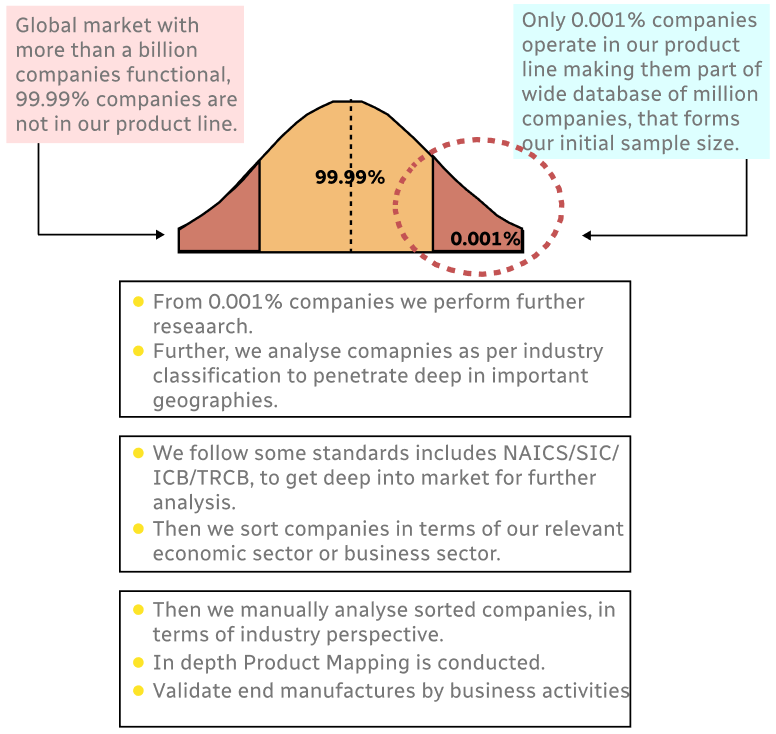
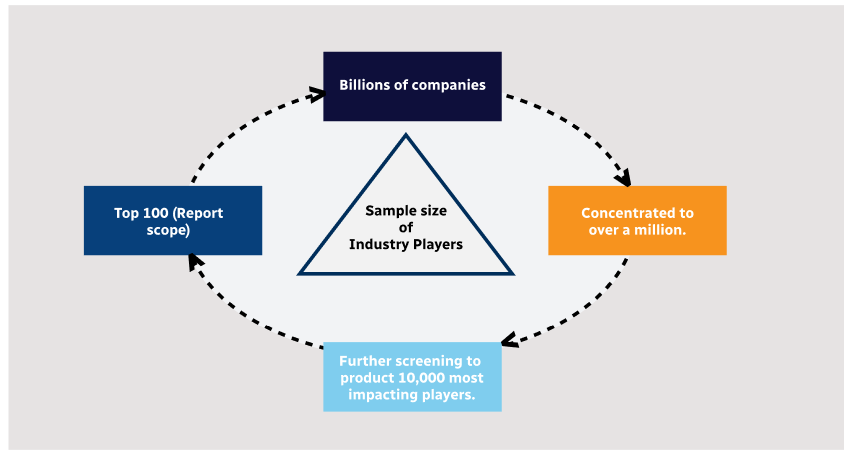
Step 1 - Identification of Relevant Samples Size from Population Database
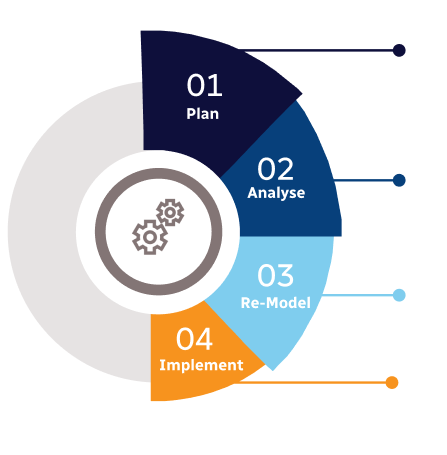
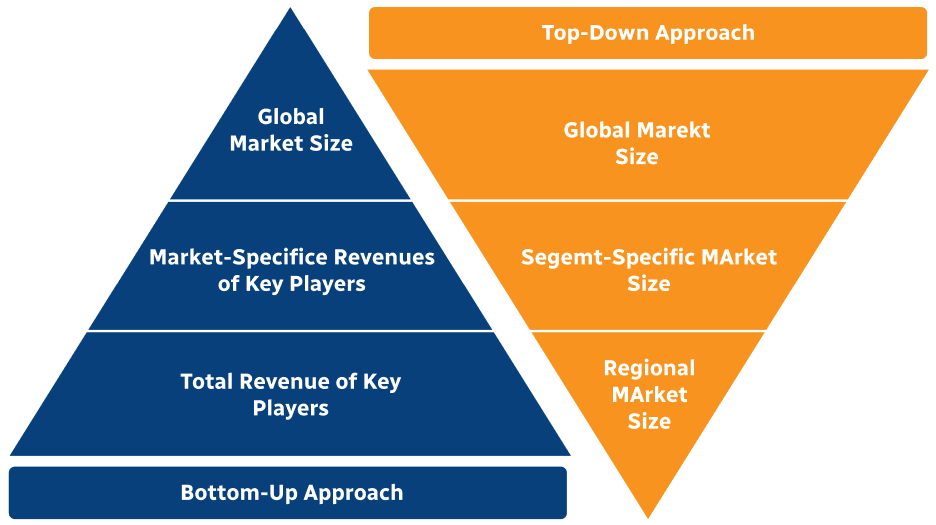
Step 2 - Approaches for Defining Global Market Size (Value, Volume* & Price*)
Note*: In applicable scenarios
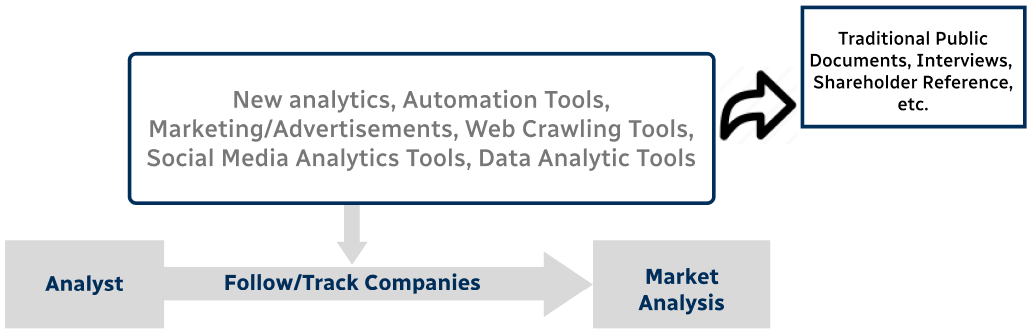
Step 3 - Data Sources
Primary Research
- Web Analytics
- Survey Reports
- Research Institute
- Latest Research Reports
- Opinion Leaders
Secondary Research
- Annual Reports
- White Paper
- Latest Press Release
- Industry Association
- Paid Database
- Investor Presentations
Step 4 - Data Triangulation
Involves using different sources of information in order to increase the validity of a study
These sources are likely to be stakeholders in a program - participants, other researchers, program staff, other community members, and so on.
Then we put all data in single framework & apply various statistical tools to find out the dynamic on the market.
During the analysis stage, feedback from the stakeholder groups would be compared to determine areas of agreement as well as areas of divergence