


Key Insights
The Latin America Hazardous Waste Handling Automation Market is poised for significant expansion, projected to reach an estimated 3.56 million USD by 2025. This growth trajectory is underpinned by a robust Compound Annual Growth Rate (CAGR) of 6.26% throughout the forecast period (2025-2033). This upward trend is primarily driven by an increasing awareness and stringent regulatory frameworks surrounding the safe disposal of hazardous materials across key industries. Manufacturing, chemical, and energy sectors are leading this adoption, investing heavily in automated solutions to mitigate risks associated with waste handling, improve operational efficiency, and ensure compliance with evolving environmental standards. The demand for advanced manipulator arms, sophisticated telescoping masts, and specialized cranes designed for hazardous environments are key indicators of this market momentum. Furthermore, the growing emphasis on environmental protection and sustainable waste management practices across the region is creating a fertile ground for automated solutions that minimize human exposure and prevent environmental contamination.
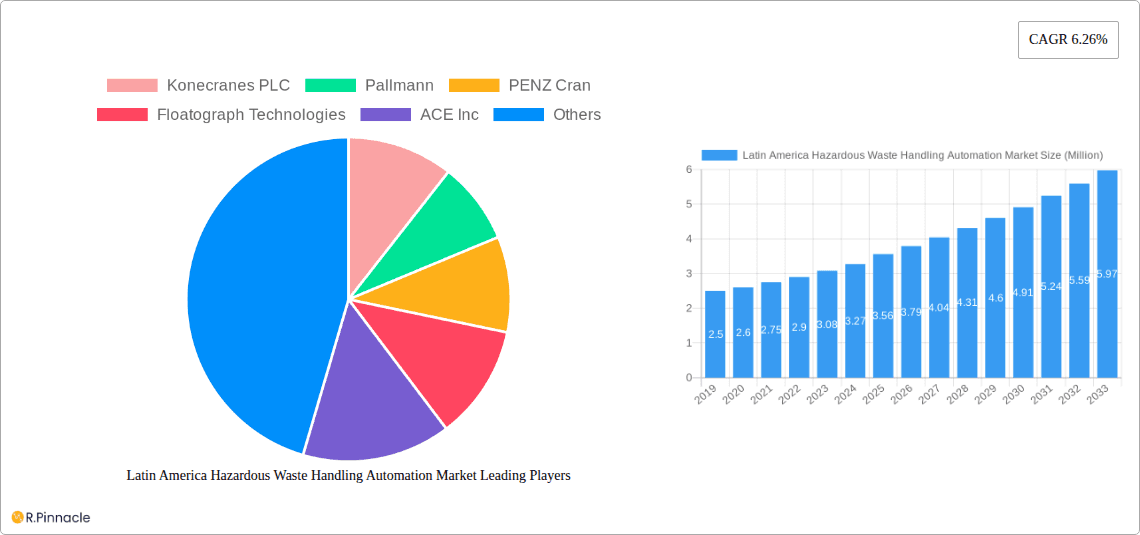
Latin America Hazardous Waste Handling Automation Market Market Size (In Million)

The market's dynamism is further shaped by distinct waste types, with a notable focus on Listed Wastes and Characteristic Wastes, which necessitate specialized handling protocols. Universal Wastes and Mixed Wastes also contribute to the demand for tailored automation solutions. While the market benefits from strong drivers such as enhanced safety mandates and technological advancements, it also faces certain restraints, including the high initial investment costs for advanced automation systems and the need for skilled personnel to operate and maintain them. However, the long-term benefits of reduced operational risks, improved productivity, and adherence to global environmental best practices are increasingly outweighing these challenges. Countries like Brazil, Mexico, and Argentina are expected to be at the forefront of this adoption, owing to their significant industrial footprints and proactive environmental policies, signaling a transformative period for hazardous waste management in Latin America.
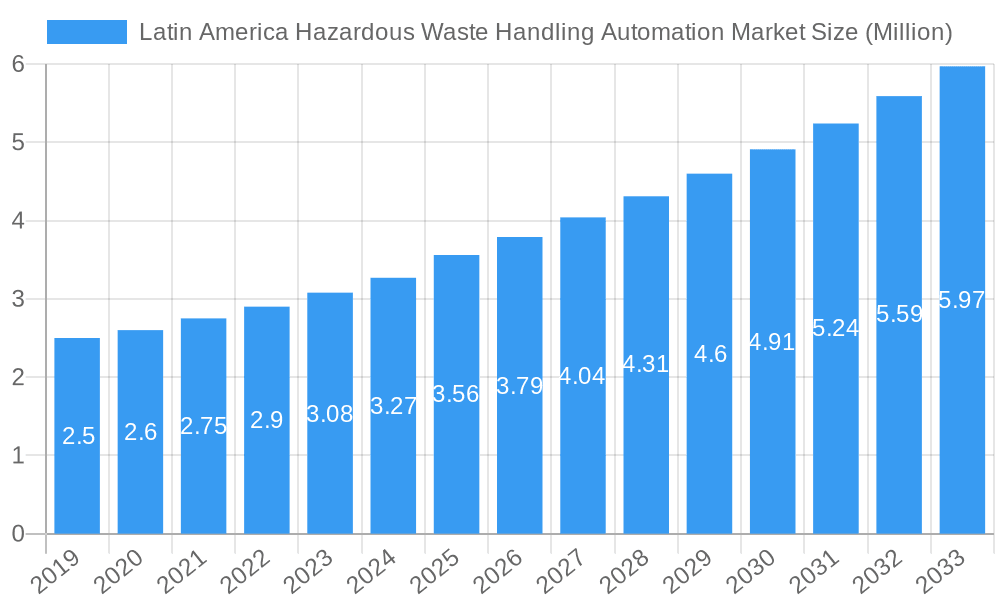
Latin America Hazardous Waste Handling Automation Market Company Market Share
This comprehensive report delves into the Latin America Hazardous Waste Handling Automation Market, offering an in-depth analysis of its current landscape and future trajectory. Focusing on critical segments and innovations, this study provides actionable intelligence for industry stakeholders aiming to capitalize on this rapidly evolving sector. Our extensive research covers the study period of 2019–2033, with a base year of 2025 and a detailed forecast period from 2025–2033.
Latin America Hazardous Waste Handling Automation Market Market Structure & Innovation Trends
The Latin America hazardous waste handling automation market exhibits a moderate to high level of concentration, with key players actively pursuing strategic initiatives to solidify their market positions. Innovation is primarily driven by advancements in robotics, AI-powered predictive maintenance, and sophisticated sensor technologies that enhance safety and efficiency in hazardous environments. Regulatory frameworks across Latin American nations are becoming increasingly stringent, compelling businesses to adopt automated solutions for compliance and risk mitigation. While product substitutes exist in manual handling, their inherent risks and inefficiencies are driving the adoption of automated systems. End-user demographics span across manufacturing, chemical, energy, and government sectors, each with unique demands for specialized automation solutions. Mergers and acquisitions (M&A) are anticipated to play a significant role in market consolidation, with estimated M&A deal values expected to increase as companies seek to expand their technological capabilities and geographic reach. Specific market share data and detailed M&A transaction values are provided within the full report. The market is characterized by a strong emphasis on safety, operational cost reduction, and environmental stewardship.
Latin America Hazardous Waste Handling Automation Market Market Dynamics & Trends
The Latin America Hazardous Waste Handling Automation Market is poised for significant expansion, propelled by a confluence of robust growth drivers, transformative technological disruptions, evolving consumer preferences, and dynamic competitive landscapes. The primary catalyst for market growth is the escalating volume of hazardous waste generated across the region, primarily from industrial activities, healthcare, and the burgeoning energy sector. Stringent environmental regulations and a growing emphasis on worker safety are compelling businesses to invest in automated solutions that minimize human exposure to hazardous materials, reduce operational risks, and ensure compliance with international standards.
Technological advancements are playing a pivotal role in shaping the market. The integration of artificial intelligence (AI), machine learning (ML), and the Internet of Things (IoT) is enabling the development of more intelligent and autonomous waste handling systems. Robotic manipulators, autonomous guided vehicles (AGVs), and advanced sensor networks are enhancing precision, efficiency, and safety in critical operations such as waste identification, segregation, containment, and transportation. The continuous innovation in these technologies is leading to the development of more adaptable and cost-effective solutions, thereby driving market penetration.
Consumer preferences are increasingly leaning towards environmentally responsible practices. Businesses are under pressure from consumers, investors, and regulatory bodies to adopt sustainable waste management strategies. Hazardous waste handling automation directly addresses these concerns by offering a more controlled and environmentally sound approach to waste disposal, minimizing the risk of spills, leaks, and environmental contamination. This shift in consumer sentiment is a significant driver for the adoption of sophisticated automation technologies.
The competitive dynamics within the Latin America hazardous waste handling automation market are characterized by the presence of established global players and emerging local companies. Intense competition is fostering innovation and driving down costs, making automation more accessible to a wider range of businesses. Strategic partnerships, collaborations, and acquisitions are becoming common as companies aim to enhance their product portfolios, expand their market reach, and gain a competitive edge. The market penetration of hazardous waste handling automation is steadily increasing, with a projected Compound Annual Growth Rate (CAGR) of approximately 8.5% over the forecast period. This growth is underpinned by the clear economic benefits, including reduced labor costs, minimized downtime, and enhanced operational efficiency, alongside the critical imperative of environmental protection and regulatory adherence.
Dominant Regions & Segments in Latin America Hazardous Waste Handling Automation Market
The Latin America hazardous waste handling automation market is experiencing dynamic growth across its diverse segments, with certain regions and waste types emerging as dominant forces. Brazil stands out as a leading region, driven by its large industrial base, significant energy sector, and increasingly stringent environmental regulations. The country's proactive approach to industrial waste management and its substantial investments in infrastructure development create a fertile ground for the adoption of advanced automation solutions. Mexico and Argentina follow closely, with growing industrial sectors and a heightened awareness of environmental protection.
Within the Type of Waste segmentation, Characteristic Wastes represent a significant portion of the market. This category, encompassing wastes that are ignitable, corrosive, reactive, or toxic, requires highly specialized handling and disposal methods. The increasing regulatory scrutiny and inherent risks associated with these wastes directly translate into a higher demand for automated solutions that ensure containment and safety. Universal Wastes, such as batteries, pesticides, and mercury-containing equipment, also contribute substantially to market growth due to their widespread generation and specific disposal requirements.
In terms of Products, Cranes and Manipulator Arms are currently the most dominant segments. Cranes are essential for the lifting and movement of heavy hazardous waste containers, while manipulator arms provide the dexterity and precision required for intricate tasks, such as sorting, transferring, and packaging hazardous materials. The demand for these products is directly correlated with the growth of the manufacturing and chemical industries, which are major generators of hazardous waste. Size Reduction Systems are also gaining traction as industries seek more efficient methods for waste compaction and preparation for disposal.
The End-user Industry landscape is predominantly led by the Manufacturing sector, owing to its extensive production processes that generate a wide array of hazardous byproducts. The Chemical industry is another major consumer of hazardous waste handling automation, driven by the inherent risks associated with chemical production and processing. The Energy sector, encompassing oil and gas exploration and production, also contributes significantly due to the generation of hazardous waste from drilling operations and refineries. Government initiatives and regulations aimed at safe waste management further bolster the demand from the Government sector.
Key drivers for dominance in these segments include:
- Economic Policies: Favorable investment policies and tax incentives for adopting eco-friendly technologies in countries like Brazil.
- Infrastructure Development: Expansion of industrial zones and waste treatment facilities that necessitate advanced handling equipment.
- Regulatory Enforcement: Strict enforcement of environmental protection laws that mandate safe hazardous waste management practices.
- Technological Adoption Rates: Higher propensity of industries in leading economies to invest in and integrate cutting-edge automation technologies.
Latin America Hazardous Waste Handling Automation Market Product Innovations
Product innovations in the Latin America hazardous waste handling automation market are centered on enhancing safety, efficiency, and adaptability. Manufacturers are developing advanced robotic systems with improved dexterity and payload capacity for handling a wider range of hazardous materials. IoT integration is enabling real-time monitoring of waste streams and equipment performance, facilitating predictive maintenance and optimizing operational workflows. Emerging technologies like AI-powered waste identification and sorting systems are improving the accuracy and speed of segregation processes. These innovations offer competitive advantages by reducing human exposure, minimizing errors, and lowering overall operational costs, aligning with the market's demand for reliable and cost-effective hazardous waste management solutions.
Report Scope & Segmentation Analysis
This report provides an exhaustive analysis of the Latin America Hazardous Waste Handling Automation Market. The segmentation includes:
- Type of Waste: Listed Wastes, Characteristic Wastes, Universal Wastes, and Mixed Wastes. The Characteristic Wastes segment is projected to exhibit the highest growth due to its inherent risks and stringent handling requirements.
- Product: Manipulator Arms, Telescoping Masts, Cranes, Trusses, Size Reduction Systems, and Other Products. The Cranes and Manipulator Arms segments are expected to maintain their leading positions, driven by ongoing industrial expansion and the need for robust handling capabilities.
- End-user Industry: Manufacturing, Chemical, Energy, Consumer Care, Government, and Other End-user Industries. The Manufacturing and Chemical sectors are anticipated to dominate the market, owing to the significant volume and complexity of hazardous waste generated within these industries. Growth projections and market sizes for each segment are detailed within the full report, alongside an analysis of the competitive dynamics shaping their evolution.
Key Drivers of Latin America Hazardous Waste Handling Automation Market Growth
The growth of the Latin America hazardous waste handling automation market is fueled by several key drivers. Increasing stringent environmental regulations across the region are compelling industries to invest in automated solutions to ensure compliance and mitigate risks associated with hazardous waste. The rising generation of industrial and healthcare waste, particularly from sectors like manufacturing and energy, necessitates advanced handling technologies. Furthermore, a growing emphasis on worker safety and the desire to minimize human exposure to hazardous materials are pushing companies towards automation. Technological advancements, including sophisticated robotics, AI, and IoT integration, are making these solutions more effective and accessible, further accelerating market adoption.
Challenges in the Latin America Hazardous Waste Handling Automation Market Sector
Despite its growth potential, the Latin America hazardous waste handling automation market faces several challenges. High initial investment costs for advanced automation systems can be a significant barrier for small and medium-sized enterprises (SMEs). The availability of skilled labor to operate and maintain complex automated machinery is also a concern in some regions. Inconsistent regulatory frameworks and enforcement across different Latin American countries can create complexities for businesses operating in multiple markets. Supply chain disruptions and the availability of spare parts for specialized equipment can also pose operational challenges.
Emerging Opportunities in Latin America Hazardous Waste Handling Automation Market
Emerging opportunities in the Latin America hazardous waste handling automation market lie in the growing demand for customized and integrated solutions. The increasing focus on sustainability and the circular economy presents opportunities for automation technologies that facilitate waste valorization and recycling. The expansion of the renewable energy sector, while generating new waste streams, also opens avenues for specialized handling equipment. Furthermore, the development of smaller, more modular automation systems could cater to the needs of a broader range of industries and applications, unlocking new market segments. Increased government initiatives supporting green technologies and waste management infrastructure also represent significant growth avenues.
Leading Players in the Latin America Hazardous Waste Handling Automation Market Market
- Konecranes PLC
- Pallmann
- PENZ Cran
- Floatograph Technologies
- ACE Inc
- PaR Systems Inc
- Hiab
- Hosokawa Micron Powder Systems
- DX Engineering
- Terex MHPS GmbH
Key Developments in Latin America Hazardous Waste Handling Automation Market Industry
- April 2024: Clean Harbors Inc., a leading provider of environmental and industrial services, introduced its "Total PFAS Solution" to address all consumer needs related to PFAS (per- and poly-fluorinated alkyl substances). This initiative's foremost and only one-stop shop consists of eight core elements offering services from analysis to remediation to disposal, significantly impacting the hazardous waste management sector by providing comprehensive solutions for persistent chemical contaminants.
- March 2024: Clean Harbors Inc., which provides field services, environmental remediation, and emergency response services to over 2,000 customers, announced the completion of its acquisition of HEPACO, a prominent environmental provider of field and emergency response services. This strategic move enhances Clean Harbors' capabilities and geographic reach, further consolidating its position in the environmental services market and impacting the competitive landscape for hazardous waste handling.
Future Outlook for Latin America Hazardous Waste Handling Automation Market Market
The future outlook for the Latin America hazardous waste handling automation market is exceptionally promising, driven by a sustained increase in hazardous waste generation and a heightened global emphasis on environmental sustainability and worker safety. The market is expected to witness accelerated adoption of advanced technologies such as AI-driven analytics for waste stream optimization, robotics for enhanced precision in handling highly toxic materials, and IoT for real-time monitoring and predictive maintenance. Government investments in robust waste management infrastructure and stricter enforcement of environmental regulations will continue to be significant growth accelerators. Furthermore, the growing trend towards circular economy principles will spur demand for automation solutions that facilitate efficient waste segregation and resource recovery. Strategic partnerships and M&A activities are anticipated to intensify as companies seek to expand their technological expertise and market penetration across the diverse economies of Latin America.
Latin America Hazardous Waste Handling Automation Market Segmentation
-
1. Type of Waste
- 1.1. Listed Wastes
- 1.2. Characteristic Wastes
- 1.3. Universal Wastes
- 1.4. Mixed Wastes
-
2. Product
- 2.1. Manipulator Arms
- 2.2. Telescoping Masts
- 2.3. Cranes
- 2.4. Trusses
- 2.5. Size Reduction Systems
- 2.6. Other Products
-
3. End-user Industry
- 3.1. Manufacturing
- 3.2. Chemical
- 3.3. Energy
- 3.4. Consumer Care
- 3.5. Government
- 3.6. Other End-user Industries
Latin America Hazardous Waste Handling Automation Market Segmentation By Geography
-
1. Latin America
- 1.1. Brazil
- 1.2. Argentina
- 1.3. Chile
- 1.4. Colombia
- 1.5. Mexico
- 1.6. Peru
- 1.7. Venezuela
- 1.8. Ecuador
- 1.9. Bolivia
- 1.10. Paraguay
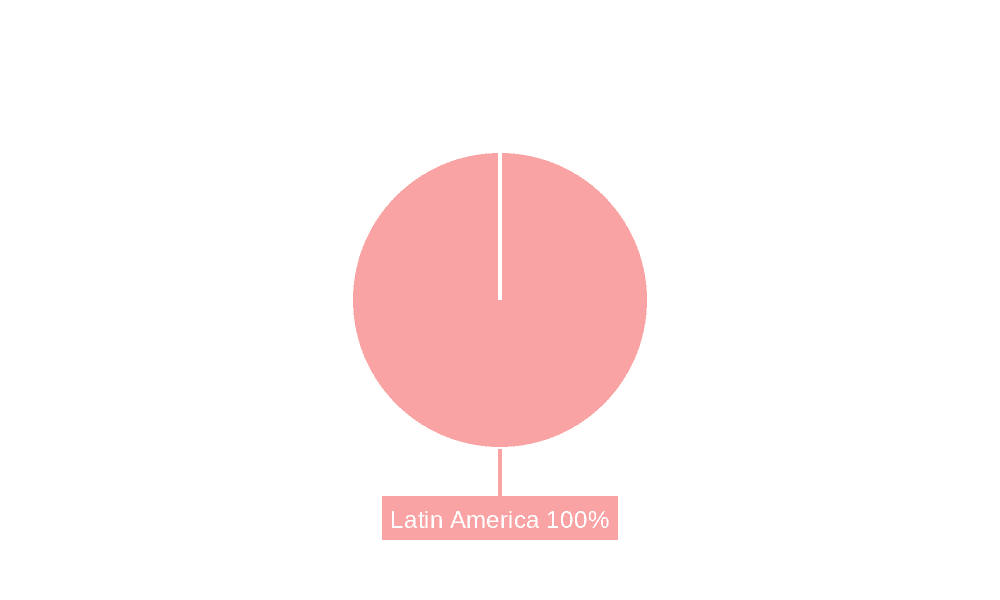
Latin America Hazardous Waste Handling Automation Market Regional Market Share
Geographic Coverage of Latin America Hazardous Waste Handling Automation Market
Latin America Hazardous Waste Handling Automation Market REPORT HIGHLIGHTS
| Aspects | Details |
|---|---|
| Study Period | 2020-2034 |
| Base Year | 2025 |
| Estimated Year | 2026 |
| Forecast Period | 2026-2034 |
| Historical Period | 2020-2025 |
| Growth Rate | CAGR of 6.26% from 2020-2034 |
| Segmentation |
|
Table of Contents
- 1. Introduction
- 1.1. Research Scope
- 1.2. Market Segmentation
- 1.3. Research Methodology
- 1.4. Definitions and Assumptions
- 2. Executive Summary
- 2.1. Introduction
- 3. Market Dynamics
- 3.1. Introduction
- 3.2. Market Drivers
- 3.2.1. Government and Industry Regulations; Growing Concerns About Waste Management
- 3.3. Market Restrains
- 3.3.1. ; Lack of Infrastructure and Limited Awareness about E-learning
- 3.4. Market Trends
- 3.4.1. Growing Concerns About Waste Management Are Expected to Drive the Demand
- 4. Market Factor Analysis
- 4.1. Porters Five Forces
- 4.2. Supply/Value Chain
- 4.3. PESTEL analysis
- 4.4. Market Entropy
- 4.5. Patent/Trademark Analysis
- 5. Latin America Hazardous Waste Handling Automation Market Analysis, Insights and Forecast, 2020-2032
- 5.1. Market Analysis, Insights and Forecast - by Type of Waste
- 5.1.1. Listed Wastes
- 5.1.2. Characteristic Wastes
- 5.1.3. Universal Wastes
- 5.1.4. Mixed Wastes
- 5.2. Market Analysis, Insights and Forecast - by Product
- 5.2.1. Manipulator Arms
- 5.2.2. Telescoping Masts
- 5.2.3. Cranes
- 5.2.4. Trusses
- 5.2.5. Size Reduction Systems
- 5.2.6. Other Products
- 5.3. Market Analysis, Insights and Forecast - by End-user Industry
- 5.3.1. Manufacturing
- 5.3.2. Chemical
- 5.3.3. Energy
- 5.3.4. Consumer Care
- 5.3.5. Government
- 5.3.6. Other End-user Industries
- 5.4. Market Analysis, Insights and Forecast - by Region
- 5.4.1. Latin America
- 5.1. Market Analysis, Insights and Forecast - by Type of Waste
- 6. Competitive Analysis
- 6.1. Market Share Analysis 2025
- 6.2. Company Profiles
- 6.2.1 Konecranes PLC
- 6.2.1.1. Overview
- 6.2.1.2. Products
- 6.2.1.3. SWOT Analysis
- 6.2.1.4. Recent Developments
- 6.2.1.5. Financials (Based on Availability)
- 6.2.2 Pallmann
- 6.2.2.1. Overview
- 6.2.2.2. Products
- 6.2.2.3. SWOT Analysis
- 6.2.2.4. Recent Developments
- 6.2.2.5. Financials (Based on Availability)
- 6.2.3 PENZ Cran
- 6.2.3.1. Overview
- 6.2.3.2. Products
- 6.2.3.3. SWOT Analysis
- 6.2.3.4. Recent Developments
- 6.2.3.5. Financials (Based on Availability)
- 6.2.4 Floatograph Technologies
- 6.2.4.1. Overview
- 6.2.4.2. Products
- 6.2.4.3. SWOT Analysis
- 6.2.4.4. Recent Developments
- 6.2.4.5. Financials (Based on Availability)
- 6.2.5 ACE Inc
- 6.2.5.1. Overview
- 6.2.5.2. Products
- 6.2.5.3. SWOT Analysis
- 6.2.5.4. Recent Developments
- 6.2.5.5. Financials (Based on Availability)
- 6.2.6 PaR Systems Inc
- 6.2.6.1. Overview
- 6.2.6.2. Products
- 6.2.6.3. SWOT Analysis
- 6.2.6.4. Recent Developments
- 6.2.6.5. Financials (Based on Availability)
- 6.2.7 Hiab
- 6.2.7.1. Overview
- 6.2.7.2. Products
- 6.2.7.3. SWOT Analysis
- 6.2.7.4. Recent Developments
- 6.2.7.5. Financials (Based on Availability)
- 6.2.8 Hosokawa Micron Powder Systems
- 6.2.8.1. Overview
- 6.2.8.2. Products
- 6.2.8.3. SWOT Analysis
- 6.2.8.4. Recent Developments
- 6.2.8.5. Financials (Based on Availability)
- 6.2.9 DX Engineering
- 6.2.9.1. Overview
- 6.2.9.2. Products
- 6.2.9.3. SWOT Analysis
- 6.2.9.4. Recent Developments
- 6.2.9.5. Financials (Based on Availability)
- 6.2.10 Terex MHPS GmbH
- 6.2.10.1. Overview
- 6.2.10.2. Products
- 6.2.10.3. SWOT Analysis
- 6.2.10.4. Recent Developments
- 6.2.10.5. Financials (Based on Availability)
- 6.2.1 Konecranes PLC
List of Figures
- Figure 1: Latin America Hazardous Waste Handling Automation Market Revenue Breakdown (Million, %) by Product 2025 & 2033
- Figure 2: Latin America Hazardous Waste Handling Automation Market Share (%) by Company 2025
List of Tables
- Table 1: Latin America Hazardous Waste Handling Automation Market Revenue Million Forecast, by Type of Waste 2020 & 2033
- Table 2: Latin America Hazardous Waste Handling Automation Market Revenue Million Forecast, by Product 2020 & 2033
- Table 3: Latin America Hazardous Waste Handling Automation Market Revenue Million Forecast, by End-user Industry 2020 & 2033
- Table 4: Latin America Hazardous Waste Handling Automation Market Revenue Million Forecast, by Region 2020 & 2033
- Table 5: Latin America Hazardous Waste Handling Automation Market Revenue Million Forecast, by Type of Waste 2020 & 2033
- Table 6: Latin America Hazardous Waste Handling Automation Market Revenue Million Forecast, by Product 2020 & 2033
- Table 7: Latin America Hazardous Waste Handling Automation Market Revenue Million Forecast, by End-user Industry 2020 & 2033
- Table 8: Latin America Hazardous Waste Handling Automation Market Revenue Million Forecast, by Country 2020 & 2033
- Table 9: Brazil Latin America Hazardous Waste Handling Automation Market Revenue (Million) Forecast, by Application 2020 & 2033
- Table 10: Argentina Latin America Hazardous Waste Handling Automation Market Revenue (Million) Forecast, by Application 2020 & 2033
- Table 11: Chile Latin America Hazardous Waste Handling Automation Market Revenue (Million) Forecast, by Application 2020 & 2033
- Table 12: Colombia Latin America Hazardous Waste Handling Automation Market Revenue (Million) Forecast, by Application 2020 & 2033
- Table 13: Mexico Latin America Hazardous Waste Handling Automation Market Revenue (Million) Forecast, by Application 2020 & 2033
- Table 14: Peru Latin America Hazardous Waste Handling Automation Market Revenue (Million) Forecast, by Application 2020 & 2033
- Table 15: Venezuela Latin America Hazardous Waste Handling Automation Market Revenue (Million) Forecast, by Application 2020 & 2033
- Table 16: Ecuador Latin America Hazardous Waste Handling Automation Market Revenue (Million) Forecast, by Application 2020 & 2033
- Table 17: Bolivia Latin America Hazardous Waste Handling Automation Market Revenue (Million) Forecast, by Application 2020 & 2033
- Table 18: Paraguay Latin America Hazardous Waste Handling Automation Market Revenue (Million) Forecast, by Application 2020 & 2033
Frequently Asked Questions
1. What is the projected Compound Annual Growth Rate (CAGR) of the Latin America Hazardous Waste Handling Automation Market?
The projected CAGR is approximately 6.26%.
2. Which companies are prominent players in the Latin America Hazardous Waste Handling Automation Market?
Key companies in the market include Konecranes PLC, Pallmann, PENZ Cran, Floatograph Technologies, ACE Inc, PaR Systems Inc, Hiab, Hosokawa Micron Powder Systems, DX Engineering, Terex MHPS GmbH.
3. What are the main segments of the Latin America Hazardous Waste Handling Automation Market?
The market segments include Type of Waste, Product, End-user Industry.
4. Can you provide details about the market size?
The market size is estimated to be USD 3.56 Million as of 2022.
5. What are some drivers contributing to market growth?
Government and Industry Regulations; Growing Concerns About Waste Management.
6. What are the notable trends driving market growth?
Growing Concerns About Waste Management Are Expected to Drive the Demand.
7. Are there any restraints impacting market growth?
; Lack of Infrastructure and Limited Awareness about E-learning.
8. Can you provide examples of recent developments in the market?
April 2024: Clean Harbors Inc., one of the leading providers of environmental and industrial services, introduced its "Total PFAS Solution" to address all the needs of consumers related to PFAS (per- and poly-fluorinated alkyl substances), which are commonly referred to as forever chemicals. Clean Harbors' Total PFAS Solution is the initiative's foremost and only one-stop shop, consisting of eight core elements that offer customers a range of services from analysis to remediation to disposal.
9. What pricing options are available for accessing the report?
Pricing options include single-user, multi-user, and enterprise licenses priced at USD 4750, USD 4950, and USD 6800 respectively.
10. Is the market size provided in terms of value or volume?
The market size is provided in terms of value, measured in Million.
11. Are there any specific market keywords associated with the report?
Yes, the market keyword associated with the report is "Latin America Hazardous Waste Handling Automation Market," which aids in identifying and referencing the specific market segment covered.
12. How do I determine which pricing option suits my needs best?
The pricing options vary based on user requirements and access needs. Individual users may opt for single-user licenses, while businesses requiring broader access may choose multi-user or enterprise licenses for cost-effective access to the report.
13. Are there any additional resources or data provided in the Latin America Hazardous Waste Handling Automation Market report?
While the report offers comprehensive insights, it's advisable to review the specific contents or supplementary materials provided to ascertain if additional resources or data are available.
14. How can I stay updated on further developments or reports in the Latin America Hazardous Waste Handling Automation Market?
To stay informed about further developments, trends, and reports in the Latin America Hazardous Waste Handling Automation Market, consider subscribing to industry newsletters, following relevant companies and organizations, or regularly checking reputable industry news sources and publications.
Methodology
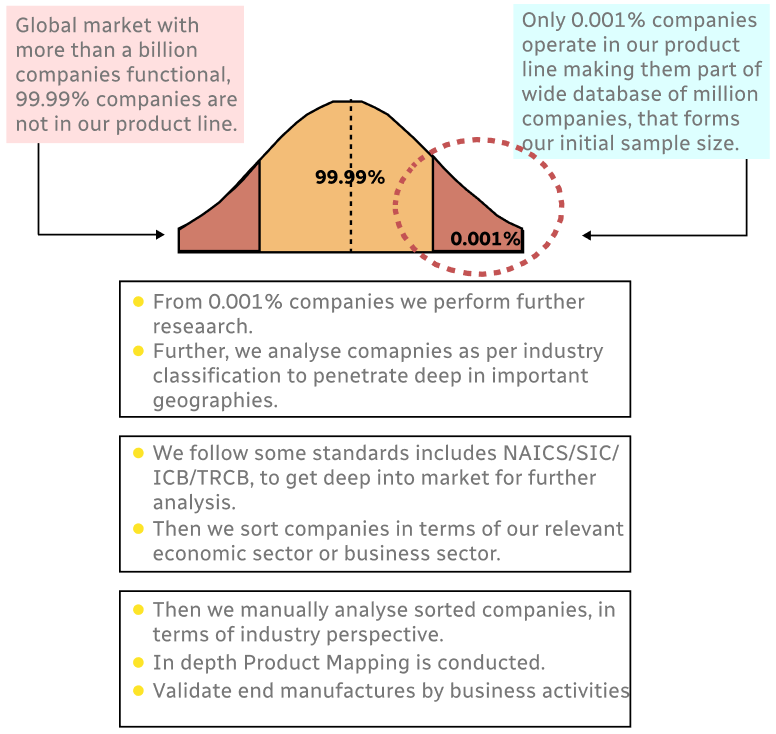
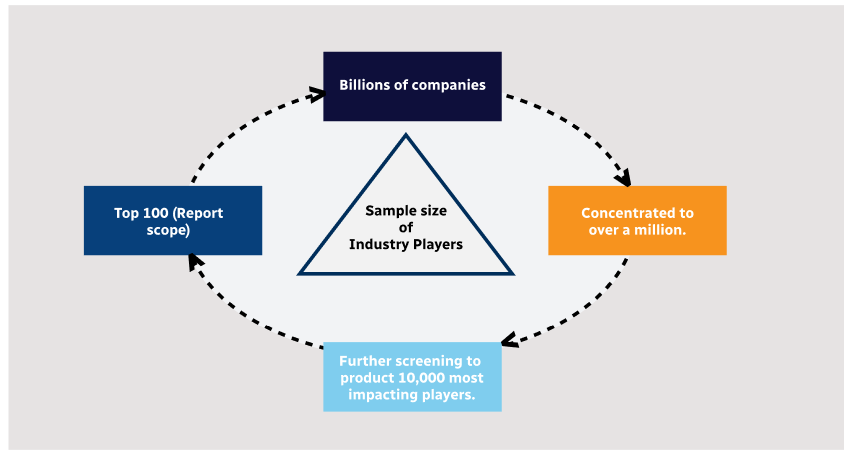
Step 1 - Identification of Relevant Samples Size from Population Database
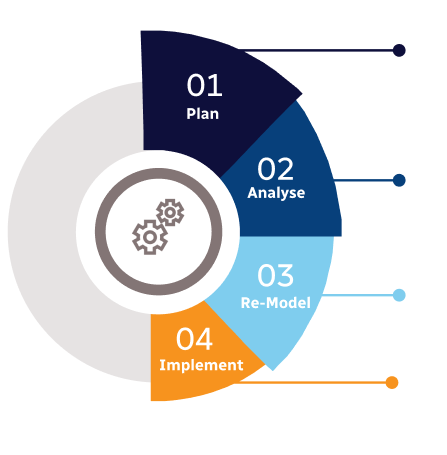
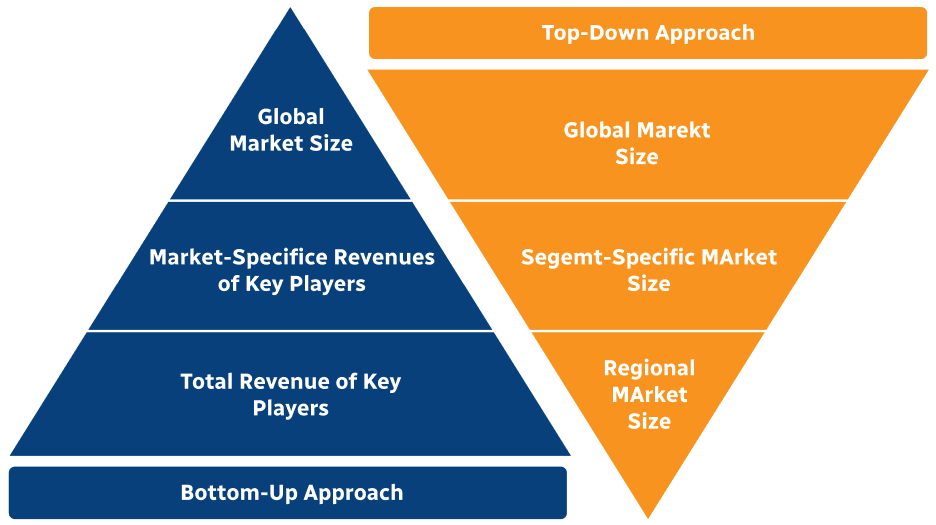
Step 2 - Approaches for Defining Global Market Size (Value, Volume* & Price*)
Note*: In applicable scenarios
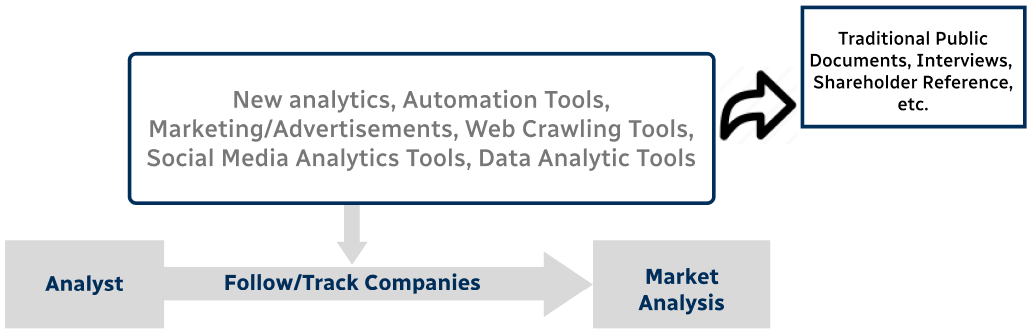
Step 3 - Data Sources
Primary Research
- Web Analytics
- Survey Reports
- Research Institute
- Latest Research Reports
- Opinion Leaders
Secondary Research
- Annual Reports
- White Paper
- Latest Press Release
- Industry Association
- Paid Database
- Investor Presentations
Step 4 - Data Triangulation
Involves using different sources of information in order to increase the validity of a study
These sources are likely to be stakeholders in a program - participants, other researchers, program staff, other community members, and so on.
Then we put all data in single framework & apply various statistical tools to find out the dynamic on the market.
During the analysis stage, feedback from the stakeholder groups would be compared to determine areas of agreement as well as areas of divergence