


Key Insights
The global Mobile WiMAX market is poised for significant expansion, with a projected market size of $1.73 billion in 2025. This growth is fueled by a robust compound annual growth rate (CAGR) of 12.3%, indicating a dynamic and evolving landscape for wireless broadband solutions. Key drivers for this surge include the ever-increasing demand for high-speed internet connectivity across various sectors, the continuous development of advanced wireless technologies, and the growing adoption of mobile devices for both personal and professional use. The market's trajectory is further propelled by strategic investments in infrastructure upgrades and the deployment of next-generation networks, enabling seamless and reliable wireless experiences.
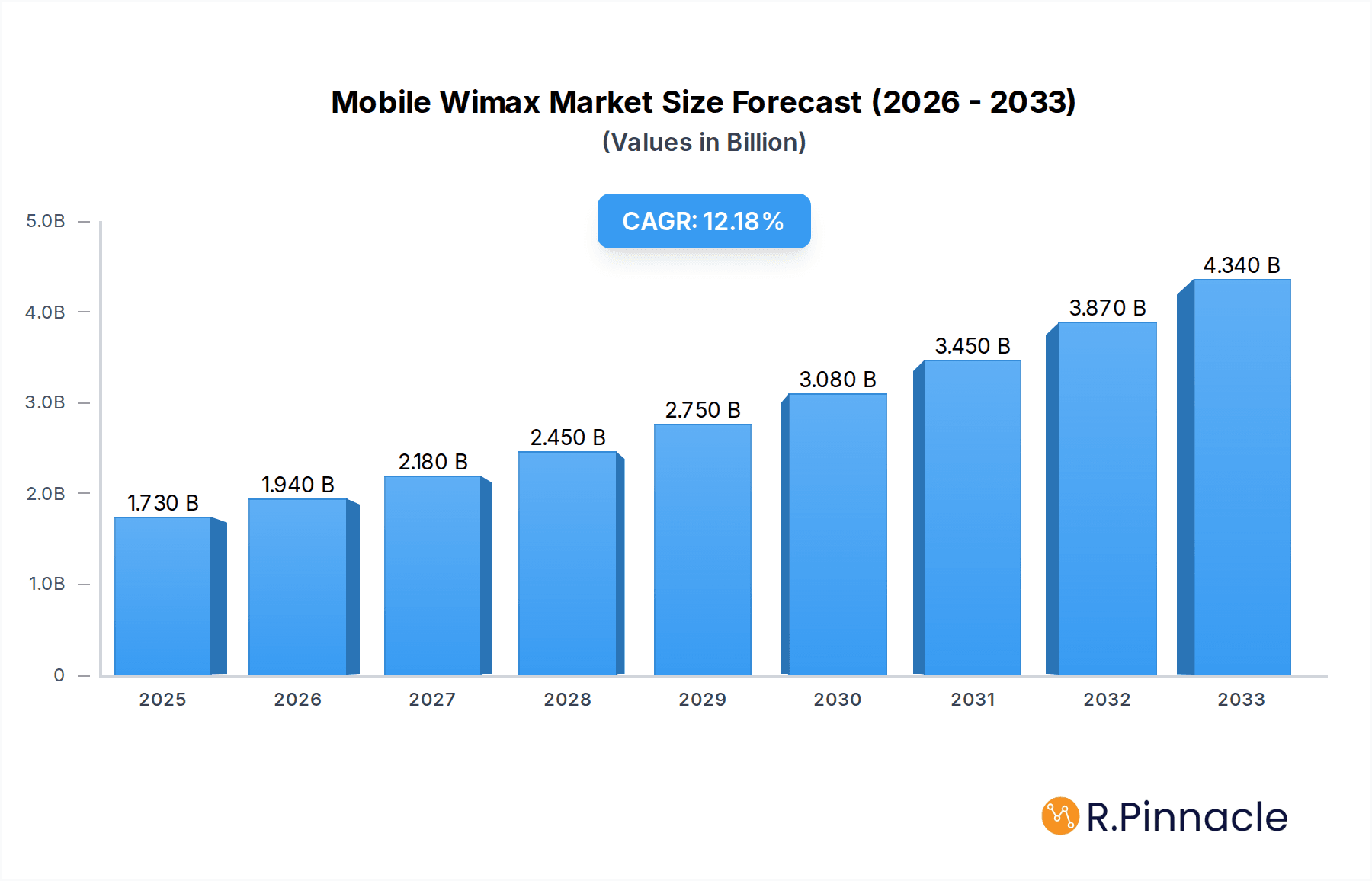
Mobile Wimax Market Size (In Billion)

This upward trend is further bolstered by emerging market trends such as the proliferation of the Internet of Things (IoT) and the increasing need for robust wireless solutions in emerging economies. The market is segmented by application, with BFSI, IT and Telecom, and Media and Entertainment expected to be major contributors, alongside significant adoption in the Public Sector, Retail, Manufacturing, and Healthcare industries. By type, the market will witness growth across 2.3 GHz, 2.5 GHz, and other frequency bands. Geographically, North America and Asia Pacific are anticipated to lead market expansion due to substantial technological advancements and supportive government initiatives, though Europe, the Middle East & Africa, and South America also present promising opportunities for market players.

Mobile Wimax Company Market Share
Unveiling the Future of Wireless Broadband: A Comprehensive Mobile WiMAX Market Report (2019-2033)
This in-depth report provides an unparalleled analysis of the global Mobile WiMAX market, projecting its evolution from 2019 through 2033, with a base and estimated year of 2025 and a forecast period of 2025–2033. Delve into the intricate workings of this dynamic sector, uncovering critical insights for industry professionals, investors, and policymakers. We leverage billions in market data, focusing on high-impact wireless broadband solutions, 4G LTE alternatives, and fixed wireless access technologies. Discover how Mobile WiMAX advancements are shaping connectivity across diverse industries.
Mobile WiMAX Market Structure & Innovation Trends
The Mobile WiMAX market is characterized by a moderate level of concentration, with key players like Huawei Technologies Co. Ltd., Cisco Systems, Inc., and Vecima Networks, Inc. holding significant influence. Innovation is driven by the relentless pursuit of enhanced bandwidth, reduced latency, and improved spectral efficiency, crucial for applications in IT and Telecom, BFSI, and Media and Entertainment. Regulatory frameworks play a vital role, with spectrum allocation and deployment policies influencing market accessibility. Product substitutes, such as 4G LTE and emerging 5G technologies, present a continuous competitive challenge, necessitating ongoing innovation and strategic differentiation for WiMAX. End-user demographics are increasingly sophisticated, demanding reliable and high-speed internet for both personal and professional use. Mergers and acquisitions (M&A) activities, though currently at a modest scale, are expected to increase as companies seek to consolidate market share and expand technological capabilities. M&A deal values are anticipated to reach billions as strategic partnerships become paramount for survival and growth in this competitive landscape. The market share of dominant players is continuously monitored to understand the competitive ebb and flow.
- Market Concentration: Moderate, with a few key global players dominating significant portions.
- Innovation Drivers: Bandwidth enhancement, latency reduction, spectral efficiency, cost-effectiveness.
- Regulatory Frameworks: Spectrum allocation, deployment licenses, interoperability standards.
- Product Substitutes: 4G LTE, 5G NR, Fiber Optic networks.
- End-User Demographics: Growing demand for high-speed, reliable internet from enterprises and consumers.
- M&A Activities: Expected to rise as companies seek strategic advantages and market consolidation, with deal values reaching billions.
Mobile WiMAX Market Dynamics & Trends
The Mobile WiMAX market is poised for substantial growth, driven by an insatiable global demand for robust and high-speed wireless connectivity. The market penetration of advanced wireless solutions continues to climb, fueled by the increasing digitalization of various sectors, including the Public Sector, Manufacturing, and Healthcare. Technological disruptions, such as advancements in OFDM (Orthogonal Frequency-Division Multiplexing) and MIMO (Multiple-Input Multiple-Output) technologies, are significantly enhancing WiMAX's capabilities, enabling it to compete effectively with newer wireless standards. Consumer preferences are increasingly leaning towards seamless, high-bandwidth experiences, whether for streaming high-definition content, engaging in online gaming, or facilitating remote work. This trend directly benefits Mobile WiMAX providers who can offer reliable and cost-effective broadband solutions. The competitive dynamics within the market are intensifying, with established players and emerging innovators vying for market share. Companies are investing heavily in research and development to optimize WiMAX performance and expand its application scope, particularly in areas where fiber deployment is economically unfeasible. The projected Compound Annual Growth Rate (CAGR) for the Mobile WiMAX market is expected to be robust, indicating a healthy expansion trajectory. Fixed wireless access (FWA) leveraging WiMAX technology is emerging as a particularly strong growth segment, offering a compelling alternative to traditional broadband services. The increasing adoption of IoT devices further propels the demand for scalable and efficient wireless networks that WiMAX can provide. The 2.3 GHz and 2.5 GHz frequency bands remain critical for WiMAX deployment due to their favorable propagation characteristics, enabling wider coverage and better penetration. The "Others" category for frequency types also signifies the potential for new spectrum allocations or proprietary solutions. The Mobile WiMAX market is not just about providing internet access; it's about enabling economic growth, bridging the digital divide, and fostering innovation across the globe. The sheer volume of data traffic generated by the proliferation of smart devices and digital services necessitates the kind of scalable and efficient network infrastructure that Mobile WiMAX is well-positioned to deliver.
Dominant Regions & Segments in Mobile WiMAX
The Mobile WiMAX market is experiencing significant traction across various regions and application segments, with the IT and Telecom sector emerging as a dominant force due to the foundational role of robust connectivity in this industry. The Asia-Pacific region, particularly China, has historically been a frontrunner in the adoption and deployment of Mobile WiMAX technology, driven by government initiatives and a burgeoning demand for high-speed internet services. This dominance is further cemented by the presence of major technology giants like Huawei Technologies Co. Ltd. and a large, tech-savvy population. The 2.5 GHz frequency band has been a cornerstone for many Mobile WiMAX deployments globally, offering a balance of bandwidth and coverage, making it highly attractive for service providers.
In terms of applications, IT and Telecom is leading the charge, followed closely by Media and Entertainment, which relies heavily on high-bandwidth solutions for streaming and content delivery. The Public Sector is increasingly adopting WiMAX for smart city initiatives and government connectivity, while BFSI leverages its reliability for secure data transmission. The Manufacturing sector is exploring WiMAX for industrial IoT (IIoT) and process automation, and Healthcare is adopting it for telemedicine and remote patient monitoring.
- Dominant Region: Asia-Pacific, with a strong emphasis on China, due to rapid infrastructure development and high adoption rates.
- Dominant Segment (Application): IT and Telecom, reflecting the industry's critical need for advanced wireless networking.
- Dominant Segment (Type): 2.5 GHz frequency band, providing optimal performance for a wide range of deployments.
Key Drivers of Dominance:
- Economic Policies: Government incentives and spectrum availability.
- Infrastructure Development: Significant investments in broadband networks.
- Technological Advancements: Continuous improvements in WiMAX efficiency and speed.
- Market Demand: Growing needs for high-speed internet across various sectors.
- Competitive Landscape: Presence of key vendors driving innovation and adoption.
Mobile WiMAX Product Innovations
Mobile WiMAX is witnessing continuous product innovations focused on enhancing performance, expanding applications, and improving cost-effectiveness. Key developments include advancements in MIMO techniques for greater spectral efficiency, improved power management for mobile devices, and the integration of WiMAX with other wireless technologies for seamless roaming and hybrid network solutions. These innovations offer competitive advantages by delivering higher throughputs, lower latencies, and more reliable connections, making WiMAX a viable and attractive option for a wider range of use cases. Applications are expanding beyond traditional broadband to include specialized solutions for enterprise connectivity, industrial IoT, and private wireless networks.
Report Scope & Segmentation Analysis
This comprehensive report segments the Mobile WiMAX market into distinct categories to provide granular insights. The Application segmentation covers critical sectors: BFSI, IT and Telecom, Media and Entertainment, Public Sector, Retail, Manufacturing, Healthcare, and Others. Each segment is analyzed for its unique connectivity demands, adoption rates, and future growth projections, with billions in market value anticipated across these verticals. The Type segmentation focuses on frequency bands: 2.3 GHz, 2.5 GHz, and Others, highlighting their respective market shares, performance characteristics, and deployment scenarios. Growth projections for each segment are meticulously forecasted, with an emphasis on understanding the competitive dynamics and market sizes that will define the Mobile WiMAX landscape through 2033.
Application Segmentation:
- BFSI: Focus on secure, high-availability connectivity.
- IT and Telecom: Foundation of data-intensive operations.
- Media and Entertainment: Demand for high-bandwidth streaming and content delivery.
- Public Sector: Smart city initiatives, government network modernization.
- Retail: In-store connectivity, POS systems, inventory management.
- Manufacturing: Industrial IoT, process automation, supply chain visibility.
- Healthcare: Telemedicine, remote patient monitoring, hospital networks.
- Others: Emerging applications and niche markets.
Type Segmentation:
- 2.3 GHz: Balanced coverage and capacity.
- 2.5 GHz: High throughput and performance.
- Others: Potential for new spectrum allocations or proprietary solutions.
Key Drivers of Mobile WiMAX Growth
The growth of the Mobile WiMAX market is propelled by a confluence of powerful factors. Technologically, continuous advancements in OFDM, MIMO, and advanced modulation schemes are significantly enhancing data speeds and reliability, making WiMAX a formidable competitor in the wireless broadband space. Economically, the increasing demand for affordable and scalable broadband solutions, especially in underserved regions, presents a vast opportunity. Government initiatives promoting digital inclusion and infrastructure development, along with favorable spectrum allocation policies, are crucial regulatory drivers. The cost-effectiveness of WiMAX deployments compared to fiber optic networks in certain geographical areas makes it an attractive choice for both service providers and end-users, driving market penetration. The expansion of the Internet of Things (IoT) ecosystem also necessitates robust and flexible wireless connectivity, a niche that Mobile WiMAX is well-positioned to fill.
Challenges in the Mobile WiMAX Sector
Despite its strengths, the Mobile WiMAX sector faces several hurdles. Regulatory fragmentation across different countries can complicate deployment and slow down market expansion. The specter of newer, more advanced technologies like 5G NR presents a significant competitive pressure, potentially diverting investment and consumer attention. Supply chain disruptions for crucial components, though improving, can still impact production and deployment timelines, leading to project delays and increased costs. Furthermore, the interoperability and standardization efforts, while ongoing, need continuous reinforcement to ensure seamless integration and widespread adoption. The initial perception of WiMAX as a legacy technology in some markets also needs to be actively addressed through marketing and showcasing its continued relevance and evolution.
Emerging Opportunities in Mobile WiMAX
The Mobile WiMAX market is ripe with emerging opportunities. The growing demand for fixed wireless access (FWA) solutions, particularly in suburban and rural areas where fiber deployment is expensive, represents a significant growth avenue. The industrial IoT (IIoT) sector presents a burgeoning market for reliable, high-capacity wireless networks that Mobile WiMAX can effectively provide for smart factories and logistics. Furthermore, the increasing need for private wireless networks for enterprises, campuses, and government facilities opens up new deployment possibilities. As edge computing gains traction, the low latency and high bandwidth capabilities of WiMAX become even more critical for enabling real-time data processing and analytics. Exploration of new spectrum bands and continued refinement of WiMAX standards will further unlock its potential.
Leading Players in the Mobile WiMAX Market
- Airspan Networks, Inc.
- Alvarion Technologies Ltd.
- Aperto Networks, Inc.
- Axxcelera Broadband Wireless, Inc.
- Cisco Systems, Inc.
- Huawei Technologies Co. Ltd.
- Mobile Mark, Inc.
- National Instruments Corporation
- Vecima Networks, Inc.
- Zyxel Communications Corp.
Key Developments in Mobile WiMAX Industry
- 2021: Increased focus on fixed wireless access (FWA) solutions leveraging WiMAX technology to address the digital divide.
- 2022: Advancements in WiMAX standards to improve spectral efficiency and support higher bandwidth applications.
- 2023: Strategic partnerships between WiMAX equipment vendors and service providers to expand network reach and service offerings.
- 2024: Growing interest in WiMAX for private wireless networks in industrial and enterprise environments due to its cost-effectiveness and performance.
- 2025 (Estimated): Anticipated surge in deployments for smart city initiatives and IoT connectivity solutions.
- 2026-2033 (Forecast): Continued evolution of WiMAX technology to remain competitive with emerging wireless standards, focusing on niche applications and cost-optimized solutions.
Future Outlook for Mobile WiMAX Market
The future outlook for the Mobile WiMAX market is one of sustained relevance and strategic growth, particularly in its established niches and emerging application areas. While not positioned to directly compete with the highest echelon of 5G performance, WiMAX will continue to thrive as a highly cost-effective and reliable solution for fixed wireless access, bridging connectivity gaps in underserved regions. The increasing adoption of IoT devices and the drive towards industrial automation will create significant demand for WiMAX's robust and scalable network capabilities. Continued innovation in spectral efficiency and power management will further enhance its appeal. Strategic partnerships and focused product development will be key for market players to capitalize on opportunities in enterprise private networks and specialized connectivity needs, ensuring WiMAX remains a vital component of the global wireless ecosystem for years to come.
Mobile Wimax Segmentation
-
1. Application
- 1.1. BFSI
- 1.2. IT and Telecom
- 1.3. Media and Entertainment
- 1.4. Public Sector
- 1.5. Retail
- 1.6. Manufacturing
- 1.7. Healthcare
- 1.8. Others
-
2. Type
- 2.1. 2.3 GHz
- 2.2. 2.5 GHz
- 2.3. Others
Mobile Wimax Segmentation By Geography
-
1. North America
- 1.1. United States
- 1.2. Canada
- 1.3. Mexico
-
2. South America
- 2.1. Brazil
- 2.2. Argentina
- 2.3. Rest of South America
-
3. Europe
- 3.1. United Kingdom
- 3.2. Germany
- 3.3. France
- 3.4. Italy
- 3.5. Spain
- 3.6. Russia
- 3.7. Benelux
- 3.8. Nordics
- 3.9. Rest of Europe
-
4. Middle East & Africa
- 4.1. Turkey
- 4.2. Israel
- 4.3. GCC
- 4.4. North Africa
- 4.5. South Africa
- 4.6. Rest of Middle East & Africa
-
5. Asia Pacific
- 5.1. China
- 5.2. India
- 5.3. Japan
- 5.4. South Korea
- 5.5. ASEAN
- 5.6. Oceania
- 5.7. Rest of Asia Pacific
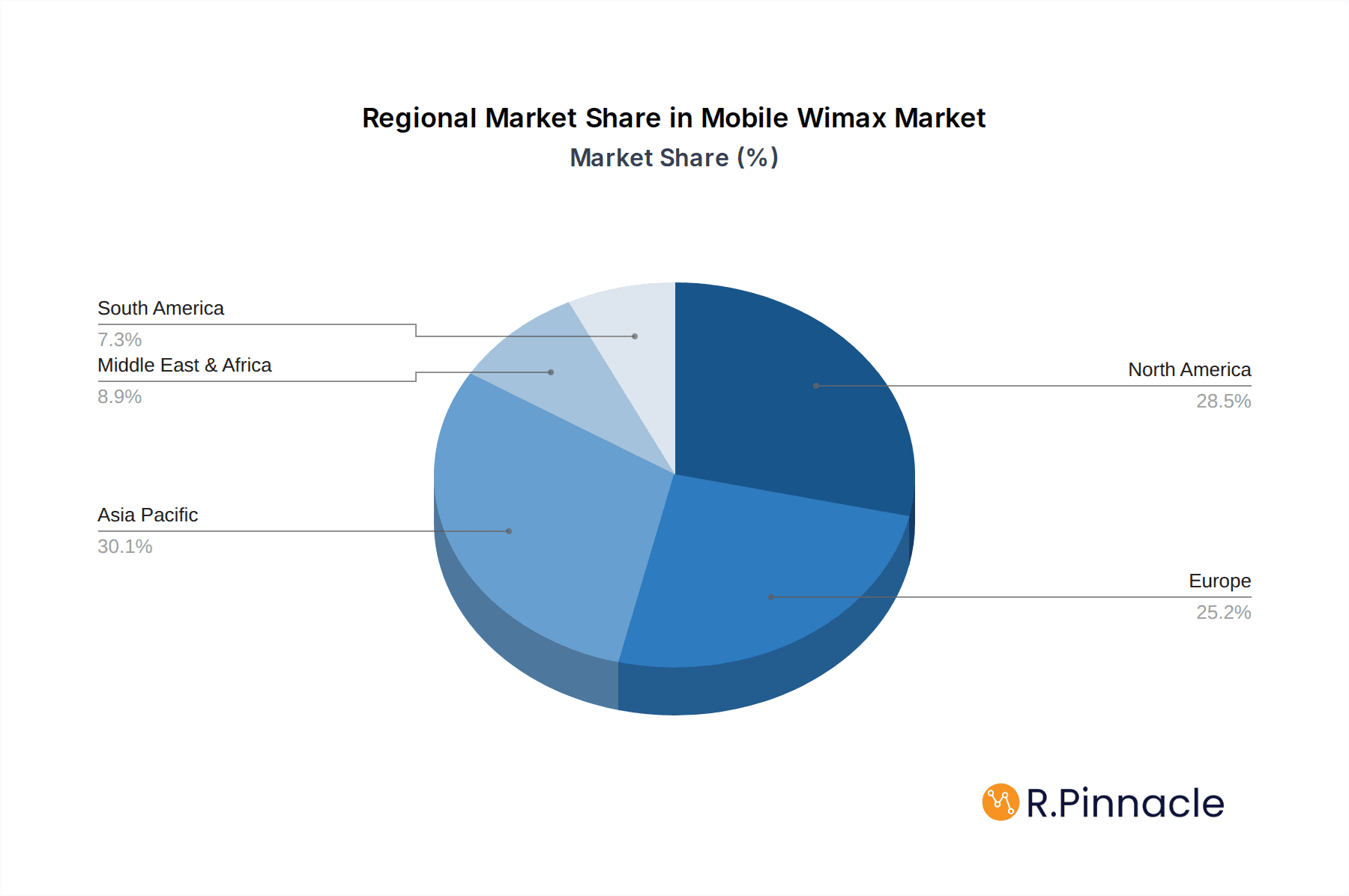
Mobile Wimax Regional Market Share
Geographic Coverage of Mobile Wimax
Mobile Wimax REPORT HIGHLIGHTS
| Aspects | Details |
|---|---|
| Study Period | 2020-2034 |
| Base Year | 2025 |
| Estimated Year | 2026 |
| Forecast Period | 2026-2034 |
| Historical Period | 2020-2025 |
| Growth Rate | CAGR of 12.3% from 2020-2034 |
| Segmentation |
|
Table of Contents
- 1. Introduction
- 1.1. Research Scope
- 1.2. Market Segmentation
- 1.3. Research Methodology
- 1.4. Definitions and Assumptions
- 2. Executive Summary
- 2.1. Introduction
- 3. Market Dynamics
- 3.1. Introduction
- 3.2. Market Drivers
- 3.3. Market Restrains
- 3.4. Market Trends
- 4. Market Factor Analysis
- 4.1. Porters Five Forces
- 4.2. Supply/Value Chain
- 4.3. PESTEL analysis
- 4.4. Market Entropy
- 4.5. Patent/Trademark Analysis
- 5. Global Mobile Wimax Analysis, Insights and Forecast, 2020-2032
- 5.1. Market Analysis, Insights and Forecast - by Application
- 5.1.1. BFSI
- 5.1.2. IT and Telecom
- 5.1.3. Media and Entertainment
- 5.1.4. Public Sector
- 5.1.5. Retail
- 5.1.6. Manufacturing
- 5.1.7. Healthcare
- 5.1.8. Others
- 5.2. Market Analysis, Insights and Forecast - by Type
- 5.2.1. 2.3 GHz
- 5.2.2. 2.5 GHz
- 5.2.3. Others
- 5.3. Market Analysis, Insights and Forecast - by Region
- 5.3.1. North America
- 5.3.2. South America
- 5.3.3. Europe
- 5.3.4. Middle East & Africa
- 5.3.5. Asia Pacific
- 5.1. Market Analysis, Insights and Forecast - by Application
- 6. North America Mobile Wimax Analysis, Insights and Forecast, 2020-2032
- 6.1. Market Analysis, Insights and Forecast - by Application
- 6.1.1. BFSI
- 6.1.2. IT and Telecom
- 6.1.3. Media and Entertainment
- 6.1.4. Public Sector
- 6.1.5. Retail
- 6.1.6. Manufacturing
- 6.1.7. Healthcare
- 6.1.8. Others
- 6.2. Market Analysis, Insights and Forecast - by Type
- 6.2.1. 2.3 GHz
- 6.2.2. 2.5 GHz
- 6.2.3. Others
- 6.1. Market Analysis, Insights and Forecast - by Application
- 7. South America Mobile Wimax Analysis, Insights and Forecast, 2020-2032
- 7.1. Market Analysis, Insights and Forecast - by Application
- 7.1.1. BFSI
- 7.1.2. IT and Telecom
- 7.1.3. Media and Entertainment
- 7.1.4. Public Sector
- 7.1.5. Retail
- 7.1.6. Manufacturing
- 7.1.7. Healthcare
- 7.1.8. Others
- 7.2. Market Analysis, Insights and Forecast - by Type
- 7.2.1. 2.3 GHz
- 7.2.2. 2.5 GHz
- 7.2.3. Others
- 7.1. Market Analysis, Insights and Forecast - by Application
- 8. Europe Mobile Wimax Analysis, Insights and Forecast, 2020-2032
- 8.1. Market Analysis, Insights and Forecast - by Application
- 8.1.1. BFSI
- 8.1.2. IT and Telecom
- 8.1.3. Media and Entertainment
- 8.1.4. Public Sector
- 8.1.5. Retail
- 8.1.6. Manufacturing
- 8.1.7. Healthcare
- 8.1.8. Others
- 8.2. Market Analysis, Insights and Forecast - by Type
- 8.2.1. 2.3 GHz
- 8.2.2. 2.5 GHz
- 8.2.3. Others
- 8.1. Market Analysis, Insights and Forecast - by Application
- 9. Middle East & Africa Mobile Wimax Analysis, Insights and Forecast, 2020-2032
- 9.1. Market Analysis, Insights and Forecast - by Application
- 9.1.1. BFSI
- 9.1.2. IT and Telecom
- 9.1.3. Media and Entertainment
- 9.1.4. Public Sector
- 9.1.5. Retail
- 9.1.6. Manufacturing
- 9.1.7. Healthcare
- 9.1.8. Others
- 9.2. Market Analysis, Insights and Forecast - by Type
- 9.2.1. 2.3 GHz
- 9.2.2. 2.5 GHz
- 9.2.3. Others
- 9.1. Market Analysis, Insights and Forecast - by Application
- 10. Asia Pacific Mobile Wimax Analysis, Insights and Forecast, 2020-2032
- 10.1. Market Analysis, Insights and Forecast - by Application
- 10.1.1. BFSI
- 10.1.2. IT and Telecom
- 10.1.3. Media and Entertainment
- 10.1.4. Public Sector
- 10.1.5. Retail
- 10.1.6. Manufacturing
- 10.1.7. Healthcare
- 10.1.8. Others
- 10.2. Market Analysis, Insights and Forecast - by Type
- 10.2.1. 2.3 GHz
- 10.2.2. 2.5 GHz
- 10.2.3. Others
- 10.1. Market Analysis, Insights and Forecast - by Application
- 11. Competitive Analysis
- 11.1. Global Market Share Analysis 2025
- 11.2. Company Profiles
- 11.2.1 Airspan Networks Inc. (US)
- 11.2.1.1. Overview
- 11.2.1.2. Products
- 11.2.1.3. SWOT Analysis
- 11.2.1.4. Recent Developments
- 11.2.1.5. Financials (Based on Availability)
- 11.2.2 Alvarion Technologies Ltd. (Israel)
- 11.2.2.1. Overview
- 11.2.2.2. Products
- 11.2.2.3. SWOT Analysis
- 11.2.2.4. Recent Developments
- 11.2.2.5. Financials (Based on Availability)
- 11.2.3 Aperto Networks Inc. (US)
- 11.2.3.1. Overview
- 11.2.3.2. Products
- 11.2.3.3. SWOT Analysis
- 11.2.3.4. Recent Developments
- 11.2.3.5. Financials (Based on Availability)
- 11.2.4 Axxcelera Broadband Wireless Inc. (US)
- 11.2.4.1. Overview
- 11.2.4.2. Products
- 11.2.4.3. SWOT Analysis
- 11.2.4.4. Recent Developments
- 11.2.4.5. Financials (Based on Availability)
- 11.2.5 Cisco Systems Inc. (US)
- 11.2.5.1. Overview
- 11.2.5.2. Products
- 11.2.5.3. SWOT Analysis
- 11.2.5.4. Recent Developments
- 11.2.5.5. Financials (Based on Availability)
- 11.2.6 Huawei Technologies Co. Ltd. (China)
- 11.2.6.1. Overview
- 11.2.6.2. Products
- 11.2.6.3. SWOT Analysis
- 11.2.6.4. Recent Developments
- 11.2.6.5. Financials (Based on Availability)
- 11.2.7 Mobile Mark Inc. (US)
- 11.2.7.1. Overview
- 11.2.7.2. Products
- 11.2.7.3. SWOT Analysis
- 11.2.7.4. Recent Developments
- 11.2.7.5. Financials (Based on Availability)
- 11.2.8 National Instruments Corporation (US)
- 11.2.8.1. Overview
- 11.2.8.2. Products
- 11.2.8.3. SWOT Analysis
- 11.2.8.4. Recent Developments
- 11.2.8.5. Financials (Based on Availability)
- 11.2.9 Vecima Networks Inc. (Canada)
- 11.2.9.1. Overview
- 11.2.9.2. Products
- 11.2.9.3. SWOT Analysis
- 11.2.9.4. Recent Developments
- 11.2.9.5. Financials (Based on Availability)
- 11.2.10 Zyxel Communications Corp. (Taiwan)
- 11.2.10.1. Overview
- 11.2.10.2. Products
- 11.2.10.3. SWOT Analysis
- 11.2.10.4. Recent Developments
- 11.2.10.5. Financials (Based on Availability)
- 11.2.1 Airspan Networks Inc. (US)
List of Figures
- Figure 1: Global Mobile Wimax Revenue Breakdown (undefined, %) by Region 2025 & 2033
- Figure 2: North America Mobile Wimax Revenue (undefined), by Application 2025 & 2033
- Figure 3: North America Mobile Wimax Revenue Share (%), by Application 2025 & 2033
- Figure 4: North America Mobile Wimax Revenue (undefined), by Type 2025 & 2033
- Figure 5: North America Mobile Wimax Revenue Share (%), by Type 2025 & 2033
- Figure 6: North America Mobile Wimax Revenue (undefined), by Country 2025 & 2033
- Figure 7: North America Mobile Wimax Revenue Share (%), by Country 2025 & 2033
- Figure 8: South America Mobile Wimax Revenue (undefined), by Application 2025 & 2033
- Figure 9: South America Mobile Wimax Revenue Share (%), by Application 2025 & 2033
- Figure 10: South America Mobile Wimax Revenue (undefined), by Type 2025 & 2033
- Figure 11: South America Mobile Wimax Revenue Share (%), by Type 2025 & 2033
- Figure 12: South America Mobile Wimax Revenue (undefined), by Country 2025 & 2033
- Figure 13: South America Mobile Wimax Revenue Share (%), by Country 2025 & 2033
- Figure 14: Europe Mobile Wimax Revenue (undefined), by Application 2025 & 2033
- Figure 15: Europe Mobile Wimax Revenue Share (%), by Application 2025 & 2033
- Figure 16: Europe Mobile Wimax Revenue (undefined), by Type 2025 & 2033
- Figure 17: Europe Mobile Wimax Revenue Share (%), by Type 2025 & 2033
- Figure 18: Europe Mobile Wimax Revenue (undefined), by Country 2025 & 2033
- Figure 19: Europe Mobile Wimax Revenue Share (%), by Country 2025 & 2033
- Figure 20: Middle East & Africa Mobile Wimax Revenue (undefined), by Application 2025 & 2033
- Figure 21: Middle East & Africa Mobile Wimax Revenue Share (%), by Application 2025 & 2033
- Figure 22: Middle East & Africa Mobile Wimax Revenue (undefined), by Type 2025 & 2033
- Figure 23: Middle East & Africa Mobile Wimax Revenue Share (%), by Type 2025 & 2033
- Figure 24: Middle East & Africa Mobile Wimax Revenue (undefined), by Country 2025 & 2033
- Figure 25: Middle East & Africa Mobile Wimax Revenue Share (%), by Country 2025 & 2033
- Figure 26: Asia Pacific Mobile Wimax Revenue (undefined), by Application 2025 & 2033
- Figure 27: Asia Pacific Mobile Wimax Revenue Share (%), by Application 2025 & 2033
- Figure 28: Asia Pacific Mobile Wimax Revenue (undefined), by Type 2025 & 2033
- Figure 29: Asia Pacific Mobile Wimax Revenue Share (%), by Type 2025 & 2033
- Figure 30: Asia Pacific Mobile Wimax Revenue (undefined), by Country 2025 & 2033
- Figure 31: Asia Pacific Mobile Wimax Revenue Share (%), by Country 2025 & 2033
List of Tables
- Table 1: Global Mobile Wimax Revenue undefined Forecast, by Application 2020 & 2033
- Table 2: Global Mobile Wimax Revenue undefined Forecast, by Type 2020 & 2033
- Table 3: Global Mobile Wimax Revenue undefined Forecast, by Region 2020 & 2033
- Table 4: Global Mobile Wimax Revenue undefined Forecast, by Application 2020 & 2033
- Table 5: Global Mobile Wimax Revenue undefined Forecast, by Type 2020 & 2033
- Table 6: Global Mobile Wimax Revenue undefined Forecast, by Country 2020 & 2033
- Table 7: United States Mobile Wimax Revenue (undefined) Forecast, by Application 2020 & 2033
- Table 8: Canada Mobile Wimax Revenue (undefined) Forecast, by Application 2020 & 2033
- Table 9: Mexico Mobile Wimax Revenue (undefined) Forecast, by Application 2020 & 2033
- Table 10: Global Mobile Wimax Revenue undefined Forecast, by Application 2020 & 2033
- Table 11: Global Mobile Wimax Revenue undefined Forecast, by Type 2020 & 2033
- Table 12: Global Mobile Wimax Revenue undefined Forecast, by Country 2020 & 2033
- Table 13: Brazil Mobile Wimax Revenue (undefined) Forecast, by Application 2020 & 2033
- Table 14: Argentina Mobile Wimax Revenue (undefined) Forecast, by Application 2020 & 2033
- Table 15: Rest of South America Mobile Wimax Revenue (undefined) Forecast, by Application 2020 & 2033
- Table 16: Global Mobile Wimax Revenue undefined Forecast, by Application 2020 & 2033
- Table 17: Global Mobile Wimax Revenue undefined Forecast, by Type 2020 & 2033
- Table 18: Global Mobile Wimax Revenue undefined Forecast, by Country 2020 & 2033
- Table 19: United Kingdom Mobile Wimax Revenue (undefined) Forecast, by Application 2020 & 2033
- Table 20: Germany Mobile Wimax Revenue (undefined) Forecast, by Application 2020 & 2033
- Table 21: France Mobile Wimax Revenue (undefined) Forecast, by Application 2020 & 2033
- Table 22: Italy Mobile Wimax Revenue (undefined) Forecast, by Application 2020 & 2033
- Table 23: Spain Mobile Wimax Revenue (undefined) Forecast, by Application 2020 & 2033
- Table 24: Russia Mobile Wimax Revenue (undefined) Forecast, by Application 2020 & 2033
- Table 25: Benelux Mobile Wimax Revenue (undefined) Forecast, by Application 2020 & 2033
- Table 26: Nordics Mobile Wimax Revenue (undefined) Forecast, by Application 2020 & 2033
- Table 27: Rest of Europe Mobile Wimax Revenue (undefined) Forecast, by Application 2020 & 2033
- Table 28: Global Mobile Wimax Revenue undefined Forecast, by Application 2020 & 2033
- Table 29: Global Mobile Wimax Revenue undefined Forecast, by Type 2020 & 2033
- Table 30: Global Mobile Wimax Revenue undefined Forecast, by Country 2020 & 2033
- Table 31: Turkey Mobile Wimax Revenue (undefined) Forecast, by Application 2020 & 2033
- Table 32: Israel Mobile Wimax Revenue (undefined) Forecast, by Application 2020 & 2033
- Table 33: GCC Mobile Wimax Revenue (undefined) Forecast, by Application 2020 & 2033
- Table 34: North Africa Mobile Wimax Revenue (undefined) Forecast, by Application 2020 & 2033
- Table 35: South Africa Mobile Wimax Revenue (undefined) Forecast, by Application 2020 & 2033
- Table 36: Rest of Middle East & Africa Mobile Wimax Revenue (undefined) Forecast, by Application 2020 & 2033
- Table 37: Global Mobile Wimax Revenue undefined Forecast, by Application 2020 & 2033
- Table 38: Global Mobile Wimax Revenue undefined Forecast, by Type 2020 & 2033
- Table 39: Global Mobile Wimax Revenue undefined Forecast, by Country 2020 & 2033
- Table 40: China Mobile Wimax Revenue (undefined) Forecast, by Application 2020 & 2033
- Table 41: India Mobile Wimax Revenue (undefined) Forecast, by Application 2020 & 2033
- Table 42: Japan Mobile Wimax Revenue (undefined) Forecast, by Application 2020 & 2033
- Table 43: South Korea Mobile Wimax Revenue (undefined) Forecast, by Application 2020 & 2033
- Table 44: ASEAN Mobile Wimax Revenue (undefined) Forecast, by Application 2020 & 2033
- Table 45: Oceania Mobile Wimax Revenue (undefined) Forecast, by Application 2020 & 2033
- Table 46: Rest of Asia Pacific Mobile Wimax Revenue (undefined) Forecast, by Application 2020 & 2033
Frequently Asked Questions
1. What is the projected Compound Annual Growth Rate (CAGR) of the Mobile Wimax?
The projected CAGR is approximately 12.3%.
2. Which companies are prominent players in the Mobile Wimax?
Key companies in the market include Airspan Networks, Inc. (US), Alvarion Technologies Ltd. (Israel), Aperto Networks, Inc. (US), Axxcelera Broadband Wireless, Inc. (US), Cisco Systems, Inc. (US), Huawei Technologies Co. Ltd. (China), Mobile Mark, Inc. (US), National Instruments Corporation (US), Vecima Networks, Inc. (Canada), Zyxel Communications Corp. (Taiwan).
3. What are the main segments of the Mobile Wimax?
The market segments include Application, Type.
4. Can you provide details about the market size?
The market size is estimated to be USD XXX N/A as of 2022.
5. What are some drivers contributing to market growth?
N/A
6. What are the notable trends driving market growth?
N/A
7. Are there any restraints impacting market growth?
N/A
8. Can you provide examples of recent developments in the market?
N/A
9. What pricing options are available for accessing the report?
Pricing options include single-user, multi-user, and enterprise licenses priced at USD 3950.00, USD 5925.00, and USD 7900.00 respectively.
10. Is the market size provided in terms of value or volume?
The market size is provided in terms of value, measured in N/A.
11. Are there any specific market keywords associated with the report?
Yes, the market keyword associated with the report is "Mobile Wimax," which aids in identifying and referencing the specific market segment covered.
12. How do I determine which pricing option suits my needs best?
The pricing options vary based on user requirements and access needs. Individual users may opt for single-user licenses, while businesses requiring broader access may choose multi-user or enterprise licenses for cost-effective access to the report.
13. Are there any additional resources or data provided in the Mobile Wimax report?
While the report offers comprehensive insights, it's advisable to review the specific contents or supplementary materials provided to ascertain if additional resources or data are available.
14. How can I stay updated on further developments or reports in the Mobile Wimax?
To stay informed about further developments, trends, and reports in the Mobile Wimax, consider subscribing to industry newsletters, following relevant companies and organizations, or regularly checking reputable industry news sources and publications.
Methodology
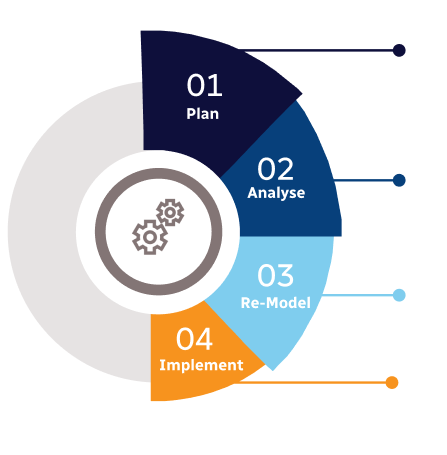
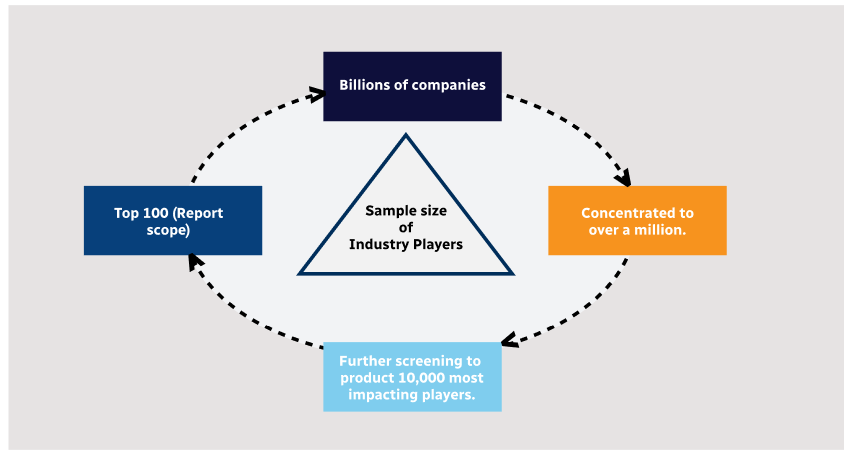
Step 1 - Identification of Relevant Samples Size from Population Database
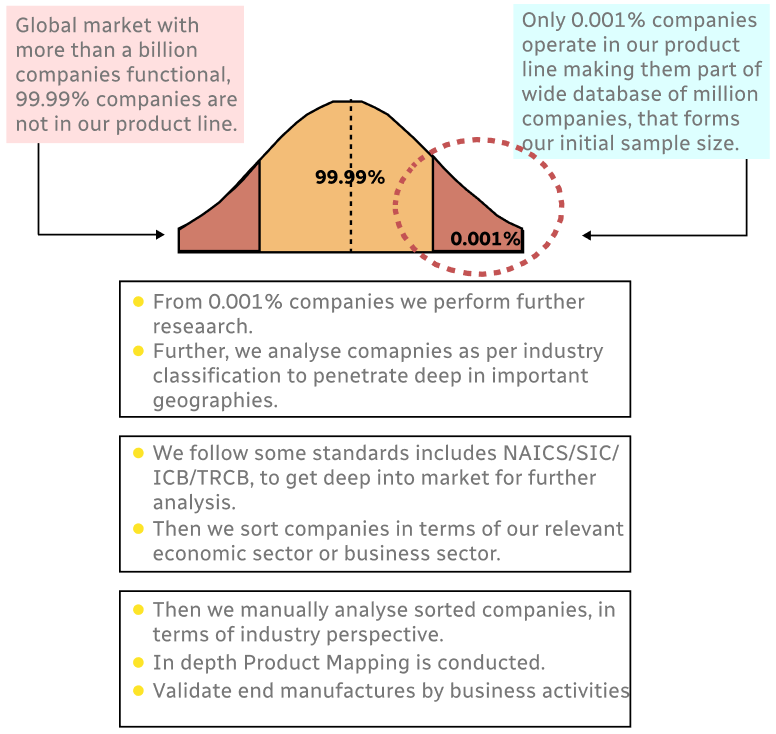
Step 2 - Approaches for Defining Global Market Size (Value, Volume* & Price*)
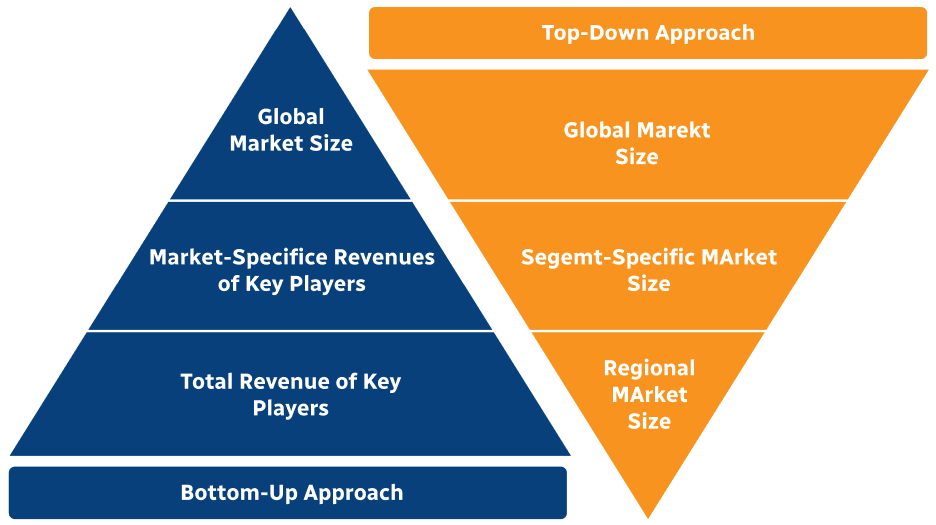
Note*: In applicable scenarios
Step 3 - Data Sources
Primary Research
- Web Analytics
- Survey Reports
- Research Institute
- Latest Research Reports
- Opinion Leaders
Secondary Research
- Annual Reports
- White Paper
- Latest Press Release
- Industry Association
- Paid Database
- Investor Presentations
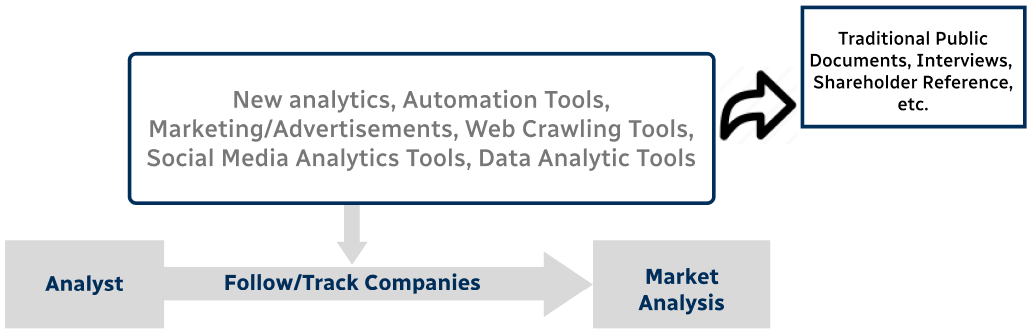
Step 4 - Data Triangulation
Involves using different sources of information in order to increase the validity of a study
These sources are likely to be stakeholders in a program - participants, other researchers, program staff, other community members, and so on.
Then we put all data in single framework & apply various statistical tools to find out the dynamic on the market.
During the analysis stage, feedback from the stakeholder groups would be compared to determine areas of agreement as well as areas of divergence