


Key Insights
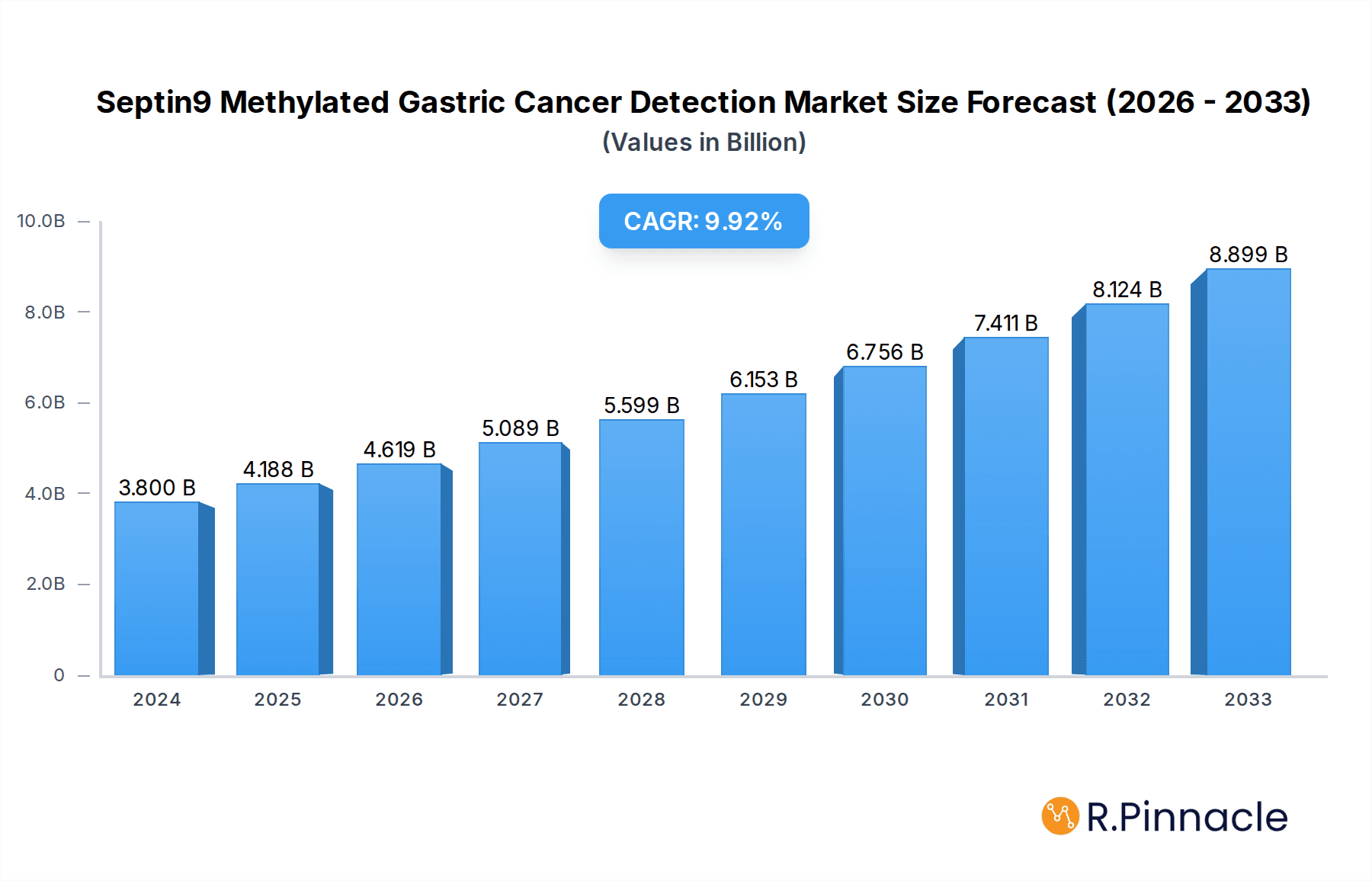
The Septin9 Methylated Gastric Cancer Detection market is poised for significant expansion, projected to reach an estimated $3.8 billion in 2024. This robust growth is driven by a compelling CAGR of 10.2% through the forecast period. A primary catalyst for this surge is the increasing prevalence of gastric cancer globally, necessitating earlier and more accurate diagnostic solutions. Advancements in molecular diagnostics, particularly in identifying methylation markers like Septin9, are proving pivotal in this regard. The demand for non-invasive or minimally invasive detection methods, which Septin9 methylation assays offer, is also a major driver. Furthermore, a growing emphasis on personalized medicine and the need for improved patient outcomes are fueling the adoption of these advanced detection techniques in both public and private healthcare settings. The expansion of healthcare infrastructure, especially in emerging economies, further bolsters market penetration.
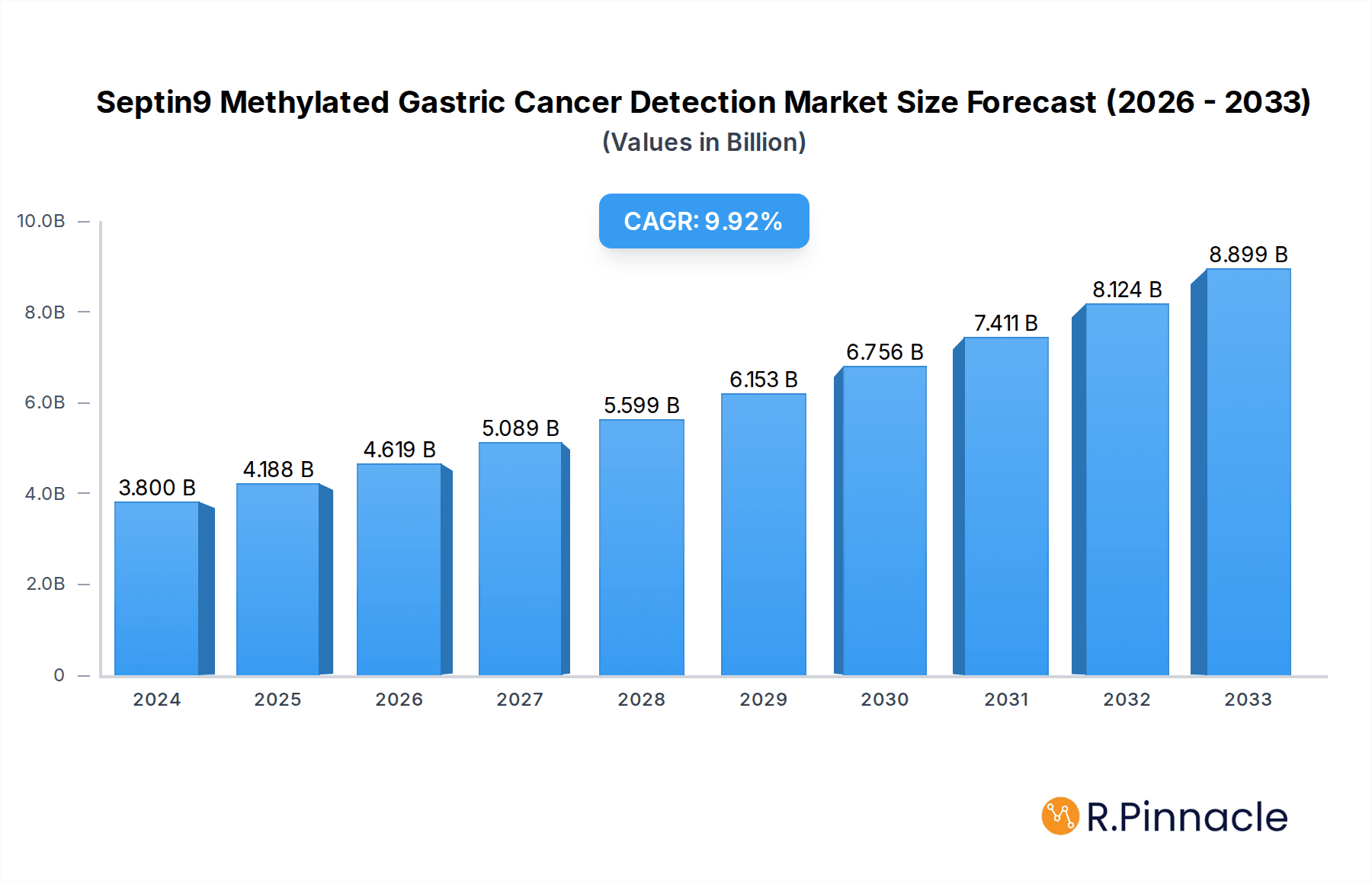
Septin9 Methylated Gastric Cancer Detection Market Size (In Billion)

The market's trajectory is further shaped by key trends such as the increasing investment in research and development for more sensitive and specific Septin9 detection panels. The integration of these tests into routine cancer screening protocols is a significant emerging trend. However, the market also faces certain restraints, including the high cost associated with advanced diagnostic technologies and the need for greater awareness and education among healthcare professionals and the general public regarding the benefits of Septin9 methylation testing. Stringent regulatory approvals for new diagnostic assays can also pose a challenge. Despite these hurdles, the strong underlying demand for effective gastric cancer diagnostics, coupled with ongoing technological innovations and a growing global patient pool, suggests a highly promising future for the Septin9 Methylated Gastric Cancer Detection market. The market is segmented by application into Public Hospitals and Private Hospitals, and by type into Specific Loci Type and Whole Genome Type, indicating diverse avenues for growth and specialization.
Septin9 Methylated Gastric Cancer Detection Company Market Share
Septin9 Methylated Gastric Cancer Detection Market: Comprehensive Report Description
This in-depth market research report provides an exhaustive analysis of the Septin9 methylated gastric cancer detection market, offering critical insights for industry stakeholders. Spanning a study period from 2019 to 2033, with a base year of 2025 and a forecast period from 2025 to 2033, this report leverages historical data from 2019-2024 to project future trends and opportunities. We meticulously examine market structure, dynamics, regional dominance, product innovations, growth drivers, challenges, and emerging opportunities, underpinned by a comprehensive segmentation analysis. Industry professionals will find actionable intelligence to navigate this rapidly evolving landscape, including a detailed overview of leading players and key industry developments.
Septin9 Methylated Gastric Cancer Detection Market Structure & Innovation Trends
The Septin9 methylated gastric cancer detection market exhibits a moderately concentrated structure, driven by significant innovation in biomarker discovery and assay development. Key innovation drivers include advancements in liquid biopsy technologies, the increasing demand for minimally invasive diagnostic tools, and a growing understanding of the epigenetic landscape of gastric cancer. Regulatory frameworks are evolving to accommodate novel diagnostic tests, though pathways for approval can be stringent. Product substitutes, while currently limited in direct comparison to Septin9 methylation assays, include traditional endoscopic biopsies and other molecular markers. End-user demographics primarily comprise oncologists, gastroenterologists, and diagnostic laboratories within healthcare institutions. Merger and acquisition (M&A) activities, valued in the billions, are anticipated to intensify as larger diagnostic companies seek to consolidate their portfolios and acquire innovative technologies. The market share of key players is dynamic, influenced by R&D investments and strategic partnerships. M&A deal values are projected to reach xx billion by the forecast period.
- Market Concentration: Moderately concentrated with key players dominating specific niches.
- Innovation Drivers: Liquid biopsy advancements, demand for minimally invasive tests, epigenetic research.
- Regulatory Frameworks: Evolving, with a focus on clinical validation and accuracy.
- Product Substitutes: Endoscopic biopsies, other molecular markers.
- End-User Demographics: Healthcare professionals in oncology and gastroenterology, diagnostic labs.
- M&A Activities: Increasing, with projected deal values in the billions.
Septin9 Methylated Gastric Cancer Detection Market Dynamics & Trends
The Septin9 methylated gastric cancer detection market is poised for substantial growth, fueled by a confluence of powerful market drivers and transformative technological disruptions. The increasing global incidence of gastric cancer, coupled with a growing emphasis on early detection and personalized medicine, serves as a primary growth catalyst. This heightened awareness translates into a burgeoning demand for sensitive and specific diagnostic solutions, positioning Septin9 methylation assays as a crucial tool in the clinical armamentarium. Technological advancements, particularly in the realm of next-generation sequencing (NGS) and digital PCR, are enhancing the accuracy, speed, and cost-effectiveness of methylation detection, further propelling market penetration. Consumer preferences are shifting towards non-invasive diagnostic methods, making blood-based Septin9 methylation tests increasingly attractive compared to traditional invasive procedures. The competitive landscape is characterized by robust R&D investments, strategic collaborations between diagnostic companies and research institutions, and a continuous drive for technological superiority. The compound annual growth rate (CAGR) of this market is estimated to be XX%, reflecting its strong upward trajectory. Market penetration is expected to reach xx% by the end of the forecast period, driven by wider clinical adoption and improved reimbursement policies. The expanding understanding of the role of epigenetics in cancer development is also a significant trend, encouraging the development of novel diagnostic and prognostic biomarkers. The integration of artificial intelligence (AI) in data analysis and interpretation of methylation patterns is another emerging trend that promises to enhance diagnostic precision and efficiency. Furthermore, the growing focus on precision oncology necessitates highly accurate and early diagnostic methods, a need that Septin9 methylation assays are well-equipped to address. The economic impact of delayed diagnosis and treatment of gastric cancer is also a significant factor driving investment in early detection technologies like Septin9 methylation testing. The market dynamics are also influenced by government initiatives promoting cancer screening programs and the development of innovative healthcare solutions. The development of more robust and standardized assay protocols is crucial for widespread clinical adoption and consistent diagnostic outcomes. The ongoing research into the clinical utility of Septin9 methylation for different stages and subtypes of gastric cancer will further shape market trends.
Dominant Regions & Segments in Septin9 Methylated Gastric Cancer Detection
The Septin9 methylated gastric cancer detection market demonstrates significant regional and segment-specific dominance, driven by a complex interplay of economic policies, healthcare infrastructure, and disease prevalence. North America currently leads the market, propelled by its advanced healthcare system, substantial R&D investments, and a high adoption rate of innovative diagnostic technologies. The United States, in particular, represents a significant market due to its large patient population and favorable regulatory environment for novel diagnostics. Asia Pacific, however, is emerging as a rapidly growing region, fueled by increasing healthcare expenditure, a rising incidence of gastric cancer, and growing awareness about early detection methods. Economic policies in these regions often prioritize public health initiatives, including cancer screening, which directly benefits the Septin9 methylation detection market.
Within the Application segment, Public Hospitals represent the dominant force. This is attributed to their extensive patient reach, government funding, and the critical role they play in national cancer screening programs. Public hospitals are often at the forefront of adopting new diagnostic technologies that offer improved patient outcomes and cost-effectiveness. However, Private Hospitals are experiencing substantial growth, driven by patient preference for faster turnaround times, personalized care, and access to cutting-edge diagnostic services.
In terms of Type, the Specific Loci Type segment currently holds a leading position. This dominance stems from the established clinical utility and validation of assays targeting specific Septin9 gene methylation sites known to be associated with gastric cancer. These assays are generally more mature, widely accessible, and have well-defined diagnostic performance metrics. The Whole Genome Type segment, while nascent, presents a significant future growth opportunity. As genomic and epigenomic sequencing technologies become more sophisticated and cost-effective, whole-genome methylation profiling is expected to offer a more comprehensive understanding of gastric cancer biology, potentially leading to the discovery of new biomarkers and improved diagnostic accuracy. The infrastructure in leading regions, such as robust laboratory networks and skilled workforce, also plays a crucial role in segment dominance.
- Leading Region: North America, with a strong emphasis on the United States.
- Dominant Application: Public Hospitals, owing to extensive patient reach and screening programs.
- Growing Application: Private Hospitals, driven by demand for advanced and personalized diagnostics.
- Dominant Type: Specific Loci Type, due to established clinical validation and accessibility.
- Emerging Type: Whole Genome Type, with significant future growth potential driven by technological advancements.
Septin9 Methylated Gastric Cancer Detection Product Innovations
The Septin9 methylated gastric cancer detection market is experiencing a wave of product innovations, primarily focused on enhancing assay sensitivity, specificity, and ease of use. Companies are developing advanced liquid biopsy platforms that enable the detection of Septin9 methylation from easily accessible blood samples, thereby minimizing patient discomfort and procedural risks associated with traditional biopsies. These innovations offer significant competitive advantages by providing earlier and more accurate diagnostic capabilities. Technological trends include the integration of digital PCR and advanced bioinformatics for precise methylation quantification. Market fit is being improved through the development of standardized, clinically validated assays suitable for routine diagnostic workflows in public and private hospitals.
Report Scope & Segmentation Analysis
This report meticulously analyzes the Septin9 methylated gastric cancer detection market across key segmentation parameters. The Application segmentation includes Public Hospital and Private Hospital. Public hospitals, characterized by large patient volumes and government funding, are expected to maintain a significant market share due to their role in widespread cancer screening initiatives. Private hospitals, on the other hand, are projected to exhibit robust growth driven by patient demand for advanced and personalized diagnostic services.
The Type segmentation encompasses Specific Loci Type and Whole Genome Type. The Specific Loci Type segment, which targets known methylation hotspots, currently dominates the market due to its established clinical validation and accessibility. The Whole Genome Type, while in its early stages, holds immense potential for future growth as genomic technologies advance, offering a more comprehensive approach to gastric cancer detection and characterization. Growth projections for each segment are detailed within the report, alongside their current market sizes and anticipated competitive dynamics.
Key Drivers of Septin9 Methylated Gastric Cancer Detection Growth
The Septin9 methylated gastric cancer detection market is propelled by several key drivers. Technological advancements in liquid biopsy and molecular diagnostic techniques are paramount, enabling highly sensitive and specific detection of Septin9 methylation from blood samples. The increasing global burden of gastric cancer and a growing emphasis on early diagnosis are creating a substantial demand for non-invasive screening tools. Economic factors, including rising healthcare expenditure and favorable reimbursement policies for early detection tests, further accelerate market growth. Regulatory support for novel diagnostic technologies that demonstrate clear clinical utility also plays a crucial role.
- Technological Advancement: Innovations in liquid biopsy and molecular diagnostics.
- Disease Burden: Rising incidence of gastric cancer globally.
- Early Detection Focus: Growing patient and physician preference for timely diagnosis.
- Economic Factors: Increased healthcare spending and supportive reimbursement landscapes.
- Regulatory Support: Favorable policies for validated early detection methods.
Challenges in the Septin9 Methylated Gastric Cancer Detection Sector
Despite its promising growth, the Septin9 methylated gastric cancer detection market faces several challenges. Regulatory hurdles and the need for extensive clinical validation for widespread adoption remain significant. The cost-effectiveness and reimbursement landscape for these advanced diagnostic tests can be a barrier in certain healthcare systems. Supply chain complexities for specialized reagents and equipment can also impact market accessibility and scalability. Furthermore, intense competition from existing diagnostic methods and emerging alternative biomarkers necessitates continuous innovation and demonstration of superior clinical utility.
- Regulatory Hurdles: Stringent approval processes and extensive validation requirements.
- Cost and Reimbursement: Challenges in achieving cost-effectiveness and securing broad reimbursement.
- Supply Chain Complexities: Potential disruptions in the supply of specialized consumables.
- Competitive Pressures: Robust competition from established and novel diagnostic approaches.
Emerging Opportunities in Septin9 Methylated Gastric Cancer Detection
The Septin9 methylated gastric cancer detection market presents numerous emerging opportunities. The expansion of liquid biopsy applications beyond screening to include prognosis and treatment monitoring for gastric cancer offers a significant avenue for growth. Development of more multiplexed assays that can detect Septin9 methylation alongside other cancer biomarkers will enhance diagnostic accuracy and clinical utility. Untapped markets in developing economies with a high incidence of gastric cancer and a growing healthcare infrastructure represent considerable expansion potential. The increasing adoption of AI and machine learning in analyzing complex methylation data holds promise for improved diagnostic insights and personalized treatment strategies.
- Expanded Applications: Prognosis, treatment monitoring, and recurrence prediction.
- Multiplexed Assays: Combination with other biomarkers for enhanced accuracy.
- Emerging Markets: Growth potential in developing economies with high gastric cancer burden.
- AI Integration: Leveraging AI for advanced data analysis and personalized medicine.
Leading Players in the Septin9 Methylated Gastric Cancer Detection Market
- Abcam
- Borchen
- Jiangsu Weizhen Biological Medicine
- Shanghai Tellgen Life Science
- Xiamen Aide Biology
- Gene Technology
- Akron Medical
Key Developments in Septin9 Methylated Gastric Cancer Detection Industry
- 2023: Launch of enhanced Septin9 methylation assay with improved sensitivity in detecting early-stage gastric cancer.
- 2022: Strategic partnership established between leading diagnostic manufacturers to advance liquid biopsy technologies for gastric cancer.
- 2021: Significant investment in R&D for whole-genome methylation profiling in gastric cancer diagnostics.
- 2020: Regulatory approval obtained for a novel blood-based Septin9 methylation test in key Asian markets.
- 2019: Publication of seminal research highlighting the prognostic value of Septin9 methylation in gastric cancer patients.
Future Outlook for Septin9 Methylated Gastric Cancer Detection Market
The future outlook for the Septin9 methylated gastric cancer detection market is exceptionally bright, driven by an increasing global demand for early, non-invasive, and accurate cancer diagnostics. The continued advancement in liquid biopsy technologies and the growing understanding of cancer epigenetics will fuel the development of more sophisticated and clinically impactful Septin9 methylation assays. Strategic investments in R&D, coupled with expanding clinical validation studies, will further solidify the role of these tests in routine gastric cancer management. Opportunities for market expansion into underserved regions and the integration of advanced data analytics will be crucial growth accelerators. The market is poised for sustained growth, offering significant potential for companies that can innovate and adapt to the evolving healthcare landscape, ultimately contributing to improved patient outcomes in gastric cancer management.
Septin9 Methylated Gastric Cancer Detection Segmentation
-
1. Application
- 1.1. Public Hospital
- 1.2. Private Hospital
-
2. Type
- 2.1. Specific Loci Type
- 2.2. Whole Genome Type
Septin9 Methylated Gastric Cancer Detection Segmentation By Geography
-
1. North America
- 1.1. United States
- 1.2. Canada
- 1.3. Mexico
-
2. South America
- 2.1. Brazil
- 2.2. Argentina
- 2.3. Rest of South America
-
3. Europe
- 3.1. United Kingdom
- 3.2. Germany
- 3.3. France
- 3.4. Italy
- 3.5. Spain
- 3.6. Russia
- 3.7. Benelux
- 3.8. Nordics
- 3.9. Rest of Europe
-
4. Middle East & Africa
- 4.1. Turkey
- 4.2. Israel
- 4.3. GCC
- 4.4. North Africa
- 4.5. South Africa
- 4.6. Rest of Middle East & Africa
-
5. Asia Pacific
- 5.1. China
- 5.2. India
- 5.3. Japan
- 5.4. South Korea
- 5.5. ASEAN
- 5.6. Oceania
- 5.7. Rest of Asia Pacific
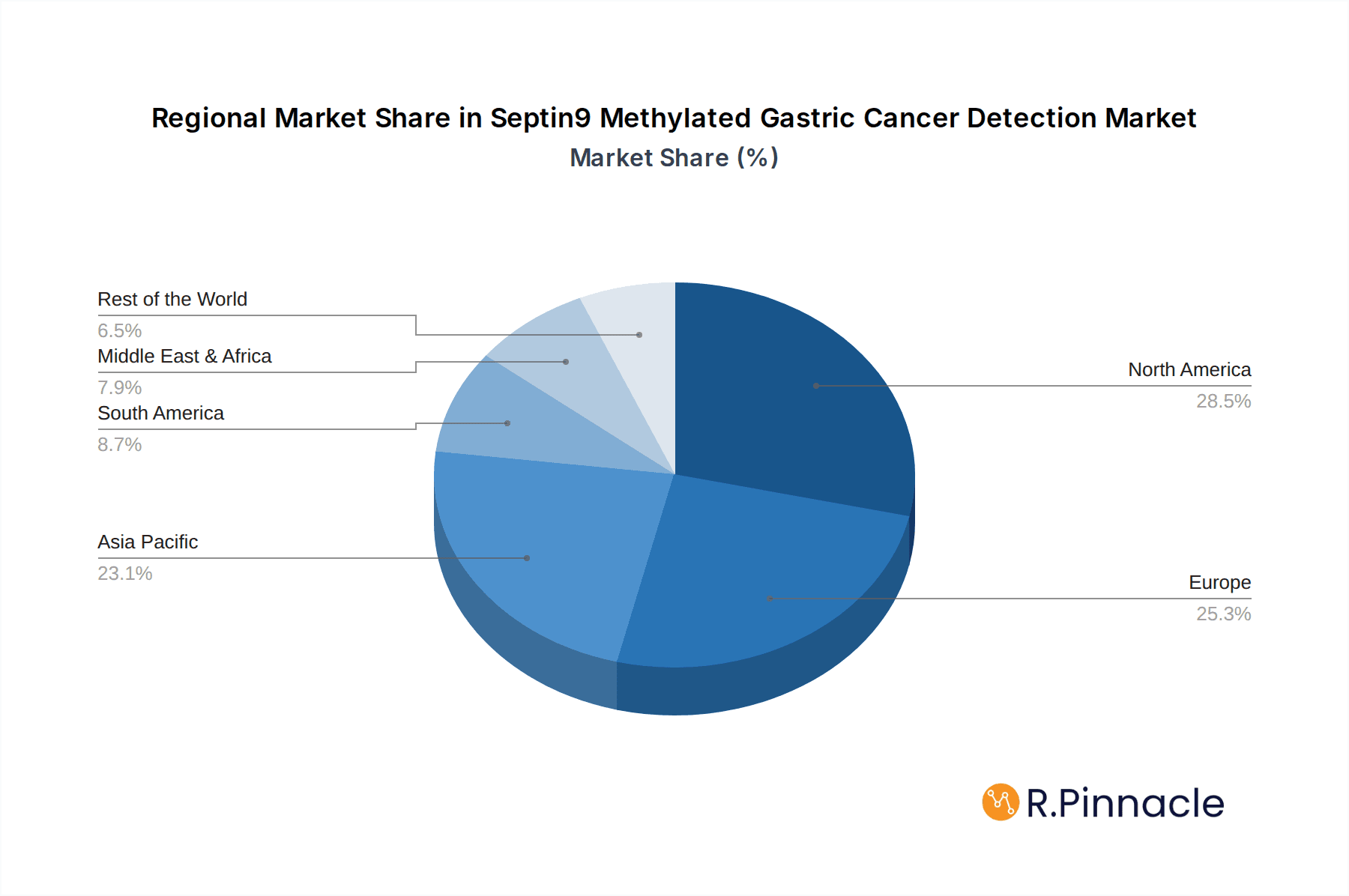
Septin9 Methylated Gastric Cancer Detection Regional Market Share
Geographic Coverage of Septin9 Methylated Gastric Cancer Detection
Septin9 Methylated Gastric Cancer Detection REPORT HIGHLIGHTS
| Aspects | Details |
|---|---|
| Study Period | 2020-2034 |
| Base Year | 2025 |
| Estimated Year | 2026 |
| Forecast Period | 2026-2034 |
| Historical Period | 2020-2025 |
| Growth Rate | CAGR of 10.2% from 2020-2034 |
| Segmentation |
|
Table of Contents
- 1. Introduction
- 1.1. Research Scope
- 1.2. Market Segmentation
- 1.3. Research Methodology
- 1.4. Definitions and Assumptions
- 2. Executive Summary
- 2.1. Introduction
- 3. Market Dynamics
- 3.1. Introduction
- 3.2. Market Drivers
- 3.3. Market Restrains
- 3.4. Market Trends
- 4. Market Factor Analysis
- 4.1. Porters Five Forces
- 4.2. Supply/Value Chain
- 4.3. PESTEL analysis
- 4.4. Market Entropy
- 4.5. Patent/Trademark Analysis
- 5. Global Septin9 Methylated Gastric Cancer Detection Analysis, Insights and Forecast, 2020-2032
- 5.1. Market Analysis, Insights and Forecast - by Application
- 5.1.1. Public Hospital
- 5.1.2. Private Hospital
- 5.2. Market Analysis, Insights and Forecast - by Type
- 5.2.1. Specific Loci Type
- 5.2.2. Whole Genome Type
- 5.3. Market Analysis, Insights and Forecast - by Region
- 5.3.1. North America
- 5.3.2. South America
- 5.3.3. Europe
- 5.3.4. Middle East & Africa
- 5.3.5. Asia Pacific
- 5.1. Market Analysis, Insights and Forecast - by Application
- 6. North America Septin9 Methylated Gastric Cancer Detection Analysis, Insights and Forecast, 2020-2032
- 6.1. Market Analysis, Insights and Forecast - by Application
- 6.1.1. Public Hospital
- 6.1.2. Private Hospital
- 6.2. Market Analysis, Insights and Forecast - by Type
- 6.2.1. Specific Loci Type
- 6.2.2. Whole Genome Type
- 6.1. Market Analysis, Insights and Forecast - by Application
- 7. South America Septin9 Methylated Gastric Cancer Detection Analysis, Insights and Forecast, 2020-2032
- 7.1. Market Analysis, Insights and Forecast - by Application
- 7.1.1. Public Hospital
- 7.1.2. Private Hospital
- 7.2. Market Analysis, Insights and Forecast - by Type
- 7.2.1. Specific Loci Type
- 7.2.2. Whole Genome Type
- 7.1. Market Analysis, Insights and Forecast - by Application
- 8. Europe Septin9 Methylated Gastric Cancer Detection Analysis, Insights and Forecast, 2020-2032
- 8.1. Market Analysis, Insights and Forecast - by Application
- 8.1.1. Public Hospital
- 8.1.2. Private Hospital
- 8.2. Market Analysis, Insights and Forecast - by Type
- 8.2.1. Specific Loci Type
- 8.2.2. Whole Genome Type
- 8.1. Market Analysis, Insights and Forecast - by Application
- 9. Middle East & Africa Septin9 Methylated Gastric Cancer Detection Analysis, Insights and Forecast, 2020-2032
- 9.1. Market Analysis, Insights and Forecast - by Application
- 9.1.1. Public Hospital
- 9.1.2. Private Hospital
- 9.2. Market Analysis, Insights and Forecast - by Type
- 9.2.1. Specific Loci Type
- 9.2.2. Whole Genome Type
- 9.1. Market Analysis, Insights and Forecast - by Application
- 10. Asia Pacific Septin9 Methylated Gastric Cancer Detection Analysis, Insights and Forecast, 2020-2032
- 10.1. Market Analysis, Insights and Forecast - by Application
- 10.1.1. Public Hospital
- 10.1.2. Private Hospital
- 10.2. Market Analysis, Insights and Forecast - by Type
- 10.2.1. Specific Loci Type
- 10.2.2. Whole Genome Type
- 10.1. Market Analysis, Insights and Forecast - by Application
- 11. Competitive Analysis
- 11.1. Global Market Share Analysis 2025
- 11.2. Company Profiles
- 11.2.1 Abcam
- 11.2.1.1. Overview
- 11.2.1.2. Products
- 11.2.1.3. SWOT Analysis
- 11.2.1.4. Recent Developments
- 11.2.1.5. Financials (Based on Availability)
- 11.2.2 Borchen
- 11.2.2.1. Overview
- 11.2.2.2. Products
- 11.2.2.3. SWOT Analysis
- 11.2.2.4. Recent Developments
- 11.2.2.5. Financials (Based on Availability)
- 11.2.3 Jiangsu Weizhen Biological Medicine
- 11.2.3.1. Overview
- 11.2.3.2. Products
- 11.2.3.3. SWOT Analysis
- 11.2.3.4. Recent Developments
- 11.2.3.5. Financials (Based on Availability)
- 11.2.4 Shanghai Tellgen Life Science
- 11.2.4.1. Overview
- 11.2.4.2. Products
- 11.2.4.3. SWOT Analysis
- 11.2.4.4. Recent Developments
- 11.2.4.5. Financials (Based on Availability)
- 11.2.5 Xiamen Aide Biology
- 11.2.5.1. Overview
- 11.2.5.2. Products
- 11.2.5.3. SWOT Analysis
- 11.2.5.4. Recent Developments
- 11.2.5.5. Financials (Based on Availability)
- 11.2.6 Gene Technology
- 11.2.6.1. Overview
- 11.2.6.2. Products
- 11.2.6.3. SWOT Analysis
- 11.2.6.4. Recent Developments
- 11.2.6.5. Financials (Based on Availability)
- 11.2.7 Akron Medical
- 11.2.7.1. Overview
- 11.2.7.2. Products
- 11.2.7.3. SWOT Analysis
- 11.2.7.4. Recent Developments
- 11.2.7.5. Financials (Based on Availability)
- 11.2.1 Abcam
List of Figures
- Figure 1: Global Septin9 Methylated Gastric Cancer Detection Revenue Breakdown (undefined, %) by Region 2025 & 2033
- Figure 2: North America Septin9 Methylated Gastric Cancer Detection Revenue (undefined), by Application 2025 & 2033
- Figure 3: North America Septin9 Methylated Gastric Cancer Detection Revenue Share (%), by Application 2025 & 2033
- Figure 4: North America Septin9 Methylated Gastric Cancer Detection Revenue (undefined), by Type 2025 & 2033
- Figure 5: North America Septin9 Methylated Gastric Cancer Detection Revenue Share (%), by Type 2025 & 2033
- Figure 6: North America Septin9 Methylated Gastric Cancer Detection Revenue (undefined), by Country 2025 & 2033
- Figure 7: North America Septin9 Methylated Gastric Cancer Detection Revenue Share (%), by Country 2025 & 2033
- Figure 8: South America Septin9 Methylated Gastric Cancer Detection Revenue (undefined), by Application 2025 & 2033
- Figure 9: South America Septin9 Methylated Gastric Cancer Detection Revenue Share (%), by Application 2025 & 2033
- Figure 10: South America Septin9 Methylated Gastric Cancer Detection Revenue (undefined), by Type 2025 & 2033
- Figure 11: South America Septin9 Methylated Gastric Cancer Detection Revenue Share (%), by Type 2025 & 2033
- Figure 12: South America Septin9 Methylated Gastric Cancer Detection Revenue (undefined), by Country 2025 & 2033
- Figure 13: South America Septin9 Methylated Gastric Cancer Detection Revenue Share (%), by Country 2025 & 2033
- Figure 14: Europe Septin9 Methylated Gastric Cancer Detection Revenue (undefined), by Application 2025 & 2033
- Figure 15: Europe Septin9 Methylated Gastric Cancer Detection Revenue Share (%), by Application 2025 & 2033
- Figure 16: Europe Septin9 Methylated Gastric Cancer Detection Revenue (undefined), by Type 2025 & 2033
- Figure 17: Europe Septin9 Methylated Gastric Cancer Detection Revenue Share (%), by Type 2025 & 2033
- Figure 18: Europe Septin9 Methylated Gastric Cancer Detection Revenue (undefined), by Country 2025 & 2033
- Figure 19: Europe Septin9 Methylated Gastric Cancer Detection Revenue Share (%), by Country 2025 & 2033
- Figure 20: Middle East & Africa Septin9 Methylated Gastric Cancer Detection Revenue (undefined), by Application 2025 & 2033
- Figure 21: Middle East & Africa Septin9 Methylated Gastric Cancer Detection Revenue Share (%), by Application 2025 & 2033
- Figure 22: Middle East & Africa Septin9 Methylated Gastric Cancer Detection Revenue (undefined), by Type 2025 & 2033
- Figure 23: Middle East & Africa Septin9 Methylated Gastric Cancer Detection Revenue Share (%), by Type 2025 & 2033
- Figure 24: Middle East & Africa Septin9 Methylated Gastric Cancer Detection Revenue (undefined), by Country 2025 & 2033
- Figure 25: Middle East & Africa Septin9 Methylated Gastric Cancer Detection Revenue Share (%), by Country 2025 & 2033
- Figure 26: Asia Pacific Septin9 Methylated Gastric Cancer Detection Revenue (undefined), by Application 2025 & 2033
- Figure 27: Asia Pacific Septin9 Methylated Gastric Cancer Detection Revenue Share (%), by Application 2025 & 2033
- Figure 28: Asia Pacific Septin9 Methylated Gastric Cancer Detection Revenue (undefined), by Type 2025 & 2033
- Figure 29: Asia Pacific Septin9 Methylated Gastric Cancer Detection Revenue Share (%), by Type 2025 & 2033
- Figure 30: Asia Pacific Septin9 Methylated Gastric Cancer Detection Revenue (undefined), by Country 2025 & 2033
- Figure 31: Asia Pacific Septin9 Methylated Gastric Cancer Detection Revenue Share (%), by Country 2025 & 2033
List of Tables
- Table 1: Global Septin9 Methylated Gastric Cancer Detection Revenue undefined Forecast, by Application 2020 & 2033
- Table 2: Global Septin9 Methylated Gastric Cancer Detection Revenue undefined Forecast, by Type 2020 & 2033
- Table 3: Global Septin9 Methylated Gastric Cancer Detection Revenue undefined Forecast, by Region 2020 & 2033
- Table 4: Global Septin9 Methylated Gastric Cancer Detection Revenue undefined Forecast, by Application 2020 & 2033
- Table 5: Global Septin9 Methylated Gastric Cancer Detection Revenue undefined Forecast, by Type 2020 & 2033
- Table 6: Global Septin9 Methylated Gastric Cancer Detection Revenue undefined Forecast, by Country 2020 & 2033
- Table 7: United States Septin9 Methylated Gastric Cancer Detection Revenue (undefined) Forecast, by Application 2020 & 2033
- Table 8: Canada Septin9 Methylated Gastric Cancer Detection Revenue (undefined) Forecast, by Application 2020 & 2033
- Table 9: Mexico Septin9 Methylated Gastric Cancer Detection Revenue (undefined) Forecast, by Application 2020 & 2033
- Table 10: Global Septin9 Methylated Gastric Cancer Detection Revenue undefined Forecast, by Application 2020 & 2033
- Table 11: Global Septin9 Methylated Gastric Cancer Detection Revenue undefined Forecast, by Type 2020 & 2033
- Table 12: Global Septin9 Methylated Gastric Cancer Detection Revenue undefined Forecast, by Country 2020 & 2033
- Table 13: Brazil Septin9 Methylated Gastric Cancer Detection Revenue (undefined) Forecast, by Application 2020 & 2033
- Table 14: Argentina Septin9 Methylated Gastric Cancer Detection Revenue (undefined) Forecast, by Application 2020 & 2033
- Table 15: Rest of South America Septin9 Methylated Gastric Cancer Detection Revenue (undefined) Forecast, by Application 2020 & 2033
- Table 16: Global Septin9 Methylated Gastric Cancer Detection Revenue undefined Forecast, by Application 2020 & 2033
- Table 17: Global Septin9 Methylated Gastric Cancer Detection Revenue undefined Forecast, by Type 2020 & 2033
- Table 18: Global Septin9 Methylated Gastric Cancer Detection Revenue undefined Forecast, by Country 2020 & 2033
- Table 19: United Kingdom Septin9 Methylated Gastric Cancer Detection Revenue (undefined) Forecast, by Application 2020 & 2033
- Table 20: Germany Septin9 Methylated Gastric Cancer Detection Revenue (undefined) Forecast, by Application 2020 & 2033
- Table 21: France Septin9 Methylated Gastric Cancer Detection Revenue (undefined) Forecast, by Application 2020 & 2033
- Table 22: Italy Septin9 Methylated Gastric Cancer Detection Revenue (undefined) Forecast, by Application 2020 & 2033
- Table 23: Spain Septin9 Methylated Gastric Cancer Detection Revenue (undefined) Forecast, by Application 2020 & 2033
- Table 24: Russia Septin9 Methylated Gastric Cancer Detection Revenue (undefined) Forecast, by Application 2020 & 2033
- Table 25: Benelux Septin9 Methylated Gastric Cancer Detection Revenue (undefined) Forecast, by Application 2020 & 2033
- Table 26: Nordics Septin9 Methylated Gastric Cancer Detection Revenue (undefined) Forecast, by Application 2020 & 2033
- Table 27: Rest of Europe Septin9 Methylated Gastric Cancer Detection Revenue (undefined) Forecast, by Application 2020 & 2033
- Table 28: Global Septin9 Methylated Gastric Cancer Detection Revenue undefined Forecast, by Application 2020 & 2033
- Table 29: Global Septin9 Methylated Gastric Cancer Detection Revenue undefined Forecast, by Type 2020 & 2033
- Table 30: Global Septin9 Methylated Gastric Cancer Detection Revenue undefined Forecast, by Country 2020 & 2033
- Table 31: Turkey Septin9 Methylated Gastric Cancer Detection Revenue (undefined) Forecast, by Application 2020 & 2033
- Table 32: Israel Septin9 Methylated Gastric Cancer Detection Revenue (undefined) Forecast, by Application 2020 & 2033
- Table 33: GCC Septin9 Methylated Gastric Cancer Detection Revenue (undefined) Forecast, by Application 2020 & 2033
- Table 34: North Africa Septin9 Methylated Gastric Cancer Detection Revenue (undefined) Forecast, by Application 2020 & 2033
- Table 35: South Africa Septin9 Methylated Gastric Cancer Detection Revenue (undefined) Forecast, by Application 2020 & 2033
- Table 36: Rest of Middle East & Africa Septin9 Methylated Gastric Cancer Detection Revenue (undefined) Forecast, by Application 2020 & 2033
- Table 37: Global Septin9 Methylated Gastric Cancer Detection Revenue undefined Forecast, by Application 2020 & 2033
- Table 38: Global Septin9 Methylated Gastric Cancer Detection Revenue undefined Forecast, by Type 2020 & 2033
- Table 39: Global Septin9 Methylated Gastric Cancer Detection Revenue undefined Forecast, by Country 2020 & 2033
- Table 40: China Septin9 Methylated Gastric Cancer Detection Revenue (undefined) Forecast, by Application 2020 & 2033
- Table 41: India Septin9 Methylated Gastric Cancer Detection Revenue (undefined) Forecast, by Application 2020 & 2033
- Table 42: Japan Septin9 Methylated Gastric Cancer Detection Revenue (undefined) Forecast, by Application 2020 & 2033
- Table 43: South Korea Septin9 Methylated Gastric Cancer Detection Revenue (undefined) Forecast, by Application 2020 & 2033
- Table 44: ASEAN Septin9 Methylated Gastric Cancer Detection Revenue (undefined) Forecast, by Application 2020 & 2033
- Table 45: Oceania Septin9 Methylated Gastric Cancer Detection Revenue (undefined) Forecast, by Application 2020 & 2033
- Table 46: Rest of Asia Pacific Septin9 Methylated Gastric Cancer Detection Revenue (undefined) Forecast, by Application 2020 & 2033
Frequently Asked Questions
1. What is the projected Compound Annual Growth Rate (CAGR) of the Septin9 Methylated Gastric Cancer Detection?
The projected CAGR is approximately 10.2%.
2. Which companies are prominent players in the Septin9 Methylated Gastric Cancer Detection?
Key companies in the market include Abcam, Borchen, Jiangsu Weizhen Biological Medicine, Shanghai Tellgen Life Science, Xiamen Aide Biology, Gene Technology, Akron Medical.
3. What are the main segments of the Septin9 Methylated Gastric Cancer Detection?
The market segments include Application, Type.
4. Can you provide details about the market size?
The market size is estimated to be USD XXX N/A as of 2022.
5. What are some drivers contributing to market growth?
N/A
6. What are the notable trends driving market growth?
N/A
7. Are there any restraints impacting market growth?
N/A
8. Can you provide examples of recent developments in the market?
N/A
9. What pricing options are available for accessing the report?
Pricing options include single-user, multi-user, and enterprise licenses priced at USD 4250.00, USD 6375.00, and USD 8500.00 respectively.
10. Is the market size provided in terms of value or volume?
The market size is provided in terms of value, measured in N/A.
11. Are there any specific market keywords associated with the report?
Yes, the market keyword associated with the report is "Septin9 Methylated Gastric Cancer Detection," which aids in identifying and referencing the specific market segment covered.
12. How do I determine which pricing option suits my needs best?
The pricing options vary based on user requirements and access needs. Individual users may opt for single-user licenses, while businesses requiring broader access may choose multi-user or enterprise licenses for cost-effective access to the report.
13. Are there any additional resources or data provided in the Septin9 Methylated Gastric Cancer Detection report?
While the report offers comprehensive insights, it's advisable to review the specific contents or supplementary materials provided to ascertain if additional resources or data are available.
14. How can I stay updated on further developments or reports in the Septin9 Methylated Gastric Cancer Detection?
To stay informed about further developments, trends, and reports in the Septin9 Methylated Gastric Cancer Detection, consider subscribing to industry newsletters, following relevant companies and organizations, or regularly checking reputable industry news sources and publications.
Methodology
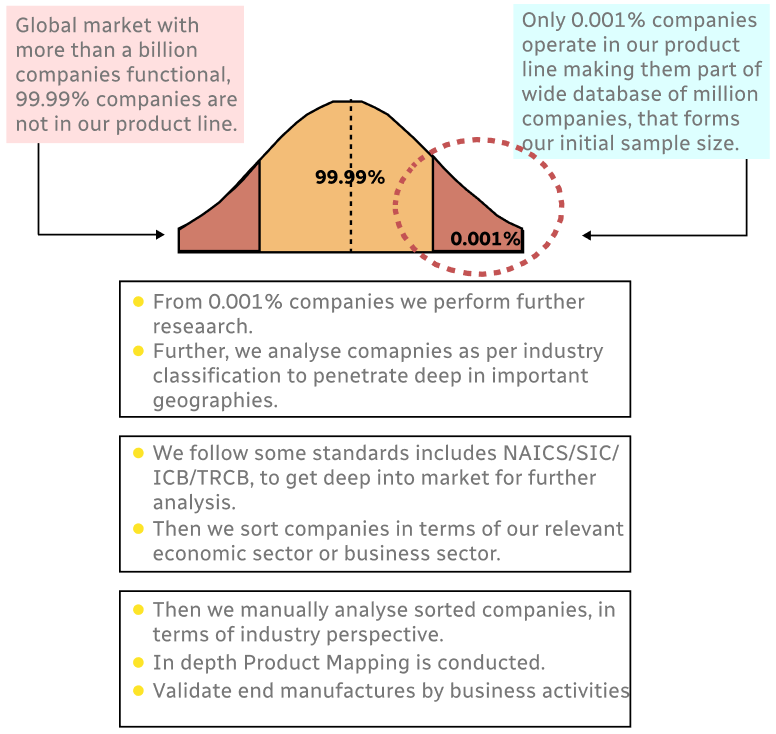
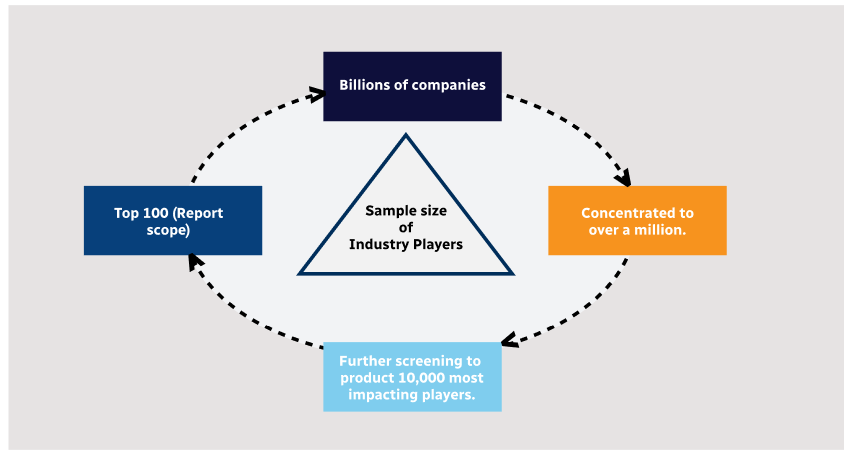
Step 1 - Identification of Relevant Samples Size from Population Database
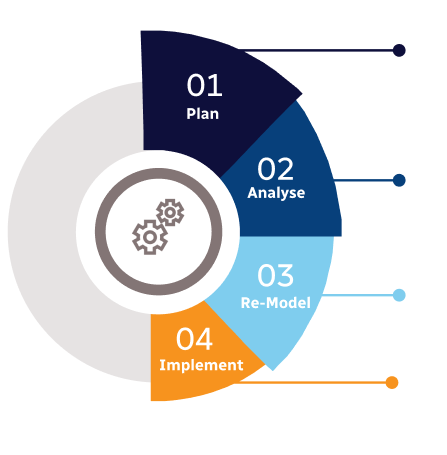
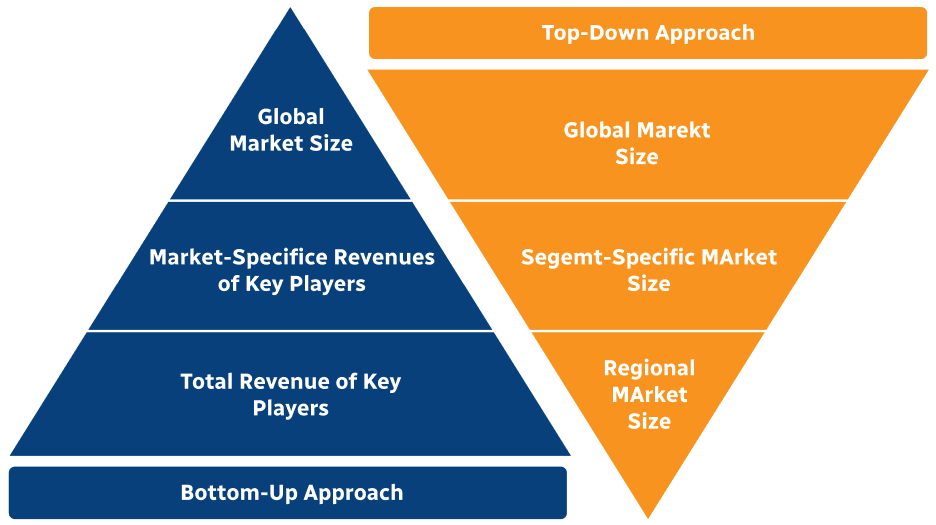
Step 2 - Approaches for Defining Global Market Size (Value, Volume* & Price*)
Note*: In applicable scenarios
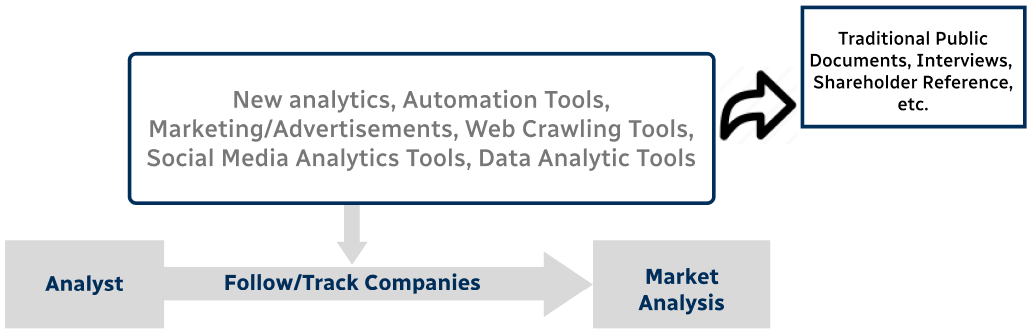
Step 3 - Data Sources
Primary Research
- Web Analytics
- Survey Reports
- Research Institute
- Latest Research Reports
- Opinion Leaders
Secondary Research
- Annual Reports
- White Paper
- Latest Press Release
- Industry Association
- Paid Database
- Investor Presentations
Step 4 - Data Triangulation
Involves using different sources of information in order to increase the validity of a study
These sources are likely to be stakeholders in a program - participants, other researchers, program staff, other community members, and so on.
Then we put all data in single framework & apply various statistical tools to find out the dynamic on the market.
During the analysis stage, feedback from the stakeholder groups would be compared to determine areas of agreement as well as areas of divergence