


Key Insights
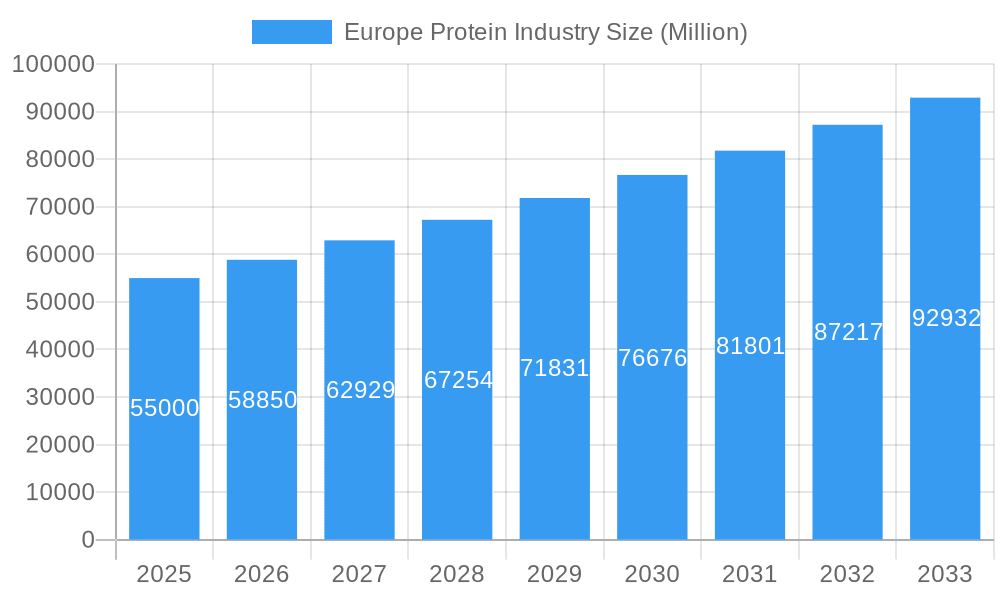
The Europe Protein Industry is poised for robust growth, with a projected market size of approximately $55,000 million in 2025 and an anticipated Compound Annual Growth Rate (CAGR) of 7.00% through 2033. This expansion is primarily fueled by a confluence of increasing consumer demand for healthier and more sustainable food options, a burgeoning awareness of the health benefits associated with adequate protein intake, and the growing popularity of sports nutrition and specialized dietary products. The rising disposable incomes across key European nations further empower consumers to invest in premium protein sources and supplements. Furthermore, evolving dietary habits, including a notable shift towards plant-based and alternative protein sources, are creating significant opportunities for innovation and market diversification. The animal feed segment also remains a substantial contributor, driven by the demand for high-quality animal nutrition to support the livestock industry.
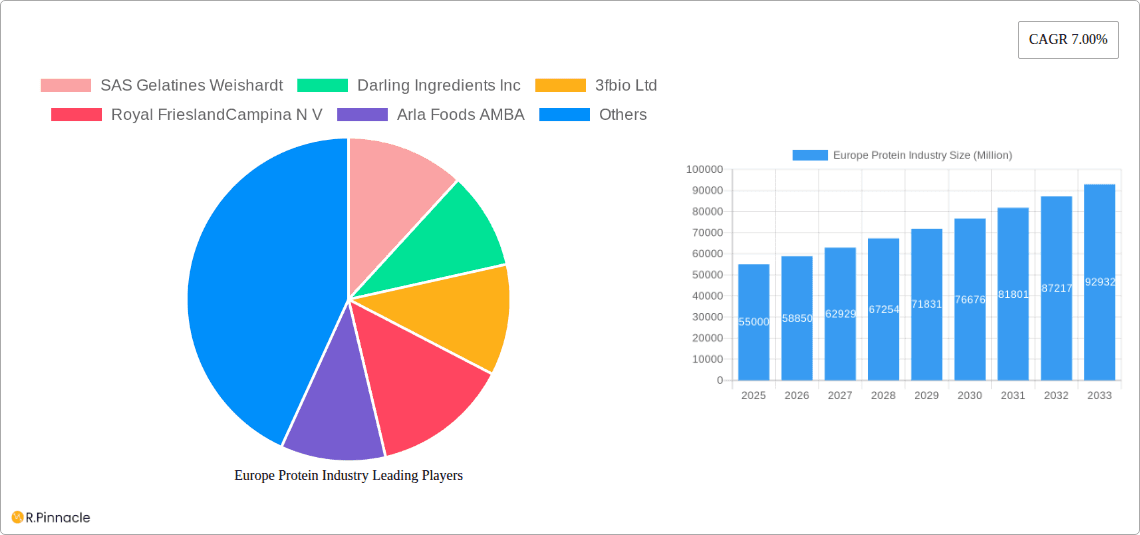
Europe Protein Industry Market Size (In Billion)

The market's trajectory is further shaped by several key trends. The continued surge in demand for plant-based proteins, driven by ethical, environmental, and health considerations, is a dominant force. Innovations in protein processing technologies are yielding novel ingredients with improved functionality and sensory profiles, expanding their applicability across various food and beverage categories, including bakery, dairy alternatives, and meat substitutes. The personal care and cosmetics sector is also increasingly incorporating protein derivatives for their beneficial skin and hair properties. However, the industry faces certain restraints, including the volatility in raw material prices, particularly for animal-derived proteins, and the stringent regulatory landscape governing novel food ingredients and their claims. Supply chain disruptions and concerns regarding the sustainability of certain protein sources also present challenges that necessitate strategic mitigation. Despite these headwinds, the overarching trend of health and wellness, coupled with a growing appetite for protein-rich products, indicates a dynamic and expanding market for the foreseeable future in Europe.
Europe Protein Industry Company Market Share
Here is the SEO-optimized, reader-centric report description for the Europe Protein Industry, designed for immediate use without modification:
Europe Protein Industry Market Structure & Innovation Trends
The Europe Protein Industry is characterized by a dynamic market structure shaped by evolving consumer demands for healthier and more sustainable protein sources. Innovation is primarily driven by the surge in demand for plant-based and alternative proteins, alongside advancements in protein extraction and processing technologies. Regulatory frameworks, particularly concerning novel foods and health claims, play a crucial role in shaping market entry and product development. Product substitutes are increasingly prevalent, ranging from various plant-derived proteins to cultured meat and insect-based alternatives. End-user demographics show a growing preference for protein-fortified products across food & beverages, supplements, and even personal care. Mergers and Acquisitions (M&A) activities are on the rise as larger companies seek to expand their portfolios and gain a competitive edge in the rapidly growing protein market. For instance, the market share for leading animal protein suppliers remains substantial, but the growth trajectory of plant-based protein segments is significantly outpacing traditional sources. M&A deal values are projected to exceed XX Million as consolidation continues.
- Market Concentration: Moderate, with a significant presence of both established dairy and meat giants and a growing number of agile plant-based and alternative protein startups.
- Innovation Drivers: Health and wellness trends, sustainability concerns, technological advancements in food science, and increasing consumer awareness of protein benefits.
- Regulatory Frameworks: Stringent but evolving, with a focus on food safety, labeling transparency, and the approval of novel ingredients.
- Product Substitutes: A wide array, including but not limited to soy, pea, hemp, insect, and cultured protein sources.
- End-User Demographics: Diverse, spanning age groups from infants to the elderly, with a notable rise in health-conscious millennials and Gen Z consumers.
- M&A Activities: Active, indicating industry consolidation and strategic investments to secure market share and technological capabilities.
Europe Protein Industry Market Dynamics & Trends
The Europe Protein Industry is experiencing robust growth, driven by a confluence of compelling market dynamics and evolving consumer preferences. The increasing awareness of the health benefits associated with adequate protein intake, particularly for muscle health, satiety, and overall well-being, is a primary growth driver. This has fueled a significant demand for protein-enriched foods and beverages, from specialized sports nutrition supplements to everyday dairy products and baked goods. Technological disruptions are continuously reshaping the industry, with advancements in fermentation, cell-based agriculture, and novel protein extraction techniques unlocking new possibilities for sustainable and efficient protein production. For example, the development of precision fermentation allows for the creation of high-value proteins with enhanced functional properties and reduced environmental impact.
Consumer preferences are undergoing a profound shift, with a strong and growing demand for plant-based and alternative protein sources. This trend is propelled by ethical considerations, environmental concerns, and perceived health advantages. The rise of veganism and flexitarianism has created a substantial market for protein products derived from sources like peas, soy, and even insects. Consequently, market penetration of plant-based protein alternatives is expected to surge. The competitive dynamics within the industry are intensifying, characterized by strategic product launches, aggressive marketing campaigns, and a race to secure market share in high-growth segments. Companies are investing heavily in research and development to innovate and differentiate their offerings. The market penetration of protein bars and shakes, for instance, has reached an estimated XX% across key European markets. The Compound Annual Growth Rate (CAGR) for the overall Europe Protein Industry is projected to be XX% during the forecast period. The market size is estimated to reach XX Million Euros by 2033.
Dominant Regions & Segments in Europe Protein Industry
The European Union as a whole stands as a dominant region in the global protein industry, with Germany, France, and the United Kingdom leading in market size and consumption. Within these leading nations, the Food and Beverages segment is the largest and most influential end-user category, demonstrating significant growth across various sub-segments.
Leading Region: European Union (comprising Germany, France, UK, Italy, Spain, etc.)
- Key Drivers: High disposable income, increasing health consciousness, strong R&D infrastructure, established food manufacturing base, and supportive governmental initiatives for sustainable food systems.
- Dominance Analysis: The EU's robust economic standing and a highly developed consumer market contribute to its leading position. Extensive distribution networks and a sophisticated retail landscape ensure widespread availability of protein products. Regulatory support for innovation and sustainable practices further bolsters its dominance.
Dominant Segment: Food and Beverages
- Sub End Users:
- Dairy and Dairy Alternative Products: This sub-segment is a powerhouse, benefiting from traditional dairy consumption and the rapid rise of plant-based milk, yogurt, and cheese alternatives. The demand for high-protein dairy products like Greek yogurt and the increasing popularity of whey protein-based beverages contribute significantly. The market size for this sub-segment is estimated to be XX Million Euros in 2025.
- Meat/Poultry/Seafood and Meat Alternative Products: While traditional meat consumption remains high, the meat alternative market is experiencing explosive growth, driven by consumer demand for plant-based options. This is a key area for innovation and market expansion. The market size for meat alternatives alone is projected to reach XX Million Euros by 2033.
- Supplements: This segment, encompassing Sport/Performance Nutrition, Baby Food and Infant Formula, and Elderly Nutrition and Medical Nutrition, is a major contributor to the protein industry. The focus on active lifestyles and aging populations fuels consistent demand. The Sport/Performance Nutrition sub-segment is projected to grow at a CAGR of XX%.
- Sub End Users:
Dominant Protein Source: Animal Protein
- By Protein Type:
- Whey Protein: Remains a dominant force due to its proven efficacy in muscle building and recovery, widely used in sports nutrition and functional foods.
- Casein and Caseinates: Valued for their slow-digesting properties, finding applications in meal replacements and nutritional supplements.
- Milk Protein: A staple in dairy products and infant formulas, maintaining a strong market presence.
- Dominance Analysis: Animal proteins, particularly those derived from dairy, continue to hold a significant market share due to their well-established nutritional profiles, functional properties, and consumer familiarity. Established supply chains and extensive product integration support their continued dominance.
- By Protein Type:
Europe Protein Industry Product Innovations
Product innovation in the Europe Protein Industry is characterized by a strong focus on enhancing nutritional profiles, improving taste and texture, and developing sustainable protein solutions. Companies are actively launching high-protein versions of popular food and beverage items, including shakes, puddings, and ready-to-eat meals, catering to the growing demand for convenience and health. The integration of novel protein sources like insect protein and algae protein is also gaining traction, offering unique nutritional benefits and a reduced environmental footprint. Furthermore, advancements in processing technologies are enabling the creation of plant-based alternatives that closely mimic the taste and texture of traditional animal products, driving significant market appeal. The competitive advantage lies in product differentiation through functional benefits, clean labeling, and sustainable sourcing.
Report Scope & Segmentation Analysis
This report provides a comprehensive analysis of the Europe Protein Industry, segmented by protein source, type, and end-user applications. The segmentation includes:
- Source: Animal
- By Protein Type: Casein and Caseinates, Collagen, Egg Protein, Gelatin, Insect Protein, Milk Protein, Whey Protein, Other Animal Protein. This segment is expected to see steady growth, particularly in specialized applications and infant nutrition. The market size for Whey Protein alone is projected to reach XX Million Euros by 2033.
- Source: Microbial
- By Protein Type: Algae Protein, Mycoprotein. This emerging segment shows significant potential for sustainable protein production, with projected growth driven by technological advancements and increasing consumer acceptance.
- Source: Plant
- By Protein Type: Hemp Protein, Pea Protein, Potato Protein, Rice Protein, Soy Protein, Wheat Protein, Other Plant Protein. This segment is experiencing rapid expansion, driven by the plant-based movement. Pea protein and soy protein are leading the charge, with strong growth projections fueled by their versatility and functional properties.
- End User:
- Animal Feed: A consistent market driven by the livestock industry's demand for essential nutrients.
- Food and Beverages: The largest and fastest-growing end-user segment, further broken down into:
- By Sub End User: Bakery, Breakfast Cereals, Condiments/Sauces, Confectionery, Dairy and Dairy Alternative Products, Meat/Poultry/Seafood and Meat Alternative Products, RTE/RTC Food Products, Snacks. Dairy and Dairy Alternative Products and Meat Alternative Products are projected to witness the highest growth rates.
- Personal Care and Cosmetics: A niche but growing segment, leveraging proteins for their moisturizing and anti-aging properties.
- Supplements: Encompassing Baby Food and Infant Formula, Elderly Nutrition and Medical Nutrition, and Sport/Performance Nutrition. The Sport/Performance Nutrition sub-segment is a significant growth engine.
Key Drivers of Europe Protein Industry Growth
The Europe Protein Industry's growth is propelled by several key factors. Firstly, the escalating global health consciousness and the recognized importance of protein for muscle health, weight management, and overall well-being are driving consumer demand for protein-fortified products. Secondly, the surging popularity of plant-based diets and flexitarianism, motivated by environmental concerns and ethical considerations, is creating a substantial market for alternative protein sources like pea, soy, and hemp. Thirdly, technological advancements in protein extraction, processing, and fermentation are enabling the development of novel, sustainable, and functional protein ingredients with improved sensory attributes. Finally, supportive government initiatives promoting sustainable food systems and healthy eating habits are further bolstering market expansion.
Challenges in the Europe Protein Industry Sector
Despite its promising growth, the Europe Protein Industry faces several challenges. Regulatory hurdles concerning novel protein sources, such as insect and algae protein, can slow down market entry and product adoption. Supply chain complexities, particularly for specialized plant-based ingredients and sustainable sourcing, can lead to price volatility and availability issues. Intense competitive pressures from both established players and emerging startups necessitate continuous innovation and cost optimization. Consumer perception and acceptance of certain alternative protein sources, like insect protein, remain a barrier in some markets. Furthermore, the cost of developing and producing novel protein ingredients can be higher, impacting affordability for some consumer segments.
Emerging Opportunities in Europe Protein Industry
Emerging opportunities in the Europe Protein Industry are abundant, driven by evolving consumer trends and technological innovations. The rapidly expanding market for plant-based meat and dairy alternatives presents a significant avenue for growth, with opportunities to develop more sophisticated and appealing products. The functional food and beverage sector offers substantial potential, as consumers seek protein-enriched options for specific health benefits, such as improved immunity or cognitive function. The development of sustainable and ethically sourced protein ingredients, including insect and algae proteins, caters to the growing demand for eco-friendly products. Furthermore, the personalized nutrition trend is creating opportunities for tailor-made protein solutions based on individual dietary needs and health goals.
Leading Players in the Europe Protein Industry Market
- SAS Gelatines Weishardt
- Darling Ingredients Inc
- 3fbio Ltd
- Royal FrieslandCampina N V
- Arla Foods AMBA
- International Flavors & Fragrances Inc
- Laita
- Archer Daniels Midland Company
- Südzucker A
- Groupe LACTALIS
- Roquette Frère
- Kerry Group plc
Key Developments in Europe Protein Industry Industry
- November 2021: Lactalis Ingredients launched new high-protein product concepts using Pronativ® Native Micellar Casein and Pronativ® Native Whey Protein, including high-protein shakes and high-protein puddings.
- August 2021: Arla Foods Ingredients launched MicelPure™, a micellar casein isolate, containing a minimum of 87% native protein, low in lactose and fat, heat-stable, and with a neutral taste, primarily for RTD beverages, high-protein beverages, and powder shakes.
- May 2021: Unilever announced a partnership with food-tech company ENOUGH (formerly 3F BIO) to introduce new plant-based meat products to the market.
Future Outlook for Europe Protein Industry Market
The future outlook for the Europe Protein Industry is exceptionally bright, characterized by sustained high growth and continuous innovation. The ongoing shift towards healthier lifestyles, increased environmental awareness, and the growing acceptance of diverse protein sources will continue to drive demand. Key growth accelerators include the expansion of plant-based protein markets, the integration of novel and sustainable proteins like mycoprotein and algae, and the development of personalized protein solutions tailored to individual needs. Technological advancements in food science will unlock new functional ingredients and create more appealing product formats, further cementing protein's central role in the European diet. Strategic investments in R&D and sustainable production practices will be crucial for companies aiming to capitalize on these evolving market dynamics.
Europe Protein Industry Segmentation
-
1. Source
-
1.1. Animal
-
1.1.1. By Protein Type
- 1.1.1.1. Casein and Caseinates
- 1.1.1.2. Collagen
- 1.1.1.3. Egg Protein
- 1.1.1.4. Gelatin
- 1.1.1.5. Insect Protein
- 1.1.1.6. Milk Protein
- 1.1.1.7. Whey Protein
- 1.1.1.8. Other Animal Protein
-
1.1.1. By Protein Type
-
1.2. Microbial
- 1.2.1. Algae Protein
- 1.2.2. Mycoprotein
-
1.3. Plant
- 1.3.1. Hemp Protein
- 1.3.2. Pea Protein
- 1.3.3. Potato Protein
- 1.3.4. Rice Protein
- 1.3.5. Soy Protein
- 1.3.6. Wheat Protein
- 1.3.7. Other Plant Protein
-
1.1. Animal
-
2. End User
- 2.1. Animal Feed
-
2.2. Food and Beverages
-
2.2.1. By Sub End User
- 2.2.1.1. Bakery
- 2.2.1.2. Breakfast Cereals
- 2.2.1.3. Condiments/Sauces
- 2.2.1.4. Confectionery
- 2.2.1.5. Dairy and Dairy Alternative Products
- 2.2.1.6. Meat/Poultry/Seafood and Meat Alternative Products
- 2.2.1.7. RTE/RTC Food Products
- 2.2.1.8. Snacks
-
2.2.1. By Sub End User
- 2.3. Personal Care and Cosmetics
-
2.4. Supplements
- 2.4.1. Baby Food and Infant Formula
- 2.4.2. Elderly Nutrition and Medical Nutrition
- 2.4.3. Sport/Performance Nutrition
Europe Protein Industry Segmentation By Geography
-
1. Europe
- 1.1. United Kingdom
- 1.2. Germany
- 1.3. France
- 1.4. Italy
- 1.5. Spain
- 1.6. Netherlands
- 1.7. Belgium
- 1.8. Sweden
- 1.9. Norway
- 1.10. Poland
- 1.11. Denmark
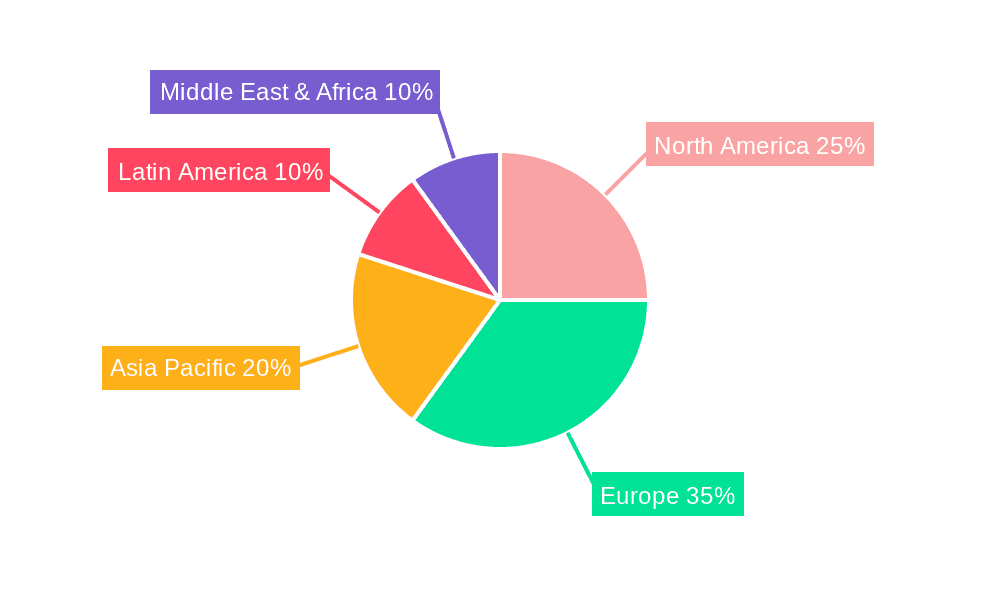
Europe Protein Industry Regional Market Share
Geographic Coverage of Europe Protein Industry
Europe Protein Industry REPORT HIGHLIGHTS
| Aspects | Details |
|---|---|
| Study Period | 2020-2034 |
| Base Year | 2025 |
| Estimated Year | 2026 |
| Forecast Period | 2026-2034 |
| Historical Period | 2020-2025 |
| Growth Rate | CAGR of 5.12% from 2020-2034 |
| Segmentation |
|
Table of Contents
- 1. Introduction
- 1.1. Research Scope
- 1.2. Market Segmentation
- 1.3. Research Methodology
- 1.4. Definitions and Assumptions
- 2. Executive Summary
- 2.1. Introduction
- 3. Market Dynamics
- 3.1. Introduction
- 3.2. Market Drivers
- 3.2.1. Increasing Focus on Maintaining Health and Well-Being; Launching Supplements For Specific Purposes and Targeted Population
- 3.3. Market Restrains
- 3.3.1. Supplement Consumption and Their Side-effects; Inclination Towards Substitute Products
- 3.4. Market Trends
- 3.4.1. OTHER KEY INDUSTRY TRENDS COVERED IN THE REPORT
- 4. Market Factor Analysis
- 4.1. Porters Five Forces
- 4.2. Supply/Value Chain
- 4.3. PESTEL analysis
- 4.4. Market Entropy
- 4.5. Patent/Trademark Analysis
- 5. Europe Protein Industry Analysis, Insights and Forecast, 2020-2032
- 5.1. Market Analysis, Insights and Forecast - by Source
- 5.1.1. Animal
- 5.1.1.1. By Protein Type
- 5.1.1.1.1. Casein and Caseinates
- 5.1.1.1.2. Collagen
- 5.1.1.1.3. Egg Protein
- 5.1.1.1.4. Gelatin
- 5.1.1.1.5. Insect Protein
- 5.1.1.1.6. Milk Protein
- 5.1.1.1.7. Whey Protein
- 5.1.1.1.8. Other Animal Protein
- 5.1.1.1. By Protein Type
- 5.1.2. Microbial
- 5.1.2.1. Algae Protein
- 5.1.2.2. Mycoprotein
- 5.1.3. Plant
- 5.1.3.1. Hemp Protein
- 5.1.3.2. Pea Protein
- 5.1.3.3. Potato Protein
- 5.1.3.4. Rice Protein
- 5.1.3.5. Soy Protein
- 5.1.3.6. Wheat Protein
- 5.1.3.7. Other Plant Protein
- 5.1.1. Animal
- 5.2. Market Analysis, Insights and Forecast - by End User
- 5.2.1. Animal Feed
- 5.2.2. Food and Beverages
- 5.2.2.1. By Sub End User
- 5.2.2.1.1. Bakery
- 5.2.2.1.2. Breakfast Cereals
- 5.2.2.1.3. Condiments/Sauces
- 5.2.2.1.4. Confectionery
- 5.2.2.1.5. Dairy and Dairy Alternative Products
- 5.2.2.1.6. Meat/Poultry/Seafood and Meat Alternative Products
- 5.2.2.1.7. RTE/RTC Food Products
- 5.2.2.1.8. Snacks
- 5.2.2.1. By Sub End User
- 5.2.3. Personal Care and Cosmetics
- 5.2.4. Supplements
- 5.2.4.1. Baby Food and Infant Formula
- 5.2.4.2. Elderly Nutrition and Medical Nutrition
- 5.2.4.3. Sport/Performance Nutrition
- 5.3. Market Analysis, Insights and Forecast - by Region
- 5.3.1. Europe
- 5.1. Market Analysis, Insights and Forecast - by Source
- 6. Competitive Analysis
- 6.1. Market Share Analysis 2025
- 6.2. Company Profiles
- 6.2.1 SAS Gelatines Weishardt
- 6.2.1.1. Overview
- 6.2.1.2. Products
- 6.2.1.3. SWOT Analysis
- 6.2.1.4. Recent Developments
- 6.2.1.5. Financials (Based on Availability)
- 6.2.2 Darling Ingredients Inc
- 6.2.2.1. Overview
- 6.2.2.2. Products
- 6.2.2.3. SWOT Analysis
- 6.2.2.4. Recent Developments
- 6.2.2.5. Financials (Based on Availability)
- 6.2.3 3fbio Ltd
- 6.2.3.1. Overview
- 6.2.3.2. Products
- 6.2.3.3. SWOT Analysis
- 6.2.3.4. Recent Developments
- 6.2.3.5. Financials (Based on Availability)
- 6.2.4 Royal FrieslandCampina N V
- 6.2.4.1. Overview
- 6.2.4.2. Products
- 6.2.4.3. SWOT Analysis
- 6.2.4.4. Recent Developments
- 6.2.4.5. Financials (Based on Availability)
- 6.2.5 Arla Foods AMBA
- 6.2.5.1. Overview
- 6.2.5.2. Products
- 6.2.5.3. SWOT Analysis
- 6.2.5.4. Recent Developments
- 6.2.5.5. Financials (Based on Availability)
- 6.2.6 International Flavors & Fragrances Inc
- 6.2.6.1. Overview
- 6.2.6.2. Products
- 6.2.6.3. SWOT Analysis
- 6.2.6.4. Recent Developments
- 6.2.6.5. Financials (Based on Availability)
- 6.2.7 Laita
- 6.2.7.1. Overview
- 6.2.7.2. Products
- 6.2.7.3. SWOT Analysis
- 6.2.7.4. Recent Developments
- 6.2.7.5. Financials (Based on Availability)
- 6.2.8 Archer Daniels Midland Company
- 6.2.8.1. Overview
- 6.2.8.2. Products
- 6.2.8.3. SWOT Analysis
- 6.2.8.4. Recent Developments
- 6.2.8.5. Financials (Based on Availability)
- 6.2.9 Südzucker A
- 6.2.9.1. Overview
- 6.2.9.2. Products
- 6.2.9.3. SWOT Analysis
- 6.2.9.4. Recent Developments
- 6.2.9.5. Financials (Based on Availability)
- 6.2.10 Groupe LACTALIS
- 6.2.10.1. Overview
- 6.2.10.2. Products
- 6.2.10.3. SWOT Analysis
- 6.2.10.4. Recent Developments
- 6.2.10.5. Financials (Based on Availability)
- 6.2.11 Roquette Frère
- 6.2.11.1. Overview
- 6.2.11.2. Products
- 6.2.11.3. SWOT Analysis
- 6.2.11.4. Recent Developments
- 6.2.11.5. Financials (Based on Availability)
- 6.2.12 Kerry Group plc
- 6.2.12.1. Overview
- 6.2.12.2. Products
- 6.2.12.3. SWOT Analysis
- 6.2.12.4. Recent Developments
- 6.2.12.5. Financials (Based on Availability)
- 6.2.1 SAS Gelatines Weishardt
List of Figures
- Figure 1: Europe Protein Industry Revenue Breakdown (undefined, %) by Product 2025 & 2033
- Figure 2: Europe Protein Industry Share (%) by Company 2025
List of Tables
- Table 1: Europe Protein Industry Revenue undefined Forecast, by Source 2020 & 2033
- Table 2: Europe Protein Industry Revenue undefined Forecast, by End User 2020 & 2033
- Table 3: Europe Protein Industry Revenue undefined Forecast, by Region 2020 & 2033
- Table 4: Europe Protein Industry Revenue undefined Forecast, by Source 2020 & 2033
- Table 5: Europe Protein Industry Revenue undefined Forecast, by End User 2020 & 2033
- Table 6: Europe Protein Industry Revenue undefined Forecast, by Country 2020 & 2033
- Table 7: United Kingdom Europe Protein Industry Revenue (undefined) Forecast, by Application 2020 & 2033
- Table 8: Germany Europe Protein Industry Revenue (undefined) Forecast, by Application 2020 & 2033
- Table 9: France Europe Protein Industry Revenue (undefined) Forecast, by Application 2020 & 2033
- Table 10: Italy Europe Protein Industry Revenue (undefined) Forecast, by Application 2020 & 2033
- Table 11: Spain Europe Protein Industry Revenue (undefined) Forecast, by Application 2020 & 2033
- Table 12: Netherlands Europe Protein Industry Revenue (undefined) Forecast, by Application 2020 & 2033
- Table 13: Belgium Europe Protein Industry Revenue (undefined) Forecast, by Application 2020 & 2033
- Table 14: Sweden Europe Protein Industry Revenue (undefined) Forecast, by Application 2020 & 2033
- Table 15: Norway Europe Protein Industry Revenue (undefined) Forecast, by Application 2020 & 2033
- Table 16: Poland Europe Protein Industry Revenue (undefined) Forecast, by Application 2020 & 2033
- Table 17: Denmark Europe Protein Industry Revenue (undefined) Forecast, by Application 2020 & 2033
Frequently Asked Questions
1. What is the projected Compound Annual Growth Rate (CAGR) of the Europe Protein Industry?
The projected CAGR is approximately 5.12%.
2. Which companies are prominent players in the Europe Protein Industry?
Key companies in the market include SAS Gelatines Weishardt, Darling Ingredients Inc, 3fbio Ltd, Royal FrieslandCampina N V, Arla Foods AMBA, International Flavors & Fragrances Inc, Laita, Archer Daniels Midland Company, Südzucker A, Groupe LACTALIS, Roquette Frère, Kerry Group plc.
3. What are the main segments of the Europe Protein Industry?
The market segments include Source, End User.
4. Can you provide details about the market size?
The market size is estimated to be USD XXX N/A as of 2022.
5. What are some drivers contributing to market growth?
Increasing Focus on Maintaining Health and Well-Being; Launching Supplements For Specific Purposes and Targeted Population.
6. What are the notable trends driving market growth?
OTHER KEY INDUSTRY TRENDS COVERED IN THE REPORT.
7. Are there any restraints impacting market growth?
Supplement Consumption and Their Side-effects; Inclination Towards Substitute Products.
8. Can you provide examples of recent developments in the market?
November 2021: Lactalis Ingredients launched new high-protein product concepts using Pronativ® Native Micellar Casein and Pronativ® Native Whey Protein. Some of the derived concepts are high-protein shakes and high-protein puddings.August 2021: Arla Foods Ingredients launched MicelPure™, a micellar casein isolate, in the market. The new micellar casein isolate contains a minimum of 87% of native protein, is low in lactose and fat, is heat-stable, and has a neutral taste. It is majorly used in RTD beverages, high-protein beverages, and powder shakes.May 2021: Unilever announced that it would partner with the food-tech company ENOUGH (formerly 3F BIO) to bring new plant-based meat products to the market.
9. What pricing options are available for accessing the report?
Pricing options include single-user, multi-user, and enterprise licenses priced at USD 3800, USD 4500, and USD 5800 respectively.
10. Is the market size provided in terms of value or volume?
The market size is provided in terms of value, measured in N/A.
11. Are there any specific market keywords associated with the report?
Yes, the market keyword associated with the report is "Europe Protein Industry," which aids in identifying and referencing the specific market segment covered.
12. How do I determine which pricing option suits my needs best?
The pricing options vary based on user requirements and access needs. Individual users may opt for single-user licenses, while businesses requiring broader access may choose multi-user or enterprise licenses for cost-effective access to the report.
13. Are there any additional resources or data provided in the Europe Protein Industry report?
While the report offers comprehensive insights, it's advisable to review the specific contents or supplementary materials provided to ascertain if additional resources or data are available.
14. How can I stay updated on further developments or reports in the Europe Protein Industry?
To stay informed about further developments, trends, and reports in the Europe Protein Industry, consider subscribing to industry newsletters, following relevant companies and organizations, or regularly checking reputable industry news sources and publications.
Methodology
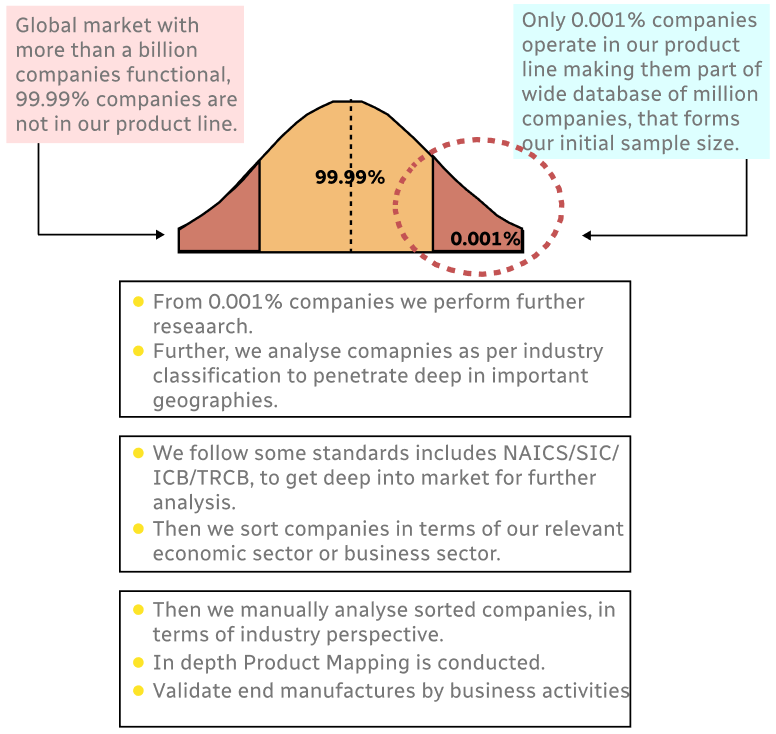
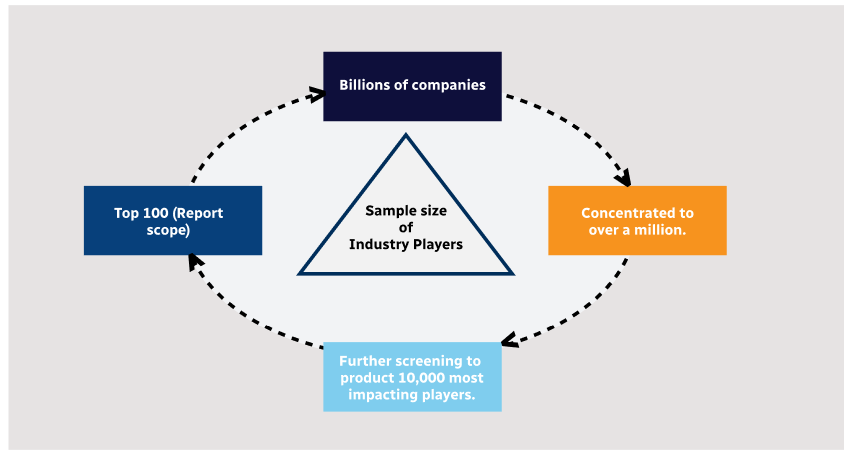
Step 1 - Identification of Relevant Samples Size from Population Database
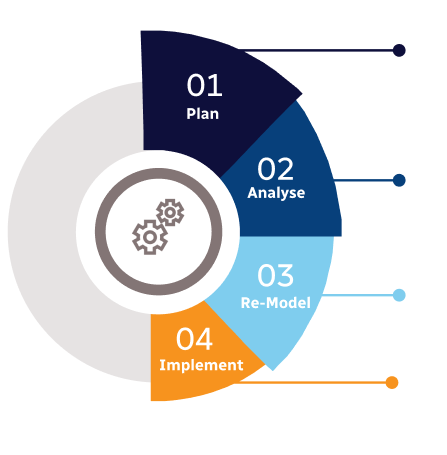
Step 2 - Approaches for Defining Global Market Size (Value, Volume* & Price*)
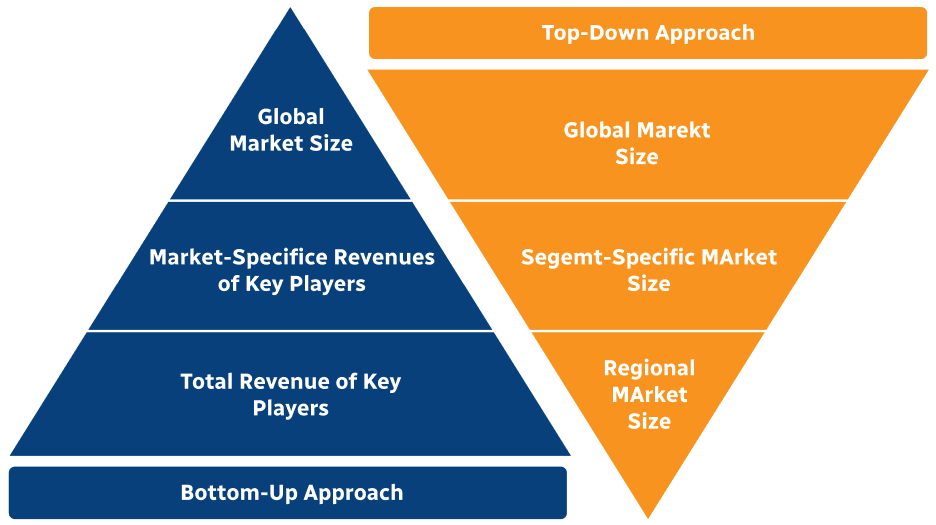
Note*: In applicable scenarios
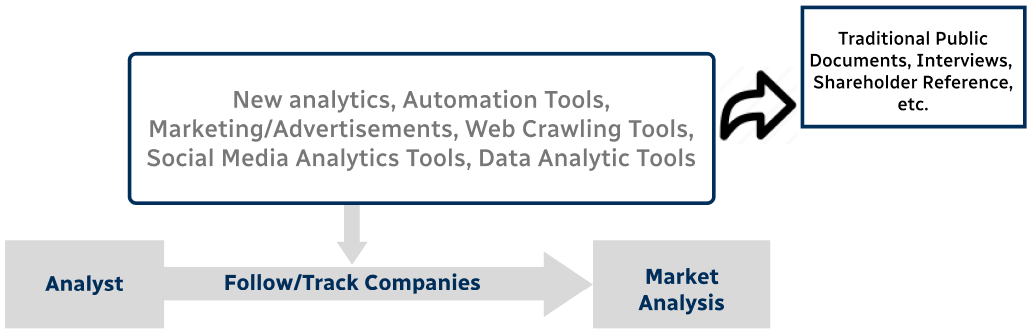
Step 3 - Data Sources
Primary Research
- Web Analytics
- Survey Reports
- Research Institute
- Latest Research Reports
- Opinion Leaders
Secondary Research
- Annual Reports
- White Paper
- Latest Press Release
- Industry Association
- Paid Database
- Investor Presentations
Step 4 - Data Triangulation
Involves using different sources of information in order to increase the validity of a study
These sources are likely to be stakeholders in a program - participants, other researchers, program staff, other community members, and so on.
Then we put all data in single framework & apply various statistical tools to find out the dynamic on the market.
During the analysis stage, feedback from the stakeholder groups would be compared to determine areas of agreement as well as areas of divergence