


Key Insights
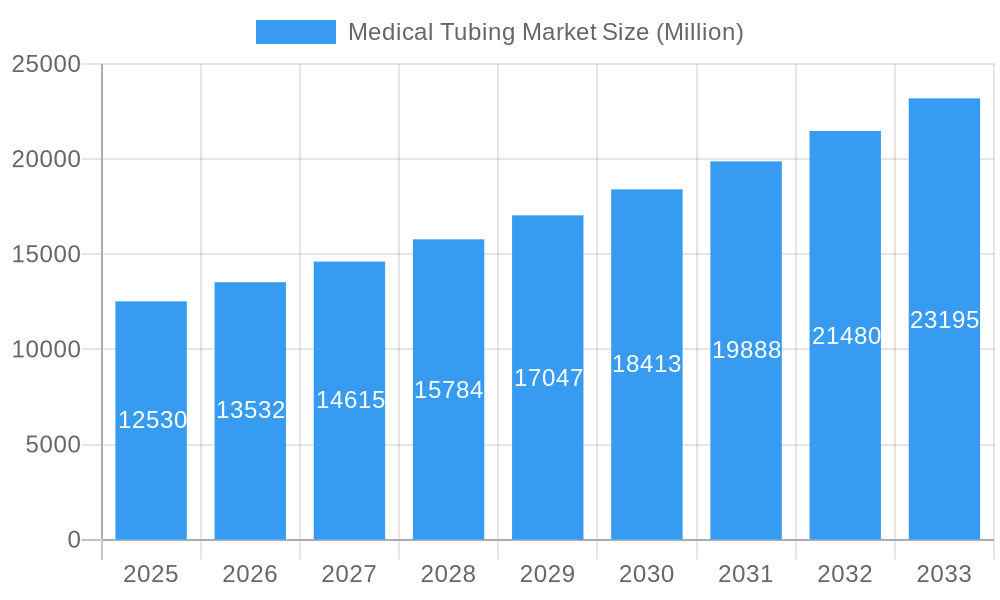
The global medical tubing market is poised for robust expansion, projected to reach an estimated $12.53 billion in 2025 and exhibiting a CAGR of 8% during the forecast period. This significant growth is primarily fueled by the increasing demand for minimally invasive procedures, the rising prevalence of chronic diseases requiring long-term care, and advancements in healthcare technology. The burgeoning healthcare infrastructure in emerging economies and the continuous innovation in drug delivery systems are also pivotal drivers propelling market expansion. Specialized polymers and advanced materials are increasingly being adopted for their superior biocompatibility, flexibility, and durability, enhancing the performance and safety of medical devices.
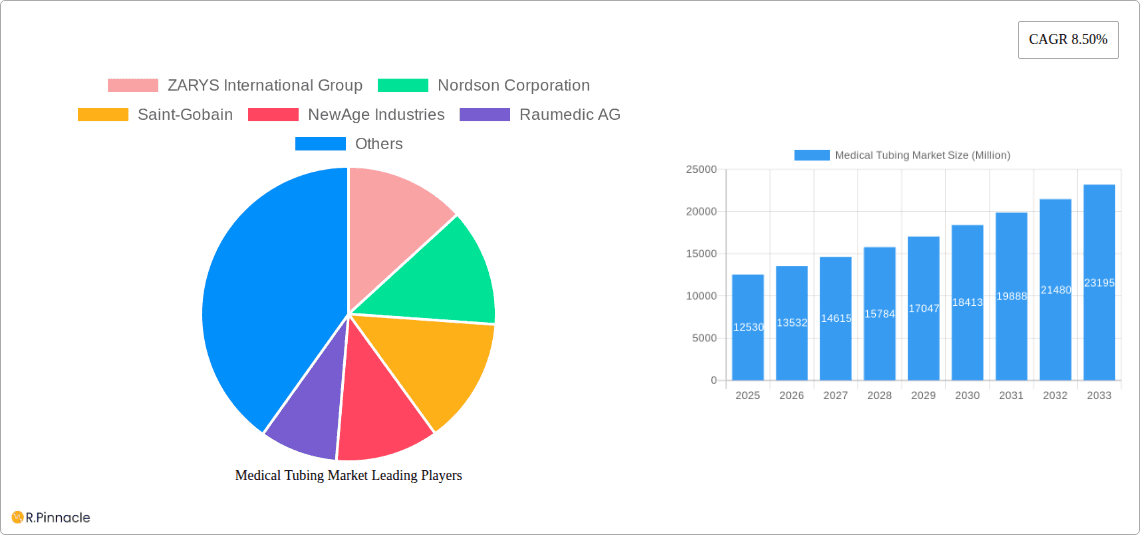
Medical Tubing Market Market Size (In Billion)

The market is segmented across various materials, applications, and structures, reflecting the diverse needs of the healthcare industry. Plastics, rubbers, and specialty polymers dominate the material segment, catering to a wide array of applications including bulk disposable tubing for fluid management, sophisticated drug delivery systems for precise therapeutic administration, and advanced catheters and cannulas for diagnostic and interventional procedures. The structural diversity, encompassing single lumen, co-extruded, multi-lumen, and braided tubing, allows for tailored solutions to meet specific medical requirements. Geographically, North America and Europe currently lead the market due to established healthcare systems and high adoption rates of advanced medical technologies. However, the Asia Pacific region is anticipated to witness the fastest growth, driven by expanding healthcare access, increasing disposable incomes, and a growing medical device manufacturing base. Key players are actively engaged in research and development, strategic collaborations, and mergers and acquisitions to enhance their product portfolios and expand their global reach within this dynamic market.
Medical Tubing Market Company Market Share
Unlocking Growth: The Medical Tubing Market Report 2025-2033
Gain unparalleled insights into the dynamic medical tubing market with our comprehensive report. Covering the study period of 2019–2033, with a base year and estimated year of 2025, this analysis delves deep into market dynamics, CAGR projections, and future market penetration. Explore key growth drivers, technological advancements, and emerging opportunities shaping the global medical tubing sector. This report is essential for manufacturers, suppliers, healthcare providers, and investors seeking to navigate the evolving landscape of medical device tubing, catheter tubing, and drug delivery tubing.
Medical Tubing Market Market Structure & Innovation Trends
The medical tubing market exhibits a moderately concentrated structure, with key players like ZARYS International Group, Nordson Corporation, and Saint-Gobain holding significant market share. Innovation is primarily driven by advancements in material science, leading to the development of enhanced plastic tubing, rubber tubing, and specialty polymer tubing with improved biocompatibility, flexibility, and durability. Regulatory frameworks, particularly those from the FDA and EMA, play a crucial role in shaping product development and market entry strategies. Product substitutes are limited due to the specialized nature of medical applications, but innovation in alternative materials and manufacturing processes continues to emerge. End-user demographics are expanding with the aging global population and increasing prevalence of chronic diseases, driving demand for sophisticated medical tubing solutions. Mergers and acquisitions (M&A) activities are notable, with an estimated M&A deal value in the hundreds of millions, aimed at consolidating market presence and expanding product portfolios.
- Market Concentration: Moderate, with a few dominant players and numerous smaller, specialized manufacturers.
- Innovation Drivers: Material science advancements, miniaturization of medical devices, and demand for patient-specific solutions.
- Regulatory Frameworks: Stringent compliance requirements influencing product design and manufacturing processes.
- Product Substitutes: Limited, but ongoing research into novel materials and manufacturing techniques.
- End-User Demographics: Growing demand from an aging population and increased incidence of chronic conditions.
- M&A Activities: Strategic acquisitions to enhance market reach and technological capabilities.
Medical Tubing Market Market Dynamics & Trends
The medical tubing market is poised for significant expansion, driven by several interconnected factors. A key growth driver is the escalating global demand for minimally invasive surgical procedures, which heavily rely on advanced catheter and cannula tubing. The increasing prevalence of chronic diseases such as cardiovascular conditions, diabetes, and cancer necessitates advanced drug delivery systems, further bolstering the need for specialized medical tubing. Technological disruptions are primarily focused on material innovation, leading to the development of novel polymers with enhanced properties like antimicrobial resistance and radiopacity. Furthermore, advancements in extrusion technologies are enabling the production of complex multi-lumen tubing and co-extruded tubing with precise dimensional control, catering to sophisticated medical devices. Consumer preferences are shifting towards safer, more comfortable, and more effective medical treatments, influencing manufacturers to invest in high-quality, biocompatible tubing solutions. The competitive landscape is characterized by intense innovation and strategic partnerships, with companies striving to differentiate their offerings through specialized materials, custom solutions, and enhanced performance characteristics. The market penetration of advanced medical tubing is projected to grow steadily as healthcare systems worldwide adopt more sophisticated technologies and procedures. The CAGR for the medical tubing market is estimated to be around 6.5% over the forecast period, reflecting robust growth prospects.
The rising global healthcare expenditure is a fundamental catalyst for the medical tubing market. As healthcare systems in both developed and developing economies invest more in advanced medical infrastructure and patient care, the demand for disposable medical supplies, including a wide array of medical tubing, experiences a proportional increase. This trend is particularly pronounced in emerging economies where access to advanced medical technologies is rapidly expanding. Furthermore, the ongoing COVID-19 pandemic, while presenting initial supply chain challenges, ultimately underscored the critical importance of reliable and sterile medical supplies, including tubing used in ventilators, IV lines, and dialysis equipment, leading to increased focus on securing robust supply chains and potentially higher inventory levels in the long term.
The development of smart medical devices, equipped with sensors and integrated electronics, is another significant trend. Medical tubing plays a crucial role in connecting these devices to the patient, often requiring specialized designs to accommodate wiring, fluid delivery, and signal transmission. This opens up new avenues for innovation in co-extruded tubing and specialty polymer tubing capable of housing these complex functionalities while maintaining biocompatibility and sterile integrity. The growing adoption of home healthcare and remote patient monitoring also contributes to the demand for reliable and easy-to-use medical tubing for devices used outside traditional hospital settings.
Market Penetration of advanced tubing solutions is expected to be driven by their ability to improve patient outcomes, reduce healthcare costs through enhanced efficiency, and minimize complications. For instance, advanced drug delivery tubing can ensure precise and controlled release of medications, improving therapeutic efficacy and patient compliance. Similarly, improved catheter and cannula tubing can reduce the risk of infection and trauma during procedures. The CAGR is also influenced by increasing regulatory approvals for novel medical tubing products, facilitated by advancements in testing and validation methodologies.
Competitive dynamics are intense, with companies vying for market leadership through continuous product development, strategic collaborations with medical device manufacturers, and expansion into untapped geographical regions. Differentiation often hinges on the ability to offer customized solutions that meet the unique requirements of specific medical applications and patient demographics. The focus on sustainability is also gaining traction, with manufacturers exploring eco-friendly materials and manufacturing processes, which may become a competitive advantage in the future.
Dominant Regions & Segments in Medical Tubing Market
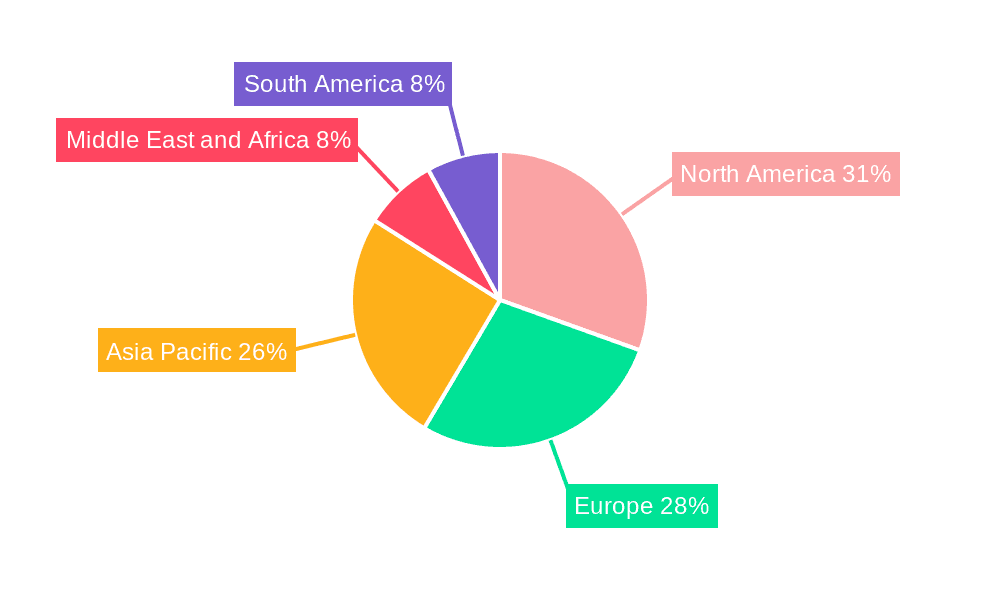
North America currently holds a dominant position in the global medical tubing market, primarily driven by its advanced healthcare infrastructure, high per capita healthcare spending, and a strong presence of leading medical device manufacturers and research institutions. The United States, in particular, accounts for a substantial share due to its robust adoption of innovative medical technologies and an aging population that demands continuous medical interventions. Economic policies supporting healthcare innovation and stringent regulatory standards from the Food and Drug Administration (FDA) further solidify North America's leadership.
Geographically, Europe is another significant market, with countries like Germany, the United Kingdom, and France leading in terms of consumption and production of medical tubing. The region benefits from a well-established healthcare system, extensive research and development activities, and strong emphasis on patient safety and quality of care. Favorable government initiatives and a growing awareness among healthcare professionals regarding the benefits of advanced medical tubing contribute to its market dominance.
Asia Pacific is projected to witness the fastest growth in the medical tubing market. Rapidly developing economies like China and India are experiencing a surge in healthcare expenditure, driven by increasing disposable incomes, a growing middle class, and a rising incidence of lifestyle-related diseases. Government investments in healthcare infrastructure and a burgeoning medical device manufacturing sector are key drivers in this region. The increasing adoption of minimally invasive procedures and a large patient pool create substantial demand for various types of medical tubing.
Material Segment Dominance:
- Plastics: Dominates the market due to its versatility, cost-effectiveness, and wide range of applications in disposable medical devices, IV tubing, and catheters. The ability to engineer plastics with specific properties like flexibility, transparency, and chemical resistance makes them highly sought after.
- Rubbers: Holds a significant share, particularly in applications requiring high elasticity and resilience, such as peristaltic pump tubing and seals. However, concerns regarding biocompatibility and potential allergic reactions can sometimes limit their use compared to advanced plastics.
- Specialty Polymers: Exhibits strong growth potential due to its use in high-performance medical applications requiring exceptional biocompatibility, chemical inertness, and thermal stability, such as implantable devices and advanced drug delivery systems.
Application Segment Dominance:
- Bulk Disposable Tubing: Commands the largest market share owing to the high volume usage in hospitals and clinics for applications like intravenous drips, drainage, and respiratory support. The single-use nature ensures sterility and prevents cross-contamination, driving consistent demand.
- Drug Delivery Systems: A rapidly growing segment, driven by the increasing complexity of pharmaceutical formulations and the need for precise and controlled drug administration. This includes tubing for infusion pumps, insulin pens, and transdermal patches.
- Catheters and Cannulas: A substantial and growing segment, crucial for diagnostic and therapeutic procedures across various medical specialties, including cardiology, urology, and neurology. Innovation in catheter design often necessitates specialized tubing with unique characteristics.
Structure Segment Dominance:
- Single Lumen: The most widely used structure due to its simplicity and cost-effectiveness, suitable for a broad range of basic fluid transfer applications.
- Co-Extruded Tubing: Gaining significant traction due to its ability to combine multiple materials with different properties in a single tube, allowing for enhanced functionality and performance in complex medical devices.
- Multi Lumen Tubing: Essential for advanced medical devices requiring the simultaneous delivery or withdrawal of multiple fluids or the passage of wires and endoscopes. Its complexity offers significant value in specialized applications.
Medical Tubing Market Product Innovations
Recent product innovations in the medical tubing market are largely characterized by the development of advanced materials and sophisticated designs. Zeus Industrial Products' launch of its PTFE Sub-Lite-Wall multi-lumen tubing addresses the growing need for steerable catheters in minimally invasive procedures. Similarly, Imperative Care Inc.'s Zoom POD Aspiration Tubing signifies an innovation in stroke care, integrating aspiration and filtration to enhance efficiency and patient outcomes. These developments highlight a trend towards tubing solutions that offer improved functionality, patient safety, and procedural efficiency, thereby providing a competitive edge to manufacturers.
Report Scope & Segmentation Analysis
This report provides an exhaustive analysis of the medical tubing market, segmented by Material, Application, and Structure. The Material segment includes Plastics, Rubbers, and Specialty Polymers, each with distinct growth trajectories driven by specific end-use requirements and technological advancements. The Application segment encompasses Bulk Disposable Tubing, Drug Delivery Systems, Catheters and Cannulas, and Others, reflecting the diverse uses of medical tubing across healthcare. The Structure segment breaks down the market into Single Lumen, Co-Extruded, Multi Lumen, and Braided Tubing, detailing the evolving demand for complex tubing architectures. Growth projections and market sizes are provided for each segment, with a focus on competitive dynamics and emerging opportunities within each area.
Key Drivers of Medical Tubing Market Growth
The medical tubing market is propelled by several key drivers. The increasing global burden of chronic diseases and an aging population are fueling demand for medical devices and treatments that rely on advanced tubing. Technological advancements in material science are enabling the creation of tubing with enhanced biocompatibility, durability, and specialized functionalities, catering to more complex medical procedures. The growing trend towards minimally invasive surgeries significantly boosts the demand for sophisticated catheter and cannula tubing. Furthermore, government initiatives aimed at improving healthcare access and quality, coupled with rising healthcare expenditure worldwide, are creating a favorable environment for market expansion.
Challenges in the Medical Tubing Market Sector
Despite robust growth, the medical tubing market faces several challenges. Stringent regulatory hurdles and the lengthy approval processes for new medical devices and materials can impede rapid product launches. Supply chain disruptions, as witnessed in recent global events, can impact the availability of raw materials and finished products, leading to price volatility. Intense competition among a large number of manufacturers, particularly for commoditized products, can exert downward pressure on profit margins. Moreover, the need for continuous investment in research and development to keep pace with technological advancements and evolving healthcare needs represents a significant financial commitment for companies.
Emerging Opportunities in Medical Tubing Market
Emerging opportunities in the medical tubing market lie in the growing demand for personalized medicine and customized solutions. The expansion of home healthcare and remote patient monitoring creates a need for reliable and user-friendly tubing for portable medical devices. Advancements in 3D printing technology offer potential for fabricating intricate tubing structures and novel materials. The increasing focus on sustainability is also opening doors for manufacturers developing eco-friendly and biodegradable tubing options. Furthermore, the untapped potential in emerging economies presents significant growth opportunities for market expansion and penetration.
Leading Players in the Medical Tubing Market Market
- ZARYS International Group
- Nordson Corporation
- Saint-Gobain
- NewAge Industries
- Raumedic AG
- Hitachi Ltd
- W L Gore & Associates Inc
- TE Connectivity
- The Lubrizol Corporation
- Optinova
- Freudenberg Medical
- MDC Industries
Key Developments in Medical Tubing Market Industry
- February 2022: Zeus Industrial Products launched its PTFE Sub-Lite-Wall multi-lumen tubing to its product portfolio designed for steerable catheters.
- February 2022: Imperative Care Inc. launched Zoom POD Aspiration Tubing, the company's latest innovation in elevating stroke care. This product includes the Zoom 88 Large Distal Platform for neurovascular access, four Zoom Aspiration Catheters in various sizes, and the Zoom Pump with accessories. The Zoom POD is integrated into the aspiration tubing, which shortens the distance from aspiration to filtration while maintaining full aspiration power.
Future Outlook for Medical Tubing Market Market
The future outlook for the medical tubing market is exceptionally promising, driven by continuous innovation and expanding applications. The integration of advanced materials with enhanced biocompatibility and functionality will be a key growth accelerator. The increasing adoption of minimally invasive surgical techniques and the development of sophisticated drug delivery systems will continue to fuel demand for specialized tubing. Furthermore, the growing focus on patient comfort and safety, coupled with the expansion of healthcare infrastructure in emerging economies, presents significant strategic opportunities for market players. The market is expected to witness sustained growth as it plays an indispensable role in the advancement of modern healthcare.
Medical Tubing Market Segmentation
-
1. Material
- 1.1. Plastics
- 1.2. Rubbers
- 1.3. Specialty Polymers
-
2. Application
- 2.1. Bulk Disposable Tubing
- 2.2. Drug Delivery Systems
- 2.3. Catheters and Cannulas
- 2.4. Others (
-
3. Structure
- 3.1. Single Lumen
- 3.2. Co-Extruded
- 3.3. Multi Lumen
- 3.4. Braided Tubing
Medical Tubing Market Segmentation By Geography
-
1. North America
- 1.1. United States
- 1.2. Canada
- 1.3. Mexico
-
2. Europe
- 2.1. Germany
- 2.2. United Kingdom
- 2.3. France
- 2.4. Italy
- 2.5. Spain
- 2.6. Rest of Europe
-
3. Asia Pacific
- 3.1. China
- 3.2. Japan
- 3.3. India
- 3.4. Australia
- 3.5. South Korea
- 3.6. Rest of Asia Pacific
-
4. Middle East and Africa
- 4.1. GCC
- 4.2. South Africa
- 4.3. Rest of Middle East and Africa
-
5. South America
- 5.1. Brazil
- 5.2. Argentina
- 5.3. Rest of South America
Medical Tubing Market Regional Market Share
Geographic Coverage of Medical Tubing Market
Medical Tubing Market REPORT HIGHLIGHTS
| Aspects | Details |
|---|---|
| Study Period | 2020-2034 |
| Base Year | 2025 |
| Estimated Year | 2026 |
| Forecast Period | 2026-2034 |
| Historical Period | 2020-2025 |
| Growth Rate | CAGR of 8% from 2020-2034 |
| Segmentation |
|
Table of Contents
- 1. Introduction
- 1.1. Research Scope
- 1.2. Market Segmentation
- 1.3. Research Methodology
- 1.4. Definitions and Assumptions
- 2. Executive Summary
- 2.1. Introduction
- 3. Market Dynamics
- 3.1. Introduction
- 3.2. Market Drivers
- 3.2.1. Growing Burden of Chronic Diseases and Geriatric Population; Rising Demand for Minimally Invasive Medical Procedures; Increasing Demand of Disposable Tube Based Medical Devices
- 3.3. Market Restrains
- 3.3.1. Huge Investments and Time Required for Product Development
- 3.4. Market Trends
- 3.4.1. Catheters and Cannulas Segment is Expected to Account for the Large Market Share During the Forecast Period
- 4. Market Factor Analysis
- 4.1. Porters Five Forces
- 4.2. Supply/Value Chain
- 4.3. PESTEL analysis
- 4.4. Market Entropy
- 4.5. Patent/Trademark Analysis
- 5. Global Medical Tubing Market Analysis, Insights and Forecast, 2020-2032
- 5.1. Market Analysis, Insights and Forecast - by Material
- 5.1.1. Plastics
- 5.1.2. Rubbers
- 5.1.3. Specialty Polymers
- 5.2. Market Analysis, Insights and Forecast - by Application
- 5.2.1. Bulk Disposable Tubing
- 5.2.2. Drug Delivery Systems
- 5.2.3. Catheters and Cannulas
- 5.2.4. Others (
- 5.3. Market Analysis, Insights and Forecast - by Structure
- 5.3.1. Single Lumen
- 5.3.2. Co-Extruded
- 5.3.3. Multi Lumen
- 5.3.4. Braided Tubing
- 5.4. Market Analysis, Insights and Forecast - by Region
- 5.4.1. North America
- 5.4.2. Europe
- 5.4.3. Asia Pacific
- 5.4.4. Middle East and Africa
- 5.4.5. South America
- 5.1. Market Analysis, Insights and Forecast - by Material
- 6. North America Medical Tubing Market Analysis, Insights and Forecast, 2020-2032
- 6.1. Market Analysis, Insights and Forecast - by Material
- 6.1.1. Plastics
- 6.1.2. Rubbers
- 6.1.3. Specialty Polymers
- 6.2. Market Analysis, Insights and Forecast - by Application
- 6.2.1. Bulk Disposable Tubing
- 6.2.2. Drug Delivery Systems
- 6.2.3. Catheters and Cannulas
- 6.2.4. Others (
- 6.3. Market Analysis, Insights and Forecast - by Structure
- 6.3.1. Single Lumen
- 6.3.2. Co-Extruded
- 6.3.3. Multi Lumen
- 6.3.4. Braided Tubing
- 6.1. Market Analysis, Insights and Forecast - by Material
- 7. Europe Medical Tubing Market Analysis, Insights and Forecast, 2020-2032
- 7.1. Market Analysis, Insights and Forecast - by Material
- 7.1.1. Plastics
- 7.1.2. Rubbers
- 7.1.3. Specialty Polymers
- 7.2. Market Analysis, Insights and Forecast - by Application
- 7.2.1. Bulk Disposable Tubing
- 7.2.2. Drug Delivery Systems
- 7.2.3. Catheters and Cannulas
- 7.2.4. Others (
- 7.3. Market Analysis, Insights and Forecast - by Structure
- 7.3.1. Single Lumen
- 7.3.2. Co-Extruded
- 7.3.3. Multi Lumen
- 7.3.4. Braided Tubing
- 7.1. Market Analysis, Insights and Forecast - by Material
- 8. Asia Pacific Medical Tubing Market Analysis, Insights and Forecast, 2020-2032
- 8.1. Market Analysis, Insights and Forecast - by Material
- 8.1.1. Plastics
- 8.1.2. Rubbers
- 8.1.3. Specialty Polymers
- 8.2. Market Analysis, Insights and Forecast - by Application
- 8.2.1. Bulk Disposable Tubing
- 8.2.2. Drug Delivery Systems
- 8.2.3. Catheters and Cannulas
- 8.2.4. Others (
- 8.3. Market Analysis, Insights and Forecast - by Structure
- 8.3.1. Single Lumen
- 8.3.2. Co-Extruded
- 8.3.3. Multi Lumen
- 8.3.4. Braided Tubing
- 8.1. Market Analysis, Insights and Forecast - by Material
- 9. Middle East and Africa Medical Tubing Market Analysis, Insights and Forecast, 2020-2032
- 9.1. Market Analysis, Insights and Forecast - by Material
- 9.1.1. Plastics
- 9.1.2. Rubbers
- 9.1.3. Specialty Polymers
- 9.2. Market Analysis, Insights and Forecast - by Application
- 9.2.1. Bulk Disposable Tubing
- 9.2.2. Drug Delivery Systems
- 9.2.3. Catheters and Cannulas
- 9.2.4. Others (
- 9.3. Market Analysis, Insights and Forecast - by Structure
- 9.3.1. Single Lumen
- 9.3.2. Co-Extruded
- 9.3.3. Multi Lumen
- 9.3.4. Braided Tubing
- 9.1. Market Analysis, Insights and Forecast - by Material
- 10. South America Medical Tubing Market Analysis, Insights and Forecast, 2020-2032
- 10.1. Market Analysis, Insights and Forecast - by Material
- 10.1.1. Plastics
- 10.1.2. Rubbers
- 10.1.3. Specialty Polymers
- 10.2. Market Analysis, Insights and Forecast - by Application
- 10.2.1. Bulk Disposable Tubing
- 10.2.2. Drug Delivery Systems
- 10.2.3. Catheters and Cannulas
- 10.2.4. Others (
- 10.3. Market Analysis, Insights and Forecast - by Structure
- 10.3.1. Single Lumen
- 10.3.2. Co-Extruded
- 10.3.3. Multi Lumen
- 10.3.4. Braided Tubing
- 10.1. Market Analysis, Insights and Forecast - by Material
- 11. Competitive Analysis
- 11.1. Global Market Share Analysis 2025
- 11.2. Company Profiles
- 11.2.1 ZARYS International Group
- 11.2.1.1. Overview
- 11.2.1.2. Products
- 11.2.1.3. SWOT Analysis
- 11.2.1.4. Recent Developments
- 11.2.1.5. Financials (Based on Availability)
- 11.2.2 Nordson Corporation
- 11.2.2.1. Overview
- 11.2.2.2. Products
- 11.2.2.3. SWOT Analysis
- 11.2.2.4. Recent Developments
- 11.2.2.5. Financials (Based on Availability)
- 11.2.3 Saint-Gobain
- 11.2.3.1. Overview
- 11.2.3.2. Products
- 11.2.3.3. SWOT Analysis
- 11.2.3.4. Recent Developments
- 11.2.3.5. Financials (Based on Availability)
- 11.2.4 NewAge Industries
- 11.2.4.1. Overview
- 11.2.4.2. Products
- 11.2.4.3. SWOT Analysis
- 11.2.4.4. Recent Developments
- 11.2.4.5. Financials (Based on Availability)
- 11.2.5 Raumedic AG
- 11.2.5.1. Overview
- 11.2.5.2. Products
- 11.2.5.3. SWOT Analysis
- 11.2.5.4. Recent Developments
- 11.2.5.5. Financials (Based on Availability)
- 11.2.6 Hitachi Ltd
- 11.2.6.1. Overview
- 11.2.6.2. Products
- 11.2.6.3. SWOT Analysis
- 11.2.6.4. Recent Developments
- 11.2.6.5. Financials (Based on Availability)
- 11.2.7 W L Gore & Associates Inc
- 11.2.7.1. Overview
- 11.2.7.2. Products
- 11.2.7.3. SWOT Analysis
- 11.2.7.4. Recent Developments
- 11.2.7.5. Financials (Based on Availability)
- 11.2.8 TE Connectivity
- 11.2.8.1. Overview
- 11.2.8.2. Products
- 11.2.8.3. SWOT Analysis
- 11.2.8.4. Recent Developments
- 11.2.8.5. Financials (Based on Availability)
- 11.2.9 The Lubrizol Corporation
- 11.2.9.1. Overview
- 11.2.9.2. Products
- 11.2.9.3. SWOT Analysis
- 11.2.9.4. Recent Developments
- 11.2.9.5. Financials (Based on Availability)
- 11.2.10 Optinova
- 11.2.10.1. Overview
- 11.2.10.2. Products
- 11.2.10.3. SWOT Analysis
- 11.2.10.4. Recent Developments
- 11.2.10.5. Financials (Based on Availability)
- 11.2.11 Freudenberg Medical
- 11.2.11.1. Overview
- 11.2.11.2. Products
- 11.2.11.3. SWOT Analysis
- 11.2.11.4. Recent Developments
- 11.2.11.5. Financials (Based on Availability)
- 11.2.12 MDC Industries
- 11.2.12.1. Overview
- 11.2.12.2. Products
- 11.2.12.3. SWOT Analysis
- 11.2.12.4. Recent Developments
- 11.2.12.5. Financials (Based on Availability)
- 11.2.1 ZARYS International Group
List of Figures
- Figure 1: Global Medical Tubing Market Revenue Breakdown (undefined, %) by Region 2025 & 2033
- Figure 2: North America Medical Tubing Market Revenue (undefined), by Material 2025 & 2033
- Figure 3: North America Medical Tubing Market Revenue Share (%), by Material 2025 & 2033
- Figure 4: North America Medical Tubing Market Revenue (undefined), by Application 2025 & 2033
- Figure 5: North America Medical Tubing Market Revenue Share (%), by Application 2025 & 2033
- Figure 6: North America Medical Tubing Market Revenue (undefined), by Structure 2025 & 2033
- Figure 7: North America Medical Tubing Market Revenue Share (%), by Structure 2025 & 2033
- Figure 8: North America Medical Tubing Market Revenue (undefined), by Country 2025 & 2033
- Figure 9: North America Medical Tubing Market Revenue Share (%), by Country 2025 & 2033
- Figure 10: Europe Medical Tubing Market Revenue (undefined), by Material 2025 & 2033
- Figure 11: Europe Medical Tubing Market Revenue Share (%), by Material 2025 & 2033
- Figure 12: Europe Medical Tubing Market Revenue (undefined), by Application 2025 & 2033
- Figure 13: Europe Medical Tubing Market Revenue Share (%), by Application 2025 & 2033
- Figure 14: Europe Medical Tubing Market Revenue (undefined), by Structure 2025 & 2033
- Figure 15: Europe Medical Tubing Market Revenue Share (%), by Structure 2025 & 2033
- Figure 16: Europe Medical Tubing Market Revenue (undefined), by Country 2025 & 2033
- Figure 17: Europe Medical Tubing Market Revenue Share (%), by Country 2025 & 2033
- Figure 18: Asia Pacific Medical Tubing Market Revenue (undefined), by Material 2025 & 2033
- Figure 19: Asia Pacific Medical Tubing Market Revenue Share (%), by Material 2025 & 2033
- Figure 20: Asia Pacific Medical Tubing Market Revenue (undefined), by Application 2025 & 2033
- Figure 21: Asia Pacific Medical Tubing Market Revenue Share (%), by Application 2025 & 2033
- Figure 22: Asia Pacific Medical Tubing Market Revenue (undefined), by Structure 2025 & 2033
- Figure 23: Asia Pacific Medical Tubing Market Revenue Share (%), by Structure 2025 & 2033
- Figure 24: Asia Pacific Medical Tubing Market Revenue (undefined), by Country 2025 & 2033
- Figure 25: Asia Pacific Medical Tubing Market Revenue Share (%), by Country 2025 & 2033
- Figure 26: Middle East and Africa Medical Tubing Market Revenue (undefined), by Material 2025 & 2033
- Figure 27: Middle East and Africa Medical Tubing Market Revenue Share (%), by Material 2025 & 2033
- Figure 28: Middle East and Africa Medical Tubing Market Revenue (undefined), by Application 2025 & 2033
- Figure 29: Middle East and Africa Medical Tubing Market Revenue Share (%), by Application 2025 & 2033
- Figure 30: Middle East and Africa Medical Tubing Market Revenue (undefined), by Structure 2025 & 2033
- Figure 31: Middle East and Africa Medical Tubing Market Revenue Share (%), by Structure 2025 & 2033
- Figure 32: Middle East and Africa Medical Tubing Market Revenue (undefined), by Country 2025 & 2033
- Figure 33: Middle East and Africa Medical Tubing Market Revenue Share (%), by Country 2025 & 2033
- Figure 34: South America Medical Tubing Market Revenue (undefined), by Material 2025 & 2033
- Figure 35: South America Medical Tubing Market Revenue Share (%), by Material 2025 & 2033
- Figure 36: South America Medical Tubing Market Revenue (undefined), by Application 2025 & 2033
- Figure 37: South America Medical Tubing Market Revenue Share (%), by Application 2025 & 2033
- Figure 38: South America Medical Tubing Market Revenue (undefined), by Structure 2025 & 2033
- Figure 39: South America Medical Tubing Market Revenue Share (%), by Structure 2025 & 2033
- Figure 40: South America Medical Tubing Market Revenue (undefined), by Country 2025 & 2033
- Figure 41: South America Medical Tubing Market Revenue Share (%), by Country 2025 & 2033
List of Tables
- Table 1: Global Medical Tubing Market Revenue undefined Forecast, by Material 2020 & 2033
- Table 2: Global Medical Tubing Market Revenue undefined Forecast, by Application 2020 & 2033
- Table 3: Global Medical Tubing Market Revenue undefined Forecast, by Structure 2020 & 2033
- Table 4: Global Medical Tubing Market Revenue undefined Forecast, by Region 2020 & 2033
- Table 5: Global Medical Tubing Market Revenue undefined Forecast, by Material 2020 & 2033
- Table 6: Global Medical Tubing Market Revenue undefined Forecast, by Application 2020 & 2033
- Table 7: Global Medical Tubing Market Revenue undefined Forecast, by Structure 2020 & 2033
- Table 8: Global Medical Tubing Market Revenue undefined Forecast, by Country 2020 & 2033
- Table 9: United States Medical Tubing Market Revenue (undefined) Forecast, by Application 2020 & 2033
- Table 10: Canada Medical Tubing Market Revenue (undefined) Forecast, by Application 2020 & 2033
- Table 11: Mexico Medical Tubing Market Revenue (undefined) Forecast, by Application 2020 & 2033
- Table 12: Global Medical Tubing Market Revenue undefined Forecast, by Material 2020 & 2033
- Table 13: Global Medical Tubing Market Revenue undefined Forecast, by Application 2020 & 2033
- Table 14: Global Medical Tubing Market Revenue undefined Forecast, by Structure 2020 & 2033
- Table 15: Global Medical Tubing Market Revenue undefined Forecast, by Country 2020 & 2033
- Table 16: Germany Medical Tubing Market Revenue (undefined) Forecast, by Application 2020 & 2033
- Table 17: United Kingdom Medical Tubing Market Revenue (undefined) Forecast, by Application 2020 & 2033
- Table 18: France Medical Tubing Market Revenue (undefined) Forecast, by Application 2020 & 2033
- Table 19: Italy Medical Tubing Market Revenue (undefined) Forecast, by Application 2020 & 2033
- Table 20: Spain Medical Tubing Market Revenue (undefined) Forecast, by Application 2020 & 2033
- Table 21: Rest of Europe Medical Tubing Market Revenue (undefined) Forecast, by Application 2020 & 2033
- Table 22: Global Medical Tubing Market Revenue undefined Forecast, by Material 2020 & 2033
- Table 23: Global Medical Tubing Market Revenue undefined Forecast, by Application 2020 & 2033
- Table 24: Global Medical Tubing Market Revenue undefined Forecast, by Structure 2020 & 2033
- Table 25: Global Medical Tubing Market Revenue undefined Forecast, by Country 2020 & 2033
- Table 26: China Medical Tubing Market Revenue (undefined) Forecast, by Application 2020 & 2033
- Table 27: Japan Medical Tubing Market Revenue (undefined) Forecast, by Application 2020 & 2033
- Table 28: India Medical Tubing Market Revenue (undefined) Forecast, by Application 2020 & 2033
- Table 29: Australia Medical Tubing Market Revenue (undefined) Forecast, by Application 2020 & 2033
- Table 30: South Korea Medical Tubing Market Revenue (undefined) Forecast, by Application 2020 & 2033
- Table 31: Rest of Asia Pacific Medical Tubing Market Revenue (undefined) Forecast, by Application 2020 & 2033
- Table 32: Global Medical Tubing Market Revenue undefined Forecast, by Material 2020 & 2033
- Table 33: Global Medical Tubing Market Revenue undefined Forecast, by Application 2020 & 2033
- Table 34: Global Medical Tubing Market Revenue undefined Forecast, by Structure 2020 & 2033
- Table 35: Global Medical Tubing Market Revenue undefined Forecast, by Country 2020 & 2033
- Table 36: GCC Medical Tubing Market Revenue (undefined) Forecast, by Application 2020 & 2033
- Table 37: South Africa Medical Tubing Market Revenue (undefined) Forecast, by Application 2020 & 2033
- Table 38: Rest of Middle East and Africa Medical Tubing Market Revenue (undefined) Forecast, by Application 2020 & 2033
- Table 39: Global Medical Tubing Market Revenue undefined Forecast, by Material 2020 & 2033
- Table 40: Global Medical Tubing Market Revenue undefined Forecast, by Application 2020 & 2033
- Table 41: Global Medical Tubing Market Revenue undefined Forecast, by Structure 2020 & 2033
- Table 42: Global Medical Tubing Market Revenue undefined Forecast, by Country 2020 & 2033
- Table 43: Brazil Medical Tubing Market Revenue (undefined) Forecast, by Application 2020 & 2033
- Table 44: Argentina Medical Tubing Market Revenue (undefined) Forecast, by Application 2020 & 2033
- Table 45: Rest of South America Medical Tubing Market Revenue (undefined) Forecast, by Application 2020 & 2033
Frequently Asked Questions
1. What is the projected Compound Annual Growth Rate (CAGR) of the Medical Tubing Market?
The projected CAGR is approximately 8%.
2. Which companies are prominent players in the Medical Tubing Market?
Key companies in the market include ZARYS International Group, Nordson Corporation, Saint-Gobain, NewAge Industries, Raumedic AG, Hitachi Ltd, W L Gore & Associates Inc, TE Connectivity, The Lubrizol Corporation, Optinova, Freudenberg Medical, MDC Industries.
3. What are the main segments of the Medical Tubing Market?
The market segments include Material, Application, Structure.
4. Can you provide details about the market size?
The market size is estimated to be USD XXX N/A as of 2022.
5. What are some drivers contributing to market growth?
Growing Burden of Chronic Diseases and Geriatric Population; Rising Demand for Minimally Invasive Medical Procedures; Increasing Demand of Disposable Tube Based Medical Devices.
6. What are the notable trends driving market growth?
Catheters and Cannulas Segment is Expected to Account for the Large Market Share During the Forecast Period.
7. Are there any restraints impacting market growth?
Huge Investments and Time Required for Product Development.
8. Can you provide examples of recent developments in the market?
In February 2022, Zeus Industrial Products launched its PTFE Sub-Lite-Wall multi-lumen tubing to its product portfolio designed for steerable catheters.
9. What pricing options are available for accessing the report?
Pricing options include single-user, multi-user, and enterprise licenses priced at USD 4750, USD 5250, and USD 8750 respectively.
10. Is the market size provided in terms of value or volume?
The market size is provided in terms of value, measured in N/A.
11. Are there any specific market keywords associated with the report?
Yes, the market keyword associated with the report is "Medical Tubing Market," which aids in identifying and referencing the specific market segment covered.
12. How do I determine which pricing option suits my needs best?
The pricing options vary based on user requirements and access needs. Individual users may opt for single-user licenses, while businesses requiring broader access may choose multi-user or enterprise licenses for cost-effective access to the report.
13. Are there any additional resources or data provided in the Medical Tubing Market report?
While the report offers comprehensive insights, it's advisable to review the specific contents or supplementary materials provided to ascertain if additional resources or data are available.
14. How can I stay updated on further developments or reports in the Medical Tubing Market?
To stay informed about further developments, trends, and reports in the Medical Tubing Market, consider subscribing to industry newsletters, following relevant companies and organizations, or regularly checking reputable industry news sources and publications.
Methodology
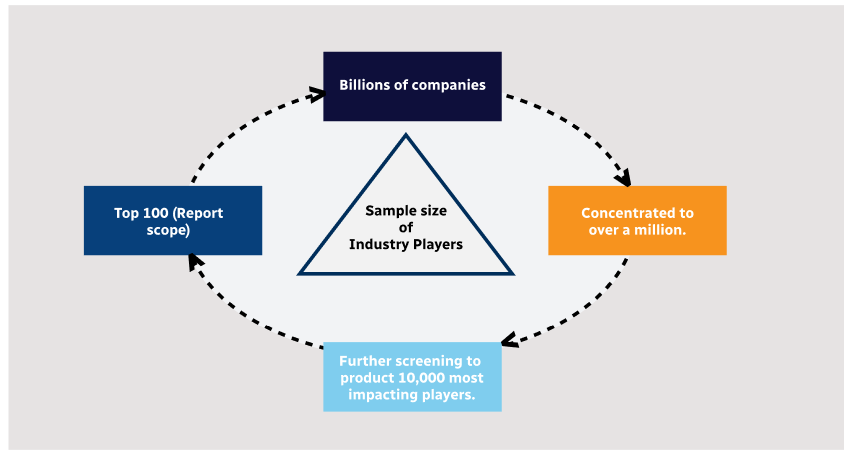
Step 1 - Identification of Relevant Samples Size from Population Database

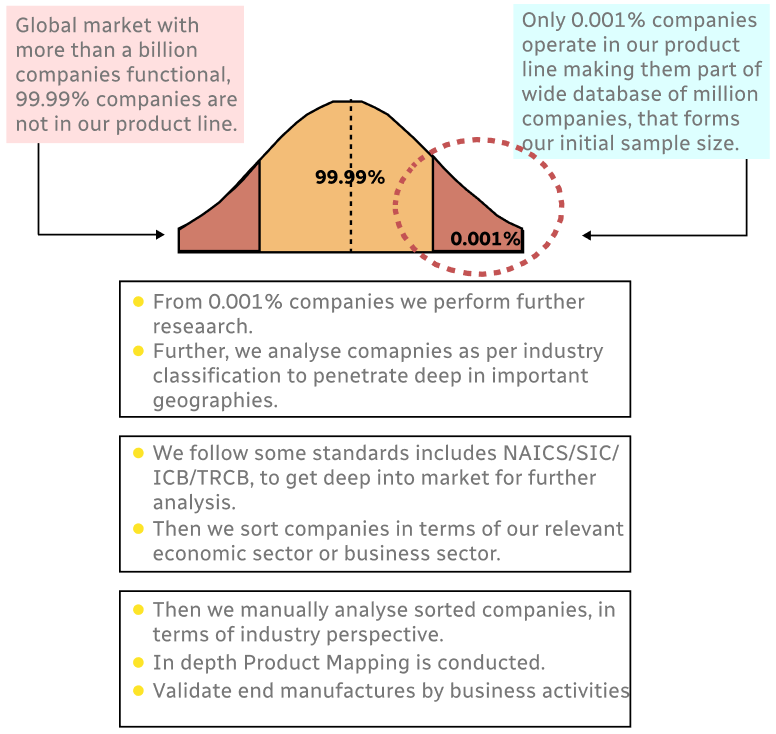
Step 2 - Approaches for Defining Global Market Size (Value, Volume* & Price*)
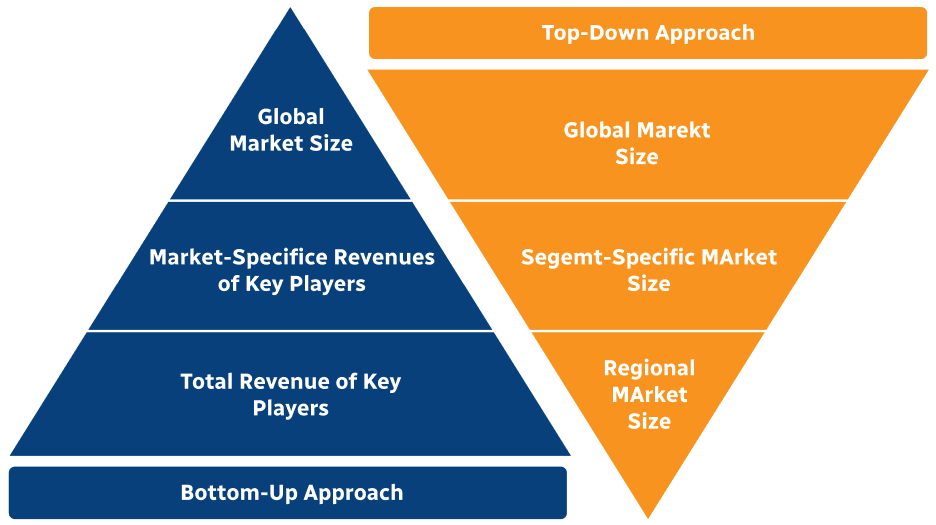
Note*: In applicable scenarios
Step 3 - Data Sources
Primary Research
- Web Analytics
- Survey Reports
- Research Institute
- Latest Research Reports
- Opinion Leaders
Secondary Research
- Annual Reports
- White Paper
- Latest Press Release
- Industry Association
- Paid Database
- Investor Presentations
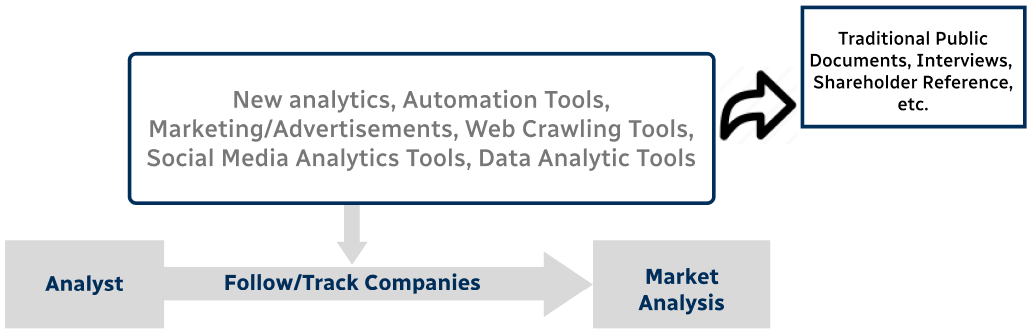
Step 4 - Data Triangulation
Involves using different sources of information in order to increase the validity of a study
These sources are likely to be stakeholders in a program - participants, other researchers, program staff, other community members, and so on.
Then we put all data in single framework & apply various statistical tools to find out the dynamic on the market.
During the analysis stage, feedback from the stakeholder groups would be compared to determine areas of agreement as well as areas of divergence