


Key Insights
The global Ophthalmology Diagnostics Market is poised for significant expansion, projected to reach USD 2.83 billion in 2025, with a robust CAGR of 6.27% expected to drive its growth through 2033. This upward trajectory is primarily fueled by the increasing prevalence of eye-related disorders, such as glaucoma and age-related macular degeneration, which necessitate early and accurate diagnosis. Advancements in diagnostic technologies, including the development of more sophisticated OCT scanners and advanced corneal topographers, are also key drivers, offering enhanced precision and patient comfort. Furthermore, a growing global population, coupled with rising healthcare expenditure and an increased awareness regarding the importance of regular eye check-ups, are contributing to the market's strong performance. The industry is also witnessing a trend towards the miniaturization and portability of diagnostic devices, making them more accessible in diverse healthcare settings.
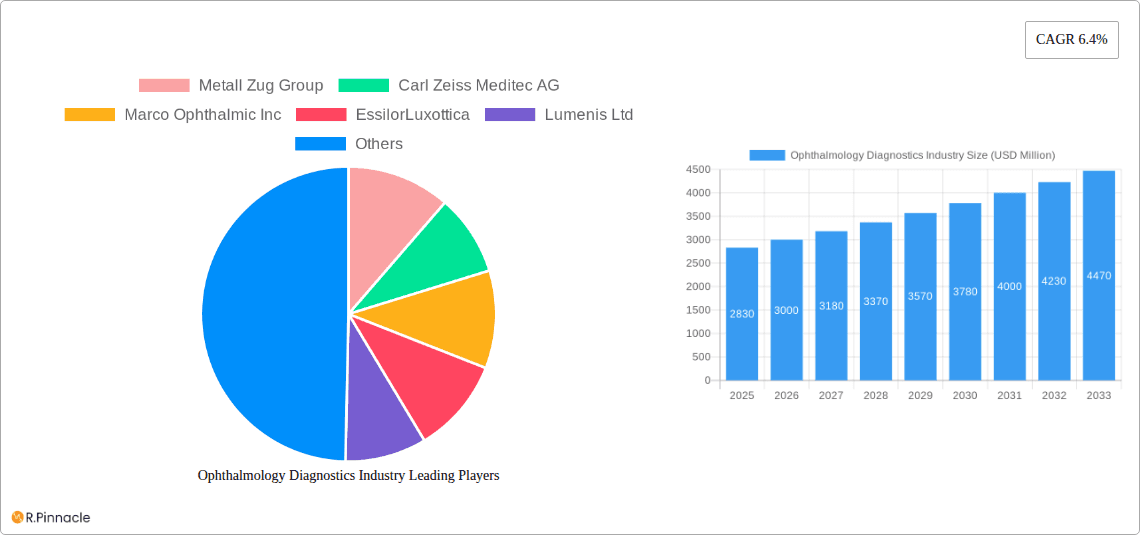
Ophthalmology Diagnostics Industry Market Size (In Billion)

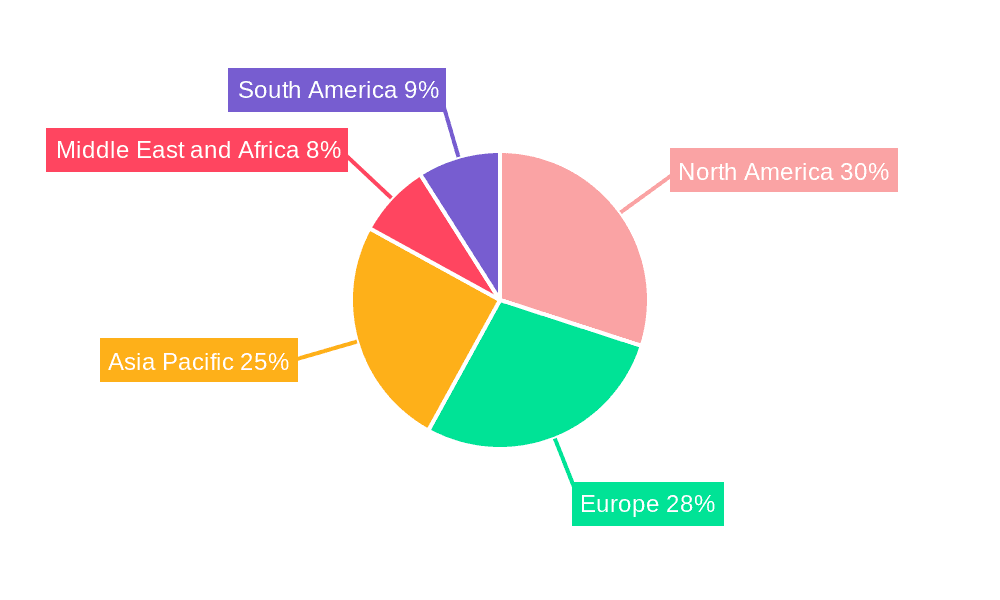
The market segmentation reveals a diverse landscape, with product segments like OCT Scanners and Fundus Cameras leading the adoption due to their critical role in diagnosing various retinal conditions. Application-wise, Retinal Evaluation and Refraction Assessment dominate, reflecting the high demand for visual acuity testing and the management of refractive errors. The End-user segment is largely driven by Hospitals and Speciality Clinics, which are equipped to handle the complexities of advanced ophthalmic diagnostics. Geographically, North America and Europe currently hold substantial market shares, driven by well-established healthcare infrastructures and high adoption rates of advanced medical technologies. However, the Asia Pacific region is anticipated to exhibit the fastest growth, propelled by a burgeoning population, increasing disposable incomes, and a growing emphasis on preventative healthcare. Restraints such as the high cost of some advanced diagnostic equipment and the need for skilled professionals for operation are being addressed through continuous innovation and training initiatives. Key players like Carl Zeiss Meditec AG, Topcon Corporation, and Alcon Inc. are actively investing in research and development to introduce innovative solutions and expand their market reach.
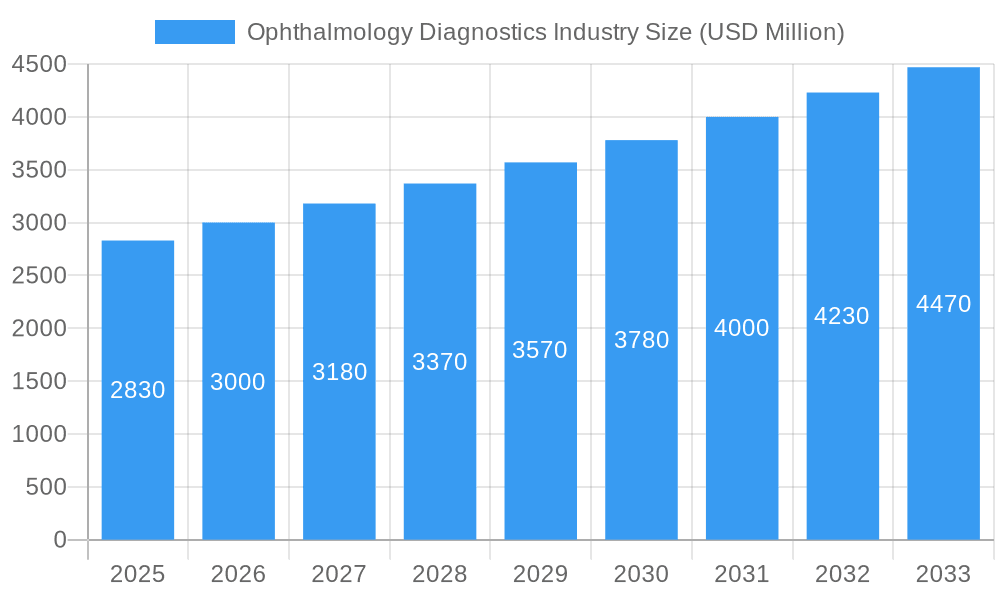
Ophthalmology Diagnostics Industry Company Market Share
This comprehensive report provides an in-depth analysis of the global Ophthalmology Diagnostics Industry, offering critical insights into market dynamics, key players, and future growth trajectories. Covering a Study Period from 2019 to 2033, with a Base Year and Estimated Year of 2025 and a Forecast Period from 2025–2033, this research is essential for industry stakeholders seeking to navigate the evolving landscape of ophthalmic diagnostics. The Historical Period spans 2019–2024.
This report leverages high-ranking keywords such as "ophthalmology diagnostics market," "eye care technology," "retinal imaging," "glaucoma detection devices," "OCT scanners market," and "surgical ophthalmology equipment" to ensure maximum search visibility and engagement with professionals in the ophthalmology sector.
Ophthalmology Diagnostics Industry Market Structure & Innovation Trends
The Ophthalmology Diagnostics Industry exhibits a moderately concentrated market structure, characterized by the presence of established global players and a growing number of innovative startups. Key innovation drivers include the increasing prevalence of eye diseases, advancements in artificial intelligence (AI) and machine learning for diagnostic accuracy, and the demand for minimally invasive diagnostic procedures. Regulatory frameworks, such as FDA approvals and CE marking, play a crucial role in shaping product development and market entry. Product substitutes, while present, often fall short in providing the comprehensive diagnostic capabilities of advanced ophthalmic equipment. End-user demographics are shifting towards an aging population with higher incidences of visual impairments, alongside a growing demand for preventative eye care. Mergers and acquisitions (M&A) activities are prevalent, with significant M&A deal values in the billions, as larger companies seek to consolidate their market position and acquire innovative technologies. For instance, the acquisition of smaller AI-driven diagnostic firms by established medical device manufacturers is a recurring theme. While specific market share data fluctuates, leading companies like Carl Zeiss Meditec AG and Topcon Corporation consistently hold significant portions of the global market, estimated in the billions of USD.
Ophthalmology Diagnostics Industry Market Dynamics & Trends
The Ophthalmology Diagnostics Industry is experiencing robust growth, fueled by a confluence of technological advancements, increasing global healthcare expenditure, and rising awareness about eye health. The CAGR is projected to be substantial, estimated in the high single digits, driving market penetration of advanced diagnostic solutions. Technological disruptions are at the forefront, with the integration of AI and machine learning transforming how eye conditions are diagnosed and managed. AI-powered algorithms are enhancing the accuracy of interpreting complex retinal scans, leading to earlier detection of diseases like diabetic retinopathy and age-related macular degeneration (AMD). Consumer preferences are increasingly leaning towards non-invasive and faster diagnostic methods, pushing manufacturers to develop user-friendly and portable devices. The competitive landscape is dynamic, with intense rivalry among established players and agile startups vying for market dominance. The increasing burden of eye diseases worldwide, exacerbated by lifestyle changes and an aging population, is a primary growth driver. Furthermore, government initiatives promoting eye care screening programs and the growing emphasis on preventative healthcare are further bolstering market expansion. The expansion of telehealth and remote diagnostic capabilities is also a significant trend, allowing for wider access to specialized ophthalmological care, particularly in underserved regions. The market penetration of advanced diagnostic technologies is steadily increasing as healthcare providers recognize the economic and clinical benefits of early and accurate diagnosis. The global market size for ophthalmology diagnostics is projected to reach billions in the coming years, underscoring the significant economic opportunity within this sector.
Dominant Regions & Segments in Ophthalmology Diagnostics Industry
The Ophthalmology Diagnostics Industry is segmented by Product, Application, and End-user.
Dominant Regions:
- North America currently holds a dominant position in the global ophthalmology diagnostics market, driven by a high prevalence of eye diseases, advanced healthcare infrastructure, significant R&D investments, and favorable reimbursement policies. The United States, in particular, is a key market, characterized by strong adoption of cutting-edge technologies.
- Europe follows closely, with Germany, the UK, and France leading the adoption of sophisticated diagnostic equipment. The region benefits from a well-established healthcare system and a growing aging population prone to ophthalmic conditions.
- Asia Pacific is emerging as a high-growth region, fueled by a large and expanding population, increasing disposable incomes, rising awareness about eye health, and significant investments in healthcare infrastructure, particularly in countries like China and India.
Dominant Product Segments:
- OCT Scanners represent a highly dominant product segment due to their unparalleled ability to provide high-resolution, cross-sectional images of the retina and optic nerve, crucial for diagnosing a wide range of conditions including glaucoma, macular degeneration, and diabetic retinopathy. The demand for spectral-domain OCT (SD-OCT) and swept-source OCT (SS-OCT) technologies continues to surge.
- Fundus Cameras are also a significant segment, widely used for imaging the back of the eye, aiding in the detection and monitoring of diseases like diabetic retinopathy, hypertensive retinopathy, and retinal vascular occlusions.
- Corneal Topographers are essential for diagnosing and managing corneal diseases and for refractive surgery planning.
Dominant Application Segments:
- Glaucoma Detection is a primary application driving market growth, given its status as a leading cause of irreversible blindness. Early and accurate detection through advanced diagnostics is paramount.
- Retinal Evaluation encompasses a broad range of diagnostic needs for conditions affecting the retina, including diabetic retinopathy, macular degeneration, and retinal detachments, making it a substantial application area.
- Surgical Evaluation is also critical, as precise diagnostic data is required for planning and executing various ophthalmic surgical procedures.
Dominant End-user Segments:
- Hospitals constitute the largest end-user segment due to their comprehensive eye care facilities, a high volume of patient cases, and the procurement of advanced diagnostic equipment for both diagnostic and surgical purposes.
- Speciality Clinics focusing on ophthalmology are also significant contributors, driven by their specialized services and the demand for targeted diagnostic solutions.
Ophthalmology Diagnostics Industry Product Innovations
Recent product innovations in the Ophthalmology Diagnostics Industry are centered on enhancing diagnostic accuracy, speed, and patient comfort. The integration of artificial intelligence into fundus cameras and OCT scanners allows for automated detection of subtle abnormalities, reducing diagnostic time and improving early disease identification. Advanced OCT technologies offer higher resolution and faster scanning speeds, providing more detailed insights into retinal structures. Miniaturization and portability are also key trends, leading to the development of handheld diagnostic devices that expand accessibility, particularly in remote or underserved areas. These innovations offer competitive advantages by enabling earlier diagnosis, more precise treatment planning, and improved patient outcomes, thereby meeting the growing demand for efficient and effective eye care solutions.
Report Scope & Segmentation Analysis
This report provides a granular analysis of the Ophthalmology Diagnostics Industry, segmented by product type, application, and end-user.
Product Segmentation: The market is analyzed across Corneal Topographers, Fundus Cameras, Ophthalmoscopes, OCT Scanners, Retinoscopes, Refractors, and Others. OCT Scanners are expected to exhibit the highest growth due to their advanced imaging capabilities.
Application Segmentation: Key applications include Retinal Evaluation, Glaucoma Detection, Surgical Evaluation, Refraction Assessment, and Others. Glaucoma Detection and Retinal Evaluation are projected to see substantial market expansion due to the rising incidence of these conditions.
End-user Segmentation: The analysis covers Hospitals, Speciality Clinics, and Others. Hospitals are anticipated to maintain their leading position due to extensive infrastructure and patient volumes, while speciality clinics are expected to witness robust growth driven by increasing patient referrals for specialized eye care.
Key Drivers of Ophthalmology Diagnostics Industry Growth
The Ophthalmology Diagnostics Industry's growth is propelled by several key factors. The escalating prevalence of age-related eye diseases, such as cataracts, glaucoma, and age-related macular degeneration (AMD), directly fuels the demand for diagnostic tools. Technological advancements, particularly in artificial intelligence, machine learning, and optical coherence tomography (OCT), are enabling more accurate and earlier disease detection. Furthermore, increasing global healthcare expenditure and government initiatives focused on public health and eye care screening programs are creating a favorable market environment. The growing awareness among the general population regarding the importance of regular eye check-ups also contributes significantly to market expansion.
Challenges in the Ophthalmology Diagnostics Industry Sector
Despite its growth, the Ophthalmology Diagnostics Industry faces several challenges. High initial investment costs for advanced diagnostic equipment can be a barrier for smaller healthcare facilities, especially in emerging economies. Stringent regulatory approval processes for new medical devices can lead to extended market entry timelines. Supply chain disruptions, as witnessed in recent years, can impact the availability of critical components and finished products. Moreover, the limited availability of trained ophthalmologists and diagnostic technicians in certain regions can hinder the widespread adoption and utilization of sophisticated diagnostic tools, impacting the overall market penetration of these technologies.
Emerging Opportunities in Ophthalmology Diagnostics Industry
The Ophthalmology Diagnostics Industry is ripe with emerging opportunities. The expansion of telemedicine and remote diagnostics presents a significant avenue for growth, enabling access to eye care in underserved areas and facilitating continuous patient monitoring. The development of AI-powered diagnostic solutions for early detection of systemic diseases through ocular imaging, such as cardiovascular risks identified via retinal scans, opens new market segments. Increasing demand for personalized medicine in ophthalmology, where diagnostics guide tailored treatment plans, also offers significant potential. Furthermore, the growing focus on preventative eye care and early intervention strategies worldwide is creating a continuous demand for advanced diagnostic technologies.
Leading Players in the Ophthalmology Diagnostics Industry Market
- Metall Zug Group
- Carl Zeiss Meditec AG
- Marco Ophthalmic Inc
- EssilorLuxottica
- Lumenis Ltd
- Ziemer Ophthalmic Systems AG
- Canon
- Topcon Corporation
- NIDEK CO LTD
- Alcon Inc
- Lumibird Group
Key Developments in Ophthalmology Diagnostics Industry Industry
- July 2022: Sightsavers launched a mobile van under its National Truckers Eye Health Programme with Cholamandalam Investment and Finance Company Limited (Chola) support in Delhi-NCR. It provides eye care services to the truckers' community. The van is equipped with an ophthalmoscope, a retinoscope, trial lenses, trial frames, a lensometer, vision charts, occluders, and a drum for vision testing.
- May 2022: Toku Eyes, a New Zealand-based healthcare AI company, launched its tool that assesses heart risk through a retinal scan in the U.S. The tool, called ORAiCLE, recognizes subtle changes in aspects like blood vessels and pigmentation to identify a person's risk of a stroke or heart attack in the next five years.
Future Outlook for Ophthalmology Diagnostics Industry Market
The future outlook for the Ophthalmology Diagnostics Industry is exceptionally promising, projected to witness sustained growth driven by ongoing technological innovations and increasing global healthcare investments. The continuous evolution of AI and machine learning algorithms for enhanced diagnostic precision will remain a significant growth accelerator. The market is expected to benefit from an expanding elderly population worldwide, which directly correlates with a higher incidence of age-related eye conditions. Furthermore, the growing emphasis on preventative eye care and early disease detection strategies will fuel the demand for advanced diagnostic solutions. The increasing adoption of telehealth and portable diagnostic devices will broaden access to specialized eye care, particularly in emerging markets. Strategic collaborations and mergers among key players, alongside the introduction of novel diagnostic technologies, will further shape the market landscape, presenting lucrative opportunities for stakeholders. The market size is anticipated to reach billions by the end of the forecast period.
Ophthalmology Diagnostics Industry Segmentation
-
1. Product
- 1.1. Corneal Topographers
- 1.2. Fundus Cameras
- 1.3. Ophthalmoscopes
- 1.4. OCT Scanners
- 1.5. Retinoscopes
- 1.6. Refractors
- 1.7. Others
-
2. Application
- 2.1. Retinal Evaluation
- 2.2. Glaucoma Detection
- 2.3. Surgical Evaluation
- 2.4. Refraction Assessment
- 2.5. Others
-
3. End-user
- 3.1. Hospitals
- 3.2. Speciality Clinics
- 3.3. Others
Ophthalmology Diagnostics Industry Segmentation By Geography
-
1. North America
- 1.1. United states
- 1.2. Canada
- 1.3. Mexico
-
2. Europe
- 2.1. Germany
- 2.2. United Kingdom
- 2.3. France
- 2.4. Italy
- 2.5. Spain
- 2.6. Rest of Europe
-
3. Asia Pacific
- 3.1. China
- 3.2. Japan
- 3.3. India
- 3.4. Australia
- 3.5. South Korea
- 3.6. Rest of Asia Pacific
-
4. Middle East and Africa
- 4.1. GCC
- 4.2. South Africa
- 4.3. Rest of Middle East and Africa
-
5. South America
- 5.1. Brazil
- 5.2. Argentina
- 5.3. Rest of South America
Ophthalmology Diagnostics Industry Regional Market Share
Geographic Coverage of Ophthalmology Diagnostics Industry
Ophthalmology Diagnostics Industry REPORT HIGHLIGHTS
| Aspects | Details |
|---|---|
| Study Period | 2020-2034 |
| Base Year | 2025 |
| Estimated Year | 2026 |
| Forecast Period | 2026-2034 |
| Historical Period | 2020-2025 |
| Growth Rate | CAGR of 6.27% from 2020-2034 |
| Segmentation |
|
Table of Contents
- 1. Introduction
- 1.1. Research Scope
- 1.2. Market Segmentation
- 1.3. Research Methodology
- 1.4. Definitions and Assumptions
- 2. Executive Summary
- 2.1. Introduction
- 3. Market Dynamics
- 3.1. Introduction
- 3.2. Market Drivers
- 3.2.1. Increased Global Incidence of Ophthalmic Disorders Coupled with Rise in Diabetes; Rise in Government Support to Control Visual Impairment and Rapid Advancements in the Ophthalmic Devices
- 3.3. Market Restrains
- 3.3.1. Higher Cost of the Ophthalmic Devices and Treatment; Lack of Awareness and Skilled Ophthalmologists in Emerging Nations
- 3.4. Market Trends
- 3.4.1. The Surgical Evaluation Segment is Expected to Hold a Significant Market Share in the Ophthalmic Diagnostics Market
- 4. Market Factor Analysis
- 4.1. Porters Five Forces
- 4.2. Supply/Value Chain
- 4.3. PESTEL analysis
- 4.4. Market Entropy
- 4.5. Patent/Trademark Analysis
- 5. Global Ophthalmology Diagnostics Industry Analysis, Insights and Forecast, 2020-2032
- 5.1. Market Analysis, Insights and Forecast - by Product
- 5.1.1. Corneal Topographers
- 5.1.2. Fundus Cameras
- 5.1.3. Ophthalmoscopes
- 5.1.4. OCT Scanners
- 5.1.5. Retinoscopes
- 5.1.6. Refractors
- 5.1.7. Others
- 5.2. Market Analysis, Insights and Forecast - by Application
- 5.2.1. Retinal Evaluation
- 5.2.2. Glaucoma Detection
- 5.2.3. Surgical Evaluation
- 5.2.4. Refraction Assessment
- 5.2.5. Others
- 5.3. Market Analysis, Insights and Forecast - by End-user
- 5.3.1. Hospitals
- 5.3.2. Speciality Clinics
- 5.3.3. Others
- 5.4. Market Analysis, Insights and Forecast - by Region
- 5.4.1. North America
- 5.4.2. Europe
- 5.4.3. Asia Pacific
- 5.4.4. Middle East and Africa
- 5.4.5. South America
- 5.1. Market Analysis, Insights and Forecast - by Product
- 6. North America Ophthalmology Diagnostics Industry Analysis, Insights and Forecast, 2020-2032
- 6.1. Market Analysis, Insights and Forecast - by Product
- 6.1.1. Corneal Topographers
- 6.1.2. Fundus Cameras
- 6.1.3. Ophthalmoscopes
- 6.1.4. OCT Scanners
- 6.1.5. Retinoscopes
- 6.1.6. Refractors
- 6.1.7. Others
- 6.2. Market Analysis, Insights and Forecast - by Application
- 6.2.1. Retinal Evaluation
- 6.2.2. Glaucoma Detection
- 6.2.3. Surgical Evaluation
- 6.2.4. Refraction Assessment
- 6.2.5. Others
- 6.3. Market Analysis, Insights and Forecast - by End-user
- 6.3.1. Hospitals
- 6.3.2. Speciality Clinics
- 6.3.3. Others
- 6.1. Market Analysis, Insights and Forecast - by Product
- 7. Europe Ophthalmology Diagnostics Industry Analysis, Insights and Forecast, 2020-2032
- 7.1. Market Analysis, Insights and Forecast - by Product
- 7.1.1. Corneal Topographers
- 7.1.2. Fundus Cameras
- 7.1.3. Ophthalmoscopes
- 7.1.4. OCT Scanners
- 7.1.5. Retinoscopes
- 7.1.6. Refractors
- 7.1.7. Others
- 7.2. Market Analysis, Insights and Forecast - by Application
- 7.2.1. Retinal Evaluation
- 7.2.2. Glaucoma Detection
- 7.2.3. Surgical Evaluation
- 7.2.4. Refraction Assessment
- 7.2.5. Others
- 7.3. Market Analysis, Insights and Forecast - by End-user
- 7.3.1. Hospitals
- 7.3.2. Speciality Clinics
- 7.3.3. Others
- 7.1. Market Analysis, Insights and Forecast - by Product
- 8. Asia Pacific Ophthalmology Diagnostics Industry Analysis, Insights and Forecast, 2020-2032
- 8.1. Market Analysis, Insights and Forecast - by Product
- 8.1.1. Corneal Topographers
- 8.1.2. Fundus Cameras
- 8.1.3. Ophthalmoscopes
- 8.1.4. OCT Scanners
- 8.1.5. Retinoscopes
- 8.1.6. Refractors
- 8.1.7. Others
- 8.2. Market Analysis, Insights and Forecast - by Application
- 8.2.1. Retinal Evaluation
- 8.2.2. Glaucoma Detection
- 8.2.3. Surgical Evaluation
- 8.2.4. Refraction Assessment
- 8.2.5. Others
- 8.3. Market Analysis, Insights and Forecast - by End-user
- 8.3.1. Hospitals
- 8.3.2. Speciality Clinics
- 8.3.3. Others
- 8.1. Market Analysis, Insights and Forecast - by Product
- 9. Middle East and Africa Ophthalmology Diagnostics Industry Analysis, Insights and Forecast, 2020-2032
- 9.1. Market Analysis, Insights and Forecast - by Product
- 9.1.1. Corneal Topographers
- 9.1.2. Fundus Cameras
- 9.1.3. Ophthalmoscopes
- 9.1.4. OCT Scanners
- 9.1.5. Retinoscopes
- 9.1.6. Refractors
- 9.1.7. Others
- 9.2. Market Analysis, Insights and Forecast - by Application
- 9.2.1. Retinal Evaluation
- 9.2.2. Glaucoma Detection
- 9.2.3. Surgical Evaluation
- 9.2.4. Refraction Assessment
- 9.2.5. Others
- 9.3. Market Analysis, Insights and Forecast - by End-user
- 9.3.1. Hospitals
- 9.3.2. Speciality Clinics
- 9.3.3. Others
- 9.1. Market Analysis, Insights and Forecast - by Product
- 10. South America Ophthalmology Diagnostics Industry Analysis, Insights and Forecast, 2020-2032
- 10.1. Market Analysis, Insights and Forecast - by Product
- 10.1.1. Corneal Topographers
- 10.1.2. Fundus Cameras
- 10.1.3. Ophthalmoscopes
- 10.1.4. OCT Scanners
- 10.1.5. Retinoscopes
- 10.1.6. Refractors
- 10.1.7. Others
- 10.2. Market Analysis, Insights and Forecast - by Application
- 10.2.1. Retinal Evaluation
- 10.2.2. Glaucoma Detection
- 10.2.3. Surgical Evaluation
- 10.2.4. Refraction Assessment
- 10.2.5. Others
- 10.3. Market Analysis, Insights and Forecast - by End-user
- 10.3.1. Hospitals
- 10.3.2. Speciality Clinics
- 10.3.3. Others
- 10.1. Market Analysis, Insights and Forecast - by Product
- 11. Competitive Analysis
- 11.1. Global Market Share Analysis 2025
- 11.2. Company Profiles
- 11.2.1 Metall Zug Group
- 11.2.1.1. Overview
- 11.2.1.2. Products
- 11.2.1.3. SWOT Analysis
- 11.2.1.4. Recent Developments
- 11.2.1.5. Financials (Based on Availability)
- 11.2.2 Carl Zeiss Meditec AG
- 11.2.2.1. Overview
- 11.2.2.2. Products
- 11.2.2.3. SWOT Analysis
- 11.2.2.4. Recent Developments
- 11.2.2.5. Financials (Based on Availability)
- 11.2.3 Marco Ophthalmic Inc
- 11.2.3.1. Overview
- 11.2.3.2. Products
- 11.2.3.3. SWOT Analysis
- 11.2.3.4. Recent Developments
- 11.2.3.5. Financials (Based on Availability)
- 11.2.4 EssilorLuxottica
- 11.2.4.1. Overview
- 11.2.4.2. Products
- 11.2.4.3. SWOT Analysis
- 11.2.4.4. Recent Developments
- 11.2.4.5. Financials (Based on Availability)
- 11.2.5 Lumenis Ltd
- 11.2.5.1. Overview
- 11.2.5.2. Products
- 11.2.5.3. SWOT Analysis
- 11.2.5.4. Recent Developments
- 11.2.5.5. Financials (Based on Availability)
- 11.2.6 Ziemer Ophthalmic Systems AG
- 11.2.6.1. Overview
- 11.2.6.2. Products
- 11.2.6.3. SWOT Analysis
- 11.2.6.4. Recent Developments
- 11.2.6.5. Financials (Based on Availability)
- 11.2.7 Canon
- 11.2.7.1. Overview
- 11.2.7.2. Products
- 11.2.7.3. SWOT Analysis
- 11.2.7.4. Recent Developments
- 11.2.7.5. Financials (Based on Availability)
- 11.2.8 Topcon Corporation
- 11.2.8.1. Overview
- 11.2.8.2. Products
- 11.2.8.3. SWOT Analysis
- 11.2.8.4. Recent Developments
- 11.2.8.5. Financials (Based on Availability)
- 11.2.9 NIDEK CO LTD
- 11.2.9.1. Overview
- 11.2.9.2. Products
- 11.2.9.3. SWOT Analysis
- 11.2.9.4. Recent Developments
- 11.2.9.5. Financials (Based on Availability)
- 11.2.10 Alcon Inc
- 11.2.10.1. Overview
- 11.2.10.2. Products
- 11.2.10.3. SWOT Analysis
- 11.2.10.4. Recent Developments
- 11.2.10.5. Financials (Based on Availability)
- 11.2.11 Lumibird Group
- 11.2.11.1. Overview
- 11.2.11.2. Products
- 11.2.11.3. SWOT Analysis
- 11.2.11.4. Recent Developments
- 11.2.11.5. Financials (Based on Availability)
- 11.2.1 Metall Zug Group
List of Figures
- Figure 1: Global Ophthalmology Diagnostics Industry Revenue Breakdown (undefined, %) by Region 2025 & 2033
- Figure 2: Global Ophthalmology Diagnostics Industry Volume Breakdown (K Unit, %) by Region 2025 & 2033
- Figure 3: North America Ophthalmology Diagnostics Industry Revenue (undefined), by Product 2025 & 2033
- Figure 4: North America Ophthalmology Diagnostics Industry Volume (K Unit), by Product 2025 & 2033
- Figure 5: North America Ophthalmology Diagnostics Industry Revenue Share (%), by Product 2025 & 2033
- Figure 6: North America Ophthalmology Diagnostics Industry Volume Share (%), by Product 2025 & 2033
- Figure 7: North America Ophthalmology Diagnostics Industry Revenue (undefined), by Application 2025 & 2033
- Figure 8: North America Ophthalmology Diagnostics Industry Volume (K Unit), by Application 2025 & 2033
- Figure 9: North America Ophthalmology Diagnostics Industry Revenue Share (%), by Application 2025 & 2033
- Figure 10: North America Ophthalmology Diagnostics Industry Volume Share (%), by Application 2025 & 2033
- Figure 11: North America Ophthalmology Diagnostics Industry Revenue (undefined), by End-user 2025 & 2033
- Figure 12: North America Ophthalmology Diagnostics Industry Volume (K Unit), by End-user 2025 & 2033
- Figure 13: North America Ophthalmology Diagnostics Industry Revenue Share (%), by End-user 2025 & 2033
- Figure 14: North America Ophthalmology Diagnostics Industry Volume Share (%), by End-user 2025 & 2033
- Figure 15: North America Ophthalmology Diagnostics Industry Revenue (undefined), by Country 2025 & 2033
- Figure 16: North America Ophthalmology Diagnostics Industry Volume (K Unit), by Country 2025 & 2033
- Figure 17: North America Ophthalmology Diagnostics Industry Revenue Share (%), by Country 2025 & 2033
- Figure 18: North America Ophthalmology Diagnostics Industry Volume Share (%), by Country 2025 & 2033
- Figure 19: Europe Ophthalmology Diagnostics Industry Revenue (undefined), by Product 2025 & 2033
- Figure 20: Europe Ophthalmology Diagnostics Industry Volume (K Unit), by Product 2025 & 2033
- Figure 21: Europe Ophthalmology Diagnostics Industry Revenue Share (%), by Product 2025 & 2033
- Figure 22: Europe Ophthalmology Diagnostics Industry Volume Share (%), by Product 2025 & 2033
- Figure 23: Europe Ophthalmology Diagnostics Industry Revenue (undefined), by Application 2025 & 2033
- Figure 24: Europe Ophthalmology Diagnostics Industry Volume (K Unit), by Application 2025 & 2033
- Figure 25: Europe Ophthalmology Diagnostics Industry Revenue Share (%), by Application 2025 & 2033
- Figure 26: Europe Ophthalmology Diagnostics Industry Volume Share (%), by Application 2025 & 2033
- Figure 27: Europe Ophthalmology Diagnostics Industry Revenue (undefined), by End-user 2025 & 2033
- Figure 28: Europe Ophthalmology Diagnostics Industry Volume (K Unit), by End-user 2025 & 2033
- Figure 29: Europe Ophthalmology Diagnostics Industry Revenue Share (%), by End-user 2025 & 2033
- Figure 30: Europe Ophthalmology Diagnostics Industry Volume Share (%), by End-user 2025 & 2033
- Figure 31: Europe Ophthalmology Diagnostics Industry Revenue (undefined), by Country 2025 & 2033
- Figure 32: Europe Ophthalmology Diagnostics Industry Volume (K Unit), by Country 2025 & 2033
- Figure 33: Europe Ophthalmology Diagnostics Industry Revenue Share (%), by Country 2025 & 2033
- Figure 34: Europe Ophthalmology Diagnostics Industry Volume Share (%), by Country 2025 & 2033
- Figure 35: Asia Pacific Ophthalmology Diagnostics Industry Revenue (undefined), by Product 2025 & 2033
- Figure 36: Asia Pacific Ophthalmology Diagnostics Industry Volume (K Unit), by Product 2025 & 2033
- Figure 37: Asia Pacific Ophthalmology Diagnostics Industry Revenue Share (%), by Product 2025 & 2033
- Figure 38: Asia Pacific Ophthalmology Diagnostics Industry Volume Share (%), by Product 2025 & 2033
- Figure 39: Asia Pacific Ophthalmology Diagnostics Industry Revenue (undefined), by Application 2025 & 2033
- Figure 40: Asia Pacific Ophthalmology Diagnostics Industry Volume (K Unit), by Application 2025 & 2033
- Figure 41: Asia Pacific Ophthalmology Diagnostics Industry Revenue Share (%), by Application 2025 & 2033
- Figure 42: Asia Pacific Ophthalmology Diagnostics Industry Volume Share (%), by Application 2025 & 2033
- Figure 43: Asia Pacific Ophthalmology Diagnostics Industry Revenue (undefined), by End-user 2025 & 2033
- Figure 44: Asia Pacific Ophthalmology Diagnostics Industry Volume (K Unit), by End-user 2025 & 2033
- Figure 45: Asia Pacific Ophthalmology Diagnostics Industry Revenue Share (%), by End-user 2025 & 2033
- Figure 46: Asia Pacific Ophthalmology Diagnostics Industry Volume Share (%), by End-user 2025 & 2033
- Figure 47: Asia Pacific Ophthalmology Diagnostics Industry Revenue (undefined), by Country 2025 & 2033
- Figure 48: Asia Pacific Ophthalmology Diagnostics Industry Volume (K Unit), by Country 2025 & 2033
- Figure 49: Asia Pacific Ophthalmology Diagnostics Industry Revenue Share (%), by Country 2025 & 2033
- Figure 50: Asia Pacific Ophthalmology Diagnostics Industry Volume Share (%), by Country 2025 & 2033
- Figure 51: Middle East and Africa Ophthalmology Diagnostics Industry Revenue (undefined), by Product 2025 & 2033
- Figure 52: Middle East and Africa Ophthalmology Diagnostics Industry Volume (K Unit), by Product 2025 & 2033
- Figure 53: Middle East and Africa Ophthalmology Diagnostics Industry Revenue Share (%), by Product 2025 & 2033
- Figure 54: Middle East and Africa Ophthalmology Diagnostics Industry Volume Share (%), by Product 2025 & 2033
- Figure 55: Middle East and Africa Ophthalmology Diagnostics Industry Revenue (undefined), by Application 2025 & 2033
- Figure 56: Middle East and Africa Ophthalmology Diagnostics Industry Volume (K Unit), by Application 2025 & 2033
- Figure 57: Middle East and Africa Ophthalmology Diagnostics Industry Revenue Share (%), by Application 2025 & 2033
- Figure 58: Middle East and Africa Ophthalmology Diagnostics Industry Volume Share (%), by Application 2025 & 2033
- Figure 59: Middle East and Africa Ophthalmology Diagnostics Industry Revenue (undefined), by End-user 2025 & 2033
- Figure 60: Middle East and Africa Ophthalmology Diagnostics Industry Volume (K Unit), by End-user 2025 & 2033
- Figure 61: Middle East and Africa Ophthalmology Diagnostics Industry Revenue Share (%), by End-user 2025 & 2033
- Figure 62: Middle East and Africa Ophthalmology Diagnostics Industry Volume Share (%), by End-user 2025 & 2033
- Figure 63: Middle East and Africa Ophthalmology Diagnostics Industry Revenue (undefined), by Country 2025 & 2033
- Figure 64: Middle East and Africa Ophthalmology Diagnostics Industry Volume (K Unit), by Country 2025 & 2033
- Figure 65: Middle East and Africa Ophthalmology Diagnostics Industry Revenue Share (%), by Country 2025 & 2033
- Figure 66: Middle East and Africa Ophthalmology Diagnostics Industry Volume Share (%), by Country 2025 & 2033
- Figure 67: South America Ophthalmology Diagnostics Industry Revenue (undefined), by Product 2025 & 2033
- Figure 68: South America Ophthalmology Diagnostics Industry Volume (K Unit), by Product 2025 & 2033
- Figure 69: South America Ophthalmology Diagnostics Industry Revenue Share (%), by Product 2025 & 2033
- Figure 70: South America Ophthalmology Diagnostics Industry Volume Share (%), by Product 2025 & 2033
- Figure 71: South America Ophthalmology Diagnostics Industry Revenue (undefined), by Application 2025 & 2033
- Figure 72: South America Ophthalmology Diagnostics Industry Volume (K Unit), by Application 2025 & 2033
- Figure 73: South America Ophthalmology Diagnostics Industry Revenue Share (%), by Application 2025 & 2033
- Figure 74: South America Ophthalmology Diagnostics Industry Volume Share (%), by Application 2025 & 2033
- Figure 75: South America Ophthalmology Diagnostics Industry Revenue (undefined), by End-user 2025 & 2033
- Figure 76: South America Ophthalmology Diagnostics Industry Volume (K Unit), by End-user 2025 & 2033
- Figure 77: South America Ophthalmology Diagnostics Industry Revenue Share (%), by End-user 2025 & 2033
- Figure 78: South America Ophthalmology Diagnostics Industry Volume Share (%), by End-user 2025 & 2033
- Figure 79: South America Ophthalmology Diagnostics Industry Revenue (undefined), by Country 2025 & 2033
- Figure 80: South America Ophthalmology Diagnostics Industry Volume (K Unit), by Country 2025 & 2033
- Figure 81: South America Ophthalmology Diagnostics Industry Revenue Share (%), by Country 2025 & 2033
- Figure 82: South America Ophthalmology Diagnostics Industry Volume Share (%), by Country 2025 & 2033
List of Tables
- Table 1: Global Ophthalmology Diagnostics Industry Revenue undefined Forecast, by Product 2020 & 2033
- Table 2: Global Ophthalmology Diagnostics Industry Volume K Unit Forecast, by Product 2020 & 2033
- Table 3: Global Ophthalmology Diagnostics Industry Revenue undefined Forecast, by Application 2020 & 2033
- Table 4: Global Ophthalmology Diagnostics Industry Volume K Unit Forecast, by Application 2020 & 2033
- Table 5: Global Ophthalmology Diagnostics Industry Revenue undefined Forecast, by End-user 2020 & 2033
- Table 6: Global Ophthalmology Diagnostics Industry Volume K Unit Forecast, by End-user 2020 & 2033
- Table 7: Global Ophthalmology Diagnostics Industry Revenue undefined Forecast, by Region 2020 & 2033
- Table 8: Global Ophthalmology Diagnostics Industry Volume K Unit Forecast, by Region 2020 & 2033
- Table 9: Global Ophthalmology Diagnostics Industry Revenue undefined Forecast, by Product 2020 & 2033
- Table 10: Global Ophthalmology Diagnostics Industry Volume K Unit Forecast, by Product 2020 & 2033
- Table 11: Global Ophthalmology Diagnostics Industry Revenue undefined Forecast, by Application 2020 & 2033
- Table 12: Global Ophthalmology Diagnostics Industry Volume K Unit Forecast, by Application 2020 & 2033
- Table 13: Global Ophthalmology Diagnostics Industry Revenue undefined Forecast, by End-user 2020 & 2033
- Table 14: Global Ophthalmology Diagnostics Industry Volume K Unit Forecast, by End-user 2020 & 2033
- Table 15: Global Ophthalmology Diagnostics Industry Revenue undefined Forecast, by Country 2020 & 2033
- Table 16: Global Ophthalmology Diagnostics Industry Volume K Unit Forecast, by Country 2020 & 2033
- Table 17: United states Ophthalmology Diagnostics Industry Revenue (undefined) Forecast, by Application 2020 & 2033
- Table 18: United states Ophthalmology Diagnostics Industry Volume (K Unit) Forecast, by Application 2020 & 2033
- Table 19: Canada Ophthalmology Diagnostics Industry Revenue (undefined) Forecast, by Application 2020 & 2033
- Table 20: Canada Ophthalmology Diagnostics Industry Volume (K Unit) Forecast, by Application 2020 & 2033
- Table 21: Mexico Ophthalmology Diagnostics Industry Revenue (undefined) Forecast, by Application 2020 & 2033
- Table 22: Mexico Ophthalmology Diagnostics Industry Volume (K Unit) Forecast, by Application 2020 & 2033
- Table 23: Global Ophthalmology Diagnostics Industry Revenue undefined Forecast, by Product 2020 & 2033
- Table 24: Global Ophthalmology Diagnostics Industry Volume K Unit Forecast, by Product 2020 & 2033
- Table 25: Global Ophthalmology Diagnostics Industry Revenue undefined Forecast, by Application 2020 & 2033
- Table 26: Global Ophthalmology Diagnostics Industry Volume K Unit Forecast, by Application 2020 & 2033
- Table 27: Global Ophthalmology Diagnostics Industry Revenue undefined Forecast, by End-user 2020 & 2033
- Table 28: Global Ophthalmology Diagnostics Industry Volume K Unit Forecast, by End-user 2020 & 2033
- Table 29: Global Ophthalmology Diagnostics Industry Revenue undefined Forecast, by Country 2020 & 2033
- Table 30: Global Ophthalmology Diagnostics Industry Volume K Unit Forecast, by Country 2020 & 2033
- Table 31: Germany Ophthalmology Diagnostics Industry Revenue (undefined) Forecast, by Application 2020 & 2033
- Table 32: Germany Ophthalmology Diagnostics Industry Volume (K Unit) Forecast, by Application 2020 & 2033
- Table 33: United Kingdom Ophthalmology Diagnostics Industry Revenue (undefined) Forecast, by Application 2020 & 2033
- Table 34: United Kingdom Ophthalmology Diagnostics Industry Volume (K Unit) Forecast, by Application 2020 & 2033
- Table 35: France Ophthalmology Diagnostics Industry Revenue (undefined) Forecast, by Application 2020 & 2033
- Table 36: France Ophthalmology Diagnostics Industry Volume (K Unit) Forecast, by Application 2020 & 2033
- Table 37: Italy Ophthalmology Diagnostics Industry Revenue (undefined) Forecast, by Application 2020 & 2033
- Table 38: Italy Ophthalmology Diagnostics Industry Volume (K Unit) Forecast, by Application 2020 & 2033
- Table 39: Spain Ophthalmology Diagnostics Industry Revenue (undefined) Forecast, by Application 2020 & 2033
- Table 40: Spain Ophthalmology Diagnostics Industry Volume (K Unit) Forecast, by Application 2020 & 2033
- Table 41: Rest of Europe Ophthalmology Diagnostics Industry Revenue (undefined) Forecast, by Application 2020 & 2033
- Table 42: Rest of Europe Ophthalmology Diagnostics Industry Volume (K Unit) Forecast, by Application 2020 & 2033
- Table 43: Global Ophthalmology Diagnostics Industry Revenue undefined Forecast, by Product 2020 & 2033
- Table 44: Global Ophthalmology Diagnostics Industry Volume K Unit Forecast, by Product 2020 & 2033
- Table 45: Global Ophthalmology Diagnostics Industry Revenue undefined Forecast, by Application 2020 & 2033
- Table 46: Global Ophthalmology Diagnostics Industry Volume K Unit Forecast, by Application 2020 & 2033
- Table 47: Global Ophthalmology Diagnostics Industry Revenue undefined Forecast, by End-user 2020 & 2033
- Table 48: Global Ophthalmology Diagnostics Industry Volume K Unit Forecast, by End-user 2020 & 2033
- Table 49: Global Ophthalmology Diagnostics Industry Revenue undefined Forecast, by Country 2020 & 2033
- Table 50: Global Ophthalmology Diagnostics Industry Volume K Unit Forecast, by Country 2020 & 2033
- Table 51: China Ophthalmology Diagnostics Industry Revenue (undefined) Forecast, by Application 2020 & 2033
- Table 52: China Ophthalmology Diagnostics Industry Volume (K Unit) Forecast, by Application 2020 & 2033
- Table 53: Japan Ophthalmology Diagnostics Industry Revenue (undefined) Forecast, by Application 2020 & 2033
- Table 54: Japan Ophthalmology Diagnostics Industry Volume (K Unit) Forecast, by Application 2020 & 2033
- Table 55: India Ophthalmology Diagnostics Industry Revenue (undefined) Forecast, by Application 2020 & 2033
- Table 56: India Ophthalmology Diagnostics Industry Volume (K Unit) Forecast, by Application 2020 & 2033
- Table 57: Australia Ophthalmology Diagnostics Industry Revenue (undefined) Forecast, by Application 2020 & 2033
- Table 58: Australia Ophthalmology Diagnostics Industry Volume (K Unit) Forecast, by Application 2020 & 2033
- Table 59: South Korea Ophthalmology Diagnostics Industry Revenue (undefined) Forecast, by Application 2020 & 2033
- Table 60: South Korea Ophthalmology Diagnostics Industry Volume (K Unit) Forecast, by Application 2020 & 2033
- Table 61: Rest of Asia Pacific Ophthalmology Diagnostics Industry Revenue (undefined) Forecast, by Application 2020 & 2033
- Table 62: Rest of Asia Pacific Ophthalmology Diagnostics Industry Volume (K Unit) Forecast, by Application 2020 & 2033
- Table 63: Global Ophthalmology Diagnostics Industry Revenue undefined Forecast, by Product 2020 & 2033
- Table 64: Global Ophthalmology Diagnostics Industry Volume K Unit Forecast, by Product 2020 & 2033
- Table 65: Global Ophthalmology Diagnostics Industry Revenue undefined Forecast, by Application 2020 & 2033
- Table 66: Global Ophthalmology Diagnostics Industry Volume K Unit Forecast, by Application 2020 & 2033
- Table 67: Global Ophthalmology Diagnostics Industry Revenue undefined Forecast, by End-user 2020 & 2033
- Table 68: Global Ophthalmology Diagnostics Industry Volume K Unit Forecast, by End-user 2020 & 2033
- Table 69: Global Ophthalmology Diagnostics Industry Revenue undefined Forecast, by Country 2020 & 2033
- Table 70: Global Ophthalmology Diagnostics Industry Volume K Unit Forecast, by Country 2020 & 2033
- Table 71: GCC Ophthalmology Diagnostics Industry Revenue (undefined) Forecast, by Application 2020 & 2033
- Table 72: GCC Ophthalmology Diagnostics Industry Volume (K Unit) Forecast, by Application 2020 & 2033
- Table 73: South Africa Ophthalmology Diagnostics Industry Revenue (undefined) Forecast, by Application 2020 & 2033
- Table 74: South Africa Ophthalmology Diagnostics Industry Volume (K Unit) Forecast, by Application 2020 & 2033
- Table 75: Rest of Middle East and Africa Ophthalmology Diagnostics Industry Revenue (undefined) Forecast, by Application 2020 & 2033
- Table 76: Rest of Middle East and Africa Ophthalmology Diagnostics Industry Volume (K Unit) Forecast, by Application 2020 & 2033
- Table 77: Global Ophthalmology Diagnostics Industry Revenue undefined Forecast, by Product 2020 & 2033
- Table 78: Global Ophthalmology Diagnostics Industry Volume K Unit Forecast, by Product 2020 & 2033
- Table 79: Global Ophthalmology Diagnostics Industry Revenue undefined Forecast, by Application 2020 & 2033
- Table 80: Global Ophthalmology Diagnostics Industry Volume K Unit Forecast, by Application 2020 & 2033
- Table 81: Global Ophthalmology Diagnostics Industry Revenue undefined Forecast, by End-user 2020 & 2033
- Table 82: Global Ophthalmology Diagnostics Industry Volume K Unit Forecast, by End-user 2020 & 2033
- Table 83: Global Ophthalmology Diagnostics Industry Revenue undefined Forecast, by Country 2020 & 2033
- Table 84: Global Ophthalmology Diagnostics Industry Volume K Unit Forecast, by Country 2020 & 2033
- Table 85: Brazil Ophthalmology Diagnostics Industry Revenue (undefined) Forecast, by Application 2020 & 2033
- Table 86: Brazil Ophthalmology Diagnostics Industry Volume (K Unit) Forecast, by Application 2020 & 2033
- Table 87: Argentina Ophthalmology Diagnostics Industry Revenue (undefined) Forecast, by Application 2020 & 2033
- Table 88: Argentina Ophthalmology Diagnostics Industry Volume (K Unit) Forecast, by Application 2020 & 2033
- Table 89: Rest of South America Ophthalmology Diagnostics Industry Revenue (undefined) Forecast, by Application 2020 & 2033
- Table 90: Rest of South America Ophthalmology Diagnostics Industry Volume (K Unit) Forecast, by Application 2020 & 2033
Frequently Asked Questions
1. What is the projected Compound Annual Growth Rate (CAGR) of the Ophthalmology Diagnostics Industry?
The projected CAGR is approximately 6.27%.
2. Which companies are prominent players in the Ophthalmology Diagnostics Industry?
Key companies in the market include Metall Zug Group, Carl Zeiss Meditec AG, Marco Ophthalmic Inc, EssilorLuxottica, Lumenis Ltd, Ziemer Ophthalmic Systems AG, Canon, Topcon Corporation, NIDEK CO LTD, Alcon Inc, Lumibird Group.
3. What are the main segments of the Ophthalmology Diagnostics Industry?
The market segments include Product, Application, End-user.
4. Can you provide details about the market size?
The market size is estimated to be USD XXX N/A as of 2022.
5. What are some drivers contributing to market growth?
Increased Global Incidence of Ophthalmic Disorders Coupled with Rise in Diabetes; Rise in Government Support to Control Visual Impairment and Rapid Advancements in the Ophthalmic Devices.
6. What are the notable trends driving market growth?
The Surgical Evaluation Segment is Expected to Hold a Significant Market Share in the Ophthalmic Diagnostics Market.
7. Are there any restraints impacting market growth?
Higher Cost of the Ophthalmic Devices and Treatment; Lack of Awareness and Skilled Ophthalmologists in Emerging Nations.
8. Can you provide examples of recent developments in the market?
July 2022- Sightsavers launched a mobile van under its National Truckers Eye Health Programme with Cholamandalam Investment and Finance Company Limited (Chola) support in Delhi-NCR. It provides eye care services to the truckers' community. The van has all the necessary tools and supplies, like an ophthalmoscope, a retinoscope, trial lenses, trial frames, a lensometer, vision charts, occluders, and a drum, for vision testing.
9. What pricing options are available for accessing the report?
Pricing options include single-user, multi-user, and enterprise licenses priced at USD 4750, USD 5250, and USD 8750 respectively.
10. Is the market size provided in terms of value or volume?
The market size is provided in terms of value, measured in N/A and volume, measured in K Unit.
11. Are there any specific market keywords associated with the report?
Yes, the market keyword associated with the report is "Ophthalmology Diagnostics Industry," which aids in identifying and referencing the specific market segment covered.
12. How do I determine which pricing option suits my needs best?
The pricing options vary based on user requirements and access needs. Individual users may opt for single-user licenses, while businesses requiring broader access may choose multi-user or enterprise licenses for cost-effective access to the report.
13. Are there any additional resources or data provided in the Ophthalmology Diagnostics Industry report?
While the report offers comprehensive insights, it's advisable to review the specific contents or supplementary materials provided to ascertain if additional resources or data are available.
14. How can I stay updated on further developments or reports in the Ophthalmology Diagnostics Industry?
To stay informed about further developments, trends, and reports in the Ophthalmology Diagnostics Industry, consider subscribing to industry newsletters, following relevant companies and organizations, or regularly checking reputable industry news sources and publications.
Methodology
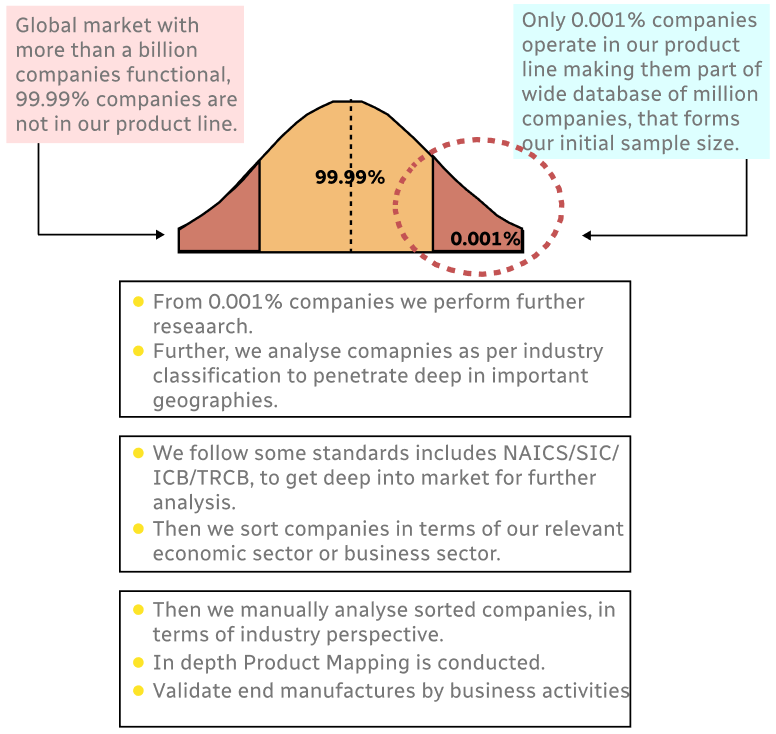
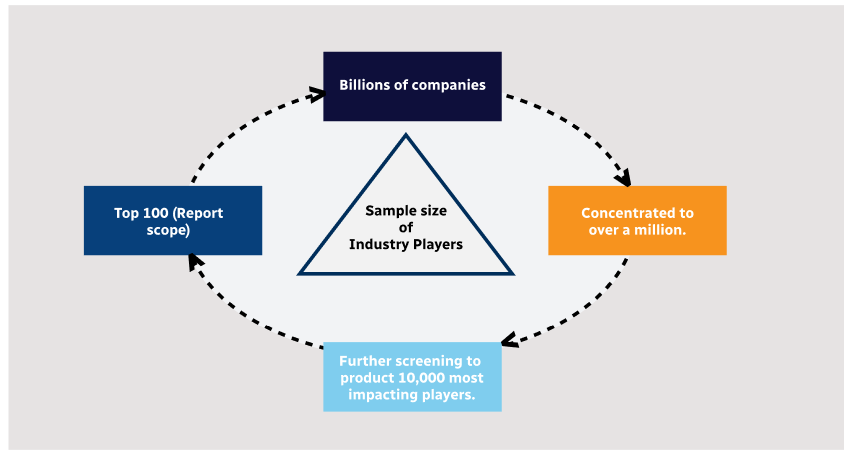
Step 1 - Identification of Relevant Samples Size from Population Database
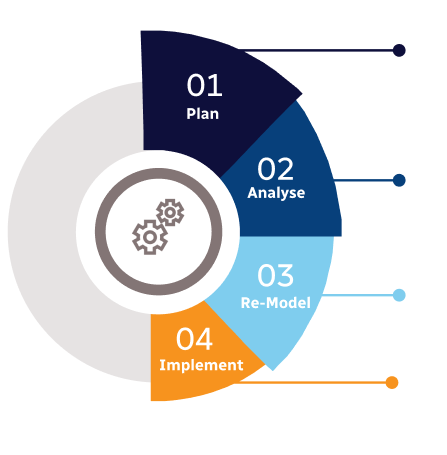
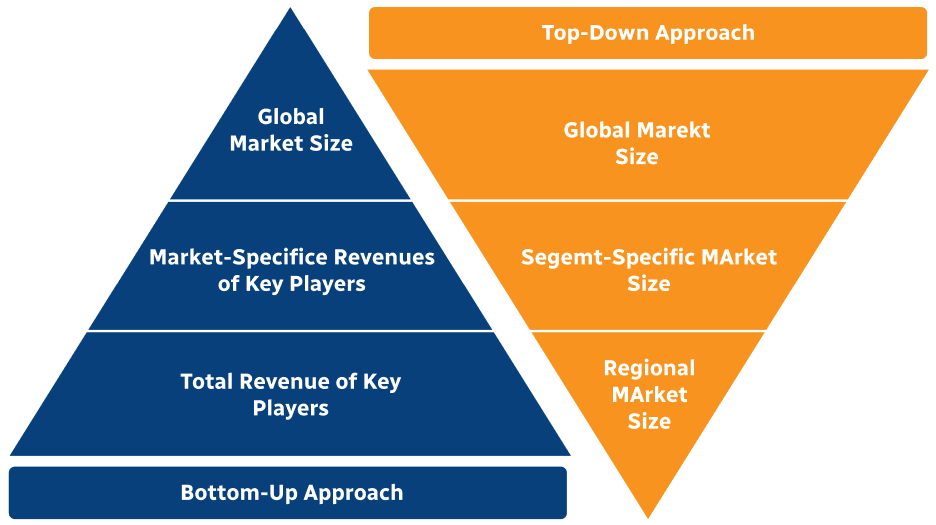
Step 2 - Approaches for Defining Global Market Size (Value, Volume* & Price*)
Note*: In applicable scenarios
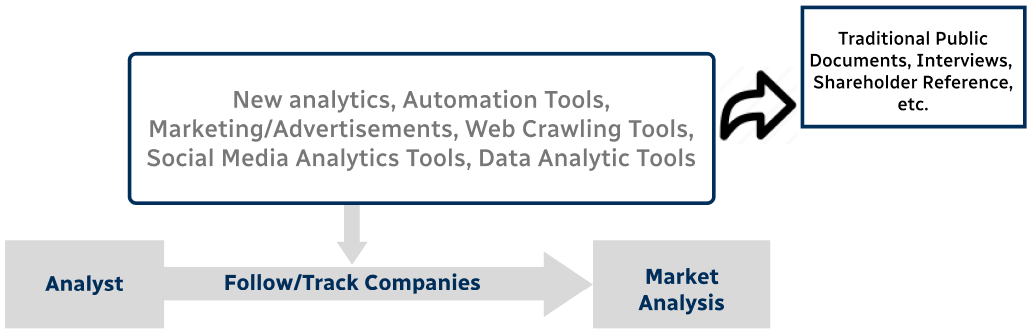
Step 3 - Data Sources
Primary Research
- Web Analytics
- Survey Reports
- Research Institute
- Latest Research Reports
- Opinion Leaders
Secondary Research
- Annual Reports
- White Paper
- Latest Press Release
- Industry Association
- Paid Database
- Investor Presentations
Step 4 - Data Triangulation
Involves using different sources of information in order to increase the validity of a study
These sources are likely to be stakeholders in a program - participants, other researchers, program staff, other community members, and so on.
Then we put all data in single framework & apply various statistical tools to find out the dynamic on the market.
During the analysis stage, feedback from the stakeholder groups would be compared to determine areas of agreement as well as areas of divergence