


Key Insights
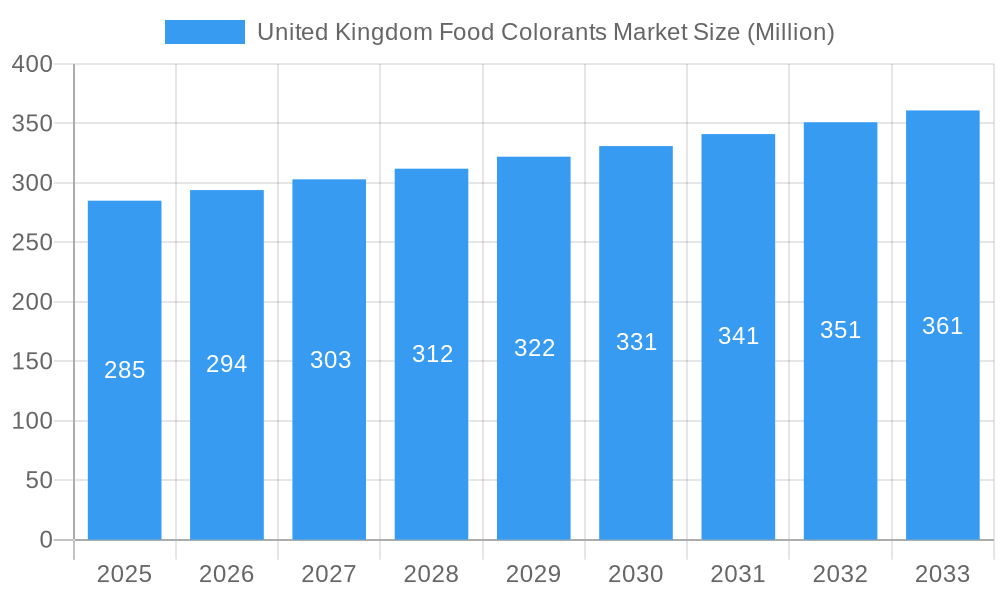
The United Kingdom food colorants market is projected to reach £285 billion by 2025, exhibiting a compound annual growth rate (CAGR) of 4%. This expansion is driven by increasing consumer demand for visually appealing food and beverage products. A significant trend shaping the market is the growing preference for natural ingredients and clean labels, prompting manufacturers to incorporate colorants derived from fruits, vegetables, and other natural sources. This shift is particularly pronounced in the beverage and dairy industries, where product appearance is critical for differentiation and consumer trust.
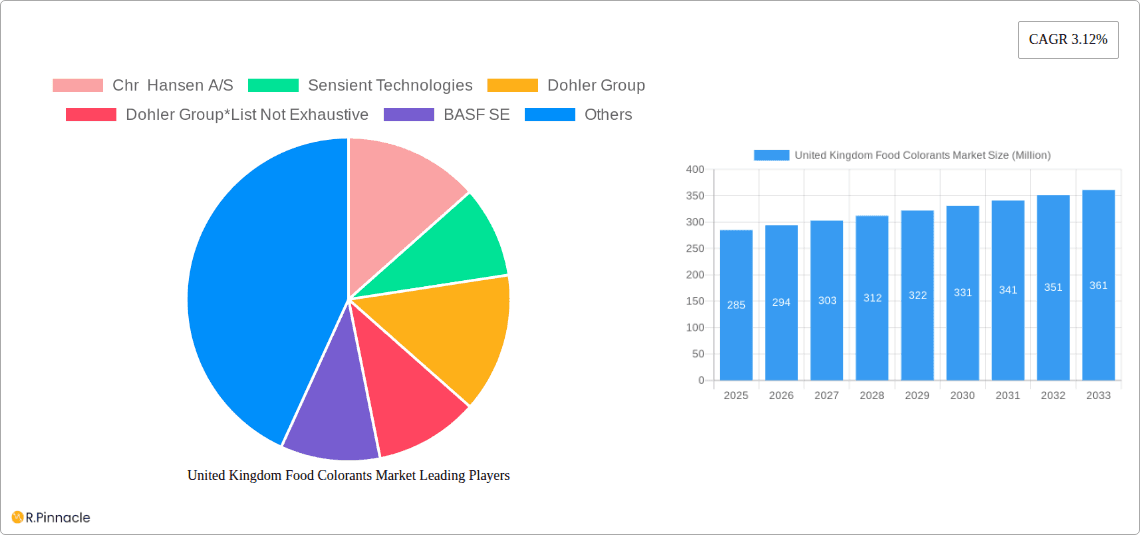
United Kingdom Food Colorants Market Market Size (In Billion)

Market dynamism is further supported by ongoing technological advancements in colorant solutions, offering improved stability, solubility, and a broader color palette. The bakery and confectionery sectors are key beneficiaries of these innovations. While the natural colorants segment is experiencing robust growth due to consumer preference, synthetic colorants remain relevant in applications prioritizing cost-effectiveness and intense coloration, such as in certain processed foods. However, regulatory oversight and evolving consumer attitudes towards synthetic ingredients may encourage a gradual transition to natural alternatives. Leading companies such as Chr Hansen A/S, Sensient Technologies, and Givaudan (Naturex) are leading R&D efforts to meet the demand for sustainable and health-conscious food coloring solutions.
United Kingdom Food Colorants Market Company Market Share
This comprehensive report offers a detailed analysis of the UK food colorants market, providing critical insights for industry stakeholders, manufacturers, suppliers, and investors. Covering the period from 2019 to 2033, with a base year of 2025, the report examines market structure, dynamics, key segments, product innovations, challenges, and future opportunities.
United Kingdom Food Colorants Market Market Structure & Innovation Trends
The United Kingdom food colorants market exhibits a moderately concentrated structure, with a significant presence of both global and niche players. Innovation is a primary driver, fueled by increasing consumer demand for natural food colorants and manufacturers' efforts to meet stringent regulatory requirements and evolving taste preferences. Key innovation trends include the development of stable, vibrant natural colorants derived from sources like fruits, vegetables, and algae, as well as advancements in encapsulation technologies to enhance the shelf-life and application of these natural alternatives. The regulatory landscape, governed by agencies like the Food Standards Agency (FSA), plays a crucial role in shaping product development and market access, with a continuous push towards cleaner labels and reduced synthetic additive usage. The threat of product substitutes is increasing, particularly from alternative visual appeal strategies like vibrant ingredients themselves. End-user demographics are shifting towards younger, health-conscious consumers who prioritize natural and transparent ingredients. Merger and acquisition (M&A) activities are anticipated to remain strategic, aimed at acquiring specialized natural colorant technologies, expanding production capacities, or gaining market share in specific application segments. Anticipated M&A deal values are expected to range from USD 20 Million to USD 150 Million for targeted acquisitions.
United Kingdom Food Colorants Market Market Dynamics & Trends
The United Kingdom food colorants market is poised for robust growth, driven by a confluence of evolving consumer preferences, technological advancements, and favorable economic factors. The projected Compound Annual Growth Rate (CAGR) for the forecast period (2025–2033) is estimated at 5.2%. A significant trend is the escalating demand for natural food colorants, spurred by growing consumer awareness regarding the potential health impacts of synthetic additives and a desire for "clean label" products. This shift is compelling manufacturers to invest heavily in research and development to create innovative, stable, and cost-effective natural color solutions. Technological disruptions are also playing a vital role, with advancements in extraction, purification, and stabilization techniques for natural pigments improving their performance and applicability across a wider range of food and beverage products. For instance, advancements in fermentation and biosynthesis are opening new avenues for producing specific color compounds efficiently.
Consumer preferences are undeniably shaping the market. The "free-from" movement and the quest for healthier, more transparent food options are leading to a preference for colorants derived from plant-based sources, such as carotenoids, anthocyanins, and curcuminoids. This is not only impacting product formulation but also influencing packaging and marketing strategies, with brands increasingly highlighting the natural origins of their food colorants. Competitive dynamics are intensifying as established players strive to expand their natural color portfolios and new entrants, particularly those specializing in novel natural color technologies, vie for market share. Strategic partnerships and acquisitions are becoming more common as companies seek to strengthen their competitive positions and broaden their product offerings.
The market penetration of natural food colorants is projected to reach 65% by 2033, indicating a substantial shift away from synthetic alternatives. This trend is further supported by a growing willingness among consumers to pay a premium for products perceived as healthier and more natural. Economic factors, such as rising disposable incomes and a strong focus on food quality and safety, also contribute to the market's upward trajectory. The increasing sophistication of food processing techniques also allows for the effective integration of natural colorants without compromising product integrity.
Dominant Regions & Segments in United Kingdom Food Colorants Market
The United Kingdom food colorants market demonstrates distinct regional dominance and segment leadership, driven by specific economic, demographic, and regulatory influences. Within the UK, the South East England region, encompassing London and its surrounding areas, typically exhibits the highest demand due to its dense population, higher disposable incomes, and a concentration of major food and beverage manufacturers. This region acts as a bellwether for national consumer trends.
Product Type Dominance:
Natural Color: This segment is experiencing the most significant growth and is projected to become the dominant product type. Key drivers include:
- Consumer Demand for Health & Wellness: Growing awareness of potential health risks associated with synthetic dyes and a strong preference for "clean label" products.
- Regulatory Pressure: Evolving regulations encouraging the use of natural alternatives and potentially restricting certain synthetic colorants.
- Technological Advancements: Improved stability, vibrancy, and cost-effectiveness of natural colorant extraction and production.
- Brand Differentiation: Companies leveraging natural colorants to enhance brand perception and appeal to health-conscious consumers.
Synthetic Color: While still holding a significant market share, the growth of synthetic colorants is expected to be more moderate compared to natural alternatives. Their dominance is maintained by:
- Cost-Effectiveness: Generally lower production costs compared to many natural colorants, making them attractive for mass-produced goods.
- Vibrancy and Stability: Established performance in terms of color intensity and stability across diverse applications.
- Existing Infrastructure: Long-standing integration into established food manufacturing processes.
Application Dominance:
Beverage: This application segment is a leading consumer of food colorants, both natural and synthetic. Dominance is driven by:
- High Volume Production: The sheer scale of the beverage industry, including soft drinks, juices, and alcoholic beverages, necessitates significant colorant usage.
- Visual Appeal: Color plays a critical role in the sensory appeal and consumer perception of beverages.
- Trend Towards Natural Beverages: Increasing demand for natural juices and healthier drink options fuels the use of natural colorants.
Dairy & Frozen Product: This segment also represents a substantial market for food colorants. Key drivers include:
- Product Aesthetics: Enhancing the visual appeal of yogurts, ice creams, and frozen desserts.
- Brand Consistency: Ensuring uniform color across product batches.
- Natural Colorant Integration: Opportunities for natural colors derived from fruits and vegetables to mimic natural shades.
Bakery: The bakery sector is another major consumer, with colorants used to enhance the appeal of bread, cakes, pastries, and confectionery.
- Visual Cues for Flavor: Colors are often associated with specific flavors in baked goods.
- Product Innovation: Development of visually striking bakery items for festive occasions and special promotions.
Meat, Poultry & Seafood: Colorants are used to maintain or enhance the natural color of processed meat, poultry, and seafood products, especially after processing.
- Consumer Expectation: Consumers often associate certain colors with freshness and quality in these products.
- Stabilizing Color: Counteracting color changes that can occur during processing and storage.
Confectionery: This segment is heavily reliant on vibrant and appealing colors.
- Eye-Catching Products: Essential for candies, chocolates, and other sweet treats to attract consumers, particularly children.
- Wide Color Spectrum: Demand for a broad range of colors to cater to diverse product offerings.
United Kingdom Food Colorants Market Product Innovations
Product innovation in the UK food colorants market centers on developing highly stable and vibrant natural alternatives to synthetic dyes. Manufacturers are focusing on advanced extraction and purification techniques to maximize pigment yield and purity from sources like berries, beets, and turmeric. Encapsulation technologies are gaining traction, protecting sensitive natural colorants from degradation caused by light, heat, and pH fluctuations, thus broadening their application scope in challenging food matrices. Competitive advantages are being secured through the development of customized color blends tailored to specific product requirements and the creation of colorants with added nutritional benefits, aligning with the clean label trend and enhancing consumer appeal.
Report Scope & Segmentation Analysis
This report segments the United Kingdom food colorants market by Product Type into Natural Color and Synthetic Color. The Natural Color segment is expected to witness a robust growth trajectory, driven by increasing consumer preference for clean label products and a growing aversion to artificial additives. Market expansion in this segment will be propelled by innovations in extraction and stabilization technologies. The Synthetic Color segment, while mature, will continue to hold a significant share due to its cost-effectiveness and established performance in various applications.
Further segmentation by Application includes Beverage, Dairy & Frozen Product, Bakery, Meat, Poultry & Seafood, Confectionery, and Others. The Beverage segment is anticipated to lead in terms of market share, owing to high consumption volumes and the critical role of visual appeal in this category. The Dairy & Frozen Product segment will also exhibit steady growth, driven by product innovation and consumer demand for visually appealing desserts and dairy items. The Bakery and Confectionery segments will remain substantial consumers, with a growing emphasis on natural colorants for premium products. The Meat, Poultry & Seafood, and Others segments will also contribute to market growth, reflecting the diverse applications of food colorants across the food industry.
Key Drivers of United Kingdom Food Colorants Market Growth
The growth of the United Kingdom food colorants market is underpinned by several key drivers. The paramount driver is the burgeoning consumer demand for natural and "clean label" food products, stemming from increasing health consciousness and a desire for transparency in ingredients. This has directly translated into a higher demand for natural food colorants derived from plant and mineral sources. Regulatory frameworks, while sometimes posing challenges, also act as drivers by encouraging the adoption of safer and more natural alternatives. Technological advancements in extraction, purification, and stabilization of natural colorants are crucial, making them more viable and cost-effective for a wider range of applications. Furthermore, the increasing product innovation by food and beverage manufacturers, seeking to differentiate their offerings and appeal to evolving consumer preferences, directly fuels the market for diverse and vibrant colorant solutions.
Challenges in the United Kingdom Food Colorants Market Sector
Despite the positive growth trajectory, the United Kingdom food colorants market faces several challenges. Volatility in the cost and availability of raw materials for natural colorants, often influenced by agricultural yields and climate conditions, can impact pricing and supply chain stability. Stringent regulatory hurdles and evolving compliance requirements for both natural and synthetic colorants necessitate continuous investment in research, development, and quality control. The inherent stability limitations of some natural colorants compared to their synthetic counterparts can pose application challenges, requiring advanced formulation techniques. Moreover, consumer perception and education surrounding the differences and safety profiles of natural versus synthetic colorants can sometimes be a barrier, requiring concerted efforts from the industry. Finally, intense price competition among manufacturers, particularly for widely used colorants, can put pressure on profit margins.
Emerging Opportunities in United Kingdom Food Colorants Market
Emerging opportunities within the United Kingdom food colorants market are significant and varied. The continuing surge in demand for plant-based and vegan food products presents a substantial opportunity for natural colorants derived from vegan sources. Advancements in biosynthesis and fermentation technologies offer the potential for sustainable and scalable production of highly specific natural color compounds, reducing reliance on agricultural inputs. The growing trend of functional foods and beverages opens avenues for colorants that also offer health benefits or are incorporated into products with added nutritional value. Furthermore, the development of novel delivery systems and stabilization technologies for natural colorants will expand their applicability into more challenging food matrices and processing conditions, unlocking new market segments.
Leading Players in the United Kingdom Food Colorants Market Market
- Chr Hansen A/S
- Sensient Technologies
- Dohler Group
- BASF SE
- Koninklijke DSM N V
- D D Williamson & Co
- Givaudan (Naturex)
Key Developments in United Kingdom Food Colorants Market Industry
- 2023: Chr Hansen A/S launched a new range of natural color solutions derived from fruits and vegetables, targeting the bakery and confectionery segments with enhanced stability.
- 2023: Sensient Technologies announced expansion of its natural colorant production capacity to meet growing demand for clean label ingredients.
- 2022: Givaudan (Naturex) acquired a specialist in microalgae-derived natural colorants, further strengthening its portfolio of sustainable color solutions.
- 2022: The Food Standards Agency (FSA) released updated guidance on the labeling and use of food colorants, emphasizing transparency for consumers.
- 2021: Koninklijke DSM N V invested in research and development for innovative anthocyanin-based colorants with improved heat stability for beverage applications.
Future Outlook for United Kingdom Food Colorants Market Market
The future outlook for the United Kingdom food colorants market is exceptionally positive, characterized by sustained growth driven by deeply entrenched consumer trends and ongoing technological innovation. The demand for natural colorants is projected to continue its upward trajectory, propelled by health-conscious consumers and increasing regulatory scrutiny of synthetic alternatives. This will stimulate further investment in R&D, focusing on creating colorants that offer superior performance, wider application ranges, and even functional benefits. The market is expected to see strategic collaborations and mergers as companies aim to secure specialized technologies and expand their offerings in the natural color space. Overall, the market is well-positioned for robust expansion, with a strong emphasis on sustainability, clean labels, and innovative solutions that cater to the evolving demands of the modern food industry.
United Kingdom Food Colorants Market Segmentation
-
1. Product Type
- 1.1. Natural Color
- 1.2. Synthetic Color
-
2. Application
- 2.1. Beverage
- 2.2. Dairy & Frozen Product
- 2.3. Bakery
- 2.4. Meat, Poultry & Seafood
- 2.5. Confectionery
- 2.6. Others
United Kingdom Food Colorants Market Segmentation By Geography
- 1. United Kingdom
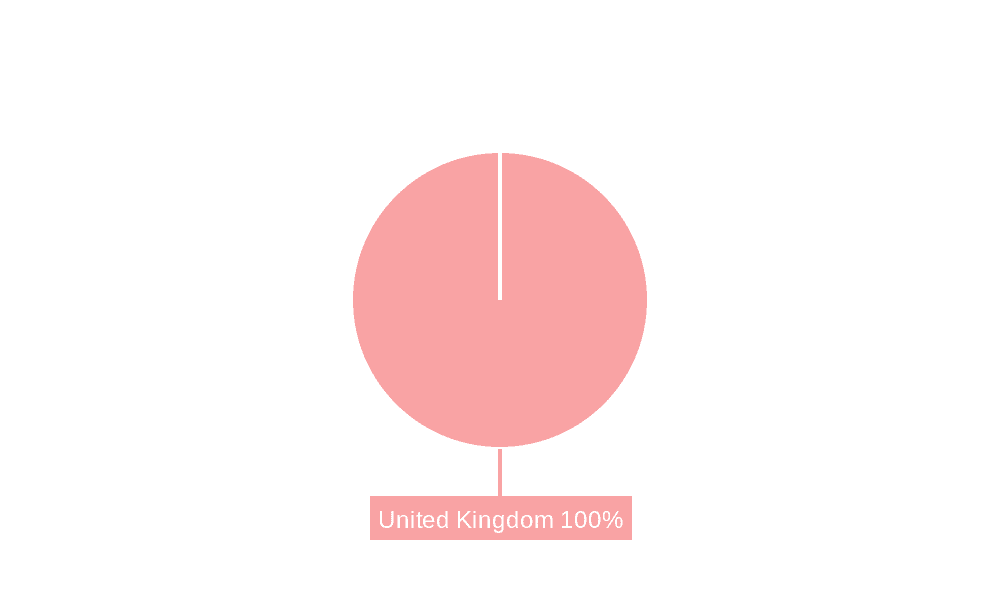
United Kingdom Food Colorants Market Regional Market Share
Geographic Coverage of United Kingdom Food Colorants Market
United Kingdom Food Colorants Market REPORT HIGHLIGHTS
| Aspects | Details |
|---|---|
| Study Period | 2020-2034 |
| Base Year | 2025 |
| Estimated Year | 2026 |
| Forecast Period | 2026-2034 |
| Historical Period | 2020-2025 |
| Growth Rate | CAGR of 4% from 2020-2034 |
| Segmentation |
|
Table of Contents
- 1. Introduction
- 1.1. Research Scope
- 1.2. Market Segmentation
- 1.3. Research Methodology
- 1.4. Definitions and Assumptions
- 2. Executive Summary
- 2.1. Introduction
- 3. Market Dynamics
- 3.1. Introduction
- 3.2. Market Drivers
- 3.2.1. The Rising Awareness of the Health Benefits Associated with Collagen Consumption; Rising Sport and Fitness Trends Drives the Market Growth
- 3.3. Market Restrains
- 3.3.1. Concerns over the Source and Animal Welfare in Collagen Extraction Limit the Market Growth
- 3.4. Market Trends
- 3.4.1. Growing Demand for Processed Food
- 4. Market Factor Analysis
- 4.1. Porters Five Forces
- 4.2. Supply/Value Chain
- 4.3. PESTEL analysis
- 4.4. Market Entropy
- 4.5. Patent/Trademark Analysis
- 5. United Kingdom Food Colorants Market Analysis, Insights and Forecast, 2020-2032
- 5.1. Market Analysis, Insights and Forecast - by Product Type
- 5.1.1. Natural Color
- 5.1.2. Synthetic Color
- 5.2. Market Analysis, Insights and Forecast - by Application
- 5.2.1. Beverage
- 5.2.2. Dairy & Frozen Product
- 5.2.3. Bakery
- 5.2.4. Meat, Poultry & Seafood
- 5.2.5. Confectionery
- 5.2.6. Others
- 5.3. Market Analysis, Insights and Forecast - by Region
- 5.3.1. United Kingdom
- 5.1. Market Analysis, Insights and Forecast - by Product Type
- 6. Competitive Analysis
- 6.1. Market Share Analysis 2025
- 6.2. Company Profiles
- 6.2.1 Chr Hansen A/S
- 6.2.1.1. Overview
- 6.2.1.2. Products
- 6.2.1.3. SWOT Analysis
- 6.2.1.4. Recent Developments
- 6.2.1.5. Financials (Based on Availability)
- 6.2.2 Sensient Technologies
- 6.2.2.1. Overview
- 6.2.2.2. Products
- 6.2.2.3. SWOT Analysis
- 6.2.2.4. Recent Developments
- 6.2.2.5. Financials (Based on Availability)
- 6.2.3 Dohler Group
- 6.2.3.1. Overview
- 6.2.3.2. Products
- 6.2.3.3. SWOT Analysis
- 6.2.3.4. Recent Developments
- 6.2.3.5. Financials (Based on Availability)
- 6.2.4 Dohler Group*List Not Exhaustive
- 6.2.4.1. Overview
- 6.2.4.2. Products
- 6.2.4.3. SWOT Analysis
- 6.2.4.4. Recent Developments
- 6.2.4.5. Financials (Based on Availability)
- 6.2.5 BASF SE
- 6.2.5.1. Overview
- 6.2.5.2. Products
- 6.2.5.3. SWOT Analysis
- 6.2.5.4. Recent Developments
- 6.2.5.5. Financials (Based on Availability)
- 6.2.6 Koninklijke DSM N V
- 6.2.6.1. Overview
- 6.2.6.2. Products
- 6.2.6.3. SWOT Analysis
- 6.2.6.4. Recent Developments
- 6.2.6.5. Financials (Based on Availability)
- 6.2.7 D D Williamson & Co
- 6.2.7.1. Overview
- 6.2.7.2. Products
- 6.2.7.3. SWOT Analysis
- 6.2.7.4. Recent Developments
- 6.2.7.5. Financials (Based on Availability)
- 6.2.8 Givaudan (Naturex)
- 6.2.8.1. Overview
- 6.2.8.2. Products
- 6.2.8.3. SWOT Analysis
- 6.2.8.4. Recent Developments
- 6.2.8.5. Financials (Based on Availability)
- 6.2.1 Chr Hansen A/S
List of Figures
- Figure 1: United Kingdom Food Colorants Market Revenue Breakdown (billion, %) by Product 2025 & 2033
- Figure 2: United Kingdom Food Colorants Market Share (%) by Company 2025
List of Tables
- Table 1: United Kingdom Food Colorants Market Revenue billion Forecast, by Product Type 2020 & 2033
- Table 2: United Kingdom Food Colorants Market Revenue billion Forecast, by Application 2020 & 2033
- Table 3: United Kingdom Food Colorants Market Revenue billion Forecast, by Region 2020 & 2033
- Table 4: United Kingdom Food Colorants Market Revenue billion Forecast, by Product Type 2020 & 2033
- Table 5: United Kingdom Food Colorants Market Revenue billion Forecast, by Application 2020 & 2033
- Table 6: United Kingdom Food Colorants Market Revenue billion Forecast, by Country 2020 & 2033
Frequently Asked Questions
1. What is the projected Compound Annual Growth Rate (CAGR) of the United Kingdom Food Colorants Market?
The projected CAGR is approximately 4%.
2. Which companies are prominent players in the United Kingdom Food Colorants Market?
Key companies in the market include Chr Hansen A/S, Sensient Technologies, Dohler Group, Dohler Group*List Not Exhaustive, BASF SE, Koninklijke DSM N V, D D Williamson & Co, Givaudan (Naturex).
3. What are the main segments of the United Kingdom Food Colorants Market?
The market segments include Product Type, Application.
4. Can you provide details about the market size?
The market size is estimated to be USD 1.9 billion as of 2022.
5. What are some drivers contributing to market growth?
The Rising Awareness of the Health Benefits Associated with Collagen Consumption; Rising Sport and Fitness Trends Drives the Market Growth.
6. What are the notable trends driving market growth?
Growing Demand for Processed Food.
7. Are there any restraints impacting market growth?
Concerns over the Source and Animal Welfare in Collagen Extraction Limit the Market Growth.
8. Can you provide examples of recent developments in the market?
N/A
9. What pricing options are available for accessing the report?
Pricing options include single-user, multi-user, and enterprise licenses priced at USD 3800, USD 4500, and USD 5800 respectively.
10. Is the market size provided in terms of value or volume?
The market size is provided in terms of value, measured in billion.
11. Are there any specific market keywords associated with the report?
Yes, the market keyword associated with the report is "United Kingdom Food Colorants Market," which aids in identifying and referencing the specific market segment covered.
12. How do I determine which pricing option suits my needs best?
The pricing options vary based on user requirements and access needs. Individual users may opt for single-user licenses, while businesses requiring broader access may choose multi-user or enterprise licenses for cost-effective access to the report.
13. Are there any additional resources or data provided in the United Kingdom Food Colorants Market report?
While the report offers comprehensive insights, it's advisable to review the specific contents or supplementary materials provided to ascertain if additional resources or data are available.
14. How can I stay updated on further developments or reports in the United Kingdom Food Colorants Market?
To stay informed about further developments, trends, and reports in the United Kingdom Food Colorants Market, consider subscribing to industry newsletters, following relevant companies and organizations, or regularly checking reputable industry news sources and publications.
Methodology
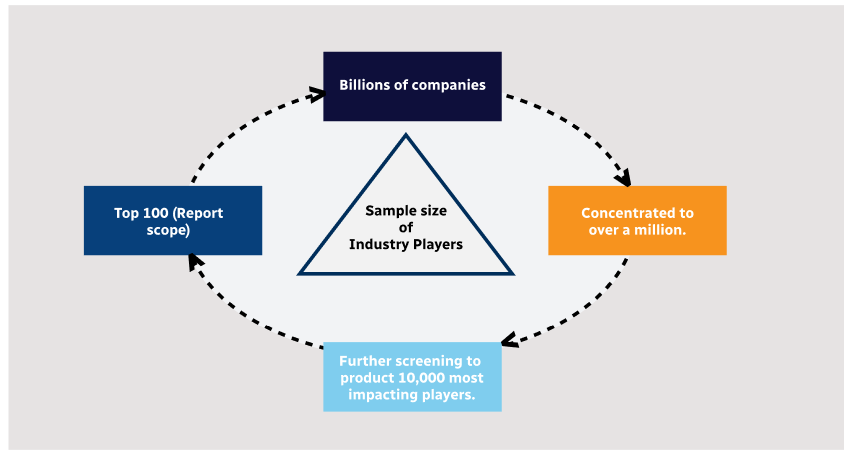
Step 1 - Identification of Relevant Samples Size from Population Database

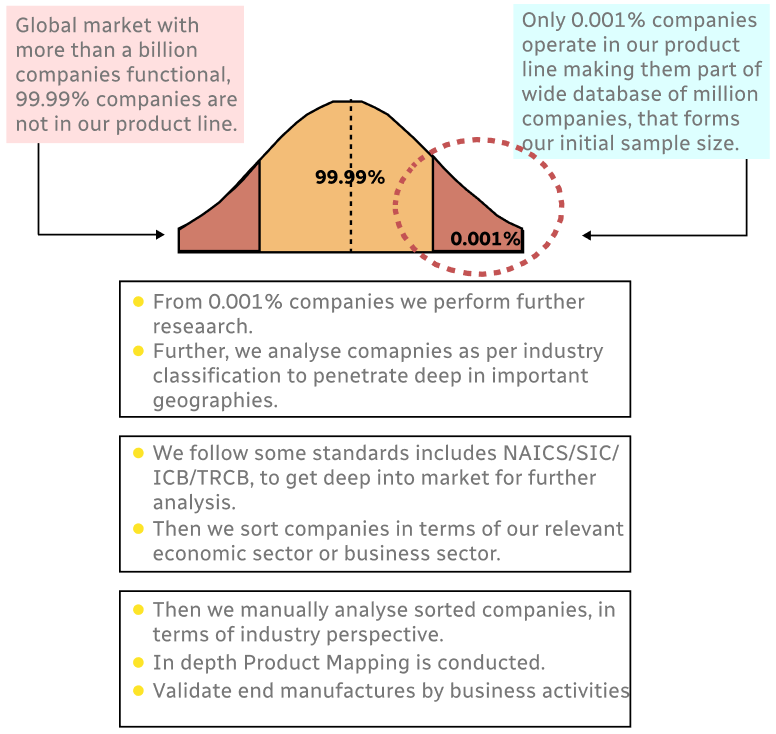
Step 2 - Approaches for Defining Global Market Size (Value, Volume* & Price*)
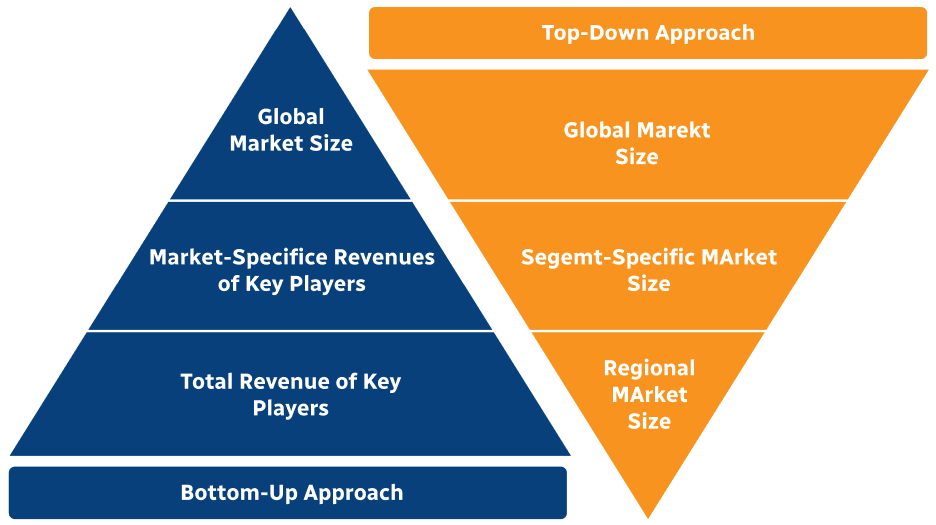
Note*: In applicable scenarios
Step 3 - Data Sources
Primary Research
- Web Analytics
- Survey Reports
- Research Institute
- Latest Research Reports
- Opinion Leaders
Secondary Research
- Annual Reports
- White Paper
- Latest Press Release
- Industry Association
- Paid Database
- Investor Presentations
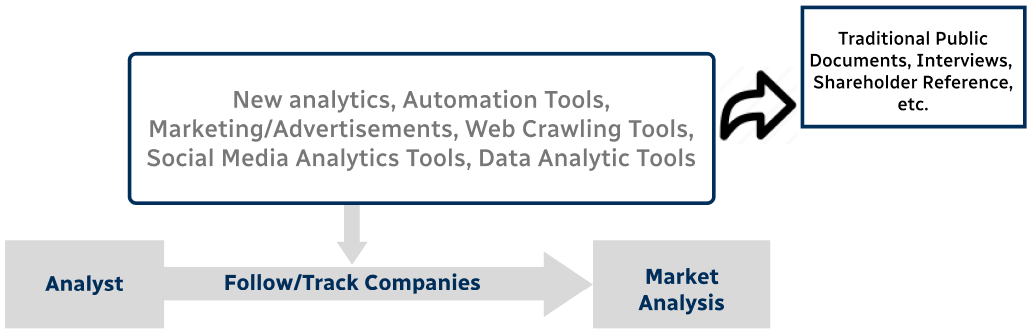
Step 4 - Data Triangulation
Involves using different sources of information in order to increase the validity of a study
These sources are likely to be stakeholders in a program - participants, other researchers, program staff, other community members, and so on.
Then we put all data in single framework & apply various statistical tools to find out the dynamic on the market.
During the analysis stage, feedback from the stakeholder groups would be compared to determine areas of agreement as well as areas of divergence