


Key Insights
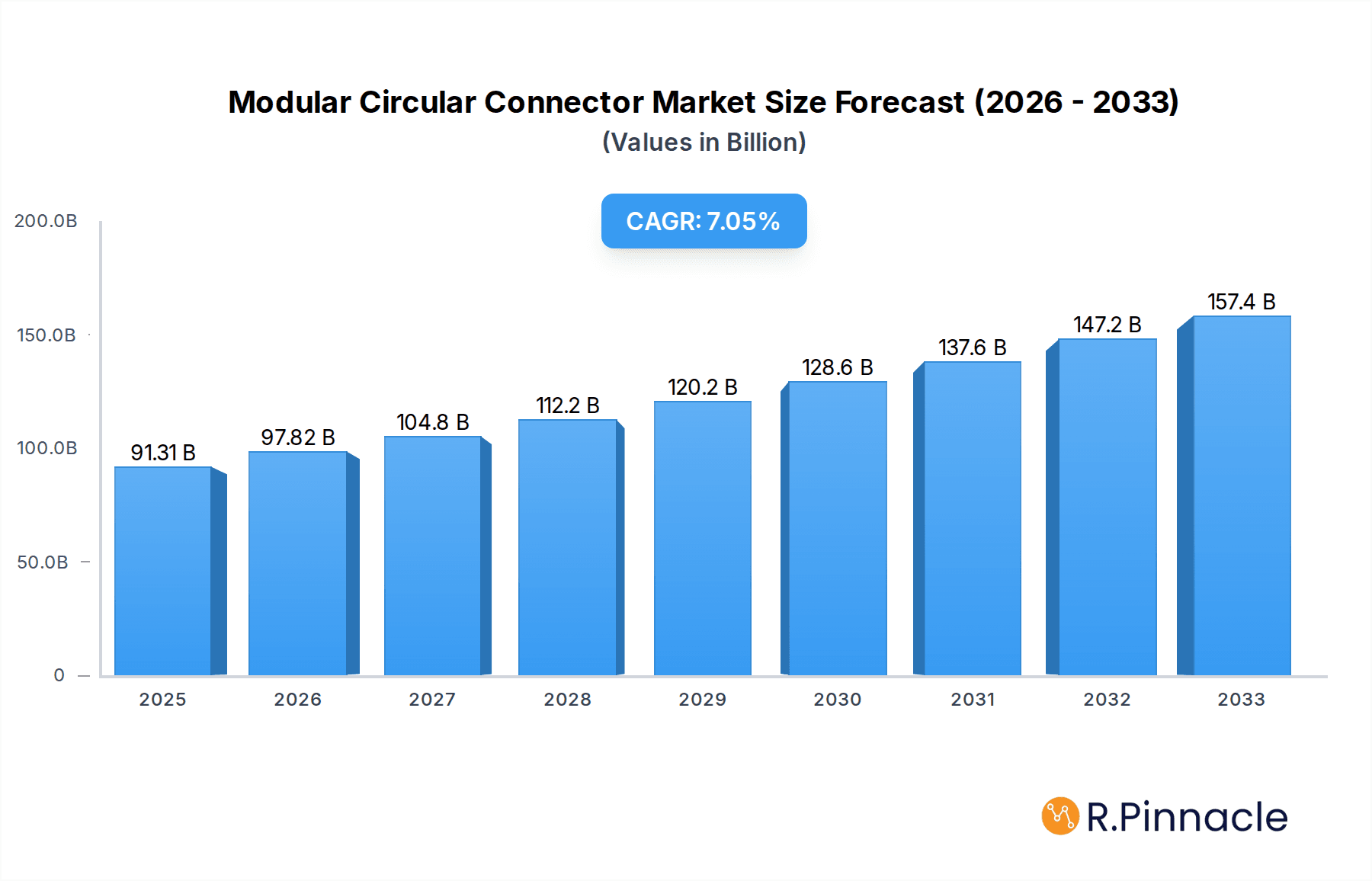
The global Modular Circular Connector market is poised for significant expansion, projected to reach an estimated USD 91.31 billion in 2025. This robust growth trajectory is fueled by an impressive Compound Annual Growth Rate (CAGR) of 7.1% over the forecast period of 2025-2033. The increasing demand across critical sectors such as military, industrial, and medical applications is a primary catalyst. In the military sector, the need for robust, reliable, and high-performance connectors for communication, sensor integration, and power distribution in defense systems, including advanced weaponry and communication networks, is a significant driver. The industrial sector is witnessing accelerated adoption driven by automation, robotics, and the Industrial Internet of Things (IIoT), which necessitate durable and versatile connectors for transmitting both power and data in harsh environments. Furthermore, the burgeoning medical device industry, with its stringent requirements for safety, sterilization, and miniaturization, is also contributing substantially to market growth.
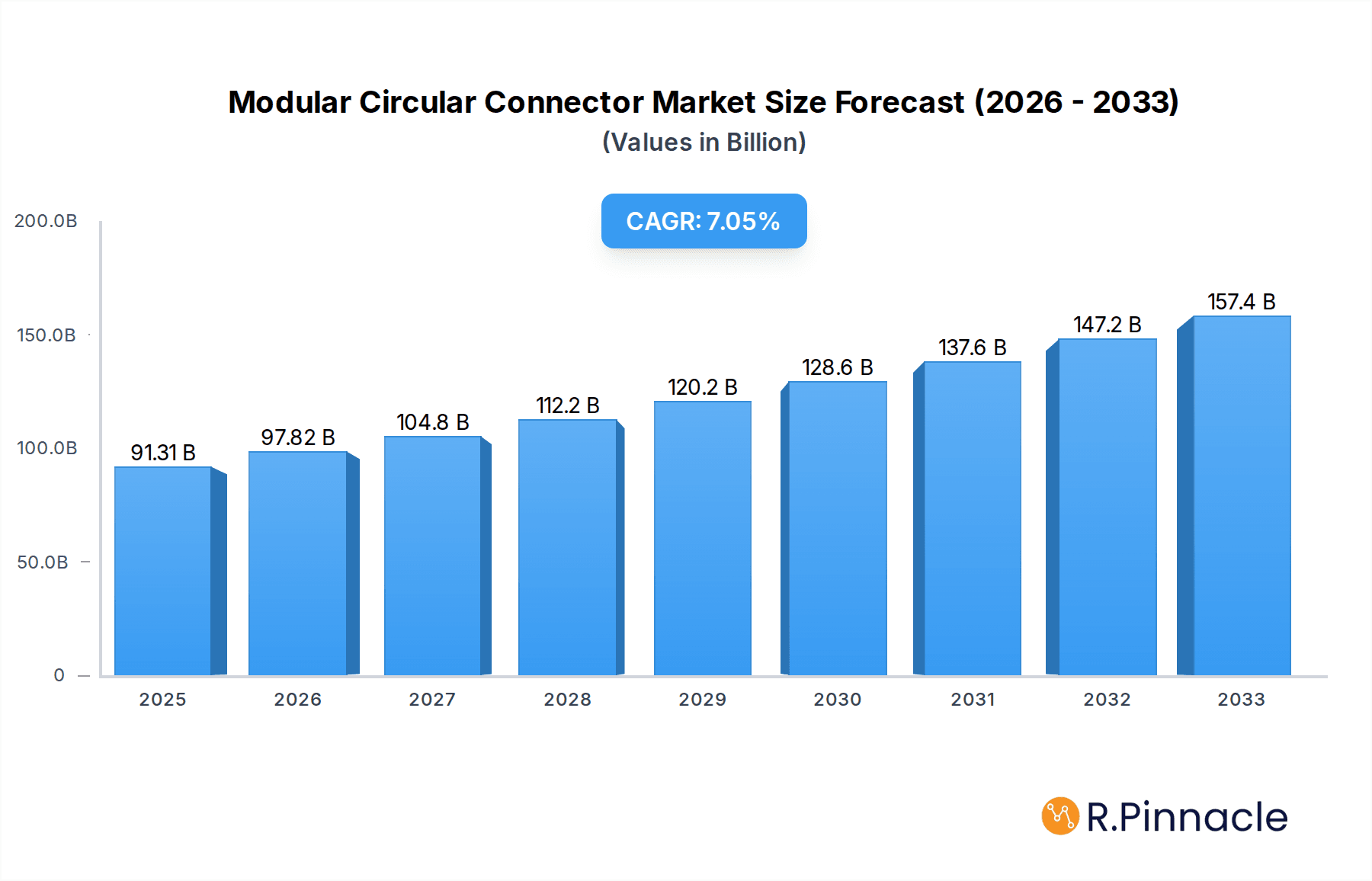
Modular Circular Connector Market Size (In Billion)

The market is segmented into distinct types, including Signal Connectors, Data Connectors, and Power Connectors, each catering to specialized needs within various applications. Signal connectors are crucial for transmitting sensitive electronic signals in complex systems, while data connectors are vital for high-speed data transfer in modern electronic devices and networks. Power connectors, designed to handle substantial electrical loads, are indispensable across all key application segments. Geographically, North America and Europe are expected to remain dominant markets due to the presence of well-established defense and industrial sectors and significant investments in technological advancements. However, the Asia Pacific region is anticipated to exhibit the fastest growth, driven by rapid industrialization, increasing defense expenditures, and a burgeoning electronics manufacturing base in countries like China and India. Key industry players such as TE Connectivity, Amphenol, and ITT are continuously innovating, offering a wide array of modular circular connectors designed to meet the evolving demands for miniaturization, enhanced connectivity, and superior environmental resistance.
Modular Circular Connector Company Market Share
This in-depth report provides a comprehensive analysis of the global modular circular connector market, covering historical trends, current dynamics, and future projections. Leveraging high-ranking SEO keywords, this report is designed to engage industry professionals and decision-makers seeking actionable insights into this critical component sector. With a study period from 2019 to 2033, a base year of 2025, and a forecast period spanning 2025–2033, this report offers a detailed roadmap for understanding market evolution, key players, and emerging opportunities.
Modular Circular Connector Market Structure & Innovation Trends
The modular circular connector market exhibits a moderately concentrated structure, with a few dominant players holding significant market share, estimated to be in the range of 60-70%. Key innovators like TE Connectivity, Amphenol, and ITT are consistently driving advancements through dedicated R&D, contributing to an estimated 20-25% annual innovation rate. Regulatory frameworks, particularly concerning safety and interoperability in military and medical applications, exert a significant influence, with compliance driving new product designs and material choices. Product substitutes, such as non-circular connectors or alternative termination methods, exist but are largely confined to niche applications where the unique advantages of modular circular connectors – such as high density, environmental sealing, and flexibility – are paramount. End-user demographics reveal a strong demand from industrial automation, aerospace, defense, and burgeoning medical device sectors. Mergers and acquisitions (M&A) activity has been steady, with estimated deal values ranging from $100 million to $500 million annually, aimed at consolidating market share and acquiring specialized technologies.
Modular Circular Connector Market Dynamics & Trends
The modular circular connector market is experiencing robust growth, propelled by an increasing demand for miniaturization, higher data transfer rates, and enhanced reliability across a spectrum of industries. The Compound Annual Growth Rate (CAGR) for the forecast period is projected to be between 6.5% and 8.0%, reaching an estimated market size of $15 billion by 2033. Technological disruptions, such as the integration of advanced materials for improved durability and conductivity, and the development of connectors supporting higher power and data densities, are reshaping the competitive landscape. Consumer preferences are increasingly leaning towards compact, lightweight, and environmentally sealed solutions that can withstand harsh operating conditions, particularly in the industrial and military sectors. The market penetration of advanced modular circular connectors in emerging applications, such as electric vehicles and renewable energy infrastructure, is on an upward trajectory. Competitive dynamics are characterized by intense innovation cycles, strategic partnerships, and a focus on custom solutions to meet specific end-user requirements. Companies are investing heavily in R&D to develop connectors with enhanced EMI shielding, higher IP ratings, and simplified assembly processes, further fueling market expansion. The shift towards Industry 4.0 and the proliferation of connected devices are also significant drivers, necessitating reliable and versatile connectivity solutions.
Dominant Regions & Segments in Modular Circular Connector
North America currently holds a dominant position in the modular circular connector market, driven by a strong presence of advanced manufacturing, a significant defense industry, and a thriving medical technology sector. The United States, in particular, accounts for an estimated 35-40% of the global market share. Key drivers for this dominance include substantial government spending on defense and aerospace projects, stringent quality and performance standards in medical device manufacturing, and the rapid adoption of automation in industrial settings.
Application Segment Dominance:
- Industrial: This segment is a primary growth engine, fueled by automation, robotics, and the increasing demand for reliable connectivity in harsh environments. Economic policies promoting industrial modernization and infrastructure development are key facilitators.
- Military: High-reliability requirements and continuous upgrades in defense systems ensure sustained demand. Government procurement policies and technological advancements in military hardware are critical.
- Medical: Miniaturization, biocompatibility, and stringent regulatory compliance drive demand for precision connectors in diagnostic equipment, surgical tools, and patient monitoring systems. Healthcare infrastructure investment is a significant factor.
Type Segment Dominance:
- Signal Connectors: The increasing complexity of electronic devices and the need for high-speed data transmission make signal connectors a cornerstone of the market. The proliferation of sensors and communication modules further bolsters this segment.
- Power Connectors: With the rise of electric mobility, renewable energy, and high-power industrial machinery, power connectors are experiencing substantial growth. The ability to handle higher voltage and current ratings is crucial.
The robust economic policies in North America, coupled with a forward-thinking approach to technological adoption, have cemented its leadership. However, the Asia-Pacific region is exhibiting the fastest growth rate, driven by expanding manufacturing bases, increasing industrialization, and a growing defense sector in countries like China and India.
Modular Circular Connector Product Innovations
Recent product developments in modular circular connectors focus on miniaturization, higher bandwidth capabilities, and improved environmental resistance. Innovations include push-pull locking mechanisms for quick and secure mating, multi-contact configurations for increased data and power density, and the integration of fiber optic elements for high-speed data transmission. Companies like TE Connectivity and Amphenol are leading in the development of ruggedized connectors with IP67/IP68 ratings, suitable for extreme conditions in military and industrial applications. Competitive advantages are being gained through enhanced signal integrity, reduced size and weight, and simplified assembly, catering to the evolving needs of sectors like medical devices and aerospace.
Report Scope & Segmentation Analysis
This report segments the modular circular connector market across key applications and connector types to provide granular insights.
Application Segments:
- Military: Characterized by extreme reliability demands, environmental ruggedness, and high-value contracts, this segment is projected to grow at a CAGR of approximately 7.0% during the forecast period.
- Industrial: Driven by automation, robotics, and smart manufacturing, this segment is expected to witness robust growth, with an estimated CAGR of 7.5%.
- Medical: Fueled by advancements in medical technology and the demand for precision, this segment is projected for steady growth, with a CAGR around 6.8%.
- Others: Encompassing various niche applications, this segment's growth will be driven by emerging technologies and specialized industrial needs.
Type Segments:
- Signal Connectors: Dominating the market due to the proliferation of electronic devices and data transfer needs, expected to grow at a CAGR of 7.2%.
- Data Connectors: Driven by the demand for high-speed data transmission, this segment will see significant expansion, with a projected CAGR of 7.8%.
- Power Connectors: Experiencing strong growth due to electrification trends, with a CAGR estimated at 7.0%.
- Others: Catering to specialized requirements, this segment will grow in tandem with the overall market.
Key Drivers of Modular Circular Connector Growth
The growth of the modular circular connector market is propelled by several key factors. Technological advancements are paramount, with a constant push for higher data speeds, increased power handling capabilities, and miniaturization. The growing adoption of automation and IoT across industrial sectors necessitates reliable and robust connectivity solutions. Stringent regulatory requirements, particularly in the military and medical industries, demanding high levels of safety, reliability, and performance, act as significant drivers. Furthermore, the increasing investment in defense and aerospace programs globally, coupled with the expansion of the medical device market, further fuels demand.
Challenges in the Modular Circular Connector Sector
Despite robust growth, the modular circular connector sector faces several challenges. Intense price competition among manufacturers, especially for standardized components, can impact profit margins. Supply chain disruptions, as seen in recent global events, can lead to component shortages and increased lead times. Navigating complex and evolving regulatory landscapes across different regions requires significant investment in compliance and certification. The development of advanced manufacturing techniques to meet the demand for higher precision and miniaturization also presents a technological hurdle.
Emerging Opportunities in Modular Circular Connector
Emerging opportunities lie in the rapid expansion of electric vehicles (EVs), demanding high-power, reliable connectors for charging and in-vehicle systems. The growth of renewable energy infrastructure, such as solar and wind farms, also presents significant opportunities for robust and environmentally sealed connectors. The increasing adoption of 5G technology and the associated infrastructure build-out will drive demand for high-bandwidth, low-latency connectors. Furthermore, the continuous innovation in medical devices, including wearable technology and advanced diagnostic equipment, offers a fertile ground for specialized modular circular connectors.
Leading Players in the Modular Circular Connector Market
- TE Connectivity
- Amphenol
- ITT
- Molex
- JAE Electronics
- Omron
- Lemo
- Hirose
- Jonhon
- Souriau
- Binder Group
- Belden
- Phoenix Contact
- CUI
- Deren
Key Developments in Modular Circular Connector Industry
- 2023 Q4: TE Connectivity launched a new series of miniaturized, high-density modular circular connectors for medical devices, enhancing portability and performance.
- 2024 Q1: Amphenol acquired a specialized connector manufacturer, strengthening its portfolio in ruggedized military-grade connectors.
- 2024 Q2: ITT introduced enhanced environmental sealing capabilities for its industrial circular connectors, improving reliability in harsh operating conditions.
- 2024 Q3: Molex expanded its data connector offerings with higher transmission speeds to support next-generation industrial automation.
- 2024 Q4: JAE Electronics announced a strategic partnership to develop connectors for the burgeoning electric vehicle market.
- 2025 Q1: Omron unveiled a new range of power connectors designed for high-voltage applications in renewable energy systems.
- 2025 Q2: Lemo showcased its latest advancements in push-pull technology for ultra-reliable connections in scientific instrumentation.
- 2025 Q3: Hirose introduced innovative connector solutions for high-frequency applications in aerospace and defense.
- 2025 Q4: Jonhon demonstrated its capabilities in providing customized connector solutions for specialized military platforms.
- 2026 Q1: Souriau expanded its global manufacturing footprint to meet increasing demand in the Asia-Pacific region.
- 2026 Q2: Binder Group launched a new series of hygienic connectors for the food and beverage processing industry.
- 2026 Q3: Belden invested in advanced testing facilities to ensure the highest quality standards for its industrial connector products.
- 2026 Q4: Phoenix Contact introduced smart connectivity features into its modular connector systems for enhanced monitoring and diagnostics.
- 2027 Q1: CUI expanded its product line with compact connectors for portable medical equipment.
- 2027 Q2: Deren showcased its capabilities in high-volume manufacturing of cost-effective circular connectors for industrial applications.
Future Outlook for Modular Circular Connector Market
The future outlook for the modular circular connector market remains highly positive, driven by sustained innovation and expanding applications. The trend towards electrification across various industries, including automotive and renewable energy, will continue to be a major growth accelerator. Advancements in Industry 5.0 and the increasing sophistication of smart factories will demand more intelligent and interconnected modular solutions. Furthermore, the ongoing evolution of defense technology and the growing need for reliable medical devices will ensure a consistent demand for high-performance connectors. Strategic investments in R&D and geographical expansion by leading players will be crucial for capitalizing on these future market potentials.
Modular Circular Connector Segmentation
-
1. Application
- 1.1. Military
- 1.2. Industrial
- 1.3. Medical
- 1.4. Others
-
2. Types
- 2.1. Signal Connectors
- 2.2. Data Connectors
- 2.3. Power Connectors
- 2.4. Others
Modular Circular Connector Segmentation By Geography
-
1. North America
- 1.1. United States
- 1.2. Canada
- 1.3. Mexico
-
2. South America
- 2.1. Brazil
- 2.2. Argentina
- 2.3. Rest of South America
-
3. Europe
- 3.1. United Kingdom
- 3.2. Germany
- 3.3. France
- 3.4. Italy
- 3.5. Spain
- 3.6. Russia
- 3.7. Benelux
- 3.8. Nordics
- 3.9. Rest of Europe
-
4. Middle East & Africa
- 4.1. Turkey
- 4.2. Israel
- 4.3. GCC
- 4.4. North Africa
- 4.5. South Africa
- 4.6. Rest of Middle East & Africa
-
5. Asia Pacific
- 5.1. China
- 5.2. India
- 5.3. Japan
- 5.4. South Korea
- 5.5. ASEAN
- 5.6. Oceania
- 5.7. Rest of Asia Pacific
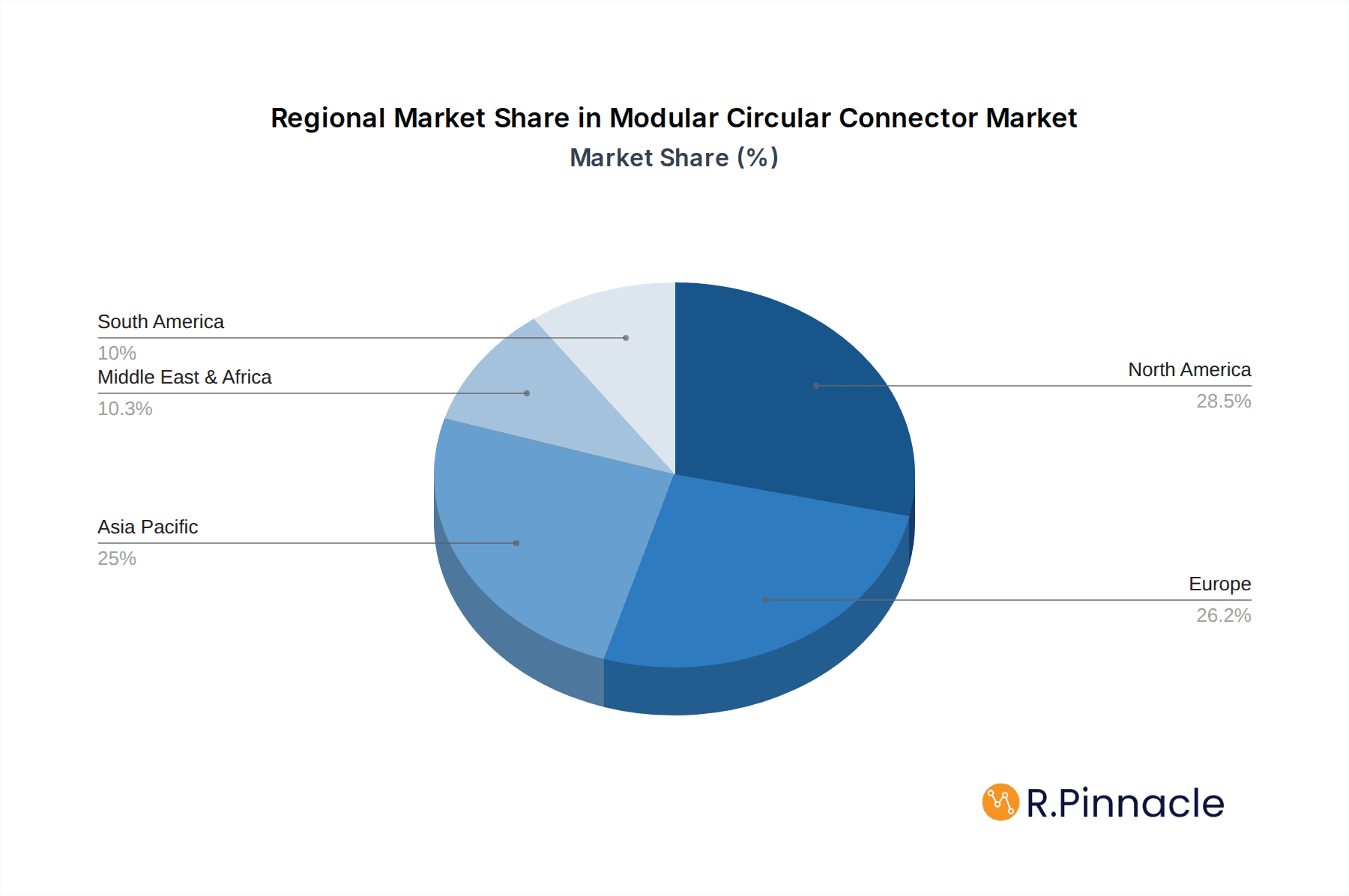
Modular Circular Connector Regional Market Share
Geographic Coverage of Modular Circular Connector
Modular Circular Connector REPORT HIGHLIGHTS
| Aspects | Details |
|---|---|
| Study Period | 2020-2034 |
| Base Year | 2025 |
| Estimated Year | 2026 |
| Forecast Period | 2026-2034 |
| Historical Period | 2020-2025 |
| Growth Rate | CAGR of 7.1% from 2020-2034 |
| Segmentation |
|
Table of Contents
- 1. Introduction
- 1.1. Research Scope
- 1.2. Market Segmentation
- 1.3. Research Methodology
- 1.4. Definitions and Assumptions
- 2. Executive Summary
- 2.1. Introduction
- 3. Market Dynamics
- 3.1. Introduction
- 3.2. Market Drivers
- 3.3. Market Restrains
- 3.4. Market Trends
- 4. Market Factor Analysis
- 4.1. Porters Five Forces
- 4.2. Supply/Value Chain
- 4.3. PESTEL analysis
- 4.4. Market Entropy
- 4.5. Patent/Trademark Analysis
- 5. Global Modular Circular Connector Analysis, Insights and Forecast, 2020-2032
- 5.1. Market Analysis, Insights and Forecast - by Application
- 5.1.1. Military
- 5.1.2. Industrial
- 5.1.3. Medical
- 5.1.4. Others
- 5.2. Market Analysis, Insights and Forecast - by Types
- 5.2.1. Signal Connectors
- 5.2.2. Data Connectors
- 5.2.3. Power Connectors
- 5.2.4. Others
- 5.3. Market Analysis, Insights and Forecast - by Region
- 5.3.1. North America
- 5.3.2. South America
- 5.3.3. Europe
- 5.3.4. Middle East & Africa
- 5.3.5. Asia Pacific
- 5.1. Market Analysis, Insights and Forecast - by Application
- 6. North America Modular Circular Connector Analysis, Insights and Forecast, 2020-2032
- 6.1. Market Analysis, Insights and Forecast - by Application
- 6.1.1. Military
- 6.1.2. Industrial
- 6.1.3. Medical
- 6.1.4. Others
- 6.2. Market Analysis, Insights and Forecast - by Types
- 6.2.1. Signal Connectors
- 6.2.2. Data Connectors
- 6.2.3. Power Connectors
- 6.2.4. Others
- 6.1. Market Analysis, Insights and Forecast - by Application
- 7. South America Modular Circular Connector Analysis, Insights and Forecast, 2020-2032
- 7.1. Market Analysis, Insights and Forecast - by Application
- 7.1.1. Military
- 7.1.2. Industrial
- 7.1.3. Medical
- 7.1.4. Others
- 7.2. Market Analysis, Insights and Forecast - by Types
- 7.2.1. Signal Connectors
- 7.2.2. Data Connectors
- 7.2.3. Power Connectors
- 7.2.4. Others
- 7.1. Market Analysis, Insights and Forecast - by Application
- 8. Europe Modular Circular Connector Analysis, Insights and Forecast, 2020-2032
- 8.1. Market Analysis, Insights and Forecast - by Application
- 8.1.1. Military
- 8.1.2. Industrial
- 8.1.3. Medical
- 8.1.4. Others
- 8.2. Market Analysis, Insights and Forecast - by Types
- 8.2.1. Signal Connectors
- 8.2.2. Data Connectors
- 8.2.3. Power Connectors
- 8.2.4. Others
- 8.1. Market Analysis, Insights and Forecast - by Application
- 9. Middle East & Africa Modular Circular Connector Analysis, Insights and Forecast, 2020-2032
- 9.1. Market Analysis, Insights and Forecast - by Application
- 9.1.1. Military
- 9.1.2. Industrial
- 9.1.3. Medical
- 9.1.4. Others
- 9.2. Market Analysis, Insights and Forecast - by Types
- 9.2.1. Signal Connectors
- 9.2.2. Data Connectors
- 9.2.3. Power Connectors
- 9.2.4. Others
- 9.1. Market Analysis, Insights and Forecast - by Application
- 10. Asia Pacific Modular Circular Connector Analysis, Insights and Forecast, 2020-2032
- 10.1. Market Analysis, Insights and Forecast - by Application
- 10.1.1. Military
- 10.1.2. Industrial
- 10.1.3. Medical
- 10.1.4. Others
- 10.2. Market Analysis, Insights and Forecast - by Types
- 10.2.1. Signal Connectors
- 10.2.2. Data Connectors
- 10.2.3. Power Connectors
- 10.2.4. Others
- 10.1. Market Analysis, Insights and Forecast - by Application
- 11. Competitive Analysis
- 11.1. Global Market Share Analysis 2025
- 11.2. Company Profiles
- 11.2.1 TE Connectivity
- 11.2.1.1. Overview
- 11.2.1.2. Products
- 11.2.1.3. SWOT Analysis
- 11.2.1.4. Recent Developments
- 11.2.1.5. Financials (Based on Availability)
- 11.2.2 Amphenol
- 11.2.2.1. Overview
- 11.2.2.2. Products
- 11.2.2.3. SWOT Analysis
- 11.2.2.4. Recent Developments
- 11.2.2.5. Financials (Based on Availability)
- 11.2.3 ITT
- 11.2.3.1. Overview
- 11.2.3.2. Products
- 11.2.3.3. SWOT Analysis
- 11.2.3.4. Recent Developments
- 11.2.3.5. Financials (Based on Availability)
- 11.2.4 Molex
- 11.2.4.1. Overview
- 11.2.4.2. Products
- 11.2.4.3. SWOT Analysis
- 11.2.4.4. Recent Developments
- 11.2.4.5. Financials (Based on Availability)
- 11.2.5 JAE Electronics
- 11.2.5.1. Overview
- 11.2.5.2. Products
- 11.2.5.3. SWOT Analysis
- 11.2.5.4. Recent Developments
- 11.2.5.5. Financials (Based on Availability)
- 11.2.6 Omron
- 11.2.6.1. Overview
- 11.2.6.2. Products
- 11.2.6.3. SWOT Analysis
- 11.2.6.4. Recent Developments
- 11.2.6.5. Financials (Based on Availability)
- 11.2.7 Lemo
- 11.2.7.1. Overview
- 11.2.7.2. Products
- 11.2.7.3. SWOT Analysis
- 11.2.7.4. Recent Developments
- 11.2.7.5. Financials (Based on Availability)
- 11.2.8 Hirose
- 11.2.8.1. Overview
- 11.2.8.2. Products
- 11.2.8.3. SWOT Analysis
- 11.2.8.4. Recent Developments
- 11.2.8.5. Financials (Based on Availability)
- 11.2.9 Jonhon
- 11.2.9.1. Overview
- 11.2.9.2. Products
- 11.2.9.3. SWOT Analysis
- 11.2.9.4. Recent Developments
- 11.2.9.5. Financials (Based on Availability)
- 11.2.10 Souriau
- 11.2.10.1. Overview
- 11.2.10.2. Products
- 11.2.10.3. SWOT Analysis
- 11.2.10.4. Recent Developments
- 11.2.10.5. Financials (Based on Availability)
- 11.2.11 Binder Group
- 11.2.11.1. Overview
- 11.2.11.2. Products
- 11.2.11.3. SWOT Analysis
- 11.2.11.4. Recent Developments
- 11.2.11.5. Financials (Based on Availability)
- 11.2.12 Belden
- 11.2.12.1. Overview
- 11.2.12.2. Products
- 11.2.12.3. SWOT Analysis
- 11.2.12.4. Recent Developments
- 11.2.12.5. Financials (Based on Availability)
- 11.2.13 Phoenix Contact
- 11.2.13.1. Overview
- 11.2.13.2. Products
- 11.2.13.3. SWOT Analysis
- 11.2.13.4. Recent Developments
- 11.2.13.5. Financials (Based on Availability)
- 11.2.14 CUI
- 11.2.14.1. Overview
- 11.2.14.2. Products
- 11.2.14.3. SWOT Analysis
- 11.2.14.4. Recent Developments
- 11.2.14.5. Financials (Based on Availability)
- 11.2.15 Deren
- 11.2.15.1. Overview
- 11.2.15.2. Products
- 11.2.15.3. SWOT Analysis
- 11.2.15.4. Recent Developments
- 11.2.15.5. Financials (Based on Availability)
- 11.2.1 TE Connectivity
List of Figures
- Figure 1: Global Modular Circular Connector Revenue Breakdown (billion, %) by Region 2025 & 2033
- Figure 2: North America Modular Circular Connector Revenue (billion), by Application 2025 & 2033
- Figure 3: North America Modular Circular Connector Revenue Share (%), by Application 2025 & 2033
- Figure 4: North America Modular Circular Connector Revenue (billion), by Types 2025 & 2033
- Figure 5: North America Modular Circular Connector Revenue Share (%), by Types 2025 & 2033
- Figure 6: North America Modular Circular Connector Revenue (billion), by Country 2025 & 2033
- Figure 7: North America Modular Circular Connector Revenue Share (%), by Country 2025 & 2033
- Figure 8: South America Modular Circular Connector Revenue (billion), by Application 2025 & 2033
- Figure 9: South America Modular Circular Connector Revenue Share (%), by Application 2025 & 2033
- Figure 10: South America Modular Circular Connector Revenue (billion), by Types 2025 & 2033
- Figure 11: South America Modular Circular Connector Revenue Share (%), by Types 2025 & 2033
- Figure 12: South America Modular Circular Connector Revenue (billion), by Country 2025 & 2033
- Figure 13: South America Modular Circular Connector Revenue Share (%), by Country 2025 & 2033
- Figure 14: Europe Modular Circular Connector Revenue (billion), by Application 2025 & 2033
- Figure 15: Europe Modular Circular Connector Revenue Share (%), by Application 2025 & 2033
- Figure 16: Europe Modular Circular Connector Revenue (billion), by Types 2025 & 2033
- Figure 17: Europe Modular Circular Connector Revenue Share (%), by Types 2025 & 2033
- Figure 18: Europe Modular Circular Connector Revenue (billion), by Country 2025 & 2033
- Figure 19: Europe Modular Circular Connector Revenue Share (%), by Country 2025 & 2033
- Figure 20: Middle East & Africa Modular Circular Connector Revenue (billion), by Application 2025 & 2033
- Figure 21: Middle East & Africa Modular Circular Connector Revenue Share (%), by Application 2025 & 2033
- Figure 22: Middle East & Africa Modular Circular Connector Revenue (billion), by Types 2025 & 2033
- Figure 23: Middle East & Africa Modular Circular Connector Revenue Share (%), by Types 2025 & 2033
- Figure 24: Middle East & Africa Modular Circular Connector Revenue (billion), by Country 2025 & 2033
- Figure 25: Middle East & Africa Modular Circular Connector Revenue Share (%), by Country 2025 & 2033
- Figure 26: Asia Pacific Modular Circular Connector Revenue (billion), by Application 2025 & 2033
- Figure 27: Asia Pacific Modular Circular Connector Revenue Share (%), by Application 2025 & 2033
- Figure 28: Asia Pacific Modular Circular Connector Revenue (billion), by Types 2025 & 2033
- Figure 29: Asia Pacific Modular Circular Connector Revenue Share (%), by Types 2025 & 2033
- Figure 30: Asia Pacific Modular Circular Connector Revenue (billion), by Country 2025 & 2033
- Figure 31: Asia Pacific Modular Circular Connector Revenue Share (%), by Country 2025 & 2033
List of Tables
- Table 1: Global Modular Circular Connector Revenue billion Forecast, by Application 2020 & 2033
- Table 2: Global Modular Circular Connector Revenue billion Forecast, by Types 2020 & 2033
- Table 3: Global Modular Circular Connector Revenue billion Forecast, by Region 2020 & 2033
- Table 4: Global Modular Circular Connector Revenue billion Forecast, by Application 2020 & 2033
- Table 5: Global Modular Circular Connector Revenue billion Forecast, by Types 2020 & 2033
- Table 6: Global Modular Circular Connector Revenue billion Forecast, by Country 2020 & 2033
- Table 7: United States Modular Circular Connector Revenue (billion) Forecast, by Application 2020 & 2033
- Table 8: Canada Modular Circular Connector Revenue (billion) Forecast, by Application 2020 & 2033
- Table 9: Mexico Modular Circular Connector Revenue (billion) Forecast, by Application 2020 & 2033
- Table 10: Global Modular Circular Connector Revenue billion Forecast, by Application 2020 & 2033
- Table 11: Global Modular Circular Connector Revenue billion Forecast, by Types 2020 & 2033
- Table 12: Global Modular Circular Connector Revenue billion Forecast, by Country 2020 & 2033
- Table 13: Brazil Modular Circular Connector Revenue (billion) Forecast, by Application 2020 & 2033
- Table 14: Argentina Modular Circular Connector Revenue (billion) Forecast, by Application 2020 & 2033
- Table 15: Rest of South America Modular Circular Connector Revenue (billion) Forecast, by Application 2020 & 2033
- Table 16: Global Modular Circular Connector Revenue billion Forecast, by Application 2020 & 2033
- Table 17: Global Modular Circular Connector Revenue billion Forecast, by Types 2020 & 2033
- Table 18: Global Modular Circular Connector Revenue billion Forecast, by Country 2020 & 2033
- Table 19: United Kingdom Modular Circular Connector Revenue (billion) Forecast, by Application 2020 & 2033
- Table 20: Germany Modular Circular Connector Revenue (billion) Forecast, by Application 2020 & 2033
- Table 21: France Modular Circular Connector Revenue (billion) Forecast, by Application 2020 & 2033
- Table 22: Italy Modular Circular Connector Revenue (billion) Forecast, by Application 2020 & 2033
- Table 23: Spain Modular Circular Connector Revenue (billion) Forecast, by Application 2020 & 2033
- Table 24: Russia Modular Circular Connector Revenue (billion) Forecast, by Application 2020 & 2033
- Table 25: Benelux Modular Circular Connector Revenue (billion) Forecast, by Application 2020 & 2033
- Table 26: Nordics Modular Circular Connector Revenue (billion) Forecast, by Application 2020 & 2033
- Table 27: Rest of Europe Modular Circular Connector Revenue (billion) Forecast, by Application 2020 & 2033
- Table 28: Global Modular Circular Connector Revenue billion Forecast, by Application 2020 & 2033
- Table 29: Global Modular Circular Connector Revenue billion Forecast, by Types 2020 & 2033
- Table 30: Global Modular Circular Connector Revenue billion Forecast, by Country 2020 & 2033
- Table 31: Turkey Modular Circular Connector Revenue (billion) Forecast, by Application 2020 & 2033
- Table 32: Israel Modular Circular Connector Revenue (billion) Forecast, by Application 2020 & 2033
- Table 33: GCC Modular Circular Connector Revenue (billion) Forecast, by Application 2020 & 2033
- Table 34: North Africa Modular Circular Connector Revenue (billion) Forecast, by Application 2020 & 2033
- Table 35: South Africa Modular Circular Connector Revenue (billion) Forecast, by Application 2020 & 2033
- Table 36: Rest of Middle East & Africa Modular Circular Connector Revenue (billion) Forecast, by Application 2020 & 2033
- Table 37: Global Modular Circular Connector Revenue billion Forecast, by Application 2020 & 2033
- Table 38: Global Modular Circular Connector Revenue billion Forecast, by Types 2020 & 2033
- Table 39: Global Modular Circular Connector Revenue billion Forecast, by Country 2020 & 2033
- Table 40: China Modular Circular Connector Revenue (billion) Forecast, by Application 2020 & 2033
- Table 41: India Modular Circular Connector Revenue (billion) Forecast, by Application 2020 & 2033
- Table 42: Japan Modular Circular Connector Revenue (billion) Forecast, by Application 2020 & 2033
- Table 43: South Korea Modular Circular Connector Revenue (billion) Forecast, by Application 2020 & 2033
- Table 44: ASEAN Modular Circular Connector Revenue (billion) Forecast, by Application 2020 & 2033
- Table 45: Oceania Modular Circular Connector Revenue (billion) Forecast, by Application 2020 & 2033
- Table 46: Rest of Asia Pacific Modular Circular Connector Revenue (billion) Forecast, by Application 2020 & 2033
Frequently Asked Questions
1. What is the projected Compound Annual Growth Rate (CAGR) of the Modular Circular Connector?
The projected CAGR is approximately 7.1%.
2. Which companies are prominent players in the Modular Circular Connector?
Key companies in the market include TE Connectivity, Amphenol, ITT, Molex, JAE Electronics, Omron, Lemo, Hirose, Jonhon, Souriau, Binder Group, Belden, Phoenix Contact, CUI, Deren.
3. What are the main segments of the Modular Circular Connector?
The market segments include Application, Types.
4. Can you provide details about the market size?
The market size is estimated to be USD 91.31 billion as of 2022.
5. What are some drivers contributing to market growth?
N/A
6. What are the notable trends driving market growth?
N/A
7. Are there any restraints impacting market growth?
N/A
8. Can you provide examples of recent developments in the market?
N/A
9. What pricing options are available for accessing the report?
Pricing options include single-user, multi-user, and enterprise licenses priced at USD 4900.00, USD 7350.00, and USD 9800.00 respectively.
10. Is the market size provided in terms of value or volume?
The market size is provided in terms of value, measured in billion.
11. Are there any specific market keywords associated with the report?
Yes, the market keyword associated with the report is "Modular Circular Connector," which aids in identifying and referencing the specific market segment covered.
12. How do I determine which pricing option suits my needs best?
The pricing options vary based on user requirements and access needs. Individual users may opt for single-user licenses, while businesses requiring broader access may choose multi-user or enterprise licenses for cost-effective access to the report.
13. Are there any additional resources or data provided in the Modular Circular Connector report?
While the report offers comprehensive insights, it's advisable to review the specific contents or supplementary materials provided to ascertain if additional resources or data are available.
14. How can I stay updated on further developments or reports in the Modular Circular Connector?
To stay informed about further developments, trends, and reports in the Modular Circular Connector, consider subscribing to industry newsletters, following relevant companies and organizations, or regularly checking reputable industry news sources and publications.
Methodology
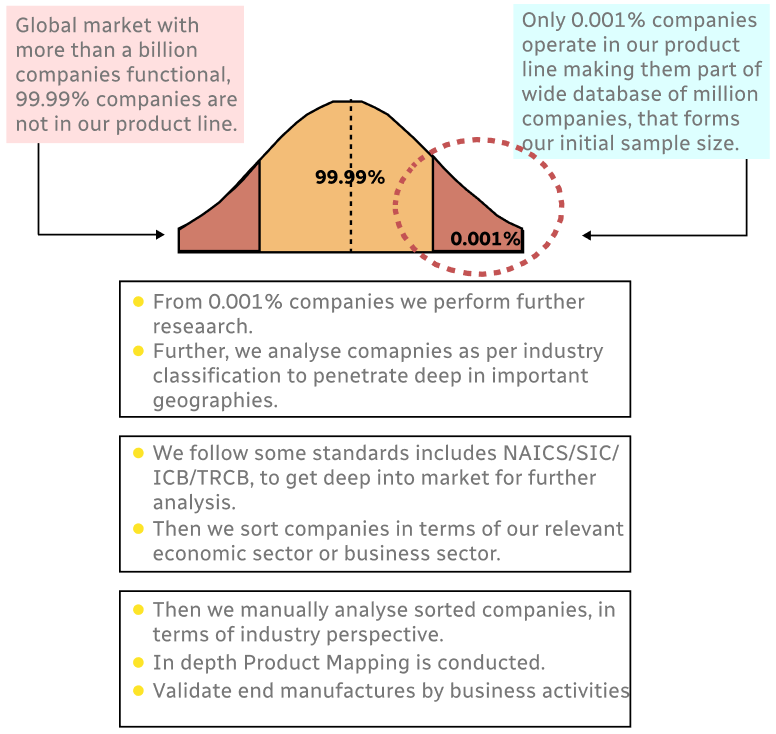
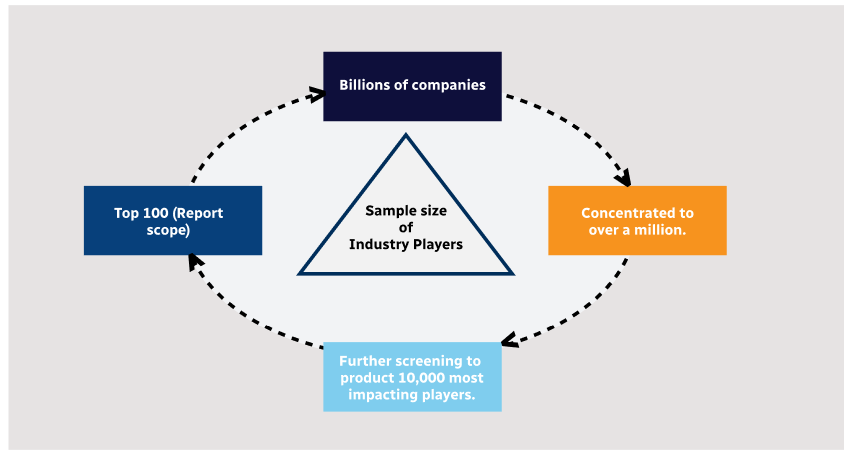
Step 1 - Identification of Relevant Samples Size from Population Database
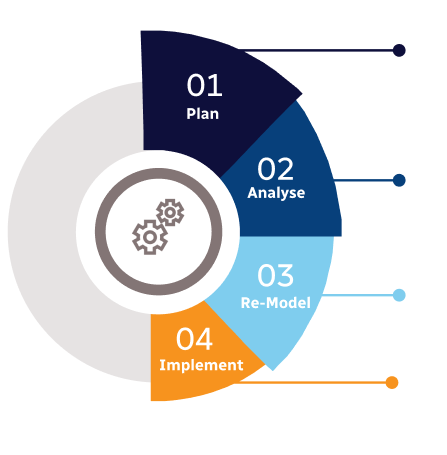
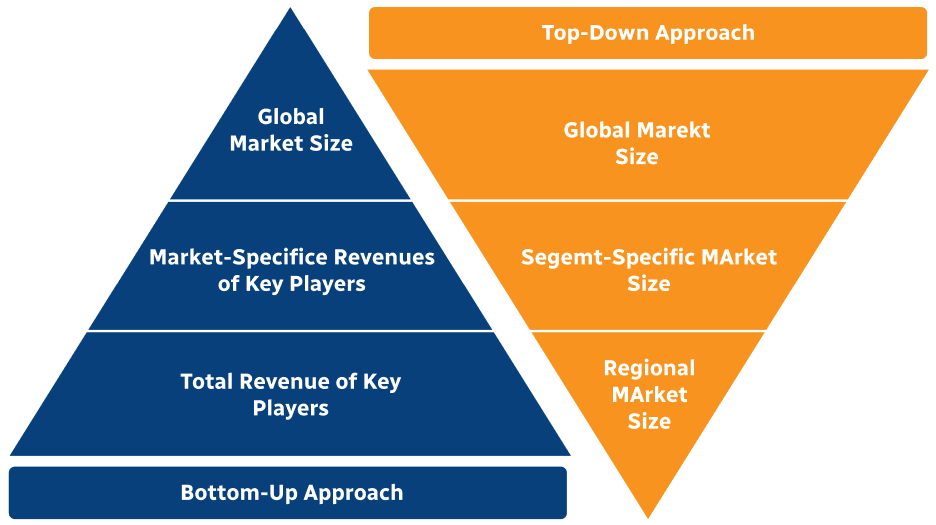
Step 2 - Approaches for Defining Global Market Size (Value, Volume* & Price*)
Note*: In applicable scenarios
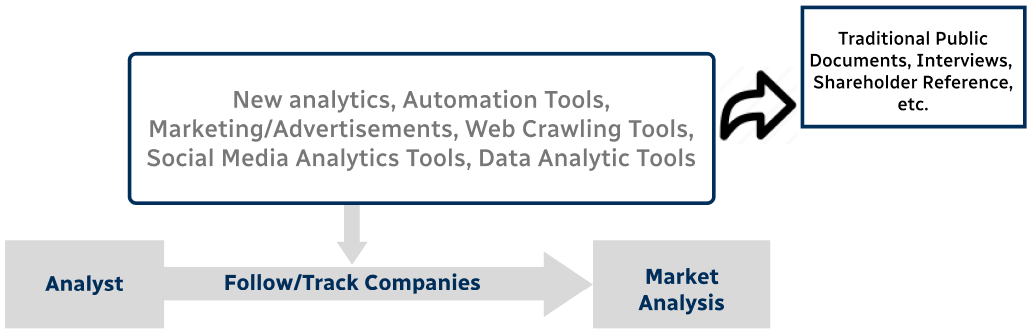
Step 3 - Data Sources
Primary Research
- Web Analytics
- Survey Reports
- Research Institute
- Latest Research Reports
- Opinion Leaders
Secondary Research
- Annual Reports
- White Paper
- Latest Press Release
- Industry Association
- Paid Database
- Investor Presentations
Step 4 - Data Triangulation
Involves using different sources of information in order to increase the validity of a study
These sources are likely to be stakeholders in a program - participants, other researchers, program staff, other community members, and so on.
Then we put all data in single framework & apply various statistical tools to find out the dynamic on the market.
During the analysis stage, feedback from the stakeholder groups would be compared to determine areas of agreement as well as areas of divergence