Key Insights
The Thailand e-commerce logistics market is experiencing robust growth, fueled by the rapid expansion of online shopping and increasing consumer demand for faster and more reliable delivery services. With a Compound Annual Growth Rate (CAGR) exceeding 9.50% from 2019 to 2024, the market is projected to continue its upward trajectory throughout the forecast period (2025-2033). Key drivers include rising smartphone penetration, improved internet infrastructure, and the increasing popularity of online marketplaces and social commerce. The market is segmented by product type (fashion and apparel, consumer electronics, home appliances, etc.), service type (transportation, warehousing, value-added services), business type (B2B, B2C), and destination (domestic, international). The dominance of B2C e-commerce is significant, contributing substantially to the market's overall growth. Major players like DB Schenker, FedEx Express, and others are competing intensely, driving innovation in areas such as last-mile delivery solutions, improved supply chain management, and the adoption of technologies like AI and automation to enhance efficiency and reduce costs. The expansion of cross-border e-commerce is also a significant growth catalyst, adding complexity and opportunity for logistics providers.
While challenges remain, such as infrastructure limitations in certain regions and fluctuating fuel prices, the overall outlook for the Thai e-commerce logistics market remains positive. The increasing sophistication of consumers' expectations regarding delivery speed and options necessitates continued investment in technology and infrastructure improvements. Furthermore, the rise of omnichannel retail strategies further underlines the importance of a robust and adaptable logistics network. Future growth will be driven by the adoption of sustainable practices within the logistics sector, increased investment in technology (such as automation and AI-powered solutions), and a focus on enhancing the customer experience through seamless and transparent delivery processes. This will require logistics providers to adapt and innovate to meet the evolving needs of both businesses and consumers.
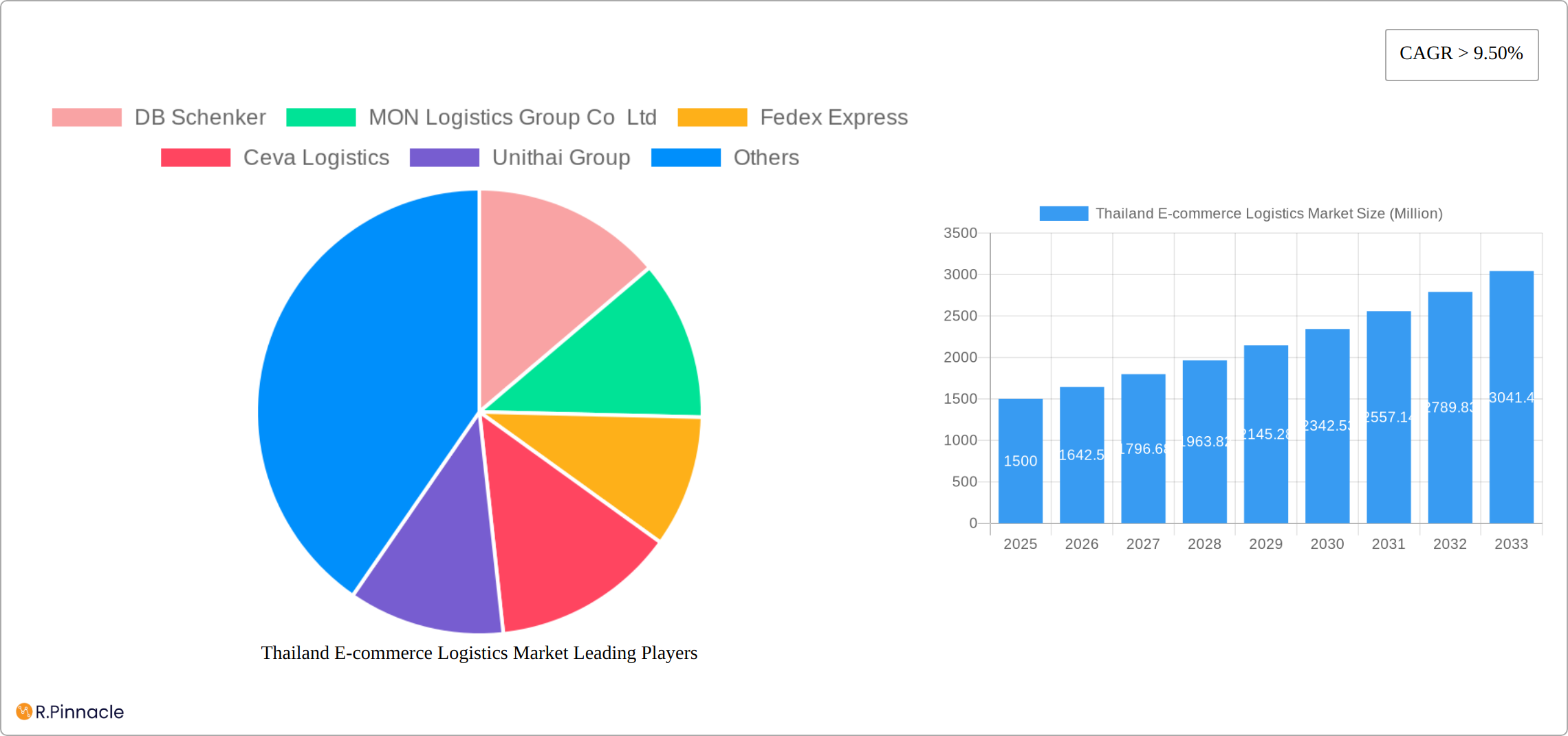
Thailand E-commerce Logistics Market Report: 2019-2033
This comprehensive report provides a detailed analysis of the Thailand e-commerce logistics market, offering invaluable insights for industry professionals, investors, and strategic planners. With a study period spanning 2019-2033, a base year of 2025, and a forecast period of 2025-2033, this report leverages robust data and expert analysis to illuminate current market dynamics and future growth trajectories. The market is projected to reach xx Million by 2033, exhibiting a CAGR of xx% during the forecast period.
Thailand E-commerce Logistics Market Market Structure & Innovation Trends
The Thai e-commerce logistics market presents a dynamic interplay of established players and agile newcomers, shaping a moderately concentrated competitive landscape. Key international players like DB Schenker, FedEx Express, and Kerry Logistics Network Ltd. maintain significant market share. However, a vibrant ecosystem of smaller, innovative companies is actively challenging the status quo, fostering competition and driving innovation. This competitive tension is further fueled by ongoing mergers and acquisitions (M&A) activity, albeit at a moderate pace in recent years. These deals, averaging approximately [Insert Average Deal Value in Million] per transaction, are primarily driven by strategies for expanding into new market segments, broadening geographic reach, and gaining access to cutting-edge technologies.
While precise 2024 market share data for the top three players remains [Insert Percentage or Clarification, e.g., "confidential" or "under review"], it's evident that these entities control a substantial portion of the overall market. The market's moderate concentration allows for both established players and agile startups to thrive. This competitive environment is a key driver of innovation within the sector.
- Market Concentration: Moderately concentrated, with leading players holding substantial but not dominant market share, fostering a healthy competitive landscape.
- Innovation Drivers: Rapid e-commerce penetration, escalating consumer demand for faster and more reliable deliveries, and significant technological advancements in automation (robotics, AI-powered sorting), data analytics (predictive modeling for optimized routes and inventory management), and sustainable logistics practices are driving innovation.
- Regulatory Framework: The regulatory environment is generally conducive to e-commerce growth. However, opportunities for improvement exist, particularly in streamlining customs clearance procedures and enhancing cross-border regulations for smoother international shipments.
- Product Substitutes: While direct substitutes are limited, alternative delivery models like peer-to-peer delivery networks and crowdsourced logistics solutions are emerging and could influence the market dynamics in the future.
- End-User Demographics: A burgeoning middle class with growing disposable income and widespread internet and smartphone penetration fuels the market's expansion. This demographic trend underpins the robust growth of the e-commerce sector in Thailand.
Thailand E-commerce Logistics Market Market Dynamics & Trends
The Thai e-commerce logistics market is demonstrating robust and sustained growth, propelled by several interconnected factors. The expanding reach of internet and smartphone penetration is undeniably crucial, fostering increased consumer confidence in online shopping and driving a surge in online purchases. The widespread adoption of mobile commerce, particularly among younger generations, significantly accelerates this market expansion.
Furthermore, technological advancements are revolutionizing operational efficiency and cost optimization. The integration of automated warehousing systems, sophisticated last-mile delivery solutions (including drone delivery and optimized routing algorithms), and advanced tracking technologies are reshaping the logistics landscape. This dynamic environment features a compelling mix of established international players and innovative local companies, contributing to a diverse and highly competitive ecosystem. The market is projected to maintain a robust growth trajectory, with a Compound Annual Growth Rate (CAGR) exceeding [Insert CAGR Percentage]% during the forecast period, highlighting the significant and ongoing penetration of e-commerce logistics services into the Thai market.
Dominant Regions & Segments in Thailand E-commerce Logistics Market
The Bangkok metropolitan area clearly dominates e-commerce logistics activities, benefiting from its high population density, well-developed infrastructure, and significant concentration of businesses. However, other major cities across Thailand are experiencing rapid growth, fueled by improvements in infrastructure (road networks, digital connectivity) and the rising popularity of online shopping in these regions. This geographically dispersed growth demonstrates the market's increasing maturity beyond its initial concentration in Bangkok.
- By Product: While fashion and apparel currently lead due to high consumer demand and relatively low shipping costs, other sectors like consumer electronics and beauty/personal care products also hold substantial market shares. Future growth might shift depending on evolving consumer preferences and technological trends.
- By Service: Transportation remains the largest segment due to the high volume of goods movement. However, the importance of warehousing and inventory management is increasing, particularly for larger e-commerce businesses aiming for greater efficiency and optimized supply chain management.
- By Business: The B2C (Business-to-Consumer) segment dominates, mirroring the rapid expansion of online consumer spending. The B2B (Business-to-Business) segment, however, shows steady growth, driven by increasing reliance on online platforms for procurement and supply chain optimization.
- By Destination: Domestic logistics currently holds the largest share. However, cross-border e-commerce is experiencing remarkable growth, fueled by increased international trade and consumer demand for imported goods. This indicates a shift towards a more globally integrated e-commerce market.
The dominance in each segment is influenced by a complex interplay of factors including government policies promoting e-commerce, infrastructure improvements, favorable demographics, and the concentration of businesses and populations in specific geographic areas. Understanding these drivers is essential to strategizing for success within this market.
Thailand E-commerce Logistics Market Product Innovations
Recent product innovations focus on enhancing speed, efficiency, and transparency in the delivery process. The adoption of technologies such as automated sorting systems, real-time tracking, and drone delivery are transforming the industry. These innovations aim to improve customer satisfaction by providing faster and more reliable delivery services. Furthermore, the use of data analytics allows for better prediction of demand and optimization of logistics routes, improving overall operational efficiency. These advancements are contributing to the market's sustained growth.
Report Scope & Segmentation Analysis
This report provides a comprehensive analysis of the Thailand e-commerce logistics market, segmented by product (fashion and apparel, consumer electronics, home appliances, furniture, beauty and personal care products, other products), service (transportation, warehousing and inventory management, value-added services), business (B2B, B2C), and destination (domestic, international/cross-border). Each segment's growth projections, market sizes, and competitive dynamics are thoroughly analyzed, providing a detailed understanding of the market's structure and future prospects. The projected market size for each segment varies significantly, with fashion and apparel and transportation currently the largest.
Key Drivers of Thailand E-commerce Logistics Market Growth
Several key factors drive the growth of the Thailand e-commerce logistics market. These include rising disposable incomes, increasing internet and smartphone penetration, a burgeoning middle class, and supportive government policies that promote e-commerce. Furthermore, technological advancements, such as improved logistics software and automation technologies, are streamlining operations and enhancing efficiency. Finally, the increasing demand for faster and more reliable delivery services is driving innovation and investment in the sector.
Challenges in the Thailand E-commerce Logistics Market Sector
Despite its considerable potential, the Thai e-commerce logistics market faces several key challenges that require strategic solutions. Infrastructural limitations in certain regions outside major metropolitan areas can hinder efficient delivery networks. Fluctuating fuel costs and global energy prices significantly impact operational expenses, requiring companies to implement cost-saving measures. Furthermore, the complexities associated with customs clearance, cross-border regulations, and the overall bureaucratic processes can impede international trade and create delays. The intensifying competition, with both established global players and agile local companies vying for market share, puts pressure on profit margins and demands innovative approaches to maintain competitiveness.
Emerging Opportunities in Thailand E-commerce Logistics Market
The market presents significant opportunities for growth. The expansion of e-commerce into previously underserved rural areas presents a considerable growth potential. The adoption of advanced technologies such as Artificial Intelligence (AI) and Internet of Things (IoT) can significantly enhance efficiency and customer experience. The rise of omnichannel retail strategies also creates opportunities for logistics providers to offer integrated solutions.
Leading Players in the Thailand E-commerce Logistics Market Market
- DB Schenker
- MON Logistics Group Co Ltd
- FedEx Express (FedEx)
- Ceva Logistics
- Unithai Group
- Yusen Logistics Co Ltd
- WICE Logistics Public Company Ltd
- SCG Logistics Management Co Ltd
- Nippon Express
- FLS Logistics
- Deutsche Post AG (DHL)
- Kerry Logistics Network Ltd (Kerry Logistics)
- Yamato Unyu
- CMA CGM Group
Key Developments in Thailand E-commerce Logistics Market Industry
- December 2022: DB Schenker launched its China-Laos Railway service, offering integrated cross-border logistics solutions. This significantly expands options for efficient goods transportation between China and Southeast Asia, boosting regional trade.
- November 2022: DHL extended its partnership with the German Bobsleigh, Luge, and Skeleton Federation (BSD), highlighting the company's commitment to sponsorship and branding within sports, which indirectly boosts its brand awareness and association with high-performance logistics.
Future Outlook for Thailand E-commerce Logistics Market Market
The future of the Thai e-commerce logistics market remains exceptionally promising. Continued robust growth is anticipated, driven by sustained e-commerce adoption, ongoing technological advancements, and supportive government policies aimed at fostering economic growth and digital transformation. Significant investments in infrastructure development, coupled with the integration of innovative technologies such as Artificial Intelligence (AI), the Internet of Things (IoT), and Big Data analytics, will enhance operational efficiency, optimize supply chains, and create new opportunities for growth and market expansion. This positive outlook strongly positions the Thai e-commerce logistics market as an attractive and lucrative investment destination for both domestic and international stakeholders.
Thailand E-commerce Logistics Market Segmentation
-
1. Service
- 1.1. Transportation
- 1.2. Warehousing and Inventory Management
- 1.3. Value-added Services (Labelling, Packaging, etc.)
-
2. Business
- 2.1. B2B
- 2.2. B2C
-
3. Destination
- 3.1. Domestic
- 3.2. International/cross-border
-
4. Product
- 4.1. Fashion and Apparel
- 4.2. Consumer Electronics
- 4.3. Home Appliances
- 4.4. Furniture
- 4.5. Beauty and Personal Care Products
- 4.6. Other Products(Toys,Food Products,etc.)
Thailand E-commerce Logistics Market Segmentation By Geography
- 1. Thailand
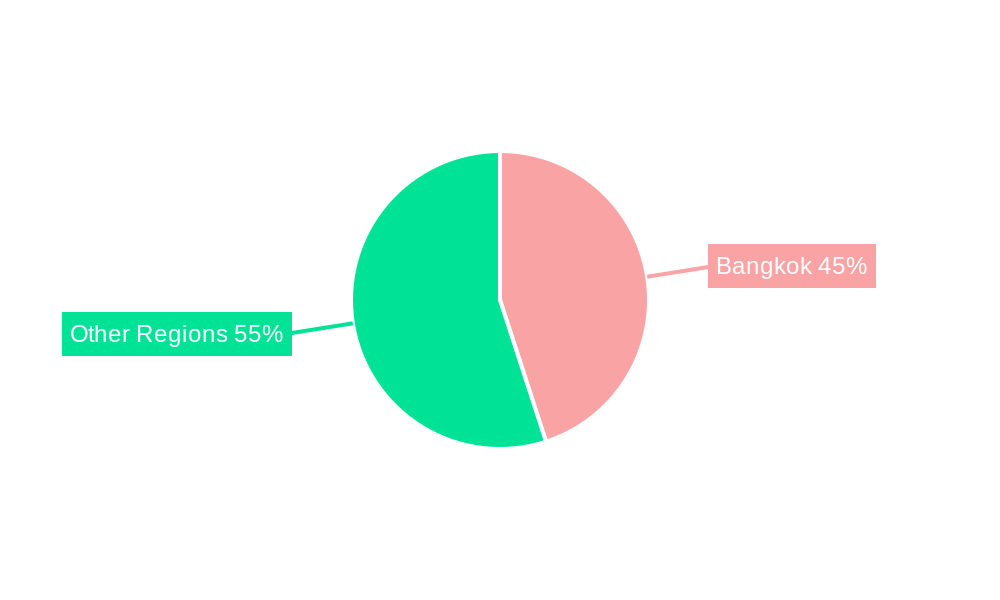
Thailand E-commerce Logistics Market REPORT HIGHLIGHTS
| Aspects | Details |
|---|---|
| Study Period | 2019-2033 |
| Base Year | 2024 |
| Estimated Year | 2025 |
| Forecast Period | 2025-2033 |
| Historical Period | 2019-2024 |
| Growth Rate | CAGR of > 9.50% from 2019-2033 |
| Segmentation |
|
Table of Contents
- 1. Introduction
- 1.1. Research Scope
- 1.2. Market Segmentation
- 1.3. Research Methodology
- 1.4. Definitions and Assumptions
- 2. Executive Summary
- 2.1. Introduction
- 3. Market Dynamics
- 3.1. Introduction
- 3.2. Market Drivers
- 3.2.1. 4.; Global Trade and Export-Oriented Economy boosting the market4.; Investment in Robotics and Automation
- 3.3. Market Restrains
- 3.3.1 4.; South Korea's logistics infrastructure
- 3.3.2 while generally well-developed
- 3.3.3 can experience congestion in key areas
- 3.3.4 such as ports and highways4.; Like many other countries
- 3.3.5 South Korea faced issues related to labor shortages in the logistics sector.
- 3.4. Market Trends
- 3.4.1. Increasing Adoption of Electronic Payments
- 4. Market Factor Analysis
- 4.1. Porters Five Forces
- 4.2. Supply/Value Chain
- 4.3. PESTEL analysis
- 4.4. Market Entropy
- 4.5. Patent/Trademark Analysis
- 5. Thailand E-commerce Logistics Market Analysis, Insights and Forecast, 2019-2031
- 5.1. Market Analysis, Insights and Forecast - by Service
- 5.1.1. Transportation
- 5.1.2. Warehousing and Inventory Management
- 5.1.3. Value-added Services (Labelling, Packaging, etc.)
- 5.2. Market Analysis, Insights and Forecast - by Business
- 5.2.1. B2B
- 5.2.2. B2C
- 5.3. Market Analysis, Insights and Forecast - by Destination
- 5.3.1. Domestic
- 5.3.2. International/cross-border
- 5.4. Market Analysis, Insights and Forecast - by Product
- 5.4.1. Fashion and Apparel
- 5.4.2. Consumer Electronics
- 5.4.3. Home Appliances
- 5.4.4. Furniture
- 5.4.5. Beauty and Personal Care Products
- 5.4.6. Other Products(Toys,Food Products,etc.)
- 5.5. Market Analysis, Insights and Forecast - by Region
- 5.5.1. Thailand
- 5.1. Market Analysis, Insights and Forecast - by Service
- 6. Competitive Analysis
- 6.1. Market Share Analysis 2024
- 6.2. Company Profiles
- 6.2.1 DB Schenker
- 6.2.1.1. Overview
- 6.2.1.2. Products
- 6.2.1.3. SWOT Analysis
- 6.2.1.4. Recent Developments
- 6.2.1.5. Financials (Based on Availability)
- 6.2.2 MON Logistics Group Co Ltd
- 6.2.2.1. Overview
- 6.2.2.2. Products
- 6.2.2.3. SWOT Analysis
- 6.2.2.4. Recent Developments
- 6.2.2.5. Financials (Based on Availability)
- 6.2.3 Fedex Express
- 6.2.3.1. Overview
- 6.2.3.2. Products
- 6.2.3.3. SWOT Analysis
- 6.2.3.4. Recent Developments
- 6.2.3.5. Financials (Based on Availability)
- 6.2.4 Ceva Logistics
- 6.2.4.1. Overview
- 6.2.4.2. Products
- 6.2.4.3. SWOT Analysis
- 6.2.4.4. Recent Developments
- 6.2.4.5. Financials (Based on Availability)
- 6.2.5 Unithai Group
- 6.2.5.1. Overview
- 6.2.5.2. Products
- 6.2.5.3. SWOT Analysis
- 6.2.5.4. Recent Developments
- 6.2.5.5. Financials (Based on Availability)
- 6.2.6 Yusen Logistics Co Ltd
- 6.2.6.1. Overview
- 6.2.6.2. Products
- 6.2.6.3. SWOT Analysis
- 6.2.6.4. Recent Developments
- 6.2.6.5. Financials (Based on Availability)
- 6.2.7 WICE Logistics Public Company Ltd
- 6.2.7.1. Overview
- 6.2.7.2. Products
- 6.2.7.3. SWOT Analysis
- 6.2.7.4. Recent Developments
- 6.2.7.5. Financials (Based on Availability)
- 6.2.8 SCG Logistics Management Co Ltd
- 6.2.8.1. Overview
- 6.2.8.2. Products
- 6.2.8.3. SWOT Analysis
- 6.2.8.4. Recent Developments
- 6.2.8.5. Financials (Based on Availability)
- 6.2.9 Nippon Express**List Not Exhaustive
- 6.2.9.1. Overview
- 6.2.9.2. Products
- 6.2.9.3. SWOT Analysis
- 6.2.9.4. Recent Developments
- 6.2.9.5. Financials (Based on Availability)
- 6.2.10 FLS Logistics
- 6.2.10.1. Overview
- 6.2.10.2. Products
- 6.2.10.3. SWOT Analysis
- 6.2.10.4. Recent Developments
- 6.2.10.5. Financials (Based on Availability)
- 6.2.11 Deutsche Post AG
- 6.2.11.1. Overview
- 6.2.11.2. Products
- 6.2.11.3. SWOT Analysis
- 6.2.11.4. Recent Developments
- 6.2.11.5. Financials (Based on Availability)
- 6.2.12 Kerry Logistics Network Ltd
- 6.2.12.1. Overview
- 6.2.12.2. Products
- 6.2.12.3. SWOT Analysis
- 6.2.12.4. Recent Developments
- 6.2.12.5. Financials (Based on Availability)
- 6.2.13 Yamato Unyu
- 6.2.13.1. Overview
- 6.2.13.2. Products
- 6.2.13.3. SWOT Analysis
- 6.2.13.4. Recent Developments
- 6.2.13.5. Financials (Based on Availability)
- 6.2.14 CMA CGM Group
- 6.2.14.1. Overview
- 6.2.14.2. Products
- 6.2.14.3. SWOT Analysis
- 6.2.14.4. Recent Developments
- 6.2.14.5. Financials (Based on Availability)
- 6.2.1 DB Schenker
List of Figures
- Figure 1: Thailand E-commerce Logistics Market Revenue Breakdown (Million, %) by Product 2024 & 2032
- Figure 2: Thailand E-commerce Logistics Market Share (%) by Company 2024
List of Tables
- Table 1: Thailand E-commerce Logistics Market Revenue Million Forecast, by Region 2019 & 2032
- Table 2: Thailand E-commerce Logistics Market Revenue Million Forecast, by Service 2019 & 2032
- Table 3: Thailand E-commerce Logistics Market Revenue Million Forecast, by Business 2019 & 2032
- Table 4: Thailand E-commerce Logistics Market Revenue Million Forecast, by Destination 2019 & 2032
- Table 5: Thailand E-commerce Logistics Market Revenue Million Forecast, by Product 2019 & 2032
- Table 6: Thailand E-commerce Logistics Market Revenue Million Forecast, by Region 2019 & 2032
- Table 7: Thailand E-commerce Logistics Market Revenue Million Forecast, by Country 2019 & 2032
- Table 8: Thailand E-commerce Logistics Market Revenue Million Forecast, by Service 2019 & 2032
- Table 9: Thailand E-commerce Logistics Market Revenue Million Forecast, by Business 2019 & 2032
- Table 10: Thailand E-commerce Logistics Market Revenue Million Forecast, by Destination 2019 & 2032
- Table 11: Thailand E-commerce Logistics Market Revenue Million Forecast, by Product 2019 & 2032
- Table 12: Thailand E-commerce Logistics Market Revenue Million Forecast, by Country 2019 & 2032
Frequently Asked Questions
1. What is the projected Compound Annual Growth Rate (CAGR) of the Thailand E-commerce Logistics Market?
The projected CAGR is approximately > 9.50%.
2. Which companies are prominent players in the Thailand E-commerce Logistics Market?
Key companies in the market include DB Schenker, MON Logistics Group Co Ltd, Fedex Express, Ceva Logistics, Unithai Group, Yusen Logistics Co Ltd, WICE Logistics Public Company Ltd, SCG Logistics Management Co Ltd, Nippon Express**List Not Exhaustive, FLS Logistics, Deutsche Post AG, Kerry Logistics Network Ltd, Yamato Unyu, CMA CGM Group.
3. What are the main segments of the Thailand E-commerce Logistics Market?
The market segments include Service, Business, Destination, Product.
4. Can you provide details about the market size?
The market size is estimated to be USD XX Million as of 2022.
5. What are some drivers contributing to market growth?
4.; Global Trade and Export-Oriented Economy boosting the market4.; Investment in Robotics and Automation.
6. What are the notable trends driving market growth?
Increasing Adoption of Electronic Payments.
7. Are there any restraints impacting market growth?
4.; South Korea's logistics infrastructure. while generally well-developed. can experience congestion in key areas. such as ports and highways4.; Like many other countries. South Korea faced issues related to labor shortages in the logistics sector..
8. Can you provide examples of recent developments in the market?
December 2022: DB Schenker has launched China-Laos Railway, the service includes auxiliary options such as domestic pick-up, customs declaration, cross-border railway transportation, and destination customs clearance.
9. What pricing options are available for accessing the report?
Pricing options include single-user, multi-user, and enterprise licenses priced at USD 3800, USD 4500, and USD 5800 respectively.
10. Is the market size provided in terms of value or volume?
The market size is provided in terms of value, measured in Million.
11. Are there any specific market keywords associated with the report?
Yes, the market keyword associated with the report is "Thailand E-commerce Logistics Market," which aids in identifying and referencing the specific market segment covered.
12. How do I determine which pricing option suits my needs best?
The pricing options vary based on user requirements and access needs. Individual users may opt for single-user licenses, while businesses requiring broader access may choose multi-user or enterprise licenses for cost-effective access to the report.
13. Are there any additional resources or data provided in the Thailand E-commerce Logistics Market report?
While the report offers comprehensive insights, it's advisable to review the specific contents or supplementary materials provided to ascertain if additional resources or data are available.
14. How can I stay updated on further developments or reports in the Thailand E-commerce Logistics Market?
To stay informed about further developments, trends, and reports in the Thailand E-commerce Logistics Market, consider subscribing to industry newsletters, following relevant companies and organizations, or regularly checking reputable industry news sources and publications.
Methodology
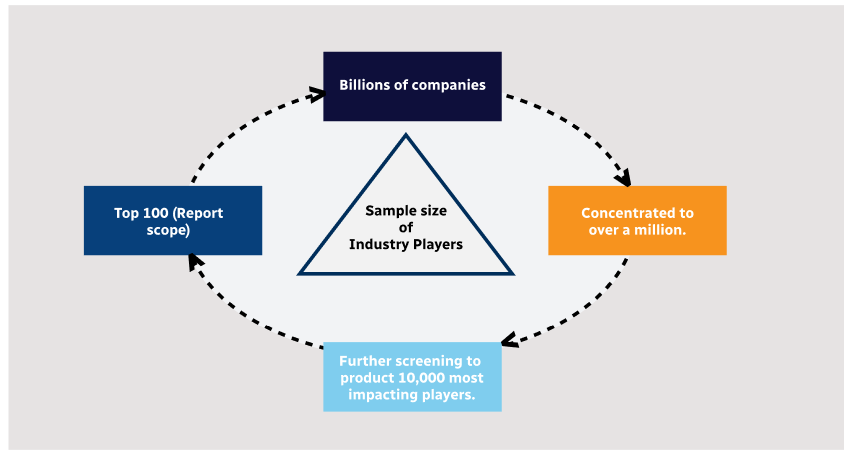
Step 1 - Identification of Relevant Samples Size from Population Database
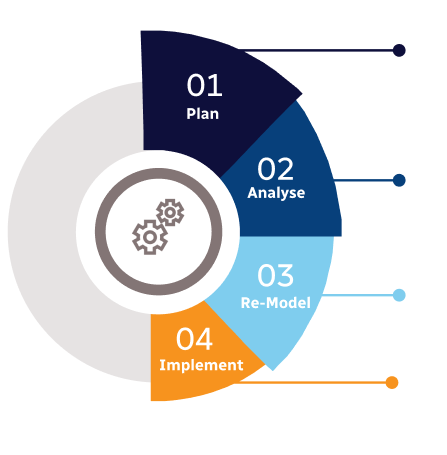
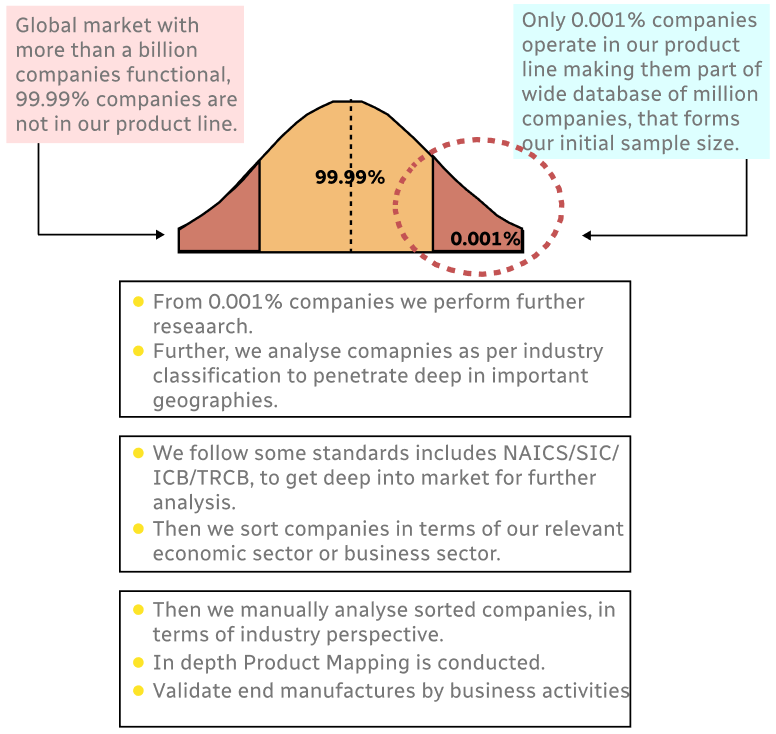
Step 2 - Approaches for Defining Global Market Size (Value, Volume* & Price*)
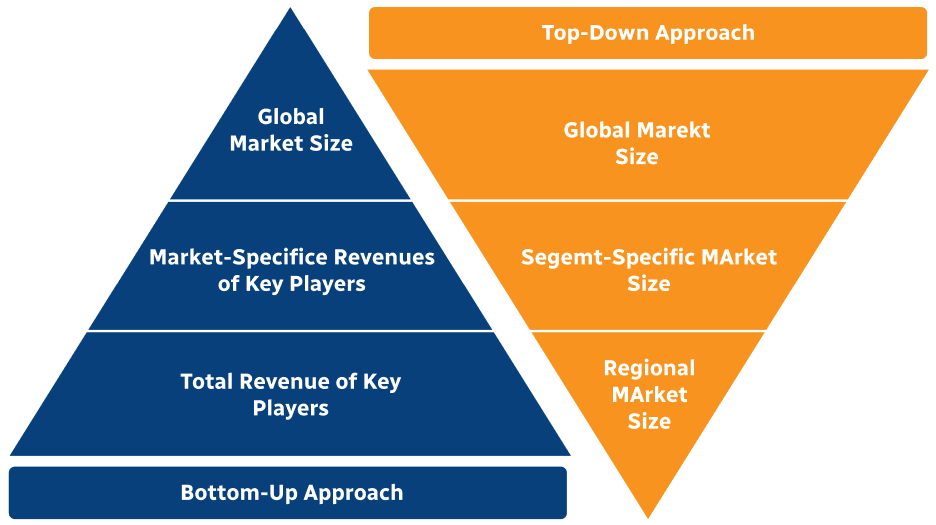
Note*: In applicable scenarios
Step 3 - Data Sources
Primary Research
- Web Analytics
- Survey Reports
- Research Institute
- Latest Research Reports
- Opinion Leaders
Secondary Research
- Annual Reports
- White Paper
- Latest Press Release
- Industry Association
- Paid Database
- Investor Presentations
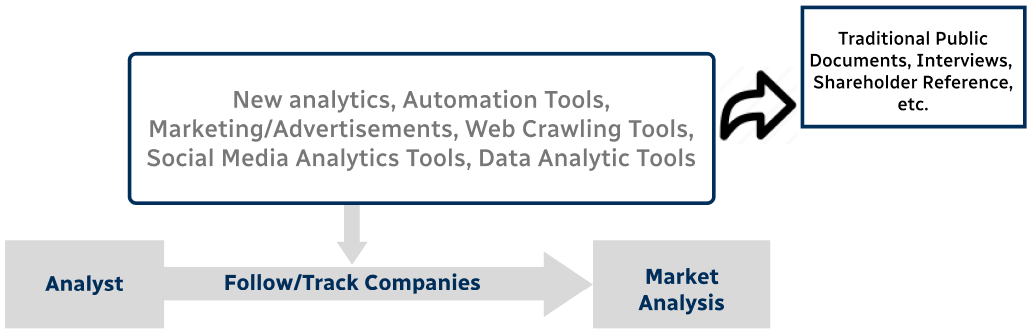
Step 4 - Data Triangulation
Involves using different sources of information in order to increase the validity of a study
These sources are likely to be stakeholders in a program - participants, other researchers, program staff, other community members, and so on.
Then we put all data in single framework & apply various statistical tools to find out the dynamic on the market.
During the analysis stage, feedback from the stakeholder groups would be compared to determine areas of agreement as well as areas of divergence