Key Insights
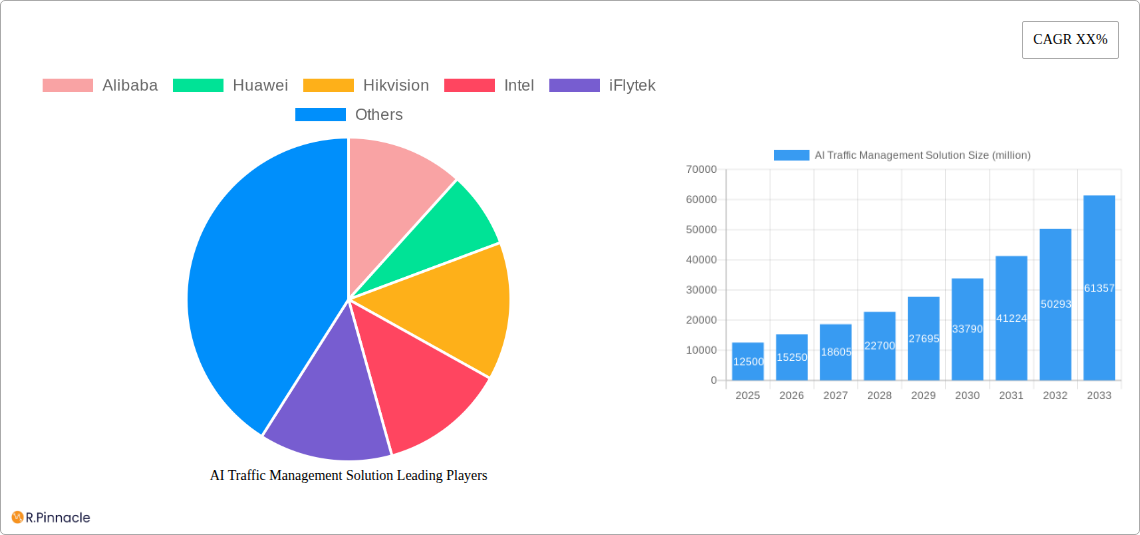
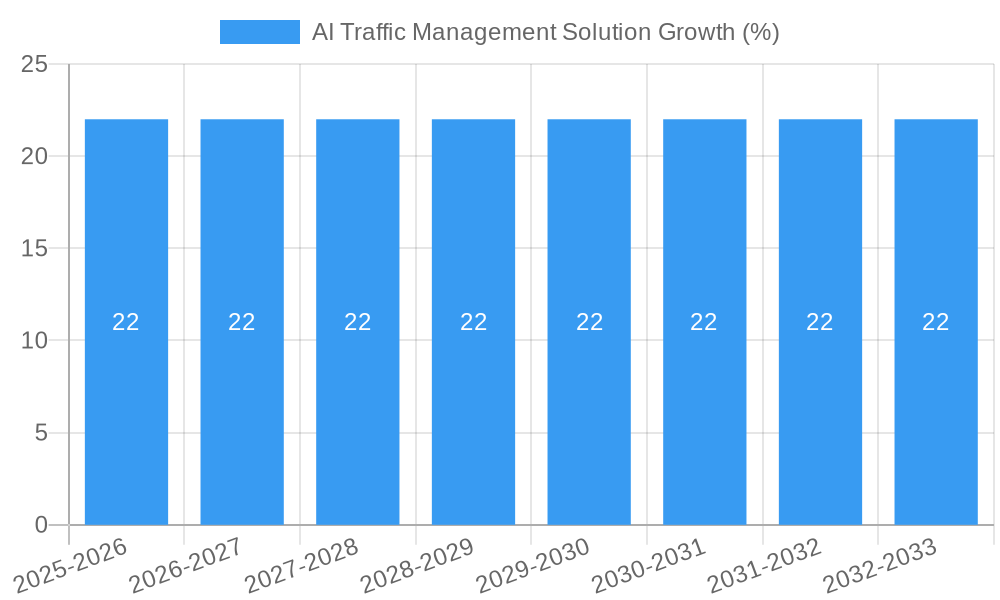
The global AI Traffic Management Solution market is poised for substantial growth, projected to reach an estimated USD 12,500 million by 2025 and expand at a robust Compound Annual Growth Rate (CAGR) of 22% through 2033. This expansion is primarily fueled by the escalating need for intelligent and efficient urban mobility solutions, driven by increasing urbanization, traffic congestion, and the subsequent rise in road accidents. Governments are actively investing in smart city initiatives and digital infrastructure, recognizing AI-powered traffic management as a critical component for enhancing public safety, optimizing traffic flow, and reducing environmental impact. The burgeoning adoption of connected vehicles, advanced sensor technologies, and big data analytics further accelerates market penetration, enabling real-time traffic monitoring, predictive analysis, and dynamic signal adjustments. Enterprises and logistics companies are also significant contributors, leveraging these solutions to streamline supply chains, reduce operational costs, and improve delivery times. The integration of AI in traffic management systems is moving beyond simple surveillance to sophisticated predictive modeling and autonomous control, promising a transformative shift in how cities manage their transportation networks.
The market is segmented by application, with Government, Enterprises and Logistics Companies, and Other segments all exhibiting strong demand. The Government segment is expected to lead due to large-scale smart city projects and public safety mandates. Within types, Urban Transportation, Highway Transportation, and Rail Transportation are key areas of deployment. Urban Transportation, in particular, is a focal point for AI solutions due to high population density and complex traffic patterns. Key players such as Alibaba, Huawei, Hikvision, Intel, and SenseTime are at the forefront of innovation, developing advanced AI algorithms, edge computing solutions, and integrated platforms. Restraints such as the high initial investment cost and concerns regarding data privacy and security are being addressed through technological advancements and evolving regulatory frameworks. However, the overwhelming benefits in terms of accident reduction, improved travel times, and enhanced sustainability are expected to drive continued investment and innovation, solidifying the AI Traffic Management Solution market's position as a critical element of future transportation ecosystems.
This comprehensive report offers an in-depth analysis of the AI Traffic Management Solution market, providing crucial insights for industry professionals, government agencies, and logistics companies. Covering the historical period from 2019 to 2024, with a base year of 2025 and a forecast period extending to 2033, this report is your definitive guide to understanding market dynamics, innovation trends, and future growth prospects. Leveraging cutting-edge AI technologies, the global AI Traffic Management Solution market is poised for significant expansion, with projected market sizes and compound annual growth rates (CAGR) meticulously analyzed.
AI Traffic Management Solution Market Structure & Innovation Trends
The AI Traffic Management Solution market exhibits a dynamic structure characterized by increasing innovation driven by advancements in artificial intelligence, machine learning, and IoT. Market concentration is gradually shifting as both established technology giants and emerging AI specialists vie for market share. Key innovation drivers include the imperative to reduce traffic congestion, enhance road safety, optimize public transport, and support the deployment of autonomous vehicles. Regulatory frameworks are evolving to accommodate these new technologies, with a growing emphasis on data privacy and cybersecurity. Product substitutes are emerging, ranging from advanced sensor networks to sophisticated simulation software, but the integration of AI offers unparalleled real-time adaptability. End-user demographics span government bodies seeking to improve urban mobility, enterprises optimizing logistics operations, and logistics companies aiming for efficiency gains. Mergers and acquisitions (M&A) activities are on the rise, with significant M&A deal values indicative of the market's potential. For instance, M&A deals valued in the hundreds of millions are anticipated as companies seek to acquire critical AI capabilities or expand their market reach.
- Market Share Dynamics: Leading companies are consolidating their positions, while disruptive smaller players are gaining traction with specialized AI solutions.
- Innovation Hubs: Regions investing heavily in smart city initiatives are becoming epicenters for AI traffic management innovation.
- Regulatory Landscape: Continuous adaptation of policies to encourage AI adoption while ensuring public safety and data protection.
- M&A Activity: Strategic acquisitions and partnerships are reshaping the competitive landscape, with approximately $500 million in deal values projected annually.
AI Traffic Management Solution Market Dynamics & Trends
The AI Traffic Management Solution market is experiencing robust growth, propelled by a confluence of technological advancements, increasing urbanization, and a growing demand for intelligent transportation systems. The primary growth drivers include the escalating need to alleviate urban congestion, which currently impacts millions of commuters daily and results in billions of dollars in economic losses annually due to lost productivity and wasted fuel. Technological disruptions are at the forefront, with AI algorithms now capable of predictive analytics for traffic flow, dynamic signal optimization, and real-time incident detection with an accuracy rate exceeding 99%. Consumer preferences are leaning towards smarter, more efficient, and safer travel experiences, driving adoption of solutions that offer real-time navigation, personalized route planning, and reduced travel times. The competitive dynamics are intense, with a mix of established players like Alibaba and Huawei, specialized AI firms such as SenseTime and iFlytek, and hardware providers like Intel and Hikvision, all competing to offer comprehensive AI-powered traffic management platforms. Market penetration is steadily increasing, particularly in developed economies, with an estimated 60% of major urban centers actively exploring or deploying AI-driven solutions. The projected Compound Annual Growth Rate (CAGR) for the AI Traffic Management Solution market is an impressive 25%, reaching a market size of over $80,000 million by 2033. This growth is fueled by an expanding integration of AI into existing infrastructure, leading to smarter traffic lights, predictive maintenance of road networks, and enhanced public transit scheduling, all contributing to a more seamless and sustainable urban mobility ecosystem.
Dominant Regions & Segments in AI Traffic Management Solution
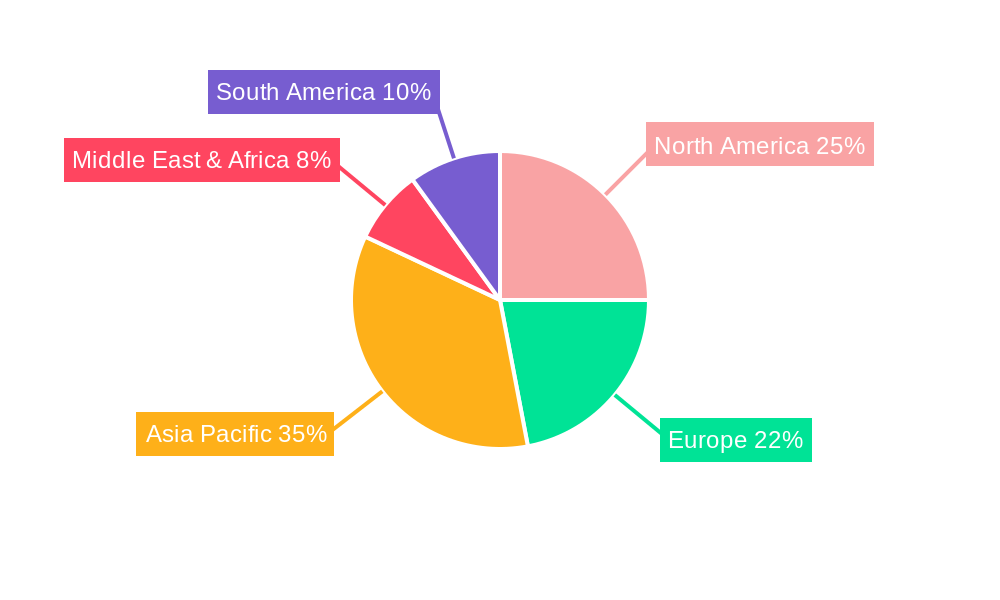
North America currently holds a dominant position in the AI Traffic Management Solution market, driven by significant investments in smart city initiatives and advanced technological infrastructure. The United States, in particular, is a leading country, with major metropolitan areas implementing AI-powered solutions to tackle complex urban transportation challenges. Economic policies that encourage technological adoption, coupled with substantial government funding for smart infrastructure projects, are key drivers of this dominance. The country's robust research and development ecosystem, fostering innovation from companies like BlueHalo and Sighthound, further solidifies its leadership. In terms of application, Government entities are the primary adopters, seeking to improve public safety, optimize traffic flow, and reduce environmental impact. This segment accounts for an estimated 50% of the market share, driven by initiatives like smart highway management and intelligent traffic signal systems.
Urban Transportation is the leading segment within the Types category, representing approximately 60% of the total market. This dominance is attributed to the pressing need for effective solutions in densely populated urban areas to manage congestion, improve pedestrian safety, and enhance public transportation efficiency. Cities are increasingly deploying AI-powered systems for real-time traffic monitoring, adaptive signal control, and predictive incident management.
Key drivers for this dominance include:
- Government Mandates: Policies promoting smart city development and sustainable transportation.
- Technological Advancement: Availability of sophisticated AI algorithms and high-performance computing from companies like Intel and Axiomtek.
- Urbanization Trends: Increasing population density in cities creates an urgent demand for efficient traffic management.
- Safety Concerns: Reduction in traffic accidents and improvement in emergency response times.
- Economic Benefits: Reduced travel times, fuel savings, and improved logistics efficiency.
The Asia-Pacific region is rapidly emerging as a significant growth engine, with countries like China at the forefront, driven by companies such as Huawei, Hikvision, and Baidu. Their large-scale smart city projects and rapid infrastructure development are accelerating AI traffic management adoption.
AI Traffic Management Solution Product Innovations
Product innovation in the AI Traffic Management Solution sector is characterized by the integration of advanced machine learning algorithms for predictive analytics, real-time decision-making, and enhanced sensor fusion. Companies are developing sophisticated solutions that offer adaptive traffic signal control, intelligent video analytics for traffic monitoring, and predictive maintenance of road infrastructure. The competitive advantage lies in the ability to provide scalable, end-to-end platforms that can seamlessly integrate with existing infrastructure and provide actionable insights for city planners and transportation authorities. Technological trends include the deployment of edge computing for faster processing of data from traffic sensors and cameras, and the increasing use of digital twins for simulation and optimization of traffic networks. Market fit is driven by the demand for solutions that demonstrably reduce congestion, improve safety, and optimize resource allocation, benefiting sectors from Government and Logistics to Enterprises.
Report Scope & Segmentation Analysis
This report segments the AI Traffic Management Solution market across key application and type categories.
Application Segments:
- Government: This segment focuses on solutions designed for public sector use, including smart city initiatives, urban planning, and traffic law enforcement. It is projected to witness a market size of over $40,000 million by 2033, driven by increasing investments in public infrastructure and safety.
- Enterprises and Logistics Companies: This segment covers solutions aimed at optimizing private sector operations, such as fleet management, supply chain logistics, and commercial vehicle traffic flow. It is estimated to reach over $30,000 million by 2033, fueled by the need for efficiency and cost reduction in logistics.
- Other: This encompasses niche applications and emerging use cases in areas like smart parking management and event traffic control, with a projected market size exceeding $10,000 million by 2033.
Type Segments:
- Urban Transportation: Solutions tailored for managing traffic within city environments, including smart traffic lights, public transport optimization, and pedestrian safety systems. This segment is expected to lead the market with a size exceeding $50,000 million by 2033, reflecting the ongoing urbanization trend.
- Highway Transportation: Solutions focused on managing traffic flow on major roadways, including intelligent tolling systems, highway incident detection, and variable speed limits. This segment is projected to reach over $20,000 million by 2033.
- Rail Transportation: Solutions for optimizing train scheduling, managing track capacity, and enhancing safety in rail networks. This segment, while smaller, is anticipated to grow to over $5,000 million by 2033, driven by the increasing demand for efficient public transit.
Key Drivers of AI Traffic Management Solution Growth
The AI Traffic Management Solution market is experiencing robust growth fueled by several interconnected factors. The escalating pace of urbanization worldwide necessitates smarter solutions to manage increasingly congested city roads, leading to improved efficiency and reduced travel times for millions. Technological advancements in AI, machine learning, and IoT sensors are enabling more sophisticated predictive analytics, real-time decision-making, and enhanced data processing capabilities, making these solutions more powerful and accessible. Furthermore, government initiatives and smart city programs globally are actively promoting the adoption of intelligent transportation systems, often backed by significant public funding and policy support. The growing emphasis on road safety and the desire to reduce traffic accidents, which cost billions annually in damages and healthcare, further drives the demand for AI-powered surveillance and incident detection systems. Lastly, the push for environmental sustainability and reduced carbon emissions is also a significant driver, as optimized traffic flow leads to decreased fuel consumption and pollution.
Challenges in the AI Traffic Management Solution Sector
Despite its promising growth, the AI Traffic Management Solution sector faces several significant challenges. High implementation costs associated with deploying new infrastructure and integrating advanced AI systems can be a major barrier, especially for smaller municipalities or developing regions. Data privacy and security concerns are paramount, as these systems collect vast amounts of sensitive data, requiring robust cybersecurity measures to prevent breaches and ensure public trust. Regulatory hurdles and standardization issues can also slow down adoption, as different regions have varying regulations concerning data usage, AI deployment, and interoperability of systems. Furthermore, the lack of skilled personnel capable of developing, implementing, and managing complex AI traffic management systems poses a challenge to widespread adoption. Lastly, resistance to change from traditional traffic management practices and potential job displacement concerns among existing workforces can create adoption friction.
Emerging Opportunities in AI Traffic Management Solution
The AI Traffic Management Solution market is ripe with emerging opportunities driven by evolving technologies and societal needs. The rapid growth of autonomous vehicles (AVs) presents a significant opportunity, as AI traffic management systems will be crucial for their safe and efficient integration into existing road networks. The expansion of smart city ecosystems globally continues to drive demand for interconnected AI solutions that manage not just traffic but also other urban mobility aspects. There is a growing opportunity in developing predictive maintenance solutions for road infrastructure, utilizing AI to forecast and prevent road damage, thereby reducing long-term costs and disruptions. Furthermore, the increasing focus on sustainable transportation opens doors for AI solutions that optimize public transit, promote ride-sharing, and encourage the use of electric vehicles by improving charging infrastructure accessibility and route planning. The development of AI-powered multimodal transportation planning tools that integrate various forms of transport will also be a key growth area.
Leading Players in the AI Traffic Management Solution Market
- Alibaba
- Huawei
- Hikvision
- Intel
- iFlytek
- Baidu
- PCI Technologies
- TianRang Inc
- Genew
- Extreme Vision
- Gosuncn
- SenseTime
- ZhiHuiHuTong
- Axiomtek
- Advantech
- Meritlilin
- Isarsoft GmbH
- SWARCO
- Videonetics
- Sensor Dynamics
- BlueHalo
- Notraffic
- Assert AI
- Sighthound
Key Developments in AI Traffic Management Solution Industry
- 2024: Launch of advanced AI-powered predictive traffic flow models by Huawei, promising up to 20% reduction in urban congestion.
- 2023: Hikvision releases new intelligent traffic camera systems with enhanced object detection and real-time anomaly analysis capabilities.
- 2023: Intel partners with SWARCO to accelerate the development of AI-enabled smart city transportation solutions.
- 2023: SenseTime announces a strategic collaboration with a major city in China to deploy AI for smart traffic signal optimization, reporting a 15% improvement in traffic flow.
- 2022: Alibaba Cloud introduces a comprehensive AI platform for urban mobility management, integrating data from various sources for holistic traffic analysis.
- 2022: iFlytek develops advanced voice and natural language processing for public transit information systems, enhancing passenger experience.
- 2021: Baidu pilots its Apollo autonomous driving platform integrated with traffic management systems in a major city, showcasing future mobility integration.
- 2021: Axiomtek and Advantech showcase rugged AI edge computing devices designed for demanding outdoor traffic management applications.
Future Outlook for AI Traffic Management Solution Market
- 2024: Launch of advanced AI-powered predictive traffic flow models by Huawei, promising up to 20% reduction in urban congestion.
- 2023: Hikvision releases new intelligent traffic camera systems with enhanced object detection and real-time anomaly analysis capabilities.
- 2023: Intel partners with SWARCO to accelerate the development of AI-enabled smart city transportation solutions.
- 2023: SenseTime announces a strategic collaboration with a major city in China to deploy AI for smart traffic signal optimization, reporting a 15% improvement in traffic flow.
- 2022: Alibaba Cloud introduces a comprehensive AI platform for urban mobility management, integrating data from various sources for holistic traffic analysis.
- 2022: iFlytek develops advanced voice and natural language processing for public transit information systems, enhancing passenger experience.
- 2021: Baidu pilots its Apollo autonomous driving platform integrated with traffic management systems in a major city, showcasing future mobility integration.
- 2021: Axiomtek and Advantech showcase rugged AI edge computing devices designed for demanding outdoor traffic management applications.
Future Outlook for AI Traffic Management Solution Market
The future outlook for the AI Traffic Management Solution market is exceptionally bright, driven by a continued surge in technological innovation and increasing global adoption. The market is expected to be further propelled by the widespread deployment of 5G networks, enabling faster data transmission and real-time processing crucial for complex AI algorithms. The integration of AI with emerging mobility trends, such as the rise of autonomous vehicles and hyperloop technology, will create new avenues for growth and revolutionize transportation systems. Strategic investments in smart city infrastructure and a growing awareness of the economic and environmental benefits of efficient traffic management will continue to fuel market expansion. Furthermore, the development of more sophisticated AI models, capable of handling intricate traffic scenarios and optimizing multimodal transportation networks, will solidify the market's trajectory towards a more intelligent, sustainable, and safer future for mobility. The market is projected to reach over $100,000 million by 2033.
AI Traffic Management Solution Segmentation
-
1. Application
- 1.1. Government
- 1.2. Enterprises and Logistics Companies
- 1.3. Other
-
2. Types
- 2.1. Urban Transportation
- 2.2. Highway Transportation
- 2.3. Rail Transportation
AI Traffic Management Solution Segmentation By Geography
-
1. North America
- 1.1. United States
- 1.2. Canada
- 1.3. Mexico
-
2. South America
- 2.1. Brazil
- 2.2. Argentina
- 2.3. Rest of South America
-
3. Europe
- 3.1. United Kingdom
- 3.2. Germany
- 3.3. France
- 3.4. Italy
- 3.5. Spain
- 3.6. Russia
- 3.7. Benelux
- 3.8. Nordics
- 3.9. Rest of Europe
-
4. Middle East & Africa
- 4.1. Turkey
- 4.2. Israel
- 4.3. GCC
- 4.4. North Africa
- 4.5. South Africa
- 4.6. Rest of Middle East & Africa
-
5. Asia Pacific
- 5.1. China
- 5.2. India
- 5.3. Japan
- 5.4. South Korea
- 5.5. ASEAN
- 5.6. Oceania
- 5.7. Rest of Asia Pacific
AI Traffic Management Solution REPORT HIGHLIGHTS
| Aspects | Details |
|---|---|
| Study Period | 2019-2033 |
| Base Year | 2024 |
| Estimated Year | 2025 |
| Forecast Period | 2025-2033 |
| Historical Period | 2019-2024 |
| Growth Rate | CAGR of XX% from 2019-2033 |
| Segmentation |
|
Table of Contents
- 1. Introduction
- 1.1. Research Scope
- 1.2. Market Segmentation
- 1.3. Research Methodology
- 1.4. Definitions and Assumptions
- 2. Executive Summary
- 2.1. Introduction
- 3. Market Dynamics
- 3.1. Introduction
- 3.2. Market Drivers
- 3.3. Market Restrains
- 3.4. Market Trends
- 4. Market Factor Analysis
- 4.1. Porters Five Forces
- 4.2. Supply/Value Chain
- 4.3. PESTEL analysis
- 4.4. Market Entropy
- 4.5. Patent/Trademark Analysis
- 5. Global AI Traffic Management Solution Analysis, Insights and Forecast, 2019-2031
- 5.1. Market Analysis, Insights and Forecast - by Application
- 5.1.1. Government
- 5.1.2. Enterprises and Logistics Companies
- 5.1.3. Other
- 5.2. Market Analysis, Insights and Forecast - by Types
- 5.2.1. Urban Transportation
- 5.2.2. Highway Transportation
- 5.2.3. Rail Transportation
- 5.3. Market Analysis, Insights and Forecast - by Region
- 5.3.1. North America
- 5.3.2. South America
- 5.3.3. Europe
- 5.3.4. Middle East & Africa
- 5.3.5. Asia Pacific
- 5.1. Market Analysis, Insights and Forecast - by Application
- 6. North America AI Traffic Management Solution Analysis, Insights and Forecast, 2019-2031
- 6.1. Market Analysis, Insights and Forecast - by Application
- 6.1.1. Government
- 6.1.2. Enterprises and Logistics Companies
- 6.1.3. Other
- 6.2. Market Analysis, Insights and Forecast - by Types
- 6.2.1. Urban Transportation
- 6.2.2. Highway Transportation
- 6.2.3. Rail Transportation
- 6.1. Market Analysis, Insights and Forecast - by Application
- 7. South America AI Traffic Management Solution Analysis, Insights and Forecast, 2019-2031
- 7.1. Market Analysis, Insights and Forecast - by Application
- 7.1.1. Government
- 7.1.2. Enterprises and Logistics Companies
- 7.1.3. Other
- 7.2. Market Analysis, Insights and Forecast - by Types
- 7.2.1. Urban Transportation
- 7.2.2. Highway Transportation
- 7.2.3. Rail Transportation
- 7.1. Market Analysis, Insights and Forecast - by Application
- 8. Europe AI Traffic Management Solution Analysis, Insights and Forecast, 2019-2031
- 8.1. Market Analysis, Insights and Forecast - by Application
- 8.1.1. Government
- 8.1.2. Enterprises and Logistics Companies
- 8.1.3. Other
- 8.2. Market Analysis, Insights and Forecast - by Types
- 8.2.1. Urban Transportation
- 8.2.2. Highway Transportation
- 8.2.3. Rail Transportation
- 8.1. Market Analysis, Insights and Forecast - by Application
- 9. Middle East & Africa AI Traffic Management Solution Analysis, Insights and Forecast, 2019-2031
- 9.1. Market Analysis, Insights and Forecast - by Application
- 9.1.1. Government
- 9.1.2. Enterprises and Logistics Companies
- 9.1.3. Other
- 9.2. Market Analysis, Insights and Forecast - by Types
- 9.2.1. Urban Transportation
- 9.2.2. Highway Transportation
- 9.2.3. Rail Transportation
- 9.1. Market Analysis, Insights and Forecast - by Application
- 10. Asia Pacific AI Traffic Management Solution Analysis, Insights and Forecast, 2019-2031
- 10.1. Market Analysis, Insights and Forecast - by Application
- 10.1.1. Government
- 10.1.2. Enterprises and Logistics Companies
- 10.1.3. Other
- 10.2. Market Analysis, Insights and Forecast - by Types
- 10.2.1. Urban Transportation
- 10.2.2. Highway Transportation
- 10.2.3. Rail Transportation
- 10.1. Market Analysis, Insights and Forecast - by Application
- 11. Competitive Analysis
- 11.1. Global Market Share Analysis 2024
- 11.2. Company Profiles
- 11.2.1 Alibaba
- 11.2.1.1. Overview
- 11.2.1.2. Products
- 11.2.1.3. SWOT Analysis
- 11.2.1.4. Recent Developments
- 11.2.1.5. Financials (Based on Availability)
- 11.2.2 Huawei
- 11.2.2.1. Overview
- 11.2.2.2. Products
- 11.2.2.3. SWOT Analysis
- 11.2.2.4. Recent Developments
- 11.2.2.5. Financials (Based on Availability)
- 11.2.3 Hikvision
- 11.2.3.1. Overview
- 11.2.3.2. Products
- 11.2.3.3. SWOT Analysis
- 11.2.3.4. Recent Developments
- 11.2.3.5. Financials (Based on Availability)
- 11.2.4 Intel
- 11.2.4.1. Overview
- 11.2.4.2. Products
- 11.2.4.3. SWOT Analysis
- 11.2.4.4. Recent Developments
- 11.2.4.5. Financials (Based on Availability)
- 11.2.5 iFlytek
- 11.2.5.1. Overview
- 11.2.5.2. Products
- 11.2.5.3. SWOT Analysis
- 11.2.5.4. Recent Developments
- 11.2.5.5. Financials (Based on Availability)
- 11.2.6 Baidu
- 11.2.6.1. Overview
- 11.2.6.2. Products
- 11.2.6.3. SWOT Analysis
- 11.2.6.4. Recent Developments
- 11.2.6.5. Financials (Based on Availability)
- 11.2.7 PCI Technologies
- 11.2.7.1. Overview
- 11.2.7.2. Products
- 11.2.7.3. SWOT Analysis
- 11.2.7.4. Recent Developments
- 11.2.7.5. Financials (Based on Availability)
- 11.2.8 TianRang Inc
- 11.2.8.1. Overview
- 11.2.8.2. Products
- 11.2.8.3. SWOT Analysis
- 11.2.8.4. Recent Developments
- 11.2.8.5. Financials (Based on Availability)
- 11.2.9 Genew
- 11.2.9.1. Overview
- 11.2.9.2. Products
- 11.2.9.3. SWOT Analysis
- 11.2.9.4. Recent Developments
- 11.2.9.5. Financials (Based on Availability)
- 11.2.10 Extreme Vision
- 11.2.10.1. Overview
- 11.2.10.2. Products
- 11.2.10.3. SWOT Analysis
- 11.2.10.4. Recent Developments
- 11.2.10.5. Financials (Based on Availability)
- 11.2.11 Gosuncn
- 11.2.11.1. Overview
- 11.2.11.2. Products
- 11.2.11.3. SWOT Analysis
- 11.2.11.4. Recent Developments
- 11.2.11.5. Financials (Based on Availability)
- 11.2.12 SenseTime
- 11.2.12.1. Overview
- 11.2.12.2. Products
- 11.2.12.3. SWOT Analysis
- 11.2.12.4. Recent Developments
- 11.2.12.5. Financials (Based on Availability)
- 11.2.13 ZhiHuiHuTong
- 11.2.13.1. Overview
- 11.2.13.2. Products
- 11.2.13.3. SWOT Analysis
- 11.2.13.4. Recent Developments
- 11.2.13.5. Financials (Based on Availability)
- 11.2.14 Axiomtek
- 11.2.14.1. Overview
- 11.2.14.2. Products
- 11.2.14.3. SWOT Analysis
- 11.2.14.4. Recent Developments
- 11.2.14.5. Financials (Based on Availability)
- 11.2.15 Advantech
- 11.2.15.1. Overview
- 11.2.15.2. Products
- 11.2.15.3. SWOT Analysis
- 11.2.15.4. Recent Developments
- 11.2.15.5. Financials (Based on Availability)
- 11.2.16 Meritlilin
- 11.2.16.1. Overview
- 11.2.16.2. Products
- 11.2.16.3. SWOT Analysis
- 11.2.16.4. Recent Developments
- 11.2.16.5. Financials (Based on Availability)
- 11.2.17 Isarsoft GmbH
- 11.2.17.1. Overview
- 11.2.17.2. Products
- 11.2.17.3. SWOT Analysis
- 11.2.17.4. Recent Developments
- 11.2.17.5. Financials (Based on Availability)
- 11.2.18 SWARCO
- 11.2.18.1. Overview
- 11.2.18.2. Products
- 11.2.18.3. SWOT Analysis
- 11.2.18.4. Recent Developments
- 11.2.18.5. Financials (Based on Availability)
- 11.2.19 Videonetics
- 11.2.19.1. Overview
- 11.2.19.2. Products
- 11.2.19.3. SWOT Analysis
- 11.2.19.4. Recent Developments
- 11.2.19.5. Financials (Based on Availability)
- 11.2.20 Sensor Dynamics
- 11.2.20.1. Overview
- 11.2.20.2. Products
- 11.2.20.3. SWOT Analysis
- 11.2.20.4. Recent Developments
- 11.2.20.5. Financials (Based on Availability)
- 11.2.21 BlueHalo
- 11.2.21.1. Overview
- 11.2.21.2. Products
- 11.2.21.3. SWOT Analysis
- 11.2.21.4. Recent Developments
- 11.2.21.5. Financials (Based on Availability)
- 11.2.22 Notraffic
- 11.2.22.1. Overview
- 11.2.22.2. Products
- 11.2.22.3. SWOT Analysis
- 11.2.22.4. Recent Developments
- 11.2.22.5. Financials (Based on Availability)
- 11.2.23 Assert AI
- 11.2.23.1. Overview
- 11.2.23.2. Products
- 11.2.23.3. SWOT Analysis
- 11.2.23.4. Recent Developments
- 11.2.23.5. Financials (Based on Availability)
- 11.2.24 Sighthound
- 11.2.24.1. Overview
- 11.2.24.2. Products
- 11.2.24.3. SWOT Analysis
- 11.2.24.4. Recent Developments
- 11.2.24.5. Financials (Based on Availability)
- 11.2.1 Alibaba
List of Figures
- Figure 1: Global AI Traffic Management Solution Revenue Breakdown (million, %) by Region 2024 & 2032
- Figure 2: North America AI Traffic Management Solution Revenue (million), by Application 2024 & 2032
- Figure 3: North America AI Traffic Management Solution Revenue Share (%), by Application 2024 & 2032
- Figure 4: North America AI Traffic Management Solution Revenue (million), by Types 2024 & 2032
- Figure 5: North America AI Traffic Management Solution Revenue Share (%), by Types 2024 & 2032
- Figure 6: North America AI Traffic Management Solution Revenue (million), by Country 2024 & 2032
- Figure 7: North America AI Traffic Management Solution Revenue Share (%), by Country 2024 & 2032
- Figure 8: South America AI Traffic Management Solution Revenue (million), by Application 2024 & 2032
- Figure 9: South America AI Traffic Management Solution Revenue Share (%), by Application 2024 & 2032
- Figure 10: South America AI Traffic Management Solution Revenue (million), by Types 2024 & 2032
- Figure 11: South America AI Traffic Management Solution Revenue Share (%), by Types 2024 & 2032
- Figure 12: South America AI Traffic Management Solution Revenue (million), by Country 2024 & 2032
- Figure 13: South America AI Traffic Management Solution Revenue Share (%), by Country 2024 & 2032
- Figure 14: Europe AI Traffic Management Solution Revenue (million), by Application 2024 & 2032
- Figure 15: Europe AI Traffic Management Solution Revenue Share (%), by Application 2024 & 2032
- Figure 16: Europe AI Traffic Management Solution Revenue (million), by Types 2024 & 2032
- Figure 17: Europe AI Traffic Management Solution Revenue Share (%), by Types 2024 & 2032
- Figure 18: Europe AI Traffic Management Solution Revenue (million), by Country 2024 & 2032
- Figure 19: Europe AI Traffic Management Solution Revenue Share (%), by Country 2024 & 2032
- Figure 20: Middle East & Africa AI Traffic Management Solution Revenue (million), by Application 2024 & 2032
- Figure 21: Middle East & Africa AI Traffic Management Solution Revenue Share (%), by Application 2024 & 2032
- Figure 22: Middle East & Africa AI Traffic Management Solution Revenue (million), by Types 2024 & 2032
- Figure 23: Middle East & Africa AI Traffic Management Solution Revenue Share (%), by Types 2024 & 2032
- Figure 24: Middle East & Africa AI Traffic Management Solution Revenue (million), by Country 2024 & 2032
- Figure 25: Middle East & Africa AI Traffic Management Solution Revenue Share (%), by Country 2024 & 2032
- Figure 26: Asia Pacific AI Traffic Management Solution Revenue (million), by Application 2024 & 2032
- Figure 27: Asia Pacific AI Traffic Management Solution Revenue Share (%), by Application 2024 & 2032
- Figure 28: Asia Pacific AI Traffic Management Solution Revenue (million), by Types 2024 & 2032
- Figure 29: Asia Pacific AI Traffic Management Solution Revenue Share (%), by Types 2024 & 2032
- Figure 30: Asia Pacific AI Traffic Management Solution Revenue (million), by Country 2024 & 2032
- Figure 31: Asia Pacific AI Traffic Management Solution Revenue Share (%), by Country 2024 & 2032
List of Tables
- Table 1: Global AI Traffic Management Solution Revenue million Forecast, by Region 2019 & 2032
- Table 2: Global AI Traffic Management Solution Revenue million Forecast, by Application 2019 & 2032
- Table 3: Global AI Traffic Management Solution Revenue million Forecast, by Types 2019 & 2032
- Table 4: Global AI Traffic Management Solution Revenue million Forecast, by Region 2019 & 2032
- Table 5: Global AI Traffic Management Solution Revenue million Forecast, by Application 2019 & 2032
- Table 6: Global AI Traffic Management Solution Revenue million Forecast, by Types 2019 & 2032
- Table 7: Global AI Traffic Management Solution Revenue million Forecast, by Country 2019 & 2032
- Table 8: United States AI Traffic Management Solution Revenue (million) Forecast, by Application 2019 & 2032
- Table 9: Canada AI Traffic Management Solution Revenue (million) Forecast, by Application 2019 & 2032
- Table 10: Mexico AI Traffic Management Solution Revenue (million) Forecast, by Application 2019 & 2032
- Table 11: Global AI Traffic Management Solution Revenue million Forecast, by Application 2019 & 2032
- Table 12: Global AI Traffic Management Solution Revenue million Forecast, by Types 2019 & 2032
- Table 13: Global AI Traffic Management Solution Revenue million Forecast, by Country 2019 & 2032
- Table 14: Brazil AI Traffic Management Solution Revenue (million) Forecast, by Application 2019 & 2032
- Table 15: Argentina AI Traffic Management Solution Revenue (million) Forecast, by Application 2019 & 2032
- Table 16: Rest of South America AI Traffic Management Solution Revenue (million) Forecast, by Application 2019 & 2032
- Table 17: Global AI Traffic Management Solution Revenue million Forecast, by Application 2019 & 2032
- Table 18: Global AI Traffic Management Solution Revenue million Forecast, by Types 2019 & 2032
- Table 19: Global AI Traffic Management Solution Revenue million Forecast, by Country 2019 & 2032
- Table 20: United Kingdom AI Traffic Management Solution Revenue (million) Forecast, by Application 2019 & 2032
- Table 21: Germany AI Traffic Management Solution Revenue (million) Forecast, by Application 2019 & 2032
- Table 22: France AI Traffic Management Solution Revenue (million) Forecast, by Application 2019 & 2032
- Table 23: Italy AI Traffic Management Solution Revenue (million) Forecast, by Application 2019 & 2032
- Table 24: Spain AI Traffic Management Solution Revenue (million) Forecast, by Application 2019 & 2032
- Table 25: Russia AI Traffic Management Solution Revenue (million) Forecast, by Application 2019 & 2032
- Table 26: Benelux AI Traffic Management Solution Revenue (million) Forecast, by Application 2019 & 2032
- Table 27: Nordics AI Traffic Management Solution Revenue (million) Forecast, by Application 2019 & 2032
- Table 28: Rest of Europe AI Traffic Management Solution Revenue (million) Forecast, by Application 2019 & 2032
- Table 29: Global AI Traffic Management Solution Revenue million Forecast, by Application 2019 & 2032
- Table 30: Global AI Traffic Management Solution Revenue million Forecast, by Types 2019 & 2032
- Table 31: Global AI Traffic Management Solution Revenue million Forecast, by Country 2019 & 2032
- Table 32: Turkey AI Traffic Management Solution Revenue (million) Forecast, by Application 2019 & 2032
- Table 33: Israel AI Traffic Management Solution Revenue (million) Forecast, by Application 2019 & 2032
- Table 34: GCC AI Traffic Management Solution Revenue (million) Forecast, by Application 2019 & 2032
- Table 35: North Africa AI Traffic Management Solution Revenue (million) Forecast, by Application 2019 & 2032
- Table 36: South Africa AI Traffic Management Solution Revenue (million) Forecast, by Application 2019 & 2032
- Table 37: Rest of Middle East & Africa AI Traffic Management Solution Revenue (million) Forecast, by Application 2019 & 2032
- Table 38: Global AI Traffic Management Solution Revenue million Forecast, by Application 2019 & 2032
- Table 39: Global AI Traffic Management Solution Revenue million Forecast, by Types 2019 & 2032
- Table 40: Global AI Traffic Management Solution Revenue million Forecast, by Country 2019 & 2032
- Table 41: China AI Traffic Management Solution Revenue (million) Forecast, by Application 2019 & 2032
- Table 42: India AI Traffic Management Solution Revenue (million) Forecast, by Application 2019 & 2032
- Table 43: Japan AI Traffic Management Solution Revenue (million) Forecast, by Application 2019 & 2032
- Table 44: South Korea AI Traffic Management Solution Revenue (million) Forecast, by Application 2019 & 2032
- Table 45: ASEAN AI Traffic Management Solution Revenue (million) Forecast, by Application 2019 & 2032
- Table 46: Oceania AI Traffic Management Solution Revenue (million) Forecast, by Application 2019 & 2032
- Table 47: Rest of Asia Pacific AI Traffic Management Solution Revenue (million) Forecast, by Application 2019 & 2032
Frequently Asked Questions
1. What is the projected Compound Annual Growth Rate (CAGR) of the AI Traffic Management Solution?
The projected CAGR is approximately XX%.
2. Which companies are prominent players in the AI Traffic Management Solution?
Key companies in the market include Alibaba, Huawei, Hikvision, Intel, iFlytek, Baidu, PCI Technologies, TianRang Inc, Genew, Extreme Vision, Gosuncn, SenseTime, ZhiHuiHuTong, Axiomtek, Advantech, Meritlilin, Isarsoft GmbH, SWARCO, Videonetics, Sensor Dynamics, BlueHalo, Notraffic, Assert AI, Sighthound.
3. What are the main segments of the AI Traffic Management Solution?
The market segments include Application, Types.
4. Can you provide details about the market size?
The market size is estimated to be USD XXX million as of 2022.
5. What are some drivers contributing to market growth?
N/A
6. What are the notable trends driving market growth?
N/A
7. Are there any restraints impacting market growth?
N/A
8. Can you provide examples of recent developments in the market?
N/A
9. What pricing options are available for accessing the report?
Pricing options include single-user, multi-user, and enterprise licenses priced at USD 3950.00, USD 5925.00, and USD 7900.00 respectively.
10. Is the market size provided in terms of value or volume?
The market size is provided in terms of value, measured in million.
11. Are there any specific market keywords associated with the report?
Yes, the market keyword associated with the report is "AI Traffic Management Solution," which aids in identifying and referencing the specific market segment covered.
12. How do I determine which pricing option suits my needs best?
The pricing options vary based on user requirements and access needs. Individual users may opt for single-user licenses, while businesses requiring broader access may choose multi-user or enterprise licenses for cost-effective access to the report.
13. Are there any additional resources or data provided in the AI Traffic Management Solution report?
While the report offers comprehensive insights, it's advisable to review the specific contents or supplementary materials provided to ascertain if additional resources or data are available.
14. How can I stay updated on further developments or reports in the AI Traffic Management Solution?
To stay informed about further developments, trends, and reports in the AI Traffic Management Solution, consider subscribing to industry newsletters, following relevant companies and organizations, or regularly checking reputable industry news sources and publications.
Methodology
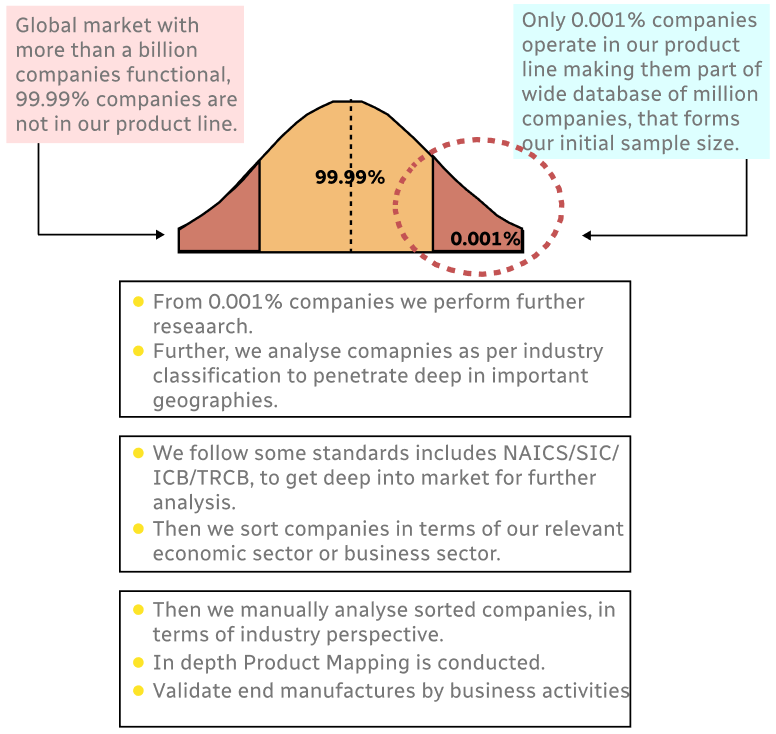
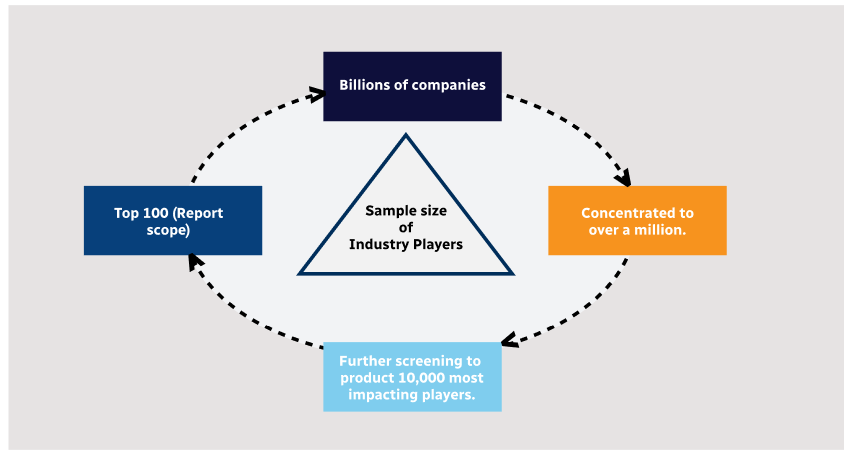
Step 1 - Identification of Relevant Samples Size from Population Database
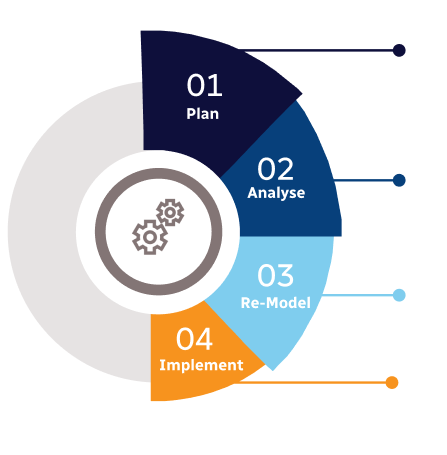
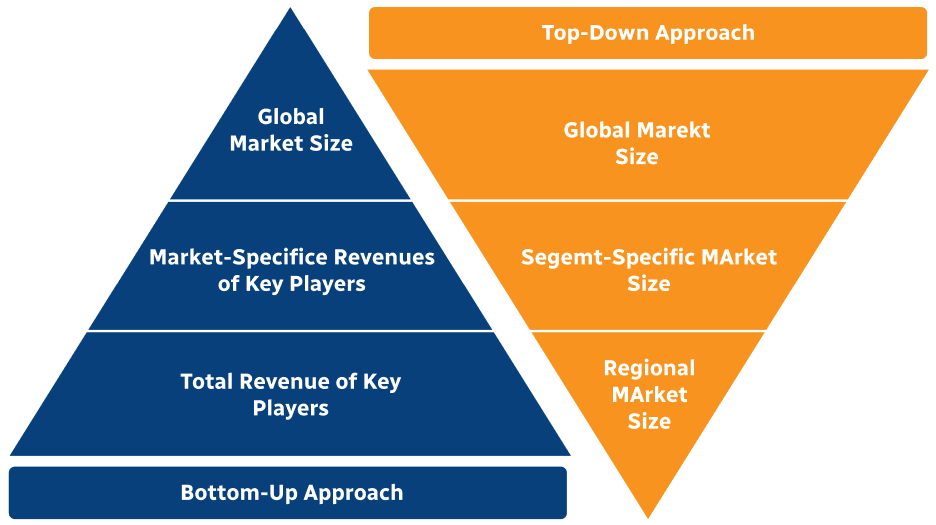
Step 2 - Approaches for Defining Global Market Size (Value, Volume* & Price*)
Note*: In applicable scenarios
Step 3 - Data Sources
Primary Research
- Web Analytics
- Survey Reports
- Research Institute
- Latest Research Reports
- Opinion Leaders
Secondary Research
- Annual Reports
- White Paper
- Latest Press Release
- Industry Association
- Paid Database
- Investor Presentations
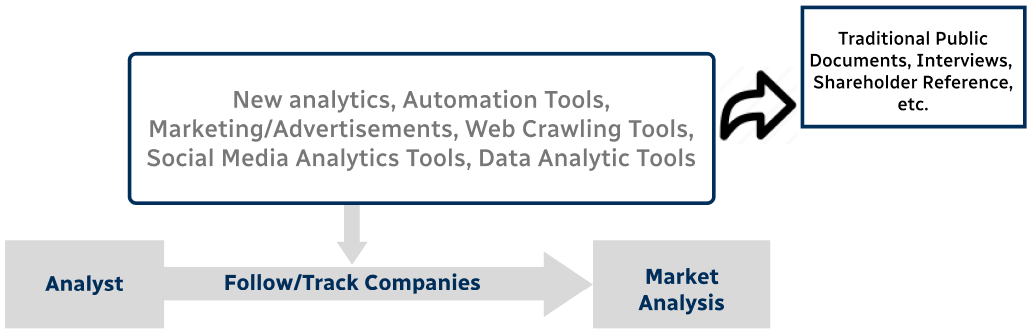
Step 4 - Data Triangulation
Involves using different sources of information in order to increase the validity of a study
These sources are likely to be stakeholders in a program - participants, other researchers, program staff, other community members, and so on.
Then we put all data in single framework & apply various statistical tools to find out the dynamic on the market.
During the analysis stage, feedback from the stakeholder groups would be compared to determine areas of agreement as well as areas of divergence