Key Insights
The global fire suppression systems market, currently valued at approximately $XX million (assuming a reasonable value based on market size and CAGR data from similar industries), is projected to experience robust growth with a compound annual growth rate (CAGR) of 5.10% from 2025 to 2033. This expansion is driven by several key factors. Increasing urbanization and industrialization are leading to a higher density of buildings and infrastructure, necessitating comprehensive fire safety measures. Stringent government regulations and building codes worldwide are mandating the installation of advanced fire suppression systems in various sectors, including commercial, industrial, and residential buildings. Furthermore, the growing awareness of fire safety and the rising demand for sophisticated systems, such as water-based mist systems offering superior fire control and reduced water damage, are significantly contributing to market growth. Technological advancements in fire detection and suppression technologies, such as intelligent sensors and AI-powered systems, are also fueling market expansion.
Market segmentation reveals a diverse landscape. Water-based systems, encompassing sprinkler and mist types, currently dominate the solution type segment due to their cost-effectiveness and widespread adoption. However, gas-based and foam-based systems are witnessing increasing demand in specialized applications requiring targeted fire suppression and minimal water damage. The commercial building sector is a major end-user vertical, followed by industrial and residential segments. Regional analysis (while specific numbers are absent from the provided data) indicates strong growth potential in developing economies within Asia-Pacific and Latin America, driven by infrastructure development and rising construction activities. Major players like Kidde Fire Safety, Rotarex, and Siemens AG are actively shaping the market through product innovation, strategic partnerships, and global expansion efforts, contributing to increased competition and driving further market evolution. However, high initial investment costs associated with advanced systems and the potential for maintenance complexities could act as restraints to market growth in certain sectors.
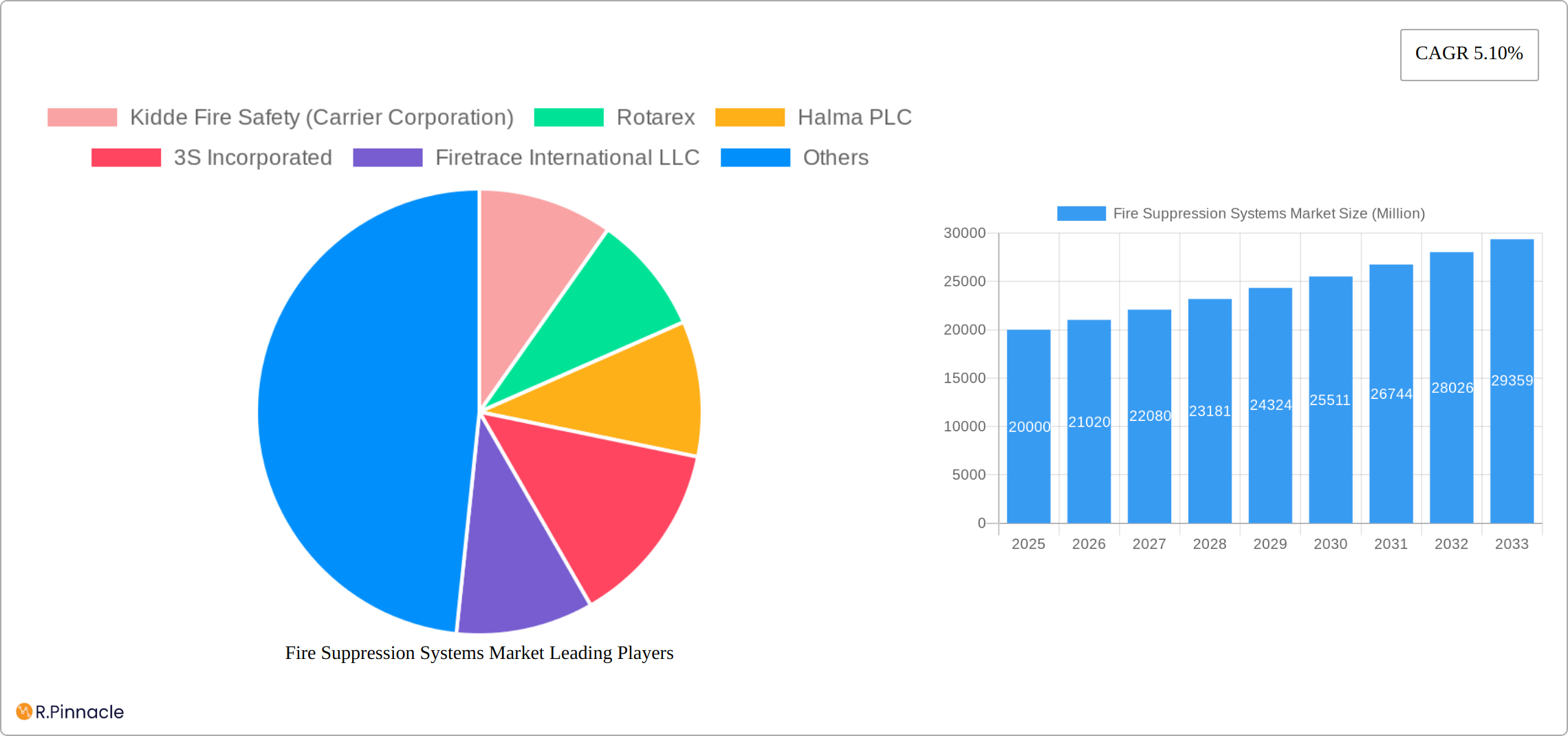
Fire Suppression Systems Market Report: 2019-2033
This comprehensive report provides a detailed analysis of the Fire Suppression Systems Market, offering valuable insights for industry professionals, investors, and strategists. The study period covers 2019-2033, with a base year of 2025 and a forecast period of 2025-2033. The market is segmented by solution type (water-based, gas-based, foam-based) and end-user vertical (commercial, industrial, residential, other). The report features a xx Million market valuation in 2025, projecting substantial growth with a CAGR of xx% during the forecast period.
Fire Suppression Systems Market Structure & Innovation Trends
This section analyzes the competitive landscape, innovation drivers, and regulatory influences shaping the fire suppression systems market. The market exhibits a moderately consolidated structure, with key players holding significant market share. For example, Kidde Fire Safety (Carrier Corporation), and Johnson Controls hold a combined xx% market share in 2025 (estimated). Innovation is driven by the increasing demand for advanced and intelligent fire safety solutions, stricter regulatory compliance requirements, and the need for improved efficiency and effectiveness in fire suppression. Several key trends are impacting the market:
- Technological advancements: Development of smart sensors, cloud-based monitoring systems, and AI-driven fire detection and suppression technologies are transforming the industry.
- Regulatory landscape: Stringent safety regulations and building codes are driving demand for more sophisticated fire suppression systems.
- Mergers and Acquisitions (M&A): Consolidation is expected to continue with significant M&A activity anticipated over the forecast period with a predicted xx Million in deal value (2025-2033).
- Product Substitution: While traditional systems remain dominant, there is growing interest in eco-friendly alternatives reducing the environmental impact of fire suppression.
- End-User Demographics: The growing construction of commercial and industrial buildings is a major market driver. Additionally, rising urbanization and population density fuel demand for effective fire safety in residential settings.
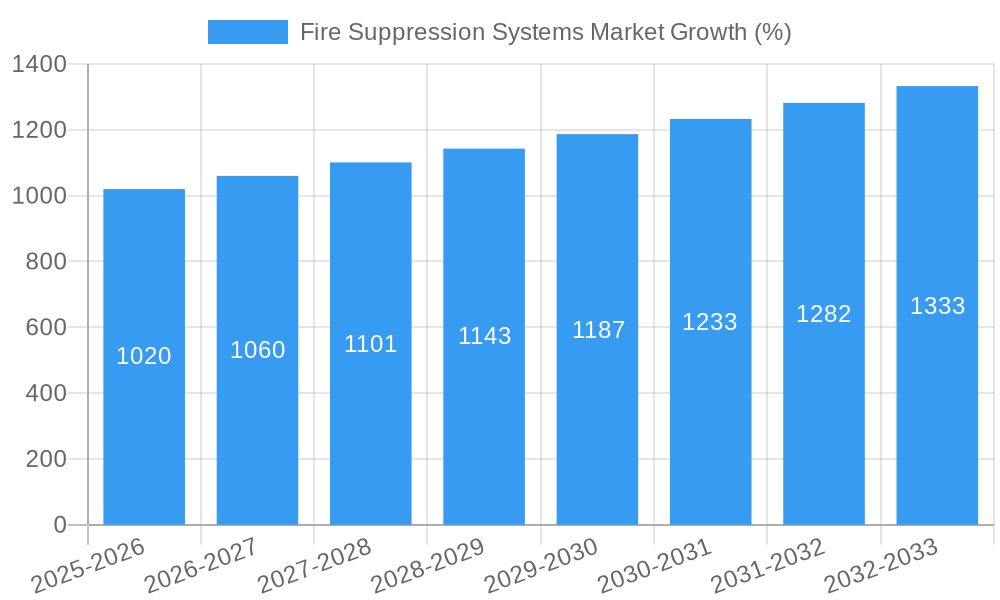
Fire Suppression Systems Market Dynamics & Trends
The fire suppression systems market is experiencing robust growth, propelled by several key factors. Stringent safety regulations in both developed and developing economies are mandating the installation of advanced fire suppression systems across various sectors. The increasing prevalence of high-rise buildings and large-scale industrial facilities significantly increases the demand for sophisticated systems. Rapid urbanization and rising disposable incomes further contribute to the market's expansion. Technological advancements, such as the incorporation of IoT and AI in fire detection and suppression systems, are creating opportunities for innovative solutions and improving system efficiency. Competitive dynamics are characterized by both established players and emerging companies competing on innovation, price, and service offerings. The market's growth is expected to remain strong due to increased construction activities globally. Moreover, the ongoing trend of smart buildings and integrated security systems fosters greater demand for advanced and interconnected fire suppression systems.
Dominant Regions & Segments in Fire Suppression Systems Market
The North American region is currently the leading market for fire suppression systems, driven by strong economic growth, robust construction activity, and stringent building codes. However, Asia-Pacific is projected to experience the fastest growth rate during the forecast period due to rapid urbanization, industrialization, and increasing infrastructure development.
Leading Segments by Solution Type:
- Water-based systems: This segment dominates the market due to their cost-effectiveness, reliability, and widespread adoption across various applications. The sprinkler type is currently the most prevalent.
- Gas-based systems: This segment is experiencing significant growth owing to its suitability for sensitive environments and effectiveness in protecting electronic equipment.
- Foam-based systems: This segment is witnessing moderate growth driven by the increasing demand for efficient fire suppression in specific industrial applications.
Leading Segments by End-user Vertical:
- Commercial Buildings: High occupancy rates and the presence of valuable assets in commercial buildings drive strong demand.
- Industrial Buildings: Manufacturing plants and warehouses require robust fire suppression systems to mitigate risks and prevent significant losses.
- Residential Buildings: Rising concerns about fire safety, particularly in high-rise apartments, drive growth in this segment. Increased awareness of fire safety and government regulations are also substantial contributors.
Key Drivers for Regional Dominance:
- North America: Stringent building codes, high disposable income, and advanced infrastructure support market expansion.
- Asia-Pacific: Rapid urbanization, industrialization, and rising construction activities fuel market growth.
Fire Suppression Systems Market Product Innovations
The fire suppression systems market is experiencing a wave of innovation focused on enhancing efficiency, intelligence, and environmental sustainability. Cutting-edge advancements include the seamless integration of IoT sensors, enabling real-time monitoring, remote system control, and predictive maintenance capabilities. This results in faster response times, minimized downtime, and significantly improved overall system performance. Cloud-based platforms offer centralized management and advanced data analytics, facilitating proactive fire safety management and informed decision-making. Furthermore, the industry is witnessing a strong push towards eco-friendly suppression agents, minimizing environmental impact and promoting responsible fire safety practices. These innovations are key differentiators, providing companies with a significant competitive advantage in the market by offering sophisticated, integrated, and sustainable fire suppression solutions.
Report Scope & Segmentation Analysis
This report provides a comprehensive and in-depth analysis of the fire suppression systems market, meticulously segmented by solution type and end-user vertical to provide a granular understanding of market dynamics.
By Solution Type:
- Water-based systems (Sprinkler Type and Mist Type): This segment continues to dominate the market due to its cost-effectiveness, reliability, and established track record. Its projected growth at an xx% CAGR reflects its enduring popularity and consistent demand across diverse applications. Further advancements in water-based technologies, such as improved nozzle designs and water mist systems, are contributing to this sustained growth.
- Gas-based systems: This segment exhibits strong growth potential, driven by the increasing need to protect sensitive electronic equipment and data centers where water damage is unacceptable. Its suitability for clean agent applications in these crucial environments fuels its projected xx% CAGR growth.
- Foam-based systems: While a niche segment, foam-based systems demonstrate moderate growth, primarily driven by specific industrial needs, such as combating flammable liquid fires. The xx% CAGR projection reflects its consistent application in specialized industries.
By End-user Vertical:
- Commercial Buildings: High demand is fueled by stringent safety regulations, the need for robust asset protection, and the growing awareness of fire safety among building owners and managers. The projected xx% CAGR highlights the continuous investment in advanced fire suppression systems within this sector.
- Industrial Buildings: The increasing number of large-scale industrial facilities and the inherent fire risks associated with their operations are driving market expansion. The projected xx% CAGR reflects the substantial growth potential in this sector.
- Residential Buildings: Rising awareness of fire safety among homeowners and the increasing adoption of fire suppression systems in high-rise apartments are key drivers of market growth in this segment. The projected xx% CAGR underscores the escalating demand for residential fire safety solutions.
- Other End-user Verticals: This diverse segment encompasses airports, seaports, data centers, and other specialized locations requiring tailored fire suppression systems. This segment presents significant growth opportunities for manufacturers offering specialized and highly adaptable solutions with a projected xx% CAGR.
Key Drivers of Fire Suppression Systems Market Growth
Several factors contribute to the market's expansion: increasing construction activity globally, stricter safety regulations, rising urbanization, and the adoption of advanced technologies. The demand for smart buildings and integrated security systems is also driving the market growth. Government initiatives promoting fire safety are further boosting market demand.
Challenges in the Fire Suppression Systems Market Sector
High initial investment costs for advanced systems can be a barrier for some customers. Supply chain disruptions can impact the availability of components and materials. Intense competition among established and new players puts pressure on pricing and profitability.
Emerging Opportunities in Fire Suppression Systems Market
The growing adoption of IoT and AI-based solutions is creating new opportunities. Expansion into new and developing markets offers significant potential. The increasing focus on sustainability creates opportunities for eco-friendly fire suppression systems.
Leading Players in the Fire Suppression Systems Market Market
- Kidde Fire Safety (Carrier Corporation)
- Rotarex
- Halma PLC
- 3S Incorporated
- Firetrace International LLC
- Siemens AG
- Johnson Controls
- ORR Protection
- McWane Inc
- Consilium
- Fike Corporation
Key Developments in Fire Suppression Systems Market Industry
- September 2022: Siemens launched a new digital service portfolio for fire safety, enabling proactive fire safety management.
- August 2022: Firetrace International opened facilities in India and China, expanding its reach into renewable energy markets.
Future Outlook for Fire Suppression Systems Market Market
The fire suppression systems market is poised for continued growth, driven by technological advancements, increasing demand from various sectors, and a greater emphasis on safety. Strategic partnerships, product diversification, and expansion into new markets will be crucial for companies to maintain a competitive edge. The incorporation of AI and IoT into fire safety systems will define future trends.
Fire Suppression Systems Market Segmentation
-
1. Solution Type
- 1.1. Water-based Systems (Sprinkler Type and Mist Type)
- 1.2. Gas-based Systems
- 1.3. Foam-based Systems
-
2. End-user Vertical
- 2.1. Commerci
- 2.2. Industri
- 2.3. Resident
- 2.4. Other En
Fire Suppression Systems Market Segmentation By Geography
- 1. North America
- 2. Europe
- 3. Asia Pacific
- 4. Latin America
- 5. Middle East
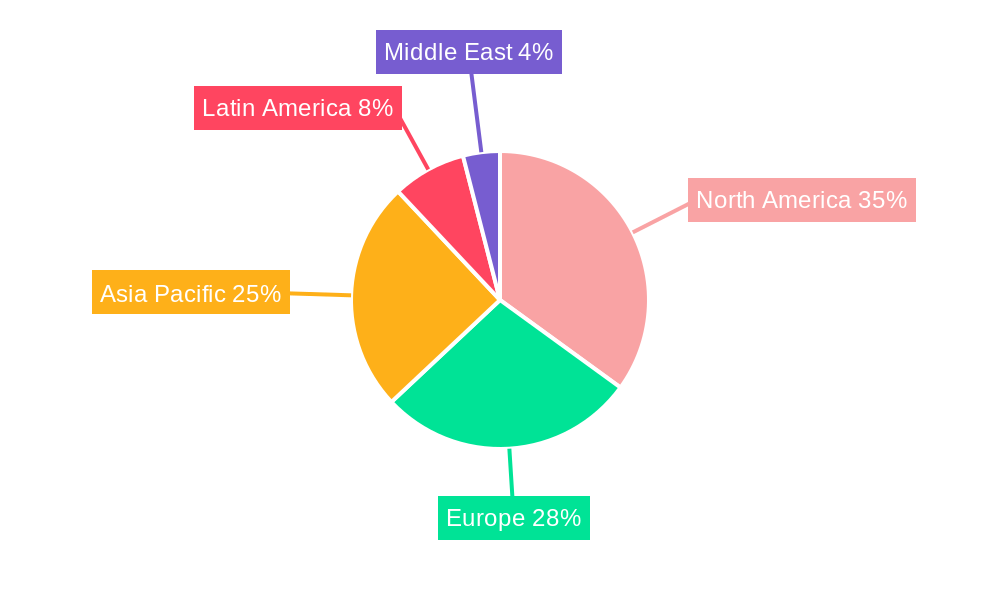
Fire Suppression Systems Market REPORT HIGHLIGHTS
| Aspects | Details |
|---|---|
| Study Period | 2019-2033 |
| Base Year | 2024 |
| Estimated Year | 2025 |
| Forecast Period | 2025-2033 |
| Historical Period | 2019-2024 |
| Growth Rate | CAGR of 5.10% from 2019-2033 |
| Segmentation |
|
Table of Contents
- 1. Introduction
- 1.1. Research Scope
- 1.2. Market Segmentation
- 1.3. Research Methodology
- 1.4. Definitions and Assumptions
- 2. Executive Summary
- 2.1. Introduction
- 3. Market Dynamics
- 3.1. Introduction
- 3.2. Market Drivers
- 3.2.1. Stringent Government Regulations and Mandates
- 3.3. Market Restrains
- 3.3.1. Security Concerns Related to IoT and Smart Devices; Higher Costs of Refurbishment of Old Buildings
- 3.4. Market Trends
- 3.4.1. Commercial Buildings Segment to Hold Significant Market Share
- 4. Market Factor Analysis
- 4.1. Porters Five Forces
- 4.2. Supply/Value Chain
- 4.3. PESTEL analysis
- 4.4. Market Entropy
- 4.5. Patent/Trademark Analysis
- 5. Global Fire Suppression Systems Market Analysis, Insights and Forecast, 2019-2031
- 5.1. Market Analysis, Insights and Forecast - by Solution Type
- 5.1.1. Water-based Systems (Sprinkler Type and Mist Type)
- 5.1.2. Gas-based Systems
- 5.1.3. Foam-based Systems
- 5.2. Market Analysis, Insights and Forecast - by End-user Vertical
- 5.2.1. Commerci
- 5.2.2. Industri
- 5.2.3. Resident
- 5.2.4. Other En
- 5.3. Market Analysis, Insights and Forecast - by Region
- 5.3.1. North America
- 5.3.2. Europe
- 5.3.3. Asia Pacific
- 5.3.4. Latin America
- 5.3.5. Middle East
- 5.1. Market Analysis, Insights and Forecast - by Solution Type
- 6. North America Fire Suppression Systems Market Analysis, Insights and Forecast, 2019-2031
- 6.1. Market Analysis, Insights and Forecast - by Solution Type
- 6.1.1. Water-based Systems (Sprinkler Type and Mist Type)
- 6.1.2. Gas-based Systems
- 6.1.3. Foam-based Systems
- 6.2. Market Analysis, Insights and Forecast - by End-user Vertical
- 6.2.1. Commerci
- 6.2.2. Industri
- 6.2.3. Resident
- 6.2.4. Other En
- 6.1. Market Analysis, Insights and Forecast - by Solution Type
- 7. Europe Fire Suppression Systems Market Analysis, Insights and Forecast, 2019-2031
- 7.1. Market Analysis, Insights and Forecast - by Solution Type
- 7.1.1. Water-based Systems (Sprinkler Type and Mist Type)
- 7.1.2. Gas-based Systems
- 7.1.3. Foam-based Systems
- 7.2. Market Analysis, Insights and Forecast - by End-user Vertical
- 7.2.1. Commerci
- 7.2.2. Industri
- 7.2.3. Resident
- 7.2.4. Other En
- 7.1. Market Analysis, Insights and Forecast - by Solution Type
- 8. Asia Pacific Fire Suppression Systems Market Analysis, Insights and Forecast, 2019-2031
- 8.1. Market Analysis, Insights and Forecast - by Solution Type
- 8.1.1. Water-based Systems (Sprinkler Type and Mist Type)
- 8.1.2. Gas-based Systems
- 8.1.3. Foam-based Systems
- 8.2. Market Analysis, Insights and Forecast - by End-user Vertical
- 8.2.1. Commerci
- 8.2.2. Industri
- 8.2.3. Resident
- 8.2.4. Other En
- 8.1. Market Analysis, Insights and Forecast - by Solution Type
- 9. Latin America Fire Suppression Systems Market Analysis, Insights and Forecast, 2019-2031
- 9.1. Market Analysis, Insights and Forecast - by Solution Type
- 9.1.1. Water-based Systems (Sprinkler Type and Mist Type)
- 9.1.2. Gas-based Systems
- 9.1.3. Foam-based Systems
- 9.2. Market Analysis, Insights and Forecast - by End-user Vertical
- 9.2.1. Commerci
- 9.2.2. Industri
- 9.2.3. Resident
- 9.2.4. Other En
- 9.1. Market Analysis, Insights and Forecast - by Solution Type
- 10. Middle East Fire Suppression Systems Market Analysis, Insights and Forecast, 2019-2031
- 10.1. Market Analysis, Insights and Forecast - by Solution Type
- 10.1.1. Water-based Systems (Sprinkler Type and Mist Type)
- 10.1.2. Gas-based Systems
- 10.1.3. Foam-based Systems
- 10.2. Market Analysis, Insights and Forecast - by End-user Vertical
- 10.2.1. Commerci
- 10.2.2. Industri
- 10.2.3. Resident
- 10.2.4. Other En
- 10.1. Market Analysis, Insights and Forecast - by Solution Type
- 11. North America Fire Suppression Systems Market Analysis, Insights and Forecast, 2019-2031
- 11.1. Market Analysis, Insights and Forecast - By Country/Sub-region
- 11.1.1.
- 12. Europe Fire Suppression Systems Market Analysis, Insights and Forecast, 2019-2031
- 12.1. Market Analysis, Insights and Forecast - By Country/Sub-region
- 12.1.1.
- 13. Asia Pacific Fire Suppression Systems Market Analysis, Insights and Forecast, 2019-2031
- 13.1. Market Analysis, Insights and Forecast - By Country/Sub-region
- 13.1.1.
- 14. Latin America Fire Suppression Systems Market Analysis, Insights and Forecast, 2019-2031
- 14.1. Market Analysis, Insights and Forecast - By Country/Sub-region
- 14.1.1.
- 15. Middle East Fire Suppression Systems Market Analysis, Insights and Forecast, 2019-2031
- 15.1. Market Analysis, Insights and Forecast - By Country/Sub-region
- 15.1.1.
- 16. Competitive Analysis
- 16.1. Global Market Share Analysis 2024
- 16.2. Company Profiles
- 16.2.1 Kidde Fire Safety (Carrier Corporation)
- 16.2.1.1. Overview
- 16.2.1.2. Products
- 16.2.1.3. SWOT Analysis
- 16.2.1.4. Recent Developments
- 16.2.1.5. Financials (Based on Availability)
- 16.2.2 Rotarex
- 16.2.2.1. Overview
- 16.2.2.2. Products
- 16.2.2.3. SWOT Analysis
- 16.2.2.4. Recent Developments
- 16.2.2.5. Financials (Based on Availability)
- 16.2.3 Halma PLC
- 16.2.3.1. Overview
- 16.2.3.2. Products
- 16.2.3.3. SWOT Analysis
- 16.2.3.4. Recent Developments
- 16.2.3.5. Financials (Based on Availability)
- 16.2.4 3S Incorporated
- 16.2.4.1. Overview
- 16.2.4.2. Products
- 16.2.4.3. SWOT Analysis
- 16.2.4.4. Recent Developments
- 16.2.4.5. Financials (Based on Availability)
- 16.2.5 Firetrace International LLC
- 16.2.5.1. Overview
- 16.2.5.2. Products
- 16.2.5.3. SWOT Analysis
- 16.2.5.4. Recent Developments
- 16.2.5.5. Financials (Based on Availability)
- 16.2.6 Siemens AG
- 16.2.6.1. Overview
- 16.2.6.2. Products
- 16.2.6.3. SWOT Analysis
- 16.2.6.4. Recent Developments
- 16.2.6.5. Financials (Based on Availability)
- 16.2.7 Johnson Controls
- 16.2.7.1. Overview
- 16.2.7.2. Products
- 16.2.7.3. SWOT Analysis
- 16.2.7.4. Recent Developments
- 16.2.7.5. Financials (Based on Availability)
- 16.2.8 ORR Protection
- 16.2.8.1. Overview
- 16.2.8.2. Products
- 16.2.8.3. SWOT Analysis
- 16.2.8.4. Recent Developments
- 16.2.8.5. Financials (Based on Availability)
- 16.2.9 McWane Inc *List Not Exhaustive
- 16.2.9.1. Overview
- 16.2.9.2. Products
- 16.2.9.3. SWOT Analysis
- 16.2.9.4. Recent Developments
- 16.2.9.5. Financials (Based on Availability)
- 16.2.10 Consilium
- 16.2.10.1. Overview
- 16.2.10.2. Products
- 16.2.10.3. SWOT Analysis
- 16.2.10.4. Recent Developments
- 16.2.10.5. Financials (Based on Availability)
- 16.2.11 Fike Corporation
- 16.2.11.1. Overview
- 16.2.11.2. Products
- 16.2.11.3. SWOT Analysis
- 16.2.11.4. Recent Developments
- 16.2.11.5. Financials (Based on Availability)
- 16.2.1 Kidde Fire Safety (Carrier Corporation)
List of Figures
- Figure 1: Global Fire Suppression Systems Market Revenue Breakdown (Million, %) by Region 2024 & 2032
- Figure 2: North America Fire Suppression Systems Market Revenue (Million), by Country 2024 & 2032
- Figure 3: North America Fire Suppression Systems Market Revenue Share (%), by Country 2024 & 2032
- Figure 4: Europe Fire Suppression Systems Market Revenue (Million), by Country 2024 & 2032
- Figure 5: Europe Fire Suppression Systems Market Revenue Share (%), by Country 2024 & 2032
- Figure 6: Asia Pacific Fire Suppression Systems Market Revenue (Million), by Country 2024 & 2032
- Figure 7: Asia Pacific Fire Suppression Systems Market Revenue Share (%), by Country 2024 & 2032
- Figure 8: Latin America Fire Suppression Systems Market Revenue (Million), by Country 2024 & 2032
- Figure 9: Latin America Fire Suppression Systems Market Revenue Share (%), by Country 2024 & 2032
- Figure 10: Middle East Fire Suppression Systems Market Revenue (Million), by Country 2024 & 2032
- Figure 11: Middle East Fire Suppression Systems Market Revenue Share (%), by Country 2024 & 2032
- Figure 12: North America Fire Suppression Systems Market Revenue (Million), by Solution Type 2024 & 2032
- Figure 13: North America Fire Suppression Systems Market Revenue Share (%), by Solution Type 2024 & 2032
- Figure 14: North America Fire Suppression Systems Market Revenue (Million), by End-user Vertical 2024 & 2032
- Figure 15: North America Fire Suppression Systems Market Revenue Share (%), by End-user Vertical 2024 & 2032
- Figure 16: North America Fire Suppression Systems Market Revenue (Million), by Country 2024 & 2032
- Figure 17: North America Fire Suppression Systems Market Revenue Share (%), by Country 2024 & 2032
- Figure 18: Europe Fire Suppression Systems Market Revenue (Million), by Solution Type 2024 & 2032
- Figure 19: Europe Fire Suppression Systems Market Revenue Share (%), by Solution Type 2024 & 2032
- Figure 20: Europe Fire Suppression Systems Market Revenue (Million), by End-user Vertical 2024 & 2032
- Figure 21: Europe Fire Suppression Systems Market Revenue Share (%), by End-user Vertical 2024 & 2032
- Figure 22: Europe Fire Suppression Systems Market Revenue (Million), by Country 2024 & 2032
- Figure 23: Europe Fire Suppression Systems Market Revenue Share (%), by Country 2024 & 2032
- Figure 24: Asia Pacific Fire Suppression Systems Market Revenue (Million), by Solution Type 2024 & 2032
- Figure 25: Asia Pacific Fire Suppression Systems Market Revenue Share (%), by Solution Type 2024 & 2032
- Figure 26: Asia Pacific Fire Suppression Systems Market Revenue (Million), by End-user Vertical 2024 & 2032
- Figure 27: Asia Pacific Fire Suppression Systems Market Revenue Share (%), by End-user Vertical 2024 & 2032
- Figure 28: Asia Pacific Fire Suppression Systems Market Revenue (Million), by Country 2024 & 2032
- Figure 29: Asia Pacific Fire Suppression Systems Market Revenue Share (%), by Country 2024 & 2032
- Figure 30: Latin America Fire Suppression Systems Market Revenue (Million), by Solution Type 2024 & 2032
- Figure 31: Latin America Fire Suppression Systems Market Revenue Share (%), by Solution Type 2024 & 2032
- Figure 32: Latin America Fire Suppression Systems Market Revenue (Million), by End-user Vertical 2024 & 2032
- Figure 33: Latin America Fire Suppression Systems Market Revenue Share (%), by End-user Vertical 2024 & 2032
- Figure 34: Latin America Fire Suppression Systems Market Revenue (Million), by Country 2024 & 2032
- Figure 35: Latin America Fire Suppression Systems Market Revenue Share (%), by Country 2024 & 2032
- Figure 36: Middle East Fire Suppression Systems Market Revenue (Million), by Solution Type 2024 & 2032
- Figure 37: Middle East Fire Suppression Systems Market Revenue Share (%), by Solution Type 2024 & 2032
- Figure 38: Middle East Fire Suppression Systems Market Revenue (Million), by End-user Vertical 2024 & 2032
- Figure 39: Middle East Fire Suppression Systems Market Revenue Share (%), by End-user Vertical 2024 & 2032
- Figure 40: Middle East Fire Suppression Systems Market Revenue (Million), by Country 2024 & 2032
- Figure 41: Middle East Fire Suppression Systems Market Revenue Share (%), by Country 2024 & 2032
List of Tables
- Table 1: Global Fire Suppression Systems Market Revenue Million Forecast, by Region 2019 & 2032
- Table 2: Global Fire Suppression Systems Market Revenue Million Forecast, by Solution Type 2019 & 2032
- Table 3: Global Fire Suppression Systems Market Revenue Million Forecast, by End-user Vertical 2019 & 2032
- Table 4: Global Fire Suppression Systems Market Revenue Million Forecast, by Region 2019 & 2032
- Table 5: Global Fire Suppression Systems Market Revenue Million Forecast, by Country 2019 & 2032
- Table 6: Fire Suppression Systems Market Revenue (Million) Forecast, by Application 2019 & 2032
- Table 7: Global Fire Suppression Systems Market Revenue Million Forecast, by Country 2019 & 2032
- Table 8: Fire Suppression Systems Market Revenue (Million) Forecast, by Application 2019 & 2032
- Table 9: Global Fire Suppression Systems Market Revenue Million Forecast, by Country 2019 & 2032
- Table 10: Fire Suppression Systems Market Revenue (Million) Forecast, by Application 2019 & 2032
- Table 11: Global Fire Suppression Systems Market Revenue Million Forecast, by Country 2019 & 2032
- Table 12: Fire Suppression Systems Market Revenue (Million) Forecast, by Application 2019 & 2032
- Table 13: Global Fire Suppression Systems Market Revenue Million Forecast, by Country 2019 & 2032
- Table 14: Fire Suppression Systems Market Revenue (Million) Forecast, by Application 2019 & 2032
- Table 15: Global Fire Suppression Systems Market Revenue Million Forecast, by Solution Type 2019 & 2032
- Table 16: Global Fire Suppression Systems Market Revenue Million Forecast, by End-user Vertical 2019 & 2032
- Table 17: Global Fire Suppression Systems Market Revenue Million Forecast, by Country 2019 & 2032
- Table 18: Global Fire Suppression Systems Market Revenue Million Forecast, by Solution Type 2019 & 2032
- Table 19: Global Fire Suppression Systems Market Revenue Million Forecast, by End-user Vertical 2019 & 2032
- Table 20: Global Fire Suppression Systems Market Revenue Million Forecast, by Country 2019 & 2032
- Table 21: Global Fire Suppression Systems Market Revenue Million Forecast, by Solution Type 2019 & 2032
- Table 22: Global Fire Suppression Systems Market Revenue Million Forecast, by End-user Vertical 2019 & 2032
- Table 23: Global Fire Suppression Systems Market Revenue Million Forecast, by Country 2019 & 2032
- Table 24: Global Fire Suppression Systems Market Revenue Million Forecast, by Solution Type 2019 & 2032
- Table 25: Global Fire Suppression Systems Market Revenue Million Forecast, by End-user Vertical 2019 & 2032
- Table 26: Global Fire Suppression Systems Market Revenue Million Forecast, by Country 2019 & 2032
- Table 27: Global Fire Suppression Systems Market Revenue Million Forecast, by Solution Type 2019 & 2032
- Table 28: Global Fire Suppression Systems Market Revenue Million Forecast, by End-user Vertical 2019 & 2032
- Table 29: Global Fire Suppression Systems Market Revenue Million Forecast, by Country 2019 & 2032
Frequently Asked Questions
1. What is the projected Compound Annual Growth Rate (CAGR) of the Fire Suppression Systems Market?
The projected CAGR is approximately 5.10%.
2. Which companies are prominent players in the Fire Suppression Systems Market?
Key companies in the market include Kidde Fire Safety (Carrier Corporation), Rotarex, Halma PLC, 3S Incorporated, Firetrace International LLC, Siemens AG, Johnson Controls, ORR Protection, McWane Inc *List Not Exhaustive, Consilium, Fike Corporation.
3. What are the main segments of the Fire Suppression Systems Market?
The market segments include Solution Type, End-user Vertical.
4. Can you provide details about the market size?
The market size is estimated to be USD XX Million as of 2022.
5. What are some drivers contributing to market growth?
Stringent Government Regulations and Mandates.
6. What are the notable trends driving market growth?
Commercial Buildings Segment to Hold Significant Market Share.
7. Are there any restraints impacting market growth?
Security Concerns Related to IoT and Smart Devices; Higher Costs of Refurbishment of Old Buildings.
8. Can you provide examples of recent developments in the market?
September 2022 - Siemens launched a new digital service portfolio for fire safety. These new fire safety digital services enable businesses to move from reactive to proactive fire safety. The company's first-in-market cloud-based portfolio goes beyond compliance for total protection through intelligent security.
9. What pricing options are available for accessing the report?
Pricing options include single-user, multi-user, and enterprise licenses priced at USD 4750, USD 5250, and USD 8750 respectively.
10. Is the market size provided in terms of value or volume?
The market size is provided in terms of value, measured in Million.
11. Are there any specific market keywords associated with the report?
Yes, the market keyword associated with the report is "Fire Suppression Systems Market," which aids in identifying and referencing the specific market segment covered.
12. How do I determine which pricing option suits my needs best?
The pricing options vary based on user requirements and access needs. Individual users may opt for single-user licenses, while businesses requiring broader access may choose multi-user or enterprise licenses for cost-effective access to the report.
13. Are there any additional resources or data provided in the Fire Suppression Systems Market report?
While the report offers comprehensive insights, it's advisable to review the specific contents or supplementary materials provided to ascertain if additional resources or data are available.
14. How can I stay updated on further developments or reports in the Fire Suppression Systems Market?
To stay informed about further developments, trends, and reports in the Fire Suppression Systems Market, consider subscribing to industry newsletters, following relevant companies and organizations, or regularly checking reputable industry news sources and publications.
Methodology
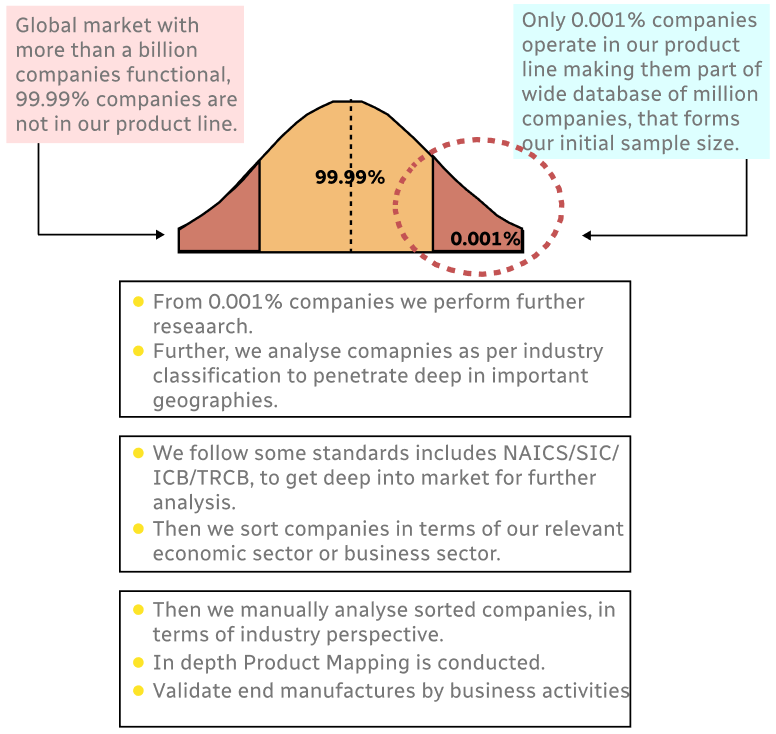
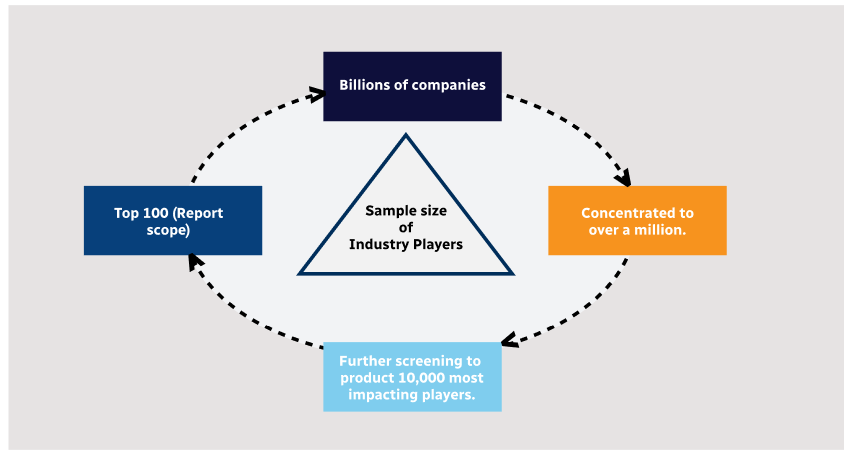
Step 1 - Identification of Relevant Samples Size from Population Database
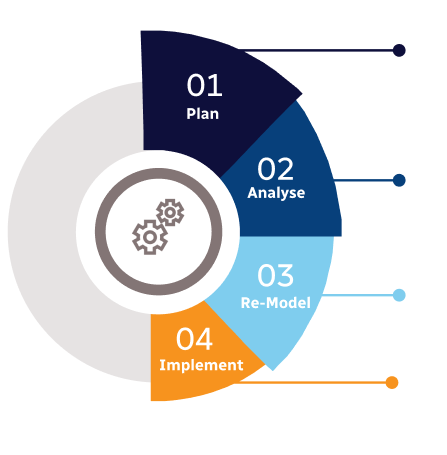
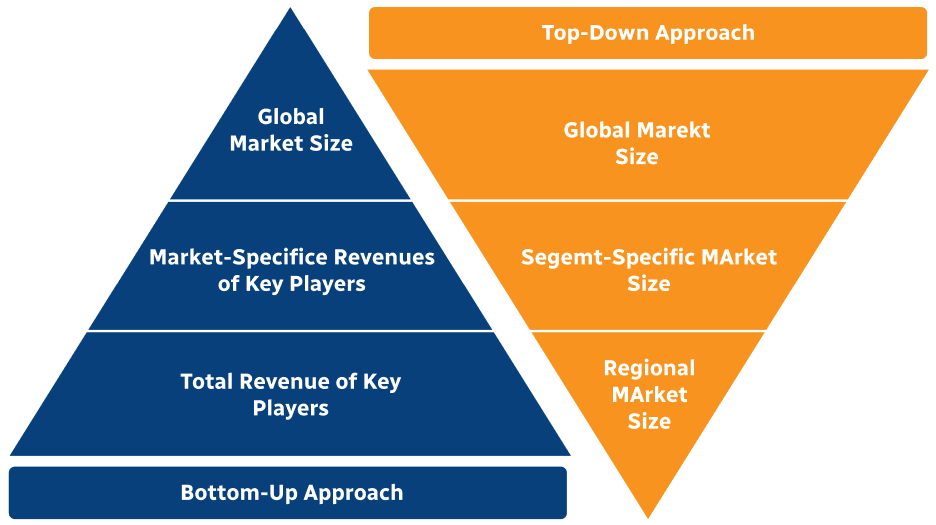
Step 2 - Approaches for Defining Global Market Size (Value, Volume* & Price*)
Note*: In applicable scenarios
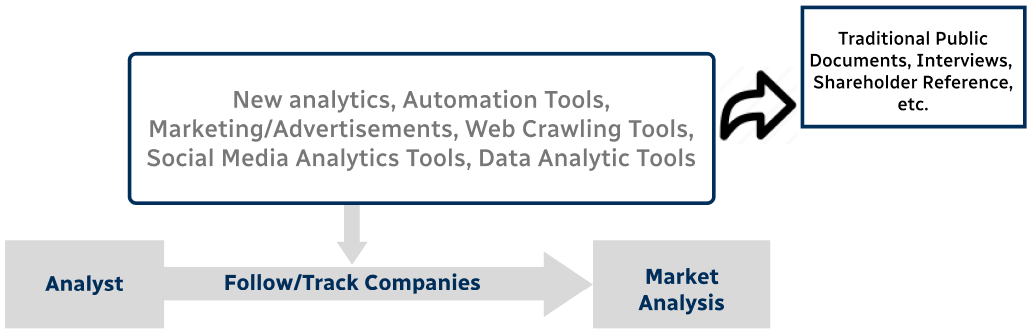
Step 3 - Data Sources
Primary Research
- Web Analytics
- Survey Reports
- Research Institute
- Latest Research Reports
- Opinion Leaders
Secondary Research
- Annual Reports
- White Paper
- Latest Press Release
- Industry Association
- Paid Database
- Investor Presentations
Step 4 - Data Triangulation
Involves using different sources of information in order to increase the validity of a study
These sources are likely to be stakeholders in a program - participants, other researchers, program staff, other community members, and so on.
Then we put all data in single framework & apply various statistical tools to find out the dynamic on the market.
During the analysis stage, feedback from the stakeholder groups would be compared to determine areas of agreement as well as areas of divergence