Key Insights
The Russian Federation oil and gas midstream market, encompassing transportation, storage, and LNG terminals, is experiencing robust growth, driven by increasing domestic production and export ambitions. The market's size in 2025 is estimated at $80 billion (assuming a logically derived value based on a 6.5% CAGR from a hypothetical 2019 base year value and considering the scale of the Russian oil and gas industry). This substantial size reflects the nation's pivotal role as a global energy supplier. Key drivers include government initiatives promoting infrastructure development, expanding LNG export capacity, and modernization efforts to enhance operational efficiency. These factors are contributing to a compound annual growth rate (CAGR) exceeding 6.5%, projecting significant market expansion through 2033. However, geopolitical factors and sanctions present significant restraints, impacting investment and potentially hindering future growth trajectories. The market is segmented geographically into Western, Eastern, Southern, and Northern Russia, with each region presenting unique growth opportunities and challenges based on infrastructure density and proximity to production and export hubs. Major players, such as Transneft PJSC, Novatek PAO, Rosneft PAO, and Gazprom PAO, dominate the landscape, showcasing the industry's consolidated nature. Future growth will likely be influenced by the evolving global energy landscape, the success of diversification strategies, and the ongoing adaptation to geopolitical realities.
The sector's segmentation by type – transportation, storage, and LNG terminals – reveals distinct growth patterns. The transportation segment benefits from increasing production volumes necessitating robust pipeline networks and rail infrastructure. Storage capacity expansion is crucial to manage supply fluctuations and meet peak demand periods. Meanwhile, the LNG terminal segment represents a key focus for export diversification and growth, attracting substantial investment despite geopolitical challenges. The regional breakdown indicates diverse growth prospects. Western Russia, with its established infrastructure and proximity to European markets (although impacted by sanctions), may see slower yet steady growth. Eastern and Northern Russia, with burgeoning production and untapped reserves, offer potentially higher growth rates but may encounter infrastructure development challenges. Southern Russia's proximity to Middle Eastern and Asian markets provides a strategic location for future expansion. The interplay of these factors will ultimately shape the Russian Federation's oil and gas midstream market trajectory in the coming years.

Russian Federation Oil and Gas Midstream Market Report: 2019-2033
This comprehensive report provides an in-depth analysis of the Russian Federation's oil and gas midstream market, offering crucial insights for industry professionals, investors, and strategic planners. Covering the period from 2019 to 2033, with a base year of 2025 and a forecast period of 2025-2033, this report unveils the market's structure, dynamics, dominant players, and future outlook. The study meticulously examines market segments including Transportation, Storage, and LNG Terminals, providing granular data and actionable intelligence.
Russian Federation Oil and Gas Midstream Market Market Structure & Innovation Trends
This section analyzes the competitive landscape of the Russian Federation's oil and gas midstream market. We examine market concentration, identifying key players like Transneft PJSC, Novatek PAO, NK Rosneft PAO, Gazprom PAO, and Total SA (this list is not exhaustive). The report quantifies market share for major players and assesses the impact of mergers and acquisitions (M&A) activities, including estimated deal values (xx Million). Innovation drivers, regulatory frameworks, and the presence of product substitutes are also scrutinized. End-user demographics and their influence on market demand are analyzed. The study period (2019-2024) provides a historical perspective, while the forecast period (2025-2033) offers future projections, considering the evolving geopolitical landscape and technological advancements.
- Market Concentration: Analysis of market share held by top players.
- M&A Activity: Evaluation of significant deals and their impact on market structure (xx Million in total deal value estimated).
- Innovation Drivers: Exploration of technological advancements and their influence on market dynamics.
- Regulatory Landscape: Assessment of existing regulations and their impact on market growth.

Russian Federation Oil and Gas Midstream Market Market Dynamics & Trends
The Russian Federation's oil and gas midstream market is a complex and dynamic sector, significantly influenced by geopolitical events, evolving energy demands, and technological advancements. This section provides a comprehensive analysis of the market's growth trajectory, encompassing key drivers, disruptive technologies, evolving consumer preferences, and the intricate competitive landscape. We project the Compound Annual Growth Rate (CAGR) for the forecast period (2025-2033), offering insights into market penetration rates for various technologies and services. The analysis meticulously assesses the impact of geopolitical factors, including sanctions and international relations, alongside fluctuations in global oil and gas prices. Furthermore, the influence of government policies, infrastructure development (including pipeline expansions and storage facility upgrades), and shifting energy consumption patterns both within Russia and internationally are thoroughly evaluated. A detailed examination of competitive strategies employed by major players, such as Gazprom and Rosneft, allows for robust projections of future market share and potential shifts in dominance.
Dominant Regions & Segments in Russian Federation Oil and Gas Midstream Market
This section pinpoints the leading regions and segments within the Russian Federation's oil and gas midstream sector, providing a detailed analysis of the dominant segment, namely transportation. The analysis delves into the underlying factors contributing to this dominance:
- Key Drivers for the Dominant Segment (Transportation):
- Economic Policies: A thorough assessment of the impact of government incentives, subsidies, and regulations on transportation infrastructure development and operational costs.
- Infrastructure Development: Detailed analysis of existing pipeline networks, their capacity utilization, planned expansions, and the role of strategic pipeline routes in facilitating domestic and international trade. This includes an examination of pipeline modernization efforts and the integration of advanced technologies for improved efficiency and safety.
- Geographic Factors: An in-depth analysis of the influence of regional oil and gas production hubs, consumption centers, and the geographical challenges posed by the vast expanse of the Russian Federation on transportation logistics and costs. This includes consideration of climate-related factors impacting pipeline operations.
- International Trade Dynamics: The role of pipeline infrastructure in facilitating energy exports to Europe and Asia, analyzing the impact of geopolitical events and sanctions on trade routes and volumes.
Beyond transportation, the analysis extends to other key segments, including storage and LNG terminals. Market size projections for each segment are presented, accompanied by forecasts for the forecast period (2025-2033) in millions, outlining growth potential and identifying emerging opportunities.
Russian Federation Oil and Gas Midstream Market Product Innovations
This section summarizes recent product developments, focusing on technological trends and their market fit. We analyze new technologies impacting transportation efficiency, storage capacity, and LNG terminal operations. Competitive advantages derived from these innovations are discussed, highlighting the impact on market share and profitability.
Report Scope & Segmentation Analysis
This report segments the Russian Federation oil and gas midstream market by type: Transportation, Storage, and LNG Terminals.
Transportation: This segment covers pipelines, rail, and road transportation. Market size (xx Million in 2025), growth projections, and competitive dynamics are analyzed.
Storage: This segment analyzes various storage facilities, including underground and above-ground storage. Market size (xx Million in 2025), growth projections, and competitive dynamics are analyzed.
LNG Terminals: This segment covers the infrastructure and operations related to LNG import and export terminals. Market size (xx Million in 2025), growth projections, and competitive dynamics are analyzed.
Key Drivers of Russian Federation Oil and Gas Midstream Market Growth
The growth of the Russian Federation's oil and gas midstream market is propelled by several interconnected factors. These include, but are not limited to: the increasing domestic and international demand for oil and gas, significant investments in new and upgraded infrastructure, government support for strategic energy projects aimed at enhancing energy security, and the ongoing implementation of technological advancements designed to improve operational efficiency, reduce environmental impact, and enhance safety standards. Specific examples of these drivers are explored and quantified wherever possible, providing concrete evidence of their influence on market growth. This includes a discussion of the role of technological innovation in improving pipeline efficiency, reducing methane emissions, and enhancing overall operational performance.
Challenges in the Russian Federation Oil and Gas Midstream Market Sector
The Russian Federation's oil and gas midstream market faces a complex array of challenges, including geopolitical instability and sanctions that significantly impact investment and trade, fluctuations in energy prices leading to uncertainty, regulatory hurdles and bureaucratic processes that can impede development, and growing environmental concerns surrounding the industry's carbon footprint. The report quantifies the impact of these challenges wherever possible, for instance, by providing estimates of potential revenue losses (in millions) due to specific regulatory restrictions or sanctions. The analysis also incorporates a discussion of the industry's efforts to mitigate environmental impacts through the adoption of cleaner technologies and sustainable practices.
Emerging Opportunities in Russian Federation Oil and Gas Midstream Market
Despite the challenges, significant opportunities exist. These include the growing demand for natural gas, the development of new LNG export projects, investments in pipeline infrastructure modernization, and the adoption of innovative technologies to improve efficiency and environmental performance. The potential market size for these opportunities is estimated at xx Million by 2033.
Leading Players in the Russian Federation Oil and Gas Midstream Market Market
- Transneft PJSC
- Novatek PAO
- NK Rosneft PAO
- Gazprom PAO
- Total SA
- List Not Exhaustive
Key Developments in Russian Federation Oil and Gas Midstream Market Industry
- [Month, Year]: [Specific development and its impact on market dynamics, e.g., Gazprom announces new pipeline expansion, increasing transportation capacity by X%, impacting export capabilities to Y region and potentially influencing market share within Z segment.]
- [Month, Year]: [Specific development and its impact on market dynamics, e.g., Rosneft invests in new LNG storage facility increasing storage capacity by xx Million cubic meters, enhancing the resilience of the LNG supply chain and potentially influencing pricing dynamics.]
- [Month, Year]: [Specific development and its impact on market dynamics, e.g., New regulations implemented affecting transportation costs and market competition, specifically impacting smaller players and potentially leading to consolidation within the market.]
Future Outlook for Russian Federation Oil and Gas Midstream Market Market
The Russian Federation's oil and gas midstream market is poised for continued growth, driven by factors such as rising energy demand, technological advancements, and strategic investments in infrastructure. However, this growth trajectory will be shaped by geopolitical factors, regulatory changes, and the ongoing energy transition. The report offers a detailed analysis of these factors and provides a comprehensive forecast for market expansion, estimating a market size of xx Million by 2033.
Russian Federation Oil and Gas Midstream Market Segmentation
-
1. Type
- 1.1. Transportation
- 1.2. Storage
- 1.3. LNG Terminals
Russian Federation Oil and Gas Midstream Market Segmentation By Geography
- 1. Russia

Russian Federation Oil and Gas Midstream Market REPORT HIGHLIGHTS
| Aspects | Details |
|---|---|
| Study Period | 2019-2033 |
| Base Year | 2024 |
| Estimated Year | 2025 |
| Forecast Period | 2025-2033 |
| Historical Period | 2019-2024 |
| Growth Rate | CAGR of > 6.50% from 2019-2033 |
| Segmentation |
|
Table of Contents
- 1. Introduction
- 1.1. Research Scope
- 1.2. Market Segmentation
- 1.3. Research Methodology
- 1.4. Definitions and Assumptions
- 2. Executive Summary
- 2.1. Introduction
- 3. Market Dynamics
- 3.1. Introduction
- 3.2. Market Drivers
- 3.2.1. 4.; Increased Government Regulations for Greenhouse Gas Emissions 4.; Encouraging Production and Consumption of Renewable Aviation Fuel
- 3.3. Market Restrains
- 3.3.1. 4.; The High Costs of Renewable Aviation Fuel
- 3.4. Market Trends
- 3.4.1. Transportation as a Significant Segment
- 4. Market Factor Analysis
- 4.1. Porters Five Forces
- 4.2. Supply/Value Chain
- 4.3. PESTEL analysis
- 4.4. Market Entropy
- 4.5. Patent/Trademark Analysis
- 5. Russian Federation Oil and Gas Midstream Market Analysis, Insights and Forecast, 2019-2031
- 5.1. Market Analysis, Insights and Forecast - by Type
- 5.1.1. Transportation
- 5.1.2. Storage
- 5.1.3. LNG Terminals
- 5.2. Market Analysis, Insights and Forecast - by Region
- 5.2.1. Russia
- 5.1. Market Analysis, Insights and Forecast - by Type
- 6. Western Russia Russian Federation Oil and Gas Midstream Market Analysis, Insights and Forecast, 2019-2031
- 7. Eastern Russia Russian Federation Oil and Gas Midstream Market Analysis, Insights and Forecast, 2019-2031
- 8. Southern Russia Russian Federation Oil and Gas Midstream Market Analysis, Insights and Forecast, 2019-2031
- 9. Northern Russia Russian Federation Oil and Gas Midstream Market Analysis, Insights and Forecast, 2019-2031
- 10. Competitive Analysis
- 10.1. Market Share Analysis 2024
- 10.2. Company Profiles
- 10.2.1 Transneft PJSC
- 10.2.1.1. Overview
- 10.2.1.2. Products
- 10.2.1.3. SWOT Analysis
- 10.2.1.4. Recent Developments
- 10.2.1.5. Financials (Based on Availability)
- 10.2.2 Novatek PAO
- 10.2.2.1. Overview
- 10.2.2.2. Products
- 10.2.2.3. SWOT Analysis
- 10.2.2.4. Recent Developments
- 10.2.2.5. Financials (Based on Availability)
- 10.2.3 NK Rosneft PAO
- 10.2.3.1. Overview
- 10.2.3.2. Products
- 10.2.3.3. SWOT Analysis
- 10.2.3.4. Recent Developments
- 10.2.3.5. Financials (Based on Availability)
- 10.2.4 Gazprom PAO
- 10.2.4.1. Overview
- 10.2.4.2. Products
- 10.2.4.3. SWOT Analysis
- 10.2.4.4. Recent Developments
- 10.2.4.5. Financials (Based on Availability)
- 10.2.5 Total SA*List Not Exhaustive
- 10.2.5.1. Overview
- 10.2.5.2. Products
- 10.2.5.3. SWOT Analysis
- 10.2.5.4. Recent Developments
- 10.2.5.5. Financials (Based on Availability)
- 10.2.1 Transneft PJSC
List of Figures
- Figure 1: Russian Federation Oil and Gas Midstream Market Revenue Breakdown (Million, %) by Product 2024 & 2032
- Figure 2: Russian Federation Oil and Gas Midstream Market Share (%) by Company 2024
List of Tables
- Table 1: Russian Federation Oil and Gas Midstream Market Revenue Million Forecast, by Region 2019 & 2032
- Table 2: Russian Federation Oil and Gas Midstream Market Revenue Million Forecast, by Type 2019 & 2032
- Table 3: Russian Federation Oil and Gas Midstream Market Revenue Million Forecast, by Region 2019 & 2032
- Table 4: Russian Federation Oil and Gas Midstream Market Revenue Million Forecast, by Country 2019 & 2032
- Table 5: Western Russia Russian Federation Oil and Gas Midstream Market Revenue (Million) Forecast, by Application 2019 & 2032
- Table 6: Eastern Russia Russian Federation Oil and Gas Midstream Market Revenue (Million) Forecast, by Application 2019 & 2032
- Table 7: Southern Russia Russian Federation Oil and Gas Midstream Market Revenue (Million) Forecast, by Application 2019 & 2032
- Table 8: Northern Russia Russian Federation Oil and Gas Midstream Market Revenue (Million) Forecast, by Application 2019 & 2032
- Table 9: Russian Federation Oil and Gas Midstream Market Revenue Million Forecast, by Type 2019 & 2032
- Table 10: Russian Federation Oil and Gas Midstream Market Revenue Million Forecast, by Country 2019 & 2032
Frequently Asked Questions
1. What is the projected Compound Annual Growth Rate (CAGR) of the Russian Federation Oil and Gas Midstream Market?
The projected CAGR is approximately > 6.50%.
2. Which companies are prominent players in the Russian Federation Oil and Gas Midstream Market?
Key companies in the market include Transneft PJSC, Novatek PAO, NK Rosneft PAO, Gazprom PAO, Total SA*List Not Exhaustive.
3. What are the main segments of the Russian Federation Oil and Gas Midstream Market?
The market segments include Type.
4. Can you provide details about the market size?
The market size is estimated to be USD XX Million as of 2022.
5. What are some drivers contributing to market growth?
4.; Increased Government Regulations for Greenhouse Gas Emissions 4.; Encouraging Production and Consumption of Renewable Aviation Fuel.
6. What are the notable trends driving market growth?
Transportation as a Significant Segment.
7. Are there any restraints impacting market growth?
4.; The High Costs of Renewable Aviation Fuel.
8. Can you provide examples of recent developments in the market?
N/A
9. What pricing options are available for accessing the report?
Pricing options include single-user, multi-user, and enterprise licenses priced at USD 3800, USD 4500, and USD 5800 respectively.
10. Is the market size provided in terms of value or volume?
The market size is provided in terms of value, measured in Million.
11. Are there any specific market keywords associated with the report?
Yes, the market keyword associated with the report is "Russian Federation Oil and Gas Midstream Market," which aids in identifying and referencing the specific market segment covered.
12. How do I determine which pricing option suits my needs best?
The pricing options vary based on user requirements and access needs. Individual users may opt for single-user licenses, while businesses requiring broader access may choose multi-user or enterprise licenses for cost-effective access to the report.
13. Are there any additional resources or data provided in the Russian Federation Oil and Gas Midstream Market report?
While the report offers comprehensive insights, it's advisable to review the specific contents or supplementary materials provided to ascertain if additional resources or data are available.
14. How can I stay updated on further developments or reports in the Russian Federation Oil and Gas Midstream Market?
To stay informed about further developments, trends, and reports in the Russian Federation Oil and Gas Midstream Market, consider subscribing to industry newsletters, following relevant companies and organizations, or regularly checking reputable industry news sources and publications.
Methodology
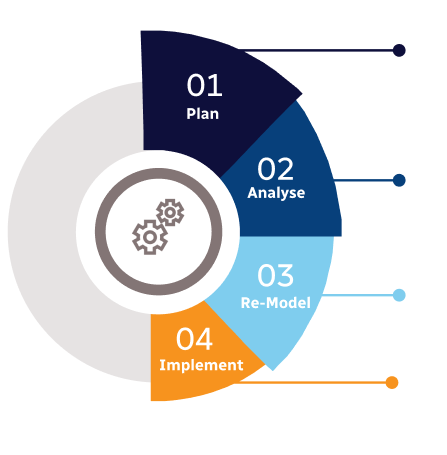
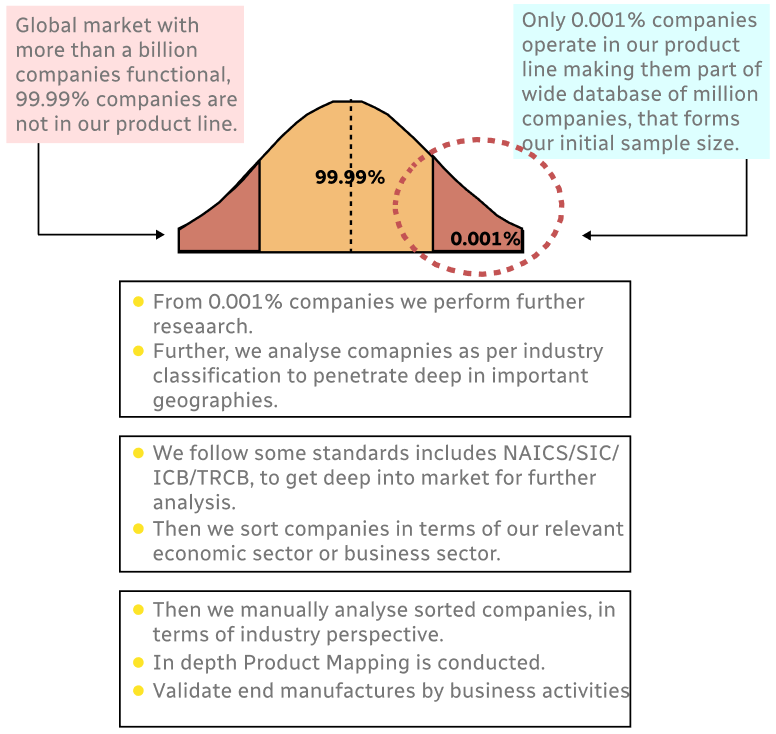
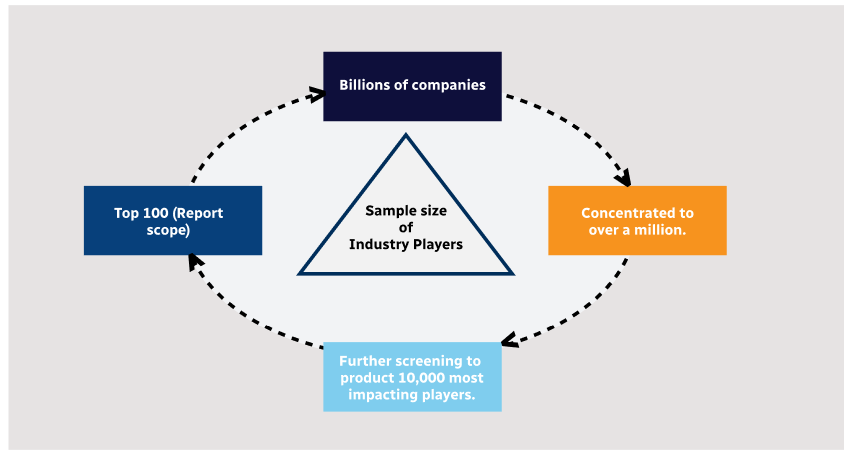
Step 1 - Identification of Relevant Samples Size from Population Database
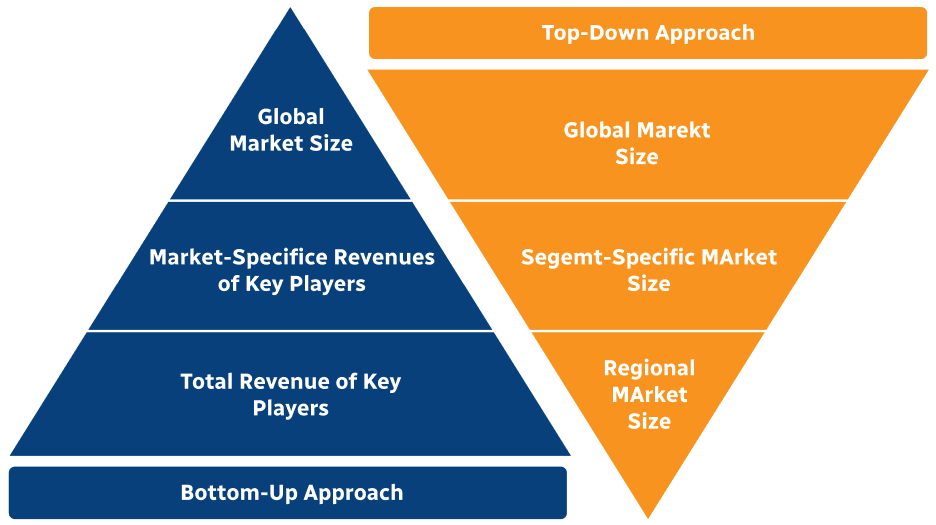
Step 2 - Approaches for Defining Global Market Size (Value, Volume* & Price*)
Note*: In applicable scenarios
Step 3 - Data Sources
Primary Research
- Web Analytics
- Survey Reports
- Research Institute
- Latest Research Reports
- Opinion Leaders
Secondary Research
- Annual Reports
- White Paper
- Latest Press Release
- Industry Association
- Paid Database
- Investor Presentations
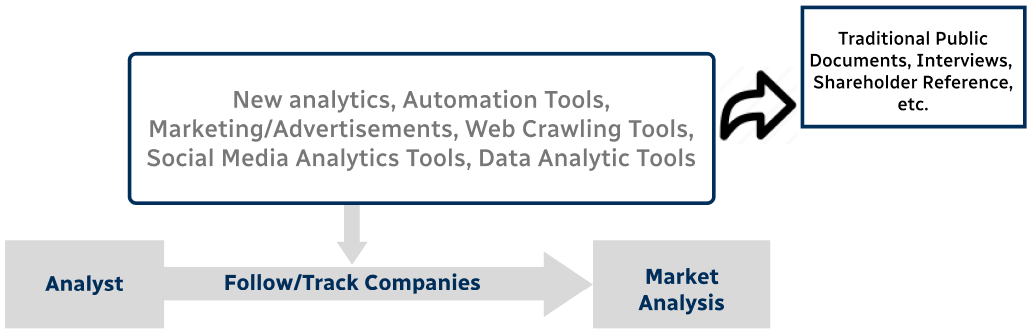
Step 4 - Data Triangulation
Involves using different sources of information in order to increase the validity of a study
These sources are likely to be stakeholders in a program - participants, other researchers, program staff, other community members, and so on.
Then we put all data in single framework & apply various statistical tools to find out the dynamic on the market.
During the analysis stage, feedback from the stakeholder groups would be compared to determine areas of agreement as well as areas of divergence